
Look at an application of deseasonalisation techniques and an interpretation of the results they provide.
 talk-data.com
Topic
849
tagged
Look at an application of deseasonalisation techniques and an interpretation of the results they provide.
Statistics is the branch of mathematics that deals with real life problems. As such, it is an essential tool for economists. Unfortunately, the way the concept is introduced to students is not compatible with the way economists think and learn. The problem is worsened by the use of mathematical jargon and complex derivations. However, as this book demonstrates, neither is necessary. The book is written in simple English with minimal use of symbols, mostly for the sake of brevity and to make reading literature more meaningful. The second edition also incorporates Stata software for use by more technically oriented readers who have access to sophisticated software. The objective of this book is to address the fundamentals of statistical analysis in a simple and easy-to-comprehend way. Instead of covering numerous topics, the book covers interrelated subjects that are necessary for the comprehension of the presented topics. The second edition has augmented the explanations in the first to clarify the subjects even more. The examples are based on economic theory utilizing actual data. The hope is that the use of theory will prove useful in relating the subject to actual empirical applications and help with research.
The quick way to learn Microsoft Visio 2016!This is learning made easy. Get more done quickly with Visio 2016. Jump in wherever you need answers--brisk lessons and colorful screenshots show you exactly what to do, step by step. Get results faster with starter diagrams Diagram processes, organizations, networks, and datacenters Add styles, colors, and themes Enhance diagrams with data-driven visualizations Link to external data sources, websites, and documents Add structure to diagrams with containers, lists, and callouts Validate flowchart, swimlane, and BPMN diagrams Collaborate and publish with Visio Services and Microsoft SharePoint 2016 Look up just the tasks and lessons you need

Written by a leading contributor to volatility modeling and Risk's 2009 Quant of the Year, this book explains how stochastic volatility is used to tackle practical issues arising in the modeling of derivatives. With many unpublished results and insights, the book addresses the practicalities of modeling local volatility, local-stochastic volatility, and multi-asset stochastic volatility. It covers forward-start options, variance swaps, options on realized variance, timer options, VIX futures and options, and daily cliquets.
More and more organizations around the globe are expecting that professionals will make data-driven decisions. Employees, team leaders, managers, and executives that can think quantitatively should be in high demand. The goal of this book is to increase ability to identify a problem, collect data, organize, and analyze data that will help aid in making more effective decisions. This book will provide you with a solid foundation for thinking quantitatively within your company. To help facilitate this objective, this book follows two fictitious companies that encounter a series of business problems, while demonstrating how managers would use the concepts in the book to solve these problems and determine the next course of action. This book is for beginners and does not require prior statistical training. All computations will be completed using Microsoft Excel.
The technique of regression analysis is used so often in business and economics today that an understanding of its use is necessary for almost everyone engaged in the field. This book covers essential elements of building and understanding regression models in a business/economic context in an intuitive manner. The book provides a non-theoretical treatment that is accessible to readers with even a limited statistical background. This book describes exactly how regression models are developed and evaluated. The data used in the book are the kind of data managers are faced with in the real world. The book provides instructions and screen shots for using Microsoft Excel to build business/economic regression models. Upon completion, the reader will be able to interpret the output of the regression models and evaluate the models for accuracy and shortcomings.
This book describes state-of-the-art optimization techniques used to solve problems with adaptive, dynamic, and stochastic features. It presents modern advances in static and dynamic optimization, decision analysis, intelligent systems, evolutionary programming, heuristic optimization, stochastic and adaptive dynamic programming, and adaptive critics. It evaluates optimization methods for handling operational planning, Voltage/VAr, control coordination, vulnerability, reliability, resilience, and reconfiguration issues, providing mathematical formulations, algorithms for implementation, examples, and case studies. It also discusses the limitations of current optimization techniques in meeting the challenges of smart electric grids.
Offering a planned approach for determining cause and effect, DOE Simplified: Practical Tools for Effective Experimentation, Third Edition integrates the authors’ decades of combined experience in providing training, consulting, and computational tools to industrial experimenters. Supplying readers with the statistical means to analyze how numerous variables interact, it is ideal for those seeking breakthroughs in product quality and process efficiency via systematic experimentation. Following in the footsteps of its bestselling predecessors, this edition incorporates a lively approach to learning the fundamentals of the design of experiments (DOE). It lightens up the inherently dry complexities with interesting sidebars and amusing anecdotes. The book explains simple methods for collecting and displaying data and presents comparative experiments for testing hypotheses. Discussing how to block the sources of variation from your analysis, it looks at two-level factorial designs and covers analysis of variance. It also details a four-step planning process for designing and executing experiments that takes statistical power into consideration. This edition includes a major revision of the software that accompanies the book (via download) and sets the stage for introducing experiment designs where the randomization of one or more hard-to-change factors can be restricted. Along these lines, it includes a new chapter on split plots and adds coverage of a number of recent developments in the design and analysis of experiments. Readers have access to case studies, problems, practice experiments, a glossary of terms, and a glossary of statistical symbols, as well as a series of dynamic online lectures that cover the first several chapters of the book.
In 'Python Data Visualization Cookbook (Second Edition)', you'll learn how to create stunning and meaningful visual representations of data using Python's powerful libraries. Through step-by-step, recipe-based guidance, this book equips you to transform raw data into comprehensible and compelling visual stories. What this Book will help me do Master setting up Python and its libraries for data visualization. Learn how to import, clean, and organize data effectively. Create a variety of plots and charts tailored to your data's needs. Explore 3D visualizations and animations for more complex data insights. Incorporate visualization into environments like LaTeX and web frameworks. Author(s) The authors Igor Milovanovic, None Foures, and Giuseppe Vettigli bring extensive experience in Python programming and data analysis. With a passion for teaching and a clear instructional style, they make complex topics approachable and engaging. Their expertise ensures you gain practical knowledge you can apply immediately. Who is it for? This book is perfect for Python programmers who want to deepen their understanding of data and learn how to visualize it effectively. It's suitable for readers with basic Python knowledge, looking to elevate their skills in data visualization. Whether you aim to improve at data-driven storytelling or analyze data in clarity, this book has you covered.
Creating Data Stories with Tableau Public is a comprehensive guide to building impactful and interactive data visualizations using Tableau Public. Whether you are an investigative journalist, blogger, or data enthusiast, this book takes you through all the essential concepts, from connecting to data sources to publishing your visualizations online. You will learn how to effectively communicate data-driven stories with engaging visuals. What this Book will help me do Understand how to connect and prepare data for Tableau Public visualizations, including tips on cleaning and joining data. Learn about various chart types and their applications to visualize data effectively according to context and message. Discover methods for creating geographic maps and adding meaningful calculations to enhance your visualizations. Master the art of designing dashboards and storytelling with interactive elements like filters and actions. Gain insights on how to publish and embed your Tableau Public visualizations to share your data stories with wider audiences. Author(s) None Ohmann is an accomplished author and educator with rich expertise in data visualization and storytelling. Leveraging a passion for effective communication, None has written extensively on using tools like Tableau Public to bring data to life. As an advocate for accessible and interactive visualizations, None's work bridges technical proficiency and creative expression. Who is it for? This book is perfect for investigative journalists, bloggers, and media professionals eager to incorporate data visualizations into their work. Whether you're a beginner or have some experience with Tableau Public, you'll find practical advice to enhance your abilities. Organizations and teams that deal with data storytelling will also benefit from the clear and actionable strategies outlined in this guide.

This book shows scientific researchers and applied statisticians from a wide range of fields how to analyze their spatial point pattern data. Making the techniques accessible to non-mathematicians, the authors draw on their 25 years of software development experiences, methodological research, and broad scientific collaborations to deliver a book that clearly and succinctly explains concepts and addresses real scientific questions. The book uses the authors' R package spatstat throughout to process and analyze spatial point pattern data.
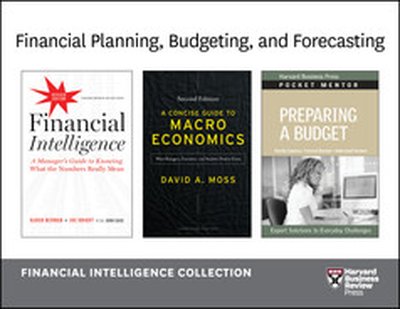
Don’t let your fear of finance get in the way of your success. This digital collection, curated by Harvard Business Review, brings together everything a manager needs to know about financial intelligence. It includes Financial Intelligence, called a must-read” for decision makers without expertise in finance; A Concise Guide to Macroeconomics, which covers the essentials of macroeconomics and examines the core ideas of output, money, and expectations; Essentials of Finance and Budgeting, which explains everything HR professionals need to know to make wise financial decisions; Ahead of the Curve, Joseph H. Ellis’s forecasting method to help managers and investors understand and predict the economic cycles that control their businesses and financial fates; Beyond Budgeting; which offers a coherent management model that overcomes the limitations of traditional budgeting; Preparing a Budget, packed with handy tools, self-tests, and real life examples to help you hone critical skills; and HBR Guide to Finance Basics for Managers, which will give you the tools and confidence you need to master the fundamentals of finance.
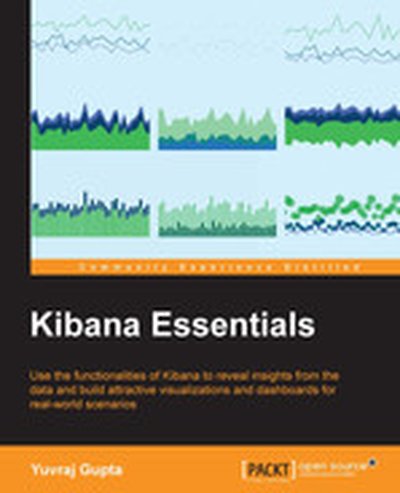
Dive into "Kibana Essentials" and discover how to efficiently analyze data and create visually engaging visualizations and dashboards with Kibana. Whether you are new to Kibana or looking to enhance your skills, this book provides practical guidance to help you apply Kibana features to real-world scenarios. By the end, you'll have the skills to create and apply dashboards that run on Elasticsearch. What this Book will help me do Understand the core features and setup process of Kibana on both Windows and Ubuntu platforms. Master the Discover, Visualize, Dashboard, and Settings functionalities in Kibana. Utilize Elasticsearch's search capabilities to analyze data in Kibana. Create, customize, and share stunning visualizations and dashboards for various use cases. Gain advanced knowledge to tweak Kibana settings for optimized workflows. Author(s) None Gupta is an experienced author and data professional who has worked extensively with Kibana and Elasticsearch technologies. With a passion for simplifying complex concepts, None specializes in breaking down technical topics into digestible, actionable steps. Their practical approach ensures that learners can confidently apply knowledge immediately after reading. Who is it for? This book is for professionals or enthusiasts aiming to delve into data visualization using Kibana. Whether starting from scratch or familiar with similar tools, readers will find the foundational to advanced techniques invaluable. It's especially suited for those who want a practical, hands-on approach to mastering Kibana.
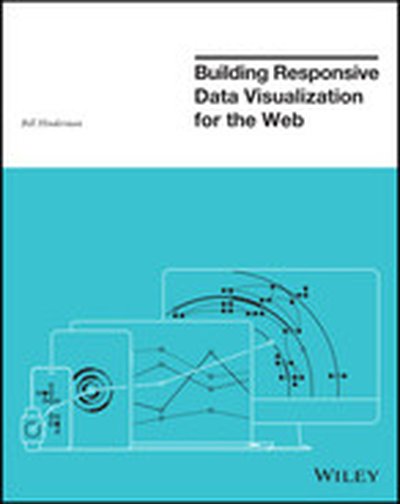
Unchain your data from the desktop with responsive visualizations Building Responsive Data Visualization for the Web is a handbook for any front-end development team needing a framework for integrating responsive web design into the current workflow. Written by a leading industry expert and design lead at Starbase Go, this book provides a wealth of information and practical guidance from the perspective of a real-world designer. You'll walk through the process of building data visualizations responsively as you learn best practices that build upon responsive web design principles, and get the hands-on practice you need with exercises, examples, and source code provided in every chapter. These strategies are designed to be implemented by teams large and small, with varying skill sets, so you can apply these concepts and skills to your project right away. Responsive web design is the practice of building a website to suit base browser capability, then adding features that enhance the experience based on the user's device's capabilities. Applying these ideas to data produces visualizations that always look as if they were designed specifically for the device through which they are viewed. This book shows you how to incorporate these principles into your current practices, with highly practical hands-on training. Examine the hard data surrounding responsive design Master best practices with hands-on exercises Learn data-based document manipulation using D3.js Adapt your current strategies to responsive workflows Data is growing exponentially, and the need to visualize it in any context has become crucial. Traditional visualizations allow important data to become lost when viewed on a small screen, and the web traffic speaks for itself – viewers repeatedly demonstrate their preference for responsive design. If you're ready to create more accessible, take-anywhere visualizations, Building Responsive Data Visualization for the Web is your tailor-made solution.
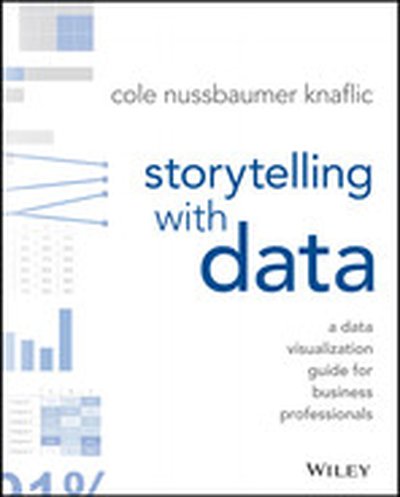
Don't simply show your data—tell a story with it! Storytelling with Data teaches you the fundamentals of data visualization and how to communicate effectively with data. You'll discover the power of storytelling and the way to make data a pivotal point in your story. The lessons in this illuminative text are grounded in theory, but made accessible through numerous real-world examples—ready for immediate application to your next graph or presentation. Storytelling is not an inherent skill, especially when it comes to data visualization, and the tools at our disposal don't make it any easier. This book demonstrates how to go beyond conventional tools to reach the root of your data, and how to use your data to create an engaging, informative, compelling story. Specifically, you'll learn how to: Understand the importance of context and audience Determine the appropriate type of graph for your situation Recognize and eliminate the clutter clouding your information Direct your audience's attention to the most important parts of your data Think like a designer and utilize concepts of design in data visualization Leverage the power of storytelling to help your message resonate with your audience Together, the lessons in this book will help you turn your data into high impact visual stories that stick with your audience. Rid your world of ineffective graphs, one exploding 3D pie chart at a time. There is a story in your data— Storytelling with Data will give you the skills and power to tell it!
Learn or refresh core statistical methods for business with SAS® and approach real business analytics issues and techniques using a practical approach that avoids complex mathematics and instead employs easy-to-follow explanations.
Business Statistics Made Easy in SAS® is designed as a user-friendly, practice-oriented, introductory text to teach businesspeople, students, and others core statistical concepts and applications. It begins with absolute core principles and takes you through an overview of statistics, data and data collection, an introduction to SAS®, and basic statistics (descriptive statistics and basic associational statistics). The book also provides an overview of statistical modeling, effect size, statistical significance and power testing, basics of linear regression, introduction to comparison of means, basics of chi-square tests for categories, extrapolating statistics to business outcomes, and some topical issues in statistics, such as big data, simulation, machine learning, and data warehousing.
The book steers away from complex mathematical-based explanations, and it also avoids basing explanations on the traditional build-up of distributions, probability theory and the like, which tend to lose the practice-oriented reader. Instead, it teaches the core ideas of statistics through methods such as careful, intuitive written explanations, easy-to-follow diagrams, step-by-step technique implementation, and interesting metaphors.
With no previous SAS experience necessary, Business Statistics Made Easy in SAS® is an ideal introduction for beginners. It is suitable for introductory undergraduate classes, postgraduate courses such as MBA refresher classes, and for the business practitioner. It is compatible with SAS® University Edition.
Dive into the world of Bayesian Machine Learning with "Learning Bayesian Models with R." This comprehensive guide introduces the foundations of probability theory and Bayesian inference, teaches you how to implement these concepts with the R programming language, and progresses to practical techniques for supervised and unsupervised problems in data science. What this Book will help me do Understand and set up an R environment for Bayesian modeling Build Bayesian models including linear regression and classification for predictive analysis Learn to apply Bayesian inference to real-world machine learning problems Work with big data and high-performance computation frameworks like Hadoop and Spark Master advanced Bayesian techniques and apply them to deep learning and AI challenges Author(s) Hari Manassery Koduvely is a proficient data scientist with extensive experience in leveraging Bayesian frameworks for real-world applications. His passion for Bayesian Machine Learning is evident in his approachable and detailed teaching methodology, aimed at making these complex topics accessible for practitioners. Who is it for? This book is best suited for data scientists, analysts, and statisticians familiar with R and basic probability theory who aim to enhance their expertise in Bayesian approaches. It's ideal for professionals tackling machine learning challenges in applied data contexts. If you're looking to incorporate advanced probabilistic methods into your projects, this guide will show you how.
Practical Graph Analytics with Apache Giraph helps you build data mining and machine learning applications using the Apache Foundation’s Giraph framework for graph processing. This is the same framework as used by Facebook, Google, and other social media analytics operations to derive business value from vast amounts of interconnected data points. Graphs arise in a wealth of data scenarios and describe the connections that are naturally formed in both digital and real worlds. Examples of such connections abound in online social networks such as Facebook and Twitter, among users who rate movies from services like Netflix and Amazon Prime, and are useful even in the context of biological networks for scientific research. Whether in the context of business or science, viewing data as connected adds value by increasing the amount of information available to be drawn from that data and put to use in generating new revenue or scientific opportunities. Apache Giraph offers a simple yet flexible programming model targeted to graph algorithms and designed to scale easily to accommodate massive amounts of data. Originally developed at Yahoo!, Giraph is now a top top-level project at the Apache Foundation, and it enlists contributors from companies such as Facebook, LinkedIn, and Twitter. Practical Graph Analytics with Apache Giraph brings the power of Apache Giraph to you, showing how to harness the power of graph processing for your own data by building sophisticated graph analytics applications using the very same framework that is relied upon by some of the largest players in the industry today.
Explore the possibilities of web scraping using Python with this practical guide. The book provides a comprehensive introduction to extracting information from web pages, managing complex scraping scenarios, and utilizing specialized tools such as Scrapy. Whether you're dealing with static pages or interactive web content, this book equips you with the skills to gather and process web data efficiently. What this Book will help me do Gain proficiency in writing Python scripts to extract data from web pages. Learn to build and manage multithreaded crawlers to handle large-scale scraping tasks. Master techniques for interacting with dynamic web content and JavaScript-rendered pages. Understand how to work with web forms, sessions, and tackle challenges like CAPTCHA. Implement practical examples of web scraping using Scrapy for real-world data projects. Author(s) Richard Penman is an experienced software engineer and an expert in Python programming and web development. With years of practical expertise in web crawling and data extraction, Richard shares his extensive knowledge in this field to make complex tasks accessible to developers of all levels. His thoughtful approach aims to empower readers to confidently tackle data challenges on the web. Who is it for? This book is ideal for developers and technical professionals who want to learn effective techniques for web scraping with Python. A basic understanding of programming concepts and experience with Python will help readers get the most out of the practical examples. It's also suitable for advanced learners looking to apply Python skills for automating web data extraction tasks. If you're enthusiastic about turning web data into actionable insights, this guide is for you.
Mastering Python Data Visualization provides thorough, hands-on guidance for creating impactful visual representations of data by leveraging Python's powerful libraries such as Matplotlib, Pandas, and Scikit-Learn. By following this book, you will gain proficiency in understanding data, performing analyses, and ultimately presenting your findings in a clear and engaging way. What this Book will help me do Effectively transform raw data into insightful visualizations using Python's rich ecosystem of libraries. Understand and apply best practices for selecting the most appropriate visualization techniques for different datasets and objectives. Master the use of Python for interactive plotting, regression analysis, clustering, and classification tasks. Develop a solid foundation in data visualization aesthetics and how to convey information clearly through visuals. Utilize Python for specialized fields such as finance, bioinformatics, and social network analysis, incorporating advanced computation techniques. Author(s) Kirthi Raman is an experienced data scientist and Python advocate with a strong background in technical computing and data visualization. He has hands-on experience in using Python's ecosystem to solve real-world data problems and a passion for sharing knowledge. Raman's writing focuses on blending practical insights with comprehensive explanations, ensuring readers not only learn the tools but also apply them effectively. Who is it for? This book is ideal for data analysts, data scientists, and researchers who want to deepen their knowledge of Python-based data visualization techniques. It requires readers to have a basic understanding of Python and data manipulation. If your goal is to create professional and informative visual narratives that are both visually appealing and data-driven, this book is for you.