talk-data.com talk-data.com

Topic

data

2093

tagged

Activity Trend

3 peak/qtr
2020-Q1 2026-Q1

Activities

Showing filtered results

Filtering by: O'Reilly Data Science Books ×
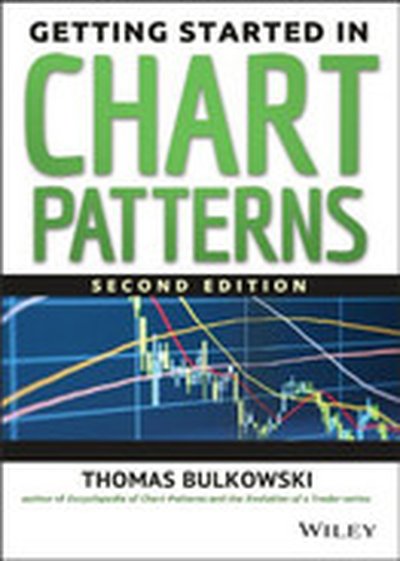
Getting Started in Chart Patterns, 2nd Edition

Your plain-English guide to understanding and using technical chart patterns Chart pattern analysis is not only one of the most important investing tools, but also one of the most popular. Filled with expert insights and practical advice from one of the best in the business, Getting Started in Chart Patterns, Second Edition helps new and seasoned traders alike profit by tracking and identifying specific chart patterns. Substantially revised and expanded, this new edition stay true to the original, with author Thomas Bulkowski's frank discussion of how trading behavior can affect the bottom line. Interwoven throughout the technical presentations are fascinating anecdotes drawn from the author's quarter-century as a professional trader that vividly demonstrate how one of the best in the business leverages the power of chart patterns. Includes additional charts for ETFs and mutual funds Introduces more than 40 key chart formations, as well as trading tactics that can be used in conjunction with them Supplies actual trades, with their corresponding dollar amounts If you're looking to gain a better understanding of this discipline, look no further than the Second Edition of Getting Started in Chart Patterns.
Repeated Measurements and Cross-Over Designs

An introduction to state-of-the-art experimental design approaches to better understand and interpret repeated measurement data in cross-over designs. Repeated Measurements and Cross-Over Designs: Features the close tie between the design, analysis, and presentation of results Presents principles and rules that apply very generally to most areas of research, such as clinical trials, agricultural investigations, industrial procedures, quality control procedures, and epidemiological studies Includes many practical examples, such as PK/PD studies in the pharmaceutical industry, k-sample and one sample repeated measurement designs for psychological studies, and residual effects of different treatments in controlling conditions such as asthma, blood pressure, and diabetes. Utilizes SAS(R) software to draw necessary inferences. All SAS output and data sets are available via the book's related website. This book is ideal for a broad audience including statisticians in pre-clinical research, researchers in psychology, sociology, politics, marketing, and engineering.

Statistics: Principles and Methods, 7th Edition

Johnson/Bhattacharyya is unique in its clarity of exposition while maintaining the mathematical correctness of its explanations. Many other books that claim to be easier to understand often sacrifice mathematical rigor. In contrast, Johnson/ Bhattacharyya maintain a focus on accuracy without getting bogged down in unnecessary details.

Developing Analytic Talent: Becoming a Data Scientist

Learn what it takes to succeed in the the most in-demand tech job Harvard Business Review calls it the sexiest tech job of the 21st century. Data scientists are in demand, and this unique book shows you exactly what employers want and the skill set that separates the quality data scientist from other talented IT professionals. Data science involves extracting, creating, and processing data to turn it into business value. With over 15 years of big data, predictive modeling, and business analytics experience, author Vincent Granville is no stranger to data science. In this one-of-a-kind guide, he provides insight into the essential data science skills, such as statistics and visualization techniques, and covers everything from analytical recipes and data science tricks to common job interview questions, sample resumes, and source code. The applications are endless and varied: automatically detecting spam and plagiarism, optimizing bid prices in keyword advertising, identifying new molecules to fight cancer, assessing the risk of meteorite impact. Complete with case studies, this book is a must, whether you're looking to become a data scientist or to hire one. Explains the finer points of data science, the required skills, and how to acquire them, including analytical recipes, standard rules, source code, and a dictionary of terms Shows what companies are looking for and how the growing importance of big data has increased the demand for data scientists Features job interview questions, sample resumes, salary surveys, and examples of job ads Case studies explore how data science is used on Wall Street, in botnet detection, for online advertising, and in many other business-critical situations Developing Analytic Talent: Becoming a Data Scientist is essential reading for those aspiring to this hot career choice and for employers seeking the best candidates.

Introduction to Numerical Electrostatics Using MATLAB

Readers are guided step by step through numerous specific problems and challenges, covering all aspects of electrostatics with an emphasis on numerical procedures. The author focuses on practical examples, derives mathematical equations, and addresses common issues with algorithms. Introduction to Numerical Electrostatics contains problem sets, an accompanying web site with simulations, and a complete list of computer codes. Computer source code listings on accompanying web site Problem sets included with book Readers using MATLAB or other simulation packages will gain insight as to the inner workings of these packages, and how to account for their limitations Example computer code is provided in MATLAB Solutions Manual The first book of its kind uniquely devoted to the field of computational electrostatics

Displaying Time Series, Spatial, and Space-Time Data with R

Code and Methods for Creating High-Quality Data GraphicsA data graphic is not only a static image, but it also tells a story about the data. It activates cognitive processes that are able to detect patterns and discover information not readily available with the raw data. This is particularly true for time series, spatial, and space-time datasets.F

Statistical Analysis: Microsoft® Excel® 2013

Use Excel 2013’s statistical tools to transform your data into knowledge Conrad Carlberg shows how to use Excel 2013 to perform core statistical tasks every business professional, student, and researcher should master. Using real-world examples, Carlberg helps you choose the right technique for each problem and get the most out of Excel’s statistical features, including recently introduced consistency functions. Along the way, he clarifies confusing statistical terminology and helps you avoid common mistakes. You’ll learn how to use correlation and regression, analyze variance and covariance, and test statistical hypotheses using the normal, binomial, t, and F distributions. To help you make accurate inferences based on samples from a population, this edition adds two more chapters on inferential statistics, covering crucial topics ranging from experimental design to the statistical power of F tests. Becoming an expert with Excel statistics has never been easier! You’ll find crystal-clear instructions, insider insights, and complete step-by-step projects—all complemented by extensive web-based resources. Master Excel’s most useful descriptive and inferential statistical tools Tell the truth with statistics—and recognize when others don’t Accurately summarize sets of values Infer a population’s characteristics from a sample’s frequency distribution Explore correlation and regression to learn how variables move in tandem Use Excel consistency functions such as STDEV.S() and STDEV.P() Test differences between two means using z tests, t tests, and Excel’s Data Analysis Add-in Use ANOVA to test differences between more than two means Explore statistical power by manipulating mean differences, standard errors, directionality, and alpha Take advantage of Recommended PivotTables, Quick Analysis, and other Excel 2013 shortcuts

Economic and Business Forecasting: Analyzing and Interpreting Econometric Results

Discover the secrets to applying simple econometric techniques to improve forecasting Equipping analysts, practitioners, and graduate students with a statistical framework to make effective decisions based on the application of simple economic and statistical methods, Economic and Business Forecasting offers a comprehensive and practical approach to quantifying and accurate forecasting of key variables. Using simple econometric techniques, author John E. Silvia focuses on a select set of major economic and financial variables, revealing how to optimally use statistical software as a template to apply to your own variables of interest. Presents the economic and financial variables that offer unique insights into economic performance Highlights the econometric techniques that can be used to characterize variables Explores the application of SAS software, complete with simple explanations of SAS-code and output Identifies key econometric issues with practical solutions to those problems Presenting the "ten commandments" for economic and business forecasting, this book provides you with a practical forecasting framework you can use for important everyday business applications.

Excel Dashboards and Reports For Dummies, 2nd Edition

Create dynamic dashboards and put your data on display with For Dummies No matter what business you're in, reports have become a staple of the workplace, but what good is a report if no reads it, or even worse, understands it? This all new edition of Excel Dashboards & Reports For Dummies is here to help you make meaning of all your data and turn it into clear and actionable visualizations. Fully updated for the latest business intelligence and spreadsheet tools in Excel 2013, this book shows you how to analyze large amounts of data, quickly slice data into various views on the fly, automate redundant reporting, create eye-catching visualizations, and more. Helps you move beyond reporting data with simple tables, rows, and columns to designing high-impact reports, dashboards, and visuals Walks you through a wide array of technical and analytical concepts to give you the background you need to select the right tool for interpreting and displaying data Covers how to build a chart, work with pivot tables, group and bucket your data, represent trends, create What-If analyses, and increase the value of your reports Excel Dashboards & Reports For Dummies, 2nd Edition is the business analysis tool you need to transform your raw data into a powerful and effective presentation that is accessible to everyone.

It's Not the Size of the Data -- It's How You Use It
Brand tracking, CRM programs, trade shows, online behavior tracking, satisfaction studies. Mounds of marketing metrics are generated across touchpoints and channels. It can be information overload--too much, too scattered. But locked in the vast quantity of information are accurate, data-driven answers to every marketing question. Analytic dashboards are transformative web-based tools that gather, syn the size, and visually display essential data in real time, directly connecting marketing with performance. World renowned marketing expert Koen Pauwels supplies a simple yet rigorous methodology and wealth of case studies to help any size organization, in any industry, turn data into productive action. He explains step by step how to: ● Gain crucial IT support ● Build a rock-solid database ● Select key leading performance indicators ● Design the optimal dashboard layout ● Use marketing analytics to improve decisions and reap rewards Gut decisions are outdated and downright dangerous. Whether you're trying to allocate resources between online and offline marketing, measure the ROI of specific efforts, or scale up a creative campaign, dashboard analytics bring scientific precision and insight to marketing efforts--with far better results.
matplotlib Plotting Cookbook

The "matplotlib Plotting Cookbook" equips you with the skills to create impactful scientific visualizations using Python's matplotlib library. Through a series of concise recipes, this book covers everything from basic plotting to advanced techniques, ensuring you can create impressive graphics for your data. What this Book will help me do Learn to produce standard 2D plots like line, bar, and scatter plots. Master advanced plotting techniques such as 3D plotting and data overlays. Enhance plots with detailed annotations, rich legends, and labeling. Understand the use of colors, styles, and scales to maximize readability. Use matplotlib to generate plots programmatically or integrate with applications. Author(s) Alexandre Devert, the author of the "matplotlib Plotting Cookbook," is an experienced data scientist with a strong foundation in Python and data visualization techniques. Alexandre has worked extensively in the field of data analysis, and his expertise is reflected in the practical examples and hands-on guidance provided throughout this book. He takes a learner-focused approach to presenting technical topics in an accessible way. Who is it for? This book is designed for Python developers, data scientists, and researchers who need to create clear, professional-quality visualizations. If you are at a beginner or intermediate level in using matplotlib or visualization libraries, this book will empower you with essential plotting skills. Readers looking to save time while producing meaningful insights through data visualizations will find this book valuable. It is suitable for those aiming to improve their data representation skills for presentations or publications.

Practical Data Science with R

NEWER EDITION AVAILABLE IN MEAP Practical Data Science with R, Second Edition is now available in the Manning Early Access Program. An eBook of this older edition is included at no additional cost when you buy the revised edition! You may still purchase Practical Data Science with R (First Edition) using the Buy options on this page. Practical Data Science with R lives up to its name. It explains basic principles without the theoretical mumbo-jumbo and jumps right to the real use cases you'll face as you collect, curate, and analyze the data crucial to the success of your business. You'll apply the R programming language and statistical analysis techniques to carefully explained examples based in marketing, business intelligence, and decision support. About the Technology Business analysts and developers are increasingly collecting, curating, analyzing, and reporting on crucial business data. The R language and its associated tools provide a straightforward way to tackle day-to-day data science tasks without a lot of academic theory or advanced mathematics. About the Book Practical Data Science with R shows you how to apply the R programming language and useful statistical techniques to everyday business situations. Using examples from marketing, business intelligence, and decision support, it shows you how to design experiments (such as A/B tests), build predictive models, and present results to audiences of all levels. What's Inside Data science for the business professional Statistical analysis using the R language Project lifecycle, from planning to delivery Numerous instantly familiar use cases Keys to effective data presentations About the Reader This book is accessible to readers without a background in data science. Some familiarity with basic statistics, R, or another scripting language is assumed. About the Authors Nina Zumel and John Mount are cofounders of a San Francisco-based data science consulting firm. Both hold PhDs from Carnegie Mellon and blog on statistics, probability, and computer science at win-vector.com. Quotes A unique and important addition to any data scientist’s library. - From the Foreword by Jim Porzak, Cofounder Bay Area R Users Group Covers the process end-to-end, from data exploration to modeling to delivering the results. - Nezih Yigitbasi, Intel Full of useful gems for both aspiring and experienced data scientists. - Fred Rahmanian, Siemens Healthcare Hands-on data analysis with real-world examples. Highly recommended. - Dr. Kostas Passadis, IPTO

Predictive Analytics For Dummies

Combine business sense, statistics, and computers in a new and intuitive way, thanks to Big Data Predictive analytics is a branch of data mining that helps predict probabilities and trends. Predictive Analytics For Dummies explores the power of predictive analytics and how you can use it to make valuable predictions for your business, or in fields such as advertising, fraud detection, politics, and others. This practical book does not bog you down with loads of mathematical or scientific theory, but instead helps you quickly see how to use the right algorithms and tools to collect and analyze data and apply it to make predictions. Topics include using structured and unstructured data, building models, creating a predictive analysis roadmap, setting realistic goals, budgeting, and much more. Shows readers how to use Big Data and data mining to discover patterns and make predictions for tech-savvy businesses Helps readers see how to shepherd predictive analytics projects through their companies Explains just enough of the science and math, but also focuses on practical issues such as protecting project budgets, making good presentations, and more Covers nuts-and-bolts topics including predictive analytics basics, using structured and unstructured data, data mining, and algorithms and techniques for analyzing data Also covers clustering, association, and statistical models; creating a predictive analytics roadmap; and applying predictions to the web, marketing, finance, health care, and elsewhere Propose, produce, and protect predictive analytics projects through your company with Predictive Analytics For Dummies.

Statistical Hypothesis Testing with SAS and R

A comprehensive guide to statistical hypothesis testing with examples in SAS and R When analyzing datasets the following questions often arise: Is there a short hand procedure for a statistical test available in SAS or R? If so, how do I use it? If not, how do I program the test myself? This book answers these questions and provides an overview of the most common statistical test problems in a comprehensive way, making it easy to find and perform an appropriate statistical test. A general summary of statistical test theory is presented, along with a basic description for each test, including the necessary prerequisites, assumptions, the formal test problem and the test statistic. Examples in both SAS and R are provided, along with program code to perform the test, resulting output and remarks explaining the necessary program parameters. Key features: Provides examples in both SAS and R for each test presented. Looks at the most common statistical tests, displayed in a clear and easy to follow way. Supported by a supplementary website http://www.d-taeger.de featuring example program code. Academics, practitioners and SAS and R programmers will find this book a valuable resource. Students using SAS and R will also find it an excellent choice for reference and data analysis.

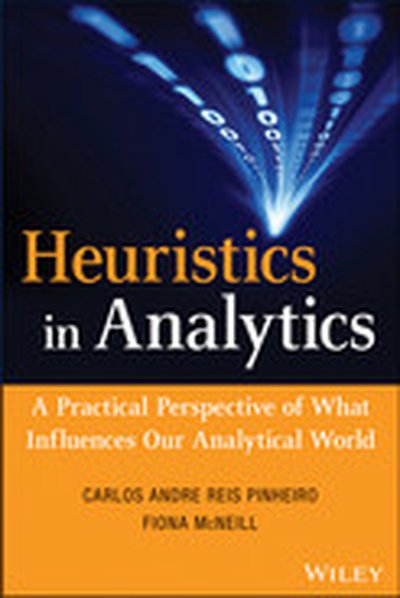
Heuristics in Analytics: A Practical Perspective of What Influences Our Analytical World

A practical guide to deploying mathematical and statistical models when performing analytics The Heuristics in Analytics describes analytic processes and how they fit into the heuristic world around us. In spite of the strong heuristic characteristics of the analytical processes, this important book emphasizes the need to have the proper tools to engage analytics. It describes the analytical process from the exploratory analysis in respect to business scenarios and corporate environments, to model developments; and from statistics, probability, stochastic, mathematics, and artificial intelligence; to the deployments and possible outcomes. Describes the overall analytical process in terms of modeling, deployment, and application Offers a new perspective of the randomness in analytical modeling Presents distinct analytical approaches such as statistical, probabilistic, stochastic, and mathematical Includes case studies on the entire analytical process using telecom companies based in Brazil, Ireland, Turkey, United Sates, and Canada Randomness holds a strong impact in the everyday world. It makes sense, then, that analytics are put in place to understand business occurrences, marketplace scenarios, and consumer behavior. The Heuristics in Analytics uniquely shows how random events on a daily basis might completely change expectations, predictions, and behaviors, particularly in corporate environments, and how companies can build a proper analytical strategy to diminish the effect of randomness in business actions.

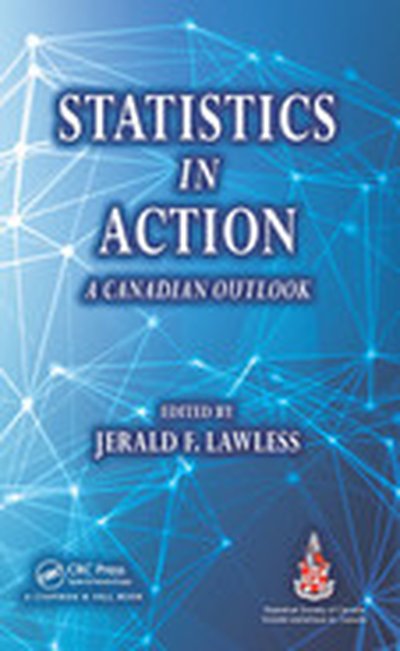
Statistics in Action

Commissioned by the Statistical Society of Canada (SSC), this volume helps both general readers and users of statistics better appreciate the scope and importance of statistics. It presents the ways in which statistics is used while highlighting key contributions that Canadian statisticians are making to science, technology, business, government, and other areas. The book emphasizes the role and impact of computing in statistical modeling and analysis, including the issues involved with the huge amounts of data being generated by automated processes.

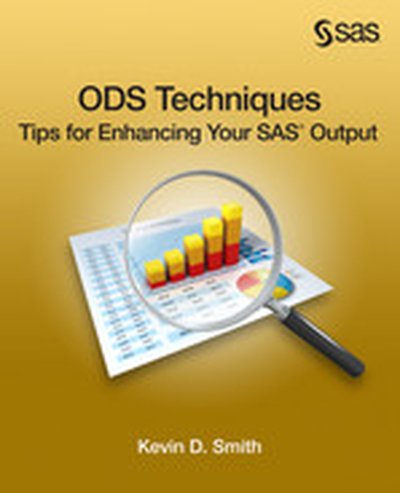
ODS Techniques

Enhance your SAS ODS output with this collection of basic to novel ideas.

SAS Output Delivery System (ODS) expert Kevin D. Smith has compiled a cookbook-style collection of his top ODS tips and techniques to teach you how to bring your reports to a new level and inspire you to see ODS in a new light.

This collection of code techniques showcases some of the most interesting and unusual methods you can use to enhance your reports within the SAS Output Delivery System. It includes general ODS tips, as well as techniques for styles, enhancing tabular output, ODS HTML, ODS PDF, ODS Microsoft Excel destinations, and ODS DOCUMENT.

Smith offers tips based on his own extensive knowledge of ODS, as well as those inspired by questions that frequently come up in his interactions with SAS users. There are simple techniques for beginners who have a minimal amount of ODS knowledge and advanced tips for the more adventurous SAS user. Together, these helpful methods provide a strong foundation for your ODS development and inspiration for building on and creating new, even more advanced techniques on your own.

This book is part of the SAS Press program.

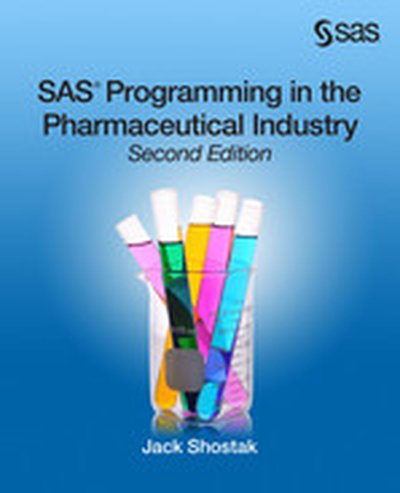
SAS Programming in the Pharmaceutical Industry, Second Edition, 2nd Edition

This comprehensive resource provides on-the-job training for statistical programmers who use SAS in the pharmaceutical industry

This one-stop resource offers a complete review of what entry- to intermediate-level statistical programmers need to know in order to help with the analysis and reporting of clinical trial data in the pharmaceutical industry.

SAS Programming in the Pharmaceutical Industry, Second Edition begins with an introduction to the pharmaceutical industry and the work environment of a statistical programmer. Then it gives a chronological explanation of what you need to know to do the job. It includes information on importing and massaging data into analysis data sets, producing clinical trial output, and exporting data. This edition has been updated for SAS 9.4, and it features new graphics as well as all new examples using CDISC SDTM or ADaM model data structures.

Whether you're a novice seeking an introduction to SAS programming in the pharmaceutical industry or a junior-level programmer exploring new approaches to problem solving, this real-world reference guide offers a wealth of practical suggestions to help you sharpen your skills.

This book is part of the SAS Press program.

Examples and Problems in Mathematical Statistics

Provides the necessary skills to solve problems in mathematical statistics through theory, concrete examples, and exercises With a clear and detailed approach to the fundamentals of statistical theory, Examples and Problems in Mathematical Statistics uniquely bridges the gap between theory andapplication and presents numerous problem-solving examples that illustrate the relatednotations and proven results. Written by an established authority in probability and mathematical statistics, each chapter begins with a theoretical presentation to introduce both the topic and the important results in an effort to aid in overall comprehension. Examples are then provided, followed by problems, and finally, solutions to some of the earlier problems. In addition, Examples and Problems in Mathematical Statistics features: Over 160 practical and interesting real-world examples from a variety of fields including engineering, mathematics, and statistics to help readers become proficient in theoretical problem solving More than 430 unique exercises with select solutions Key statistical inference topics, such as probability theory, statistical distributions, sufficient statistics, information in samples, testing statistical hypotheses, statistical estimation, confidence and tolerance intervals, large sample theory, and Bayesian analysis Recommended for graduate-level courses in probability and statistical inference, Examples and Problems in Mathematical Statistics is also an ideal reference for applied statisticians and researchers.