talk-data.com talk-data.com

Topic

data

5765

tagged

Activity Trend

3 peak/qtr
2020-Q1 2026-Q1

Activities

5765 activities · Newest first

Relevant Search

Relevant Search demystifies relevance work. Using Elasticsearch, it teaches you how to return engaging search results to your users, helping you understand and leverage the internals of Lucene-based search engines. About the Technology Users are accustomed to and expect instant, relevant search results. To achieve this, you must master the search engine. Yet for many developers, relevance ranking is mysterious or confusing. About the Book Relevant Search demystifies the subject and shows you that a search engine is a programmable relevance framework. You'll learn how to apply Elasticsearch or Solr to your business's unique ranking problems. The book demonstrates how to program relevance and how to incorporate secondary data sources, taxonomies, text analytics, and personalization. In practice, a relevance framework requires softer skills as well, such as collaborating with stakeholders to discover the right relevance requirements for your business. By the end, you'll be able to achieve a virtuous cycle of provable, measurable relevance improvements over a search product's lifetime. What's Inside Techniques for debugging relevance Applying search engine features to real problems Using the user interface to guide searchers A systematic approach to relevance A business culture focused on improving search About the Reader For developers trying to build smarter search with Elasticsearch or Solr. About the Authors Doug Turnbull is lead relevance consultant at OpenSource Connections, where he frequently speaks and blogs. John Berryman is a data engineer at Eventbrite, where he specializes in recommendations and search. Quotes One of the best and most engaging technical books I’ve ever read. - From the Foreword by Trey Grainger, Author of "Solr in Action" Will help you solve real-world search relevance problems for Lucene-based search engines. - Dimitrios Kouzis-Loukas, Bloomberg L.P. An inspiring book revealing the essence and mechanics of relevant search. - Ursin Stauss, Swiss Post Arms you with invaluable knowledge to temper the relevancy of search results and harness the powerful features provided by modern search engines. - Russ Cam, Elastic
Applied Regression and Modeling

The book is divided into three parts – (1) prerequisite to regression analysis followed by a discussion on simple regression, (2) multiple regression analysis with applications, and (3) regression and modeling including the second order models, nonlinear regression, and interaction models in regressions. All these sections provide examples with complete computer analysis and instructions commonly used in modeling and analyzing these problems. The book deals with detailed analysis and interpretation of computer results. This will help readers to appreciate the power of computer in applying regression models. The readers will find that the understanding of computer results is critical to implementing regression and modeling in real world situation. The book is written for juniors, seniors and graduate students in business, MBAs, professional MBAs, and working people in business and industry. Managers, practitioners, professionals, quality professionals, quality engineers, and anyone involved in data analysis, business analytics, and quality and six sigma will find the book to be a valuable resource.

Advancing Procurement Analytics

One area where data analytics can have profound effect is your company’s procurement process. Some organizations spend more than two thirds of their revenue buying goods and services, making procurement—out of all business activities—a key element in achieving cost reduction. This report examines how your company can significantly improve procurement analytics to solve business questions quickly and effectively. Author Federico Castanedo, Chief Data Scientist at WiseAthena.com, explains how a probabilistic, bottom-up approach can significantly increase the quality, speed, and scalability of your data preparation operations—whether you’re integrating datasets or cleaning and classifying them. You’ll learn how new solutions leverage automation and machine learning, including the Tamr platform, and help you take advantage of several data-driven actions for procurement—including compliance, price arbitrage, and spend recovery.

Ambient Computing

Consider this scenario: You walk into a building and a sensor identifies you through your mobile phone. You then receive a welcoming text telling you when lunch will be served, or perhaps a health warning based on allergy information you’ve stored in your profile. Maybe you’ll be flagged as a security threat. How is that possible? This O’Reilly report explores ambient computing—hands-free, 24/7 wireless connectivity to hardware, data, and IT systems. Enabling that scenario requires a lot of work behind the scenes to determine network connectivity, device security, and personal privacy. With an ambient-computing technology stack already in the works, resolving those issues is only a matter of time. Through interviews with front-line tech pioneers—including Ari Gesher (Kairos Aerospace) and Matthew Gast (Aerohive Networks)—author Mike Barlow explores how real-time analytics can enable real-time decision making. How will simple beacons broadcast information to your phone as you pass businesses on your morning walk? How can emotional speech analysis monitor the emotional state of employees, students, or people in crowds? Pick up this report and find out.

Implementing the IBM System Storage SAN Volume Controller with IBM Spectrum Virtualize V7.6

This IBM® Redbooks® publication is a detailed technical guide to the IBM System Storage® SAN Volume Controller (SVC), powered by IBM Spectrum Virtualize™ Version 7.6. IBM SAN Volume Controller is a virtualization appliance solution, which maps virtualized volumes that are visible to hosts and applications to physical volumes on storage devices. Each server within the storage area network (SAN) has its own set of virtual storage addresses that are mapped to physical addresses. If the physical addresses change, the server continues running by using the same virtual addresses that it had before. Therefore, volumes or storage can be added or moved while the server is still running. The IBM virtualization technology improves the management of information at the "block" level in a network, which enables applications and servers to share storage devices on a network.

Java XML and JSON

Java XML and JSON is your one-stop guide to mastering the XML metalanguage and JSON data format along with significant Java APIs for parsing and creating XML/JSON documents (and more). The first six chapters focus on XML along with the SAX, DOM, StAX, XPath, and XSLT APIs. The remaining four chapters focus on JSON along with the mJson, GSON, and JsonPath APIs. Each chapter ends with select exercises designed to challenge your grasp of the chapter's content. An appendix provides the answers to these exercises. What You'll Learn Master the XML language Learn how to validate XML documents Learn how to parse XML documents with the SAX, DOM, and StAX APIs Learn how to create XML documents with the DOM and StAX APIs Learn how to extract values from XML documents with the XPath API Learn how to transform XML documents with the XSLT API Master the JSON format Learn how to validate JSON documents Learn how to parse and create JSON documents with the mJson and Gson APIs Learn how to extract values from JSON documents with the JsonPath API Who This Book Is For Intermediate or advanced Java programmers/developers.

IBM z13s Technical Guide

Digital business has been driving the transformation of underlying information technology (IT) infrastructure to be more efficient, secure, adaptive, and integrated. IT must be able to handle the explosive growth of mobile clients and employees. It also must be able to process enormous amounts of data to provide deep and real-time insights to help achieve the greatest business impact. This IBM® Redbooks® publication addresses the new IBM z Systems™ single frame, the IBM z13s server. IBM z Systems servers are the trusted enterprise platform for integrating data, transactions, and insight. A data-centric infrastructure must always be available with a 99.999% or better availability, have flawless data integrity, and be secured from misuse. It needs to be an integrated infrastructure that can support new applications. It also needs to have integrated capabilities that can provide new mobile capabilities with real-time analytics delivered by a secure cloud infrastructure. IBM z13s servers are designed with improved scalability, performance, security, resiliency, availability, and virtualization. The superscalar design allows z13s servers to deliver a record level of capacity over the prior single frame z Systems server. In its maximum configuration, the z13s server is powered by up to 20 client characterizable microprocessors (cores) running at 4.3 GHz. This configuration can run more than 18,000 millions of instructions per second (MIPS) and up to 4 TB of client memory. The IBM z13s Model N20 is estimated to provide up to 100% more total system capacity than the IBM zEnterprise® BC12 Model H13. This book provides information about the IBM z13s server and its functions, features, and associated software support. Greater detail is offered in areas relevant to technical planning. It is intended for systems engineers, consultants, planners, and anyone who wants to understand the IBM z Systems™ functions and plan for their usage. It is not intended as an introduction to mainframes. Readers are expected to be generally familiar with existing IBM z Systems technology and terminology.

Pro Spark Streaming: The Zen of Real-Time Analytics Using Apache Spark

Learn the right cutting-edge skills and knowledge to leverage Spark Streaming to implement a wide array of real-time, streaming applications. This book walks you through end-to-end real-time application development using real-world applications, data, and code. Taking an application-first approach, each chapter introduces use cases from a specific industry and uses publicly available datasets from that domain to unravel the intricacies of production-grade design and implementation. The domains covered in Pro Spark Streaming include social media, the sharing economy, finance, online advertising, telecommunication, and IoT. In the last few years, Spark has become synonymous with big data processing. DStreams enhance the underlying Spark processing engine to support streaming analysis with a novel micro-batch processing model. Pro Spark Streaming by Zubair Nabi will enable you to become a specialist of latency sensitive applications by leveraging the key features of DStreams, micro-batch processing, and functional programming. To this end, the book includes ready-to-deploy examples and actual code. Pro Spark Streaming will act as the bible of Spark Streaming. What You'll Learn Discover Spark Streaming application development and best practices Work with the low-level details of discretized streams Optimize production-grade deployments of Spark Streaming via configuration recipes and instrumentation using Graphite, collectd, and Nagios Ingest data from disparate sources including MQTT, Flume, Kafka, Twitter, and a custom HTTP receiver Integrate and couple with HBase, Cassandra, and Redis Take advantage of design patterns for side-effects and maintaining state across the Spark Streaming micro-batch model Implement real-time and scalable ETL using data frames, SparkSQL, Hive, and SparkR Use streaming machine learning, predictive analytics, and recommendations Mesh batch processing with stream processing via the Lambda architecture Who This Book Is For Data scientists, big data experts, BI analysts, and data architects.

Spark GraphX in Action

Spark GraphX in Action starts out with an overview of Apache Spark and the GraphX graph processing API. This example-based tutorial then teaches you how to configure GraphX and how to use it interactively. Along the way, you'll collect practical techniques for enhancing applications and applying machine learning algorithms to graph data. About the Technology GraphX is a powerful graph processing API for the Apache Spark analytics engine that lets you draw insights from large datasets. GraphX gives you unprecedented speed and capacity for running massively parallel and machine learning algorithms. About the Book Spark GraphX in Action begins with the big picture of what graphs can be used for. This example-based tutorial teaches you how to use GraphX interactively. You'll start with a crystal-clear introduction to building big data graphs from regular data, and then explore the problems and possibilities of implementing graph algorithms and architecting graph processing pipelines. Along the way, you'll collect practical techniques for enhancing applications and applying machine learning algorithms to graph data. What's Inside Understanding graph technology Using the GraphX API Developing algorithms for big graphs Machine learning with graphs Graph visualization About the Reader Readers should be comfortable writing code. Experience with Apache Spark and Scala is not required. About the Authors Michael Malak has worked on Spark applications for Fortune 500 companies since early 2013. Robin East has worked as a consultant to large organizations for over 15 years and is a data scientist at Worldpay. Quotes Learn complex graph processing from two experienced authors…A comprehensive guide. - Gaurav Bhardwaj, 3Pillar Global The best resource to go from GraphX novice to expert in the least amount of time. - Justin Fister, PaperRater A must-read for anyone serious about large-scale graph data mining! - Antonio Magnaghi, OpenMail Reveals the awesome and elegant capabilities of working with linked data for large-scale datasets. - Sumit Pal, Independent consultant

The Data Industry

Provides an introduction of the data industry to the field of economics This book bridges the gap between economics and data science to help data scientists understand the economics of big data, and enable economists to analyze the data industry. It begins by explaining data resources and introduces the data asset. This book defines a data industry chain, enumerates data enterprises’ business models versus operating models, and proposes a mode of industrial development for the data industry. The author describes five types of enterprise agglomerations, and multiple industrial cluster effects. A discussion on the establishment and development of data industry related laws and regulations is provided. In addition, this book discusses several scenarios on how to convert data driving forces into productivity that can then serve society. This book is designed to serve as a reference and training guide for ata scientists, data-oriented managers and executives, entrepreneurs, scholars, and government employees. Defines and develops the concept of a “Data Industry,” and explains the economics of data to data scientists and statisticians Includes numerous case studies and examples from a variety of industries and disciplines Serves as a useful guide for practitioners and entrepreneurs in the business of data technology The Data Industry: The Business and Economics of Information and Big Data is a resource for practitioners in the data science industry, government, and students in economics, business, and statistics. CHUNLEI TANG, Ph.D., is a research fellow at Harvard University. She is the co-founder of Fudan’s Institute for Data Industry and proposed the concept of the “data industry”. She received a Ph.D. in Computer and Software Theory in 2012 and a Master of Software Engineering in 2006 from Fudan University, Shanghai, China.

Python: Real-World Data Science

Unleash the power of Python and its robust data science capabilities About This Book Unleash the power of Python 3 objects Learn to use powerful Python libraries for effective data processing and analysis Harness the power of Python to analyze data and create insightful predictive models Unlock deeper insights into machine learning with this vital guide to cutting-edge predictive analytics Who This Book Is For Entry-level analysts who want to enter in the data science world will find this course very useful to get themselves acquainted with Python's data science capabilities for doing real-world data analysis. What You Will Learn Install and setup Python Implement objects in Python by creating classes and defining methods Get acquainted with NumPy to use it with arrays and array-oriented computing in data analysis Create effective visualizations for presenting your data using Matplotlib Process and analyze data using the time series capabilities of pandas Interact with different kind of database systems, such as file, disk format, Mongo, and Redis Apply data mining concepts to real-world problems Compute on big data, including real-time data from the Internet Explore how to use different machine learning models to ask different questions of your data In Detail The Python: Real-World Data Science course will take you on a journey to become an efficient data science practitioner by thoroughly understanding the key concepts of Python. This learning path is divided into four modules and each module are a mini course in their own right, and as you complete each one, you'll have gained key skills and be ready for the material in the next module. The course begins with getting your Python fundamentals nailed down. After getting familiar with Python core concepts, it's time that you dive into the field of data science. In the second module, you'll learn how to perform data analysis using Python in a practical and example-driven way. The third module will teach you how to design and develop data mining applications using a variety of datasets, starting with basic classification and affinity analysis to more complex data types including text, images, and graphs. Machine learning and predictive analytics have become the most important approaches to uncover data gold mines. In the final module, we'll discuss the necessary details regarding machine learning concepts, offering intuitive yet informative explanations on how machine learning algorithms work, how to use them, and most importantly, how to avoid the common pitfalls. Style and approach This course includes all the resources that will help you jump into the data science field with Python and learn how to make sense of data. The aim is to create a smooth learning path that will teach you how to get started with powerful Python libraries and perform various data science techniques in depth.

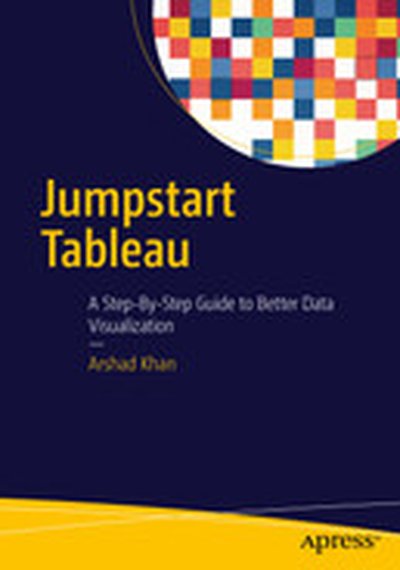
Jumpstart Tableau: A Step-By-Step Guide to Better Data Visualization

This book simplifies the use of Tableau software functionality for novice users so that they can create powerful data visualizations easily and quickly. Since it is often very difficult and expensive to provide external training on BI tools, this book aims to equip the reader with the resource they need to do it themselves. Jumpstart Tableau covers the basic reporting and analysis functions that most BI users perform in their day-to-day work. These include connecting to a data source, working with dimensions and measures, developing reports and charts, saving workbooks, filtering, swapping, sorting, formatting, grouping, creating hierarchies, forecasting, exporting, distributing, as well developing various chart types. Each exercise in Jumpstart Tableau provides screenshots that cover every step from start to finish. The exercises are based on a comprehensive sample Excel-based data source that Tableau Software (version 9) has provided, which makes it very easy to duplicate the exercises on the real software. In addition, the book: Enables readers to develop reports, queries, and visualizations Perform data analysis Execute each function in a step-by-step manner Provides the basic hands-on ability which can enable users to work up to more advanced and complex Tableau functionality Shows how to integrate individual development of content, such as tables/charts and visualizations., onto a dashboard for an effective presentation

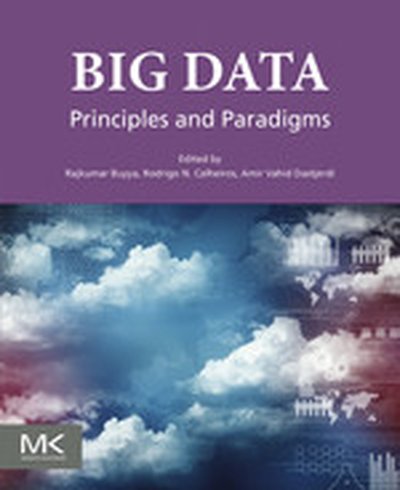
Big Data

Big Data: Principles and Paradigms captures the state-of-the-art research on the architectural aspects, technologies, and applications of Big Data. The book identifies potential future directions and technologies that facilitate insight into numerous scientific, business, and consumer applications. To help realize Big Data’s full potential, the book addresses numerous challenges, offering the conceptual and technological solutions for tackling them. These challenges include life-cycle data management, large-scale storage, flexible processing infrastructure, data modeling, scalable machine learning, data analysis algorithms, sampling techniques, and privacy and ethical issues. Covers computational platforms supporting Big Data applications Addresses key principles underlying Big Data computing Examines key developments supporting next generation Big Data platforms Explores the challenges in Big Data computing and ways to overcome them Contains expert contributors from both academia and industry

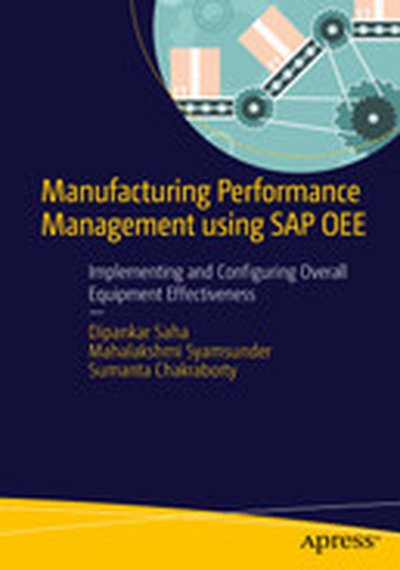
Manufacturing Performance Management using SAP OEE: Implementing and Configuring Overall Equipment Effectiveness

Learn how to configure, implement, enhance, and customize SAP OEE to address manufacturing performance management. Manufacturing Performance Management using SAP OEE will show you how to connect your business processes with your plant systems and how to integrate SAP OEE with ERP through standard workflows and shop floor systems for automated data collection. Manufacturing Performance Management using SAP OEE is a must-have comprehensive guide to implementing SAP OEE. It will ensure that SAP consultants and users understand how SAP OEE can offer solutions for manufacturing performance management in process industries. With this book in hand, managing shop floor execution effectively will become easier than ever. Authors Dipankar Saha and Mahalakshmi Symsunder, both SAP manufacturing solution experts, and Sumanta Chakraborty, product owner of SAP OEE, will explain execution and processing related concepts, manual and automatic data collection through the OEE Worker UI, and how to enhance and customize interfaces and dashboards for your specific purposes. You'll learn how to capture and categorize production and loss data and use it effectively for root-cause analysis. In addition, this book will show you: Various down-time handling scenarios. How to monitor, calculate, and define standard as well as industry-specific KPIs. How to carry out standard operational analytics for continuous improvement on the shop floor, at local plant level using MII and SAP Lumira, and also global consolidated analytics at corporation level using SAP HANA. Steps to benchmark manufacturing performance to compare similar manufacturing plants' performance, leading to a more efficient and effective shop floor. Manufacturing Performance Management using SAP OEE will provide you with in-depth coverage of SAP OEE and how to effectively leverage its features. This will allow you to efficiently manage the manufacturing process and to enhance the shop floor's overall performance, making you the sought-after SAP OEE expert in the organization. Manufacturing Performance Management using SAP OEE will provide you with in-depth coverage of SAP OEE and how to effectively leverage its features. This will allow you to efficiently manage the manufacturing process and to enhance the shop floor's overall performance, making you the sought-after SAP OEE expert in the organization. What You Will Learn Configure your ERP OEE add-on to build your plant and global hierarchy and relevant master data and KPIs Use the SAP OEE standard integration (SAP OEEINT) to integrate your ECC and OEE system to establish bi-directional integration between the enterprise and the shop floor Enable your shop floor operator on the OEE Worker UI to handle shop floor production execution Use SAP OEE as a tool for measuring manufacturing performance Enhance and customize SAP OEE to suit your specific requirements Create local plant-based reporting using SAP Lumira and MII Use standard SAP OEE HANA analytics Who This Book Is For SAP MII, ME, and OEE consultants and users who will implement and use the solution.

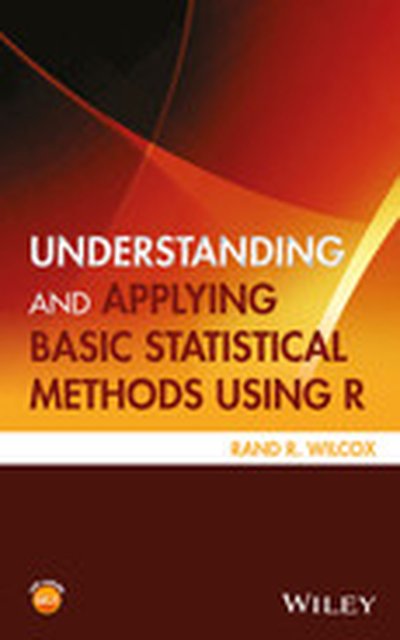
Understanding and Applying Basic Statistical Methods Using R

Features a straightforward and concise resource for introductory statistical concepts, methods, and techniques using R Understanding and Applying Basic Statistical Methods Using R uniquely bridges the gap between advances in the statistical literature and methods routinely used by non-statisticians. Providing a conceptual basis for understanding the relative merits and applications of these methods, the book features modern insights and advances relevant to basic techniques in terms of dealing with non-normality, outliers, heteroscedasticity (unequal variances), and curvature. Featuring a guide to R, the book uses R programming to explore introductory statistical concepts and standard methods for dealing with known problems associated with classic techniques. Thoroughly class-room tested, the book includes sections that focus on either R programming or computational details to help the reader become acquainted with basic concepts and principles essential in terms of understanding and applying the many methods currently available. Covering relevant material from a wide range of disciplines, Understanding and Applying Basic Statistical Methods Using R also includes: Numerous illustrations and exercises that use data to demonstrate the practical importance of multiple perspectives Discussions on common mistakes such as eliminating outliers and applying standard methods based on means using the remaining data Detailed coverage on R programming with descriptions on how to apply both classic and more modern methods using R A companion website with the data and solutions to all of the exercises Understanding and Applying Basic Statistical Methods Using R is an ideal textbook for an undergraduate and graduate-level statistics courses in the science and/or social science departments. The book can also serve as a reference for professional statisticians and other practitioners looking to better understand modern statistical methods as well as R programming.

IBM ProtecTIER Implementation and Best Practices Guide

This IBM® Redbooks® publication provides best practice guidance for planning, installing, configuring, and employing the IBM TS7600 ProtecTIER® family of products. It provides the latest best practices for the practical application of ProtecTIER Software Version 3.4. This latest release introduces the new ProtecTIER Enterprise Edition TS7650G DD6 model high performance server. This book also includes information about the revolutionary and patented IBM HyperFactor® deduplication engine, along with other data storage efficiency techniques, such as compression and defragmentation. The IBM System Storage® TS7650G ProtecTIER Deduplication Gateway and the IBM System Storage TS7620 ProtecTIER Deduplication Appliance Express are disk-based data storage systems: The Virtual Tape Library (VTL) interface is the foundation of ProtecTIER and emulates traditional automated tape libraries. For your existing ProtecTIER solution, this guide provides best practices and suggestions to boost the performance and the effectiveness of data deduplication with regards to your application platforms for your VTL and FSI (systems prior to version 3.4). When you build a ProtecTIER data deduplication environment, this guide can help IT architects and solution designers plan for the best option and scenario for data deduplication for their environments. This book can help you optimize your deduplication ratio, while reducing the hardware, power and cooling, and management costs. This Redbooks publication provides expertise that was gained from an IBM ProtecTIER System Client Technical Specialist (CTS), Development, and Quality Assurance teams. This planning should be done by the Sales Representative or IBM Business Partner, with the help of an IBM System CTS or IBM Solution Architect.

Oracle Database 12c Security Cookbook

Oracle Database 12c Security Cookbook is your essential guide to mastering the security features in Oracle Database 12c. Through a clear and practical approach, this book provides step-by-step recipes to secure your database against contemporary vulnerabilities, ensuring that your data remains safe and protected. What this Book will help me do Identify and apply the right security strategies for various Oracle Database use cases. Understand and implement Oracle Data Redaction and Virtual Private Database to protect sensitive data. Utilize privilege analysis to strengthen database security and reduce attack surfaces. Set up and enforce unified auditing to monitor user activities effectively. Learn the best practices for multi-layer database security strategies in real-world scenarios. Author(s) Maja Veselica and Zoran Pavlovic are experienced database administrators and architects with years of expertise in Oracle Database environments. They bring a meticulous and holistic approach to troubleshooting and solution development. Through their books, they aim to empower professionals with the tools and knowledge needed to excel in database management. Who is it for? This book is perfect for database administrators, developers, and architects who want a practical guide on securing Oracle Database 12c. Beginners can grasp fundamental security concepts, whereas intermediate practitioners will gain insights into advanced topics. It's ideal for those striving to implement robust security measures in their Oracle environments.

IBM PowerHA SystemMirror for i: Using DS8000 (Volume 2 of 4)

IBM® PowerHA® SystemMirror® for i is the IBM high-availability (HA), disk-based clustering solution for the IBM i operating system. When PowerHA for i is combined with IBM i clustering technology, PowerHA for i delivers a complete HA and disaster-recovery (DR) solution for business applications that run in an IBM i environment. With PowerHA for i, you can support HA capabilities with either native disk storage, IBM DS8000® storage servers, or IBM Storwize® storage servers. This IBM Redbooks® publication helps you to install, tailor, and configure IBM PowerHA SystemMirror for i with the IBM System Storage® DS8000 series. This publication provides you with planning information to prepare to use the various PowerHA offerings for the IBM DS8000 family. It also provides implementation and management information. It provides guidance about troubleshooting these solutions and identifies the documentation and data that you need to capture before you call IBM Support. This book is part of a four-book volume set that gives you a complete understanding of PowerHA for i that uses native disk storage, IBM DS8000 storage servers, or IBM Storwize storage servers. The following IBM Redbooks publications are part of this PowerHA for i volume set: IBM PowerHA SystemMirror for i: Preparation, SG24-8400 IBM PowerHA SystemMirror for i: Using IBM Storwize, SG24-8402 IBM PowerHA SystemMirror for i: Using Geographic Mirroring, SG24-8401 Important: The information that is presented in this volume set is for technical consultants, technical support staff, IT architects, and IT specialists who are responsible for providing HA and support for IBM i solutions. If you are new to HA, review the information that is presented in the first book of this volume set, IBM PowerHA SystemMirror for i: Preparation (Volume 1 of 4), SG24-8400, to get a general understanding of clustering technology, independent auxiliary storage pools (IASPs), and the PowerHA architecture.

IBM PowerHA SystemMirror for i: Using IBM Storwize (Volume 3 of 4)

IBM® PowerHA® SystemMirror® for i is the IBM high-availability (HA), disk-based clustering solution for the IBM i operating system. When combined with IBM i clustering technology, PowerHA for i delivers a complete HA and disaster recovery (DR) solution for business applications running in an IBM i environment. You can use PowerHA for i to support HA capabilities with either native disk storage, IBM DS8000® storage servers, or IBM Storwize® storage servers. Use this IBM Redbooks® publication to help you install, tailor, and configure IBM PowerHA SystemMirror for i with the IBM Storwize storage servers. This publication provides you with planning information to prepare for using the various PowerHA offerings for the IBM Storwize storage family. It also provides implementation and managing information. Finally, it provides guidance on troubleshooting these solutions and identifies the documentation that you must capture before calling support. This book is part of a four-book volume set that gives you a complete understanding of PowerHA for i by using native disk storage, IBM DS8000 storage servers, or IBM Storwize storage servers. The following publications are part of this PowerHA for i volume set: IBM PowerHA SystemMirror for i: Preparation (Volume 1 of 4), SG24-8400 IBM PowerHA SystemMirror for i: Using DS8000 (Volume 2 of 4), SG24-8403 IBM PowerHA SystemMirror for i: Using Geographic Mirroring (Volume 4 of 4), SG24-8401 Important: The information that is presented in this volume set is for technical consultants, technical support staff, IT architects, and IT specialists who are responsible for providing HA and support for IBM i solutions. If you are new to HA, you should first review the information that is presented in the first book of this volume set, IBM PowerHA SystemMirror for i: Preparation (Volume 1 of 4), SG24-8400, to get a general understanding of clustering technology, independent auxiliary storage pools (IASPs), and the PowerHA architecture.

Implementing an Optimized Analytics Solution on IBM Power Systems

This IBM® Redbooks® publication addresses topics to use the virtualization strengths of the IBM POWER8® platform to solve clients' system resource utilization challenges and maximize systems' throughput and capacity. This book addresses performance tuning topics that will help answer clients' complex analytic workload requirements, help maximize systems' resources, and provide expert-level documentation to transfer the how-to-skills to the worldwide teams. This book strengthens the position of IBM Analytics and Big Data solutions with a well-defined and documented deployment model within a POWER8 virtualized environment, offering clients a planned foundation for security, scaling, capacity, resilience, and optimization for analytics workloads. This book is targeted toward technical professionals (analytics consultants, technical support staff, IT Architects, and IT Specialists) who are responsible for providing analytics solutions and support on IBM Power Systems™.