talk-data.com talk-data.com

Topic

data

5765

tagged

Activity Trend

3 peak/qtr
2020-Q1 2026-Q1

Activities

5765 activities · Newest first

2016 Software Development Salary Survey

Early this year, more than 5000 software engineers, developers, and other programming professionals participated in O’Reilly Media’s first Software Development Salary Survey. Participants included professionals from large and small companies in a variety of industries across 51 countries and all 50 US states. With the complete survey results in this in-depth report, you’ll be able to explore the world of software development—and the careers that propel it—in great detail. With this report, you’ll learn: The top programming languages that respondents currently use professionally Where programmers make the highest salaries—by country and by regions in the US Salary ranges by industry and by specific programming language The difference in earnings between programmers who work on tiny teams vs those work on larger teams The most common programming languages that respondents no longer use in their work The most common languages that respondents intend to learn within the next couple of years Pick up a copy of this report and find out where you stand in the programming world. We encourage you to plug in your own data points to our survey model to see how you compare to other programming professionals in your industry.
Regression Analysis Microsoft® Excel®

This is today’s most complete guide to regression analysis with Microsoft® Excel for any business analytics or research task. Drawing on 25 years of advanced statistical experience, Microsoft MVP Conrad Carlberg shows how to use Excel’s regression-related worksheet functions to perform a wide spectrum of practical analyses. Carlberg clearly explains all the theory you’ll need to avoid mistakes, understand what your regressions are really doing, and evaluate analyses performed by others. From simple correlations and t-tests through multiple analysis of covariance, Carlberg offers hands-on, step-by-step walkthroughs using meaningful examples. He discusses the consequences of using each option and argument, points out idiosyncrasies and controversies associated with Excel’s regression functions, and shows how to use them reliably in fields ranging from medical research to financial analysis to operations. You don’t need expensive software or a doctorate in statistics to work with regression analyses. Microsoft Excel has all the tools you need—and this book has all the knowledge! Understand what regression analysis can and can’t do, and why Master regression-based functions built into all recent versions of Excel Work with correlation and simple regression Make the most of Excel’s improved LINEST() function Plan and perform multiple regression Distinguish the assumptions that matter from the ones that don’t Extend your analysis options by using regression instead of traditional analysis of variance Add covariates to your analysis to reduce bias and increase statistical power

Introducing Data Science

Introducing Data Science teaches you how to accomplish the fundamental tasks that occupy data scientists. Using the Python language and common Python libraries, you'll experience firsthand the challenges of dealing with data at scale and gain a solid foundation in data science. About the Technology Many companies need developers with data science skills to work on projects ranging from social media marketing to machine learning. Discovering what you need to learn to begin a career as a data scientist can seem bewildering. This book is designed to help you get started. About the Book Introducing Data Science explains vital data science concepts and teaches you how to accomplish the fundamental tasks that occupy data scientists. You'll explore data visualization, graph databases, the use of NoSQL, and the data science process. You'll use the Python language and common Python libraries as you experience firsthand the challenges of dealing with data at scale. Discover how Python allows you to gain insights from data sets so big that they need to be stored on multiple machines, or from data moving so quickly that no single machine can handle it. This book gives you hands-on experience with the most popular Python data science libraries, Scikit-learn and StatsModels. After reading this book, you'll have the solid foundation you need to start a career in data science. What's Inside Handling large data Introduction to machine learning Using Python to work with data Writing data science algorithms About the Reader This book assumes you're comfortable reading code in Python or a similar language, such as C, Ruby, or JavaScript. No prior experience with data science is required. About the Authors Davy Cielen, Arno D. B. Meysman, and Mohamed Ali are the founders and managing partners of Optimately and Maiton, where they focus on developing data science projects and solutions in various sectors. Quotes Read this book if you want to get a quick overview of data science, with lots of examples to get you started! - Alvin Raj, Oracle The map that will help you navigate the data science oceans. - Marius Butuc, Shopify Covers the processes involved in data science from end to end… A complete overview. - Heather Campbell, Kainos A must-read for anyone who wants to get into the data science world. - Hector Cuesta, Big Data Bootcamp

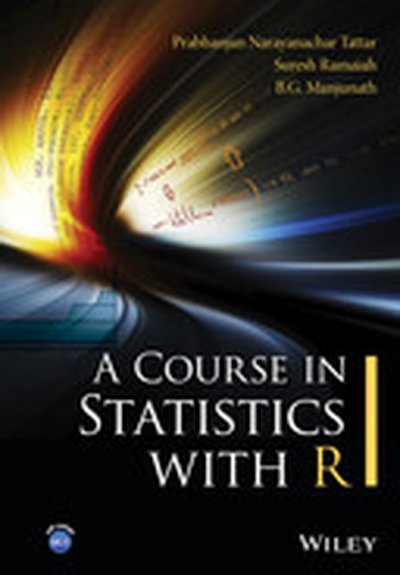
A Course in Statistics with R

Integrates the theory and applications of statistics using R A Course in Statistics with R has been written to bridge the gap between theory and applications and explain how mathematical expressions are converted into R programs. The book has been primarily designed as a useful companion for a Masters student during each semester of the course, but will also help applied statisticians in revisiting the underpinnings of the subject. With this dual goal in mind, the book begins with R basics and quickly covers visualization and exploratory analysis. Probability and statistical inference, inclusive of classical, nonparametric, and Bayesian schools, is developed with definitions, motivations, mathematical expression and R programs in a way which will help the reader to understand the mathematical development as well as R implementation. Linear regression models, experimental designs, multivariate analysis, and categorical data analysis are treated in a way which makes effective use of visualization techniques and the related statistical techniques underlying them through practical applications, and hence helps the reader to achieve a clear understanding of the associated statistical models. Key features: Integrates R basics with statistical concepts Provides graphical presentations inclusive of mathematical expressions Aids understanding of limit theorems of probability with and without the simulation approach Presents detailed algorithmic development of statistical models from scratch Includes practical applications with over 50 data sets

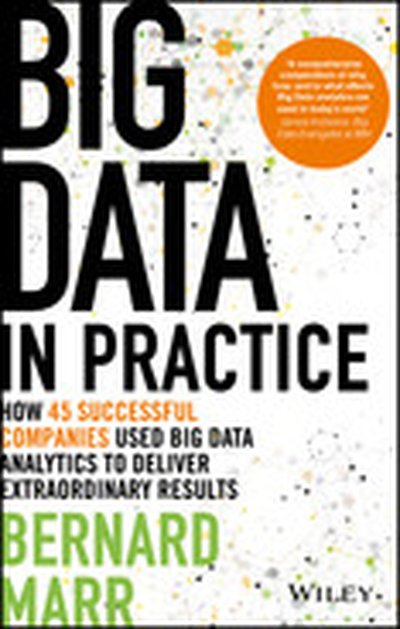
Big Data in Practice

The best-selling author of Big Data is back, this time with a unique and in-depth insight into how specific companies use big data. Big data is on the tip of everyone's tongue. Everyone understands its power and importance, but many fail to grasp the actionable steps and resources required to utilise it effectively. This book fills the knowledge gap by showing how major companies are using big data every day, from an up-close, on-the-ground perspective. From technology, media and retail, to sport teams, government agencies and financial institutions, learn the actual strategies and processes being used to learn about customers, improve manufacturing, spur innovation, improve safety and so much more. Organised for easy dip-in navigation, each chapter follows the same structure to give you the information you need quickly. For each company profiled, learn what data was used, what problem it solved and the processes put it place to make it practical, as well as the technical details, challenges and lessons learned from each unique scenario. Learn how predictive analytics helps Amazon, Target, John Deere and Apple understand their customers Discover how big data is behind the success of Walmart, LinkedIn, Microsoft and more Learn how big data is changing medicine, law enforcement, hospitality, fashion, science and banking Develop your own big data strategy by accessing additional reading materials at the end of each chapter

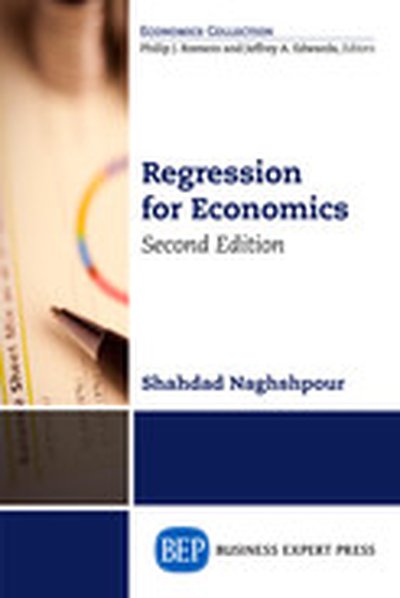
Regression for Economics, Second Edition

Regression analysis can be used to establish causal relationships between factors and the response variable. However, in order to be able to do so, economic theory must be used to provide the causal relationship and then regression analysis is applied to verify the validity of the theory. Regression analysis is the most commonly used analytical tool and can be understood without complex mathematics.  This book simplifies and demystifies regression analysis. All the examples are from economics and in almost all the cases, real data is used to show the application of the method. By limiting the use of mathematical symbols, the author enables a logical reader to learn regression, without shortchanging the subject.  The book is targeted to all business students and executives who need to understand the concept of regression for practical and professional purposes.

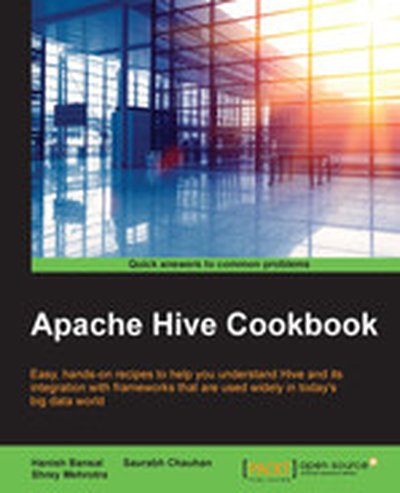
Apache Hive Cookbook

Apache Hive Cookbook is a comprehensive resource for mastering Apache Hive, a tool that bridges the gap between SQL and Big Data processing. Through guided recipes, you'll acquire essential skills in Hive query development, optimization, and integration with modern big data frameworks. What this Book will help me do Design efficient Hive query structures for big data analytics. Optimize data storage and query execution using partitions and buckets. Integrate Hive seamlessly with frameworks like Spark and Hadoop. Understand and utilize the HiveQL syntax to perform advanced analytical processing. Implement practical solutions to secure, maintain, and scale Hive environments. Author(s) Hanish Bansal, Saurabh Chauhan, and Shrey Mehrotra bring their extensive expertise in big data technologies and Hive to this cookbook. With years of practical experience and deep technical knowledge, they offer a collection of solutions and best practices that reflect real-world use cases. Their commitment to clarity and depth makes this book an invaluable resource for exploring Hive to its fullest potential. Who is it for? This book is perfect for data professionals, engineers, and developers looking to enhance their capabilities in big data analytics using Hive. It caters to those with a foundational understanding of big data frameworks and some familiarity with SQL. Whether you're planning to optimize data handling or integrate Hive with other data tools, this guide helps you achieve your goals. Step into the world of efficient data analytics with Apache Hive through structured learning paths.

Dynamic SQL: Applications, Performance, and Security

This book is an introduction and deep-dive into the many uses of dynamic SQL in Microsoft SQL Server. Dynamic SQL is key to large-scale searching based upon user-entered criteria. It's also useful in generating value-lists, in dynamic pivoting of data for business intelligence reporting, and for customizing database objects and querying their structure. Executing dynamic SQL is at the heart of applications such as business intelligence dashboards that need to be fluid and respond instantly to changing user needs as those users explore their data and view the results. Yet dynamic SQL is feared by many due to concerns over SQL injection attacks. Reading Dynamic SQL: Applications, Performance, and Security is your opportunity to learn and master an often misunderstood feature, including security and SQL injection. All aspects of security relevant to dynamic SQL are discussed in this book. You will learn many ways to save time and develop code more efficiently, and you will practice directly with security scenarios that threaten companies around the world every day. Dynamic SQL: Applications, Performance, and Security helps you bring the productivity and user-satisfaction of flexible and responsive applications to your organization safely and securely. Your organization's increased ability to respond to rapidly changing business scenarios will build competitive advantage in an increasingly crowded and competitive global marketplace. Discusses many applications of dynamic SQL, both simple and complex. Explains each example with demos that can be run at home and on your laptop. Helps you to identify when dynamic SQL can offer superior performance. Pays attention to security and best practices to ensure safety of your data. What You Will Learn Build flexible applications that respond fast to changing business needs. Take advantage of unconventional but productive uses of dynamic SQL. Protect your data from attack through best-practices in your implementations. Know about SQL Injection and be confident in your defenses against it Run at high performance by optimizing dynamic SQL in your applications. Troubleshoot and debug dynamic SQL to ensure correct results. Who This Book is For Dynamic SQL: Applications, Performance, and Security is for developers and database administrators looking to hone and build their T-SQL coding skills. The book is ideal for advanced users wanting to plumb the depths of application flexibility and troubleshoot performance issues involving dynamic SQL. The book is also ideal for beginners wanting to learn what dynamic SQL is about and how it can help them deliver competitive advantage to their organizations.

Learning Probabilistic Graphical Models in R

Explore the fundamentals of probabilistic graphical models (PGM) with hands-on examples using R. This book helps you translate theoretical concepts into practical solutions, addressing complex problems with Bayesian and Markov networks. It's written to demystify PGMs, equipping you to create robust models for inference, learning, and prediction. What this Book will help me do Understand and implement probabilistic graphical models, including Bayesian and Markov networks, directly in R. Learn to use various R packages for performing inference and analyzing probabilistic models. Master the essentials of Bayesian methods, transitioning to advanced concepts with clear, step-by-step guidance. Familiarize yourself with methods like PCA and ICA for analyzing and reducing complex data dimensions. Develop practical skills to apply PGM techniques to machine learning challenges and real-world data problems. Author(s) The authors bring diverse expertise in probabilistic modeling, R programming, and applied machine learning. They are passionate educators and technical writers, focusing on breaking down complex theories into accessible knowledge. Their writing emphasizes practical demonstration, leveraging their industry and academic experiences. Who is it for? This book is designed for data scientists, engineers, and machine learning enthusiasts who wish to enhance their understanding of probabilistic graphical models. Whether you're curious about Bayesian methods or looking to apply PGM approaches to data-rich challenges, this guide is perfect for learners at an intermediate level, offering practical insights and real-world applications.

Practical Data Analysis Cookbook

Practical Data Analysis Cookbook takes you on a comprehensive journey to mastering data exploration and analysis using Python. From data cleaning and transformation to building predictive and classification models, this book provides practical recipes for tackling real-world data challenges and extracting valuable insights. What this Book will help me do Efficiently clean, transform, and explore datasets using tools like pandas and OpenRefine. Develop predictive models for time series and other datasets using Python libraries such as scikit-learn and Statsmodels. Apply clustering and classification techniques to real-world data problems to gain actionable insights. Explore advanced topics like natural language processing and graph theory concepts using specialized tools. Build the skills to solve practical data modeling problems encountered in a data science role. Author(s) None Drabas is an experienced data scientist and author who specializes in Python-based data analysis. With a background in tackling intricate data-driven problems, None brings real-world experience to the readers. In creating this Cookbook, None adopts a step-by-step approach, making complex techniques accessible to learners of all backgrounds. Who is it for? If you are a data analyst, data scientist, or someone interested in exploring Python for practical data problems, this book is for you. It suits beginners starting their data journey and intermediate professionals looking to enhance their toolset. With clear instructions, it's ideal for anyone willing to build practical skills and tackle real-world challenges in data analysis.

RStudio for R Statistical Computing Cookbook

Dive into the practical applications of RStudio with this comprehensive cookbook, designed to help analysts and data scientists unlock the full potential of RStudio's features. You'll enhance your statistical computing, data visualization, and reporting skills through over 50 carefully curated recipes-each seamlessly blending conceptual understanding with hands-on implementation. What this Book will help me do Master the latest advanced R console features for a smooth coding experience. Create dynamic and interactive visualizations to effectively represent data insights. Improve R project management to organize and maintain reproducibility in your analyses. Apply statistical and predictive modeling techniques tailored for diverse application domains. Develop interactive web applications and detailed reports with R Markdown and Shiny. Author(s) Andrea Cirillo is an experienced data scientist with a deep knowledge of statistical computing and data analysis. Through his professional and academic career, Andrea has developed a knack for teaching and simplifying complex programming and statistics concepts. His passion is helping others advance their skills with practical, hands-on resources. Who is it for? This book is tailored for data scientists, statisticians, and R programmers with foundational R programming skills. It is ideal for professionals who aim to enhance their fluency with RStudio and improve their statistical analysis capabilities. Whether you're structuring your first analytical project or refining your data visualization techniques, this book is designed to assist your growth. Overall, the audience includes anyone seeking practical expertise in RStudio for impactful data analysis.

NumPy Essentials

NumPy Essentials is your guide to mastering NumPy, the powerful Python library for scientific computing. In this book, you'll discover how to manipulate arrays, perform mathematical operations, and create advanced models. With its clear examples and practical exercises, you'll build the skills needed to efficiently tackle analytical challenges. What this Book will help me do Learn to manipulate data efficiently with NumPy array objects and universal functions. Gain proficiency in solving linear algebra problems using NumPy's powerful modules. Master regression techniques and curve fitting for statistical modeling. Apply Fourier Transform and spectral analysis in solving real-world problems. Integrate and optimize Python code using Cython and the NumPy C API for higher performance. Author(s) Jaidev Deshpande, None Chin, Tanmay Dutta, and Shane Holloway are seasoned developers passionate about Python and scientific computing. With experience across diverse projects, they bring practical insights and accessible explanations to their writing. Who is it for? This book is ideal for Python developers seeking to sharpen their numerical computing skills. Prior experience with Python is expected, as the content progresses quickly to advanced topics. Whether you're working in data analysis, scientific research, or machine learning, this book will provide valuable tools and insights.

Big Data

Big Data: Storage, Sharing, and Security examines Big Data management from an R&D perspective. It covers the 3S designs-storage, sharing, and security-through detailed descriptions of Big Data concepts and implementations. Presenting the contributions of recognized Big Data experts from around the world, the book contains more than 450 pages of technical details on the most important implementation aspects regarding Big Data.

Good Charts

Dataviz—the new language of business A good visualization can communicate the nature and potential impact of information and ideas more powerfully than any other form of communication. For a long time “dataviz” was left to specialists—data scientists and professional designers. No longer. A new generation of tools and massive amounts of available data make it easy for anyone to create visualizations that communicate ideas far more effectively than generic spreadsheet charts ever could. What’s more, building good charts is quickly becoming a need-to-have skill for managers. If you’re not doing it, other managers are, and they’re getting noticed for it and getting credit for contributing to your company’s success. In Good Charts, dataviz maven Scott Berinato provides an essential guide to how visualization works and how to use this new language to impress and persuade. Dataviz today is where spreadsheets and word processors were in the early 1980s—on the cusp of changing how we work. Berinato lays out a system for thinking visually and building better charts through a process of talking, sketching, and prototyping. This book is much more than a set of static rules for making visualizations. It taps into both well-established and cutting-edge research in visual perception and neuroscience, as well as the emerging field of visualization science, to explore why good charts (and bad ones) create “feelings behind our eyes.” Along the way, Berinato also includes many engaging vignettes of dataviz pros, illustrating the ideas in practice. Good Charts will help you turn plain, uninspiring charts that merely present information into smart, effective visualizations that powerfully convey ideas.

IBM Power Systems HMC Implementation and Usage Guide

The IBM® Hardware Management Console (HMC) provides to systems administrators a tool for planning, deploying, and managing IBM Power Systems™ servers. This IBM Redbooks® publication is an extension of IBM Power Systems HMC Implementation and Usage Guide, SG24-7491 and also merges updated information from IBM Power Systems Hardware Management Console: Version 8 Release 8.1.0 Enhancements, SG24-8232. It explains the new features of IBM Power Systems Hardware Management Console Version V8.8.1.0 through V8.8.4.0. The major functions that the HMC provides are Power Systems server hardware management and virtualization (partition) management. Further information about virtualization management is in the following publications: IBM PowerVM Virtualization Managing and Monitoring, SG24-7590 IBM PowerVM Virtualization Introduction and Configuration, SG24-7940 IBM PowerVM Enhancements What is New in 2013, SG24-8198 IBM Power Systems SR-IOV: Technical Overview and Introduction, REDP-5065 The following features of HMC V8.8.1.0 through HMC V8.8.4.0 are described in this book: HMC V8.8.1.0 enhancements HMC V8.8.4.0 enhancements System and Partition Templates HMC and IBM PowerVM® Simplification Enhancement Manage Partition Enhancement Performance and Capacity Monitoring HMC V8.8.4.0 upgrade changes

External Procedures, Triggers, and User-Defined Functions on IBM DB2 for i

Procedures, triggers, and user-defined functions (UDFs) are the key database software features for developing robust and distributed applications. IBM Universal Database™ for i (IBM DB2® for i) supported these features for many years, and they were enhanced in V5R1, V5R2, and V5R3 of IBM® OS/400® and V5R4 of IBM i5/OS™. This IBM Redbooks® publication includes several of the announced features for procedures, triggers, and UDFs in V5R1, V5R2, V5R3, and V5R4. This book includes suggestions, guidelines, and practical examples to help you effectively develop IBM DB2 for i procedures, triggers, and UDFs. The following topics are covered in this book: External stored procedures and triggers Java procedures (both Java Database Connectivity (JDBC) and Structured Query Language for Java (SQLJ)) External triggers External UDFs This publication also offers examples that were developed in several programming languages, including RPG, COBOL, C, Java, and Visual Basic, by using native and SQL data access interfaces. This book is part of the original IBM Redbooks publication, Stored Procedures, Triggers, and User-Defined Functions on DB2 Universal Database for iSeries, SG24-6503-02, that covered external procedures, triggers, and functions, and also SQL procedures, triggers, and functions. All of the information that relates to external routines was left in this publication. All of the information that relates to SQL routines was rewritten and updated. This information is in the new IBM Redbooks publication, SQL Procedures, Triggers, and Functions on IBM DB2 for i, SG24-8326. This book is intended for anyone who wants to develop IBM DB2 for i procedures, triggers, and UDFs. Before you read this book, you need to know about relational database technology and the application development environment on the IBM i server.

Mastering QlikView Data Visualization

"Mastering QlikView Data Visualization" is your essential guide to becoming proficient in advanced data visualization and analysis using QlikView. Through practical examples and real-world scenarios, this book enables you to create insightful and meaningful QlikView applications tailored to business needs. What this Book will help me do Design and implement advanced QlikView applications using realistic data and scenarios. Understand and fulfill business requirements across varied organizational departments. Create advanced charts and visualizations including frequency polygons and XmR charts. Integrate geographical, sentiment, and planning analysis into your QlikView models. Develop troubleshooting strategies for common QlikView data visualization challenges. Author(s) None Pover, an expert in data analytics and QlikView technologies, has extensive experience in implementing QlikView applications to address real-world business challenges. They are passionate about teaching practical solutions, ensuring readers gain actionable insights. With hands-on expertise, the author delivers clear, structured guidance in technical learning. Who is it for? If you're a QlikView developer wanting to go beyond the basics, this book is perfect for you. It is designed for individuals who have foundational knowledge of QlikView and are looking to enhance their ability to handle advanced projects. Whether you're focusing on analytics for sales, finance, or operations, you'll find this guide extremely useful.

SQL Procedures, Triggers, and Functions on IBM DB2 for i

Structured Query Language (SQL) procedures, triggers, and functions, which are also known as user-defined functions (UDFs), are the key database features for developing robust and distributed applications. IBM® DB2® for i supported these features for many years, and they are enhanced in IBM i versions 6.1, 7.1, and 7.2. DB2 for i refers to the IBM DB2 family member and relational database management system that is integrated within the IBM Power operating system that is known as IBM i. This IBM Redbooks® publication includes several of the announced features for SQL procedures, triggers, and functions in IBM i versions 6.1, 7.1, and 7.2. This book includes suggestions, guidelines, and practical examples to develop DB2 for i SQL procedures, triggers, and functions effectively. This book covers the following topics: Introduction to the SQL/Persistent Stored Modules (PSM) language, which is used in SQL procedures, triggers, and functions SQL procedures SQL triggers SQL functions This book is for IBM i database engineers and data-centric developers who strive to provide flexible, extensible, agile, and scalable database solutions that meet business requirements in a timely manner. Before you read this book, you need to know about relational database technology and the application development environment on the IBM Power Systems™ with the IBM i operating system.

Practical Maintenance Plans in SQL Server: Automation for the DBA

This book is a complete guide to setting up and maintaining maintenance plans for SQL Server Database Administrators. Maintenance plans too often consist of a backup task and that's it, but there is so much more that can and must be done to ensure the integrity of your most important company resource -- the data you are tasked to manage and safeguard. This book walks even the newest of users through creating a powerful, automated maintenance plan. Automate your job using SQL Server Agent to leverage the power of Maintenance Plans to deliver real, proactive solutions to common issues. Schedule common tasks such as backups and index rebuilds to run automatically, and get early-warning notifications of impending problems relating to resource usage and query performance. By the time your boss knows to call you about a problem, you'll have already called him to describe your solution. The large majority of books never really cover the topic of inheriting a database server with multiple live databases; the common thread is that the databases will be created and maintained by the reader forever and ever. In the real world, that scenario rarely happens. covers that scenario and provides you with the knowledge and tools needed to get comfortable writing your own maintenance plans for any SQL Server database, whether created by you or inherited. Practical Maintenance Plans in SQL Server Shows the different tasks that can be run in a maintenance plan. Explains how and why those tasks can be implemented. Provides a roadmap to creating your own custom maintenance plan. What You Will Learn Implement a completely automated backup maintenance plan Be alerted to performance problems and outages ahead of your boss Learn the different types of database maintenance tasks Plan the workflow of tasks within a maintenance plan Automate your work by implementing custom maintenance plans Who This Book Is For is for any level of database administrator, but specifically it's for those administrators with a real need to set up a powerful maintenance plan quickly. New and seasoned administrators will appreciate the book for its robust learning pattern of visual aids in combination with explanations and scenarios. P Practical Maintenance Plans in SQL Server is the perfect "new hire" gift for new database administrators in any organization. ractical Maintenance Plans in SQL Server

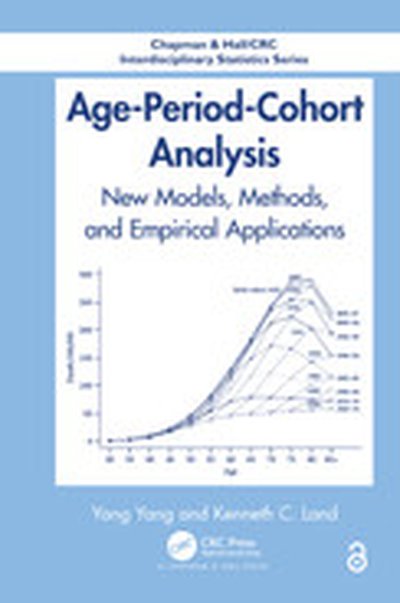
Age-Period-Cohort Analysis

This book explores the ways in which statistical models, methods, and research designs can be used to open new possibilities for APC analysis. Within a single, consistent HAPC-GLMM statistical modeling framework, the authors synthesize APC models and methods for three research designs: age-by-time period tables of population rates or proportions, repeated cross-section sample surveys, and accelerated longitudinal panel studies. They show how the empirical application of the models to various problems leads to many fascinating findings on how outcome variables develop along the age, period, and cohort dimensions.