talk-data.com talk-data.com

Topic

data

5765

tagged

Activity Trend

3 peak/qtr
2020-Q1 2026-Q1

Activities

5765 activities · Newest first

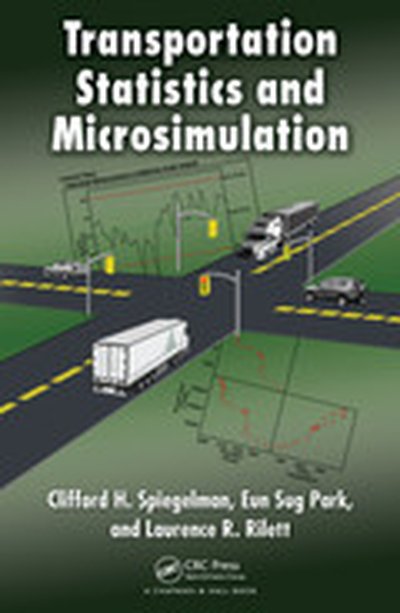
Transportation Statistics and Microsimulation

By discussing statistical concepts in the context of transportation planning and operations, this text provides the necessary background for making informed transportation-related decisions. It explains the why behind standard methods and uses real-world transportation examples and problems to illustrate key concepts. The book covers the statistical techniques most frequently employed by transportation and pavement professionals. To familiarize readers with the underlying theory and equations, it contains problems that can be solved using SAS's JMP package, which enables users to interactively explore and visualize data.

Oracle Database Problem Solving and Troubleshooting Handbook

An Expert Guide for Solving Complex Oracle Database Problems delivers comprehensive, practical, and up-to-date advice for running the Oracle Database reliably and efficiently in complex production environments. Seven leading Oracle experts have brought together an unmatched collection of proven solutions, hands-on examples, and step-by-step tips for Oracle Database 12 Oracle Database Problem Solving and Troubleshooting Handbook c, 11 g, and other recent versions of Oracle Database. Every solution is crafted to help experienced Oracle DBAs and DMAs understand and fix serious problems as rapidly as possible. The authors cover LOB segments, UNDO tablespaces, high GC buffer wait events, poor query response times, latch contention, indexing, XA distributed transactions, RMAN backup/recovery, and much more. They also offer in-depth coverage of a wide range of topics, including DDL optimization, VLDB tuning, database forensics, adaptive cursor sharing, data pumps, data migration, SSDs, indexes, and how to go about fixing Oracle RAC problems. Learn how to Choose the quickest path to solve high-impact problems Use modern best practices to make your day more efficient and predictable Construct your “Call 9-1-1 plan” for future database emergencies Proactively perform maintenance to improve your environment’s stability Save time with industry-standard tools and scripts Register your product at informit.com/register for convenient access to downloads, updates, and corrections as they become available.

Architecting Data Lakes

Many organizations use Hadoop-driven data lakes as an adjunct staging area for their enterprise data warehouses (EDW). But for those companies ready to take the plunge, a data lake is far more useful as a one-stop-shop for extracting insights from their vast collection of data. With this eBook, you’ll learn best practices for building, maintaining, and deriving value from a Hadoop data lake in production environments. Authors Alice LaPlante and Ben Sharma explain how a data lake will enable your organization to manage an increasing volume of datasets—from blog postings and product reviews to streaming data—and to discover important relationships between them. Whether you want to control administrative costs in healthcare or reduce risk in financial services, this ebook addresses the architectural considerations and required capabilities you need to build your own data lake. With this report, you’ll learn: The key attributes of a data lake, including its ability to store information in native formats for later processing Why implementing data management and governance in your data lake is crucial How to address various challenges for building and managing a data lake Self-service options that enable different users to access the data lake without help from IT Emerging trends that will shape the future of data lakes

Getting Analytics Right

Ask vital questions before you dive into data Are your big data and analytics capabilities up to par? Nearly half of the global company executives in a recent Forbes Insight/Teradata survey certainly don’t think theirs are. This new book from O’Reilly examines how things typically go wrong in the data analytics process, and introduces a question-first, data-second strategy that can help your company close the gap between being analytics-invested and truly data-driven. Authors from Tamr, Inc. share insights into why analytics projects often fail, and offer solutions based on their combined experience in engineering, architecture, product strategizing, and marketing. You’ll learn how projects often start from the wrong place, take too long, and don’t go far enough—missteps that lead to incomplete, late, or useless answers to critical business questions. Find out how their question-first, data-second approach—fueled by vastly improved data preparation platforms and cataloging software—can help you create human-machine analytics solutions designed specifically to produce better answers, faster. Getting Analytics Right was written and presented by people at Tamr, Inc., including Nidhi Aggarwal, Product and Strategy Lead; Byron Berk, Customer Success Lead; Gideon Goldin, Senior UX Architect; Matt Holzapfel, Product Marketing; and Eliot Knudsen, Field Engineer. Tamr, a Cambridge, Massachusetts-based startup, helps companies understand and unify their disparate databases.

Mapping Workflows and Managing Knowledge

This book is Volume II of simple but powerful tools for performance improvement. It is written for managers, analysts, and consultants who realize the value that system dynamic modeling can bring to companies and organizations, and would like to have that capability without a degree in math or computer science. It features the iThink modeling program, which requires no extensive knowledge of math; instead, iThink uses a small set of symbols and rules to allow any keen observer of a system to create models graphically—the user literally draws a graphic of the system within the program and works from that. In Chapter 1, the author describes his own experiences with modeling, the growth and development of modeling software, and makes the case for its value. Chapter 2 is an overview of iThink symbols and rules, sufficient to enable the reader to interpret and understand iThink models; while the program has many advanced features, a great many models are based on the fundamentals in this chapter. Chapter 3 provides guidelines for converting workflow-mapping models into iThink dynamic models, and discusses approaches to building models from scratch. This approach to modeling is consistent with the author’s approach to workflow mapping and analysis, which uses a small symbol set and related discipline to map workflows in any company or organization, without the need for expensive software or extended training. That process is described in this volume of the series, and these maps are often the foundation for modeling the system as a dynamic entity.

Relational Database Design and Implementation, 4th Edition

Relational Database Design and Implementation: Clearly Explained, Fourth Edition, provides the conceptual and practical information necessary to develop a database design and management scheme that ensures data accuracy and user satisfaction while optimizing performance. Database systems underlie the large majority of business information systems. Most of those in use today are based on the relational data model, a way of representing data and data relationships using only two-dimensional tables. This book covers relational database theory as well as providing a solid introduction to SQL, the international standard for the relational database data manipulation language. The book begins by reviewing basic concepts of databases and database design, then turns to creating, populating, and retrieving data using SQL. Topics such as the relational data model, normalization, data entities, and Codd's Rules (and why they are important) are covered clearly and concisely. In addition, the book looks at the impact of big data on relational databases and the option of using NoSQL databases for that purpose. Features updated and expanded coverage of SQL and new material on big data, cloud computing, and object-relational databases Presents design approaches that ensure data accuracy and consistency and help boost performance Includes three case studies, each illustrating a different database design challenge Reviews the basic concepts of databases and database design, then turns to creating, populating, and retrieving data using SQL

The Hadoop Performance Myth

The wish lists of many data-driven organizations seem reasonable enough. They’d like to capitalize on real-time data analysis, move beyond batch processing for time-critical insights, allow multiple users to share cluster resources, and provide predictable service levels. However, fundamental performance limitations of complex distributed systems such as Hadoop prevent much of this from happening. In this report, Courtney Webster examines the root cause of these performance problems and explains why best practices for mitigating them—cluster tuning, provisioning, and even cluster isolation for mission critical jobs—don’t provide viable, scalable, or long-term solutions. Organizations have been pushing Hadoop and other distributed systems to their performance breaking points as they seek to use clusters as shared resources across multiple business units and individual users. Once they hit this performance wall, companies will find it difficult to deliver on the big data promise at scale. Read this report to find out what the implications are for your organization.

Informatics for Health Professionals

Provides healthcare students and professionals with the foundational knowledge to integrate informatics principles into clinical practice. Key content focuses on current informatics research and practice including but not limited to: technology trends, information security advances, health information exchanges, care coordination, transition technologies, ethical and legislative aspects, social media use, mobile health, bioinformatics, knowledge management, data mining, and more. Helpful learning tools include case studies, provoking questions to prompt discussion and application of the material learned, research briefs to encourage the reader to access current research, and call-outs which focus on cutting-edge innovations, meaningful use, and patient safety.

Model-Based Testing Essentials - Guide to the ISTQB Certified Model-Based Tester

Provides a practical and comprehensive introduction to the key aspects of model-based testing as taught in the ISTQB® Model-Based Tester—Foundation Level Certification Syllabus This book covers the essentials of Model-Based Testing (MBT) needed to pass the ISTQB® Foundation Level Model-Based Tester Certification. The text begins with an introduction to MBT, covering both the benefits and the limitations of MBT. The authors review the various approaches to model-based testing, explaining the fundamental processes in MBT, the different modeling languages used, common good modeling practices, and the typical mistakes and pitfalls. The book explains the specifics of MBT test implementation, the dependencies on modeling and test generation activities, and the steps required to automate the generated test cases. The text discusses the introduction of MBT in a company, presenting metrics to measure success and good practices to apply. Provides case studies illustrating different approaches to Model-Based Testing Includes in-text exercises to encourage readers to practice modeling and test generation activities Contains appendices with solutions to the in-text exercises, a short quiz to test readers, along with additional information Model-Based Testing Essentials – Guide to the ISTQB® Certified Model-Based Tester – Foundation Level is written primarily for participants of the ISTQB® Certification: software engineers, test engineers, software developers, and anybody else involved in software quality assurance. This book can also be used for anyone who wants a deeper understanding of software testing and of the use of models for test generation.

Business Intelligence Strategy and Big Data Analytics

Business Intelligence Strategy and Big Data Analytics is written for business leaders, managers, and analysts - people who are involved with advancing the use of BI at their companies or who need to better understand what BI is and how it can be used to improve profitability. It is written from a general management perspective, and it draws on observations at 12 companies whose annual revenues range between $500 million and $20 billion. Over the past 15 years, my company has formulated vendor-neutral business-focused BI strategies and program execution plans in collaboration with manufacturers, distributors, retailers, logistics companies, insurers, investment companies, credit unions, and utilities, among others. It is through these experiences that we have validated business-driven BI strategy formulation methods and identified common enterprise BI program execution challenges. In recent years, terms like “big data” and “big data analytics” have been introduced into the business and technical lexicon. Upon close examination, the newer terminology is about the same thing that BI has always been about: analyzing the vast amounts of data that companies generate and/or purchase in the course of business as a means of improving profitability and competitiveness. Accordingly, we will use the terms BI and business intelligence throughout the book, and we will discuss the newer concepts like big data as appropriate. More broadly, the goal of this book is to share methods and observations that will help companies achieve BI success and thereby increase revenues, reduce costs, or both. Provides ideas for improving the business performance of one’s company or business functions Emphasizes proven, practical, step-by-step methods that readers can readily apply in their companies Includes exercises and case studies with road-tested advice about formulating BI strategies and program plans

IBM System Storage DS8000 Performance Monitoring and Tuning

This IBM® Redbooks® publication provides guidance about how to configure, monitor, and manage your IBM DS8880 storage systems to achieve optimum performance, and it also covers the IBM DS8870 storage system. It describes the DS8880 performance features and characteristics, including hardware-related performance features, synergy items for certain operating systems, and other functions, such as IBM Easy Tier® and the DS8000® I/O Priority Manager. The book also describes specific performance considerations that apply to particular host environments, including database applications. This book also outlines the various tools that are available for monitoring and measuring I/O performance for different server environments, and it describes how to monitor the performance of the entire DS8000 storage system. This book is intended for individuals who want to maximize the performance of their DS8880 and DS8870 storage systems and investigate the planning and monitoring tools that are available. The IBM DS8880 storage system features, as described in this book, are available for the DS8880 model family with R8.0 release bundles (Licensed Machine Code (LMC) level 7.8.0).

Global Business Analytics Models: Concepts and Applications in Predictive, Healthcare, Supply Chain, and Finance Analytics

THE COMPLETE GUIDE TO USING ANALYTICS TO MANAGE RISK AND UNCERTAINTY IN COMPLEX GLOBAL BUSINESS ENVIRONMENTS Practical techniques for developing reliable, actionable intelligence–and using it to craft strategy Analytical opportunities to solve key managerial problems in global enterprises Written for working managers: packed with realistic, useful examples This guide helps global managers use modern analytics to gain reliable, actionable, and timely business intelligence–and use it to manage risk, build winning strategies, and solve urgent problems. Dr. Hokey Min offers a practical, easy-to-understand overview of business analytics in a global context, focusing especially on managerial and strategic implications. After demystifying today’s core quantitative tools, he demonstrates them at work in a wide spectrum of global applications. You’ll build models to help segment global markets, forecast demand, assess risk, plan financing, optimize supply chains, and more. Along the way, you’ll find practical guidance for developing analytic thinking, operationalizing Big Data in global environments, and preparing for future analytical innovations. Whether you’re a global executive, strategist, analyst, marketer, supply chain professional, student or researcher, this book will help you drive real value from analytics–in smarter decisions, improved strategy, and better management. In today’s global business environments characterized by growing complexity, volatility, and uncertainty, business analytics has become an indispensable tool for managing these challenges. Specifically, global managers need analytics expertise to solve problems, identify opportunities, shape strategy, mitigate risk, and improve their day-to-day operational efficiency. Now, for the first time, there’s an analytics guide designed specifically for decision-makers in global organizations. Leveraging his experience teaching a number of students and training hundreds of managers and executives, Dr. Hokey Min demystifies the principles and tools of modern business analytics, and demonstrates their real-world use in global business. First, Dr. Min identifies key success factors and mindsets, helping you establish the preconditions for effective analysis. Next, he walks you through the practicalities of collecting, organizing, and analyzing Big Data, and developing models to transform them into actionable insight. Building on these foundations, he illustrates core analytical applications in finance, healthcare, and global supply chains. He concludes by previewing emerging trends in analytics, including the newest tools for automated decision-making. Compare today’s key quantitative tools Stats, data mining, OR, and simulation: how they work, when to use them Get the right data… …and get the data right Predict the future… …and sense its arrival sooner than others can Implement high-value analytics applications… …in finance, supply chains, healthcare, and beyond

IBM Reference Architecture for Genomics, Power Systems Edition

This IBM® Redbooks® publication introduces the IBM Reference Architecture for Genomics, IBM Power Systems™ edition on IBM POWER8®. It addresses topics such as why you would implement Life Sciences workloads on IBM POWER8, and shows how to use such solution to run Life Sciences workloads using IBM Platform™ Computing software to help set up the workloads. It also provides technical content to introduce the IBM POWER8 clustered solution for Life Sciences workloads. This book customizes and tests Life Sciences workloads with a combination of an IBM Platform Computing software solution stack, Open Stack, and third party applications. All of these applications use IBM POWER8, and IBM Spectrum Scale™ for a high performance file system. This book helps strengthen IBM Life Sciences solutions on IBM POWER8 with a well-defined and documented deployment model within an IBM Platform Computing and an IBM POWER8 clustered environment. This system provides clients in need of a modular, cost-effective, and robust solution with a planned foundation for future growth. This book highlights IBM POWER8 as a flexible infrastructure for clients looking to deploy life sciences workloads, and at the same time reduce capital expenditures, operational expenditures, and optimization of resources. This book helps answer clients' workload challenges in particular with Life Sciences applications, and provides expert-level documentation and how-to-skills to worldwide teams that provide Life Sciences solutions and support to give a broad understanding of a new architecture.

IT Modernization using Catalogic ECX Copy Data Management and IBM Spectrum Storage

Data is the currency of the new economy, and organizations are increasingly tasked with finding better ways to protect, recover, access, share, and use data. Traditional storage technologies are being stretched to the breaking point. This challenge is not because of storage hardware performance, but because management tools and techniques have not kept pace with new requirements. Primary data growth rates of 35% to 50% annually only amplify the problem. Organizations of all sizes find themselves needing to modernize their IT processes to enable critical new use cases such as storage self-service, Development and Operations (DevOps), and integration of data centers with the Cloud. They are equally challenged with improving management efficiencies for long established IT processes such as data protection, disaster recovery, reporting, and business analytics. Access to copies of data is the one common feature of all these use cases. However, the slow, manual processes common to IT organizations, including a heavy reliance on labor-intensive scripting and disparate tool sets, are no longer able to deliver the speed and agility required in today's fast-paced world. Copy Data Management (CDM) is an IT modernization technology that focuses on using existing data in a manner that is efficient, automated, scalable, and easy to use, delivering the data access that is urgently needed to meet the new use cases. Catalogic ECX, with IBM® storage, provides in-place copy data management that modernizes IT processes, enables key use cases, and does it all within existing infrastructure. This IBM Redbooks® publication shows how Catalogic Software and IBM have partnered together to create an integrated solution that addresses today's IT environment.

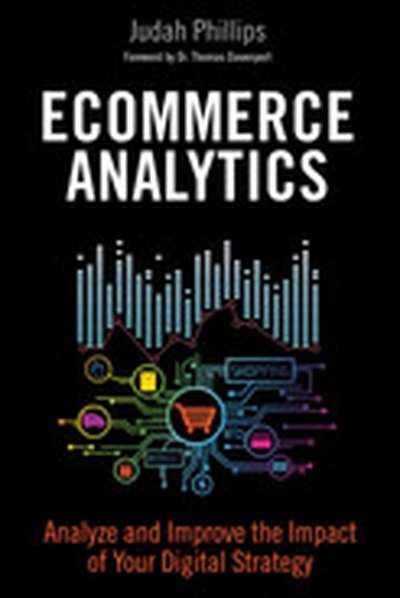
Ecommerce Analytics: Analyze and Improve the Impact of Your Digital Strategy

Today's Complete, Focused, Up-to-Date Guide to Analytics for Ecommerce Profit from analytics throughout the entire customer experience and lifecycle Make the most of all the fast-changing data sources now available to you For all ecommerce executives, strategists, entrepreneurs, marketers, analysts, and data scientists Ecommerce Analytics is the only complete single-source guide to analytics for your ecommerce business. It brings together all the knowledge and skills you need to solve your unique problems, and transform your data into better decisions and customer experiences. Judah Phillips shows how to use analysis to improve ecommerce marketing and advertising, understand customer behavior, increase conversion rates, strengthen loyalty, optimize merchandising and product mix, streamline transactions, optimize product mix, and accurately attribute sales. Drawing on extensive experience leading large-scale analytics programs, he also offers expert guidance on building successful analytical teams; surfacing high-value insights via dashboards and visualization; and managing data governance, security, and privacy. Here are the answers you need to make the most of analytics in ecommerce: throughout your organization, across your entire customer lifecycle.

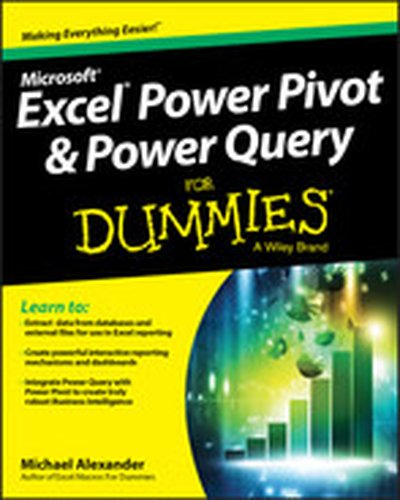
Excel Power Pivot and Power Query For Dummies

A guide to PowerPivot and Power Query no data cruncher should be without! Want to familiarize yourself with the rich set of Microsoft Excel tools and reporting capabilities available from PowerPivot and Power Query? Look no further! Excel PowerPivot & Power Query For Dummies shows you how this powerful new set of tools can be leveraged to more effectively source and incorporate 'big data' Business Intelligence and Dashboard reports. You'll discover how PowerPivot and Power Query not only allow you to save time and simplify your processes, but also enable you to substantially enhance your data analysis and reporting capabilities. Gone are the days of relatively small amounts of data—today's data environment demands more from business analysts than ever before. Now, with the help of this friendly, hands-on guide, you'll learn to use PowerPivot and Power Query to expand your skill-set from the one-dimensional spreadsheet to new territories, like relational databases, data integration, and multi-dimensional reporting. Demonstrates how Power Query is used to discover, connect to, and import your data Shows you how to use PowerPivot to model data once it's been imported Offers guidance on using these tools to make analyzing data easier Written by a Microsoft MVP in the lighthearted, fun style you've come to expect from the For Dummies brand If you spend your days analyzing data, Excel PowerPivot & Power Query For Dummies will get you up and running with the rich set of Excel tools and reporting capabilities that will make your life—and work—easier.

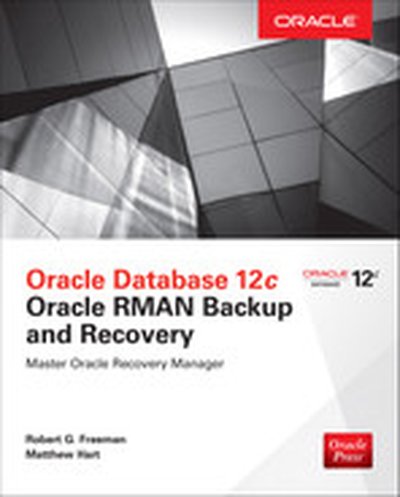
Oracle Database 12c Oracle RMAN Backup & Recovery

This authoritative Oracle Press resource on RMAN has been thoroughly revised to cover every new feature, offering the most up-to-date information This fully updated volume lays out the easiest, fastest, and most effective methods of deploying RMAN in Oracle Database environments of any size. Keeping with previous editions, this book teaches computing professionals at all skill levels how to fully leverage every powerful RMAN tool and protect mission-critical data. Oracle Database 12c RMAN Backup and Recovery explains how to generate reliable archives and carry out successful system restores. You will learn to work from the command line or GUI, automate the database backup process, perform Oracle Flashback recoveries, and deploy third-party administration utilities. The book features full details on cloud computing, report generation, performance tuning, and security. Offers up-to-date coverage of Oracle Database 12 c new features Examples and workshops throughout walk you through important RMAN operations

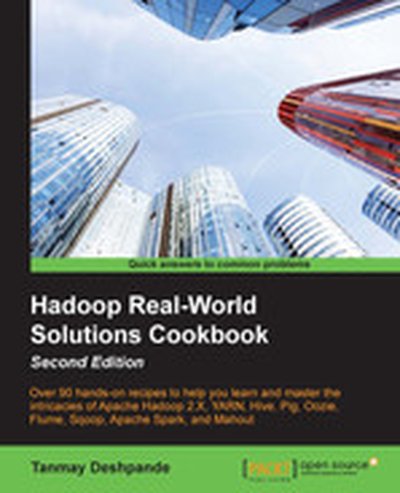
Hadoop Real-World Solutions Cookbook - Second Edition

Master the full potential of big data processing using Hadoop with this comprehensive guide. Featuring over 90 practical recipes, this book helps you streamline data workflows and implement machine learning models with tools like Spark, Hive, and Pig. By the end, you'll confidently handle complex data problems and optimize big data solutions effectively. What this Book will help me do Install and manage a Hadoop 2.x cluster efficiently to suit your data processing needs. Explore and utilize advanced tools like Hive, Pig, and Flume for seamless big data analysis. Master data import/export processes with Sqoop and workflows automation using Oozie. Implement machine learning and analytics tasks using Mahout and Apache Spark. Store and process data flexibly across formats like Parquet, ORC, RC, and more. Author(s) None Deshpande is an expert in big data processing and analytics with years of hands-on experience in implementing Hadoop-based solutions for real-world problems. Known for a clear and pragmatic writing style, None brings actionable wisdom and best practices to the forefront, helping readers excel in managing and utilizing big data systems. Who is it for? Designed for technical enthusiasts and professionals, this book is ideal for those familiar with basic big data concepts. If you are looking to expand your expertise in Hadoop's ecosystem and implement data-driven solutions, this book will guide you through essential skills and advanced techniques to efficiently manage complex big data projects.

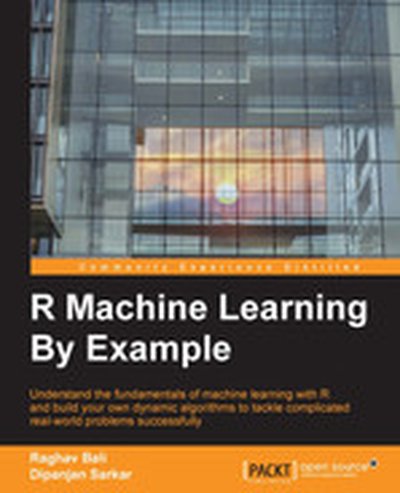
R Machine Learning By Example

This book, 'R Machine Learning by Example,' offers a hands-on approach to learning about machine learning using R. You will not only understand the theoretical aspects but also learn to apply machine learning algorithms to solve real-world problems. Through guided examples, you'll explore predictive modeling, data analysis, and other machine learning techniques implemented in R. What this Book will help me do Master the use of R for advanced data handling and exploration. Visualize multidimensional data effectively to derive insights. Understand and implement key machine learning algorithms in R. Solve practical, industry-relevant problems across multiple domains using R. Learn to optimize and fine-tune machine learning models for better results. Author(s) Raghav Bali, the author, is a seasoned data scientist with expertise in machine learning. With years of experience using R in data science, he has taught both professionals and enthusiasts how to use machine learning effectively. His approachable and clear writing style ensures that learners of various skill levels can benefit from his insights and guidance. Who is it for? This book is perfect for analysts, data scientists, or enthusiasts who want to leverage R for machine learning. It is suitable for beginners familiar with basic R concepts and intermediate learners looking to deepen their understanding of machine learning applications. If you are aiming to solve practical problems using data, this book will serve as a comprehensive guide.

MongoDB in Action, Second Edition

GET MORE WITH MANNING An eBook copy of the previous edition, MongoDB in Action (First Edition), is included at no additional cost. It will be automatically added to your Manning Bookshelf within 24 hours of purchase. MongoDB in Action, Second Edition is a completely revised and updated version. It introduces MongoDB 3.0 and the document-oriented database model. This perfectly paced book gives you both the big picture you'll need as a developer and enough low-level detail to satisfy system engineers. About the Technology This document-oriented database was built for high availability, supports rich, dynamic schemas, and lets you easily distribute data across multiple servers. MongoDB 3.0 is flexible, scalable, and very fast, even with big data loads. About the Book MongoDB in Action, Second Edition is a completely revised and updated version. It introduces MongoDB 3.0 and the document-oriented database model. This perfectly paced book gives you both the big picture you'll need as a developer and enough low-level detail to satisfy system engineers. Lots of examples will help you develop confidence in the crucial area of data modeling. You'll also love the deep explanations of each feature, including replication, auto-sharding, and deployment. What's Inside Indexes, queries, and standard DB operations Aggregation and text searching Map-reduce for custom aggregations and reporting Deploying for scale and high availability Updated for Mongo 3.0 About the Reader Written for developers. No previous MongoDB or NoSQL experience is assumed. About the Authors After working at MongoDB, Kyle Banker is now at a startup. Peter Bakkum is a developer with MongoDB expertise. Shaun Verch has worked on the core server team at MongoDB. A Genentech engineer, Doug Garrett is one of the winners of the MongoDB Innovation Award for Analytics. A software architect, Tim Hawkins has led search engineering at Yahoo Europe. Technical Contributor: Wouter Thielen Technical Editor: Mihalis Tsoukalos Quotes A thorough manual for learning, practicing, and implementing MongoDB - Jeet Marwah, Acer Inc. A must-read to properly use MongoDB and model your data in the best possible way. - Hernan Garcia, Betterez Inc. Provides all the necessary details to get you jump-started with MongoDB. - Gregor Zurowski, Independent Software Development Consultant Awesome! MongoDB in a nutshell. - Hardy Ferentschik, Red Hat