talk-data.com talk-data.com

Topic

data

5765

tagged

Activity Trend

3 peak/qtr
2020-Q1 2026-Q1

Activities

5765 activities · Newest first

Learn Data Science Using SAS Studio: A Quick-Start Guide

Do you want to create data analysis reports without writing a line of code? This book introduces SAS Studio, a free data science web browser-based product for educational and non-commercial purposes. The power of SAS Studio comes from its visual point-and-click user interface that generates SAS code. It is easier to learn SAS Studio than to learn R and Python to accomplish data cleaning, statistics, and visualization tasks. The book includes a case study about analyzing the data required for predicting the results of presidential elections in the state of Maine for 2016 and 2020. In addition to the presidential elections, the book provides real-life examples including analyzing stocks, oil and gold prices, crime, marketing, and healthcare. You will see data science in action and how easy it is to perform complicated tasks and visualizations in SAS Studio.You will learn, step-by-step, how to do visualizations, including maps. In most cases, you will not need a line of code as you work with the SAS Studio graphical user interface. The book includes explanations of the code that SAS Studio generates automatically. You will learn how to edit this code to perform more complicated advanced tasks. The book introduces you to multiple SAS products such as SAS Viya, SAS Analytics, and SAS Visual Statistics. What You Will Learn Become familiar with SAS Studio IDE Understand essential visualizations Know the fundamental statistical analysis required in most data science and analytics reports Clean the most common data set problems Use linear progression for data prediction Write programs in SAS Get introduced to SAS-Viya, which is more potent than SAS studio Who This Book Is For A general audience of people who are new to data science, students, and data analysts and scientists who are experiencedbut new to SAS. No programming or in-depth statistics knowledge is needed.
Product Analytics: Applied Data Science Techniques for Actionable Consumer Insights

This guide shows how to combine data science with social science to gain unprecedented insight into customer behavior, so you can change it. Joanne Rodrigues-Craig bridges the gap between predictive data science and statistical techniques that reveal why important things happen -- why customers buy more, or why they immediately leave your site -- so you can get more behaviors you want and less you don’t. Drawing on extensive enterprise experience and deep knowledge of demographics and sociology, Rodrigues-Craig shows how to create better theories and metrics, so you can accelerate the process of gaining insight, altering behavior, and earning business value. You’ll learn how to: Develop complex, testable theories for understanding individual and social behavior in web products Think like a social scientist and contextualize individual behavior in today’s social environments Build more effective metrics and KPIs for any web product or system Conduct more informative and actionable A/B tests Explore causal effects, reflecting a deeper understanding of the differences between correlation and causation Alter user behavior in a complex web product Understand how relevant human behaviors develop, and the prerequisites for changing them Choose the right statistical techniques for common tasks such as multistate and uplift modeling Use advanced statistical techniques to model multidimensional systems Do all of this in R (with sample code available in a separate code manual)

BigQuery for Data Warehousing: Managed Data Analysis in the Google Cloud

Create a data warehouse, complete with reporting and dashboards using Google’s BigQuery technology. This book takes you from the basic concepts of data warehousing through the design, build, load, and maintenance phases. You will build capabilities to capture data from the operational environment, and then mine and analyze that data for insight into making your business more successful. You will gain practical knowledge about how to use BigQuery to solve data challenges in your organization. BigQuery is a managed cloud platform from Google that provides enterprise data warehousing and reporting capabilities. Part I of this book shows you how to design and provision a data warehouse in the BigQuery platform. Part II teaches you how to load and stream your operational data into the warehouse to make it ready for analysis and reporting. Parts III and IV cover querying and maintaining, helping you keep your information relevant with other Google Cloud Platform services and advanced BigQuery. Part V takes reporting to the next level by showing you how to create dashboards to provide at-a-glance visual representations of your business situation. Part VI provides an introduction to data science with BigQuery, covering machine learning and Jupyter notebooks. What You Will Learn Design a data warehouse for your project or organization Load data from a variety of external and internal sources Integrate other Google Cloud Platform services for more complex workflows Maintain and scale your data warehouse as your organization grows Analyze, report, and create dashboards on the information in the warehouse Become familiar with machine learning techniques using BigQuery ML Who This Book Is For Developers who want to provide business users with fast, reliable, and insightful analysis from operational data, and data analysts interested in a cloud-based solution that avoids the pain of provisioning their own servers.

ETL with Azure Cookbook

ETL with Azure Cookbook is a comprehensive guide to building effective and scalable ETL solutions using the Azure cloud platform. Through hands-on recipes, this book explores the features and capabilities of Azure services for data integration and transformation, guiding you in creating efficient processes for moving and handling data. What this Book will help me do Master the basics and advanced techniques for building ETL processes on Azure. Learn practical skills in designing solutions that integrate multiple Azure services. Understand how to migrate existing on-premises ETL solutions to Azure successfully. Acquire knowledge of SQL Server and Azure Big Data Clusters for data integration. Gain experience in automating and optimizing data processes with BIML and Azure Databricks. Author(s) The authors of ETL with Azure Cookbook are experienced data engineers and Azure specialists with years of expertise in designing and implementing robust data solutions. Their professional journey includes hands-on work with SQL Server, Azure services, and scalable ETL frameworks. They aim to provide practical insights and actionable guidance to help readers achieve success in data engineering projects. Who is it for? This book is ideal for data architects, ETL developers, and IT professionals seeking to enhance their skills in data integration and transformation, particularly within the Azure ecosystem. It's suitable for individuals with some knowledge of data engineering principles, SQL, and familiarity with ETL processes who aim to adopt modern cloud-based approaches.

Metabase Up and Running

Metabase Up and Running is your go-to guide for mastering Metabase, the open-source business intelligence tool. You'll progress from the basics of installation and setup to connecting data sources and creating insightful visualizations and dashboards. By the end, you'll be confident in implementing Metabase in your organization for impactful decision-making. What this Book will help me do Understand how to securely deploy and configure Metabase on Amazon Web Services. Master the creation of dashboards, reports, and visual visualizations using Metabase's tools. Gain expertise in user and permissions management within Metabase. Learn to use Metabase's SQL console for advanced database interactions. Acquire skills to embed Metabase within applications and automate reports via email or Slack. Author(s) None Abraham, an experienced tool specialist, is passionate about teaching others how to leverage data tools effectively. With a background in business analytics, Abraham has guided companies of all sizes. Their approachable writing style ensures a learning journey that is both informative and engaging. Who is it for? This book is ideal for business analysts and data professionals looking to amplify their business intelligence capabilities using Metabase. Readers should have some understanding of data analytics principles. Whether you're starting in analytics or seeking advanced automation, this book offers valuable guidance to meet your goals.

Big Data Meets Survey Science

O ffers a clear view of the utility and place for survey data within the broader Big Data ecosystem This book presents a collection of snapshots from two sides of the Big Data perspective. It assembles an array of tangible tools, methods, and approaches that illustrate how Big Data sources and methods are being used in the survey and social sciences to improve official statistics and estimates for human populations. It also provides examples of how survey data are being used to evaluate and improve the quality of insights derived from Big Data. Big Data Meets Survey Science: A Collection of Innovative Methods shows how survey data and Big Data are used together for the benefit of one or more sources of data, with numerous chapters providing consistent illustrations and examples of survey data enriching the evaluation of Big Data sources. Examples of how machine learning, data mining, and other data science techniques are inserted into virtually every stage of the survey lifecycle are presented. Topics covered include: Total Error Frameworks for Found Data; Performance and Sensitivities of Home Detection on Mobile Phone Data; Assessing Community Wellbeing Using Google Street View and Satellite Imagery; Using Surveys to Build and Assess RBS Religious Flag; and more. Presents groundbreaking survey methods being utilized today in the field of Big Data Explores how machine learning methods can be applied to the design, collection, and analysis of social science data Filled with examples and illustrations that show how survey data benefits Big Data evaluation Covers methods and applications used in combining Big Data with survey statistics Examines regulations as well as ethical and privacy issues Big Data Meets Survey Science: A Collection of Innovative Methods is an excellent book for both the survey and social science communities as they learn to capitalize on this new revolution. It will also appeal to the broader data and computer science communities looking for new areas of application for emerging methods and data sources.

Tableau Prep: Up & Running

For self-service data preparation, Tableau Prep is relatively easy to use—as long as you know how to clean and organize your datasets. Carl Allchin, from The Information Lab in London, gets you up to speed on Tableau Prep through a series of practical lessons that include methods for preparing, cleaning, automating, organizing, and outputting your datasets. Based on Allchin’s popular blog, Preppin’ Data, this practical guide takes you step-by-step through Tableau Prep’s fundamentals. Self-service data preparation reduces the time it takes to complete data projects and improves the quality of your analyses. Discover how Tableau Prep helps you access your data and turn it into valuable information. Know what to look for when you prepare data Learn which Tableau Prep functions to use when working with data fields Analyze the shape and profile of your dataset Output data for analysis and learn how Tableau Prep automates your workflow Learn how to clean your dataset using Tableau Prep functions Explore ways to use Tableau Prep techniques in real-world scenarios Make your data available to others by managing and documenting the output

Empower Decision Makers with SAP Analytics Cloud: Modernize BI with SAP's Single Platform for Analytics

Discover the capabilities and features of SAP Analytics Cloud to draw actionable insights from a variety of data, as well as the functionality that enables you to meet typical business challenges. With this book, you will work with SAC and enable key decision makers within your enterprise to deliver crucial business decisions driven by data and key performance indicators. Along the way you’ll see how SAP has built a strong repertoire of analytics products and how SAC helps you analyze data to derive better business solutions. This book begins by covering the current trends in analytics and how SAP is re-shaping its solutions. Next, you will learn to analyze a typical business scenario and map expectations to the analytics solution including delivery via a single platform. Further, you will see how SAC as a solution meets each of the user expectations, starting with creation of a platform for sourcing data from multiple sources, enabling self-service for a spectrum of business roles, across time zones and devices. There’s a chapter on advanced capabilities of predictive analytics and custom analytical applications. Later there are chapters explaining the security aspects and their technical features before concluding with a chapter on SAP’s roadmap for SAC. Empower Decision Makers with SAP Analytics Cloud takes a unique approach of facilitating learning SAP Analytics Cloud by resolving the typical business challenges of an enterprise. These business expectations are mapped to specific features and capabilities of SAC, while covering its technical architecture block by block. What You Will Learn Work with the features and capabilities of SAP Analytics Cloud Analyze the requirements of a modern decision-support system Use the features of SAC that make it a single platform for decision support in a modern enterprise. See how SAC provides a secure and scalable platform hosted on the cloud Who This Book Is For Enterprise architects, SAP BI analytic solution architects, and developers.

Microsoft Power Platform Enterprise Architecture

This comprehensive guide dives into the intricacies of designing enterprise-grade solutions using Microsoft Power Platform. You'll learn how to leverage the tools in the suite, such as Power Apps, Power Automate, and Power BI, alongside Microsoft 365 and Azure services. By exploring practical examples and methodologies, you will be equipped to handle complex requirements and business challenges. What this Book will help me do Master the integration of Microsoft 365 and Azure components to enhance Power Platform applications. Learn advanced security implementations to safeguard enterprise architecture solutions. Gain proficiency in data migration strategies for robust and seamless data handling across platforms. Understand application lifecycle management and best practices for enterprise-grade Power Platform solutions. Extend and customize Power Platform tools for tailored business applications. Author(s) Robert Rybaric is an experienced enterprise architect specializing in Microsoft technologies. With years of experience crafting complex architecture solutions for dynamic business environments, Robert brings insights that simplify and clarify the challenges of enterprise architecture. His hands-on experience and practical approach make him a trusted voice in the IT solutions space. Who is it for? This book is ideal for enterprise architects and IT decision-makers seeking to use Microsoft Power Platform to address complex business needs. It caters to professionals with a foundational understanding of the platform, aiming to enhance their ability to implement scalable, efficient solutions in competitive business environments.

Predictive Analytics for Healthcare

Before the onset of COVID-19, the healthcare community was already moving to meet the challenges of a growing global population. By collecting record amounts of clinical data electronically and making significant progress on neural network-based AI approaches, the industry now has the potential to build powerful predictive analytics systems. The focus will accelerate the shift from a one-size-fits-all approach to individualized medicine. But several questions remain. What are the plausible outcomes for the world of predictive analytics in both the short and long term? What does the care pathway look like if everything is predicted? And with patient populations and healthcare needs increasing exponentially, how can the industry deliver care in a sustainable and cost-effective way? This comprehensive report, written by Jaquie Finn and Dr. Gavin Troughton with Cambridge Consultants, explores the possibilities. You’ll learn: How predictive analytics plays a part across all stages of the care pathway The foundational enablers for predictive analytics How healthcare economics figure into the equation Predictive analytics and today’s healthcare system The future of predictive analytics in healthcare

Implementing IBM FlashSystem 9200, 9100, 7200, and 5100 Systems with IBM Spectrum Virtualize V8.3.1

Continuing its commitment to developing and delivering industry-leading storage technologies, IBM® introduces the IBM FlashSystem® solution that is powered by IBM Spectrum® Virtualize V8.3.1. This innovative storage offering delivers essential storage efficiency technologies and exceptional ease of use and performance, all integrated into a compact, modular design that is offered at a competitive, midrange price. The solution incorporates some of the top IBM technologies that are typically found only in enterprise-class storage systems, which raises the standard for storage efficiency in midrange disk systems. This cutting-edge storage system extends the comprehensive storage portfolio from IBM and can help change the way organizations address the ongoing information explosion. This IBM Redbooks® publication introduces the features and functions of an IBM Spectrum Virtualize V8.3.1 system through several examples. This book is aimed at pre-sales and post-sales technical support and marketing and storage administrators. It helps you understand the architecture, how to implement it, and how to take advantage of its industry-leading functions and features. Applicability: This edition applies to IBM Spectrum Virtualize V8.3.1 and the associated hardware and software that is detailed within. The screen captures included within this book might differ from the generally available (GA) version because parts of this book were written with pre-GA code. On 11 February 2020, IBM announced that it was simplifying its portfolio. This book was written by using previous models of the product line before the simplification; however, most of the general principles apply. If you are in any doubt as to their applicability, contact your local IBM representative. IBM Knowledge Center: In this book we provide links to Knowledge Center and a description of the relevant section that provides more information. Our starting point is the IBM FlashSystem 9200 family page, and the reader may have to select the product that applies to their environment.

Customer Data and Privacy: The Insights You Need from Harvard Business Review

Collect data and build trust. With the rise of data science and machine learning, companies are awash in customer data and powerful new ways to gain insight from that data. But in the absence of regulation and clear guidelines from most federal or state governments, it's difficult for companies to understand what qualifies as reasonable use and then determine how to act in the best interest of their customers. How do they build, not erode, trust? Customer Data and Privacy: The Insights You Need from Harvard Business Review brings you today's most essential thinking on customer data and privacy to help you understand the tangled interdependencies and complexities of this evolving issue. The lessons in this book will help you develop strategies that allow your company to be a good steward, collecting, using, and storing customer data responsibly. Business is changing. Will you adapt or be left behind? Get up to speed and deepen your understanding of the topics that are shaping your company's future with the Insights You Need from Harvard Business Review series. Featuring HBR's smartest thinking on fast-moving issues—blockchain, cybersecurity, AI, and more—each book provides the foundational introduction and practical case studies your organization needs to compete today and collects the best research, interviews, and analysis to get it ready for tomorrow. You can't afford to ignore how these issues will transform the landscape of business and society. The Insights You Need series will help you grasp these critical ideas—and prepare you and your company for the future.

Understanding Oracle APEX 20 Application Development: Think Like an Application Express Developer

This book shows developers and Oracle professionals how to build practical, non-trivial web applications using Oracle’s rapid application development environment – Application Express (APEX). This third edition Is revised to cover the new features and user interface experience found in APEX 20. Interactive grids and form regions are two of the newer aspects of APEX covered in this edition. The book is targeted at those who are new to APEX and just beginning to develop real projects for deployment, as well as those who are familiar with APEX and want a deeper understanding. The book takes you through the development of a demo web application that illustrates the concepts all APEX programmers should know. This book introduces the world of APEX properties, explaining the functionality supported by each page component as well as the techniques developers use to achieve that functionality. Topics include conditional formatting, user-customized reports, data entry forms, concurrency and lost updates, and security control. Specific attention is given in the book to the thought process involved in choosing and assembling APEX components and features to deliver a specific result. Understanding Oracle APEX 20 Application Development, 3rd Edition is the ideal book to take you from an understanding of the individual pieces of APEX to an understanding of how those pieces are assembled into polished applications. What You Will Learn Build attractive, highly functional web apps from the ground up Enhance and customize pages created by the APEX wizards Understand the security implications of page design Write PL/SQL code for process activity and verification Build complex components such as forms and interactive grids Who This Book Is For Developers new to APEXwho desire a strong fundamental understanding of how APEX applications work. For existing developers and database administrators desiring to mine the most value from APEX by improving their development techniques.

Workflow Automation with Microsoft Power Automate

Discover how Microsoft Power Automate can transform business processes by enabling you to automate workflows with minimal coding. This book introduces the core concepts and practical applications of workflow automation using Power Automate, making it an essential guide for enhancing productivity and efficiency in digital processes. What this Book will help me do Gain foundational knowledge of Microsoft Power Automate and how its components work together. Build automation flows that integrate with popular Microsoft 365 and third-party applications. Create efficient workflows like automated email processes and file management systems. Learn to enhance workflows with features like approvals, conditions, and triggers. Understand the basics of robotic process automation and artificial intelligence applications. Author(s) Aaron Guilmette leverages his extensive experience with Microsoft 365 to provide practical, user-friendly guides to the platform's tools. His expertise in workflow optimization ensures that readers can efficiently implement the concepts discussed. Aaron's teaching style emphasizes clarity and accessibility, making complex topics understandable for readers of all levels. Who is it for? This book is for technologists, system administrators, and power users eager to learn Microsoft Power Automate from scratch or enhance their workflow capabilities. It is ideal for those familiar with Microsoft 365 looking to streamline business processes. The book aims to help readers achieve automation goals, from simple workflows to more complex solutions.

Analytics Stories

Inform your own analyses by seeing how one of the best data analysts in the world approaches analytics problems Analytics Stories: How to Make Good Things Happen is a thoughtful, incisive, and entertaining exploration of the application of analytics to real-world problems and situations. Covering fields as diverse as sports, finance, politics, healthcare, and business, Analytics Stories bridges the gap between the oft inscrutable world of data analytics and the concrete problems it solves. Distinguished professor and author Wayne L. Winston answers questions like: Was Liverpool over Barcelona the greatest upset in sports history? Was Derek Jeter a great infielder What's wrong with the NFL QB rating? How did Madoff keep his fund going? Does a mutual fund’s past performance predict future performance? What caused the Crash of 2008? Can we predict where crimes are likely to occur? Is the lot of the American worker improving? How can analytics save the US Republic? The birth of evidence-based medicine: How did James Lind know citrus fruits cured scurvy? How can I objectively compare hospitals? How can we predict heart attacks in real time? How does a retail store know if you're pregnant? How can I use A/B testing to improve sales from my website? How can analytics help me write a hit song? Perfect for anyone with the word “analyst” in their job title, Analytics Stories illuminates the process of applying analytic principles to practical problems and highlights the potential pitfalls that await careless analysts.

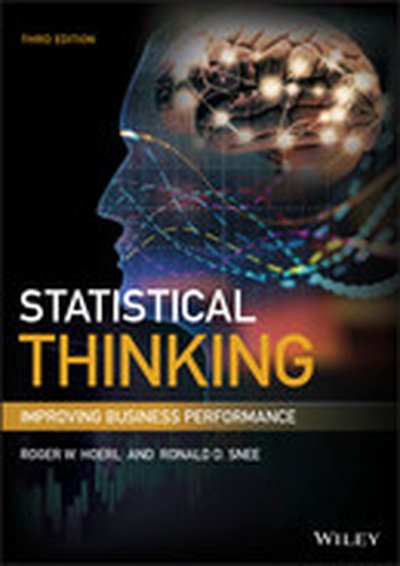
Statistical Thinking, 3rd Edition

Apply statistics in business to achieve performance improvement Statistical Thinking: Improving Business Performance, 3rd Edition helps managers understand the role of statistics in implementing business improvements. It guides professionals who are learning statistics in order to improve performance in business and industry. It also helps graduate and undergraduate students understand the strategic value of data and statistics in arriving at real business solutions. Instruction in the book is based on principles of effective learning, established by educational and behavioral research. The authors cover both practical examples and underlying theory, both the big picture and necessary details. Readers gain a conceptual understanding and the ability to perform actionable analyses. They are introduced to data skills to improve business processes, including collecting the appropriate data, identifying existing data limitations, and analyzing data graphically. The authors also provide an in-depth look at JMP software, including its purpose, capabilities, and techniques for use. Updates to this edition include: A new chapter on data, assessing data pedigree (quality), and acquisition tools Discussion of the relationship between statistical thinking and data science Explanation of the proper role and interpretation of p-values (understanding of the dangers of “p-hacking”) Differentiation between practical and statistical significance Introduction of the emerging discipline of statistical engineering Explanation of the proper role of subject matter theory in order to identify causal relationships A holistic framework for variation that includes outliers, in addition to systematic and random variation Revised chapters based on significant teaching experience Content enhancements based on student input This book helps readers understand the role of statistics in business before they embark on learning statistical techniques.

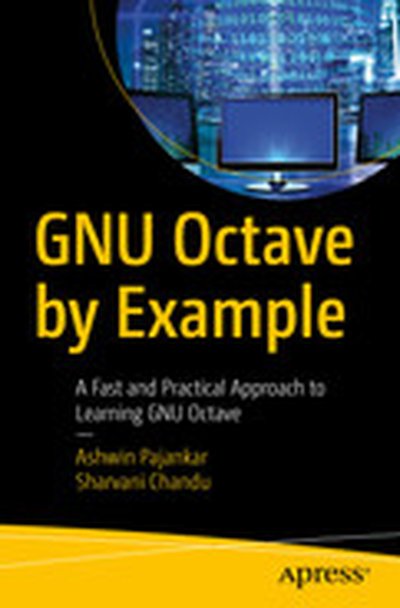
GNU Octave by Example: A Fast and Practical Approach to Learning GNU Octave

Get a quick start to learn, understand, and apply GNU Octave using a math- and programming-friendly approach. This book focuses on an end-to-end track to teach mathematical programming, data science, signal processing, and image processing with GNU Octave. GNU Octave by Example starts with an introduction to GNU Octave, a free and open-source alternative to MATLAB. Next, it explains the processes to install GNU Octave on popular operating systems such as Windows, Ubuntu, Raspberry Pi, and other platforms. Further, it covers hands-on exercises with GNU Octave exploring the basic functionality and command line in interactive mode. This is followed by covering matrices and various operations including how to read and analyze data from various sources. Moving forward, it introduces commonly used programming constructs in data visualization. It explains 2D and 3D data visualization along with data analysis. It also demonstrates the concepts related to geometry and its application with GNU Octave. It concludes with coverage of signal processing followed by image, video, and audio processing techniques. After reading this book, you will be able to write your own programs for scientific and numerical applications. What You Will Learn ● Understand the practical aspects of GNU Octave with math and programming-friendly abstractions ● Install GNU Octave on multiple platforms including Windows, Raspberry Pi, and Ubuntu ● Work with GNU Octave using the GUI, the command line, and Jupyter notebooks ● Implement 2D and 3D data visualization and analysis with GNU Octave Who This Book Is For Software engineers, data engineers, data science enthusiasts, and computer vision professionals.

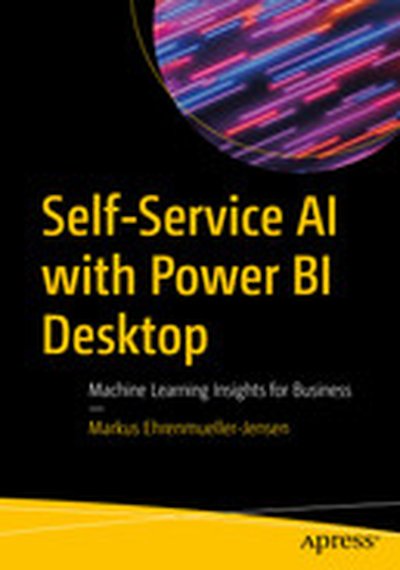
Self-Service AI with Power BI Desktop: Machine Learning Insights for Business

This book explains how you can enrich the data you have loaded into Power BI Desktop by accessing a suite of Artificial Intelligence (AI) features. These AI features are built into Power BI Desktop and help you to gain new insights from existing data. Some of the features are automated and are available to you at the click of a button or through writing Data Analysis Expressions (DAX). Other features are available through writing code in either the R, Python, or M languages. This book opens up the entire suite of AI features to you with clear examples showing when they are best applied and how to invoke them on your own datasets. No matter if you are a business user, analyst, or data scientist – Power BI has AI capabilities tailored to you. This book helps you learn what types of insights Power BI is capable of delivering automatically. You will learn how to integrate and leverage the use of the R and Python languages for statistics, how to integrate with Cognitive Services andAzure Machine Learning Services when loading data, how to explore your data by asking questions in plain English ... and more! There are AI features for discovering your data, characterizing unexplored datasets, and building what-if scenarios. There’s much to like and learn from this book whether you are a newcomer to Power BI or a seasoned user. Power BI Desktop is a freely available tool for visualization and analysis. This book helps you to get the most from that tool by exploiting some of its latest and most advanced features. What You Will Learn Ask questions in natural language and get answers from your data Let Power BI explain why a certain data point differs from the rest Have Power BI show key influencers over categories of data Access artificial intelligence features available in the Azure cloud Walk the same drill down path in different parts of your hierarchy Load visualizations to add smartness to your reports Simulate changes in data and immediately see the consequences Know your data, even before you build your first report Create new columns by giving examples of the data that you need Transform and visualize your data with the help of R and Python scripts Who This Book Is For For the enthusiastic Power BI user who wants to apply state-of-the-art artificial intelligence (AI) features to gain new insights from existing data. For end-users and IT professionals who are not shy of jumping into a new world of machine learning and are ready to make that step and take a deeper look into their data. For those wanting to step up their game from doing simple reporting and visualizations by making the move into diagnostic and predictive analysis.

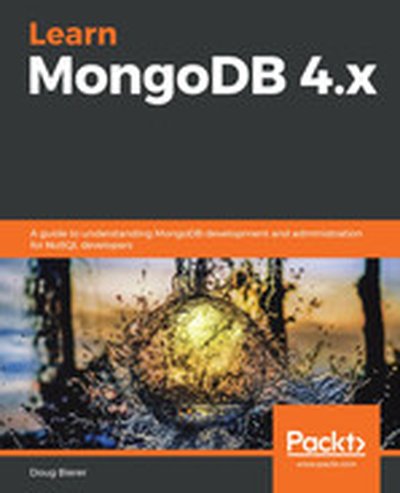
Learn MongoDB 4.x

Explore the capabilities of MongoDB 4.x with this comprehensive guide designed for developers and administrators working with NoSQL databases. Dive into topics such as database design, advanced query handling, and security configuration, and gain hands-on experience through practical examples and insights. What this Book will help me do Learn to configure and install MongoDB 4.x for development and administration. Understand the principles of NoSQL schema design for optimal performance. Perform complex queries and operations to manage your MongoDB databases. Secure your MongoDB setup with role-based access control and encryption techniques. Monitor and optimize database performance for production environments. Author(s) None Bierer, the author of 'Learn MongoDB 4.x,' is a seasoned database expert with extensive experience in NoSQL technologies. With a focus on practicality and clear explanations, None brings deep insights into MongoDB's development and administration. Who is it for? This book is ideal for early-career developers, system administrators, and database enthusiasts eager to break into NoSQL technologies. If you are familiar with Python and basic database concepts, this book will guide you through mastering MongoDB. It's perfect for those building dynamic backend systems.

SQL Server 2019 Administrator's Guide - Second Edition

SQL Server 2019 Administrator's Guide provides a complete walkthrough of administering, managing, and optimizing SQL Server 2019. You'll gain the expertise needed to implement secure and efficient database solutions suitable for enterprise-scale environments. This book systematically explores the tools, techniques, and best practices essential to mastering SQL Server 2019. What this Book will help me do Optimize database queries and design using indexing techniques to resolve performance issues effectively. Implement robust backup and recovery mechanisms following advanced security policies. Utilize SQL Server 2019 tools for automation in monitoring, maintaining, and managing health checks. Integrate SQL Server with Azure for Big Data processing and scalability. Set up highly available and stable Always-On environments for enterprise databases. Author(s) Marek Chmel and Vladimír Mužný are seasoned database administrators with years of hands-on experience in SQL Server and database infrastructure. Their collaborative writing approach emphasizes real-world scenarios and examples that make technical concepts accessible. With accolades in professional database education and a passion for teaching, they provide a guiding hand through complex database subjects. Who is it for? This book is ideal for database administrators, developers, and IT professionals who seek to enhance their expertise with SQL Server 2019. Readers should have a basic understanding of database principles and familiarity with prior versions of SQL Server. Whether you're stepping into advanced administration or seeking to fine-tune your enterprise database infrastructure, this book is tailored for you.