talk-data.com talk-data.com

Topic

data

5765

tagged

Activity Trend

3 peak/qtr
2020-Q1 2026-Q1

Activities

5765 activities · Newest first

Tableau Certified Data Analyst Study Guide

In today's data-driven world, earning the Tableau Certified Data Analyst credential signals your ability to connect, analyze, and communicate insights using one of the industry's leading visualization platforms. This study guide offers practical and comprehensive preparation for the certification exam, with walk-throughs, best practices, vocabulary, and example questions to help you build both confidence and competence in Tableau. Written by Christopher Gardner, business intelligence analyst and lead Tableau developer at the University of Michigan, this guide supports first-time test-takers and seasoned users alike. You'll begin with foundational skills in Tableau Prep Builder and Tableau Desktop—connecting, combining, and preparing data—before progressing to building effective visualizations, performing calculations, and applying advanced tools like level-of-detail expressions, parameters, forecasts, and predictive analytics. Read, manipulate, and prepare data for analysis Navigate Tableau's tools to build impactful visualizations Write calculations and functions to enhance your dashboards Share your work responsibly with secure publishing options

Expert Scripting and Automation for SQL Server DBAs: Amplifying Productivity Through Automation

The market is trending toward a much smaller ratio of DBAs to SQL Server instances, but this book will help you meet this new reality by harnessing automation to continue building and maintaining reliable database platform services for your SQL Server enterprise. The book will help you automate your workload and manage more databases and instances with greater ease and efficiency by combining metadata-driven automation with the power of PowerShell. You'll soon be able to automate your new instance-builds and centralize your maintenance. This book walks you through automating the SQL Server build processes and maintenance of multiple instances from a single location, as well as how to use database metadata to drive your automation. With a heavier focus on PowerShell, this 2nd edition highlights modern techniques, such as configuration management. Also new in this edition, you will learn how to use PowerShell modules such as SqlServer and DBATools, which is a popular community module that you can rely on to keep your database estate running smoothly. You will understand the benefits of centralizing maintenance to better keep your enterprise responding with reliable performance to the loads placed upon it by your business. The book helps you become faster and better at what you do for a living, and thus will boost your value within the job market. What You Will Learn Automate SQL Server installation and configuration Apply techniques such as Desired State Configuration to prevent drift on your servers and instances Increase your value to your organization by automating low-value tasks and focusing your time on the higher-value ones Take advantage of database metadata to drive automation, allowing you to build intelligent automated routines Promote and demonstrate how to modernize database maintenance across your enterprise Apply tools such as PowerShell with modern techniques to increase your value in the job market Who This Book Is For SQL Server DBAs who want to increase their productivity by embracing automation

Building Integrations with MuleSoft

This concise yet comprehensive guide shows developers and architects how to tackle data integration challenges with MuleSoft. Authors Pooja Kamath and Diane Kesler take you through the process necessary to build robust and scalable integration solutions step-by-step. Supported by real-world use cases, Building Integrations with MuleSoft teaches you to identify and resolve performance bottlenecks, handle errors, and ensure the reliability and scalability of your integration solutions. You'll explore MuleSoft's robust set of connectors and their components, and use them to connect to systems and applications from legacy databases to cloud services. Ask the right questions to determine your use case, define requirements, decide on reuse versus rebuild, and create sequence and context diagrams Master tools like the Anypoint Platform, Anypoint Studio, Code Builder, GitHub, and Maven Design APIs with RAML and OAS and craft effective requests and responses Write MUnit tests, validate DataWeave expressions, and use Postman Collections Deploy Mule applications to CloudHub, use API Manager to create API proxies, and secure APIs with Mule OAuth 2.0 Learn message orchestration techniques for routers, transactions, error handling, For Each, Parallel For Each, and batch processing

Next-Level A/B Testing

The better the tools you have in your experimentation toolkit, the better off teams will be shipping and evaluating new features on a product. Learn how to create robust A/B testing strategies that evolve with your product and engineering needs. See how to run experiments quickly, efficiently, and at less cost with the overarching goal of improving your product experience and your company's bottom line. The long-term success of any product hinges on a company’s ability to experiment quickly and effectively. The more a company evolves and grows, the more demand there is on the experimentation platform. To continue to meet testing demands and empower teams to leverage A/B testing in their product development life cycle, it’s vital to incorporate techniques to improve testing velocity, cost, and quality. Learn how to create an A/B testing environment for the long term that lets you quickly construct, run, and analyze tests and enables the business to explore and exploit new features in a cost-effective and controlled way. Know when to use techniques — stratified random sampling, interleaving, and metric sensitivity analysis — that let you work faster, more accurately, and more cost-effectively. With practical strategies and hands-on engineering tasks oriented around improving the rate and quality of testing on a product, you can apply what you’ve learned to optimize your experimentation practices. A/B testing is vital to product development. It's time to create the tools and environment that let you run these tests easily, affordably, and reliably.

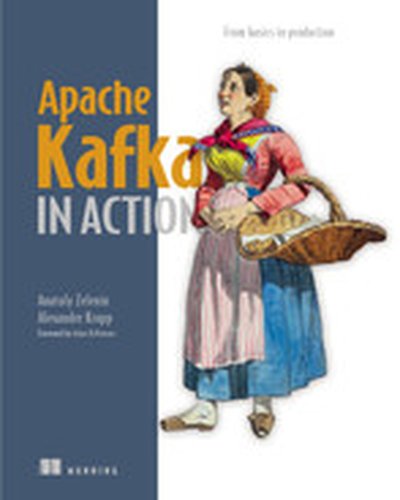
Apache Kafka in Action

Apache Kafka, start to finish. Apache Kafka in Action: From basics to production guides you through the concepts and skills you’ll need to deploy and administer Kafka for data pipelines, event-driven applications, and other systems that process data streams from multiple sources. Authors Anatoly Zelenin and Alexander Kropp have spent years using Kafka in real-world production environments. In this guide, they reveal their hard-won expert insights to help you avoid common Kafka pitfalls and challenges. Inside Apache Kafka in Action you’ll discover: Apache Kafka from the ground up Achieving reliability and performance Troubleshooting Kafka systems Operations, governance, and monitoring Kafka use cases, patterns, and anti-patterns Clear, concise, and practical, Apache Kafka in Action is written for IT operators, software engineers, and IT architects working with Kafka every day. Chapter by chapter, it guides you through the skills you need to deliver and maintain reliable and fault-tolerant data-driven applications. About the Technology Apache Kafka is the gold standard streaming data platform for real-time analytics, event sourcing, and stream processing. Acting as a central hub for distributed data, it enables seamless flow between producers and consumers via a publish-subscribe model. Kafka easily handles millions of events per second, and its rock-solid design ensures high fault tolerance and smooth scalability. About the Book Apache Kafka in Action is a practical guide for IT professionals who are integrating Kafka into data-intensive applications and infrastructures. The book covers everything from Kafka fundamentals to advanced operations, with interesting visuals and real-world examples. Readers will learn to set up Kafka clusters, produce and consume messages, handle real-time streaming, and integrate Kafka into enterprise systems. This easy-to-follow book emphasizes building reliable Kafka applications and taking advantage of its distributed architecture for scalability and resilience. What's Inside Master Kafka’s distributed streaming capabilities Implement real-time data solutions Integrate Kafka into enterprise environments Build and manage Kafka applications Achieve fault tolerance and scalability About the Reader For IT operators, software architects and developers. No experience with Kafka required. About the Authors Anatoly Zelenin is a Kafka expert known for workshops across Europe, especially in banking and manufacturing. Alexander Kropp specializes in Kafka and Kubernetes, contributing to cloud platform design and monitoring. Quotes A great introduction. Even experienced users will go back to it again and again. - Jakub Scholz, Red Hat Approachable, practical, well-illustrated, and easy to follow. A must-read. - Olena Kutsenko, Confluent A zero to hero journey to understanding and using Kafka! - Anthony Nandaa, Microsoft Thoughtfully explores a wide range of topics. A wealth of valuable information seamlessly presented and easily accessible. - Olena Babenko, Aiven Oy

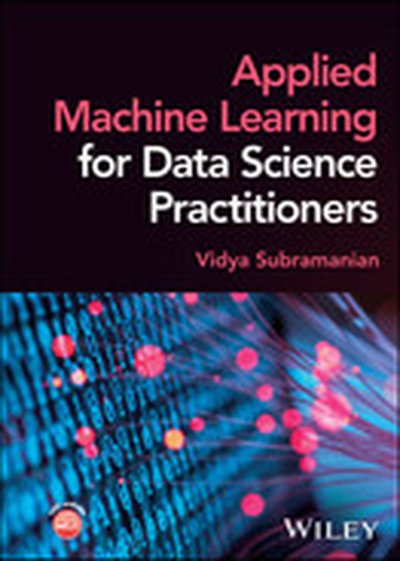
Applied Machine Learning for Data Science Practitioners

A single-volume reference on data science techniques for evaluating and solving business problems using Applied Machine Learning (ML). Applied Machine Learning for Data Science Practitioners offers a practical, step-by-step guide to building end-to-end ML solutions for real-world business challenges, empowering data science practitioners to make informed decisions and select the right techniques for any use case. Unlike many data science books that focus on popular algorithms and coding, this book takes a holistic approach. It equips you with the knowledge to evaluate a range of techniques and algorithms. The book balances theoretical concepts with practical examples to illustrate key concepts, derive insights, and demonstrate applications. In addition to code snippets and reviewing output, the book provides guidance on interpreting results. This book is an essential resource if you are looking to elevate your understanding of ML and your technical capabilities, combining theoretical and practical coding examples. A basic understanding of using data to solve business problems, high school-level math and statistics, and basic Python coding skills are assumed. Written by a recognized data science expert, Applied Machine Learning for Data Science Practitioners covers essential topics, including: Data Science Fundamentals that provide you with an overview of core concepts, laying the foundation for understanding ML. Data Preparation covers the process of framing ML problems and preparing data and features for modeling. ML Problem Solving introduces you to a range of ML algorithms, including Regression, Classification, Ranking, Clustering, Patterns, Time Series, and Anomaly Detection. Model Optimization explores frameworks, decision trees, and ensemble methods to enhance performance and guide the selection of the most effective model. ML Ethics addresses ethical considerations, including fairness, accountability, transparency, and ethics. Model Deployment and Monitoring focuses on production deployment, performance monitoring, and adapting to model drift.

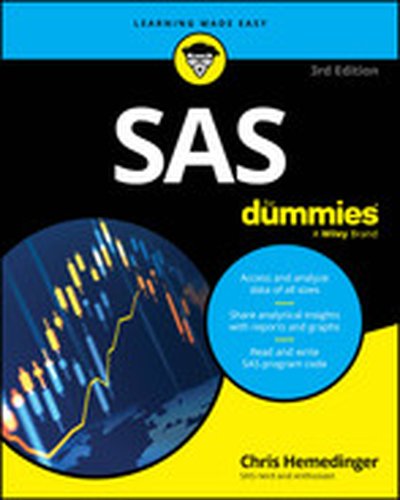
SAS For Dummies, 3rd Edition

Become data-savvy with the widely used data and AI software Data and analytics are essential for any business, giving insight into what's working, what can be improved, and what else needs to be done. SAS software helps you make sure you're doing data right, with a host of data management, reporting, and analysis tools. SAS For Dummies teaches you the essentials, helping you navigate this statistical software and turn information into value. In this book, learn how to gather data, create reports, and analyze results. You'll also discover how SAS machine learning and AI can help deliver decisions based on data. Even if you're brand new to data and analytics, this easy-to-follow guide will turn you into an SAS power user. Become familiar with the most popular SAS applications, including SAS 9 and SAS Viya Connect to data, organize your information, and adopt sound data security practices Get a primer on working with data sets, variables, and statistical analysis Explore and analyze data through SAS programming and rich application interfaces Create and share graphs interactive visualizations to deliver insights This is the perfect Dummies guide for new SAS users looking to improve their skills—in any industry and for any organization size.

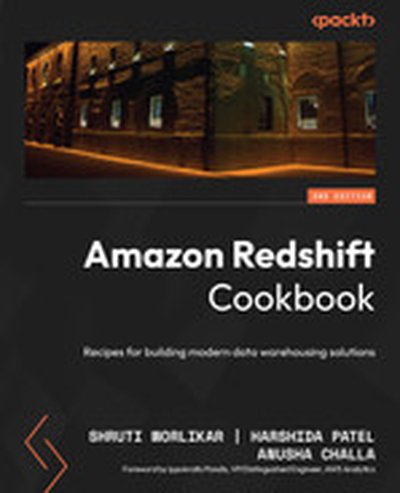
Amazon Redshift Cookbook - Second Edition

Amazon Redshift Cookbook provides practical techniques for utilizing AWS's managed data warehousing service effectively. With this book, you'll learn to create scalable and secure data analytics solutions, tackle data integration challenges, and leverage Redshift's advanced features like data sharing and generative AI capabilities. What this Book will help me do Create end-to-end data analytics solutions from ingestion to reporting using Amazon Redshift. Optimize the performance and security of Redshift implementations to meet enterprise standards. Leverage Amazon Redshift for zero-ETL ingestion and advanced concurrency scaling. Integrate Redshift with data lakes for enhanced data processing versatility. Implement generative AI and machine learning solutions directly within Redshift environments. Author(s) Shruti Worlikar, Harshida Patel, and Anusha Challa are seasoned data experts who bring together years of experience with Amazon Web Services and data analytics. Their combined expertise enables them to offer actionable insights, hands-on recipes, and proven strategies for implementing and optimizing Amazon Redshift-based solutions. Who is it for? This book is best suited for data analysts, data engineers, and architects who are keen on mastering modern data warehouse solutions using Redshift. Readers should have some knowledge of data warehousing and familiarity with cloud concepts. Ideal for professionals looking to migrate on-premises systems or build cloud-native analytics pipelines leveraging Redshift.

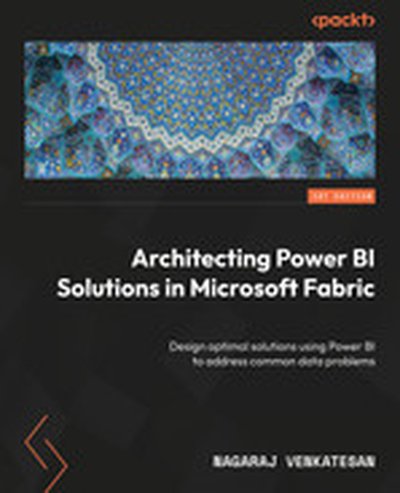
Architecting Power BI Solutions in Microsoft Fabric

This book is a comprehensive guide to building sophisticated and robust Power BI solutions that solve common data problems effectively. Written with hands-on professionals in mind, it provides essential insights and practical advice to help you choose the right tools and approaches for any BI task. Readers will learn to create performant, secure, and innovative business intelligence systems. What this Book will help me do Identify the scenarios where each Power BI component fits best. Apply secure and performance-conscious design principles when building BI solutions. Leverage Microsoft Fabric and other advanced integrations to maximize Power BI's capabilities. Implement AI-powered features such as Copilot and predictive modeling in Power BI. Facilitate collaboration and governance using Power BI's advanced features. Author(s) Nagaraj Venkatesan has over 17 years of professional expertise in data platform technologies and business intelligence tools. Through a rich career in data solution architecture, he has mastered the art of designing efficient and reliable Power BI implementations. This book reflects his passion for empowering professionals to make the most of Power BI. Who is it for? If you are a solution architect, data engineer, or Power BI report developer looking to elevate your skills in designing optimized Power BI solutions, this book is for you. Business analysts and data scientists can also benefit immensely from the book's coverage of self-service BI and data science integration. Some familiarity with Power BI will enhance your learning experience, but newcomers eager to learn will also find it invaluable.

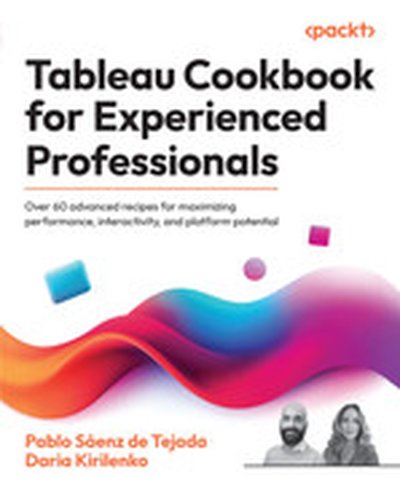
Tableau Cookbook for Experienced Professionals

This book takes an advanced dive into using Tableau for professional data visualization and analytics. You will learn techniques for crafting highly interactive dashboards, optimizing their performance, and leveraging Tableau's APIs and server features. With a focus on real-world applications, this resource serves as a guide for professionals aiming to master advanced Tableau skills. What this Book will help me do Build robust, high-performing Tableau data models for enterprise analytics. Use advanced geospatial techniques to create dynamic, data-rich mapping visualizations. Leverage APIs and developer tools to integrate Tableau with other platforms. Optimize Tableau dashboards for performance and interactivity. Apply best practices for content management and data security in Tableau implementations. Author(s) Pablo Sáenz de Tejada and Daria Kirilenko are seasoned Tableau experts with vast professional experience in implementing advanced analytics solutions. Pablo specializes in enterprise-level dashboard design and has trained numerous professionals globally. Daria focuses on integrating Tableau into complex data ecosystems, bringing a practical and innovative approach to analytics. Who is it for? This book is tailored for professionals such as Tableau developers, data analysts, and BI consultants who already have a foundational knowledge of Tableau. It is ideal for those seeking to deepen their skills and gain expertise in tackling advanced data visualization challenges. Whether you work in corporate analytics or enjoy exploring data in your own projects, this book will enhance your Tableau proficiency.

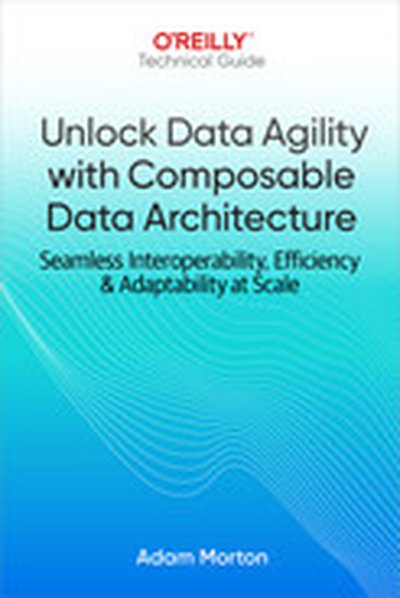
Unlock Data Agility with Composable Data Architecture

Are your data systems slowing down your AI initiatives? The potential of AI to revolutionize business is undeniable, but many organizations struggle to bridge the gap between ambitious ideas and real-world results. The cause? Traditional data architectures remain too rigid and siloed to support today's dynamic, data-intensive demands. If you're a data leader searching for a solution, composable data architecture is the answer. This essential guide provides a clear, actionable framework for you to discover how this modular, adaptable approach empowers data teams, streamlines pipelines, and fuels continuous innovation. So, you'll not only keep pace with your most agile competitors—you'll surpass them. Understand the fundamental concepts that make composable architecture a game-changer Design pipelines that optimize performance and adapt to your organization's unique data needs See how composable architecture breaks down silos, enabling faster, more collaborative data processes Discover tools to streamline data management of high-volume streams or multicloud environments Leverage flexible architecture that simplifies data sharing, enabling easier access to insights

An Introduction to Self-Report Measurement

This book covers the science of measuring the invisible building blocks of thought processes that are useful for understanding humans, including technology users, media consumers, and consumers of goods and services. It provides: An explanation of what self-report measurement entails for beginners; A clear set of assumptions needed in order for self-report measures to yield valuable information; A mindset that needs to be adopted when using self-report measurement in the contexts of surveys and experiments; Guidance for extracting opinion from social media text content and integrating AI; A roadmap for quantifying the errors associated with self-report measurement.

Building Agentic AI Systems

In "Building Agentic AI Systems", you will explore how to design and create intelligent and autonomous AI agents that can reason, plan, and adapt. This book dives deep into the principles and practices necessary to unlock the potential of generative AI and agentic systems. From foundation to implementation, you'll gain valuable insights into cutting-edge AI architectures and functionalities. What this Book will help me do Understand the foundational concepts of generative AI and the principles of agentic systems. Develop skills to design AI agents capable of self-reflection, tool utilization, and adaptable planning. Explore strategies for ensuring ethical transparency and safety in autonomous AI systems. Learn practical techniques to build effective multi-agent AI collaborations with real-world applications. Gain insights into designing AI systems with scalability, adaptability, and minimal human intervention. Author(s) Anjanava Biswas and Wrick Talukdar are experts in AI development with years of experience working on generative AI frameworks and autonomous systems. They specialize in creating innovative AI solutions and contributing to AI best practices in the industry. Their dedication to teaching and clarity in writing make technical concepts accessible to developers at all levels. Who is it for? This book is ideal for AI developers, machine learning engineers, and software architects seeking to advance their understanding of designing and implementing intelligent autonomous AI systems. Readers should have a foundational understanding of machine learning principles and basic programming experience, particularly in Python, to follow the book effectively. Understanding of generative AI or large language models is helpful but not required. If you're aiming to build or refine your skills in agent-based AI systems and how they adapt, this book is for you.

Data Engineering Design Patterns

Data projects are an intrinsic part of an organization's technical ecosystem, but data engineers in many companies continue to work on problems that others have already solved. This hands-on guide shows you how to provide valuable data by focusing on various aspects of data engineering, including data ingestion, data quality, idempotency, and more. Author Bartosz Konieczny guides you through the process of building reliable end-to-end data engineering projects, from data ingestion to data observability, focusing on data engineering design patterns that solve common business problems in a secure and storage-optimized manner. Each pattern includes a user-facing description of the problem, solutions, and consequences that place the pattern into the context of real-life scenarios. Throughout this journey, you'll use open source data tools and public cloud services to apply each pattern. You'll learn: Challenges data engineers face and their impact on data systems How these challenges relate to data system components Useful applications of data engineering patterns How to identify and fix issues with your current data components Technology-agnostic solutions to new and existing data projects, with open source implementation examples Bartosz Konieczny is a freelance data engineer who's been coding since 2010. He's held various senior hands-on positions that allowed him to work on many data engineering problems in batch and stream processing.

Think Stats, 3rd Edition

If you know how to program, you have the skills to turn data into knowledge. This thoroughly revised edition presents statistical concepts computationally, rather than mathematically, using programs written in Python. Through practical examples and exercises based on real-world datasets, you'll learn the entire process of exploratory data analysis—from wrangling data and generating statistics to identifying patterns and testing hypotheses. Whether you're a data scientist, software engineer, or data enthusiast, you'll get up to speed on commonly used tools including NumPy, SciPy, and Pandas. You'll explore distributions, relationships between variables, visualization, and many other concepts. And all chapters are available as Jupyter notebooks, so you can read the text, run the code, and work on exercises all in one place. Analyze data distributions and visualize patterns using Python libraries Improve predictions and insights with regression models Dive into specialized topics like time series analysis and survival analysis Integrate statistical techniques and tools for validation, inference, and more Communicate findings with effective data visualization Troubleshoot common data analysis challenges Boost reproducibility and collaboration in data analysis projects with interactive notebooks

Data Usability in the Enterprise: How Usability Leads to Optimal Digital Experiences

Ensuring data usability is paramount to unlocking a company’s full potential and driving informed decision-making. Part of author Saurav Bhattacharya’s trilogy that covers the essential pillars of digital ecosystems—security, reliability, and usability—this book offers a comprehensive exploration of the fundamental concepts, principles, and practices essential for enhancing data accessibility and effectiveness. You’ll study the core aspects of data design, standardization, and interoperability, gaining the knowledge needed to create and maintain high-quality data environments. By examining the tools and technologies that improve data usability, along with best practices for data visualization and user-centric strategies, this book serves as an invaluable resource for professionals seeking to leverage data more effectively. The book also addresses crucial governance issues, ensuring data quality, integrity, and security are maintained. Through a detailed analysis of data governance frameworks and privacy concerns, you’ll see how to manage data responsibly. Additionally, the book includes compelling case studies that highlight successful data usability implementations, future trends, and the challenges faced in achieving optimal data usability. By fostering a culture of data literacy and usability, this book will help you and your organization navigate the evolving data landscape and harness the power of data for innovation and growth. What You Will Learn Understand the fundamental concepts and importance of data usability, including effective data design, enhancing data accessibility, and ensuring data standardization and interoperability. Review the latest tools and technologies that enhance data usability, best practices for data visualization, and strategies for implementing user-centric data approaches. Ensure data quality and integrity, while navigating data privacy and security concerns. Implement robust data governance frameworks to manage data responsibly and effectively. Who This Book Is For Cybersecurity and IT professionals