talk-data.com talk-data.com

Topic

data

5765

tagged

Activity Trend

3 peak/qtr
2020-Q1 2026-Q1

Activities

5765 activities · Newest first

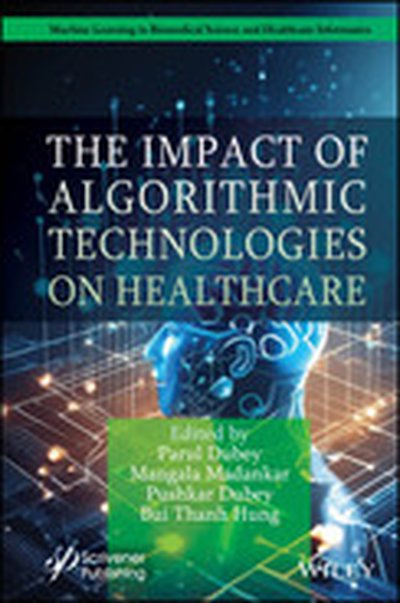
The Impact of Algorithmic Technologies on Healthcare

The book explores the fundamental principles and transformative advancements in cutting-edge algorithmic technologies, detailing their application and impact on revolutionizing healthcare. This book provides an in-depth account of how technologies such as artificial intelligence (AI), machine learning (ML), and the Internet of Things (IoT) are reshaping healthcare, transitioning from traditional diagnostic and treatment approaches to data-driven solutions that improve predictive accuracy and patient outcomes. The text also addresses the challenges and considerations associated with adopting these technologies, including ethical implications, data security concerns, and the need for human-centered approaches in algorithmic medicine. After introducing digital twin technology and its potential to enhance healthcare delivery, the book examines the broader effects of digital technology on the healthcare system. Subsequent chapters explore topics such as innovations in medical imaging, predictive analytics for improved patient outcomes, and deep learning algorithms for brain tumor detection. Other topics include generative adversarial networks (GANs), convolutional neural networks (CNNs), smart wearables for remote patient monitoring, effective IoT solutions, telemedicine advancements, and blockchain security for healthcare systems. The integration of biometric systems driven by AI, securing cyber-physical systems in healthcare, and digitizing wellness through electronic health records (EHRs) and electronic medical records (EMRs) are also discussed. The book concludes with an extensive case study comparing the impacts of various healthcare applications, offering insights and encouraging further research and innovation in this dynamic field. Audience This book is suitable for academicians and professionals in health informatics, bioinformatics, biomedical science and engineering, artificial intelligence, as well as clinicians, IT specialists, and policymakers in healthcare.
The Well-Grounded Data Analyst

Complete eight data science projects that lock in important real-world skills—along with a practical process you can use to learn any new technique quickly and efficiently. Data analysts need to be problem solvers—and The Well-Grounded Data Analyst will teach you how to solve the most common problems you'll face in industry. You'll explore eight scenarios that your class or bootcamp won’t have covered, so you can accomplish what your boss is asking for. In The Well-Grounded Data Analyst you'll learn: High-value skills to tackle specific analytical problems Deconstructing problems for faster, practical solutions Data modeling, PDF data extraction, and categorical data manipulation Handling vague metrics, deciphering inherited projects, and defining customer records The Well-Grounded Data Analyst is for junior and early-career data analysts looking to supplement their foundational data skills with real-world problem solving. As you explore each project, you'll also master a proven process for quickly learning new skills developed by author and Half Stack Data Science podcast host David Asboth. You'll learn how to determine a minimum viable answer for your stakeholders, identify and obtain the data you need to deliver, and reliably present and iterate on your findings. The book can be read cover-to-cover or opened to the chapter most relevant to your current challenges. About the Technology Real world data analysis is messy. Success requires tackling challenges like unreliable data sources, ambiguous requests, and incompatible formats—often with limited guidance. This book goes beyond the clean, structured examples you see in classrooms and bootcamps, offering a step-by-step framework you can use to confidently solve any data analysis problem like a pro. About the Book The Well-Grounded Data Analyst introduces you to eight scenarios that every data analyst is bound to face. You’ll practice author David Asboth’s results-oriented approach as you model data by identifying customer records, navigate poorly-defined metrics, extract data from PDFs, and much more! It also teaches you how to take over incomplete projects and create rapid prototypes with real data. Along the way, you’ll build an impressive portfolio of projects you can showcase at your next interview. What's Inside Deconstructing problems Handling vague metrics Data modeling Categorical data manipulation About the Reader For early-career data scientists. About the Author David Asboth is a data generalist educator, and software architect. He co-hosts the Half Stack Data Science podcast. Quotes Well reasoned and well written, with approaches to solve many sorts of data analysis problems. - Naomi Ceder, Fellow of the Python Software Foundation An excellent resource for any aspiring data scientist! - Andrew R. Freed, IBM David’s clear and repeatable framework will give you confidence to tackle open-ended stakeholder requests and reach an answer much faster! - Shaun McGirr, DevOn Software Services A book version of shadowing a senior data analyst while they explain handling frequent data problems at work, including all the ugly gotchas. - Randy Au, Google

Causal Inference for Data Science

When you know the cause of an event, you can affect its outcome. This accessible introduction to causal inference shows you how to determine causality and estimate effects using statistics and machine learning. A/B tests or randomized controlled trials are expensive and often unfeasible in a business environment. Causal Inference for Data Science reveals the techniques and methodologies you can use to identify causes from data, even when no experiment or test has been performed. In Causal Inference for Data Science you will learn how to: Model reality using causal graphs Estimate causal effects using statistical and machine learning techniques Determine when to use A/B tests, causal inference, and machine learning Explain and assess objectives, assumptions, risks, and limitations Determine if you have enough variables for your analysis It’s possible to predict events without knowing what causes them. Understanding causality allows you both to make data-driven predictions and also intervene to affect the outcomes. Causal Inference for Data Science shows you how to build data science tools that can identify the root cause of trends and events. You’ll learn how to interpret historical data, understand customer behaviors, and empower management to apply optimal decisions. About the Technology Why did you get a particular result? What would have lead to a different outcome? These are the essential questions of causal inference. This powerful methodology improves your decisions by connecting cause and effect—even when you can’t run experiments, A/B tests, or expensive controlled trials. About the Book Causal Inference for Data Science introduces techniques to apply causal reasoning to ordinary business scenarios. And with this clearly-written, practical guide, you won’t need advanced statistics or high-level math to put causal inference into practice! By applying a simple approach based on Directed Acyclic Graphs (DAGs), you’ll learn to assess advertising performance, pick productive health treatments, deliver effective product pricing, and more. What's Inside When to use A/B tests, causal inference, and ML Assess objectives, assumptions, risks, and limitations Apply causal inference to real business data About the Reader For data scientists, ML engineers, and statisticians. About the Author Aleix Ruiz de Villa Robert is a data scientist with a PhD in mathematical analysis from the Universitat Autònoma de Barcelona. Quotes With intuitive explanations, application-focused insights, and real-world examples, this book offers immense practical value. - Philipp Bach, Maintainer of the DoubleML libraries for Python and R An essential guide for navigating the complexities of real-world data analysis. - Adi Shavit, SWAPP A must-read! Demystifies causal inference with a blend of theory and practice. - Karan Gupta, SunPower Corporation Causal relationships can mask and distort results. This book provides a set of tools to extract insights correctly. - Peter V. Henstock, Harvard Extension

Take Control of Your Online Privacy, 5th Edition

Learn what's private online (not much)—and what to do about it! Version 5.1, updated January 30, 2025 Nearly everything you do say or do online can be recorded and scrutinized by advertisers, data brokers, and a long list of other people and organizations---often without your knowledge or consent. When your personal data falls into the wrong hands, you risk theft, embarrassment, and worse. But you can take steps to greatly improve your online privacy without sacrificing all your convenience. Nowadays, online privacy is extremely hard to come by. Corporations, governments, and scammers alike go out of their way to gather up massive amounts of your personal data. The situation feels bleak, but you have more control than you may realize. In this book, Joe Kissell helps you to develop a sensible, customized online privacy strategy . No matter what devices or operating systems you use, you’ll find practical advice that ordinary people need to handle common privacy needs. The massively revised fifth edition of Take Control of Your Online Privacy is packed with information that helps you get a handle on current topics in online privacy , including data breaches, hardware bugs, quantum computing, two-factor authentication, how ads can track you, and much more. You’ll receive savvy advice about topics such as these:

Why worry? Find out who wants your private data, why they want it, and what that means to you. Determine your personal risk level , learn which privacy factors are most important to you, what you can and can't control, and what extra steps you can take if you're at a high risk of being personally targeted. Hear some good news (five steps you could take that would massively increase your online privacy)…and some bad news (why some of those steps may be difficult or infeasible). Remove personal information from Google and data brokers, though the process comes with limitations and gotchas. Discover Apple-Specific Privacy Features for users of Macs, iPhones, and iPads. Manage your internet connection: Secure your Wi-Fi network and keep your data from leaking out. Find advice on why and when to use a VPN or a network-connected privacy appliance, plus why you should be skeptical of VPN reviews. Browse and search the web: Avoid bogus websites, control your cookies and history, block ads, browse and search anonymously, and find out who is tracking you. Send and receive email: Find out how your email could be intercepted, learn techniques for encrypting email when necessary, get tips for sending email anonymously, and know when email is not the best way to communicate. Watch your social media: Understand the risks of sharing personal information online (especially on Facebook!), tweak your settings, and consider common-sense precautions. Talk and chat online: Consider to what extent any phone call, text message, or online chat is private, and find tips for enhancing privacy when using these channels. Protect your smart devices: Address privacy issues with "Internet of Things" devices like smart TVs, smart speakers, and home automation gear. Think mobile: Ponder topics like supercookies, location reporting, photo storage, spear phishing, and more as you decide how to handle privacy for a mobile phone or tablet. Help your children: As a parent, you may want to take extra steps to protect your children's privacy. Find a few key tips to keep in mind.

Machine Learning Algorithms in Depth

Learn how machine learning algorithms work from the ground up so you can effectively troubleshoot your models and improve their performance. Fully understanding how machine learning algorithms function is essential for any serious ML engineer. In Machine Learning Algorithms in Depth you’ll explore practical implementations of dozens of ML algorithms including: Monte Carlo Stock Price Simulation Image Denoising using Mean-Field Variational Inference EM algorithm for Hidden Markov Models Imbalanced Learning, Active Learning and Ensemble Learning Bayesian Optimization for Hyperparameter Tuning Dirichlet Process K-Means for Clustering Applications Stock Clusters based on Inverse Covariance Estimation Energy Minimization using Simulated Annealing Image Search based on ResNet Convolutional Neural Network Anomaly Detection in Time-Series using Variational Autoencoders Machine Learning Algorithms in Depth dives into the design and underlying principles of some of the most exciting machine learning (ML) algorithms in the world today. With a particular emphasis on probabilistic algorithms, you’ll learn the fundamentals of Bayesian inference and deep learning. You’ll also explore the core data structures and algorithmic paradigms for machine learning. Each algorithm is fully explored with both math and practical implementations so you can see how they work and how they’re put into action. About the Technology Learn how machine learning algorithms work from the ground up so you can effectively troubleshoot your models and improve their performance. This book guides you from the core mathematical foundations of the most important ML algorithms to their Python implementations, with a particular focus on probability-based methods. About the Book Machine Learning Algorithms in Depth dissects and explains dozens of algorithms across a variety of applications, including finance, computer vision, and NLP. Each algorithm is mathematically derived, followed by its hands-on Python implementation along with insightful code annotations and informative graphics. You’ll especially appreciate author Vadim Smolyakov’s clear interpretations of Bayesian algorithms for Monte Carlo and Markov models. What's Inside Monte Carlo stock price simulation EM algorithm for hidden Markov models Imbalanced learning, active learning, and ensemble learning Bayesian optimization for hyperparameter tuning Anomaly detection in time-series About the Reader For machine learning practitioners familiar with linear algebra, probability, and basic calculus. About the Author Vadim Smolyakov is a data scientist in the Enterprise & Security DI R&D team at Microsoft. Quotes I love this book! It shows you how to implement common ML algorithms in plain Python with only the essential libraries, so you can see how the computation and math works in practice. - Junpeng Lao, Senior Data Scientist at Google I highly recommend this book. In the era of ChatGPT real knowledge of algorithms is invaluable. - Vatsal Desai, InfoDesk Explains algorithms so well that even a novice can digest it. - Harsh Raval, Zymr

Predictive Analytics with SAS and R: Core Concepts, Tools, and Implementation

Gain practical knowledge of application implementation using various programming approaches in predictive analytics. This book serves as a comprehensive guide for both beginners and professionals in the field of predictive analytics, offering core principles and practical insights without requiring an extensive mathematics or statistics background. The book starts with an introduction to analytics in decision making, protective analytics basics, and implementation in various industries. The book then takes you through types of regression, and simple linear regression in detail, followed by a demonstration of R Studio and SAS. Multiple Linear Regression is discussed next along with MLR model diagnostics. The book covers Multivariate Analysis and teaches you how to work with Principal Components Analysis, Factor Analysis, and much more. You also learn Time series Analysis with an understanding of Autoregressive Moving Average (ARMA) Models. After reading the book, you will be able to put predictive analytics principles into practice. What You Will Learn Understand modeling, estimating, and evaluating models for forecasting Implement Partial F-Test and Variable Selection Method Demonstrate each analysis model in R Studio and SAS Understand SLR and MLR Analysis models Who This Book Is For Students and professionals in the field of data analysis and intelligence applications

Analytics the Right Way

CLEAR AND CONCISE TECHNIQUES FOR USING ANALYTICS TO DELIVER BUSINESS IMPACT AT ANY ORGANIZATION Organizations have more data at their fingertips than ever, and their ability to put that data to productive use should be a key source of sustainable competitive advantage. Yet, business leaders looking to tap into a steady and manageable stream of “actionable insights” often, instead, get blasted with a deluge of dashboards, chart-filled slide decks, and opaque machine learning jargon that leaves them asking, “So what?” Analytics the Right Way is a guide for these leaders. It provides a clear and practical approach to putting analytics to productive use with a three-part framework that brings together the realities of the modern business environment with the deep truths underpinning statistics, computer science, machine learning, and artificial intelligence. The result: a pragmatic and actionable guide for delivering clarity, order, and business impact to an organization’s use of data and analytics. The book uses a combination of real-world examples from the authors’ direct experiences—working inside organizations, as external consultants, and as educators—mixed with vivid hypotheticals and illustrations—little green aliens, petty criminals with an affinity for ice cream, skydiving without parachutes, and more—to empower the reader to put foundational analytical and statistical concepts to effective use in a business context.

Statistical Quantitative Methods in Finance: From Theory to Quantitative Portfolio Management

Statistical quantitative methods are vital for financial valuation models and benchmarking machine learning models in finance. This book explores the theoretical foundations of statistical models, from ordinary least squares (OLS) to the generalized method of moments (GMM) used in econometrics. It enriches your understanding through practical examples drawn from applied finance, demonstrating the real-world applications of these concepts. Additionally, the book delves into non-linear methods and Bayesian approaches, which are becoming increasingly popular among practitioners thanks to advancements in computational resources. By mastering these topics, you will be equipped to build foundational models crucial for applied data science, a skill highly sought after by software engineering and asset management firms. The book also offers valuable insights into quantitative portfolio management, showcasing how traditional data science tools can be enhanced with machine learning models. These enhancements are illustrated through real-world examples from finance and econometrics, accompanied by Python code. This practical approach ensures that you can apply what you learn, gaining proficiency in the statsmodels library and becoming adept at designing, implementing, and calibrating your models. By understanding and applying these statistical models, you enhance your data science skills and effectively tackle financial challenges. What You Will Learn Understand the fundamentals of linear regression and its applications in financial data analysis and prediction Apply generalized linear models for handling various types of data distributions and enhancing model flexibility Gain insights into regime switching models to capture different market conditions and improve financial forecasting Benchmark machine learning models against traditional statistical methods to ensure robustness and reliability in financial applications Who This Book Is For Data scientists, machine learning engineers, finance professionals, and software engineers

AI-Powered Search

Apply cutting-edge machine learning techniques—from crowdsourced relevance and knowledge graph learning, to Large Language Models (LLMs)—to enhance the accuracy and relevance of your search results. Delivering effective search is one of the biggest challenges you can face as an engineer. AI-Powered Search is an in-depth guide to building intelligent search systems you can be proud of. It covers the critical tools you need to automate ongoing relevance improvements within your search applications. Inside you’ll learn modern, data-science-driven search techniques like: Semantic search using dense vector embeddings from foundation models Retrieval augmented generation (RAG) Question answering and summarization combining search and LLMs Fine-tuning transformer-based LLMs Personalized search based on user signals and vector embeddings Collecting user behavioral signals and building signals boosting models Semantic knowledge graphs for domain-specific learning Semantic query parsing, query-sense disambiguation, and query intent classification Implementing machine-learned ranking models (Learning to Rank) Building click models to automate machine-learned ranking Generative search, hybrid search, multimodal search, and the search frontier AI-Powered Search will help you build the kind of highly intelligent search applications demanded by modern users. Whether you’re enhancing your existing search engine or building from scratch, you’ll learn how to deliver an AI-powered service that can continuously learn from every content update, user interaction, and the hidden semantic relationships in your content. You’ll learn both how to enhance your AI systems with search and how to integrate large language models (LLMs) and other foundation models to massively accelerate the capabilities of your search technology. About the Technology Modern search is more than keyword matching. Much, much more. Search that learns from user interactions, interprets intent, and takes advantage of AI tools like large language models (LLMs) can deliver highly targeted and relevant results. This book shows you how to up your search game using state-of-the-art AI algorithms, techniques, and tools. About the Book AI-Powered Search teaches you to create a search that understands natural language and improves automatically the more it is used. As you work through dozens of interesting and relevant examples, you’ll learn powerful AI-based techniques like semantic search on embeddings, question answering powered by LLMs, real-time personalization, and Retrieval Augmented Generation (RAG). What's Inside Sparse lexical and embedding-based semantic search Question answering, RAG, and summarization using LLMs Personalized search and signals boosting models Learning to Rank, multimodal, and hybrid search About the Reader For software developers and data scientists familiar with the basics of search engine technology. About the Author Trey Grainger is the Founder of Searchkernel and former Chief Algorithms Officer and SVP of Engineering at Lucidworks. Doug Turnbull is a Principal Engineer at Reddit and former Staff Relevance Engineer at Spotify. Max Irwin is the Founder of Max.io and former Managing Consultant at OpenSource Connections. Quotes Belongs on the shelf of every search practitioner! - Khalifeh AlJadda, Google A treasure map! Now you have decades of semantic search knowledge at your fingertips. - Mark Moyou, NVIDIA Modern and comprehensive! Everything you need to build world-class search experiences. - Kelvin Tan, SearchStax Kick starts your ability to implement AI search with easy to understand examples. - David Meza, NASA

Deep Learning and AI Superhero

"Deep Learning and AI Superhero" is an extensive resource for mastering the core concepts and advanced techniques in AI and deep learning using TensorFlow, Keras, and PyTorch. This comprehensive guide walks you through topics from foundational neural network concepts to implementing real-world machine learning solutions. You will gain hands-on experience and theoretical knowledge to elevate your AI development skills. What this Book will help me do Develop a solid foundation in neural networks, their structure, and their training methodologies. Understand and implement deep learning models using TensorFlow and Keras effectively. Gain experience using PyTorch for creating, training, and optimizing advanced machine learning models. Learn advanced applications such as CNNs for computer vision, RNNs for sequential data, and Transformers for natural language processing. Deploy AI models on cloud and edge platforms through practical examples and optimized workflows. Author(s) Cuantum Technologies LLC has established itself as a pioneer in creating educational resources for advanced AI technologies. Their team consists of experts and practitioners in the field, combining years of industry and academic experience. Their books are crafted to ensure readers can practically apply cutting-edge AI techniques with clarity and confidence. Who is it for? This book is ideally suited for software developers, AI enthusiasts, and data scientists who have a basic understanding of programming and machine learning concepts. It's perfect for those seeking to enhance their skills and tackle real-world AI challenges. Whether your goals are professional development, research, or personal learning, you'll find practical and detailed guidance throughout this book.

Learning AI Tools in Tableau

As businesses increasingly rely on data to drive decisions, the role of advanced analytics and AI in enhancing data interpretation is becoming crucial. For professionals tasked with optimizing data analytics platforms like Tableau, staying ahead of the curve with the latest tools isn't just beneficial—it's essential. This insightful guide takes you through the integration of Tableau Pulse and Einstein Copilot, explaining their roles within the broader Tableau and Salesforce ecosystems. Author Ann Jackson, an esteemed analytics professional with a deep expertise in Tableau, offers a step-by-step exploration of these tools, backed by real-world use cases that demonstrate their impact across various industries. By the end of this book, you will: Understand the functionalities of Tableau Pulse and Einstein Copilot and how to use them Learn to deploy Tableau Pulse effectively, ensuring it aligns with your business objectives Navigate discussions on AI's role within Tableau, enhancing your strategic conversations Visualize how Tableau Pulse operates through detailed images and scenarios Utilize Einstein Copilot in Tableau Desktop/Prep to streamline and enhance data analysis

Julia Quick Syntax Reference: A Pocket Guide for Data Science Programming

Learn the Julia programming language as quickly as possible. This book is a must-have reference guide that presents the essential Julia syntax in a well-organized format, updated with the latest features of Julia’s APIs, libraries, and packages. This book provides an introduction that reveals basic Julia structures and syntax; discusses data types, control flow, functions, input/output, exceptions, metaprogramming, performance, and more. Additionally, you'll learn to interface Julia with other programming languages such as R for statistics or Python. At a more applied level, you will learn how to use Julia packages for data analysis, numerical optimization, symbolic computation, and machine learning, and how to present your results in dynamic documents. The Second Edition delves deeper into modules, environments, and parallelism in Julia. It covers random numbers, reproducibility in stochastic computations, and adds a section on probabilistic analysis. Finally, it provides forward-thinking introductions to AI and machine learning workflows using BetaML, including regression, classification, clustering, and more, with practical exercises and solutions for self-learners. What You Will Learn Work with Julia types and the different containers for rapid development Use vectorized, classical loop-based code, logical operators, and blocks Explore Julia functions: arguments, return values, polymorphism, parameters, anonymous functions, and broadcasts Build custom structures in Julia Use C/C++, Python or R libraries in Julia and embed Julia in other code. Optimize performance with GPU programming, profiling and more. Manage, prepare, analyse and visualise your data with DataFrames and Plots Implement complete ML workflows with BetaML, from data coding to model evaluation, and more. Who This Book Is For Experienced programmers who are new to Julia, as well as data scientists who want to improve their analysis or try out machine learning algorithms with Julia.

IAPP CIPP / US Certified Information Privacy Professional Study Guide, 2nd Edition

Prepare for success on the IAPP CIPP/US exam and further your career in privacy with this effective study guide - now includes a downloadable supplement to get you up to date on the current CIPP exam for 2024-2025! Information privacy has become a critical and central concern for small and large businesses across the United States. At the same time, the demand for talented professionals able to navigate the increasingly complex web of legislation and regulation regarding privacy continues to increase. Written from the ground up to prepare you for the United States version of the Certified Information Privacy Professional (CIPP) exam, Sybex's IAPP CIPP/US Certified Information Privacy Professional Study Guide also readies you for success in the rapidly growing privacy field. You'll efficiently and effectively prepare for the exam with online practice tests and flashcards as well as a digital glossary. The concise and easy-to-follow instruction contained in the IAPP/CIPP Study Guide covers every aspect of the CIPP/US exam, including the legal environment, regulatory enforcement, information management, private sector data collection, law enforcement and national security, workplace privacy and state privacy law, and international privacy regulation. Provides the information you need to gain a unique and sought-after certification that allows you to fully understand the privacy framework in the US Fully updated to prepare you to advise organizations on the current legal limits of public and private sector data collection and use Includes 1 year free access to the Sybex online learning center, with chapter review questions, full-length practice exams, hundreds of electronic flashcards, and a glossary of key terms, all supported by Wiley's support agents who are available 24x7 via email or live chat to assist with access and login questions Perfect for anyone considering a career in privacy or preparing to tackle the challenging IAPP CIPP exam as the next step to advance an existing privacy role, the IAPP CIPP/US Certified Information Privacy Professional Study Guide offers you an invaluable head start for success on the exam and in your career as an in-demand privacy professional.

Big Data, Data Mining and Data Science

Through the application of cutting-edge techniques like Big Data, Data Mining, and Data Science, it is possible to extract insights from massive datasets. These methodologies are crucial in enabling informed decision-making and driving transformative advancements across many fields, industries, and domains. This book offers an overview of latest tools, methods and approaches while also highlighting their practical use through various applications and case studies.

Mastering PostgreSQL 17 - Sixth Edition

Mastering PostgreSQL 17 is your guide to becoming a skilled PostgreSQL database administrator. Learn the latest in PostgreSQL 17, including deployment strategies, optimization approaches, and techniques for secure and high-performing database environments. This book equips you with best practices and actionable steps to elevate your PostgreSQL expertise to a professional level. What this Book will help me do Deploy and manage PostgreSQL 17 databases effectively in production environments. Utilize advanced optimization techniques to ensure queries run efficiently. Implement robust security measures, including encryption and access control. Learn and master database recovery strategies, backups, and replication. Troubleshoot real-world PostgreSQL database issues and performance bottlenecks. Author(s) Hans-Jürgen Schönig is a PostgreSQL expert with over 25 years of hands-on experience as a user and consultant. As the CEO of CYBERTEC PostgreSQL International GmbH, he has contributed extensively to the PostgreSQL community, helping clients worldwide. Hans brings a practical, solutions-focused approach to database administration drawn from supporting countless mission-critical environments. Who is it for? System and database administrators aiming to enhance their PostgreSQL expertise will find this book invaluable. It's also targeted at developers familiar with basic database concepts, seeking to deepen their understanding of PostgreSQL optimization and advanced features. Prior experience with SQL and database management is recommended. Ideal for IT professionals managing production database systems.

Data Science for Decision Makers

Data Science for Decision Makers is an essential guide for executives, managers, entrepreneurs, and anyone seeking to harness the power of data to drive business success. In today's fast-paced and increasingly digital world, the ability to make informed decisions based on data-driven insights is vital. This book serves as a bridge between the complex world of data science and the strategic decision-making process, providing readers with the knowledge and tools they need to leverage data effectively. With a clear focus on practical application, this book demystifies key concepts in data science, from data collection and analysis to predictive modeling and visualization. Via real-world examples, case studies, and actionable insights, readers will learn how to extract insights from data and translate them into actionable strategies that drive organizational growth. Written in a reader-friendly manner, this book caters to both novice and experienced professionals alike. Whether you're a seasoned executive looking to sharpen your strategic acumen or a manager seeking to enhance your team's data literacy, this essential reference provides the necessary foundation to navigate the complex landscape of data science with confidence.

Artificial Intelligence-Enabled Businesses

This book has a multidimensional perspective on AI solutions for business innovation and real-life case studies to achieve competitive advantage and drive growth in the evolving digital landscape. Artificial Intelligence-Enabled Businesses demonstrates how AI is a catalyst for change in business functional areas. Though still in the experimental phase, AI is instrumental in redefining the workforce, predicting consumer behavior, solving real-life marketing dynamics and modifications, recommending products and content, foreseeing demand, analyzing costs, strategizing, managing big data, enabling collaboration of cross-entities, and sparking new ethical, social and regulatory implications for business. Thus, AI can effectively guide the future of financial services, trading, mobile banking, last-mile delivery, logistics, and supply chain with a solution-oriented focus on discrete business problems. Furthermore, it is expected to educate leaders to act in an ever more accurate, complex, and sophisticated business environment with the combination of human and machine intelligence. The book offers effective, efficient, and strategically competent suggestions for handling new challenges and responsibilities and is aimed at leaders who wish to be more innovative. It covers the early stages of AI adoption by organizations across their functional areas and provides insightful guidance for practitioners in the suitable and timely adoption of AI. This book will greatly help to scale up AI by leveraging interdisciplinary collaboration with cross-functional, skill-diverse teams and result in a competitive advantage. Audience This book is for marketing professionals, organizational leaders, and researchers to leverage AI and new technologies across various business functions. It also fits the needs of academics, students, and trainers, providing insights, case studies, and practical strategies for driving growth in the rapidly evolving digital landscape.

Data Science Essentials For Dummies

Feel confident navigating the fundamentals of data science Data Science Essentials For Dummies is a quick reference on the core concepts of the exploding and in-demand data science field, which involves data collection and working on dataset cleaning, processing, and visualization. This direct and accessible resource helps you brush up on key topics and is right to the point—eliminating review material, wordy explanations, and fluff—so you get what you need, fast. Strengthen your understanding of data science basics Review what you've already learned or pick up key skills Effectively work with data and provide accessible materials to others Jog your memory on the essentials as you work and get clear answers to your questions Perfect for supplementing classroom learning, reviewing for a certification, or staying knowledgeable on the job, Data Science Essentials For Dummies is a reliable reference that's great to keep on hand as an everyday desk reference.

Microsoft Power Platform For Dummies

Build business intelligence with insight from a professional Microsoft Power Platform For Dummies covers the essentials you need to know to get started with Microsoft Power Platform, the suite of business intelligence applications designed to make your enterprise work smarter and more efficiently. You'll get a handle on managing and reporting data with Power BI, building no-code apps with Power Apps, creating simple web properties with Power Pages, and simplifying your day-to-day work with Power Automate. Written by a business consultant who's helped some of the world's largest organizations adopt, manage, and get work done with Power Platform, this book gets you through your work without working too hard to figure things out. Discover the tools that come with Power Platform and how they can help you build business intelligence Manage data, create apps, automate routine tasks, create web pages, and beyond Learn the current best practices for launching Power Platform in an organization Get step-by-step instructions for navigating the interface and setting up your tools This is a great quick-start guide for anyone who wants to leverage Power Platform's BI tools.

Snowflake Recipes: A Problem-Solution Approach to Implementing Modern Data Pipelines

Explore Snowflake’s core concepts and unique features that differentiates it from industry competitors, such as, Azure Synapse and Google BigQuery. This book provides recipes for architecting and developing modern data pipelines on the Snowflake data platform by employing progressive techniques, agile practices, and repeatable strategies. You’ll walk through step-by-step instructions on ready-to-use recipes covering a wide range of the latest development topics. Then build scalable development pipelines and solve specific scenarios common to all modern data platforms, such as, data masking, object tagging, data monetization, and security best practices. Throughout the book you’ll work with code samples for Amazon Web Services, Microsoft Azure, and Google Cloud Platform. There’s also a chapter devoted to solving machine learning problems with Snowflake. Authors Dillon Dayton and John Eipe are both Snowflake SnowPro Core certified, specializing in data and digital services, and understand the challenges of finding the right solution to complex problems. The recipes in this book are based on real world use cases and examples designed to help you provide quality, performant, and secured data to solve business initiatives. What You’ll Learn Handle structured and un- structured data in Snowflake. Apply best practices and different options for data transformation. Understand data application development. Implement data sharing, data governance and security. Who This book Is For Data engineers, scientists and analysts moving into Snowflake, looking to build data apps. This book expects basic knowledge in Cloud (AWS or Azure or GCP), SQL and Python