Explore the applications, opportunities and considerations of AI for business and unlock value and growth for your organization.
 talk-data.com
Topic
5765
tagged
Explore the applications, opportunities and considerations of AI for business and unlock value and growth for your organization.
This book is an essential guide designed to equip you with the vital tools and knowledge needed to excel in data science. Master the end-to-end process of data collection, processing, validation, and imputation using R, and understand fundamental theories to achieve transparency with literate programming, renv, and Git--and much more. Each chapter is concise and focused, rendering complex topics accessible and easy to understand. Data Insight Foundations caters to a diverse audience, including web developers, mathematicians, data analysts, and economists, and its flexible structure allows enables you to explore chapters in sequence or navigate directly to the topics most relevant to you. While examples are primarily in R, a basic understanding of the language is advantageous but not essential. Many chapters, especially those focusing on theory, require no programming knowledge at all. Dive in and discover how to manipulate data, ensure reproducibility, conduct thorough literature reviews, collect data effectively, and present your findings with clarity. What You Will Learn Data Management: Master the end-to-end process of data collection, processing, validation, and imputation using R. Reproducible Research: Understand fundamental theories and achieve transparency with literate programming, renv, and Git. Academic Writing: Conduct scientific literature reviews and write structured papers and reports with Quarto. Survey Design: Design well-structured surveys and manage data collection effectively. Data Visualization: Understand data visualization theory and create well-designed and captivating graphics using ggplot2. Who this Book is For Career professionals such as research and data analysts transitioning from academia to a professional setting where production quality significantly impacts career progression. Some familiarity with data analytics processes and an interest in learning R or Python are ideal.
Time Series Analysis with Spark provides a practical introduction to leveraging Apache Spark and Databricks for time series analysis. You'll learn to prepare, model, and deploy robust and scalable time series solutions for real-world applications. From data preparation to advanced generative AI techniques, this guide prepares you to excel in big data analytics. What this Book will help me do Understand the core concepts and architectures of Apache Spark for time series analysis. Learn to clean, organize, and prepare time series data for big data environments. Gain expertise in choosing, building, and training various time series models tailored to specific projects. Master techniques to scale your models in production using Spark and Databricks. Explore the integration of advanced technologies such as generative AI to enhance predictions and derive insights. Author(s) Yoni Ramaswami, a Senior Solutions Architect at Databricks, has extensive experience in data engineering and AI solutions. With a focus on creating innovative big data and AI strategies across industries, Yoni authored this book to empower professionals to efficiently handle time series data. Yoni's approachable style ensures that both foundational concepts and advanced techniques are accessible to readers. Who is it for? This book is ideal for data engineers, machine learning engineers, data scientists, and analysts interested in enhancing their expertise in time series analysis using Apache Spark and Databricks. Whether you're new to time series or looking to refine your skills, you'll find both foundational insights and advanced practices explained clearly. A basic understanding of Spark is helpful but not required.
This guide to UltraEdit covers the text editor's powerful and flexible functions that go far beyond the functionality of a normal text editor for a breadth of use cases, including text/code editing, web development, system administration, development/programming, remote file editing, data filtering and sorting, and file compare. Even though UltraEdit celebrated its 30th anniversary in 2024, very few manuals exist. This book provides a well-founded introduction and exhaustively discusses all UltraEdit’s powerful functions. At the same time, the book is intended to be a solid reference and a bundled compendium for the more than four million UltraEdit customers worldwide. What You Will Learn Know the basic functions and many power functions Understand the focus of UltraEdit in the areas of programming/development, web development, database management, and system administration, as well as technical writing, editing, and publishing Get up to speed on functions and capabilities, user interface and program navigation, customization and settings, and windows arrangement and file management Know the core functions for editing and inserting data Expand your knowledge with the many view variations, formatting options, and powerful search and replace features an editor can include Perfect your workflow with many other power functions such as multi-caret editing, column mode, and FTP integration Who This Book Is For Users who are familiar with text editors but are frustrated with their limits, or who want to benefit from UltraEdit's long-established power functions
Drawing on author’s 30+ years of teaching experience, ”Continuous-Time Signals and Systems: A MATLAB Integrated Approach” represents a novel and comprehensive approach to understanding signals and systems theory.
"Time Series Forecasting Using Generative AI introduces readers to Generative Artificial Intelligence (Gen AI) in time series analysis, offering an essential exploration of cutting-edge forecasting methodologies." The book covers a wide range of topics, starting with an overview of Generative AI, where readers gain insights into the history and fundamentals of Gen AI with a brief introduction to large language models. The subsequent chapter explains practical applications, guiding readers through the implementation of diverse neural network architectures for time series analysis such as Multi-Layer Perceptrons (MLP), WaveNet, Temporal Convolutional Network (TCN), Bidirectional Temporal Convolutional Network (BiTCN), Recurrent Neural Networks (RNN), Long Short-Term Memory (LSTM), Deep AutoRegressive(DeepAR), and Neural Basis Expansion Analysis(NBEATS) using modern tools. Building on this foundation, the book introduces the power of Transformer architecture, exploring its variants such as Vanilla Transformers, Inverted Transformer (iTransformer), DLinear, NLinear, and Patch Time Series Transformer (PatchTST). Finally, The book delves into foundation models such as Time-LLM, Chronos, TimeGPT, Moirai, and TimesFM enabling readers to implement sophisticated forecasting models tailored to their specific needs. This book empowers readers with the knowledge and skills needed to leverage Gen AI for accurate and efficient time series forecasting. By providing a detailed exploration of advanced forecasting models and methodologies, this book enables practitioners to make informed decisions and drive business growth through data-driven insights. ● Understand the core history and applications of Gen AI and its potential to revolutionize time series forecasting. ● Learn to implement different neural network architectures such as MLP, WaveNet, TCN, BiTCN, RNN, LSTM, DeepAR, and NBEATS for time series forecasting. ● Discover the potential of Transformer architecture and its variants, such as Vanilla Transformers, iTransformer, DLinear, NLinear, and PatchTST, for time series forecasting. ● Explore complex foundation models like Time-LLM, Chronos, TimeGPT, Moirai, and TimesFM. ● Gain practical knowledge on how to apply Gen AI techniques to real-world time series forecasting challenges and make data-driven decisions. Who this book is for: Data Scientists, Machine learning engineers, Business Aanalysts, Statisticians, Economists, Financial Analysts, Operations Research Analysts, Data Analysts, Students.
CockroachDB is the distributed SQL database that handles the demands of today's data-driven applications. The second edition of this popular hands-on guide shows software developers, architects, and DevOps/SRE teams how to use CockroachDB for applications that scale elastically and provide seamless delivery for end users while remaining indestructible. Data professionals will learn how to migrate existing applications to CockroachDB's performant, cloud-native data architecture. You'll also quickly discover the benefits of strong data correctness and consistency guarantees, plus optimizations for delivering ultra-low latencies to globally distributed end users. Uncover the power of distributed SQL Learn how to start, manage, and optimize projects in CockroachDB Explore best practices for data modeling, schema design, and distributed infrastructure Discover strategies for migrating data into CockroachDB See how to read, write, and run ACID transactions across distributed systems Maximize resiliency in multiregion clusters Secure, monitor, and fine-tune your CockroachDB deployment for peak performance
Today's data engineering teams are overwhelmed—juggling fire drills and endless requests while relying on manual, repetitive processes for building data pipelines. This much-needed tech guide from author Josh Hall introduces a practical approach to streamlining pipeline development, empowering teams to work smarter, not harder. Using Coalesce, a modern development platform, you'll learn to standardize workflows, apply reusable design patterns, and build faster, more efficient pipelines—all without piling on tech debt. Ideal for data engineers, architects, and analysts of all experience levels, the book offers clear explanations of Coalesce's core functionality including configuring environments, defining nodes, and connecting to data warehouses. Packed with workflows and useful takeaways, it's your guide to delivering high-quality, actionable data while reducing pipeline development time. Set up Coalesce and integrate with a data warehouse Use reusable nodes and design patterns for faster development Accelerate pipeline delivery with reduced manual effort Leverage Coalesce Marketplace for advanced functionality
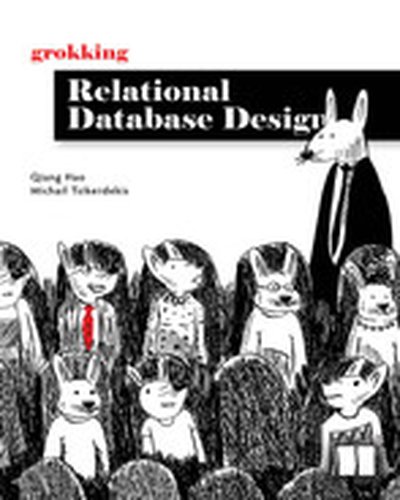
A friendly illustrated guide to designing and implementing your first database. Grokking Relational Database Design makes the principles of designing relational databases approachable and engaging. Everything in this book is reinforced by hands-on exercises and examples. In Grokking Relational Database Design, you’ll learn how to: Query and create databases using Structured Query Language (SQL) Design databases from scratch Implement and optimize database designs Take advantage of generative AI when designing databases A well-constructed database is easy to understand, query, manage, and scale when your app needs to grow. In Grokking Relational Database Design you’ll learn the basics of relational database design including how to name fields and tables, which data to store where, how to eliminate repetition, good practices for data collection and hygiene, and much more. You won’t need a computer science degree or in-depth knowledge of programming—the book’s practical examples and down-to-earth definitions are beginner-friendly. About the Technology Almost every business uses a relational database system. Whether you’re a software developer, an analyst creating reports and dashboards, or a business user just trying to pull the latest numbers, it pays to understand how a relational database operates. This friendly, easy-to-follow book guides you from square one through the basics of relational database design. About the Book Grokking Relational Database Design introduces the core skills you need to assemble and query tables using SQL. The clear explanations, intuitive illustrations, and hands-on projects make database theory come to life, even if you can’t tell a primary key from an inner join. As you go, you’ll design, implement, and optimize a database for an e-commerce application and explore how generative AI simplifies the mundane tasks of database designs. What's Inside Define entities and their relationships Minimize anomalies and redundancy Use SQL to implement your designs Security, scalability, and performance About the Reader For self-taught programmers, software engineers, data scientists, and business data users. No previous experience with relational databases assumed. About the Authors Dr. Qiang Hao and Dr. Michail Tsikerdekis are both professors of Computer Science at Western Washington University. Quotes If anyone is looking to improve their database design skills, they can’t go wrong with this book. - Ben Brumm, DatabaseStar Goes beyond SQL syntax and explores the core principles. An invaluable resource! - William Jamir Silva, Adjust Relational database design is best done right the first time. This book is a great help to achieve that! - Maxim Volgin, KLM Provides necessary notions to design and build databases that can stand the data challenges we face. - Orlando Méndez, Experian
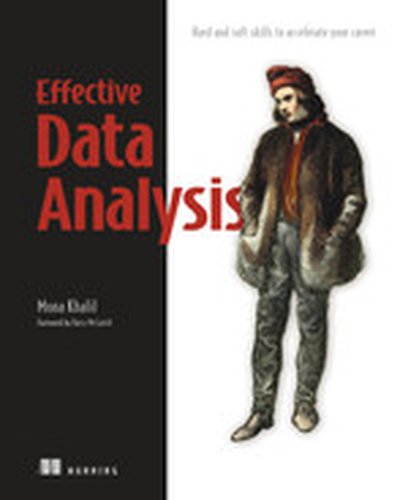
Learn the technical and soft skills you need to succeed in your career as a data analyst. You’ve learned how to use Python, R, SQL, and the statistical skills needed to get started as a data analyst—so, what’s next? Effective Data Analysis bridges the gap between foundational skills and real-world application. This book provides clear, actionable guidance on transforming business questions into impactful data projects, ensuring you’re tracking the right metrics, and equipping you with a modern data analyst’s essential toolbox. In Effective Data Analysis, you’ll gain the skills needed to excel as a data analyst, including: Maximizing the impact of your analytics projects and deliverables Identifying and leveraging data sources to enhance organizational insights Mastering statistical tests, understanding their strengths, limitations, and when to use them Overcoming the challenges and caveats at every stage of an analytics project Applying your expertise across a variety of domains with confidence Effective Data Analysis is full of sage advice on how to be an effective data analyst in a real production environment. Inside, you’ll find methods that enhance the value of your work—from choosing the right analysis approach, to developing a data-informed organizational culture. About the Technology Data analysts need top-notch knowledge of statistics and programming. They also need to manage clueless stakeholders, navigate messy problems, and advocate for resources. This unique book covers the essential technical topics and soft skills you need to be effective in the real world. About the Book Effective Data Analysis helps you lock down those skills along with unfiltered insight into what the job really looks like. You’ll build out your technical toolbox with tips for defining metrics, testing code, automation, sourcing data, and more. Along the way, you’ll learn to handle the human side of data analysis, including how to turn vague requirements into efficient data pipelines. And you’re sure to love author Mona Khalil’s illustrations, industry examples, and a friendly writing style. What's Inside Identify and incorporate external data Communicate with non-technical stakeholders Apply and interpret statistical tests Techniques to approach any business problem About the Reader Written for early-career data analysts, but useful for all. About the Author Mona Khalil is the Senior Manager of Analytics Engineering at Justworks. Quotes Your roadmap to becoming a standout data analyst! An intriguing blend of technical expertise and practical wisdom. - Chester Ismay, MATE Seminars A thoughtful guide to delivering real-world data analysis. It will be an eye-opening read for all data professionals! - David Lee, Justworks Inc. Compelling insights into the relationship between organizations and data. The real-life examples will help you excel in your data career. - Jeremy Moulton, Greenhouse Mona’s wide range of experience shines in her thoughtful, relevant examples. - Jessica Cherny, Fivetran
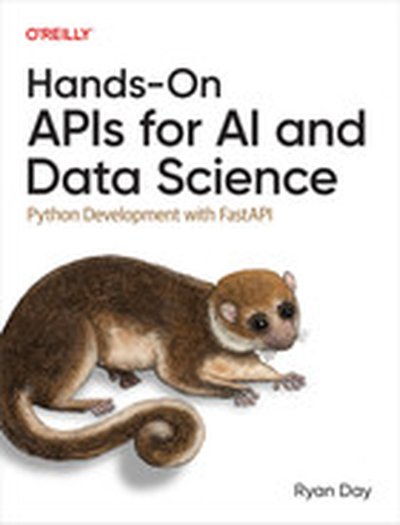
Are you ready to grow your skills in AI and data science? A great place to start is learning to build and use APIs in real-world data and AI projects. API skills have become essential for AI and data science success, because they are used in a variety of ways in these fields. With this practical book, data scientists and software developers will gain hands-on experience developing and using APIs with the Python programming language and popular frameworks like FastAPI and StreamLit. As you complete the chapters in the book, you'll be creating portfolio projects that teach you how to: Design APIs that data scientists and AIs love Develop APIs using Python and FastAPI Deploy APIs using multiple cloud providers Create data science projects such as visualizations and models using APIs as a data source Access APIs using generative AI and LLMs
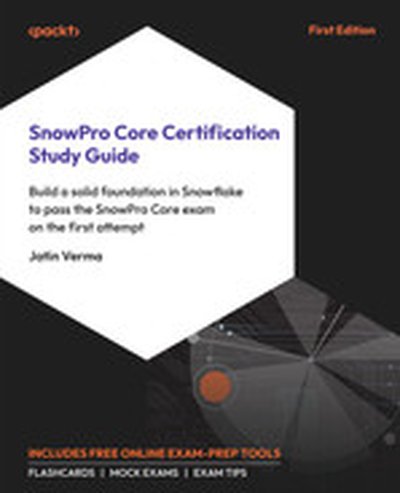
The "SnowPro Core Certification Study Guide" provides a comprehensive resource for mastering Snowflake data cloud concepts and passing the SnowPro Core exam. Through detailed explanations and practical exercises, you will gain the knowledge and skills necessary to successfully implement and manage Snowflake's powerful features and integrate data solutions effectively. What this Book will help me do Efficiently load and manage data in Snowflake for modern data processing. Optimize queries and configure Snowflake's performance features for data analytics. Securely implement access control and user roles to ensure data privacy. Apply Snowflake's sharing features to collaborate within and between organizations. Prepare effectively for the SnowPro Core exam with mock tests and review tools. Author(s) Jatin Verma is a renowned expert in Snowflake technologies and a certified SnowPro Core professional. With years of hands-on experience working with data solutions, Jatin excels at breaking down complex concepts into digestible lessons. His approachable writing style and dedication to education make this book a trusted resource for both aspiring and current professionals. Who is it for? This book is perfect for data engineers, analysts, database administrators, and business intelligence professionals who are looking to gain expertise in Snowflake and achieve SnowPro Core certification. It is particularly suited for those with foundational knowledge of databases, data warehouses, and SQL, seeking to advance their skills in Snowflake and become certified professionals. By leveraging this guide, readers can solidify their Snowflake knowledge and confidently approach the SnowPro Core certification exam.
Data engineers proficient in Databricks are currently in high demand. As organizations gather more data than ever before, skilled data engineers on platforms like Databricks become critical to business success. The Databricks Data Engineer Associate certification is proof that you have a complete understanding of the Databricks platform and its capabilities, as well as the essential skills to effectively execute various data engineering tasks on the platform. In this comprehensive study guide, you will build a strong foundation in all topics covered on the certification exam, including the Databricks Lakehouse and its tools and benefits. You'll also learn to develop ETL pipelines in both batch and streaming modes. Moreover, you'll discover how to orchestrate data workflows and design dashboards while maintaining data governance. Finally, you'll dive into the finer points of exactly what's on the exam and learn to prepare for it with mock tests. Author Derar Alhussein teaches you not only the fundamental concepts but also provides hands-on exercises to reinforce your understanding. From setting up your Databricks workspace to deploying production pipelines, each chapter is carefully crafted to equip you with the skills needed to master the Databricks Platform. By the end of this book, you'll know everything you need to ace the Databricks Data Engineer Associate certification exam with flying colors, and start your career as a certified data engineer from Databricks! You'll learn how to: Use the Databricks Platform and Delta Lake effectively Perform advanced ETL tasks using Apache Spark SQL Design multi-hop architecture to process data incrementally Build production pipelines using Delta Live Tables and Databricks Jobs Implement data governance using Databricks SQL and Unity Catalog Derar Alhussein is a senior data engineer with a master's degree in data mining. He has over a decade of hands-on experience in software and data projects, including large-scale projects on Databricks. He currently holds eight certifications from Databricks, showcasing his proficiency in the field. Derar is also an experienced instructor, with a proven track record of success in training thousands of data engineers, helping them to develop their skills and obtain professional certifications.
Master the art of designing and implementing analytics solutions using Microsoft Fabric with this comprehensive guide. Whether you're preparing for the DP-600 certification exam or want to advance your career, this book offers expert insights into data analytics in Microsoft environments. What this Book will help me do Confidently pass the DP-600 certification exam by mastering exam-tested skills. Acquire practical expertise in deploying data analytics solutions with Microsoft Fabric. Understand and optimize data integration, security, and performance in analytics systems. Learn advanced techniques including semantic model optimization and advanced SQL querying. Prepare for real-world challenges through mock exams and hands-on exercises. Author(s) Jagjeet Singh Makhija and Charles Odunukwe, authors of this guide, are seasoned Microsoft specialists with decades of experience in data analytics, certification training, and technology consulting. Their clear and methodical approach ensures learners at all levels can grow their expertise. Who is it for? If you're a data analyst or IT professional looking to enhance your skills in analytics and Microsoft's technologies, this book is for you. It's ideal for those pursuing the DP-600 certification or aiming to improve their data integration and analysis capabilities.
Explore Generative AI and understand its key concepts, architecture, and tangible business use cases. This book will help you develop the skills needed to use SAP AI Core service features available in the SAP Business Technology Platform. You’ll examine large language model (LLM) concepts and gain the practical knowledge to unleash the best use of Gen AI. As you progress, you’ll learn how to get started with your own LLM models and work with Generative AI use cases. Additionally, you’ll see how to take advantage Amazon Bedrock stack using AWS SDK for ABAP. To fully leverage your knowledge, Generative AI with SAP and Amazon Bedrock offers practical step-by-step instructions for how to establish a cloud SAP BTP account model and create your first GenAIartifacts. This work is an important prerequisite for those who want to take full advantage of generative AI with SAP. What You Will Learn Master the concepts and terminology of artificial intelligence and GenAI Understand opportunities and impacts for different industries with GenAI Become familiar with SAP AI Core, Amazon Bedrock, AWS SDK for ABAP and develop your firsts GenAI projects Accelerate your development skills Gain more productivity and time implementing GenAI use cases Who this Book Is For Anyone who wants to learn about Generative AI for Enterprise and SAP practitioners who want to take advantage of AI within the SAP ecosystem to support their systems and workflows.
Drawing from her experience at Google and Meta, Dr. Marily Nika delivers the definitive guide for product managers building AI and GenAI powered products. Packed with smart strategies, actionable tools, and real-world examples, this book breaks down the complex world of AI agents and generative AI products into a playbook for driving innovation to help product leaders bridge the gap between niche AI and GenAI technologies and user pain points. Whether you're already leading product teams or are an aspiring product manager, and regardless of your prior knowledge with AI, this guide will empower you to confidently navigate every stage of the AI product lifecycle. Confidently manage AI product development with tools, frameworks, strategic insights, and real-world examples from Google, Meta, OpenAI, and more Lead product orgs to solve real problems via agentic AI and GenAI capabilities Gain AI Awareness and technical fluency to work with AI models, LLMs, and the algorithms that power them; get cross-functional alignment; make strategic trade-offs; and set OKRs
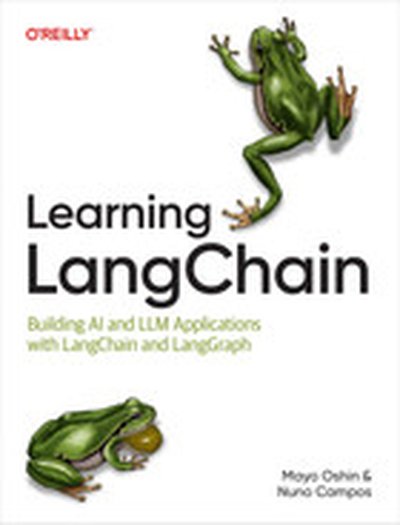
If you're looking to build production-ready AI applications that can reason and retrieve external data for context-awareness, you'll need to master--;a popular development framework and platform for building, running, and managing agentic applications. LangChain is used by several leading companies, including Zapier, Replit, Databricks, and many more. This guide is an indispensable resource for developers who understand Python or JavaScript but are beginners eager to harness the power of AI. Authors Mayo Oshin and Nuno Campos demystify the use of LangChain through practical insights and in-depth tutorials. Starting with basic concepts, this book shows you step-by-step how to build a production-ready AI agent that uses your data. Harness the power of retrieval-augmented generation (RAG) to enhance the accuracy of LLMs using external up-to-date data Develop and deploy AI applications that interact intelligently and contextually with users Make use of the powerful agent architecture with LangGraph Integrate and manage third-party APIs and tools to extend the functionality of your AI applications Monitor, test, and evaluate your AI applications to improve performance Understand the foundations of LLM app development and how they can be used with LangChain
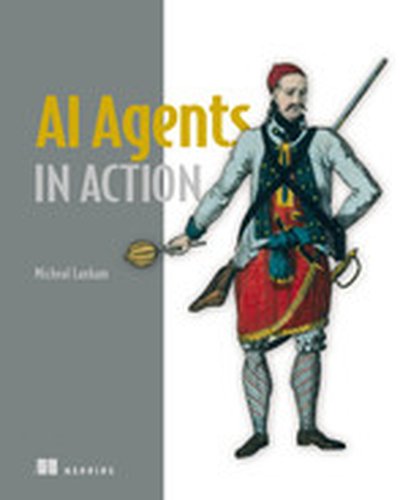
Create LLM-powered autonomous agents and intelligent assistants tailored to your business and personal needs. From script-free customer service chatbots to fully independent agents operating seamlessly in the background, AI-powered assistants represent a breakthrough in machine intelligence. In AI Agents in Action, you'll master a proven framework for developing practical agents that handle real-world business and personal tasks. Author Micheal Lanham combines cutting-edge academic research with hands-on experience to help you: Understand and implement AI agent behavior patterns Design and deploy production-ready intelligent agents Leverage the OpenAI Assistants API and complementary tools Implement robust knowledge management and memory systems Create self-improving agents with feedback loops Orchestrate collaborative multi-agent systems Enhance agents with speech and vision capabilities You won't find toy examples or fragile assistants that require constant supervision. AI Agents in Action teaches you to build trustworthy AI capable of handling high-stakes negotiations. You'll master prompt engineering to create agents with distinct personas and profiles, and develop multi-agent collaborations that thrive in unpredictable environments. Beyond just learning a new technology, you'll discover a transformative approach to problem-solving. About the Technology Most production AI systems require many orchestrated interactions between the user, AI models, and a wide variety of data sources. AI agents capture and organize these interactions into autonomous components that can process information, make decisions, and learn from interactions behind the scenes. This book will show you how to create AI agents and connect them together into powerful multi-agent systems. About the Book In AI Agents in Action, you’ll learn how to build production-ready assistants, multi-agent systems, and behavioral agents. You’ll master the essential parts of an agent, including retrieval-augmented knowledge and memory, while you create multi-agent applications that can use software tools, plan tasks autonomously, and learn from experience. As you explore the many interesting examples, you’ll work with state-of-the-art tools like OpenAI Assistants API, GPT Nexus, LangChain, Prompt Flow, AutoGen, and CrewAI. What's Inside Knowledge management and memory systems Feedback loops for continuous agent learning Collaborative multi-agent systems Speech and computer vision About the Reader For intermediate Python programmers. About the Author Micheal Lanham is a software and technology innovator with over 20 years of industry experience. He has authored books on deep learning, including Manning’s Evolutionary Deep Learning. Quotes This is about to become the hottest area of applied AI. Get a head start with this book! - Richard Davies, author of Prompt Engineering in Practice Couldn’t put this book down! It’s so comprehensive and clear that I felt like I was learning from a master teacher. - Radhika Kanubaddhi, Amazon An enlightening journey! This book transformed my questions into answers. - Jose San Leandro, ACM-SL Expertly guides through creating agent profiles, using tools, memory, planning, and multi-agent systems. Couldn’t be more timely! - Grigory Sapunov author of JAX in Action
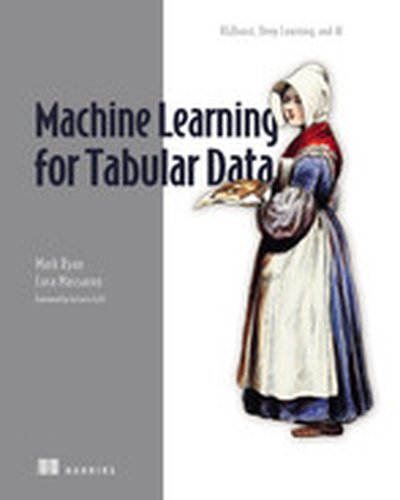
Business runs on tabular data in databases, spreadsheets, and logs. Crunch that data using deep learning, gradient boosting, and other machine learning techniques. Machine Learning for Tabular Data teaches you to train insightful machine learning models on common tabular business data sources such as spreadsheets, databases, and logs. You’ll discover how to use XGBoost and LightGBM on tabular data, optimize deep learning libraries like TensorFlow and PyTorch for tabular data, and use cloud tools like Vertex AI to create an automated MLOps pipeline. Machine Learning for Tabular Data will teach you how to: Pick the right machine learning approach for your data Apply deep learning to tabular data Deploy tabular machine learning locally and in the cloud Pipelines to automatically train and maintain a model Machine Learning for Tabular Data covers classic machine learning techniques like gradient boosting, and more contemporary deep learning approaches. By the time you’re finished, you’ll be equipped with the skills to apply machine learning to the kinds of data you work with every day. About the Technology Machine learning can accelerate everyday business chores like account reconciliation, demand forecasting, and customer service automation—not to mention more exotic challenges like fraud detection, predictive maintenance, and personalized marketing. This book shows you how to unlock the vital information stored in spreadsheets, ledgers, databases and other tabular data sources using gradient boosting, deep learning, and generative AI. About the Book Machine Learning for Tabular Data delivers practical ML techniques to upgrade every stage of the business data analysis pipeline. In it, you’ll explore examples like using XGBoost and Keras to predict short-term rental prices, deploying a local ML model with Python and Flask, and streamlining workflows using large language models (LLMs). Along the way, you’ll learn to make your models both more powerful and more explainable. What's Inside Master XGBoost Apply deep learning to tabular data Deploy models locally and in the cloud Build pipelines to train and maintain models About the Reader For readers experienced with Python and the basics of machine learning. About the Authors Mark Ryan is the AI Lead of the Developer Knowledge Platform at Google. A three-time Kaggle Grandmaster, Luca Massaron is a Google Developer Expert (GDE) in machine learning and AI. He has published 17 other books. Quotes
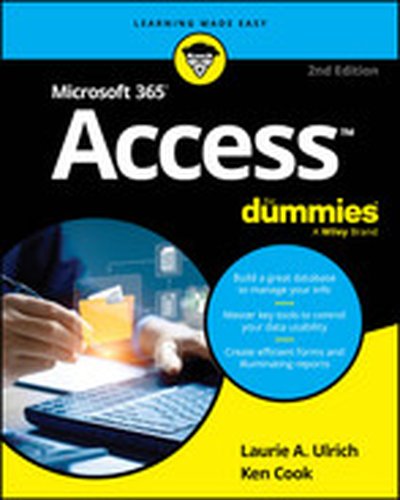
Join the millions of people already using Microsoft Access and become a database power-user in no time! In the newly revised edition of Microsoft Access For Dummies, professional database developer and Access extraordinaire Laurie Ulrich-Fuller walks you through the ins-and-outs of one of the world's most popular database platforms. This is the perfect beginner's guide to Microsoft Access, showing you how to create databases, extract data, create reports, and more. The author demonstrates a ton of tips, tricks, and best practices you can use immediately to create, maintain, and improve your databases. You'll also find: Updates outlining edge browser controls in forms Step-by-step guides explaining how to import, export, and edit data Easy-to-follow query-writing tutorials to help you find the exact data you're looking for when you need it Whether you're a database novice or a data science whiz, Microsoft Access For Dummies has the info you need to supercharge your database skills. It's the perfect, how-to guide to get you up-to-speed on everything you need to know to get started with Microsoft's world-famous database app.