talk-data.com talk-data.com

Topic

data

5765

tagged

Activity Trend

3 peak/qtr
2020-Q1 2026-Q1

Activities

5765 activities · Newest first

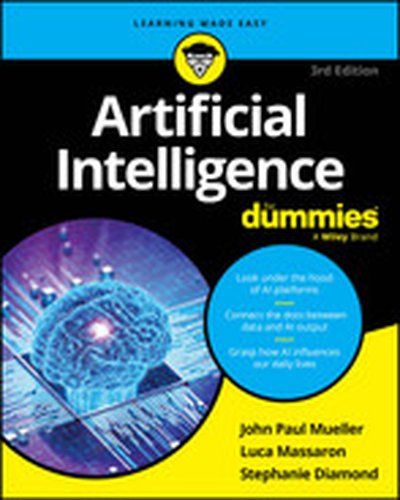
Artificial Intelligence For Dummies, 3rd Edition

Dive into the intelligence that powers artificial intelligence Artificial intelligence is swiftly moving from a sci-fi future to a modern reality. This edition of Artificial Intelligence For Dummies keeps pace with the lighting-fast expansion of AI tools that are overhauling every corner of reality. This book demystifies how artificial intelligence systems operate, giving you a look at the inner workings of AI and explaining the important role of data in creating intelligence. You'll get a primer on using AI in everyday life, and you'll also get a glimpse into possible AI-driven futures. What's next for humanity in the age of AI? How will your job and your life change as AI continue to evolve? How can you take advantage of AI today to make your live easier? This jargon-free Dummies guide answers all your most pressing questions about the world of artificial intelligence. Learn the basics of AI hardware and software, and how intelligence is created from code Get up to date with the latest AI trends and disruptions across industries Wrap your mind around what the AI revolution means for humanity, and for you Discover tips on using generative AI ethically and effectively Artificial Intelligence For Dummies is the ideal starting point for anyone seeking a deeper technological understanding of how artificial intelligence works and what promise it holds for the future.

Probability For Dummies, 2nd Edition

Learn how to calculate your chances with easy-to-understand explanations of probability Probability—the likelihood or chance of an event occurring—is an important branch of mathematics used in business and economics, finance, engineering, physics, and beyond. We see probability at work every day in areas such as weather forecasting, investing, and sports betting. Packed with real-life examples and mathematical problems with thorough explanations, Probability For Dummies helps students, professionals, and the everyday reader learn the basics. Topics include set theory, counting, permutations and combinations, random variables, conditional probability, joint distributions, conditional expectations, and probability modeling. Pass your probability class and play your cards right, with this accessible Dummies guide. Understand how probability impacts daily life Discover what counting rules are and how to use them Practice probability concepts with sample problems and explanations Get clear explanations of all the topics in your probability or statistics class Probability For Dummies is the perfect Dummies guide for college students, amateur and professional gamblers, investors, insurance professionals, and anyone preparing for the actuarial exam.

Data-driven Models in Inverse Problems

Advances in learning-based methods are revolutionizing several fields in applied mathematics, including inverse problems, resulting in a major paradigm shift towards data-driven approaches. This volume, which is inspired by this cutting-edge area of research, brings together contributors from the inverse problem community and shows how to successfully combine model- and data-driven approaches to gain insight into practical and theoretical issues.

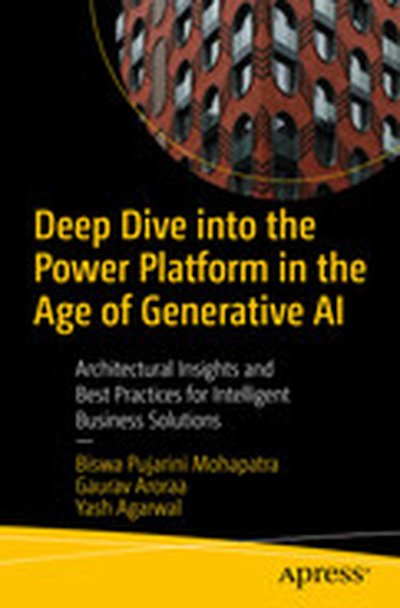
Deep Dive into the Power Platform in the Age of Generative AI: Architectural Insights and Best Practices for Intelligent Business Solutions

Understand the full potential of Microsoft Power Platform with this comprehensive guide, designed to provide you with the knowledge and tools needed to create intelligent business applications, automate workflows, and drive data-driven insights for business growth. Whether you're a novice or an experienced professional, this book offers a step-by-step approach to mastering the Power Platform. This book comes with an extensive array of essential concepts, architectural patterns and techniques. It will also guide you with practical insights to navigate the Power Platform effortlessly while integrating on Azure. Starting with exploring Power Apps for building enterprise applications, the book delves into Dataverse, Copilot Studio, AI Builder, managing platforms and Application life cycle management. You will then demonstrate testing strategy followed by a detailed examination of Dataverse and intelligent AI-powered Applications. Additionally, you will cover Power pages for external websites and AI-infused solutions. Each section is meticulously structured, offering step-by-step guidance, hands-on exercises, and real-world scenarios to reinforce learning. After reading the book, you will be able to optimize your utilization of the Power Platform for creating effective business solutions. What You Will Learn: Understand the core components and capabilities of Power Platform Explore how Power Platform integrates with Azure services Understand the key features and benefits of using Power Platform for business applications Discover best practices for governance to ensure compliance and efficient management Explore techniques for optimizing the performance of data integration and export processes on Azure Who This Book Is For: Application developers, Enterprise Architects and business decision-makers.

Power Apps Tips, Tricks, and Best Practices

This book, "Power Apps Tips, Tricks, and Best Practices," is your guide to mastering the development of robust Power Apps solutions. Through its structured and practical approach, you'll gain insights into planning, building, and maintaining applications using the Power Platform. Master advanced techniques, integrate with other systems, and ensure governance and security for professional-grade outcomes. What this Book will help me do Create scalable and maintainable applications using Power Apps. Master the setup and integration of Power Apps with tools like Power Automate and Power BI. Apply governance and security measures effectively to your Power Apps solutions. Leverage advanced topics such as data connections, Copilot Studio, and error handling. Optimize application interfaces through best practices using filtering, formatting, and formulas. Author(s) Andrea Pinillos and Tim Weinzapfel, experienced practitioners in Power Platform technologies, bring their expertise to this book. With years of professional experience in design and implementation, they use their hands-on knowledge to explain complex topics simply and clearly. Their passion for teaching is evident in their step-by-step approach to help you build Power Apps effectively. Who is it for? This book is designed for business analysts, IT professionals, and developers aiming to improve their app development skills. It accommodates both technical and non-technical users with an interest in Power Apps and the Power Platform. Readers should have a basic understanding of Microsoft 365 and Power Apps, although advanced topics are explained for beginners to comprehend easily.

Skew-Normal Model Theories and Their Applications

This book focuses on several skew-normal mixed effects models, and systematically explores the statistical inference theories, methods, and applications of parameters of interest. This book is of academic value, since it helps to establish a series of statistical inference theories and methods for skew-normal mixed effects models.

Intelligent Data Analytics for Bioinformatics and Biomedical Systems

The book analyzes the combination of intelligent data analytics with the intricacies of biological data that has become a crucial factor for innovation and growth in the fast-changing field of bioinformatics and biomedical systems. Intelligent Data Analytics for Bioinformatics and Biomedical Systems delves into the transformative nature of data analytics for bioinformatics and biomedical research. It offers a thorough examination of advanced techniques, methodologies, and applications that utilize intelligence to improve results in the healthcare sector. With the exponential growth of data in these domains, the book explores how computational intelligence and advanced analytic techniques can be harnessed to extract insights, drive informed decisions, and unlock hidden patterns from vast datasets. From genomic analysis to disease diagnostics and personalized medicine, the book aims to showcase intelligent approaches that enable researchers, clinicians, and data scientists to unravel complex biological processes and make significant strides in understanding human health and diseases. This book is divided into three sections, each focusing on computational intelligence and data sets in biomedical systems. The first section discusses the fundamental concepts of computational intelligence and big data in the context of bioinformatics. This section emphasizes data mining, pattern recognition, and knowledge discovery for bioinformatics applications. The second part talks about computational intelligence and big data in biomedical systems. Based on how these advanced techniques are utilized in the system, this section discusses how personalized medicine and precision healthcare enable treatment based on individual data and genetic profiles. The last section investigates the challenges and future directions of computational intelligence and big data in bioinformatics and biomedical systems. This section concludes with discussions on the potential impact of computational intelligence on addressing global healthcare challenges. Audience Intelligent Data Analytics for Bioinformatics and Biomedical Systems is primarily targeted to professionals and researchers in bioinformatics, genetics, molecular biology, biomedical engineering, and healthcare. The book will also suit academicians, students, and professionals working in pharmaceuticals and interpreting biomedical data.

Apache Spark for Machine Learning

Dive into the power of Apache Spark as a tool for handling and processing big data required for machine learning. With this book, you will explore how to configure, execute, and deploy machine learning algorithms using Spark's scalable architecture and learn best practices for implementing real-world big data solutions. What this Book will help me do Understand the integration of Apache Spark with large-scale infrastructures for machine learning applications. Employ data processing techniques for preprocessing and feature engineering efficiently with Spark. Master the implementation of advanced supervised and unsupervised learning algorithms using Spark. Learn to deploy machine learning models within Spark ecosystems for optimized performance. Discover methods for analyzing big data trends and machine learning model tuning for improved accuracy. Author(s) The author, Deepak Gowda, is an experienced data scientist with over ten years of expertise in machine learning and big data. His career spans industries such as supply chain, cybersecurity, and more where he has utilized Apache Spark extensively. Deepak's teaching style is marked by clarity and practicality, making complex concepts approachable. Who is it for? Apache Spark for Machine Learning is tailored for data engineers, machine learning practitioners, and computer science students looking to advance their ability to process, analyze, and model using large datasets. If you're already familiar with basic machine learning and want to scale your solutions using Spark, this book is ideal for your studies and professional growth.

Apache Airflow Best Practices

"Apache Airflow Best Practices" is your go-to guide for mastering data workflow orchestration using Apache Airflow. This book introduces you to core concepts and features of Airflow and helps you efficiently design, deploy, and manage workflows. With detailed examples and hands-on tutorials, you'll learn how to tackle real-world challenges in data engineering. What this Book will help me do Understand and utilize the features and updates introduced in Apache Airflow 2.x. Design and implement robust, scalable, and efficient data pipelines and workflows. Learn best practices for deploying Apache Airflow in cloud environments such as AWS and GCP. Extend Airflow's functionality with custom plugins and advanced configuration. Monitor, maintain, and scale your Airflow deployment effectively for high availability. Author(s) Dylan Intorf, Dylan Storey, and Kendrick van Doorn are seasoned professionals in data engineering, data strategy, and software development. Between them, they bring decades of experience working in diverse industries like finance, tech, and life sciences. They bring their expertise into this practical guide to help practitioners understand and master Apache Airflow. Who is it for? This book is tailored for data professionals such as data engineers, scientists, and system administrators, offering valuable insights for new learners and experienced users. If you're starting with workflow orchestration, seeking to optimize your current Airflow implementation, or scaling efforts, this book aligns with your goals. Readers should have a basic knowledge of Python programming and data engineering principles.

Artificial Intelligence for Cybersecurity

Explore how artificial intelligence can transform your cybersecurity strategies with "Artificial Intelligence for Cybersecurity". This book provides practical insights into applying AI methods to a variety of cybersecurity problems, from malware analysis to threat detection. By understanding these concepts, you'll gain the knowledge needed to protect your organization's data and networks effectively. What this Book will help me do Understand how AI methods can address cybersecurity concerns effectively. Develop practical skills using AI tools to combat cyber threats. Design AI-powered solutions for malware identification and anomaly detection. Navigate real-world applications of AI in cybersecurity scenarios. Recognize and mitigate common pitfalls while implementing AI methods in cybersecurity. Author(s) The authors, Bojan Kolosnjaji, Huang Xiao, Peng Xu, and Apostolis Zarras, are experts in machine learning and cybersecurity. With extensive backgrounds in both academia and industry, they bring a wealth of knowledge to the book. Their practical and educational approach makes complex AI and cybersecurity concepts accessible, empowering readers to apply these methods to real-world problems. Who is it for? This book is ideal for professionals in cybersecurity who are keen to integrate AI techniques into their frameworks and workflows. It's also suitable for machine learning enthusiasts who want to delve into the realm of cybersecurity. If you possess a basic understanding of Python programming and machine learning fundamentals, this book will guide you through to advanced concepts. Whether you are a student or an industry veteran, this book offers valuable insights for enhancing your cybersecurity strategies with AI.

Building Modern Data Applications Using Databricks Lakehouse

This book, "Building Modern Data Applications Using Databricks Lakehouse," provides a comprehensive guide for data professionals to master the Databricks platform. You'll learn to effectively build, deploy, and monitor robust data pipelines with Databricks' Delta Live Tables, empowering you to manage and optimize cloud-based data operations effortlessly. What this Book will help me do Understand the foundations and concepts of Delta Live Tables and its role in data pipeline development. Learn workflows to process and transform real-time and batch data efficiently using the Databricks lakehouse architecture. Master the implementation of Unity Catalog for governance and secure data access in modern data applications. Deploy and automate data pipeline changes using CI/CD, leveraging tools like Terraform and Databricks Asset Bundles. Gain advanced insights in monitoring data quality and performance, optimizing cloud costs, and managing DataOps tasks effectively. Author(s) Will Girten, the author, is a seasoned Solutions Architect at Databricks with over a decade of experience in data and AI systems. With a deep expertise in modern data architectures, Will is adept at simplifying complex topics and translating them into actionable knowledge. His books emphasize real-time application and offer clear, hands-on examples, making learning engaging and impactful. Who is it for? This book is geared towards data engineers, analysts, and DataOps professionals seeking efficient strategies to implement and maintain robust data pipelines. If you have a basic understanding of Python and Apache Spark and wish to delve deeper into the Databricks platform for streamlining workflows, this book is tailored for you.

Delta Lake: The Definitive Guide

Ready to simplify the process of building data lakehouses and data pipelines at scale? In this practical guide, learn how Delta Lake is helping data engineers, data scientists, and data analysts overcome key data reliability challenges with modern data engineering and management techniques. Authors Denny Lee, Tristen Wentling, Scott Haines, and Prashanth Babu (with contributions from Delta Lake maintainer R. Tyler Croy) share expert insights on all things Delta Lake--including how to run batch and streaming jobs concurrently and accelerate the usability of your data. You'll also uncover how ACID transactions bring reliability to data lakehouses at scale. This book helps you: Understand key data reliability challenges and how Delta Lake solves them Explain the critical role of Delta transaction logs as a single source of truth Learn the Delta Lake ecosystem with technologies like Apache Flink, Kafka, and Trino Architect data lakehouses with the medallion architecture Optimize Delta Lake performance with features like deletion vectors and liquid clustering

Microsoft Power Apps Cookbook - Third Edition

Microsoft Power Apps Cookbook is a comprehensive guide to harnessing the full potential of Microsoft Power Apps, a powerful low-code platform for building business applications. Packed with practical recipes, this book details how to develop scalable, efficient apps, automate workflows with RPA, and utilize new capabilities like AI-powered Microsoft Copilot and the Power Apps Component Framework. What this Book will help me do Create and deploy scalable canvas and model-driven apps using Microsoft Power Apps. Utilize AI-powered features like Copilot to speed up app creation and development. Implement robust data management strategies with Microsoft Dataverse. Extend app functionalities using the Power Apps Component Framework for custom components. Design and build secure external-facing websites with Microsoft Power Pages. Author(s) Eickhel Mendoza is an experienced Microsoft Power Platform developer and educator who has helped numerous organizations enhance their capabilities through low-code app development. Authoring from extensive hands-on experience, their teaching style bridges technical theory and practical application. Eickhel is passionate about empowering users to achieve more with modern app development tools. Who is it for? This book is ideal for information workers and developers looking to streamline their application development processes with Microsoft's low-code solutions. It is particularly targeted toward users with a foundational understanding of the Power Platform looking to deepen their knowledge. Readers will benefit most if they are eager to learn how to create innovative solutions efficiently. Traditional developers aiming to explore a new paradigm of rapid application development will also find it highly beneficial.

Pandas Cookbook - Third Edition

Discover the power of pandas for your data analysis tasks. Pandas Cookbook provides practical, hands-on recipes for mastering pandas 2.x, guiding you through real-world scenarios quickly and effectively. What this Book will help me do Efficiently manipulate and clean data using pandas. Perform advanced grouping and aggregation operations. Handle time series data with pandas robust functions. Optimize pandas code for better performance. Integrate pandas with tools like NumPy and databases. Author(s) William Ayd and Matthew Harrison co-authored this insightful cookbook. With years of practical experience in data science and Python development, both authors aim to make data analysis accessible and efficient using pandas. Who is it for? This book is perfect for Python developers and data analysts looking to enhance their data manipulation skills. Whether you're a beginner aiming to understand pandas or a professional seeking advanced insights, this book is tailored for anyone handling structured data.

Handling and Mapping Geographic Information

With the increasing proliferation of data and the systematization of geographic information referencing, maps are now a major concern – not only for specialists, but also for urban planning and development organizations and the general public. However, while producing a map may seem straightforward, the actual process of transforming data into a useful map with a specific purpose is characterized by a series of precise operations that require knowledge in a variety of fields: statistics, geography, cartography and so on. Handling and Mapping Geographic Information presents a wide range of operations based on a variety of examples. Each chapter adopts a different approach, explaining the methodological choices made in relation to the theme and the pursued objective. This approach, encompassing the entire map production process, will enable all readers, whether students, researchers, teachers or planners, to understand the multiple roles that maps can play in the analysis of geographical data.

Hands-On Prescriptive Analytics

Business decisions in any context—operational, tactical, or strategic—can have considerable consequences. Whether the outcome is positive and rewarding or negative and damaging to the business, its employees, and stakeholders is unknown when action is approved. These decisions are usually made under the proverbial cloud of uncertainty. With this practical guide, data analysts, data scientists, and business analysts will learn why and how maximizing positive consequences and minimizing negative ones requires three forms of rich information: Descriptive analytics explores the results from an action—what has already happened. Predictive analytics focuses on what could happen. The third, prescriptive analytics, informs us what should happen in the future. While all three are important for decision-makers, the primary focus of this book is on the third: prescriptive analytics. Author Walter R. Paczkowski, Ph.D. shows you: The distinction among descriptive, predictive, and prescriptive analytics How predictive analytics produces a menu of action options How prescriptive analytics narrows the menu of action options The forms of prescriptive analytics: eight prescriptive methods Two broad classes of these methods: non-stochastic and stochastic How to develop prescriptive analyses for action recommendations Ways to use an appropriate tool-set in Python

LLM Engineer's Handbook

The "LLM Engineer's Handbook" is your comprehensive guide to mastering Large Language Models from concept to deployment. Written by leading experts, it combines theoretical foundations with practical examples to help you build, refine, and deploy LLM-powered solutions that solve real-world problems effectively and efficiently. What this Book will help me do Understand the principles and approaches for training and fine-tuning Large Language Models (LLMs). Apply MLOps practices to design, deploy, and monitor your LLM applications effectively. Implement advanced techniques such as retrieval-augmented generation (RAG) and preference alignment. Optimize inference for high performance, addressing low-latency and high availability for production systems. Develop robust data pipelines and scalable architectures for building modular LLM systems. Author(s) Paul Iusztin and Maxime Labonne are experienced AI professionals specializing in natural language processing and machine learning. With years of industry and academic experience, they are dedicated to making complex AI concepts accessible and actionable. Their collaborative authorship ensures a blend of theoretical rigor and practical insights tailored for modern AI practitioners. Who is it for? This book is tailored for AI engineers, NLP professionals, and LLM practitioners who wish to deepen their understanding of Large Language Models. Ideal readers possess some familiarity with Python, AWS, and general AI concepts. If you aim to apply LLMs to real-world scenarios or enhance your expertise in AI-driven systems, this handbook is designed for you.

Aerospike: Up and Running

If you're a developer looking to build a distributed, resilient, scalable, high-performance application, you may be evaluating distributed SQL and NoSQL solutions. Perhaps you're considering the Aerospike database. This practical book shows developers, architects, and engineers how to get the highly scalable and extremely low-latency Aerospike database up and running. You will learn how to power your globally distributed applications and take advantage of Aerospike's hybrid memory architecture with the real-time performance of in-memory plus dependable persistence. After reading this book, you'll be able to build applications that can process up to tens of millions of transactions per second for millions of concurrent users on any scale of data. This practical guide provides: Step-by-step instructions on installing and connecting to Aerospike A clear explanation of the programming models available All the advice you need to develop your Aerospike application Coverage of issues such as administration, connectors, consistency, and security Code examples and tutorials to get you up and running quickly And more

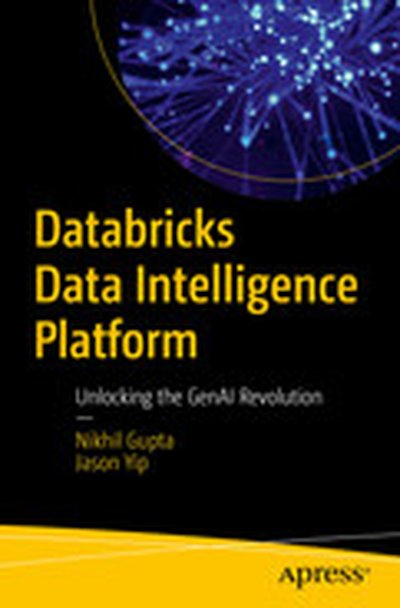
Databricks Data Intelligence Platform: Unlocking the GenAI Revolution

This book is your comprehensive guide to building robust Generative AI solutions using the Databricks Data Intelligence Platform. Databricks is the fastest-growing data platform offering unified analytics and AI capabilities within a single governance framework, enabling organizations to streamline their data processing workflows, from ingestion to visualization. Additionally, Databricks provides features to train a high-quality large language model (LLM), whether you are looking for Retrieval-Augmented Generation (RAG) or fine-tuning. Databricks offers a scalable and efficient solution for processing large volumes of both structured and unstructured data, facilitating advanced analytics, machine learning, and real-time processing. In today's GenAI world, Databricks plays a crucial role in empowering organizations to extract value from their data effectively, driving innovation and gaining a competitive edge in the digital age. This book will not only help you master the Data Intelligence Platform but also help power your enterprise to the next level with a bespoke LLM unique to your organization. Beginning with foundational principles, the book starts with a platform overview and explores features and best practices for ingestion, transformation, and storage with Delta Lake. Advanced topics include leveraging Databricks SQL for querying and visualizing large datasets, ensuring data governance and security with Unity Catalog, and deploying machine learning and LLMs using Databricks MLflow for GenAI. Through practical examples, insights, and best practices, this book equips solution architects and data engineers with the knowledge to design and implement scalable data solutions, making it an indispensable resource for modern enterprises. Whether you are new to Databricks and trying to learn a new platform, a seasoned practitioner building data pipelines, data science models, or GenAI applications, or even an executive who wants to communicate the value of Databricks to customers, this book is for you. With its extensive feature and best practice deep dives, it also serves as an excellent reference guide if you are preparing for Databricks certification exams. What You Will Learn Foundational principles of Lakehouse architecture Key features including Unity Catalog, Databricks SQL (DBSQL), and Delta Live Tables Databricks Intelligence Platform and key functionalities Building and deploying GenAI Applications from data ingestion to model serving Databricks pricing, platform security, DBRX, and many more topics Who This Book Is For Solution architects, data engineers, data scientists, Databricks practitioners, and anyone who wants to deploy their Gen AI solutions with the Data Intelligence Platform. This is also a handbook for senior execs who need to communicate the value of Databricks to customers. People who are new to the Databricks Platform and want comprehensive insights will find the book accessible.