talk-data.com talk-data.com

Topic

data

5765

tagged

Activity Trend

3 peak/qtr
2020-Q1 2026-Q1

Activities

5765 activities · Newest first

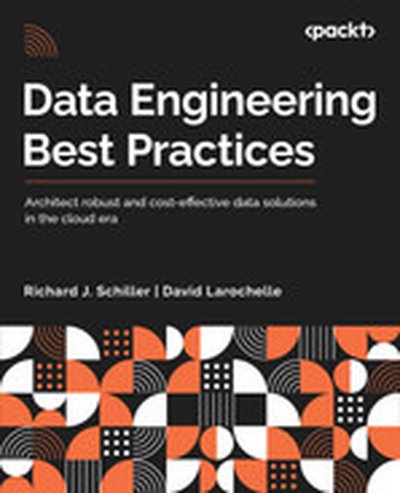
Data Engineering Best Practices

Unlock the secrets to building scalable and efficient data architectures with 'Data Engineering Best Practices.' This book provides in-depth guidance on designing, implementing, and optimizing cloud-based data pipelines. You will gain valuable insights into best practices, agile workflows, and future-proof designs. What this Book will help me do Effectively plan and architect scalable data solutions leveraging cloud-first strategies. Master agile processes tailored to data engineering for improved project outcomes. Implement secure, efficient, and reliable data pipelines optimized for analytics and AI. Apply real-world design patterns and avoid common pitfalls in data flow and processing. Create future-ready data engineering solutions following industry-proven frameworks. Author(s) Richard J. Schiller and David Larochelle are seasoned data engineering experts with decades of experience crafting efficient and secure cloud-based infrastructures. Their collaborative writing distills years of real-world expertise into practical advice aimed at helping engineers succeed in a rapidly evolving field. Who is it for? This book is ideal for data engineers, ETL specialists, and big data professionals seeking to enhance their knowledge in cloud-based solutions. Some familiarity with data engineering, ETL pipelines, and big data technologies is helpful. It suits those keen on mastering advanced practices, improving agility, and developing efficient data pipelines. Perfect for anyone looking to future-proof their skills in data engineering.

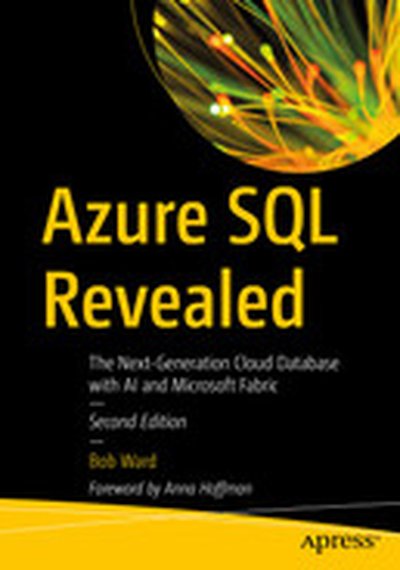
Azure SQL Revealed: The Next-Generation Cloud Database with AI and Microsoft Fabric

Access detailed content and examples on Azure SQL, a set of cloud services that allows for SQL Server to be deployed in the cloud. This book teaches the fundamentals of deployment, configuration, security, performance, and availability of Azure SQL from the perspective of these same tasks and capabilities in SQL Server. This distinct approach makes this book an ideal learning platform for readers familiar with SQL Server on-premises who want to migrate their skills toward providing cloud solutions to an enterprise market that is increasingly cloud-focused. If you know SQL Server, you will love this book. You will be able to take your existing knowledge of SQL Server and translate that knowledge into the world of cloud services from the Microsoft Azure platform, and in particular into Azure SQL. This book provides information never seen before about the history and architecture of Azure SQL. Author Bob Ward is a leading expert with access to and support from the Microsoft engineering team that built Azure SQL and related database cloud services. He presents powerful, behind-the-scenes insights into the workings of one of the most popular database cloud services in the industry. This book also brings you the latest innovations for Azure SQL including Azure Arc, Hyperscale, generative AI applications, Microsoft Copilots, and integration with the Microsoft Fabric. What You Will Learn Know the history of Azure SQL Deploy, configure, and connect to Azure SQL Choose the correct way to deploy SQL Server in Azure Migrate existing SQL Server instances to Azure SQL Monitor and tune Azure SQL’s performance to meet your needs Ensure your data and application are highly available Secure your data from attack and theft Learn the latest innovations for Azure SQL including Hyperscale Learn how to harness the power of AI for generative data-driven applications and Microsoft Copilots for assistance Learn how to integrate Azure SQL with the unified data platform, the Microsoft Fabric Who This Book Is For This book is designed to teach SQL Server in the Azure cloud to the SQL Server professional. Anyone who operates, manages, or develops applications for SQL Server will benefit from this book. Readers will be able to translate their current knowledge of SQL Server—especially of SQL Server 2019 and 2022—directly to Azure. This book is ideal for database professionals looking to remain relevant as their customer base moves into the cloud.

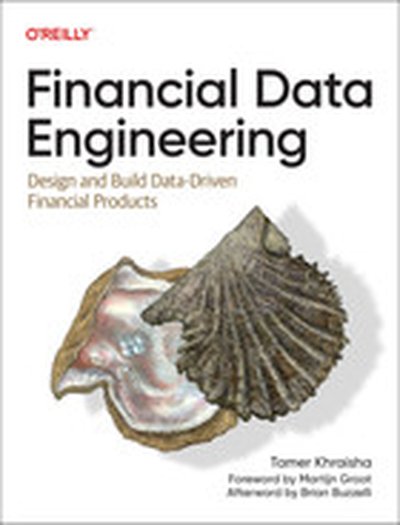
Financial Data Engineering

Today, investment in financial technology and digital transformation is reshaping the financial landscape and generating many opportunities. Too often, however, engineers and professionals in financial institutions lack a practical and comprehensive understanding of the concepts, problems, techniques, and technologies necessary to build a modern, reliable, and scalable financial data infrastructure. This is where financial data engineering is needed. A data engineer developing a data infrastructure for a financial product possesses not only technical data engineering skills but also a solid understanding of financial domain-specific challenges, methodologies, data ecosystems, providers, formats, technological constraints, identifiers, entities, standards, regulatory requirements, and governance. This book offers a comprehensive, practical, domain-driven approach to financial data engineering, featuring real-world use cases, industry practices, and hands-on projects. You'll learn: The data engineering landscape in the financial sector Specific problems encountered in financial data engineering The structure, players, and particularities of the financial data domain Approaches to designing financial data identification and entity systems Financial data governance frameworks, concepts, and best practices The financial data engineering lifecycle from ingestion to production The varieties and main characteristics of financial data workflows How to build financial data pipelines using open source tools and APIs Tamer Khraisha, PhD, is a senior data engineer and scientific author with more than a decade of experience in the financial sector.

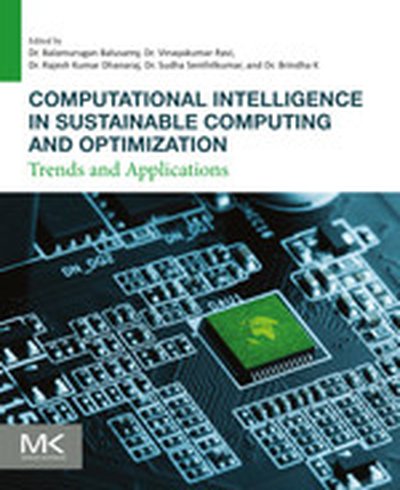
Computational Intelligence in Sustainable Computing and Optimization

Computational Intelligence in Sustainable Computing and Optimization: Trends and Applications focuses on developing and evolving advanced computational intelligence algorithms for the analysis of data involved in applications, such as agriculture, biomedical systems, bioinformatics, business intelligence, economics, disaster management, e-learning, education management, financial management, and environmental policies. The book presents research in sustainable computing and optimization, combining methods from engineering, mathematics, artificial intelligence, and computer science to optimize environmental resources Computational intelligence in the field of sustainable computing combines computer science and engineering in applications ranging from Internet of Things (IoT), information security systems, smart storage, cloud computing, intelligent transport management, cognitive and bio-inspired computing, and management science. In addition, data intelligence techniques play a critical role in sustainable computing. Recent advances in data management, data modeling, data analysis, and artificial intelligence are finding applications in energy networks and thus making our environment more sustainable. Presents computational, intelligence–based data analysis for sustainable computing applications such as pattern recognition, biomedical imaging, sustainable cities, sustainable transport, sustainable agriculture, and sustainable financial management Develops research in sustainable computing and optimization, combining methods from engineering, mathematics, and computer science to optimize environmental resources Includes three foundational chapters dedicated to providing an overview of computational intelligence and optimization techniques and their applications for sustainable computing

Fuzzy Methods for Assessment and Decision Making

Fuzzy Methods for Assessment and Decision Making presents the assessment of learning and problem-solving skills with qualitative grades. These methods are outcomes of the author’s research work on the subject for more than 20 years. In particular, a hybrid assessment model uses the Center of Gravity (COG) defuzzification technique, closed real intervals (grey numbers), neutrosophic sets, and soft sets as tools. The book starts with the basic mathematical background that is needed for an understanding of its contents. The Rectangular Fuzzy Assessment Model (RFAM) of Subbotin and Voskoglou is presented next, the outcomes of which are compared to those of the GPA index. The book presents innovative fuzzy assessment methods, enabling readers to assess the mean and quality performance of learning or problem-solving skills of a group of students when qualitative (linguistic) grades are used for this purpose. In the case of using linguistic grades for the assessment of a group’s skills, the classical method of calculating the mean value of the (numerical) grades cannot be applied. Also, no safe conclusions can be obtained on comparing the quality performance of two groups when the values of their GPA index are equal. Presents innovative, fuzzy assessment methods to enable readers to assess the mean and quality performance of learning Discusses fuzzy logic and techniques for decision-making in all domains Includes applications of fuzzy decision-making as a hybrid model using soft sets, grey numbers, and neutrosophic sets

Reshaping Intelligent Business and Industry

The convergence of Artif icial Intelligence (AI) and Internet of Things (IoT) is reshaping the way industries, businesses, and economies function; the 34 chapters in this collection show how the full potential of these technologies is being enabled to create intelligent machines that simulate smart behavior and support decision-making with little or no human interference, thereby providing startling organizational efficiencies. Readers will discover that in Reshaping Intelligent Business and Industry: The book unpacks the two superpowers of innovation, AI and IoT, and explains how they connect to better communicate and exchange information about online activities; How the center and the network's edge generate predictive analytics or anomaly alerts; The meaning of AI at the edge and IoT networks. How bandwidth is reduced and privacy and security are enhanced; How AI applications increase operating efficiency, spawn new products and services, and enhance risk management; How AI and IoT create 'intelligent' devices and how new AI technology enables IoT to reach its full potential; Analyzes AIOT platforms and the handling of personal information for shared frameworks that remain sensitive to customers’ privacy while effectively utilizing data. Audience This book will appeal to all business and organization leaders, entrepreneurs, policymakers, and economists, as well as scientists, engineers, and students working in artificial intelligence, software engineering, and information technology.

Data Security Blueprints

Once you decide to implement a data security strategy, it can be difficult to know where to start. With so many potential threats and challenges to resolve, teams often try to fix everything at once. But this boil-the-ocean approach is difficult to manage efficiently and ultimately leads to frustration, confusion, and halted progress. There's a better way to go. In this report, data science and AI leader Federico Castanedo shows you what to look for in a data security platform that will deliver the speed, scale, and agility you need to be successful in today's fast-paced, distributed data ecosystems. Unlike other resources that focus solely on data security concepts, this guide provides a road map for putting those concepts into practice. This report reveals: The most common data security use cases and their potential challenges What to look for in a data security solution that's built for speed and scale Why increasingly decentralized data architectures require centralized, dynamic data security mechanisms How to implement the steps required to put common use cases into production Methods for assessing risks—and controls necessary to mitigate those risks How to facilitate cross-functional collaboration to put data security into practice in a scalable, efficient way You'll examine the most common data security use cases that global enterprises across every industry aim to achieve, including the specific steps needed for implementation as well as the potential obstacles these use cases present. Federico Castanedo is a data science and AI leader with extensive experience in academia, industry, and startups. Having held leadership positions at DataRobot and Vodafone, he has a successful track record of leading high-performing data science teams and developing data science and AI products with business impact.

Advanced interactive interfaces with Access: Building Interactive Interfaces with VBA

Explore and learn advanced techniques for working with graphical, interactive interfaces that can be built in Access. This book starts with best practices and tips to write code using VBA, and covers how to implement them in a real-world scenario. You will learn how to create and use VBA classes. An introduction to the binary code and the "bit vector" technique is discussed, followed by the implementation of a drag-and-drop engine. You also will learn how to design a timeline, and make it scrollable. What You Will Learn Write readable, easy-to-maintain code Add a drag-and-drop engine to an Access application Apply variations to the drag-and-drop technique to create different graphical effects Embed a scrollable timeline in an Access application, on which objects can be dynamically placed Who This Book Is For VBA developers

Data Analysis and Related Applications 4

This book is a collective work by a number of leading scientists, analysts, engineers, mathematicians and statisticians who have been working at the forefront of data analysis and related applications, arising from data science, operations research, engineering, machine learning or statistics. The chapters of this collaborative work represent a cross-section of current research interests in the above scientific areas. The collected material has been divided into appropriate sections to provide the reader with both theoretical and applied information on data analysis methods, models and techniques, along with appropriate applications. Data Analysis and Related Applications 4 investigates a number of different topics in the areas mentioned above, touching on statistical analysis, stochastic processes, estimation methods, algorithms, distributions and networks, among others.

In-Memory Analytics with Apache Arrow - Second Edition

Dive into efficient data handling with 'In-Memory Analytics with Apache Arrow.' This book explores Apache Arrow, a powerful open-source project that revolutionizes how tabular and hierarchical data are processed. You'll learn to streamline data pipelines, accelerate analysis, and utilize high-performance tools for data exchange. What this Book will help me do Understand and utilize the Apache Arrow in-memory data format for your data analysis needs. Implement efficient and high-speed data pipelines using Arrow subprojects like Flight SQL and Acero. Enhance integration and performance in analysis workflows by using tools like Parquet and Snowflake with Arrow. Master chaining and reusing computations across languages and environments with Arrow's cross-language support. Apply in real-world scenarios by integrating Apache Arrow with analytics systems like Dremio and DuckDB. Author(s) Matthew Topol, the author of this book, brings 15 years of technical expertise in the realm of data processing and analysis. Having worked across various environments and languages, Matthew offers insights into optimizing workflows using Apache Arrow. His approachable writing style ensures that complex topics are comprehensible. Who is it for? This book is tailored for developers, data engineers, and data scientists eager to enhance their analytic toolset. Whether you're a beginner or have experience in data analysis, you'll find the concepts actionable and transformative. If you are curious about improving the performance and capabilities of your analytic pipelines or tools, this book is for you.

Take Control of Securing Your Apple Devices

Keep your Mac, iPhone, and iPad safe! Version 1.1.1, published September 28, 2025 Secure your Mac, iPhone, or iPad against attacks from the internet, physical intrusion, and more with the greatest of ease. Glenn Fleishman guides you through protecting yourself from phishing, email, and other exploits, as well as network-based invasive behavior. Learn about built-in privacy settings, the Secure Enclave, FileVault, hardware encryption keys, sandboxing, privacy settings, Advanced Data Protection, Lockdown Mode, resetting your password when all hope seems lost, and much more. The digital world is riddled with danger, even as Apple has done a fairly remarkable job at keeping our Macs, iPhones, and iPads safe. But the best security strategy is staying abreast of past risks and anticipating future ones. This book gives you all the insight and directions you need to ensure your Apple devices and their data are safe. It's up to date with macOS 26 Tahoe, iOS 26, and iPadOS 26. You’ll learn about the enhanced Advanced Data Protection option for iCloud services, allowing you to keep all your private data inaccessible not just to thieves and unwarranted government intrusion, but even to Apple! Also get the rundown on Lockdown Mode to deter direct network and phishing attacks, passkeys and hardware secure keys for the highest level of security for Apple Account and website logins, and Mac-specific features such as encrypted startup volumes and FileVault’s login protection process. Security and privacy are tightly related, and this book helps you understand how macOS, iOS, and iPadOS have increasingly compartmentalized and protected your personal data, and how to allow only the apps you want to access specific folders, your contacts, and other information. Here’s what this book has to offer:

Master the privacy settings on your Mac, iPhone, and iPad Calculate your level of risk and your tolerance for it Use Apple’s Stolen Device Protection feature for iPhone that deflects thieves who extract your passcode through coercion or misdirection. Learn why you’re asked to give permission for apps to access folders and personal data on your Mac Moderate access to your audio, video, screen actions, and other hardware inputs and outputs Get to know the increasing layers of system security deployed over the past few years Prepare against a failure or error that might lock you out of your device Share files and folders securely over a network and through cloud services Upgrade your iCloud data protection to use end-to-end encryption Control other low-level security options to reduce the risk of someone gaining physical access to your Mac—or override them to install system extensions Understand FileVault encryption and protection for Mac, and avoid getting locked out Investigate the security of a virtual private network (VPN) to see whether you should use one Learn how the Secure Enclave in Macs with a T2 chip or M-series Apple silicon affords hardware-level protections Dig into ransomware, the biggest potential threat to Mac users (though rare in practice) Discover recent security and privacy technologies, such as Lockdown Mode and passkeys Learn why your iPhone may restart automatically if it's been idle for several days

Data Engineering for Machine Learning Pipelines: From Python Libraries to ML Pipelines and Cloud Platforms

This book covers modern data engineering functions and important Python libraries, to help you develop state-of-the-art ML pipelines and integration code. The book begins by explaining data analytics and transformation, delving into the Pandas library, its capabilities, and nuances. It then explores emerging libraries such as Polars and CuDF, providing insights into GPU-based computing and cutting-edge data manipulation techniques. The text discusses the importance of data validation in engineering processes, introducing tools such as Great Expectations and Pandera to ensure data quality and reliability. The book delves into API design and development, with a specific focus on leveraging the power of FastAPI. It covers authentication, authorization, and real-world applications, enabling you to construct efficient and secure APIs using FastAPI. Also explored is concurrency in data engineering, examining Dask's capabilities from basic setup to crafting advanced machine learning pipelines. The book includes development and delivery of data engineering pipelines using leading cloud platforms such as AWS, Google Cloud, and Microsoft Azure. The concluding chapters concentrate on real-time and streaming data engineering pipelines, emphasizing Apache Kafka and workflow orchestration in data engineering. Workflow tools such as Airflow and Prefect are introduced to seamlessly manage and automate complex data workflows. What sets this book apart is its blend of theoretical knowledge and practical application, a structured path from basic to advanced concepts, and insights into using state-of-the-art tools. With this book, you gain access to cutting-edge techniques and insights that are reshaping the industry. This book is not just an educational tool. It is a career catalyst, and an investment in your future as a data engineering expert, poised to meet the challenges of today's data-driven world. What You Will Learn Elevate your data wrangling jobs by utilizing the power of both CPU and GPU computing, and learn to process data using Pandas 2.0, Polars, and CuDF at unprecedented speeds Design data validation pipelines, construct efficient data service APIs, develop real-time streaming pipelines and master the art of workflow orchestration to streamline your engineering projects Leverage concurrent programming to develop machine learning pipelines and get hands-on experience in development and deployment of machine learning pipelines across AWS, GCP, and Azure Who This Book Is For Data analysts, data engineers, data scientists, machine learning engineers, and MLOps specialists

Numerical Python: Scientific Computing and Data Science Applications with Numpy, SciPy and Matplotlib

Learn how to leverage the scientific computing and data analysis capabilities of Python, its standard library, and popular open-source numerical Python packages like NumPy, SymPy, SciPy, matplotlib, and more. This book demonstrates how to work with mathematical modeling and solve problems with numerical, symbolic, and visualization techniques. It explores applications in science, engineering, data analytics, and more. Numerical Python, Third Edition, presents many case study examples of applications in fundamental scientific computing disciplines, as well as in data science and statistics. This fully revised edition, updated for each library's latest version, demonstrates Python's power for rapid development and exploratory computing due to its simple and high-level syntax and many powerful libraries and tools for computation and data analysis. After reading this book, readers will be familiar with many computing techniques, including array-based and symbolic computing, visualization and numerical file I/O, equation solving, optimization, interpolation and integration, and domain-specific computational problems, such as differential equation solving, data analysis, statistical modeling, and machine learning. What You'll Learn Work with vectors and matrices using NumPy Review Symbolic computing with SymPy Plot and visualize data with Matplotlib Perform data analysis tasks with Pandas and SciPy Understand statistical modeling and machine learning with statsmodels and scikit-learn Optimize Python code using Numba and Cython Who This Book Is For Developers who want to understand how to use Python and its ecosystem of libraries for scientific computing and data analysis.

Integrating AI into Business Processes

Are you grappling with increasing productivity and enhancing creativity within your business processes? As businesses evolve in this digital age, the demand for swift, efficient, and innovative solutions is more pressing than ever. Traditional methods often fall short in keeping pace with the rapid changes and challenges that professionals face daily. Enter this report by Thomas Nield. This curated guide outlines the transformative power of generative AI in various business functions and serves as a much-needed solution to overcoming modern business hurdles. Discover how AI can be your ally in not just meeting but exceeding your productivity and creativity goals. You'll learn how to: Quickly find and use relevant images for presentations, blogs, and articles Save valuable time and refine your communications with AI-assisted email rewriting Easily distill large volumes of information into essential summaries Leverage AI for efficient data-gathering from the web, perfectly suited for analysis Utilize AI-generated text and visuals to craft compelling basic marketing materials

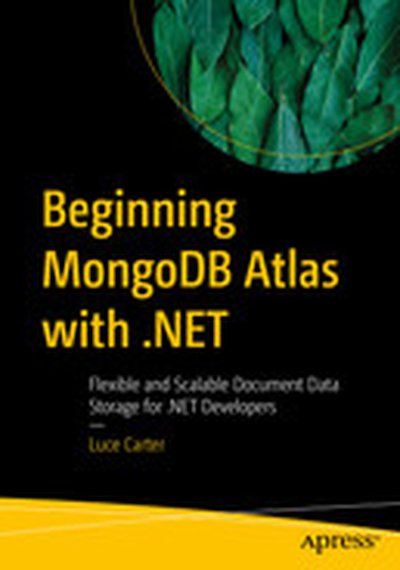
Beginning MongoDB Atlas with .NET: Flexible and Scalable Document Data Storage for .NET Developers

This book is a tutorial on MongoDB customized for developers working in Microsoft .NET 6, .NET 7, and beyond. It explains the differences between relational database systems and the document model supported by MongoDB, and shows how to build .NET applications that run against a MongoDB database, especially one in the cloud. Author Luce Carter kicks things off by teaching you how to determine when to use a document database versus a relational engine. After that, she walks you through building a Microsoft .NET project combining the MongoDB Atlas cloud database as a service solution with a .NET. application. In the process, you will learn how to create, read, update, and delete data in MongoDB from any .NET project. You will come away from this book with a solid understanding of MongoDB’s Developer Data Platform and how to use it from your .NET applications. You’ll be able to connect to MongoDB in the cloud and take advantage of the flexibility and scalability that MongoDB’s document storage model provides, and you’ll understand how to craft your applications to run using document storage and the MongoDB database engine. What You Will Learn Know when to use the MongoDB document model Build .NET applications that connect to MongoDB for data storage Create MongoDB clusters on the MongoDB Atlas cloud platform Store data in MongoDB Atlas Create, Read, Update, and Delete (CRUD) data from .NET Web API projects Test your CRUD endpoints using RESTful operations Validate schemas to help protect against breaking changes Who This Book Is For .NET developers who are looking for an alternative to relational databases, and those looking for a flexible and scalable document storage solution for use from .NET applications. Additionally, anyone wanting to learn MongoDB in the context of .NET and C# will benefit from this book.

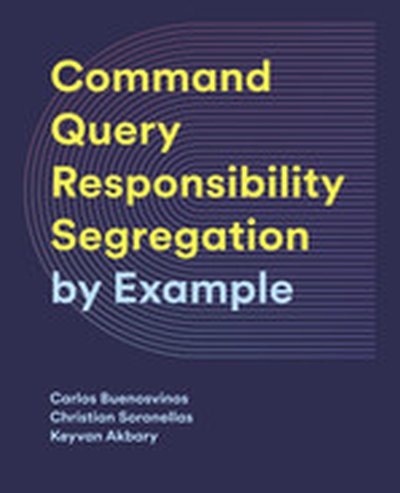
CQRS by Example

CQRS by Example is your gateway to mastering the Command Query Responsibility Segregation (CQRS) architecture. In this book, you will learn how to design robust and scalable systems by effectively separating read and write operations. Through detailed examples and practical implementation advice, you'll discover how CQRS improves maintainability and performance in complex software systems. What this Book will help me do Gain a deep understanding of the CQRS pattern and its benefits in software design. Learn to effectively distinguish between read (query) and write (command) operations. Master event sourcing to achieve strong data consistency in distributed systems. Understand and implement eventual consistency using practical examples. Apply CQRS architecture in real-world scenarios for scalable system design. Author(s) Carlos Buenosvinos, Christian Soronellas, and Keyvan Akbary bring decades of software development and system architecture expertise to this book. Having worked extensively in building high-performance, scalable systems across different industries, they have distilled their experience into a detailed guide for mastering CQRS. They have a passion for teaching complex concepts in an approachable way, making their work practical, actionable, and engaging. Who is it for? CQRS by Example is perfect for software developers and architects aiming to design scalable, high-performance systems. Whether you are a seasoned professional familiar with domain-driven design and microservices or a developer looking to adopt advanced architectural practices, this book has the insights you need. Prior knowledge of CQRS is not mandatory, but understanding of database design and distributed systems is beneficial. The content is aimed at empowering readers to apply CQRS effectively in professional projects.

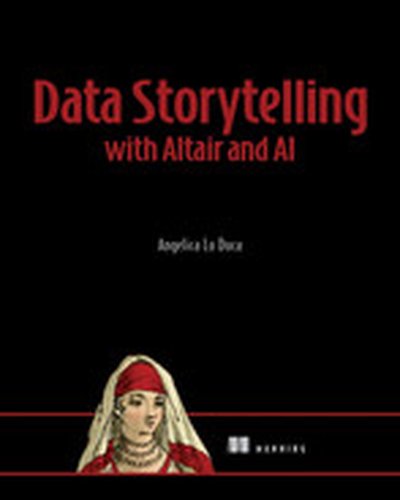
Data Storytelling with Altair and AI

Great data presentations tell a story. Learn how to organize, visualize, and present data using Python, generative AI, and the cutting-edge Altair data visualization toolkit. Take the fast track to amazing data presentations! Data Storytelling with Altair and AI introduces a stack of useful tools and tried-and-tested methodologies that will rapidly increase your productivity, streamline the visualization process, and leave your audience inspired. In Data Storytelling with Altair and AI you’ll discover: Using Python Altair for data visualization Using Generative AI tools for data storytelling The main concepts of data storytelling Building data stories with the DIKW pyramid approach Transforming raw data into a data story Data Storytelling with Altair and AI teaches you how to turn raw data into effective, insightful data stories. You’ll learn exactly what goes into an effective data story, then combine your Python data skills with the Altair library and AI tools to rapidly create amazing visualizations. Your bosses and decision-makers will love your new presentations—and you’ll love how quick Generative AI makes the whole process! About the Technology Every dataset tells a story. After you’ve cleaned, crunched, and organized the raw data, it’s your job to share its story in a way that connects with your audience. Python’s Altair data visualization library, combined with generative AI tools like Copilot and ChatGPT, provide an amazing toolbox for transforming numbers, code, text, and graphics into intuitive data presentations. About the Book Data Storytelling with Altair and AI teaches you how to build enhanced data visualizations using these tools. The book uses hands-on examples to build powerful narratives that can inform, inspire, and motivate. It covers the Altair data visualization library, along with AI techniques like generating text with ChatGPT, creating images with DALL-E, and Python coding with Copilot. You’ll learn by practicing with each interesting data story, from tourist arrivals in Portugal to population growth in the USA to fake news, salmon aquaculture, and more. What's Inside The Data-Information-Knowledge-Wisdom (DIKW) pyramid Publish data stories using Streamlit, Tableau, and Comet Vega and Vega-Lite visualization grammar About the Reader For data analysts and data scientists experienced with Python. No previous knowledge of Altair or Generative AI required. About the Author Angelica Lo Duca is a researcher at the Institute of Informatics and Telematics of the National Research Council, Italy. The technical editor on this book was Ninoslav Cerkez. Quotes This book’s step-by-step approach, illustrated through real-world examples, makes complex data accessible and actionable. - Alexey Grigorev, DataTalks.Club A clear and concise guide to data storytelling. Highly recommended. - Andrew Madson, Insights x Design Data storytelling in a way that anyone can do! This book feels ahead of its time. - Avery Smith, Data Career Jumpstart Excellent hands-on exercises that combine two of my favorite tools: AI and the Altair library. - Jose Berengueres, Author of DataViz and Storytelling