talk-data.com talk-data.com

Topic

data

5765

tagged

Activity Trend

3 peak/qtr
2020-Q1 2026-Q1

Activities

5765 activities · Newest first

Security on IBM z/VSE

Abstract One of a firm’s most valuable resources is its data: client lists, accounting data, employee information, and so on. This critical data must be securely managed and controlled, and simultaneously made available to those users authorized to see it. The IBM® z/VSE® system features extensive capabilities to simultaneously share the firm’s data among multiple users and protect them. Threats to this data come from various sources. Insider threats and malicious hackers are not only difficult to detect and prevent, they might be using resources with the business being unaware. This IBM Redbooks® publication was written to assist z/VSE support and security personnel in providing the enterprise with a safe, secure and manageable environment. This book provides an overview of the security that is provided by z/VSE and the processes for the implementation and configuration of z/VSE security components, Basic Security Manager (BSM), IBM CICS® security, TCP/IP security, single sign-on using LDAP, and connector security.

Foundations of Computational Finance with MATLAB

Graduate from Excel to MATLAB® to keep up with the evolution of finance data Foundations of Computational Finance with MATLAB® is an introductory text for both finance professionals looking to branch out from the spreadsheet, and for programmers who wish to learn more about finance. As financial data grows in volume and complexity, its very nature has changed to the extent that traditional financial calculators and spreadsheet programs are simply no longer enough. Today’s analysts need more powerful data solutions with more customization and visualization capabilities, and MATLAB provides all of this and more in an easy-to-learn skillset. This book walks you through the basics, and then shows you how to stretch your new skills to create customized solutions. Part I demonstrates MATLAB’s capabilities as they apply to traditional finance concepts, and PART II shows you how to create interactive and reusable code, link with external data sources, communicate graphically, and more. Master MATLAB’s basic operations including matrices, arrays, and flexible data structures Learn how to build your own customized solutions when the built-ins just won’t do Learn how to handle financial data and industry-specific variables including risk and uncertainty Adopt more accurate modeling practices for portfolios, options, time series, and more MATLAB is an integrated development environment that includes everything you need in one well-designed user interface. Available Toolboxes provide tested algorithms that save you hours of code, and the skills you learn using MATLAB make it easier to learn additional languages if you choose to do so. Financial firms are catching up to universities in MATLAB usage, so this is skill set that will follow you throughout your career. When you’re ready to step into the new age of finance, Foundations of Computational Finance with MATLAB provides the expert instruction you need to get started quickly.

Exam Ref 70-778 Analyzing and Visualizing Data by Using Microsoft Power BI

Prepare for Microsoft Exam 70-778-and help demonstrate your real-world mastery of Power BI data analysis and visualization. Designed for experienced BI professionals and data analysts ready to advance their status, Exam Ref focuses on the critical thinking and decision-making acumen needed for success at the MCSA level. Focus on the expertise measured by these objectives: Consume and transform data by using Power BI Desktop Model and visualize data Configure dashboards, reports, and apps in the Power BI Service This Microsoft Exam Ref: Organizes its coverage by exam objectives Features strategic, what-if scenarios to challenge you Assumes you have experience consuming and transforming data, modeling and visualizing data, and configuring dashboards using Excel and Power BI

Next-Generation Big Data: A Practical Guide to Apache Kudu, Impala, and Spark

Utilize this practical and easy-to-follow guide to modernize traditional enterprise data warehouse and business intelligence environments with next-generation big data technologies. Next-Generation Big Data takes a holistic approach, covering the most important aspects of modern enterprise big data. The book covers not only the main technology stack but also the next-generation tools and applications used for big data warehousing, data warehouse optimization, real-time and batch data ingestion and processing, real-time data visualization, big data governance, data wrangling, big data cloud deployments, and distributed in-memory big data computing. Finally, the book has an extensive and detailed coverage of big data case studies from Navistar, Cerner, British Telecom, Shopzilla, Thomson Reuters, and Mastercard. What You’ll Learn Install Apache Kudu, Impala, and Spark to modernize enterprise data warehouse and business intelligence environments, complete with real-world, easy-to-follow examples, and practical advice Integrate HBase, Solr, Oracle, SQL Server, MySQL, Flume, Kafka, HDFS, and Amazon S3 with Apache Kudu, Impala, and Spark Use StreamSets, Talend, Pentaho, and CDAP for real-time and batch data ingestion and processing Utilize Trifacta, Alteryx, and Datameer for data wrangling and interactive data processing Turbocharge Spark with Alluxio, a distributed in-memory storage platform Deploy big data in the cloud using Cloudera Director Perform real-time data visualization and time series analysis using Zoomdata, Apache Kudu, Impala, and Spark Understand enterprise big data topics such as big data governance, metadata management, data lineage, impact analysis, and policy enforcement, and how to use Cloudera Navigator to perform common data governance tasks Implement big data use cases such as big data warehousing, data warehouse optimization, Internet of Things, real-time data ingestion and analytics, complex event processing, and scalable predictive modeling Study real-world big data case studies from innovative companies, including Navistar, Cerner, British Telecom, Shopzilla, Thomson Reuters, and Mastercard Who This Book Is For BI and big data warehouse professionals interested in gaining practical and real-world insight into next-generation big data processing and analytics using Apache Kudu, Impala, and Spark; and those who want to learn more about other advanced enterprise topics

BizTalk

Why do businesses continue to use Microsoft’s BizTalk Server as the backbone to integrate line-of-business applications with their trading partners and how do recent changes make it even more effective? With the advent of Azure, we have a unique opportunity to enhance BizTalk functionality including reducing the cost of operations and maintenance. This book offers three solutions for the reader on ways to leverage BizTalk to get more from existing deployments or find ways to modernize the deployment via Azure. Microsoft partners are playing a significant role in enhancing the capabilities of BizTalk and this book includes sections that provide an in-depth review of BizTalk 360 © and the WPC HIPAA DB Toolkit ©. Over the recent past, Web 3.0 has also introduced many new concepts and open source technologies and this book covers ways to leverage these to enhance your BizTalk deployment. The authors start with a survey of the existing BizTalk Server – its history, patterns, and state of affairs –and go on to provide an in-depth elaboration of three messaging patterns that customers use for BizTalk; the advantages of updating to SQL Server 2016; a review of partner solutions that enhance BizTalk; and BizTalk with Web 3.0 for custom solutions. The book concludes with a comparison of the three viable BizTalk Azure application solutions that will enable you to make the best choice for your business.

Implementing IBM FlashSystem 900 Model AE3

Abstract Today’s global organizations depend on being able to unlock business insights from massive volumes of data. Now, with IBM® FlashSystem 900 Model AE3, powered by IBM FlashCore® technology, they can make faster decisions based on real-time insights and unleash the power of the most demanding applications, including online transaction processing (OLTP) and analytics databases, virtual desktop infrastructures (VDIs), technical computing applications, and cloud environments. This IBM Redbooks® publication introduces clients to the IBM FlashSystem® 900 Model AE3. It provides in-depth knowledge of the product architecture, software and hardware, implementation, and hints and tips. Also illustrated are use cases that show real-world solutions for tiering, flash-only, and preferred-read, and also examples of the benefits gained by integrating the FlashSystem storage into business environments. This book is intended for pre-sales and post-sales technical support professionals and storage administrators, and for anyone who wants to understand how to implement this new and exciting technology.

Mastering The Faster Web with PHP, MySQL, and JavaScript

Explore cutting-edge web optimization techniques in 'Mastering The Faster Web with PHP, MySQL, and JavaScript'. This comprehensive guide equips developers with the tools and knowledge to create lightning-fast web applications using modern technologies, including PHP 7, asynchronous programming, advanced SQL, and efficient JavaScript. What this Book will help me do Efficiently use profiling and benchmarking tools to identify performance bottlenecks. Optimize PHP 7 applications through efficient data structures and logical improvements. Enhance database performance by identifying and solving inefficient SQL queries. Incorporate modern asynchronous programming and functional programming techniques into your workflow. Integrate seamless UI designs that prioritize application responsiveness and user experience. Author(s) None Caya is a seasoned web developer with extensive experience in PHP, MySQL, and JavaScript. Through their career, they have delved deep into profiling, optimization techniques, and modern web technologies to deliver high-performance web solutions. This book reflects their commitment to providing actionable insights and practical advice to fellow developers. Who is it for? Ideal readers of this book are PHP developers with foundational knowledge in programming and web technologies who aspire to build and optimize modern web applications. Experience in JavaScript is not required, as the book covers essential aspects needed for performance enhancements. If you're aiming to hone your skills in creating faster web solutions, this book suits your goals perfectly.

Microsoft SQL Server 2017 on Linux

Essential Microsoft® SQL Server® 2017 installation, configuration, and management techniques for Linux Foreword by Kalen Delaney, Microsoft SQL Server MVP This comprehensive guide shows, step-by-step, how to set up, configure, and administer SQL Server 2017 on Linux for high performance and high availability. Written by a SQL Server expert and respected author, Microsoft SQL Server 2017 on Linux teaches valuable Linux skills to Windows-based SQL Server professionals. You will get clear coverage of both Linux and SQL Server and complete explanations of the latest features, tools, and techniques. The book offers clear instruction on adaptive query processing, automatic tuning, disaster recovery, security, and much more. •Understand how SQL Server 2017 on Linux works •Install and configure SQL Server on Linux •Run SQL Server on Docker containers •Learn Linux Administration •Troubleshoot and tune query performance in SQL Server •Learn what is new in SQL Server 2017 •Work with adaptive query processing and automatic tuning techniques •Implement high availability and disaster recovery for SQL Server on Linux •Learn the security features available in SQL Server

MySQL and JSON: A Practical Programming Guide

Practical instruction on using JavaScript Object Notation (JSON) with MySQL This hands-on guide teaches, step by step, how to use JavaScript Object Notation (JSON) with MySQL. Written by a MySQL Community Manager for Oracle , MySQL and JSON: A Practical Programming Guide shows how to quickly get started using JSON with MySQL and clearly explains the latest tools and functions. All content is based on the author’s years of interaction with MySQL professionals. Throughout, real-world examples and sample code guide you through the syntax and application of each method. You will get in-depth coverage of programming with the MySQL Document Store. •See how JavaScript Object Notation (JSON) works with MySQL •Use JSON as string data and JSON as a data type •Find the path, load data, and handle searches with REGEX •Work with JSON and non-JSON output •Build virtual generated columns and stored generated columns •Generate complex geometries using GeoJSON •Convert and manage data with JSON functions •Access JSON data, collections, and tables through MySQL Document Store

Exam Ref 70-779 Analyzing and Visualizing Data with Microsoft Excel

Prepare for Microsoft Exam 70-779 and help demonstrate your real-world mastery of Microsoft Excel data analysis and visualization. Designed for BI professionals, data analysts, and others who analyze business data with Excel, this Exam Ref focuses on the critical thinking and decision-making acumen needed for success at the MCSA level. Focus on the expertise measured by these objectives: Consume and transform data by using Microsoft Excel Model data, from building and optimizing data models through creating performance KPIs, actual and target calculations, and hierarchies Visualize data, including creating and managing PivotTables and PivotCharts, and interacting with PowerBI This Microsoft Exam Ref: Organizes its coverage by exam objectives Features strategic, what-if scenarios to challenge you Assumes you have a strong understanding of how to use Microsoft Excel to perform data analysis

IBM z14 Model ZR1 Technical Guide

Abstract This IBM® Redbooks® publication describes the new member of the IBM Z® family, IBM z14™ Model ZR1 (Machine Type 3907). It includes information about the Z environment and how it helps integrate data and transactions more securely, and can infuse insight for faster and more accurate business decisions. The z14 ZR1 is a state-of-the-art data and transaction system that delivers advanced capabilities, which are vital to any digital transformation. The z14 ZR1 is designed for enhanced modularity, in an industry standard footprint. A data-centric infrastructure must always be available with a 99.999% or better availability, have flawless data integrity, and be secured from misuse. It also must be an integrated infrastructure that can support new applications. Finally, it must have integrated capabilities that can provide new mobile capabilities with real-time analytics that are delivered by a secure cloud infrastructure. IBM z14 ZR1 servers are designed with improved scalability, performance, security, resiliency, availability, and virtualization. The superscalar design allows z14 ZR1 servers to deliver a record level of capacity over the previous IBM Z platforms. In its maximum configuration, z14 ZR1 is powered by up to 30 client characterizable microprocessors (cores) running at 4.5 GHz. This configuration can run more than 29,000 million instructions per second and up to 8 TB of client memory. The IBM z14 Model ZR1 is estimated to provide up to 54% more total system capacity than the IBM z13s® Model N20. This Redbooks publication provides information about IBM z14 ZR1 and its functions, features, and associated software support. More information is offered in areas that are relevant to technical planning. It is intended for systems engineers, consultants, planners, and anyone who wants to understand the IBM Z servers functions and plan for their usage. It is intended as an introduction to mainframes. Readers are expected to be generally familiar with IBM Z technology and terminology.

Data Analytics with Spark Using Python, First edition

Spark for Data Professionals introduces and solidifies the concepts behind Spark 2.x, teaching working developers, architects, and data professionals exactly how to build practical Spark solutions. Jeffrey Aven covers all aspects of Spark development, including basic programming to SparkSQL, SparkR, Spark Streaming, Messaging, NoSQL and Hadoop integration. Each chapter presents practical exercises deploying Spark to your local or cloud environment, plus programming exercises for building real applications. Unlike other Spark guides, Spark for Data Professionals explains crucial concepts step-by-step, assuming no extensive background as an open source developer. It provides a complete foundation for quickly progressing to more advanced data science and machine learning topics. This guide will help you: Understand Spark basics that will make you a better programmer and cluster “citizen” Master Spark programming techniques that maximize your productivity Choose the right approach for each problem Make the most of built-in platform constructs, including broadcast variables, accumulators, effective partitioning, caching, and checkpointing Leverage powerful tools for managing streaming, structured, semi-structured, and unstructured data

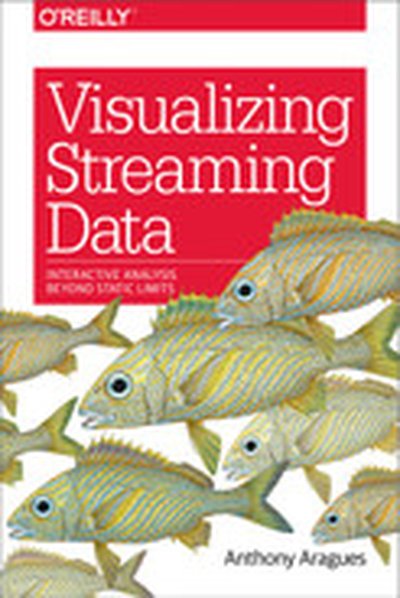
Visualizing Streaming Data

While tools for analyzing streaming and real-time data are gaining adoption, the ability to visualize these data types has yet to catch up. Dashboards are good at conveying daily or weekly data trends at a glance, though capturing snapshots when data is transforming from moment to moment is more difficult—but not impossible. With this practical guide, application designers, data scientists, and system administrators will explore ways to create visualizations that bring context and a sense of time to streaming text data. Author Anthony Aragues guides you through the concepts and tools you need to build visualizations for analyzing data as it arrives. Determine your company’s goals for visualizing streaming data Identify key data sources and learn how to stream them Learn practical methods for processing streaming data Build a client application for interacting with events, logs, and records Explore common components for visualizing streaming data Consider analysis concepts for developing your visualization Define the dashboard’s layout, flow direction, and component movement Improve visualization quality and productivity through collaboration Explore use cases including security, IoT devices, and application data

Big Data Analytics with Hadoop 3

Big Data Analytics with Hadoop 3 is your comprehensive guide to understanding and leveraging the power of Apache Hadoop for large-scale data processing and analytics. Through practical examples, it introduces the tools and techniques necessary to integrate Hadoop with other popular frameworks, enabling efficient data handling, processing, and visualization. What this Book will help me do Understand the foundational components and features of Apache Hadoop 3 such as HDFS, YARN, and MapReduce. Gain the ability to integrate Hadoop with programming languages like Python and R for data analysis. Learn the skills to utilize tools such as Apache Spark and Apache Flink for real-time data analytics within the Hadoop ecosystem. Develop expertise in setting up a Hadoop cluster and performing analytics in cloud environments such as AWS. Master the process of building practical big data analytics pipelines for end-to-end data processing. Author(s) Sridhar Alla is a seasoned big data professional with extensive industry experience in building and deploying scalable big data analytics solutions. Known for his expertise in Hadoop and related ecosystems, Sridhar combines technical depth with clear communication in his writing, providing practical insights and hands-on knowledge. Who is it for? This book is tailored for data professionals, software engineers, and data scientists looking to expand their expertise in big data analytics using Hadoop 3. Whether you're an experienced developer or new to the big data ecosystem, this book provides the step-by-step guidance and practical examples needed to advance your skills and achieve your analytical goals.

Enabling Hybrid Cloud Storage for IBM Spectrum Scale Using Transparent Cloud Tiering

This IBM® Redbooks® publication provides information to help you with the sizing, configuration, and monitoring of hybrid cloud solutions using the transparent cloud tiering (TCT) functionality of IBM Spectrum™ Scale. IBM Spectrum Scale™ is a scalable data, file, and object management solution that provides a global namespace for large data sets and several enterprise features. The IBM Spectrum Scale feature called transparent cloud tiering allows cloud object storage providers, such as IBM Cloud™ Object Storage, IBM Cloud, and Amazon S3, to be used as a storage tier for IBM Spectrum Scale. Transparent cloud tiering can help cut storage capital and operating costs by moving data that does not require local performance to an on-premise or off-premise cloud object storage provider. Transparent cloud tiering reduces the complexity of cloud object storage by making data transfers transparent to the user or application. This capability can help you adapt to a hybrid cloud deployment model where active data remains directly accessible to your applications and inactive data is placed in the correct cloud (private or public) automatically through IBM Spectrum Scale policies. This publication is intended for IT architects, IT administrators, storage administrators, and those wanting to learn more about sizing, configuration, and monitoring of hybrid cloud solutions using IBM Spectrum Scale and transparent cloud tiering.

Hands-On Data Science with Anaconda

Hands-On Data Science with Anaconda is your guide to harnessing the full potential of Anaconda, a powerful platform for data science and machine learning. With this book, you will learn how to set up Anaconda, manage packages, explore advanced data processing techniques, and create robust machine learning models using Python, R, and Julia. What this Book will help me do Master data preprocessing techniques including cleaning, sorting, and classification using Anaconda. Understand and utilize the conda package manager for efficient package management. Learn to explore and visualize data using packages and frameworks supported by Anaconda. Perform advanced operations like clustering, regression, and building predictive models. Implement distributed computing and manage environments effectively with Anaconda Cloud. Author(s) Yuxing Yan and co-author None Yan are seasoned data science professionals with extensive experience in utilizing cutting-edge tools like Anaconda to simplify and enhance data science workflows. With a focus on making complex concepts accessible, they offer a practical and systematic approach to mastering tools that power real-world data science projects. Who is it for? This book is for data science practitioners, analysts, or developers with a basic understanding of Python, R, and linear algebra who want to scale their skills and learn to utilize the Anaconda platform for their projects. If you're seeking to work more effectively within the Anaconda ecosystem or equip yourself with efficient tools for data analysis and machine learning, this book is for you.

Hands-On Data Warehousing with Azure Data Factory

Dive into the world of ETL (Extract, Transform, Load) with 'Hands-On Data Warehousing with Azure Data Factory'. This book guides readers through the essential techniques for working with Azure Data Factory and SQL Server Integration Services to design, implement, and optimize ETL solutions for both on-premises and cloud data environments. What this Book will help me do Understand and utilize Azure Data Factory and SQL Server Integration Services to build ETL solutions. Design scalable and high-performance ETL architectures tailored to modern data problems. Integrate various Azure services, such as Azure Data Lake Analytics, Machine Learning, and Databricks Spark, into your workflows. Troubleshoot and optimize ETL pipelines and address common challenges in data processing. Create insightful Power BI dashboards to visualize and interact with data from your ETL workflows. Author(s) Authors None Cote, Michelle Gutzait, and Giuseppe Ciaburro bring a wealth of experience in data engineering and cloud technologies to this practical guide. Combining expertise in Azure ecosystem and hands-on Data Warehousing, they deliver actionable insights for working professionals. Who is it for? This book is crafted for software professionals working in data engineering, especially those specializing in ETL processes. Readers with a foundational knowledge of SQL Server and cloud infrastructures will benefit most. If you aspire to implement state-of-the-art ETL pipelines or enhance existing workflows with ADF and SSIS, this book is an ideal resource.

Introducing Microsoft Flow: Automating Workflows Between Apps and Services

Use Microsoft Flow in your business to improve productivity through automation with this step-by-step introductory text from a Microsoft Flow expert. You’ll see the prerequisites to get started with this cloud-based service, including how to create a flow and how to use different connectors. Introducing Microsoft Flow takes you through connecting with SharePoint, creating approval flows, and using mobile apps. This vital information gives you a head-start when planning your Microsoft Flow implementation. The second half of the book continues with managing connections and gateways, where you’ll cover the configuration, creation, and deletion of connectors and how to connect to a data gateway. The final topic is Flow administration and techniques to manage the environment. After reading this book, you will be able to create and manage Flow from desktop, laptop, or mobile devices and connect with multiple services such as SharePoint, Twitter, Facebook, and other networking sites. What You Will Learn Create flows from built-in and blank templates Manage flows, connections, and gateways Create approvals, connect with multiple services, and use mobile apps Who This Book Is For Administrators and those who are interested in creating automated workflows using templates and connecting with multiple services without writing a single line of code.