talk-data.com talk-data.com

Topic

Data Analytics

data_analysis statistics insights

156

tagged

Activity Trend

38 peak/qtr
2020-Q1 2026-Q1

Activities

Showing filtered results

Filtering by: O'Reilly Data Science Books ×
Analytics Engineering with Microsoft Fabric and Power BI

While Microsoft Power BI has dominated the business intelligence market for years and is a go-to tool for creating visually appealing, interactive reports and dashboards, it's now an integral part of Microsoft Fabric, the end-to-end analytics platform that offers unprecedented flexibility and scalability for building enterprise-grade data analytics solutions. This book covers everything analytics engineers need to know to design and implement robust and efficient analytics solutions using Microsoft Fabric and Power BI. You'll learn the core components of Fabric, such as lakehouses, warehouses, and eventhouses, and how to work with semantic models, ensuring that data is structured and ready for analysis. You'll also discover essential techniques in both Microsoft Fabric and Power BI that you can apply in your day-to-day work. Explore the core components of Microsoft Fabric Implement, manage, and optimize Power BI semantic models Discover numerous architectural solutions with Microsoft Fabric and Power BI Build Fabric items such as lakehouses, warehouses, semantic models, and more, and share them within your organization Identify when to use a particular Fabric item or implement a particular design pattern Implement the analytics development lifecycle Optimize and fine-tune existing analytics solutions

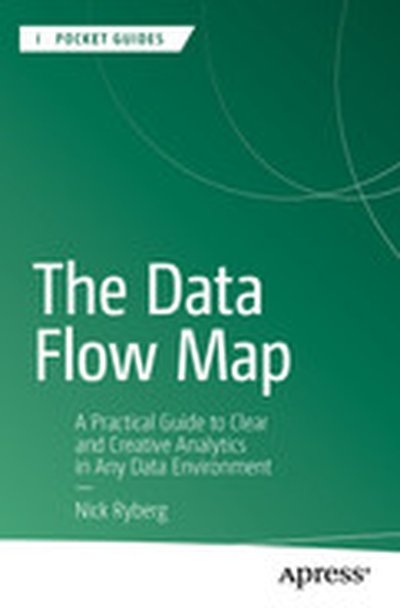
The Data Flow Map: A Practical Guide to Clear and Creative Analytics in Any Data Environment

Unlock the secrets of practical data analysis with the Data Flow Map framework—a game-changing approach that transcends tools and platforms. This book isn’t just another programming manual; it’s a guide to thinking and communicating about data at a higher level. Whether you're working with spreadsheets, databases, or AI-driven models, you'll learn how to express your analytics in clear, common language that anyone can understand. In today’s data-rich world, clarity is the real challenge. Technical details often obscure insights that could drive real impact. The Data Flow Map framework simplifies complexity into three core motions: source, focus, and build. The first half of the book explores these concepts through illustrations and stories. The second half applies them to real-world datasets using tools like Excel, SQL, and Python, showing how the framework works across platforms and use cases. A vital resource for analysts at any level, this book offers a practical, tool-agnostic approach to data analysis. With hands-on examples and a universal mental model, you’ll gain the confidence to tackle any dataset, align your team, and deliver insights that matter. Whether you're a beginner or a seasoned pro, the Data Flow Map framework will transform how you approach data analytics. What You Will Learn Grasp essential elements applicable to every data analysis workflow Adapt quickly to any dataset, tool, or platform Master analytic thinking at a higher level Use analytics patterns to better understand the world Break complex analysis into manageable, repeatable steps Iterate faster to uncover deeper insights and better solutions Communicate findings clearly for better decision-making Who This Book Is For Aspiring data professionals and experienced analysts, from beginners to seasoned data engineers, focused on data collection, analysis, and decision making

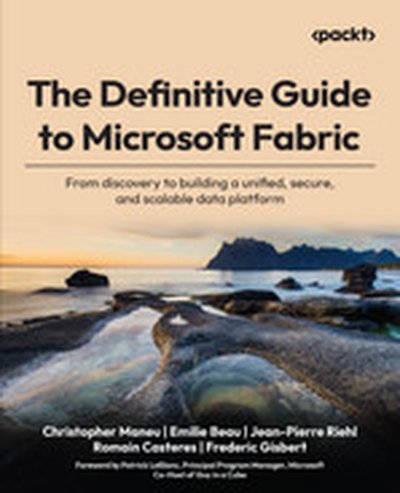
The Definitive Guide to Microsoft Fabric

Master Microsoft Fabric from basics to advanced architectures with expert guidance to unify, secure, and scale analytics on real-world data platforms Key Features Build a complete data analytics platform with Microsoft Fabric Apply proven architectures, governance, and security strategies Gain real-world insights from five seasoned data experts Purchase of the print or Kindle book includes a free PDF eBook Book Description Microsoft Fabric is reshaping how organizations manage, analyze, and act on data by unifying ingestion, storage, transformation, analytics, AI, and visualization in a single platform. The Definitive Guide to Microsoft Fabric takes you from your very first workspace to building a secure, scalable, and future-proof analytics environment. You’ll learn how to unify data in OneLake, design data meshes, transform and model data, implement real-time analytics, and integrate AI capabilities. The book also covers advanced topics, such as governance, security, cost optimization, and team collaboration using DevOps and DataOps principles. Drawing on the real-world expertise of five seasoned professionals who have built and advised on platforms for startups, SMEs, and Europe’s largest enterprises, this book blends strategic insight with practical guidance. By the end of this book, you’ll have gained the knowledge and skills to design, deploy, and operate a Microsoft Fabric platform that delivers sustainable business value. What you will learn Understand Microsoft Fabric architecture and concepts Unify data storage and data governance with OneLake Ingest and transform data using multiple Fabric tools Implement real-time analytics and event processing Design effective semantic models and reports Integrate AI and machine learning into data workflows Apply governance, security, and compliance controls Optimize performance and costs at scale Who this book is for This book is for data engineers, analytics engineers, architects, and data analysts moving into platform design roles. It’s also valuable for technical leaders seeking to unify analytics in their organizations. You’ll need only a basic grasp of databases, SQL, and Python.

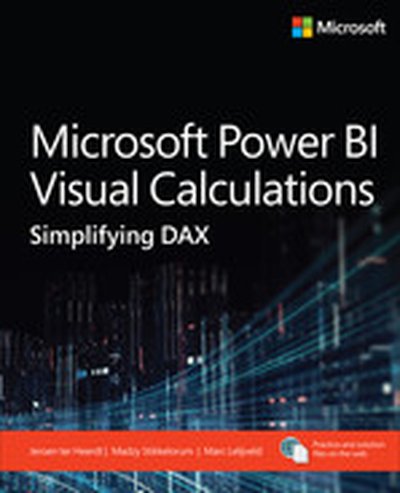
Microsoft Power BI Visual Calculations: Simplifying DAX

Seasoned experts Jeroen ter Heerdt, Madzy Stikkelorum, and Marc Lelijveld help you master visual calculations in Power BI for transformative data insights Microsoft Power BI Visual Calculations: Simplifying DAX is a comprehensive guide that demystifies the innovative feature of visual calculations in Power BI. Jeroen, a Principal Product Manager at Microsoft, Madzy, a Data Analytics Consultant, and Marc, a Microsoft Data Platform MVP, bring their extensive expertise to this book, offering you a practical approach to mastering visual calculations. The book is designed to simplify DAX, making it accessible to beginners and empowering you to transform raw data into actionable insights. You will learn to implement visual calculations, understand their benefits, and apply them effectively in real-world scenarios, ultimately enhancing your ability to make data-driven decisions. By reading this book, you will: Understand the fundamentals of visual calculations in Power BI Create your first visual calculation with step-by-step guidance Explore advanced concepts like resetting context in visual calculations Compare visual calculations with other Power BI calculation options Master the performance characteristics of visual calculations Utilize specific functions designed for visual calculations Implement practical use cases like running sums and moving averages Enhance visual calculations with regular DAX expressions Optimize operational processes using data-driven insights Unlock the full potential of Power BI for strategic decision-making About This Book For Power BI users who want to simplify DAX and unlock the full potential of visual calculations without the usual complexities For business executives, managers, and data enthusiasts looking to transform raw data into actionable insights for strategic decision-making

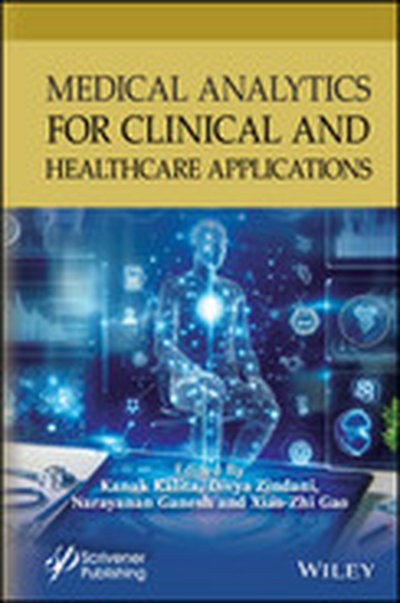
Medical Analytics for Clinical and Healthcare Applications

The book is essential for anyone exploring the forefront of healthcare innovation, as it offers a thorough exploration of transformative data-driven methodologies that can significantly enhance patient outcomes and clinical efficiency in today’s evolving medical landscape. In today’s rapidly advancing healthcare landscape, the integration of medical analytics has become essential for improving patient outcomes, clinical efficiency, and decision-making. Medical Analytics for Clinical and Healthcare Applications provides a comprehensive examination of how data-driven methodologies are revolutionizing the medical field. This book offers a deep dive into innovative techniques, real-world applications, and emerging trends in medical analytics, showcasing how these advancements are transforming disease detection, diagnosis, treatment planning, and healthcare management. Spanning sixteen chapters across five subsections, this edited volume covers a wide array of topics—from foundational principles of medical data analysis to cutting-edge applications in predictive healthcare and medical data security. Readers will encounter state-of-the-art methodologies, including machine learning models, predictive analytics, and deep learning techniques applied to various healthcare challenges such as mental health disorders, cancer detection, and hospital mortality predictions. Medical Analytics for Clinical and Healthcare Applications equips readers with the knowledge to harness the power of medical analytics and its potential to shape the future of healthcare. Through its interdisciplinary approach and expert insights, this volume is poised to serve as a valuable resource for advancing healthcare technologies and improving the overall quality of care. Readers will find the volume: Explores the latest medical analytics techniques applied across clinical settings, from diagnosis to treatment optimization; Features real-world case studies and tools for implementing data-driven solutions in healthcare; Bridges the gap between healthcare professionals, data scientists, and engineers for collaborative innovation in medical technologies; Provides foresight into emerging trends and technologies shaping the future of healthcare analytics. Audience Healthcare professionals, clinical researchers, medical data scientists, biomedical engineers, IT professionals, academics, and policymakers focused on the intersection of medicine and data analytics.

A Friendly Guide to Data Science: Everything You Should Know About the Hottest Field in Tech

Unlock the world of data science—no coding required. Curious about data science but not sure where to start? This book is a beginner-friendly guide to what data science is and how people use it. It walks you through the essential topics—what data analysis involves, which skills are useful, and how terms like “data analytics” and “machine learning” connect—without getting too technical too fast. Data science isn’t just about crunching numbers, pulling data from a database, or running fancy algorithms. It’s about asking the right questions, understanding the process from start to finish, and knowing what’s possible (and what’s not). This book teaches you all of that, while also introducing important topics like ethics, privacy, and security—because working with data means thinking about people, too. Whether you're a student exploring new skills, a professional navigating data-driven decisions, or someone considering a career change, this book is your friendly gateway into the world of data science, one of today’s most exciting fields. No coding or programming experience? No problem. You'll build a solid foundation and gain the confidence to engage with data science concepts— just as AI and data become increasingly central to everyday life. What You Will Learn Grasp foundational statistics and how it matters in data analysis and data science Understand the data science project life cycle and how to manage a data science project Examine the ethics of working with data and its use in data analysis and data science Understand the foundations of data security and privacy Collect, store, prepare, visualize, and present data Identify the many types of machine learning and know how to gauge performance Prepare for and find a career in data science Who This Book is for A wide range of readers who are curious about data science and eager to build a strong foundation. Perfect for undergraduates in the early semesters of their data science degrees, as it assumes no prior programming or industry experience. Professionals will find particular value in the real-world insights shared through practitioner interviews. Business leaders can use it to better understand what data science can do for them and how their teams are applying it. And for career changers, this book offers a welcoming entry point into the field—helping them explore the landscape before committing to more intensive learning paths like degrees or boot camps.

Handbook of Decision Analysis, 2nd Edition

Qualitative and quantitative techniques to apply decision analysis to real-world decision problems, supported by sound mathematics, best practices, soft skills, and more With substantive illustrations based on the authors’ personal experiences throughout, Handbook of Decision Analysis describes the philosophy, knowledge, science, and art of decision analysis. Key insights from decision analysis applications and behavioral decision analysis research are presented, and numerous decision analysis textbooks, technical books, and research papers are referenced for comprehensive coverage. This book does not introduce new decision analysis mathematical theory, but rather ensures the reader can understand and use the most common mathematics and best practices, allowing them to apply rigorous decision analysis with confidence. The material is supported by examples and solution steps using Microsoft Excel and includes many challenging real-world problems. Given the increase in the availability of data due to the development of products that deliver huge amounts of data, and the development of data science techniques and academic programs, a new theme of this Second Edition is the use of decision analysis techniques with big data and data analytics. Written by a team of highly qualified professionals and academics, Handbook of Decision Analysis includes information on: Behavioral decision-making insights, decision framing opportunities, collaboration with stakeholders, information assessment, and decision analysis modeling techniques Principles of value creation through designing alternatives, clear value/risk tradeoffs, and decision implementation Qualitative and quantitative techniques for each key decision analysis task, as opposed to presenting one technique for all decisions. Stakeholder analysis, decision hierarchies, and influence diagrams to frame descriptive, predictive, and prescriptive analytics decision problems to ensure implementation success Handbook of Decision Analysis is a highly valuable textbook, reference, and/or refresher for students and decision professionals in business, management science, engineering, engineering management, operations management, mathematics, and statistics who want to increase the breadth and depth of their technical and soft skills for success when faced with a professional or personal decision.

Data Insight Foundations: Step-by-Step Data Analysis with R

This book is an essential guide designed to equip you with the vital tools and knowledge needed to excel in data science. Master the end-to-end process of data collection, processing, validation, and imputation using R, and understand fundamental theories to achieve transparency with literate programming, renv, and Git--and much more. Each chapter is concise and focused, rendering complex topics accessible and easy to understand. Data Insight Foundations caters to a diverse audience, including web developers, mathematicians, data analysts, and economists, and its flexible structure allows enables you to explore chapters in sequence or navigate directly to the topics most relevant to you. While examples are primarily in R, a basic understanding of the language is advantageous but not essential. Many chapters, especially those focusing on theory, require no programming knowledge at all. Dive in and discover how to manipulate data, ensure reproducibility, conduct thorough literature reviews, collect data effectively, and present your findings with clarity. What You Will Learn Data Management: Master the end-to-end process of data collection, processing, validation, and imputation using R. Reproducible Research: Understand fundamental theories and achieve transparency with literate programming, renv, and Git. Academic Writing: Conduct scientific literature reviews and write structured papers and reports with Quarto. Survey Design: Design well-structured surveys and manage data collection effectively. Data Visualization: Understand data visualization theory and create well-designed and captivating graphics using ggplot2. Who this Book is For Career professionals such as research and data analysts transitioning from academia to a professional setting where production quality significantly impacts career progression. Some familiarity with data analytics processes and an interest in learning R or Python are ideal.

Time Series Analysis with Spark

Time Series Analysis with Spark provides a practical introduction to leveraging Apache Spark and Databricks for time series analysis. You'll learn to prepare, model, and deploy robust and scalable time series solutions for real-world applications. From data preparation to advanced generative AI techniques, this guide prepares you to excel in big data analytics. What this Book will help me do Understand the core concepts and architectures of Apache Spark for time series analysis. Learn to clean, organize, and prepare time series data for big data environments. Gain expertise in choosing, building, and training various time series models tailored to specific projects. Master techniques to scale your models in production using Spark and Databricks. Explore the integration of advanced technologies such as generative AI to enhance predictions and derive insights. Author(s) Yoni Ramaswami, a Senior Solutions Architect at Databricks, has extensive experience in data engineering and AI solutions. With a focus on creating innovative big data and AI strategies across industries, Yoni authored this book to empower professionals to efficiently handle time series data. Yoni's approachable style ensures that both foundational concepts and advanced techniques are accessible to readers. Who is it for? This book is ideal for data engineers, machine learning engineers, data scientists, and analysts interested in enhancing their expertise in time series analysis using Apache Spark and Databricks. Whether you're new to time series or looking to refine your skills, you'll find both foundational insights and advanced practices explained clearly. A basic understanding of Spark is helpful but not required.

Implementing Analytics Solutions Using Microsoft Fabric—DP-600 Exam Study Guide

Master the art of designing and implementing analytics solutions using Microsoft Fabric with this comprehensive guide. Whether you're preparing for the DP-600 certification exam or want to advance your career, this book offers expert insights into data analytics in Microsoft environments. What this Book will help me do Confidently pass the DP-600 certification exam by mastering exam-tested skills. Acquire practical expertise in deploying data analytics solutions with Microsoft Fabric. Understand and optimize data integration, security, and performance in analytics systems. Learn advanced techniques including semantic model optimization and advanced SQL querying. Prepare for real-world challenges through mock exams and hands-on exercises. Author(s) Jagjeet Singh Makhija and Charles Odunukwe, authors of this guide, are seasoned Microsoft specialists with decades of experience in data analytics, certification training, and technology consulting. Their clear and methodical approach ensures learners at all levels can grow their expertise. Who is it for? If you're a data analyst or IT professional looking to enhance your skills in analytics and Microsoft's technologies, this book is for you. It's ideal for those pursuing the DP-600 certification or aiming to improve their data integration and analysis capabilities.

Learning AI Tools in Tableau

As businesses increasingly rely on data to drive decisions, the role of advanced analytics and AI in enhancing data interpretation is becoming crucial. For professionals tasked with optimizing data analytics platforms like Tableau, staying ahead of the curve with the latest tools isn't just beneficial—it's essential. This insightful guide takes you through the integration of Tableau Pulse and Einstein Copilot, explaining their roles within the broader Tableau and Salesforce ecosystems. Author Ann Jackson, an esteemed analytics professional with a deep expertise in Tableau, offers a step-by-step exploration of these tools, backed by real-world use cases that demonstrate their impact across various industries. By the end of this book, you will: Understand the functionalities of Tableau Pulse and Einstein Copilot and how to use them Learn to deploy Tableau Pulse effectively, ensuring it aligns with your business objectives Navigate discussions on AI's role within Tableau, enhancing your strategic conversations Visualize how Tableau Pulse operates through detailed images and scenarios Utilize Einstein Copilot in Tableau Desktop/Prep to streamline and enhance data analysis

Essential Data Analytics, Data Science, and AI: A Practical Guide for a Data-Driven World

In today’s world, understanding data analytics, data science, and artificial intelligence is not just an advantage but a necessity. This book is your thorough guide to learning these innovative fields, designed to make the learning practical and engaging. The book starts by introducing data analytics, data science, and artificial intelligence. It illustrates real-world applications, and, it addresses the ethical considerations tied to AI. It also explores ways to gain data for practice and real-world scenarios, including the concept of synthetic data. Next, it uncovers Extract, Transform, Load (ETL) processes and explains how to implement them using Python. Further, it covers artificial intelligence and the pivotal role played by machine learning models. It explains feature engineering, the distinction between algorithms and models, and how to harness their power to make predictions. Moving forward, it discusses how to assess machine learning models after their creation, with insights into various evaluation techniques. It emphasizes the crucial aspects of model deployment, including the pros and cons of on-device versus cloud-based solutions. It concludes with real-world examples and encourages embracing AI while dispelling fears, and fostering an appreciation for the transformative potential of these technologies. Whether you’re a beginner or an experienced professional, this book offers valuable insights that will expand your horizons in the world of data and AI. What you will learn: What are Synthetic data and Telemetry data How to analyze data using programming languages like Python and Tableau. What is feature engineering What are the practical Implications of Artificial Intelligence Who this book is for: Data analysts, scientists, and engineers seeking to enhance their skills, explore advanced concepts, and stay up-to-date with ethics. Business leaders and decision-makers across industries are interested in understanding the transformative potential and ethical implications of data analytics and AI in their organizations.

DuckDB: Up and Running

DuckDB, an open source in-process database created for OLAP workloads, provides key advantages over more mainstream OLAP solutions: It's embeddable and optimized for analytics. It also integrates well with Python and is compatible with SQL, giving you the performance and flexibility of SQL right within your Python environment. This handy guide shows you how to get started with this versatile and powerful tool. Author Wei-Meng Lee takes developers and data professionals through DuckDB's primary features and functions, best practices, and practical examples of how you can use DuckDB for a variety of data analytics tasks. You'll also dive into specific topics, including how to import data into DuckDB, work with tables, perform exploratory data analysis, visualize data, perform spatial analysis, and use DuckDB with JSON files, Polars, and JupySQL. Understand the purpose of DuckDB and its main functions Conduct data analytics tasks using DuckDB Integrate DuckDB with pandas, Polars, and JupySQL Use DuckDB to query your data Perform spatial analytics using DuckDB's spatial extension Work with a diverse range of data including Parquet, CSV, and JSON

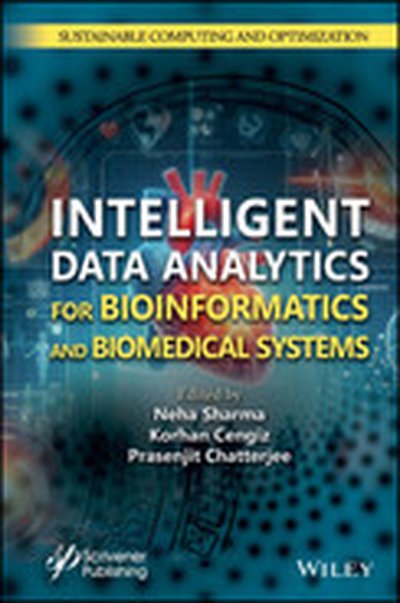
Intelligent Data Analytics for Bioinformatics and Biomedical Systems

The book analyzes the combination of intelligent data analytics with the intricacies of biological data that has become a crucial factor for innovation and growth in the fast-changing field of bioinformatics and biomedical systems. Intelligent Data Analytics for Bioinformatics and Biomedical Systems delves into the transformative nature of data analytics for bioinformatics and biomedical research. It offers a thorough examination of advanced techniques, methodologies, and applications that utilize intelligence to improve results in the healthcare sector. With the exponential growth of data in these domains, the book explores how computational intelligence and advanced analytic techniques can be harnessed to extract insights, drive informed decisions, and unlock hidden patterns from vast datasets. From genomic analysis to disease diagnostics and personalized medicine, the book aims to showcase intelligent approaches that enable researchers, clinicians, and data scientists to unravel complex biological processes and make significant strides in understanding human health and diseases. This book is divided into three sections, each focusing on computational intelligence and data sets in biomedical systems. The first section discusses the fundamental concepts of computational intelligence and big data in the context of bioinformatics. This section emphasizes data mining, pattern recognition, and knowledge discovery for bioinformatics applications. The second part talks about computational intelligence and big data in biomedical systems. Based on how these advanced techniques are utilized in the system, this section discusses how personalized medicine and precision healthcare enable treatment based on individual data and genetic profiles. The last section investigates the challenges and future directions of computational intelligence and big data in bioinformatics and biomedical systems. This section concludes with discussions on the potential impact of computational intelligence on addressing global healthcare challenges. Audience Intelligent Data Analytics for Bioinformatics and Biomedical Systems is primarily targeted to professionals and researchers in bioinformatics, genetics, molecular biology, biomedical engineering, and healthcare. The book will also suit academicians, students, and professionals working in pharmaceuticals and interpreting biomedical data.

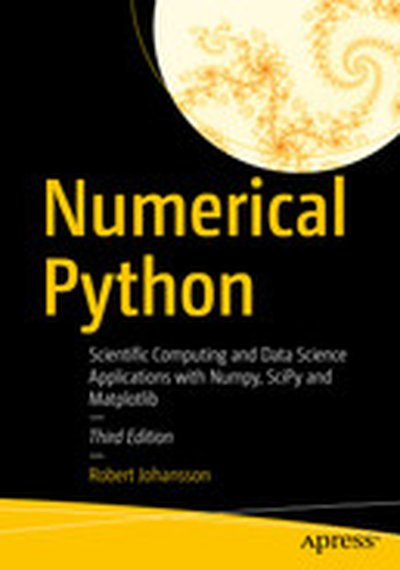
Numerical Python: Scientific Computing and Data Science Applications with Numpy, SciPy and Matplotlib

Learn how to leverage the scientific computing and data analysis capabilities of Python, its standard library, and popular open-source numerical Python packages like NumPy, SymPy, SciPy, matplotlib, and more. This book demonstrates how to work with mathematical modeling and solve problems with numerical, symbolic, and visualization techniques. It explores applications in science, engineering, data analytics, and more. Numerical Python, Third Edition, presents many case study examples of applications in fundamental scientific computing disciplines, as well as in data science and statistics. This fully revised edition, updated for each library's latest version, demonstrates Python's power for rapid development and exploratory computing due to its simple and high-level syntax and many powerful libraries and tools for computation and data analysis. After reading this book, readers will be familiar with many computing techniques, including array-based and symbolic computing, visualization and numerical file I/O, equation solving, optimization, interpolation and integration, and domain-specific computational problems, such as differential equation solving, data analysis, statistical modeling, and machine learning. What You'll Learn Work with vectors and matrices using NumPy Review Symbolic computing with SymPy Plot and visualize data with Matplotlib Perform data analysis tasks with Pandas and SciPy Understand statistical modeling and machine learning with statsmodels and scikit-learn Optimize Python code using Numba and Cython Who This Book Is For Developers who want to understand how to use Python and its ecosystem of libraries for scientific computing and data analysis.

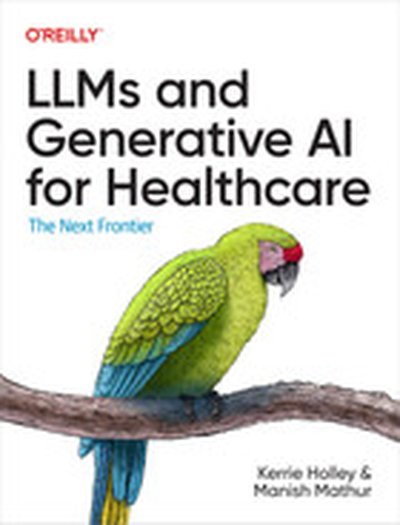
LLMs and Generative AI for Healthcare

Large language models (LLMs) and generative AI are rapidly changing the healthcare industry. These technologies have the potential to revolutionize healthcare by improving the efficiency, accuracy, and personalization of care. This practical book shows healthcare leaders, researchers, data scientists, and AI engineers the potential of LLMs and generative AI today and in the future, using storytelling and illustrative use cases in healthcare. Authors Kerrie Holley, former Google healthcare professionals, guide you through the transformative potential of large language models (LLMs) and generative AI in healthcare. From personalized patient care and clinical decision support to drug discovery and public health applications, this comprehensive exploration covers real-world uses and future possibilities of LLMs and generative AI in healthcare. With this book, you will: Understand the promise and challenges of LLMs in healthcare Learn the inner workings of LLMs and generative AI Explore automation of healthcare use cases for improved operations and patient care using LLMs Dive into patient experiences and clinical decision-making using generative AI Review future applications in pharmaceutical R&D, public health, and genomics Understand ethical considerations and responsible development of LLMs in healthcare "The authors illustrate generative's impact on drug development, presenting real-world examples of its ability to accelerate processes and improve outcomes across the pharmaceutical industry." --Harsh Pandey, VP, Data Analytics & Business Insights, Medidata-Dassault Kerrie Holley is a retired Google tech executive, IBM Fellow, and VP/CTO at Cisco. Holley's extensive experience includes serving as the first Technology Fellow at United Health Group (UHG), Optum, where he focused on advancing and applying AI, deep learning, and natural language processing in healthcare. Manish Mathur brings over two decades of expertise at the crossroads of healthcare and technology. A former executive at Google and Johnson & Johnson, he now serves as an independent consultant and advisor. He guides payers, providers, and life sciences companies in crafting cutting-edge healthcare solutions.

Polars Cookbook

Dive into the world of data analysis with the Polars Cookbook. This book, ideal for data professionals, covers practical recipes to manipulate, transform, and analyze data using the Python Polars library. You'll learn both the fundamentals and advanced techniques to build efficient and scalable data workflows. What this Book will help me do Master the basics of Python Polars including installation and setup. Perform complex data manipulation like pivoting, grouping, and joining. Handle large-scale time series data for accurate analysis. Understand data integration with libraries like pandas and numpy. Optimize workflows for both on-premise and cloud environments. Author(s) Yuki Kakegawa is an experienced data analytics consultant who has collaborated with companies such as Microsoft and Stanford Health Care. His passion for data led him to create this detailed guide on Polars. His expertise ensures you gain real-world, actionable insights from every chapter. Who is it for? This book is perfect for data analysts, engineers, and scientists eager to enhance their efficiency with Python Polars. If you are familiar with Python and tools like pandas but are new to Polars, this book will upskill you. Whether handling big data or optimizing code for performance, the Polars Cookbook has the guidance you need to succeed.

DuckDB in Action

Dive into DuckDB and start processing gigabytes of data with ease—all with no data warehouse. DuckDB is a cutting-edge SQL database that makes it incredibly easy to analyze big data sets right from your laptop. In DuckDB in Action you’ll learn everything you need to know to get the most out of this awesome tool, keep your data secure on prem, and save you hundreds on your cloud bill. From data ingestion to advanced data pipelines, you’ll learn everything you need to get the most out of DuckDB—all through hands-on examples. Open up DuckDB in Action and learn how to: Read and process data from CSV, JSON and Parquet sources both locally and remote Write analytical SQL queries, including aggregations, common table expressions, window functions, special types of joins, and pivot tables Use DuckDB from Python, both with SQL and its "Relational"-API, interacting with databases but also data frames Prepare, ingest and query large datasets Build cloud data pipelines Extend DuckDB with custom functionality Pragmatic and comprehensive, DuckDB in Action introduces the DuckDB database and shows you how to use it to solve common data workflow problems. You won’t need to read through pages of documentation—you’ll learn as you work. Get to grips with DuckDB's unique SQL dialect, learning to seamlessly load, prepare, and analyze data using SQL queries. Extend DuckDB with both Python and built-in tools such as MotherDuck, and gain practical insights into building robust and automated data pipelines. About the Technology DuckDB makes data analytics fast and fun! You don’t need to set up a Spark or run a cloud data warehouse just to process a few hundred gigabytes of data. DuckDB is easily embeddable in any data analytics application, runs on a laptop, and processes data from almost any source, including JSON, CSV, Parquet, SQLite and Postgres. About the Book DuckDB in Action guides you example-by-example from setup, through your first SQL query, to advanced topics like building data pipelines and embedding DuckDB as a local data store for a Streamlit web app. You’ll explore DuckDB’s handy SQL extensions, get to grips with aggregation, analysis, and data without persistence, and use Python to customize DuckDB. A hands-on project accompanies each new topic, so you can see DuckDB in action. What's Inside Prepare, ingest and query large datasets Build cloud data pipelines Extend DuckDB with custom functionality Fast-paced SQL recap: From simple queries to advanced analytics About the Reader For data pros comfortable with Python and CLI tools. About the Authors Mark Needham is a blogger and video creator at @‌LearnDataWithMark. Michael Hunger leads product innovation for the Neo4j graph database. Michael Simons is a Java Champion, author, and Engineer at Neo4j. Quotes I use DuckDB every day, and I still learned a lot about how DuckDB makes things that are hard in most databases easy! - Jordan Tigani, Founder, MotherDuck An excellent resource! Unlocks possibilities for storing, processing, analyzing, and summarizing data at the edge using DuckDB. - Pramod Sadalage, Director, Thoughtworks Clear and accessible. A comprehensive resource for harnessing the power of DuckDB for both novices and experienced professionals. - Qiusheng Wu, Associate Professor, University of Tennessee Excellent! The book all we ducklings have been waiting for! - Gunnar Morling, Decodable

Microsoft Power BI Cookbook - Third Edition

Discover how to harness the full potential of Microsoft Power BI in "Microsoft Power BI Cookbook". Through its recipe-based structure, this book offers step-by-step guidance on mastering data integration, crafting impactful visualizations, and utilizing Power BI's latest features like Hybrid tables and enhanced scorecards. This edition equips you with the skills to transform raw data into actionable insights for your organization. What this Book will help me do Turn business data into actionable insights by utilizing Microsoft Data Fabric effectively. Create engaging and clear visualizations through Hybrid tables and advanced reporting techniques. Gain competence in managing real-time data accuracy and implementing dynamic analytics in Power BI. Ensure robust data compliance and governance integrated seamlessly into business reporting workflows. Leverage cutting-edge Power BI features to prepare for emerging trends in data intelligence. Author(s) Greg Deckler and None Powell, both esteemed professionals in the Power BI and data analytics domain, co-author this comprehensive guide. With decades of experience, they bring vast knowledge and practical skills to this work, presenting it in a structured and approachable manner. Both are dedicated to empowering learners of all levels to excel with Power BI. Who is it for? This book is ideal for professionals like data analysts, business intelligence developers, and IT specialists focused on reporting. It suits readers with a basic familiarity with Power BI, looking to deepen their understanding. If you aim to stay current with Power BI's most modern practices and features, this book will help you achieve that. Additionally, it supports those aiming to enhance business decision-making through better visualizations and advanced analysis.