talk-data.com talk-data.com

Topic

Data Analytics

data_analysis statistics insights

98

tagged

Activity Trend

38 peak/qtr
2020-Q1 2026-Q1

Activities

Showing filtered results

Filtering by: O'Reilly Data Engineering Books ×
Elasticsearch Query Language the Definitive Guide

Streamline your workflow with ESQL enhance data analysis with real-time insights, and speed up aggregations and visualizations Key Features Apply ESQL efficiently in analytics, observability, and cybersecurity Optimize performance and scalability for high-demand environments Discover how to visualize and debug ESQL queries Purchase of the print or Kindle book includes a free PDF eBook Book Description Built to simplify high-scale data analytics in Elasticsearch, this practical guide will take you from foundational concepts to advanced applications across search, observability, and security. It will help you overcome common challenges such as efficiently querying large datasets, applying advanced analytics without deep prior knowledge, and resolving for a unique and consolidated query language. Written by senior experts at Elastic with extensive field experience, this book delivers actionable guidance rooted in solving today’s data challenges at scale. After introducing ESQL and its architecture, the chapters explore real-world applications across various domains, including analytics, raw log analysis, observability, and cybersecurity. Advanced topics such as scaling, optimization, and future developments are also covered to help you maximize your ESQL capabilities. By the end of this book, you’ll be able to leverage ESQL for comprehensive data management and analysis, optimizing your workflows and enhancing your productivity with Elasticsearch. What you will learn Gain a solid understanding of ESQL and its architecture Use ESQL for data analysis and performance monitoring Apply ESQL in cybersecurity for threat detection and incident response Find out how to perform advanced searches using ESQL Prepare for future ESQL developments Showcase ESQL in action through real-world, persona-driven use cases Who this book is for If you’re an Elasticsearch user, this book is essential for your growth. Whether you’re a data analyst looking to build analytics on top of Elasticsearch, an SRE monitoring the health of your IT system, or a cybersecurity analyst, this book will give you a complete understanding of how ESQL is built and used. Additionally, database administrators, business intelligence professionals, and operational intelligence professionals will find this book invaluable. Even with a beginner-level knowledge of Elasticsearch, you’ll be able to get started and make the most of this comprehensive guide.
Fundamentals of Metadata Management

Whether it's to adhere to regulations, access markets by meeting specific standards, or devise data analytics and AI strategies, companies today are busy implementing metadata repositories—metadata tools about the IT, data, information, and knowledge in your company. Until now, most of these repositories have been implemented in isolation from one another, but that practice lies at the core of problems with data management in many companies today. Author Ole Olesen-Bagneux, chief evangelist at Actian, shows you how to masterfully manage your metadata repositories by properly coordinating them. That requires a data discovery team to increase insights for all key players in enterprise data management, from the CIO and CDO to enterprise and data architects. Coordinating these repositories will help you and your organization democratize data and excel at data management. This book shows you how. Learn what metadata repositories are and what they do Explore which data to represent in these repositories Set up a data discovery team to make data searchable Learn how to manage and coordinate repositories in a meta grid Increase innovation by setting up a functional data marketplace Make information security and data protection more robust Gain a deeper understanding of your company IT landscape Activate real enterprise architecture based on evidence

Jumpstart Snowflake: A Step-by-Step Guide to Modern Cloud Analytics

This book is your guide to the modern market of data analytics platforms and the benefits of using Snowflake, the data warehouse built for the cloud. As organizations increasingly rely on modern cloud data platforms, the core of any analytics framework—the data warehouse—is more important than ever. This updated 2nd edition ensures you are ready to make the most of the industry’s leading data warehouse. This book will onboard you to Snowflake and present best practices for deploying and using the Snowflake data warehouse. The book also covers modern analytics architecture, integration with leading analytics software such as Matillion ETL, Tableau, and Databricks, and migration scenarios for on-premises legacy data warehouses. This new edition includes expanded coverage of SnowPark for developing complex data applications, an introduction to managing large datasets with Apache Iceberg tables, and instructions for creating interactive data applications using Streamlit, ensuring readers are equipped with the latest advancements in Snowflake's capabilities. What You Will Learn Master key functionalities of Snowflake Set up security and access with cluster Bulk load data into Snowflake using the COPY command Migrate from a legacy data warehouse to Snowflake Integrate the Snowflake data platform with modern business intelligence (BI) and data integration tools Manage large datasets with Apache Iceberg Tables Implement continuous data loading with Snowpipe and Dynamic Tables Who This Book Is For Data professionals, business analysts, IT administrators, and existing or potential Snowflake users

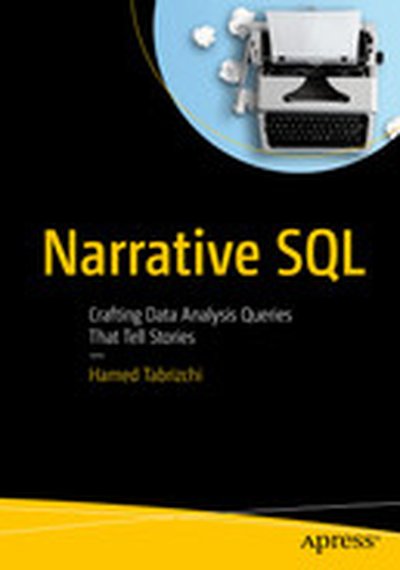
Narrative SQL: Crafting Data Analysis Queries That Tell Stories

This book addresses an important gap in data analytics education: the interplay between complex query-making and storytelling. While many resources cover the fundamentals of SQL queries and the technical skills required to manipulate data, few also explore moving beyond the numbers and figures to tell stories that drive strategic business decisions. By weaving together both SQL and narrative mechanics, author Hamed Tabrizchi has assembled a powerful tool for data analysts, aspiring database professionals, and business intelligence specialists. A strong foundation is laid in the first part of the book, which examines the technical skills necessary to access and manipulate data. You’ll explore foundational SQL commands, advanced querying techniques, data manipulation, data integrity, and optimization of queries for performance. The second half moves from the "how" of SQL to the "why," examining the meaning-making practices we can apply to data, and the stories data can tell. You'll learn how SQL queries can be interpreted, how to prepare data for visualization, and most importantly, how to convey the findings in a way that engages and informs the audience. In each chapter, practical exercises reinforce the techniques learned and help you apply them in real-world situations. In addition to strengthening technical skills, these exercises encourage readers to take a critical view of the data they are studying, considering the larger story it represents. Upon completing this book, you will not only be proficient in SQL, but also possess the key skill of converting data into narratives that can influence strategic direction and operational decisions in the modern workplace. What You Will Learn Advanced SQL Techniques: Master data manipulation and retrieval skills using advanced SQL queries Data Analysis Proficiency: Develop analytical skills to uncover key insights and understand significant data patterns Storytelling with Data: Learn to translate data analytics into compelling narratives for effective stakeholder communication Complex Querying Skills: Understand advanced SQL concepts such as common table expressions (CTEs), subqueries, and window functions Query Optimization: Optimize query execution time, resource usage, and scalability by mastering Indexes and Views Practical Application of Techniques: Gain hands-on experience with practical examples of advanced SQL techniques in real-world data analysis scenarios Effective Data Presentation: Discover strategies for visually presenting data stories to enhance engagement and understanding among diverse audiences Who This Book Is For Data analysts and business analysts, SQL developers, data-driven managers and executives and academics and students looking to enhance advanced querying and narrative building skills to better interpret and convey data.

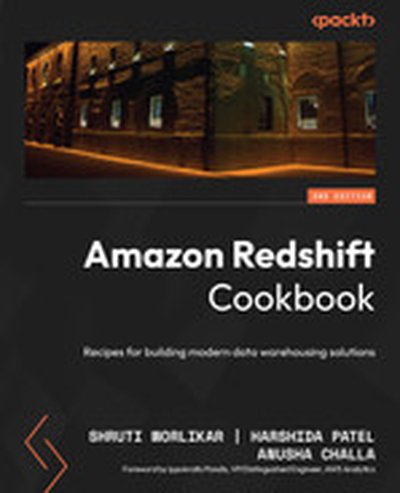
Amazon Redshift Cookbook - Second Edition

Amazon Redshift Cookbook provides practical techniques for utilizing AWS's managed data warehousing service effectively. With this book, you'll learn to create scalable and secure data analytics solutions, tackle data integration challenges, and leverage Redshift's advanced features like data sharing and generative AI capabilities. What this Book will help me do Create end-to-end data analytics solutions from ingestion to reporting using Amazon Redshift. Optimize the performance and security of Redshift implementations to meet enterprise standards. Leverage Amazon Redshift for zero-ETL ingestion and advanced concurrency scaling. Integrate Redshift with data lakes for enhanced data processing versatility. Implement generative AI and machine learning solutions directly within Redshift environments. Author(s) Shruti Worlikar, Harshida Patel, and Anusha Challa are seasoned data experts who bring together years of experience with Amazon Web Services and data analytics. Their combined expertise enables them to offer actionable insights, hands-on recipes, and proven strategies for implementing and optimizing Amazon Redshift-based solutions. Who is it for? This book is best suited for data analysts, data engineers, and architects who are keen on mastering modern data warehouse solutions using Redshift. Readers should have some knowledge of data warehousing and familiarity with cloud concepts. Ideal for professionals looking to migrate on-premises systems or build cloud-native analytics pipelines leveraging Redshift.

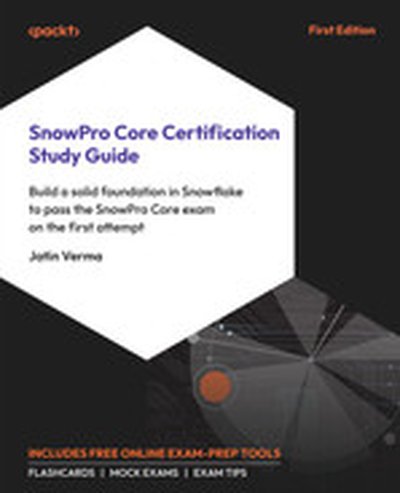
SnowPro Core Certification Study Guide

The "SnowPro Core Certification Study Guide" provides a comprehensive resource for mastering Snowflake data cloud concepts and passing the SnowPro Core exam. Through detailed explanations and practical exercises, you will gain the knowledge and skills necessary to successfully implement and manage Snowflake's powerful features and integrate data solutions effectively. What this Book will help me do Efficiently load and manage data in Snowflake for modern data processing. Optimize queries and configure Snowflake's performance features for data analytics. Securely implement access control and user roles to ensure data privacy. Apply Snowflake's sharing features to collaborate within and between organizations. Prepare effectively for the SnowPro Core exam with mock tests and review tools. Author(s) Jatin Verma is a renowned expert in Snowflake technologies and a certified SnowPro Core professional. With years of hands-on experience working with data solutions, Jatin excels at breaking down complex concepts into digestible lessons. His approachable writing style and dedication to education make this book a trusted resource for both aspiring and current professionals. Who is it for? This book is perfect for data engineers, analysts, database administrators, and business intelligence professionals who are looking to gain expertise in Snowflake and achieve SnowPro Core certification. It is particularly suited for those with foundational knowledge of databases, data warehouses, and SQL, seeking to advance their skills in Snowflake and become certified professionals. By leveraging this guide, readers can solidify their Snowflake knowledge and confidently approach the SnowPro Core certification exam.

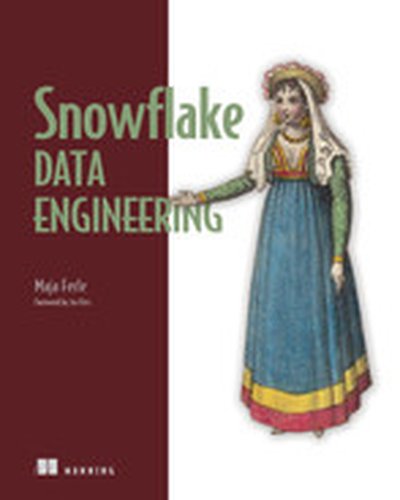
Snowflake Data Engineering

A practical introduction to data engineering on the powerful Snowflake cloud data platform. Data engineers create the pipelines that ingest raw data, transform it, and funnel it to the analysts and professionals who need it. The Snowflake cloud data platform provides a suite of productivity-focused tools and features that simplify building and maintaining data pipelines. In Snowflake Data Engineering, Snowflake Data Superhero Maja Ferle shows you how to get started. In Snowflake Data Engineering you will learn how to: Ingest data into Snowflake from both cloud and local file systems Transform data using functions, stored procedures, and SQL Orchestrate data pipelines with streams and tasks, and monitor their execution Use Snowpark to run Python code in your pipelines Deploy Snowflake objects and code using continuous integration principles Optimize performance and costs when ingesting data into Snowflake Snowflake Data Engineering reveals how Snowflake makes it easy to work with unstructured data, set up continuous ingestion with Snowpipe, and keep your data safe and secure with best-in-class data governance features. Along the way, you’ll practice the most important data engineering tasks as you work through relevant hands-on examples. Throughout, author Maja Ferle shares design tips drawn from her years of experience to ensure your pipeline follows the best practices of software engineering, security, and data governance. About the Technology Pipelines that ingest and transform raw data are the lifeblood of business analytics, and data engineers rely on Snowflake to help them deliver those pipelines efficiently. Snowflake is a full-service cloud-based platform that handles everything from near-infinite storage, fast elastic compute services, inbuilt AI/ML capabilities like vector search, text-to-SQL, code generation, and more. This book gives you what you need to create effective data pipelines on the Snowflake platform. About the Book Snowflake Data Engineering guides you skill-by-skill through accomplishing on-the-job data engineering tasks using Snowflake. You’ll start by building your first simple pipeline and then expand it by adding increasingly powerful features, including data governance and security, adding CI/CD into your pipelines, and even augmenting data with generative AI. You’ll be amazed how far you can go in just a few short chapters! What's Inside Ingest data from the cloud, APIs, or Snowflake Marketplace Orchestrate data pipelines with streams and tasks Optimize performance and cost About the Reader For software developers and data analysts. Readers should know the basics of SQL and the Cloud. About the Author Maja Ferle is a Snowflake Subject Matter Expert and a Snowflake Data Superhero who holds the SnowPro Advanced Data Engineer and the SnowPro Advanced Data Analyst certifications. Quotes An incredible guide for going from zero to production with Snowflake. - Doyle Turner, Microsoft A must-have if you’re looking to excel in the field of data engineering. - Isabella Renzetti, Data Analytics Consultant & Trainer Masterful! Unlocks the true potential of Snowflake for modern data engineers. - Shankar Narayanan, Microsoft Valuable insights will enhance your data engineering skills and lead to cost-effective solutions. A must read! - Frédéric L’Anglais, Maxa Comprehensive, up-to-date and packed with real-life code examples. - Albert Nogués, Danone

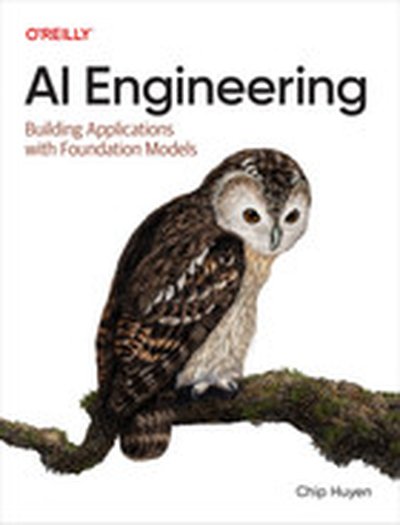
AI Engineering

Recent breakthroughs in AI have not only increased demand for AI products, they've also lowered the barriers to entry for those who want to build AI products. The model-as-a-service approach has transformed AI from an esoteric discipline into a powerful development tool that anyone can use. Everyone, including those with minimal or no prior AI experience, can now leverage AI models to build applications. In this book, author Chip Huyen discusses AI engineering: the process of building applications with readily available foundation models. The book starts with an overview of AI engineering, explaining how it differs from traditional ML engineering and discussing the new AI stack. The more AI is used, the more opportunities there are for catastrophic failures, and therefore, the more important evaluation becomes. This book discusses different approaches to evaluating open-ended models, including the rapidly growing AI-as-a-judge approach. AI application developers will discover how to navigate the AI landscape, including models, datasets, evaluation benchmarks, and the seemingly infinite number of use cases and application patterns. You'll learn a framework for developing an AI application, starting with simple techniques and progressing toward more sophisticated methods, and discover how to efficiently deploy these applications. Understand what AI engineering is and how it differs from traditional machine learning engineering Learn the process for developing an AI application, the challenges at each step, and approaches to address them Explore various model adaptation techniques, including prompt engineering, RAG, fine-tuning, agents, and dataset engineering, and understand how and why they work Examine the bottlenecks for latency and cost when serving foundation models and learn how to overcome them Choose the right model, dataset, evaluation benchmarks, and metrics for your needs Chip Huyen works to accelerate data analytics on GPUs at Voltron Data. Previously, she was with Snorkel AI and NVIDIA, founded an AI infrastructure startup, and taught Machine Learning Systems Design at Stanford. She's the author of the book Designing Machine Learning Systems, an Amazon bestseller in AI. AI Engineering builds upon and is complementary to Designing Machine Learning Systems (O'Reilly).

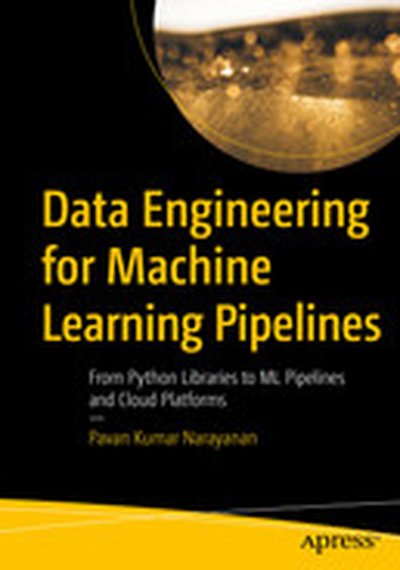
Data Engineering for Machine Learning Pipelines: From Python Libraries to ML Pipelines and Cloud Platforms

This book covers modern data engineering functions and important Python libraries, to help you develop state-of-the-art ML pipelines and integration code. The book begins by explaining data analytics and transformation, delving into the Pandas library, its capabilities, and nuances. It then explores emerging libraries such as Polars and CuDF, providing insights into GPU-based computing and cutting-edge data manipulation techniques. The text discusses the importance of data validation in engineering processes, introducing tools such as Great Expectations and Pandera to ensure data quality and reliability. The book delves into API design and development, with a specific focus on leveraging the power of FastAPI. It covers authentication, authorization, and real-world applications, enabling you to construct efficient and secure APIs using FastAPI. Also explored is concurrency in data engineering, examining Dask's capabilities from basic setup to crafting advanced machine learning pipelines. The book includes development and delivery of data engineering pipelines using leading cloud platforms such as AWS, Google Cloud, and Microsoft Azure. The concluding chapters concentrate on real-time and streaming data engineering pipelines, emphasizing Apache Kafka and workflow orchestration in data engineering. Workflow tools such as Airflow and Prefect are introduced to seamlessly manage and automate complex data workflows. What sets this book apart is its blend of theoretical knowledge and practical application, a structured path from basic to advanced concepts, and insights into using state-of-the-art tools. With this book, you gain access to cutting-edge techniques and insights that are reshaping the industry. This book is not just an educational tool. It is a career catalyst, and an investment in your future as a data engineering expert, poised to meet the challenges of today's data-driven world. What You Will Learn Elevate your data wrangling jobs by utilizing the power of both CPU and GPU computing, and learn to process data using Pandas 2.0, Polars, and CuDF at unprecedented speeds Design data validation pipelines, construct efficient data service APIs, develop real-time streaming pipelines and master the art of workflow orchestration to streamline your engineering projects Leverage concurrent programming to develop machine learning pipelines and get hands-on experience in development and deployment of machine learning pipelines across AWS, GCP, and Azure Who This Book Is For Data analysts, data engineers, data scientists, machine learning engineers, and MLOps specialists

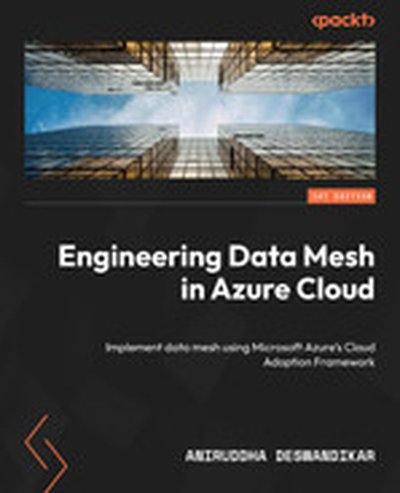
Engineering Data Mesh in Azure Cloud

Discover how to implement a modern data mesh architecture using Microsoft Azure's Cloud Adoption Framework. In this book, you'll learn the strategies to decentralize data while maintaining strong governance, turning your current analytics struggles into scalable and streamlined processes. Unlock the potential of data mesh to achieve advanced and democratized analytics platforms. What this Book will help me do Learn to decentralize data governance and integrate data domains effectively. Master strategies for building and implementing data contracts suited to your organization's needs. Explore how to design a landing zone for a data mesh using Azure's Cloud Adoption Framework. Understand how to apply key architecture patterns for analytics, including AI and machine learning. Gain the knowledge to scale analytics frameworks using modern cloud-based platforms. Author(s) None Deswandikar is a seasoned data architect with extensive experience in implementing cutting-edge data solutions in the cloud. With a passion for simplifying complex data strategies, None brings real-world customer experiences into practical guidance. This book reflects None's dedication to helping organizations achieve their data goals with clarity and effectiveness. Who is it for? This book is ideal for chief data officers, data architects, and engineers seeking to transform data analytics frameworks to accommodate advanced workloads. Especially useful for professionals aiming to implement cloud-based data mesh solutions, it assumes familiarity with centralized data systems, data lakes, and data integration techniques. If modernizing your organization's data strategy appeals to you, this book is for you.

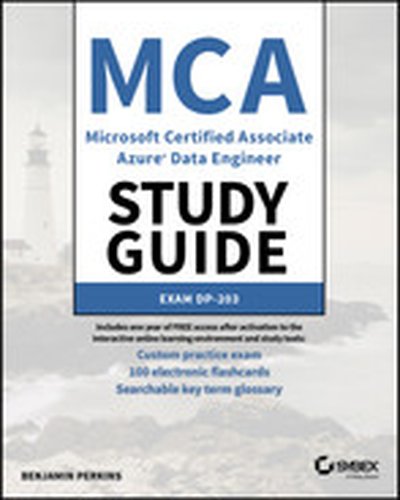
MCA Microsoft Certified Associate Azure Data Engineer Study Guide

Prepare for the Azure Data Engineering certification—and an exciting new career in analytics—with this must-have study aide In the MCA Microsoft Certified Associate Azure Data Engineer Study Guide: Exam DP-203, accomplished data engineer and tech educator Benjamin Perkins delivers a hands-on, practical guide to preparing for the challenging Azure Data Engineer certification and for a new career in an exciting and growing field of tech. In the book, you’ll explore all the objectives covered on the DP-203 exam while learning the job roles and responsibilities of a newly minted Azure data engineer. From integrating, transforming, and consolidating data from various structured and unstructured data systems into a structure that is suitable for building analytics solutions, you’ll get up to speed quickly and efficiently with Sybex’s easy-to-use study aids and tools. This Study Guide also offers: Career-ready advice for anyone hoping to ace their first data engineering job interview and excel in their first day in the field Indispensable tips and tricks to familiarize yourself with the DP-203 exam structure and help reduce test anxiety Complimentary access to Sybex’s expansive online study tools, accessible across multiple devices, and offering access to hundreds of bonus practice questions, electronic flashcards, and a searchable, digital glossary of key terms A one-of-a-kind study aid designed to help you get straight to the crucial material you need to succeed on the exam and on the job, the MCA Microsoft Certified Associate Azure Data Engineer Study Guide: Exam DP-203 belongs on the bookshelves of anyone hoping to increase their data analytics skills, advance their data engineering career with an in-demand certification, or hoping to make a career change into a popular new area of tech.

Serverless Machine Learning with Amazon Redshift ML

Serverless Machine Learning with Amazon Redshift ML provides a hands-on guide to using Amazon Redshift Serverless and Redshift ML for building and deploying machine learning models. Through SQL-focused examples and practical walkthroughs, you will learn efficient techniques for cloud data analytics and serverless machine learning. What this Book will help me do Grasp the workflow of building machine learning models with Redshift ML using SQL. Learn to handle supervised learning tasks like classification and regression. Apply unsupervised learning techniques, such as K-means clustering, in Redshift ML. Develop time-series forecasting models within Amazon Redshift. Understand how to operationalize machine learning in serverless cloud architecture. Author(s) Debu Panda, Phil Bates, Bhanu Pittampally, and Sumeet Joshi are seasoned professionals in cloud computing and machine learning technologies. They combine deep technical knowledge with teaching expertise to guide learners through mastering Amazon Redshift ML. Their collaborative approach ensures that the content is accessible, engaging, and practically applicable. Who is it for? This book is perfect for data scientists, machine learning engineers, and database administrators using or intending to use Amazon Redshift. It's tailored for professionals with basic knowledge of machine learning and SQL who aim to enhance their efficiency and specialize in serverless machine learning within cloud architectures.

Geospatial Data Analytics on AWS

In "Geospatial Data Analytics on AWS," you will learn how to store, manage, and analyze geospatial data effectively using various AWS services. This book provides insight into building geospatial data lakes, leveraging AWS databases, and applying best practices to derive insights from spatial data in the cloud. What this Book will help me do Design and manage geospatial data lakes on AWS leveraging S3 and other storage solutions. Analyze geospatial data using AWS services such as Athena and Redshift. Utilize machine learning models for geospatial data processing and analytics using SageMaker. Visualize geospatial data through services like Amazon QuickSight and OpenStreetMap integration. Avoid common pitfalls when managing geospatial data in the cloud. Author(s) Scott Bateman, Janahan Gnanachandran, and Jeff DeMuth bring their extensive experience in cloud computing and geospatial analytics to this book. With backgrounds in cloud architecture, data science, and geospatial applications, they aim to make complex topics accessible. Their collaborative approach ensures readers can practically apply concepts to real-world challenges. Who is it for? This book is ideal for GIS and data professionals, including developers, analysts, and scientists. It suits readers with a basic understanding of geographical concepts but no prior AWS experience. If you're aiming to enhance your cloud-based geospatial data management and analytics skills, this is the guide for you.

IBM FlashSystem 7300 Product Guide

This IBM® Redpaper Product Guide describes the IBM FlashSystem® 7300 solution, which is a next-generation IBM FlashSystem control enclosure. It combines the performance of flash and a Non-Volatile Memory Express (NVMe)-optimized architecture with the reliability and innovation of IBM FlashCore® technology and the rich feature set and high availability (HA) of IBM Spectrum® Virtualize. To take advantage of artificial intelligence (AI)-enhanced applications, real-time big data analytics, and cloud architectures that require higher levels of system performance and storage capacity, enterprises around the globe are rapidly moving to modernize established IT infrastructures. However, for many organizations, staff resources, and expertise are limited, and cost-efficiency is a top priority. These organizations have important investments in existing infrastructure that they want to maximize. They need enterprise-grade solutions that optimize cost-efficiency while simplifying the pathway to modernization. IBM FlashSystem 7300 is designed specifically for these requirements and use cases. It also delivers a cyber resilience without compromising application performance. IBM FlashSystem 7300 provides a rich set of software-defined storage (SDS) features that are delivered by IBM Spectrum Virtualize, including the following examples: Data reduction and deduplication Dynamic tiering Thin-provisioning Snapshots Cloning Replication and data copy services Cyber resilience Transparent Cloud Tiering (TCT) IBM HyperSwap® including 3-site replication for high availability Scale-out and scale-up configurations further enhance capacity and throughput for better availability With the release of IBM Spectrum Virtualize V8.5, extra functions and features are available, including support for new third-generation IBM FlashCore Modules Non-Volatile Memory Express (NVMe) type drives within the control enclosure, and 100 Gbps Ethernet adapters that provide NVMe Remote Direct Memory Access (RDMA) options. New software features include GUI enhancements, security enhancements including multifactor authentication and single sign-on, and Fibre Channel (FC) portsets.

What Every Engineer Should Know About Data-Driven Analytics

What Every Engineer Should Know About Data-Driven Analytics provides a comprehensive introduction to the machine learning theoretical concepts and approaches that are used in predictive data analytics through practical applications and case studies.

Serverless ETL and Analytics with AWS Glue

Discover how to harness AWS Glue for your ETL and data analysis workflows with "Serverless ETL and Analytics with AWS Glue." This comprehensive guide introduces readers to the capabilities of AWS Glue, from building data lakes to performing advanced ETL tasks, allowing you to create efficient, secure, and scalable data pipelines with serverless technology. What this Book will help me do Understand and utilize various AWS Glue features for data lake and ETL pipeline creation. Leverage AWS Glue Studio and DataBrew for intuitive data preparation workflows. Implement effective storage optimization techniques for enhanced data analytics. Apply robust data security measures, including encryption and access control, to protect data. Integrate AWS Glue with machine learning tools like SageMaker to build intelligent models. Author(s) The authors of this book include experts across the fields of data engineering and AWS technologies. With backgrounds in data analytics, software development, and cloud architecture, they bring a depth of practical experience. Their approach combines hands-on tutorials with conceptual clarity, ensuring a blend of foundational knowledge and actionable insights. Who is it for? This book is designed for ETL developers, data engineers, and data analysts who are familiar with data management concepts and want to extend their skills into serverless cloud solutions. If you're looking to master AWS Glue for building scalable and efficient ETL pipelines or are transitioning existing systems to the cloud, this book is ideal for you.

Snowflake: The Definitive Guide

Snowflake's ability to eliminate data silos and run workloads from a single platform creates opportunities to democratize data analytics, allowing users at all levels within an organization to make data-driven decisions. Whether you're an IT professional working in data warehousing or data science, a business analyst or technical manager, or an aspiring data professional wanting to get more hands-on experience with the Snowflake platform, this book is for you. You'll learn how Snowflake users can build modern integrated data applications and develop new revenue streams based on data. Using hands-on SQL examples, you'll also discover how the Snowflake Data Cloud helps you accelerate data science by avoiding replatforming or migrating data unnecessarily. You'll be able to: Efficiently capture, store, and process large amounts of data at an amazing speed Ingest and transform real-time data feeds in both structured and semistructured formats and deliver meaningful data insights within minutes Use Snowflake Time Travel and zero-copy cloning to produce a sensible data recovery strategy that balances system resilience with ongoing storage costs Securely share data and reduce or eliminate data integration costs by accessing ready-to-query datasets available in the Snowflake Marketplace

In-Memory Analytics with Apache Arrow

Discover the power of in-memory data analytics with "In-Memory Analytics with Apache Arrow." This book delves into Apache Arrow's unique capabilities, enabling you to handle vast amounts of data efficiently and effectively. Learn how Arrow improves performance, offers seamless integration, and simplifies data analysis in diverse computing environments. What this Book will help me do Gain proficiency with the datastore facilities and data types defined by Apache Arrow. Master the Arrow Flight APIs to efficiently transfer data between systems. Learn to leverage in-memory processing advantages offered by Arrow for state-of-the-art analytics. Understand how Arrow interoperates with popular tools like Pandas, Parquet, and Spark. Develop and deploy high-performance data analysis pipelines with Apache Arrow. Author(s) Matthew Topol, the author of the book, is an experienced practitioner in data analytics and Apache Arrow technology. Having contributed to the development and implementation of Arrow-powered systems, he brings a wealth of knowledge to readers. His ability to delve deep into technical concepts while keeping explanations practical makes this book an excellent guide for learners of the subject. Who is it for? This book is ideal for professionals in the data domain including developers, data analysts, and data scientists aiming to enhance their data manipulation capabilities. Beginners with some familiarity with data analysis concepts will find it beneficial, as well as engineers designing analytics utilities. Programming examples accommodate users of C, Go, and Python, making it broadly accessible.

Simplify Big Data Analytics with Amazon EMR

Simplify Big Data Analytics with Amazon EMR is a thorough guide to harnessing Amazon's EMR service for big data processing and analytics. From distributed computation pipelines to real-time streaming analytics, this book provides hands-on knowledge and actionable steps for implementing data solutions efficiently. What this Book will help me do Understand the architecture and key components of Amazon EMR and how to deploy it effectively. Learn to configure and manage distributed data processing pipelines using Amazon EMR. Implement security and data governance best practices within the Amazon EMR ecosystem. Master batch ETL and real-time analytics techniques using technologies like Apache Spark. Apply optimization and cost-saving strategies to scalable data solutions. Author(s) Sakti Mishra is a seasoned data professional with extensive expertise in deploying scalable analytics solutions on cloud platforms like AWS. With a background in big data technologies and a passion for teaching, Sakti ensures practical insights accompany every concept. Readers will find his approach thorough, hands-on, and highly informative. Who is it for? This book is perfect for data engineers, data scientists, and other professionals looking to leverage Amazon EMR for scalable analytics. If you are familiar with Python, Scala, or Java and have some exposure to Hadoop or AWS ecosystems, this book will empower you to design and implement robust data pipelines efficiently.

Data Analytics, Computational Statistics, and Operations Research for Engineers

This book investigates the role of data mining in computational statistics for machine learning. It offers applications that can be used in various domains and examines the role of transformation functions in optimizing problem statements.