talk-data.com talk-data.com

Topic

Data Lake

big_data data_storage analytics

311

tagged

Activity Trend

28 peak/qtr
2020-Q1 2026-Q1

Activities

311 activities · Newest first

Summary

Data lakehouse architectures are gaining popularity due to the flexibility and cost effectiveness that they offer. The link that bridges the gap between data lake and warehouse capabilities is the catalog. The primary purpose of the catalog is to inform the query engine of what data exists and where, but the Nessie project aims to go beyond that simple utility. In this episode Alex Merced explains how the branching and merging functionality in Nessie allows you to use the same versioning semantics for your data lakehouse that you are used to from Git.

Announcements

Hello and welcome to the Data Engineering Podcast, the show about modern data management Dagster offers a new approach to building and running data platforms and data pipelines. It is an open-source, cloud-native orchestrator for the whole development lifecycle, with integrated lineage and observability, a declarative programming model, and best-in-class testability. Your team can get up and running in minutes thanks to Dagster Cloud, an enterprise-class hosted solution that offers serverless and hybrid deployments, enhanced security, and on-demand ephemeral test deployments. Go to dataengineeringpodcast.com/dagster today to get started. Your first 30 days are free! Data lakes are notoriously complex. For data engineers who battle to build and scale high quality data workflows on the data lake, Starburst powers petabyte-scale SQL analytics fast, at a fraction of the cost of traditional methods, so that you can meet all your data needs ranging from AI to data applications to complete analytics. Trusted by teams of all sizes, including Comcast and Doordash, Starburst is a data lake analytics platform that delivers the adaptability and flexibility a lakehouse ecosystem promises. And Starburst does all of this on an open architecture with first-class support for Apache Iceberg, Delta Lake and Hudi, so you always maintain ownership of your data. Want to see Starburst in action? Go to dataengineeringpodcast.com/starburst and get $500 in credits to try Starburst Galaxy today, the easiest and fastest way to get started using Trino. Join us at the top event for the global data community, Data Council Austin. From March 26-28th 2024, we'll play host to hundreds of attendees, 100 top speakers and dozens of startups that are advancing data science, engineering and AI. Data Council attendees are amazing founders, data scientists, lead engineers, CTOs, heads of data, investors and community organizers who are all working together to build the future of data and sharing their insights and learnings through deeply technical talks. As a listener to the Data Engineering Podcast you can get a special discount off regular priced and late bird tickets by using the promo code dataengpod20. Don't miss out on our only event this year! Visit dataengineeringpodcast.com/data-council and use code dataengpod20 to register today! Your host is Tobias Macey and today I'm interviewing Alex Merced, developer advocate at Dremio and co-author of the upcoming book from O'reilly, "Apache Iceberg, The definitive Guide", about Nessie, a git-like versioned catalog for data lakes using Apache Iceberg

Interview

Introduction How did you get involved in the area of data management? Can you describe what Nessie is and the story behind it? What are the core problems/complexities that Nessie is designed to solve? The closest analogue to Nessie that I've seen in the ecosystem is LakeFS. What are the features that would lead someone to choose one or the other for a given use case? Why would someone choose Nessie over native table-level branching in the Apache Iceberg spec? How do the versioning capabilities compare to/augment the data versioning in Iceberg? What are some of the sources of, and challenges in resolving, merge conflicts between table branches? Can you describe the architecture of Nessie? How have the design and goals of the project changed since it was first created? What is involved
Summary

Artificial intelligence technologies promise to revolutionize business and produce new sources of value. In order to make those promises a reality there is a substantial amount of strategy and investment required. Colleen Tartow has worked across all stages of the data lifecycle, and in this episode she shares her hard-earned wisdom about how to conduct an AI program for your organization.

Announcements

Hello and welcome to the Data Engineering Podcast, the show about modern data management Dagster offers a new approach to building and running data platforms and data pipelines. It is an open-source, cloud-native orchestrator for the whole development lifecycle, with integrated lineage and observability, a declarative programming model, and best-in-class testability. Your team can get up and running in minutes thanks to Dagster Cloud, an enterprise-class hosted solution that offers serverless and hybrid deployments, enhanced security, and on-demand ephemeral test deployments. Go to dataengineeringpodcast.com/dagster today to get started. Your first 30 days are free! Data lakes are notoriously complex. For data engineers who battle to build and scale high quality data workflows on the data lake, Starburst powers petabyte-scale SQL analytics fast, at a fraction of the cost of traditional methods, so that you can meet all your data needs ranging from AI to data applications to complete analytics. Trusted by teams of all sizes, including Comcast and Doordash, Starburst is a data lake analytics platform that delivers the adaptability and flexibility a lakehouse ecosystem promises. And Starburst does all of this on an open architecture with first-class support for Apache Iceberg, Delta Lake and Hudi, so you always maintain ownership of your data. Want to see Starburst in action? Go to dataengineeringpodcast.com/starburst and get $500 in credits to try Starburst Galaxy today, the easiest and fastest way to get started using Trino. Join us at the top event for the global data community, Data Council Austin. From March 26-28th 2024, we'll play host to hundreds of attendees, 100 top speakers and dozens of startups that are advancing data science, engineering and AI. Data Council attendees are amazing founders, data scientists, lead engineers, CTOs, heads of data, investors and community organizers who are all working together to build the future of data and sharing their insights and learnings through deeply technical talks. As a listener to the Data Engineering Podcast you can get a special discount off regular priced and late bird tickets by using the promo code dataengpod20. Don't miss out on our only event this year! Visit dataengineeringpodcast.com/data-council and use code dataengpod20 to register today! Your host is Tobias Macey and today I'm interviewing Colleen Tartow about the questions to answer before and during the development of an AI program

Interview

Introduction How did you get involved in the area of data management? When you say "AI Program", what are the organizational, technical, and strategic elements that it encompasses?

How does the idea of an "AI Program" differ from an "AI Product"? What are some of the signals to watch for that indicate an objective for which AI is not a reasonable solution?

Who needs to be involved in the process of defining and developing that program?

What are the skills and systems that need to be in place to effectively execute on an AI program?

"AI" has grown to be an even more overloaded term than it already was. What are some of the useful clarifying/scoping questions to address when deciding the path to deployment for different definitions of "AI"? Organizations can easily fall into the trap of green-lighting an AI project before they have done the work of ensuring they have the necessary data and the ability to process it. What are the steps to take to build confidence in the availability of the data?

Even if you are sure that you can get the data, what are t

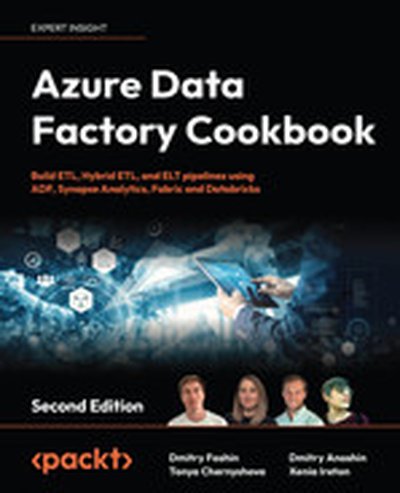
Azure Data Factory Cookbook - Second Edition

This comprehensive guide to Azure Data Factory shows you how to create robust data pipelines and workflows to handle both cloud and on-premises data solutions. Through practical recipes, you will learn to build, manage, and optimize ETL, hybrid ETL, and ELT processes. The book offers detailed explanations to help you integrate technologies like Azure Synapse, Data Lake, and Databricks into your projects. What this Book will help me do Master building and managing data pipelines using Azure Data Factory's latest versions and features. Leverage Azure Synapse and Azure Data Lake for streamlined data integration and analytics workflows. Enhance your ETL/ELT solutions with Microsoft Fabric, Databricks, and Delta tables. Employ debugging tools and workflows in Azure Data Factory to identify and solve data processing issues efficiently. Implement industry-grade best practices for reliable and efficient data orchestration and integration pipelines. Author(s) Dmitry Foshin, Tonya Chernyshova, Dmitry Anoshin, and Xenia Ireton collectively bring years of expertise in data engineering and cloud-based solutions. They are recognized professionals in the Azure ecosystem, dedicated to sharing their knowledge through detailed and actionable content. Their collaborative approach ensures that this book provides practical insights for technical audiences. Who is it for? This book is ideal for data engineers, ETL developers, and professional architects who work with cloud and hybrid environments. If you're looking to upskill in Azure Data Factory or expand your knowledge into related technologies like Synapse Analytics or Databricks, this is for you. Readers should have a foundational understanding of data warehousing concepts to fully benefit from the material.

Summary

Building a database engine requires a substantial amount of engineering effort and time investment. Over the decades of research and development into building these software systems there are a number of common components that are shared across implementations. When Paul Dix decided to re-write the InfluxDB engine he found the Apache Arrow ecosystem ready and waiting with useful building blocks to accelerate the process. In this episode he explains how he used the combination of Apache Arrow, Flight, Datafusion, and Parquet to lay the foundation of the newest version of his time-series database.

Announcements

Hello and welcome to the Data Engineering Podcast, the show about modern data management Dagster offers a new approach to building and running data platforms and data pipelines. It is an open-source, cloud-native orchestrator for the whole development lifecycle, with integrated lineage and observability, a declarative programming model, and best-in-class testability. Your team can get up and running in minutes thanks to Dagster Cloud, an enterprise-class hosted solution that offers serverless and hybrid deployments, enhanced security, and on-demand ephemeral test deployments. Go to dataengineeringpodcast.com/dagster today to get started. Your first 30 days are free! Data lakes are notoriously complex. For data engineers who battle to build and scale high quality data workflows on the data lake, Starburst powers petabyte-scale SQL analytics fast, at a fraction of the cost of traditional methods, so that you can meet all your data needs ranging from AI to data applications to complete analytics. Trusted by teams of all sizes, including Comcast and Doordash, Starburst is a data lake analytics platform that delivers the adaptability and flexibility a lakehouse ecosystem promises. And Starburst does all of this on an open architecture with first-class support for Apache Iceberg, Delta Lake and Hudi, so you always maintain ownership of your data. Want to see Starburst in action? Go to dataengineeringpodcast.com/starburst and get $500 in credits to try Starburst Galaxy today, the easiest and fastest way to get started using Trino. Join us at the top event for the global data community, Data Council Austin. From March 26-28th 2024, we'll play host to hundreds of attendees, 100 top speakers and dozens of startups that are advancing data science, engineering and AI. Data Council attendees are amazing founders, data scientists, lead engineers, CTOs, heads of data, investors and community organizers who are all working together to build the future of data and sharing their insights and learnings through deeply technical talks. As a listener to the Data Engineering Podcast you can get a special discount off regular priced and late bird tickets by using the promo code dataengpod20. Don't miss out on our only event this year! Visit dataengineeringpodcast.com/data-council and use code dataengpod20 to register today! Your host is Tobias Macey and today I'm interviewing Paul Dix about his investment in the Apache Arrow ecosystem and how it led him to create the latest PFAD in database design

Interview

Introduction How did you get involved in the area of data management? Can you start by describing the FDAP stack and how the components combine to provide a foundational architecture for database engines?

This was the core of your recent re-write of the InfluxDB engine. What were the design goals and constraints that led you to this architecture?

Each of the architectural components are well engineered for their particular scope. What is the engineering work that is involved in building a cohesive platform from those components? One of the major benefits of using open source components is the network effect of ecosystem integrations. That can also be a risk when the community vision for the project doesn't align with your own goals. How have you worked to mitigate that risk in your specific platform? Can you describe the

Summary

A data lakehouse is intended to combine the benefits of data lakes (cost effective, scalable storage and compute) and data warehouses (user friendly SQL interface). Multiple open source projects and vendors have been working together to make this vision a reality. In this episode Dain Sundstrom, CTO of Starburst, explains how the combination of the Trino query engine and the Iceberg table format offer the ease of use and execution speed of data warehouses with the infinite storage and scalability of data lakes.

Announcements

Hello and welcome to the Data Engineering Podcast, the show about modern data management Dagster offers a new approach to building and running data platforms and data pipelines. It is an open-source, cloud-native orchestrator for the whole development lifecycle, with integrated lineage and observability, a declarative programming model, and best-in-class testability. Your team can get up and running in minutes thanks to Dagster Cloud, an enterprise-class hosted solution that offers serverless and hybrid deployments, enhanced security, and on-demand ephemeral test deployments. Go to dataengineeringpodcast.com/dagster today to get started. Your first 30 days are free! Data lakes are notoriously complex. For data engineers who battle to build and scale high quality data workflows on the data lake, Starburst powers petabyte-scale SQL analytics fast, at a fraction of the cost of traditional methods, so that you can meet all your data needs ranging from AI to data applications to complete analytics. Trusted by teams of all sizes, including Comcast and Doordash, Starburst is a data lake analytics platform that delivers the adaptability and flexibility a lakehouse ecosystem promises. And Starburst does all of this on an open architecture with first-class support for Apache Iceberg, Delta Lake and Hudi, so you always maintain ownership of your data. Want to see Starburst in action? Go to dataengineeringpodcast.com/starburst and get $500 in credits to try Starburst Galaxy today, the easiest and fastest way to get started using Trino. Join in with the event for the global data community, Data Council Austin. From March 26th-28th 2024, they'll play host to hundreds of attendees, 100 top speakers, and dozens of startups that are advancing data science, engineering and AI. Data Council attendees are amazing founders, data scientists, lead engineers, CTOs, heads of data, investors and community organizers who are all working togethr to build the future of data. As a listener to the Data Engineering Podcast you can get a special discount of 20% off your ticket by using the promo code dataengpod20. Don't miss out on their only event this year! Visit: dataengineeringpodcast.com/data-council today. Your host is Tobias Macey and today I'm interviewing Dain Sundstrom about building a data lakehouse with Trino and Iceberg

Interview

Introduction How did you get involved in the area of data management? To start, can you share your definition of what constitutes a "Data Lakehouse"?

What are the technical/architectural/UX challenges that have hindered the progression of lakehouses? What are the notable advancements in recent months/years that make them a more viable platform choice?

There are multiple tools and vendors that have adopted the "data lakehouse" terminology. What are the benefits offered by the combination of Trino and Iceberg?

What are the key points of comparison for that combination in relation to other possible selections?

What are the pain points that are still prevalent in lakehouse architectures as compared to warehouse or vertically integrated systems?

What progress is being made (within or across the ecosystem) to address those sharp edges?

For someone who is interested in building a data lakehouse with Trino and Iceberg, how does that influence their selection of other platform elements? What are the differences in terms of pipeline design/access and usage patterns when using a Trino

Summary

Sharing data is a simple concept, but complicated to implement well. There are numerous business rules and regulatory concerns that need to be applied. There are also numerous technical considerations to be made, particularly if the producer and consumer of the data aren't using the same platforms. In this episode Andrew Jefferson explains the complexities of building a robust system for data sharing, the techno-social considerations, and how the Bobsled platform that he is building aims to simplify the process.

Announcements

Hello and welcome to the Data Engineering Podcast, the show about modern data management Data lakes are notoriously complex. For data engineers who battle to build and scale high quality data workflows on the data lake, Starburst powers petabyte-scale SQL analytics fast, at a fraction of the cost of traditional methods, so that you can meet all your data needs ranging from AI to data applications to complete analytics. Trusted by teams of all sizes, including Comcast and Doordash, Starburst is a data lake analytics platform that delivers the adaptability and flexibility a lakehouse ecosystem promises. And Starburst does all of this on an open architecture with first-class support for Apache Iceberg, Delta Lake and Hudi, so you always maintain ownership of your data. Want to see Starburst in action? Go to dataengineeringpodcast.com/starburst and get $500 in credits to try Starburst Galaxy today, the easiest and fastest way to get started using Trino. Dagster offers a new approach to building and running data platforms and data pipelines. It is an open-source, cloud-native orchestrator for the whole development lifecycle, with integrated lineage and observability, a declarative programming model, and best-in-class testability. Your team can get up and running in minutes thanks to Dagster Cloud, an enterprise-class hosted solution that offers serverless and hybrid deployments, enhanced security, and on-demand ephemeral test deployments. Go to dataengineeringpodcast.com/dagster today to get started. Your first 30 days are free! Your host is Tobias Macey and today I'm interviewing Andy Jefferson about how to solve the problem of data sharing

Interview

Introduction How did you get involved in the area of data management? Can you start by giving some context and scope of what we mean by "data sharing" for the purposes of this conversation? What is the current state of the ecosystem for data sharing protocols/practices/platforms?

What are some of the main challenges/shortcomings that teams/organizations experience with these options?

What are the technical capabilities that need to be present for an effective data sharing solution?

How does that change as a function of the type of data? (e.g. tabular, image, etc.)

What are the requirements around governance and auditability of data access that need to be addressed when sharing data? What are the typical boundaries along which data access requires special consideration for how the sharing is managed? Many data platform vendors have their own interfaces for data sharing. What are the shortcomings of those options, and what are the opportunities for abstracting the sharing capability from the underlying platform? What are the most interesting, innovative, or unexpected ways that you have seen data sharing/Bobsled used? What are the most interesting, unexpected, or challenging lessons that you have learned while working on data sharing? When is Bobsled the wrong choice? What do you have planned for the future of data sharing?

Contact Info

LinkedIn

Parting Question

From your perspective, what is the biggest gap in the tooling or technology for data management today?

Closing Announcements

Thank you for listening! Don't forget to check out our other shows. Podcast.init covers the Python language, its community, and the innovative ways it is being used. The Machine Learning Podcast helps you go from idea to production with machine

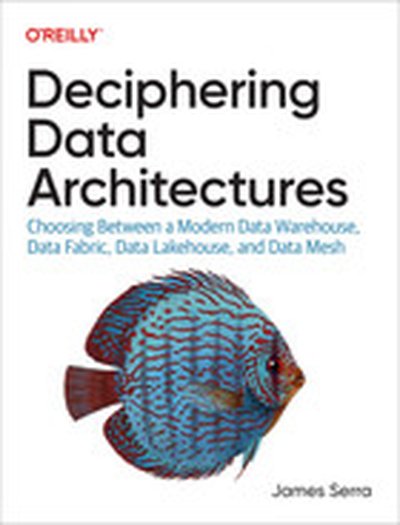
Deciphering Data Architectures

Data fabric, data lakehouse, and data mesh have recently appeared as viable alternatives to the modern data warehouse. These new architectures have solid benefits, but they're also surrounded by a lot of hyperbole and confusion. This practical book provides a guided tour of these architectures to help data professionals understand the pros and cons of each. James Serra, big data and data warehousing solution architect at Microsoft, examines common data architecture concepts, including how data warehouses have had to evolve to work with data lake features. You'll learn what data lakehouses can help you achieve, as well as how to distinguish data mesh hype from reality. Best of all, you'll be able to determine the most appropriate data architecture for your needs. With this book, you'll: Gain a working understanding of several data architectures Learn the strengths and weaknesses of each approach Distinguish data architecture theory from reality Pick the best architecture for your use case Understand the differences between data warehouses and data lakes Learn common data architecture concepts to help you build better solutions Explore the historical evolution and characteristics of data architectures Learn essentials of running an architecture design session, team organization, and project success factors Free from product discussions, this book will serve as a timeless resource for years to come.

Summary

Stream processing systems have long been built with a code-first design, adding SQL as a layer on top of the existing framework. RisingWave is a database engine that was created specifically for stream processing, with S3 as the storage layer. In this episode Yingjun Wu explains how it is architected to power analytical workflows on continuous data flows, and the challenges of making it responsive and scalable.

Announcements

Hello and welcome to the Data Engineering Podcast, the show about modern data management Data lakes are notoriously complex. For data engineers who battle to build and scale high quality data workflows on the data lake, Starburst powers petabyte-scale SQL analytics fast, at a fraction of the cost of traditional methods, so that you can meet all your data needs ranging from AI to data applications to complete analytics. Trusted by teams of all sizes, including Comcast and Doordash, Starburst is a data lake analytics platform that delivers the adaptability and flexibility a lakehouse ecosystem promises. And Starburst does all of this on an open architecture with first-class support for Apache Iceberg, Delta Lake and Hudi, so you always maintain ownership of your data. Want to see Starburst in action? Go to dataengineeringpodcast.com/starburst and get $500 in credits to try Starburst Galaxy today, the easiest and fastest way to get started using Trino. Dagster offers a new approach to building and running data platforms and data pipelines. It is an open-source, cloud-native orchestrator for the whole development lifecycle, with integrated lineage and observability, a declarative programming model, and best-in-class testability. Your team can get up and running in minutes thanks to Dagster Cloud, an enterprise-class hosted solution that offers serverless and hybrid deployments, enhanced security, and on-demand ephemeral test deployments. Go to dataengineeringpodcast.com/dagster today to get started. Your first 30 days are free! Your host is Tobias Macey and today I'm interviewing Yingjun Wu about the RisingWave database and the intricacies of building a stream processing engine on S3

Interview

Introduction How did you get involved in the area of data management? Can you describe what RisingWave is and the story behind it? There are numerous stream processing engines, near-real-time database engines, streaming SQL systems, etc. What is the specific niche that RisingWave addresses?

What are some of the platforms/architectures that teams are replacing with RisingWave?

What are some of the unique capabilities/use cases that RisingWave provides over other offerings in the current ecosystem? Can you describe how RisingWave is architected and implemented?

How have the design and goals/scope changed since you first started working on it? What are the core design philosophies that you rely on to prioritize the ongoing development of the project?

What are the most complex engineering challenges that you have had to address in the creation of RisingWave? Can you describe a typical workflow for teams that are building on top of RisingWave?

What are the user/developer experience elements that you have prioritized most highly?

What are the situations where RisingWave can/should be a system of record vs. a point-in-time view of data in transit, with a data warehouse/lakehouse as the longitudinal storage and query engine? What are the most interesting, innovative, or unexpected ways that you have seen RisingWave used? What are the most interesting, unexpected, or challenging lessons that you have learned while working on RisingWave? When is RisingWave the wrong choice? What do you have planned for the future of RisingWave?

Contact Info

yingjunwu on GitHub Personal Website LinkedIn

Parting Question

From your perspective, what is the biggest gap in the tooling or technology for data management today?

Closing Announcements

Thank you for listening! Don't forget to check out our other shows.

Summary

Monitoring and auditing IT systems for security events requires the ability to quickly analyze massive volumes of unstructured log data. The majority of products that are available either require too much effort to structure the logs, or aren't fast enough for interactive use cases. Cliff Crosland co-founded Scanner to provide fast querying of high scale log data for security auditing. In this episode he shares the story of how it got started, how it works, and how you can get started with it.

Announcements

Hello and welcome to the Data Engineering Podcast, the show about modern data management Data lakes are notoriously complex. For data engineers who battle to build and scale high quality data workflows on the data lake, Starburst powers petabyte-scale SQL analytics fast, at a fraction of the cost of traditional methods, so that you can meet all your data needs ranging from AI to data applications to complete analytics. Trusted by teams of all sizes, including Comcast and Doordash, Starburst is a data lake analytics platform that delivers the adaptability and flexibility a lakehouse ecosystem promises. And Starburst does all of this on an open architecture with first-class support for Apache Iceberg, Delta Lake and Hudi, so you always maintain ownership of your data. Want to see Starburst in action? Go to dataengineeringpodcast.com/starburst and get $500 in credits to try Starburst Galaxy today, the easiest and fastest way to get started using Trino. Your host is Tobias Macey and today I'm interviewing Cliff Crosland about Scanner, a security data lake platform for analyzing security logs and identifying issues quickly and cost-effectively

Interview

Introduction How did you get involved in the area of data management? Can you describe what Scanner is and the story behind it?

What were the shortcomings of other tools that are available in the ecosystem?

What is Scanner explicitly not trying to solve for in the security space? (e.g. SIEM) A query engine is useless without data to analyze. What are the data acquisition paths/sources that you are designed to work with?- e.g. cloudtrail logs, app logs, etc.

What are some of the other sources of signal for security monitoring that would be valuable to incorporate or integrate with through Scanner?

Log data is notoriously messy, with no strictly defined format. How do you handle introspection and querying across loosely structured records that might span multiple sources and inconsistent labelling strategies? Can you describe the architecture of the Scanner platform?

What were the motivating constraints that led you to your current implementation? How have the design and goals of the product changed since you first started working on it?

Given the security oriented customer base that you are targeting, how do you address trust/network boundaries for compliance with regulatory/organizational policies? What are the personas of the end-users for Scanner?

How has that influenced the way that you think about the query formats, APIs, user experience etc. for the prroduct?

For teams who are working with Scanner can you describe how it fits into their workflow? What are the most interesting, innovative, or unexpected ways that you have seen Scanner used? What are the most interesting, unexpected, or challenging lessons that you have learned while working on Scanner? When is Scanner the wrong choice? What do you have planned for the future of Scanner?

Contact Info

LinkedIn

Parting Question

From your perspective, what is the biggest gap in the tooling or technology for data management today?

Closing Announcements

Thank you for listening! Don't forget to check out our other shows. Podcast.init covers the Python language, its community, and the innovative ways it is being used. The Machine Learning Podcast helps you go from idea to production with machine learning. Visit the site to subscribe to the show, sign up for the mailing list, and read the s

Summary

Databases and analytics architectures have gone through several generational shifts. A substantial amount of the data that is being managed in these systems is related to customers and their interactions with an organization. In this episode Tasso Argyros, CEO of ActionIQ, gives a summary of the major epochs in database technologies and how he is applying the capabilities of cloud data warehouses to the challenge of building more comprehensive experiences for end-users through a modern customer data platform (CDP).

Announcements

Hello and welcome to the Data Engineering Podcast, the show about modern data management Data lakes are notoriously complex. For data engineers who battle to build and scale high quality data workflows on the data lake, Starburst powers petabyte-scale SQL analytics fast, at a fraction of the cost of traditional methods, so that you can meet all your data needs ranging from AI to data applications to complete analytics. Trusted by teams of all sizes, including Comcast and Doordash, Starburst is a data lake analytics platform that delivers the adaptability and flexibility a lakehouse ecosystem promises. And Starburst does all of this on an open architecture with first-class support for Apache Iceberg, Delta Lake and Hudi, so you always maintain ownership of your data. Want to see Starburst in action? Go to dataengineeringpodcast.com/starburst and get $500 in credits to try Starburst Galaxy today, the easiest and fastest way to get started using Trino. Data projects are notoriously complex. With multiple stakeholders to manage across varying backgrounds and toolchains even simple reports can become unwieldy to maintain. Miro is your single pane of glass where everyone can discover, track, and collaborate on your organization's data. I especially like the ability to combine your technical diagrams with data documentation and dependency mapping, allowing your data engineers and data consumers to communicate seamlessly about your projects. Find simplicity in your most complex projects with Miro. Your first three Miro boards are free when you sign up today at dataengineeringpodcast.com/miro. That’s three free boards at dataengineeringpodcast.com/miro. Your host is Tobias Macey and today I'm interviewing Tasso Argyros about the role of a customer data platform in the context of the modern data stack

Interview

Introduction How did you get involved in the area of data management? Can you describe what the role of the CDP is in the context of a businesses data ecosystem?

What are the core technical challenges associated with building and maintaining a CDP? What are the organizational/business factors that contribute to the complexity of these systems?

The early days of CDPs came with the promise of "Customer 360". Can you unpack that concept and how it has changed over the past ~5 years? Recent years have seen the adoption of reverse ETL, cloud data warehouses, and sophisticated product analytics suites. How has that changed the architectural approach to CDPs?

How have the architectural shifts changed the ways that organizations interact with their customer data?

How have the responsibilities shifted across different roles?

What are the governance policy and enforcement challenges that are added with the expansion of access and responsibility?

What are the most interesting, innovative, or unexpected ways that you have seen CDPs built/used? What are the most interesting, unexpected, or challenging lessons that you have learned while working on CDPs? When is a CDP the wrong choice? What do you have planned for the future of ActionIQ?

Contact Info

LinkedIn @Tasso on Twitter

Parting Question

From your perspective, what is the biggest gap in the tooling or technology for data management today?

Closing Announcements

Thank you for listening! Don't forget to check out our other shows. Podcast.init covers the Python language, its community, and the innovative ways it is being us

Extending Dynamics 365 Finance and Operations Apps with Power Platform

This book, "Extending Dynamics 365 Finance and Operations Apps with Power Platform", is your comprehensive guide to mastering the integration of Power Platform tools with Dynamics 365 Finance and Operations (F&O). Dive into practical scenarios and learn how to leverage tools like Power Automate, Power Apps, and Power BI to maximize efficiency and streamline operations. What this Book will help me do Learn to extend Dynamics 365 F&O functionalities using Dataverse and other Power Platform tools. Understand practical integration techniques including dual-write and virtual tables. Explore automation of workflows and tasks with Power Automate in an F&O context. Utilize Power BI for creating insightful reports with Azure Data Lake Storage. Gain insights into governance and lifecycle management for the Power Platform in your F&O projects. Author(s) Adrià Ariste Santacreu, a seasoned expert in Power Platform and Microsoft Dynamics, shares his rich industry experience through this book. He has implemented numerous real-world solutions integrating Power Platform with Dynamics 365, and his expertise is evident in the clear and actionable guidance provided herein. Adrià's approach helps both novices and experts discover the true potential of these technologies. Who is it for? This book is ideal for Dynamics 365 Finance & Operations consultants and Power Platform professionals seeking to extend their knowledge and capabilities. It is particularly suitable for technical and solutions architects who aim to implement innovative solutions for business requirements using the Power Platform. If you aim to leverage low-code/no-code tools for dynamics projects, this book has you covered.

Summary

Data processing technologies have dramatically improved in their sophistication and raw throughput. Unfortunately, the volumes of data that are being generated continue to double, requiring further advancements in the platform capabilities to keep up. As the sophistication increases, so does the complexity, leading to challenges for user experience. Jignesh Patel has been researching these areas for several years in his work as a professor at Carnegie Mellon University. In this episode he illuminates the landscape of problems that we are faced with and how his research is aimed at helping to solve these problems.

Announcements

Hello and welcome to the Data Engineering Podcast, the show about modern data management Data lakes are notoriously complex. For data engineers who battle to build and scale high quality data workflows on the data lake, Starburst powers petabyte-scale SQL analytics fast, at a fraction of the cost of traditional methods, so that you can meet all your data needs ranging from AI to data applications to complete analytics. Trusted by teams of all sizes, including Comcast and Doordash, Starburst is a data lake analytics platform that delivers the adaptability and flexibility a lakehouse ecosystem promises. And Starburst does all of this on an open architecture with first-class support for Apache Iceberg, Delta Lake and Hudi, so you always maintain ownership of your data. Want to see Starburst in action? Go to dataengineeringpodcast.com/starburst and get $500 in credits to try Starburst Galaxy today, the easiest and fastest way to get started using Trino. Your host is Tobias Macey and today I'm interviewing Jignesh Patel about the research that he is conducting on technical scalability and user experience improvements around data management

Interview

Introduction How did you get involved in the area of data management? Can you start by summarizing your current areas of research and the motivations behind them? What are the open questions today in technical scalability of data engines?

What are the experimental methods that you are using to gain understanding in the opportunities and practical limits of those systems?

As you strive to push the limits of technical capacity in data systems, how does that impact the usability of the resulting systems?

When performing research and building prototypes of the projects, what is your process for incorporating user experience into the implementation of the product?

What are the main sources of tension between technical scalability and user experience/ease of comprehension? What are some of the positive synergies that you have been able to realize between your teaching, research, and corporate activities?

In what ways do they produce conflict, whether personally or technically?

What are the most interesting, innovative, or unexpected ways that you have seen your research used? What are the most interesting, unexpected, or challenging lessons that you have learned while working on research of the scalability limits of data systems? What is your heuristic for when a given research project needs to be terminated or productionized? What do you have planned for the future of your academic research?

Contact Info

Website LinkedIn

Parting Question

From your perspective, what is the biggest gap in the tooling or technology for data management today?

Closing Announcements

Thank you for listening! Don't forget to check out our other shows. Podcast.init covers the Python language, its community, and the innovative ways it is being used. The Machine Learning Podcast helps you go from idea to production with machine learning. Visit the site to subscribe to the show, sign up for the mailing list, and read the show notes. If you've learned something or tried out a project from the show then tell us about it! Email [email protected]) with your story. To help other people find the show please leave a review on Apple Podcasts and tel

Summary

Working with financial data requires a high degree of rigor due to the numerous regulations and the risks involved in security breaches. In this episode Andrey Korchack, CTO of fintech startup Monite, discusses the complexities of designing and implementing a data platform in that sector.

Announcements

Hello and welcome to the Data Engineering Podcast, the show about modern data management Data lakes are notoriously complex. For data engineers who battle to build and scale high quality data workflows on the data lake, Starburst powers petabyte-scale SQL analytics fast, at a fraction of the cost of traditional methods, so that you can meet all your data needs ranging from AI to data applications to complete analytics. Trusted by teams of all sizes, including Comcast and Doordash, Starburst is a data lake analytics platform that delivers the adaptability and flexibility a lakehouse ecosystem promises. And Starburst does all of this on an open architecture with first-class support for Apache Iceberg, Delta Lake and Hudi, so you always maintain ownership of your data. Want to see Starburst in action? Go to dataengineeringpodcast.com/starburst and get $500 in credits to try Starburst Galaxy today, the easiest and fastest way to get started using Trino. Introducing RudderStack Profiles. RudderStack Profiles takes the SaaS guesswork and SQL grunt work out of building complete customer profiles so you can quickly ship actionable, enriched data to every downstream team. You specify the customer traits, then Profiles runs the joins and computations for you to create complete customer profiles. Get all of the details and try the new product today at dataengineeringpodcast.com/rudderstack You shouldn't have to throw away the database to build with fast-changing data. You should be able to keep the familiarity of SQL and the proven architecture of cloud warehouses, but swap the decades-old batch computation model for an efficient incremental engine to get complex queries that are always up-to-date. With Materialize, you can! It’s the only true SQL streaming database built from the ground up to meet the needs of modern data products. Whether it’s real-time dashboarding and analytics, personalization and segmentation or automation and alerting, Materialize gives you the ability to work with fresh, correct, and scalable results — all in a familiar SQL interface. Go to dataengineeringpodcast.com/materialize today to get 2 weeks free! Your host is Tobias Macey and today I'm interviewing Andrey Korchak about how to manage data in a fintech environment

Interview

Introduction How did you get involved in the area of data management? Can you start by summarizing the data challenges that are particular to the fintech ecosystem? What are the primary sources and types of data that fintech organizations are working with?

What are the business-level capabilities that are dependent on this data?

How do the regulatory and business requirements influence the technology landscape in fintech organizations?

What does a typical build vs. buy decision process look like?

Fraud prediction in e.g. banks is one of the most well-established applications of machine learning in industry. What are some of the other ways that ML plays a part in fintech?

How does that influence the architectural design/capabilities for data platforms in those organizations?

Data governance is a notoriously challenging problem. What are some of the strategies that fintech companies are able to apply to this problem given their regulatory burdens? What are the most interesting, innovative, or unexpected approaches to data management that you have seen in the fintech sector? What are the most interesting, unexpected, or challenging lessons that you have learned while working on data in fintech? What do you have planned for the future of your data capabilities at Monite?

Contact Info

LinkedIn

Parting Question

From your perspective, what is the biggest gap in the tooling or technology for data management today?

Closing Announcements

Thank you for listening! Don't forget to check out our other shows. Podcast.init covers the Python language, its community, and the innovative ways it is being used. The Machine Learning Podcast helps you go from idea to production with machine learning. Visit the site to subscribe to the show, sign up for the mailing list, and read the show notes. If you've learned something or tried out a project from the show then tell us about it! Email [email protected]) with your story. To help other people find the show please leave a review on Apple Podcasts and tell your friends and co-workers

Links

Monite ISO 270001 Tesseract GitOps SWIFT Protocol

The intro and outro music is from The Hug by The Freak Fandango Orchestra / CC BY-SA Sponsored By: Starburst: Starburst Logo

This episode is brought to you by Starburst - a data lake analytics platform for data engineers who are battling to build and scale high quality data pipelines on the data lake. Powered by Trino, Starburst runs petabyte-scale SQL analytics fast at a fraction of the cost of traditional methods, helping you meet all your data needs ranging from AI/ML workloads to data applications to complete analytics.

Trusted by the teams at Comcast and Doordash, Starburst delivers the adaptability and flexibility a lakehouse ecosystem promises, while providing a single point of access for your data and all your data governance allowing you to discover, transform, govern, and secure all in one place. Starburst does all of this on an open architecture with first-class support for Apache Iceberg, Delta Lake and Hudi, so you always maintain ownership of your data. Want to see Starburst in action? Try Starburst Galaxy today, the easiest and fastest way to get started using Trino, and get $500 of credits free. dataengineeringpodcast.com/starburstRudderstack: Rudderstack

Introducing RudderStack Profiles. RudderStack Profiles takes the SaaS guesswork and SQL grunt work out of building complete customer profiles so you can quickly ship actionable, enriched data to every downstream team. You specify the customer traits, then Profiles runs the joins and computations for you to create complete customer profiles. Get all of the details and try the new product today at dataengineeringpodcast.com/rudderstackMaterialize: Materialize

You shouldn't have to throw away the database to build with fast-changing data. Keep the familiar SQL, keep the proven architecture of cloud warehouses, but swap the decades-old batch computation model for an efficient incremental engine to get complex queries that are always up-to-date.

That is Materialize, the only true SQL streaming database built from the ground up to meet the needs of modern data products: Fresh, Correct, Scalable — all in a familiar SQL UI. Built on Timely Dataflow and Differential Dataflow, open source frameworks created by cofounder Frank McSherry at Microsoft Research, Materialize is trusted by data and engineering teams at Ramp, Pluralsight, Onward and more to build real-time data products without the cost, complexity, and development time of stream processing.

Go to materialize.com today and get 2 weeks free!Support Data Engineering Podcast

Architecting a Modern Data Warehouse for Large Enterprises: Build Multi-cloud Modern Distributed Data Warehouses with Azure and AWS

Design and architect new generation cloud-based data warehouses using Azure and AWS. This book provides an in-depth understanding of how to build modern cloud-native data warehouses, as well as their history and evolution. The book starts by covering foundational data warehouse concepts, and introduces modern features such as distributed processing, big data storage, data streaming, and processing data on the cloud. You will gain an understanding of the synergy, relevance, and usage data warehousing standard practices in the modern world of distributed data processing. The authors walk you through the essential concepts of Data Mesh, Data Lake, Lakehouse, and Delta Lake. And they demonstrate the services and offerings available on Azure and AWS that deal with data orchestration, data democratization, data governance, data security, and business intelligence. After completing this book, you will be ready to design and architect enterprise-grade, cloud-based modern data warehouses using industry best practices and guidelines. What You Will Learn Understand the core concepts underlying modern data warehouses Design and build cloud-native data warehousesGain a practical approach to architecting and building data warehouses on Azure and AWS Implement modern data warehousing components such as Data Mesh, Data Lake, Delta Lake, and Lakehouse Process data through pandas and evaluate your model’s performance using metrics such as F1-score, precision, and recall Apply deep learning to supervised, semi-supervised, and unsupervised anomaly detection tasks for tabular datasets and time series applications Who This Book Is For Experienced developers, cloud architects, and technology enthusiasts looking to build cloud-based modern data warehouses using Azure and AWS

Summary

Kafka has become a ubiquitous technology, offering a simple method for coordinating events and data across different systems. Operating it at scale, however, is notoriously challenging. Elad Eldor has experienced these challenges first-hand, leading to his work writing the book "Kafka: : Troubleshooting in Production". In this episode he highlights the sources of complexity that contribute to Kafka's operational difficulties, and some of the main ways to identify and mitigate potential sources of trouble.

Announcements

Hello and welcome to the Data Engineering Podcast, the show about modern data management Introducing RudderStack Profiles. RudderStack Profiles takes the SaaS guesswork and SQL grunt work out of building complete customer profiles so you can quickly ship actionable, enriched data to every downstream team. You specify the customer traits, then Profiles runs the joins and computations for you to create complete customer profiles. Get all of the details and try the new product today at dataengineeringpodcast.com/rudderstack You shouldn't have to throw away the database to build with fast-changing data. You should be able to keep the familiarity of SQL and the proven architecture of cloud warehouses, but swap the decades-old batch computation model for an efficient incremental engine to get complex queries that are always up-to-date. With Materialize, you can! It’s the only true SQL streaming database built from the ground up to meet the needs of modern data products. Whether it’s real-time dashboarding and analytics, personalization and segmentation or automation and alerting, Materialize gives you the ability to work with fresh, correct, and scalable results — all in a familiar SQL interface. Go to dataengineeringpodcast.com/materialize today to get 2 weeks free! Data lakes are notoriously complex. For data engineers who battle to build and scale high quality data workflows on the data lake, Starburst powers petabyte-scale SQL analytics fast, at a fraction of the cost of traditional methods, so that you can meet all your data needs ranging from AI to data applications to complete analytics. Trusted by teams of all sizes, including Comcast and Doordash, Starburst is a data lake analytics platform that delivers the adaptability and flexibility a lakehouse ecosystem promises. And Starburst does all of this on an open architecture with first-class support for Apache Iceberg, Delta Lake and Hudi, so you always maintain ownership of your data. Want to see Starburst in action? Go to dataengineeringpodcast.com/starburst and get $500 in credits to try Starburst Galaxy today, the easiest and fastest way to get started using Trino. Your host is Tobias Macey and today I'm interviewing Elad Eldor about operating Kafka in production and how to keep your clusters stable and performant

Interview

Introduction How did you get involved in the area of data management? Can you describe your experiences with Kafka?

What are the operational challenges that you have had to overcome while working with Kafka? What motivated to write a book about how to manage Kafka in production?

There are many options now for persistent data queues. What are the factors to consider when determining whether Kafka is the right choice?

In the case where Kafka is the appropriate tool, there are many ways to run it now. What are the considerations that teams need to work through when determining whether/where/how to operate a cluster?

When provisioning a Kafka cluster, what are the requirements that need to be considered when determining the sizing?

What are the axes along which size/scale need to be determined?

The core promise of Kafka is that it is a durable store for continuous data. What are the mechanisms that are available for preventing data loss?

Under what circumstances can data be lost?

What are the different failure conditions that cluster operators need to be aware of?

What are the monitoring strategies that ar

Summary

The "modern data stack" promised a scalable, composable data platform that gave everyone the flexibility to use the best tools for every job. The reality was that it left data teams in the position of spending all of their engineering effort on integrating systems that weren't designed with compatible user experiences. The team at 5X understand the pain involved and the barriers to productivity and set out to solve it by pre-integrating the best tools from each layer of the stack. In this episode founder Tarush Aggarwal explains how the realities of the modern data stack are impacting data teams and the work that they are doing to accelerate time to value.

Announcements

Hello and welcome to the Data Engineering Podcast, the show about modern data management Introducing RudderStack Profiles. RudderStack Profiles takes the SaaS guesswork and SQL grunt work out of building complete customer profiles so you can quickly ship actionable, enriched data to every downstream team. You specify the customer traits, then Profiles runs the joins and computations for you to create complete customer profiles. Get all of the details and try the new product today at dataengineeringpodcast.com/rudderstack You shouldn't have to throw away the database to build with fast-changing data. You should be able to keep the familiarity of SQL and the proven architecture of cloud warehouses, but swap the decades-old batch computation model for an efficient incremental engine to get complex queries that are always up-to-date. With Materialize, you can! It’s the only true SQL streaming database built from the ground up to meet the needs of modern data products. Whether it’s real-time dashboarding and analytics, personalization and segmentation or automation and alerting, Materialize gives you the ability to work with fresh, correct, and scalable results — all in a familiar SQL interface. Go to dataengineeringpodcast.com/materialize today to get 2 weeks free! Data lakes are notoriously complex. For data engineers who battle to build and scale high quality data workflows on the data lake, Starburst powers petabyte-scale SQL analytics fast, at a fraction of the cost of traditional methods, so that you can meet all your data needs ranging from AI to data applications to complete analytics. Trusted by teams of all sizes, including Comcast and Doordash, Starburst is a data lake analytics platform that delivers the adaptability and flexibility a lakehouse ecosystem promises. And Starburst does all of this on an open architecture with first-class support for Apache Iceberg, Delta Lake and Hudi, so you always maintain ownership of your data. Want to see Starburst in action? Go to dataengineeringpodcast.com/starburst and get $500 in credits to try Starburst Galaxy today, the easiest and fastest way to get started using Trino. Your host is Tobias Macey and today I'm welcoming back Tarush Aggarwal to talk about what he and his team at 5x data are building to improve the user experience of the modern data stack.

Interview

Introduction How did you get involved in the area of data management? Can you describe what 5x is and the story behind it?

We last spoke in March of 2022. What are the notable changes in the 5x business and product?

What are the notable shifts in the data ecosystem that have influenced your adoption and product direction?

What trends are you most focused on tracking as you plan the continued evolution of your offerings?

What are the points of friction that teams run into when trying to build their data platform? Can you describe design of the system that you have built?

What are the strategies that you rely on to support adaptability and speed of onboarding for new integrations?

What are some of the types of edge cases that you have to deal with while integrating and operating the platform implementations that you design for your customers? What is your process for selection of vendors to support?

How would you characte

Summary

If your business metrics looked weird tomorrow, would you know about it first? Anomaly detection is focused on identifying those outliers for you, so that you are the first to know when a business critical dashboard isn't right. Unfortunately, it can often be complex or expensive to incorporate anomaly detection into your data platform. Andrew Maguire got tired of solving that problem for each of the different roles he has ended up in, so he created the open source Anomstack project. In this episode he shares what it is, how it works, and how you can start using it today to get notified when the critical metrics in your business aren't quite right.

Announcements

Hello and welcome to the Data Engineering Podcast, the show about modern data management You shouldn't have to throw away the database to build with fast-changing data. You should be able to keep the familiarity of SQL and the proven architecture of cloud warehouses, but swap the decades-old batch computation model for an efficient incremental engine to get complex queries that are always up-to-date. With Materialize, you can! It’s the only true SQL streaming database built from the ground up to meet the needs of modern data products. Whether it’s real-time dashboarding and analytics, personalization and segmentation or automation and alerting, Materialize gives you the ability to work with fresh, correct, and scalable results — all in a familiar SQL interface. Go to dataengineeringpodcast.com/materialize today to get 2 weeks free! Introducing RudderStack Profiles. RudderStack Profiles takes the SaaS guesswork and SQL grunt work out of building complete customer profiles so you can quickly ship actionable, enriched data to every downstream team. You specify the customer traits, then Profiles runs the joins and computations for you to create complete customer profiles. Get all of the details and try the new product today at dataengineeringpodcast.com/rudderstack Data projects are notoriously complex. With multiple stakeholders to manage across varying backgrounds and toolchains even simple reports can become unwieldy to maintain. Miro is your single pane of glass where everyone can discover, track, and collaborate on your organization's data. I especially like the ability to combine your technical diagrams with data documentation and dependency mapping, allowing your data engineers and data consumers to communicate seamlessly about your projects. Find simplicity in your most complex projects with Miro. Your first three Miro boards are free when you sign up today at dataengineeringpodcast.com/miro. That’s three free boards at dataengineeringpodcast.com/miro. Data lakes are notoriously complex. For data engineers who battle to build and scale high quality data workflows on the data lake, Starburst powers petabyte-scale SQL analytics fast, at a fraction of the cost of traditional methods, so that you can meet all your data needs ranging from AI to data applications to complete analytics. Trusted by teams of all sizes, including Comcast and Doordash, Starburst is a data lake analytics platform that delivers the adaptability and flexibility a lakehouse ecosystem promises. And Starburst does all of this on an open architecture with first-class support for Apache Iceberg, Delta Lake and Hudi, so you always maintain ownership of your data. Want to see Starburst in action? Go to dataengineeringpodcast.com/starburst and get $500 in credits to try Starburst Galaxy today, the easiest and fastest way to get started using Trino. Your host is Tobias Macey and today I'm interviewing Andrew Maguire about his work on the Anomstack project and how you can use it to run your own anomaly detection for your metrics

Interview

Introduction How did you get involved in the area of data management? Can you describe what Anomstack is and the story behind it?

What are your goals for this project? What other tools/products might teams be evaluating while they consider Anom

Roberto Freato: Implement a Serverless Data Platform with Microsoft Azure

Join Roberto Freato in this illuminating session as he guides you on how to implement a Serverless Data Platform with Microsoft Azure. 🚀 Explore the latest insights and tools like Synapse and DataLake Storage to create a custom Data Platform, all while embracing a serverless, consumption-based model for maximum efficiency. 💻🌐 #Azure #ServerlessDataPlatform

✨ H I G H L I G H T S ✨

🙌 A huge shoutout to all the incredible participants who made Big Data Conference Europe 2023 in Vilnius, Lithuania, from November 21-24, an absolute triumph! 🎉 Your attendance and active participation were instrumental in making this event so special. 🌍

Don't forget to check out the session recordings from the conference to relive the valuable insights and knowledge shared! 📽️

Once again, THANK YOU for playing a pivotal role in the success of Big Data Conference Europe 2023. 🚀 See you next year for another unforgettable conference! 📅 #BigDataConference #SeeYouNextYear

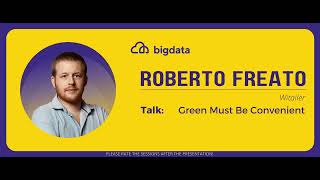
Roberto Freato: Green Must Be Convenient

Join Roberto Freato in his session 'Green Must Be Convenient' as he unveils the evolution of database storage practices, demonstrating how Azure SQL Database efficiently manages vast amounts of JSON objects. Discover how this bridges the gap between raw data in a data lake and the relational view used by analytical applications. 🌱💾 #DatabaseStorage #azuresql

✨ H I G H L I G H T S ✨

🙌 A huge shoutout to all the incredible participants who made Big Data Conference Europe 2023 in Vilnius, Lithuania, from November 21-24, an absolute triumph! 🎉 Your attendance and active participation were instrumental in making this event so special. 🌍

Don't forget to check out the session recordings from the conference to relive the valuable insights and knowledge shared! 📽️

Once again, THANK YOU for playing a pivotal role in the success of Big Data Conference Europe 2023. 🚀 See you next year for another unforgettable conference! 📅 #BigDataConference #SeeYouNextYear

Effective data management has become a cornerstone of success in our digital era. It involves not just collecting and storing information but also organizing, securing, and leveraging data to drive progress and innovation. Many organizations turn to tools like Snowflake for advanced data warehousing capabilities. However, while Snowflake enhances data storage and access, it's not a complete solution for all data management challenges. To address this, tools like Capital One’s Slingshot can be used alongside Snowflake, helping to optimize costs and refine data management strategies. Salim Syed is a VP, Head of engineering for Capital One Slingshot product. He led Capital One’s data warehouse migration to AWS and is a specialist in deploying Snowflake to a large enterprise. Salim’s expertise lies in developing Big Data (Lake) and Data Warehouse strategy on the public cloud. He leads an organization of more than 100 data engineers, support engineers, DBAs and full stack developers in driving enterprise data lake, data warehouse, data management and visualization platform services. Salim has more than 25 years of experience in the data ecosystem. His career started in data engineering where he built data pipelines and then moved into maintenance and administration of large database servers using multi-tier replication architecture in various remote locations. He then worked at CodeRye as a database architect and at 3M Health Information Systems as an enterprise data architect. Salim has been at Capital One for the past six years. In this episode, Adel and Salim explore cloud data management and the evolution of Slingshot into a major multi-tenant SaaS platform, the shift from on-premise to cloud-based data governance, the role of centralized tooling, strategies for effective cloud data management, including data governance, cost optimization, and waste reduction as well as insights into navigating the complexities of data infrastructure, security, and scalability in the modern digital era. Links Mentioned in the Show: Capital One SlingshotSnowflakeCourse: Introduction to Data WarehousingCourse: Introduction to Snowflake