talk-data.com talk-data.com

Topic

Data Lake

big_data data_storage analytics

311

tagged

Activity Trend

28 peak/qtr
2020-Q1 2026-Q1

Activities

311 activities · Newest first

Summary

The first step of data pipelines is to move the data to a place where you can process and prepare it for its eventual purpose. Data transfer systems are a critical component of data enablement, and building them to support large volumes of information is a complex endeavor. Andrei Tserakhau has dedicated his careeer to this problem, and in this episode he shares the lessons that he has learned and the work he is doing on his most recent data transfer system at DoubleCloud.

Announcements

Hello and welcome to the Data Engineering Podcast, the show about modern data management Introducing RudderStack Profiles. RudderStack Profiles takes the SaaS guesswork and SQL grunt work out of building complete customer profiles so you can quickly ship actionable, enriched data to every downstream team. You specify the customer traits, then Profiles runs the joins and computations for you to create complete customer profiles. Get all of the details and try the new product today at dataengineeringpodcast.com/rudderstack You shouldn't have to throw away the database to build with fast-changing data. You should be able to keep the familiarity of SQL and the proven architecture of cloud warehouses, but swap the decades-old batch computation model for an efficient incremental engine to get complex queries that are always up-to-date. With Materialize, you can! It’s the only true SQL streaming database built from the ground up to meet the needs of modern data products. Whether it’s real-time dashboarding and analytics, personalization and segmentation or automation and alerting, Materialize gives you the ability to work with fresh, correct, and scalable results — all in a familiar SQL interface. Go to dataengineeringpodcast.com/materialize today to get 2 weeks free! This episode is brought to you by Datafold – a testing automation platform for data engineers that finds data quality issues for every part of your data workflow, from migration to deployment. Datafold has recently launched a 3-in-1 product experience to support accelerated data migrations. With Datafold, you can seamlessly plan, translate, and validate data across systems, massively accelerating your migration project. Datafold leverages cross-database diffing to compare tables across environments in seconds, column-level lineage for smarter migration planning, and a SQL translator to make moving your SQL scripts easier. Learn more about Datafold by visiting dataengineeringpodcast.com/datafold today! Data lakes are notoriously complex. For data engineers who battle to build and scale high quality data workflows on the data lake, Starburst powers petabyte-scale SQL analytics fast, at a fraction of the cost of traditional methods, so that you can meet all your data needs ranging from AI to data applications to complete analytics. Trusted by teams of all sizes, including Comcast and Doordash, Starburst is a data lake analytics platform that delivers the adaptability and flexibility a lakehouse ecosystem promises. And Starburst does all of this on an open architecture with first-class support for Apache Iceberg, Delta Lake and Hudi, so you always maintain ownership of your data. Want to see Starburst in action? Go to dataengineeringpodcast.com/starburst and get $500 in credits to try Starburst Galaxy today, the easiest and fastest way to get started using Trino. Your host is Tobias Macey and today I'm interviewing Andrei Tserakhau about operationalizing high bandwidth and low-latency change-data capture

Interview

Introduction How did you get involved in the area of data management? Your most recent project involves operationalizing a generalized data transfer service. What was the original problem that you were trying to solve?

What were the shortcomings of other options in the ecosystem that led you to building a new system?

What was the design of your initial solution to the problem?

What are the sharp edges that you had to deal with to operate and use that i
Summary

Building a data platform that is enjoyable and accessible for all of its end users is a substantial challenge. One of the core complexities that needs to be addressed is the fractal set of integrations that need to be managed across the individual components. In this episode Tobias Macey shares his thoughts on the challenges that he is facing as he prepares to build the next set of architectural layers for his data platform to enable a larger audience to start accessing the data being managed by his team.

Announcements

Hello and welcome to the Data Engineering Podcast, the show about modern data management Introducing RudderStack Profiles. RudderStack Profiles takes the SaaS guesswork and SQL grunt work out of building complete customer profiles so you can quickly ship actionable, enriched data to every downstream team. You specify the customer traits, then Profiles runs the joins and computations for you to create complete customer profiles. Get all of the details and try the new product today at dataengineeringpodcast.com/rudderstack You shouldn't have to throw away the database to build with fast-changing data. You should be able to keep the familiarity of SQL and the proven architecture of cloud warehouses, but swap the decades-old batch computation model for an efficient incremental engine to get complex queries that are always up-to-date. With Materialize, you can! It’s the only true SQL streaming database built from the ground up to meet the needs of modern data products. Whether it’s real-time dashboarding and analytics, personalization and segmentation or automation and alerting, Materialize gives you the ability to work with fresh, correct, and scalable results — all in a familiar SQL interface. Go to dataengineeringpodcast.com/materialize today to get 2 weeks free! Developing event-driven pipelines is going to be a lot easier - Meet Functions! Memphis functions enable developers and data engineers to build an organizational toolbox of functions to process, transform, and enrich ingested events “on the fly” in a serverless manner using AWS Lambda syntax, without boilerplate, orchestration, error handling, and infrastructure in almost any language, including Go, Python, JS, .NET, Java, SQL, and more. Go to dataengineeringpodcast.com/memphis today to get started! Data lakes are notoriously complex. For data engineers who battle to build and scale high quality data workflows on the data lake, Starburst powers petabyte-scale SQL analytics fast, at a fraction of the cost of traditional methods, so that you can meet all your data needs ranging from AI to data applications to complete analytics. Trusted by teams of all sizes, including Comcast and Doordash, Starburst is a data lake analytics platform that delivers the adaptability and flexibility a lakehouse ecosystem promises. And Starburst does all of this on an open architecture with first-class support for Apache Iceberg, Delta Lake and Hudi, so you always maintain ownership of your data. Want to see Starburst in action? Go to dataengineeringpodcast.com/starburst and get $500 in credits to try Starburst Galaxy today, the easiest and fastest way to get started using Trino. Your host is Tobias Macey and today I'll be sharing an update on my own journey of building a data platform, with a particular focus on the challenges of tool integration and maintaining a single source of truth

Interview

Introduction How did you get involved in the area of data management? data sharing weight of history

existing integrations with dbt switching cost for e.g. SQLMesh de facto standard of Airflow

Single source of truth

permissions management across application layers Database engine Storage layer in a lakehouse Presentation/access layer (BI) Data flows dbt -> table level lineage orchestration engine -> pipeline flows

task based vs. asset based

Metadata platform as the logical place for horizontal view

Contact Info

LinkedIn Website

Parting Questio

Summary

The dbt project has become overwhelmingly popular across analytics and data engineering teams. While it is easy to adopt, there are many potential pitfalls. Dustin Dorsey and Cameron Cyr co-authored a practical guide to building your dbt project. In this episode they share their hard-won wisdom about how to build and scale your dbt projects.

Announcements

Hello and welcome to the Data Engineering Podcast, the show about modern data management Data projects are notoriously complex. With multiple stakeholders to manage across varying backgrounds and toolchains even simple reports can become unwieldy to maintain. Miro is your single pane of glass where everyone can discover, track, and collaborate on your organization's data. I especially like the ability to combine your technical diagrams with data documentation and dependency mapping, allowing your data engineers and data consumers to communicate seamlessly about your projects. Find simplicity in your most complex projects with Miro. Your first three Miro boards are free when you sign up today at dataengineeringpodcast.com/miro. That’s three free boards at dataengineeringpodcast.com/miro. Introducing RudderStack Profiles. RudderStack Profiles takes the SaaS guesswork and SQL grunt work out of building complete customer profiles so you can quickly ship actionable, enriched data to every downstream team. You specify the customer traits, then Profiles runs the joins and computations for you to create complete customer profiles. Get all of the details and try the new product today at dataengineeringpodcast.com/rudderstack You shouldn't have to throw away the database to build with fast-changing data. You should be able to keep the familiarity of SQL and the proven architecture of cloud warehouses, but swap the decades-old batch computation model for an efficient incremental engine to get complex queries that are always up-to-date. With Materialize, you can! It’s the only true SQL streaming database built from the ground up to meet the needs of modern data products. Whether it’s real-time dashboarding and analytics, personalization and segmentation or automation and alerting, Materialize gives you the ability to work with fresh, correct, and scalable results — all in a familiar SQL interface. Go to dataengineeringpodcast.com/materialize today to get 2 weeks free! Data lakes are notoriously complex. For data engineers who battle to build and scale high quality data workflows on the data lake, Starburst powers petabyte-scale SQL analytics fast, at a fraction of the cost of traditional methods, so that you can meet all your data needs ranging from AI to data applications to complete analytics. Trusted by teams of all sizes, including Comcast and Doordash, Starburst is a data lake analytics platform that delivers the adaptability and flexibility a lakehouse ecosystem promises. And Starburst does all of this on an open architecture with first-class support for Apache Iceberg, Delta Lake and Hudi, so you always maintain ownership of your data. Want to see Starburst in action? Go to dataengineeringpodcast.com/starburst and get $500 in credits to try Starburst Galaxy today, the easiest and fastest way to get started using Trino. Your host is Tobias Macey and today I'm interviewing Dustin Dorsey and Cameron Cyr about how to design your dbt projects

Interview

Introduction How did you get involved in the area of data management? What was your path to adoption of dbt?

What did you use prior to its existence? When/why/how did you start using it?

What are some of the common challenges that teams experience when getting started with dbt?

How does prior experience in analytics and/or software engineering impact those outcomes?

You recently wrote a book to give a crash course in best practices for dbt. What motivated you to invest that time and effort?

What new lessons did you learn about dbt in the process of writing the book?

The introduction of dbt is largely res

Summary

Software development involves an interesting balance of creativity and repetition of patterns. Generative AI has accelerated the ability of developer tools to provide useful suggestions that speed up the work of engineers. Tabnine is one of the main platforms offering an AI powered assistant for software engineers. In this episode Eran Yahav shares the journey that he has taken in building this product and the ways that it enhances the ability of humans to get their work done, and when the humans have to adapt to the tool.

Announcements

Hello and welcome to the Data Engineering Podcast, the show about modern data management Introducing RudderStack Profiles. RudderStack Profiles takes the SaaS guesswork and SQL grunt work out of building complete customer profiles so you can quickly ship actionable, enriched data to every downstream team. You specify the customer traits, then Profiles runs the joins and computations for you to create complete customer profiles. Get all of the details and try the new product today at dataengineeringpodcast.com/rudderstack This episode is brought to you by Datafold – a testing automation platform for data engineers that finds data quality issues before the code and data are deployed to production. Datafold leverages data-diffing to compare production and development environments and column-level lineage to show you the exact impact of every code change on data, metrics, and BI tools, keeping your team productive and stakeholders happy. Datafold integrates with dbt, the modern data stack, and seamlessly plugs in your data CI for team-wide and automated testing. If you are migrating to a modern data stack, Datafold can also help you automate data and code validation to speed up the migration. Learn more about Datafold by visiting dataengineeringpodcast.com/datafold Data lakes are notoriously complex. For data engineers who battle to build and scale high quality data workflows on the data lake, Starburst powers petabyte-scale SQL analytics fast, at a fraction of the cost of traditional methods, so that you can meet all your data needs ranging from AI to data applications to complete analytics. Trusted by teams of all sizes, including Comcast and Doordash, Starburst is a data lake analytics platform that delivers the adaptability and flexibility a lakehouse ecosystem promises. And Starburst does all of this on an open architecture with first-class support for Apache Iceberg, Delta Lake and Hudi, so you always maintain ownership of your data. Want to see Starburst in action? Go to dataengineeringpodcast.com/starburst and get $500 in credits to try Starburst Galaxy today, the easiest and fastest way to get started using Trino. You shouldn't have to throw away the database to build with fast-changing data. You should be able to keep the familiarity of SQL and the proven architecture of cloud warehouses, but swap the decades-old batch computation model for an efficient incremental engine to get complex queries that are always up-to-date. With Materialize, you can! It’s the only true SQL streaming database built from the ground up to meet the needs of modern data products. Whether it’s real-time dashboarding and analytics, personalization and segmentation or automation and alerting, Materialize gives you the ability to work with fresh, correct, and scalable results — all in a familiar SQL interface. Go to dataengineeringpodcast.com/materialize today to get 2 weeks free! Your host is Tobias Macey and today I'm interviewing Eran Yahav about building an AI powered developer assistant at Tabnine

Interview

Introduction How did you get involved in machine learning? Can you describe what Tabnine is and the story behind it? What are the individual and organizational motivations for using AI to generate code?

What are the real-world limitations of generative AI for creating software? (e.g. size/complexity of the outputs, naming conventions, etc.) What are the elements of skepticism/overs

Summary

Databases are the core of most applications, but they are often treated as inscrutable black boxes. When an application is slow, there is a good probability that the database needs some attention. In this episode Lukas Fittl shares some hard-won wisdom about the causes and solution of many performance bottlenecks and the work that he is doing to shine some light on PostgreSQL to make it easier to understand how to keep it running smoothly.

Announcements

Hello and welcome to the Data Engineering Podcast, the show about modern data management Introducing RudderStack Profiles. RudderStack Profiles takes the SaaS guesswork and SQL grunt work out of building complete customer profiles so you can quickly ship actionable, enriched data to every downstream team. You specify the customer traits, then Profiles runs the joins and computations for you to create complete customer profiles. Get all of the details and try the new product today at dataengineeringpodcast.com/rudderstack You shouldn't have to throw away the database to build with fast-changing data. You should be able to keep the familiarity of SQL and the proven architecture of cloud warehouses, but swap the decades-old batch computation model for an efficient incremental engine to get complex queries that are always up-to-date. With Materialize, you can! It’s the only true SQL streaming database built from the ground up to meet the needs of modern data products. Whether it’s real-time dashboarding and analytics, personalization and segmentation or automation and alerting, Materialize gives you the ability to work with fresh, correct, and scalable results — all in a familiar SQL interface. Go to dataengineeringpodcast.com/materialize today to get 2 weeks free! Data lakes are notoriously complex. For data engineers who battle to build and scale high quality data workflows on the data lake, Starburst powers petabyte-scale SQL analytics fast, at a fraction of the cost of traditional methods, so that you can meet all your data needs ranging from AI to data applications to complete analytics. Trusted by teams of all sizes, including Comcast and Doordash, Starburst is a data lake analytics platform that delivers the adaptability and flexibility a lakehouse ecosystem promises. And Starburst does all of this on an open architecture with first-class support for Apache Iceberg, Delta Lake and Hudi, so you always maintain ownership of your data. Want to see Starburst in action? Go to dataengineeringpodcast.com/starburst and get $500 in credits to try Starburst Galaxy today, the easiest and fastest way to get started using Trino. This episode is brought to you by Datafold – a testing automation platform for data engineers that finds data quality issues before the code and data are deployed to production. Datafold leverages data-diffing to compare production and development environments and column-level lineage to show you the exact impact of every code change on data, metrics, and BI tools, keeping your team productive and stakeholders happy. Datafold integrates with dbt, the modern data stack, and seamlessly plugs in your data CI for team-wide and automated testing. If you are migrating to a modern data stack, Datafold can also help you automate data and code validation to speed up the migration. Learn more about Datafold by visiting dataengineeringpodcast.com/datafold Your host is Tobias Macey and today I'm interviewing Lukas Fittl about optimizing your database performance and tips for tuning Postgres

Interview

Introduction How did you get involved in the area of data management? What are the different ways that database performance problems impact the business? What are the most common contributors to performance issues? What are the useful signals that indicate performance challenges in the database?

For a given symptom, what are the steps that you recommend for determining the proximate cause?

What are the potential negative impacts to be aware of when tu

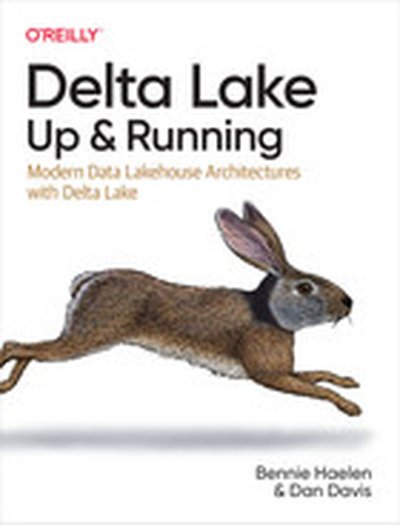
Delta Lake: Up and Running

With the surge in big data and AI, organizations can rapidly create data products. However, the effectiveness of their analytics and machine learning models depends on the data's quality. Delta Lake's open source format offers a robust lakehouse framework over platforms like Amazon S3, ADLS, and GCS. This practical book shows data engineers, data scientists, and data analysts how to get Delta Lake and its features up and running. The ultimate goal of building data pipelines and applications is to gain insights from data. You'll understand how your storage solution choice determines the robustness and performance of the data pipeline, from raw data to insights. You'll learn how to: Use modern data management and data engineering techniques Understand how ACID transactions bring reliability to data lakes at scale Run streaming and batch jobs against your data lake concurrently Execute update, delete, and merge commands against your data lake Use time travel to roll back and examine previous data versions Build a streaming data quality pipeline following the medallion architecture

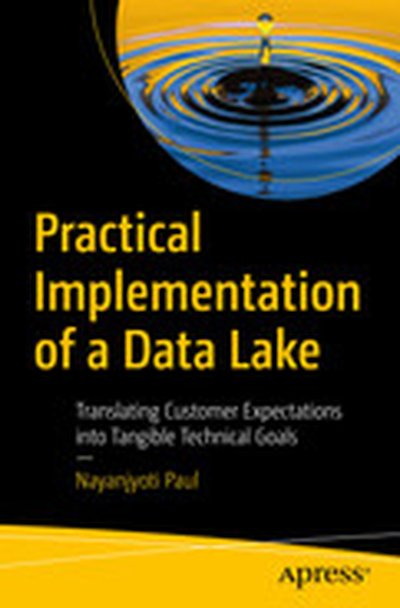
Practical Implementation of a Data Lake: Translating Customer Expectations into Tangible Technical Goals

This book explains how to implement a data lake strategy, covering the technical and business challenges architects commonly face. It also illustrates how and why client requirements should drive architectural decisions. Drawing upon a specific case from his own experience, author Nayanjyoti Paul begins with the consideration from which all subsequent decisions should flow: what does your customer need? He also describes the importance of identifying key stakeholders and the key points to focus on when starting a new project. Next, he takes you through the business and technical requirement-gathering process, and how to translate customer expectations into tangible technical goals. From there, you’ll gain insight into the security model that will allow you to establish security and legal guardrails, as well as different aspects of security from the end user’s perspective. You’ll learn which organizational roles need to be onboarded into the data lake, their responsibilities, the services they need access to, and how the hierarchy of escalations should work. Subsequent chapters explore how to divide your data lakes into zones, organize data for security and access, manage data sensitivity, and techniques used for data obfuscation. Audit and logging capabilities in the data lake are also covered before a deep dive into designing data lakes to handle multiple kinds and file formats and access patterns. The book concludes by focusing on production operationalization and solutions to implement a production setup. After completing this book, you will understand how to implement a data lake, the best practices to employ while doing so, and will be armed with practical tips to solve business problems. What You Will Learn Understand the challenges associated with implementing a data lake Explore the architectural patterns and processes used to design a new data lake Design and implement data lake capabilities Associate business requirements with technical deliverables to drive success Who This Book Is For Data Scientists and Architects, Machine Learning Engineers, and Software Engineers.

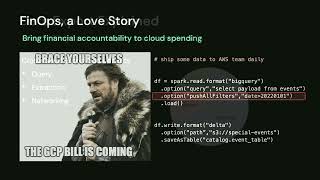
The Future is Open: Data Streaming in an Omni-Cloud Reality

This session begins with data warehouse trivia and lessons learned from production implementations of multicloud data architecture. You will learn to design future-proof low latency data systems that focus on openness and interoperability. You will also gain a gentle introduction to Cloud FinOps principles that can help your organization reduce compute spend and increase efficiency. 

Most enterprises today are multicloud. While an assortment of low-code connectors boasts the ability to make data available for analytics in real time, they post long-lasting challenges:

  • Inefficient EDW targets
  • Inability to evolve schema
  • Forbiddingly expensive data exports due to cloud and vendor lock-in

The alternative is an open data lake that unifies batch and streaming workloads. Bronze landing zones in open format eliminate the data extraction costs required by proprietary EDW. Apache Spark™ Structured Streaming provides a unified ingestion interface. Streaming triggers allow us to switch back and forth between batch and stream with one-line code changes. Streaming aggregation enables us to incrementally compute on data that arrives near each other.

Specific examples are given on how to use Autoloader to discover newly arrived data and ensure exactly once, incremental processing. How DLT can be configured effectively to further simplify streaming jobs and accelerate the development cycle. How to apply SWE best practices to Workflows and integrate with popular Git providers, either using the Databricks Project or Databricks Terraform provider. 

Talk by: Christina Taylor

Here’s more to explore: Big Book of Data Engineering: 2nd Edition: https://dbricks.co/3XpPgNV The Data Team's Guide to the Databricks Lakehouse Platform: https://dbricks.co/46nuDpI

Connect with us: Website: https://databricks.com Twitter: https://twitter.com/databricks LinkedIn: https://www.linkedin.com/company/databricks Instagram: https://www.instagram.com/databricksinc Facebook: https://www.facebook.com/databricksinc

Unlocking Near Real Time Data Replication with CDC, Apache Spark™ Streaming, and Delta Lake

Tune into DoorDash's journey to migrate from a flaky ETL system with 24-hour data delays, to standardizing a CDC streaming pattern across more than 150 databases to produce near real-time data in a scalable, configurable, and reliable manner.

During this journey, understand how we use Delta Lake to build a self-serve, read-optimized data lake with data latencies of 15, whilst reducing operational overhead. Furthermore, understand how certain tradeoffs like conceding to a non-real-time system allow for multiple optimizations but still permit for OLTP query use-cases, and the benefits it provides.

Talk by: Ivan Peng and Phani Nalluri

Here’s more to explore: Big Book of Data Engineering: 2nd Edition: https://dbricks.co/3XpPgNV The Data Team's Guide to the Databricks Lakehouse Platform: https://dbricks.co/46nuDpI

Connect with us: Website: https://databricks.com Twitter: https://twitter.com/databricks LinkedIn: https://www.linkedin.com/company/databricks Instagram: https://www.instagram.com/databricksinc Facebook: https://www.facebook.com/databricksinc

Databricks and Delta Lake: Lessons Learned from Building Akamai's Web Security Analytics Product

Akamai is a leading content delivery network (CDN) and cybersecurity company operating hundreds of thousands of servers in more than 135 countries worldwide. In this session, we will share our experiences and lessons learned from building and maintaining the Web Security Analytics (WSA) product, an interactive analytics platform powered by Databricks and Delta Lake that enables customers to efficiently analyze and take informed action on a high volume of streaming security events.

The WSA platform must be able to serve hundreds of queries per minute, scanning hundreds of terabytes of data from a six petabyte data lake, with most queries returning results within ten seconds; for both aggregation queries and needle in a haystack queries. This session will cover how to use Databricks SQL warehouses and job clusters cost-effectively, and how to improve query performance using tools and techniques such as Delta Lake, Databricks Photon, and partitioning. This talk will be valuable for anyone looking to build and operate a high-performance analytics platform.

Talk by: Tomer Patel and Itai Yaffe

Connect with us: Website: https://databricks.com Twitter: https://twitter.com/databricks LinkedIn: https://www.linkedin.com/company/databricks Instagram: https://www.instagram.com/databricksinc Facebook: https://www.facebook.com/databricksinc

IFC's MALENA Provides Analytics for ESG Reviews in Emerging Markets Using NLP and LLMs

International Finance Corporation (IFC) is using data and AI to build machine learning solutions that create analytical capacity to support the review of ESG issues at scale. This includes natural language processing and requires entity recognition and other applications to support the work of IFC’s experts and other investors working in emerging markets. These algorithms are available via IFC’s Machine Learning ESG Analyst (MALENA) platform to enable rapid analysis, increase productivity, and build investor confidence. In this manner, IFC, a development finance institution with the mandate to address poverty in emerging markets, is making use of its historical datasets and open source AI solutions to build custom-AI applications that democratize access to ESG capacity to read and classify text.

In this session, you will learn the unique flexibility of the Apache Spark™ ecosystem from Databricks and how that has allowed IFC’s MALENA project to connect to scalable data lake storage, use different natural language processing models and seamlessly adopt MLOps.

Talk by: Atiyah Curmally and Blaise Sandwidi

Connect with us: Website: https://databricks.com Twitter: https://twitter.com/databricks LinkedIn: https://www.linkedin.com/company/databricks Instagram: https://www.instagram.com/databricksinc Facebook: https://www.facebook.com/databricksinc

Databricks SQL: Why the Best Serverless Data Warehouse is a Lakehouse

Many organizations rely on complex cloud data architectures that create silos between applications, users and data. This fragmentation makes it difficult to access accurate, up-to-date information for analytics, often resulting in the use of outdated data. Enter the lakehouse, a modern data architecture that unifies data, AI, and analytics in a single location.

This session explores why the lakehouse is the best data warehouse, featuring success stories, use cases and best practices from industry experts. You'll discover how to unify and govern business-critical data at scale to build a curated data lake for data warehousing, SQL and BI. Additionally, you'll learn how Databricks SQL can help lower costs and get started in seconds with on-demand, elastic SQL serverless warehouses, and how to empower analytics engineers and analysts to quickly find and share new insights using their preferred BI and SQL tools such as Fivetran, dbt, Tableau, or Power BI.

Talk by: Miranda Luna and Cyrielle Simeone

Connect with us: Website: https://databricks.com Twitter: https://twitter.com/databricks LinkedIn: https://www.linkedin.com/company/databricks Instagram: https://www.instagram.com/databricksinc Facebook: https://www.facebook.com/databricksinc

Real-Time Streaming Solution for Call Center Analytics: Business Challenges and Technical Enablement

A large international client with a business footprint in North America, Europe and Africa reached out to us with an interest in having a real-time streaming solution designed and implemented for its call center handling incoming and outgoing client calls. The client had a previous bad experience with another vendor, who overpromised and underdelivered on the latency of the streaming solution. The previous vendor delivered an over-complex streaming data pipeline resulting in the data taking over five minutes to reach a visualization layer. The client felt that architecture was too complex and involved many services integrated together.

Our immediate challenges involved gaining the client's trust and proving that our design and implementation quality would supersede a previous experience. To resolve an immediate challenge of the overly complicated pipeline design, we deployed a Databricks Lakehouse architecture with Azure Databricks at the center of the solution. Our reference architecture integrated Genesys Cloud : App Services : Event Hub : Databricks : : Data Lake : Power BI.

The streaming solution proved to be low latency (seconds) during the POV stage, which led to subsequent productionalization of the pipeline with deployment of jobs, DLTs pipeline, including multi-notebook workflow and business and performance metrics dashboarding relied on by the call center staff for a day-to-day performance monitoring and improvements.

Talk by: Natalia Demidova

Connect with us: Website: https://databricks.com Twitter: https://twitter.com/databricks LinkedIn: https://www.linkedin.com/company/databricks Instagram: https://www.instagram.com/databricksinc Facebook: https://www.facebook.com/databricksinc

Processing Delta Lake Tables on AWS Using AWS Glue, Amazon Athena, and Amazon Redshift

Delta Lake is an open source project that helps implement modern data lake architectures commonly built on cloud storages. With Delta Lake, you can achieve ACID transactions, time travel queries, CDC, and other common use cases on the cloud.

There are a lot of use cases of Delta tables on AWS. AWS has invested a lot in this technology, and now Delta Lake is available with multiple AWS services, such as AWS Glue Spark jobs, Amazon EMR, Amazon Athena, and Amazon Redshift Spectrum. AWS Glue is a serverless, scalable data integration service that makes it easier to discover, prepare, move, and integrate data from multiple sources. With AWS Glue, you can easily ingest data from multiple data sources such as on-prem databases, Amazon RDS, DynamoDB, MongoDB into Delta Lake on Amazon S3 even without expertise in coding.

This session will demonstrate how to get started with processing Delta Lake tables on Amazon S3 using AWS Glue, and querying from Amazon Athena, and Amazon Redshift. The session also covers recent AWS service updates related to Delta Lake.

Talk by: Noritaka Sekiyama and Akira Ajisaka

Here’s more to explore: Why the Data Lakehouse Is Your next Data Warehouse: https://dbricks.co/3Pt5unq Lakehouse Fundamentals Training: https://dbricks.co/44ancQs

Connect with us: Website: https://databricks.com Twitter: https://twitter.com/databricks LinkedIn: https://www.linkedin.com/company/databricks Instagram: https://www.instagram.com/databricksinc Facebook: https://www.facebook.com/databricksinc

US Army Corp of Engineers Enhanced Commerce & National Sec Through Data-Driven Geospatial Insight

The US Army Corps of Engineers (USACE) is responsible for maintaining and improving nearly 12,000 miles of shallow-draft (9'-14') inland and intracoastal waterways, 13,000 miles of deep-draft (14' and greater) coastal channels, and 400 ports, harbors, and turning basins throughout the United States. Because these components of the national waterway network are considered assets to both US commerce and national security, they must be carefully managed to keep marine traffic operating safely and efficiently.

The National DQM Program is tasked with providing USACE a nationally standardized remote monitoring and documentation system across multiple vessel types with timely data access, reporting, dredge certifications, data quality control, and data management. Government systems have often lagged commercial systems in modernization efforts, and the emergence of the cloud and Data Lakehouse Architectures have empowered USACE to successfully move into the modern data era.

This session incorporates aspects of these topics: Data Lakehouse Architecture: Delta Lake, platform security and privacy, serverless, administration, data warehouse, Data Lake, Apache Iceberg, Data Mesh GIS: H3, MOSAIC, spatial analysis data engineering: data pipelines, orchestration, CDC, medallion architecture, Databricks Workflows, data munging, ETL/ELT, lakehouses, data lakes, Parquet, Data Mesh, Apache Spark™ internals. Data Streaming: Apache Spark Structured Streaming, real-time ingestion, real-time ETL, real-time ML, real-time analytics, and real-time applications, Delta Live Tables. ML: PyTorch, TensorFlow, Keras, scikit-learn, Python and R ecosystems data governance: security, compliance, RMF, NIST data sharing: sharing and collaboration, delta sharing, data cleanliness, APIs.

Talk by: Jeff Mroz

Connect with us: Website: https://databricks.com Twitter: https://twitter.com/databricks LinkedIn: https://www.linkedin.com/company/databricks Instagram: https://www.instagram.com/databricksinc Facebook: https://www.facebook.com/databricksinc

Advanced Governance with Collibra on Databricks

A data lake is only as good as its governance. Understanding what data you have, performing classification, defining/applying security policies and auding how it's used is the data governance lifecycle. Unity Catalog with its rich ecosystem of supported tools simplifies all stages of the data governance lifecycle. Learn how metadata can be hydrated, into Collibra directly from Unity Catalog. Once the metadata is available in Collibra we will demonstrate classification, defining security policies on the data and pushing those policies into Databricks. All access and usage of data is automatically audited with real time lineage provided in the data explorer as well as system tables.

Talk by: Leon Eller and Antonio Castelo

Connect with us: Website: https://databricks.com Twitter: https://twitter.com/databricks LinkedIn: https://www.linkedin.com/company/databricks Instagram: https://www.instagram.com/databricksinc Facebook: https://www.facebook.com/databricksin

Security Best Practices and Tools to Build a Secure Lakehouse

To learn more, visit the Databricks Security and Trust Center: https://www.databricks.com/trust

As you embark on a lakehouse project or evolve your existing data lake, you may want to improve your security posture and take advantage of new security features—there may even be a security team at your company that demands it. Databricks has worked with thousands of customers to securely deploy the Databricks Platform to meet their architecture and security requirements. While many organizations deploy security differently, we have found a common set of guidelines and features among organizations that require a high level of security. In this session, we will detail the security features and architectural choices frequently used by these organizations and walk through a series of threat models for the risks that most concern security teams. While this session is great for people who already know Databricks—don’t worry—that knowledge isn’t required. You will walk away with a full handbook detailing all the concepts, configurations, check lists, security analysis tool (SAT), and security reference architecture (SRA) automation scripts from the session so that you can make immediate progress when you get back to the office. Security can be hard, but we’ve collected the hard work already done by some of the best in the industry, and built tools, to make it easier. Come learn how. See how good looks like via a demo.

Talk by: Arun Pamulapati and Anindita Mahapatra

Connect with us: Website: https://databricks.com Twitter: https://twitter.com/databricks LinkedIn: https://www.linkedin.com/company/databricks Instagram: https://www.instagram.com/databricksinc Facebook: https://www.facebook.com/databricksinc

Using DMS and DLT for Change Data Capture

Bringing in Relational Data Store (RDS) data into your data lake is a critical and important process to facilitate use cases. By leveraging AWS Database Migration Services (DMS) and Databricks Delta Live Tables (DLT) we can simplify change data capture from your RDS. In this talk, we will be breaking down this complex process by discussing the fundamentals and best practices. There will also be a demo where we bring this all together.

Talk by: Neil Patel and Ganesh Chand

Connect with us: Website: https://databricks.com Twitter: https://twitter.com/databricks LinkedIn: https://www.linkedin.com/company/databricks Instagram: https://www.instagram.com/databricksinc Facebook: https://www.facebook.com/databricksinc

Discover the transformation of Airflow at GoDaddy: from its initial deployment on-prem to its migration to the cloud, and finally to a Single Pane Orchestration Model. This evolution has streamlined our Data Platform and improved governance. Our experience will be beneficial for anyone seeking to optimize their Airflow implementation and simplify their orchestration processes. History and Use-cases Design, Organization decisions, and Governance: Examining the decision-making process and governance structure. Migration to Cloud:Process of transitioning Airflow from on-premises to the cloud. Data Processing engines used with Airflow for Data Processing. Challenges: Obstacles faced during and after migration and how they were overcome. *Demonstrating how Airflow can be integrated with a central Glue Catalog and Data Lake Mesh model. Single Pane Orchestration (PAAS) and custom re-usable Github Actions: Examining benefits of using a Single Pane Orchestration model Monitoring

In this presentation, we discuss how we built a fully managed workflow orchestration system at Salesforce using Apache Airflow to facilitate dependable data lake infrastructure on the public cloud. We touch upon how we utilized kubernetes for increased scalability and resilience, as well as the most effective approaches for managing and scaling data pipelines. We will also talk about how we addressed data security and privacy, multitenancy, and interoperability with other internal systems. We discuss how we use this system to empower users with the ability to effortlessly build reliable pipelines that incorporate failure detection, alerting, and monitoring for deep insights through monitoring, removing the undifferentiated heavy lifting associated with running and managing their own orchestration engines. Lastly, we elaborate on how we integrated our in-house CI/CD pipelines to enable effective DAG and dependency management, further enhancing the system’s capabilities.