talk-data.com talk-data.com

Topic

Data Management

data_governance data_quality metadata_management

1097

tagged

Activity Trend

88 peak/qtr
2020-Q1 2026-Q1

Activities

1097 activities · Newest first

IBM Software for SAP Solutions

SAP is a market leader in enterprise business application software. SAP solutions provide a rich set of composable application modules, and configurable functional capabilities that are expected from a comprehensive enterprise business application software suite. In most cases, companies that adopt SAP software remain heterogeneous enterprises running both SAP and non-SAP systems to support their business processes. Regardless of the specific scenario, in heterogeneous enterprises most SAP implementations must be integrated with a variety of non-SAP enterprise systems: Portals Messaging infrastructure Business process management (BPM) tools Enterprise Content Management (ECM) methods and tools Business analytics (BA) and business intelligence (BI) technologies Security Systems of record Systems of engagement When SAP software is used in a large, heterogeneous enterprise environment, SAP clients face the dilemma of selecting the correct set of tools and platforms to implement SAP functionality, and to integrate the SAP solutions with non-SAP systems. This IBM® Redbooks® publication explains the value of integrating IBM software with SAP solutions. It describes how to enhance and extend pre-built capabilities in SAP software with best-in-class IBM enterprise software, enabling clients to maximize return on investment (ROI) in their SAP investment and achieve a balanced enterprise architecture approach. This book describes IBM Reference Architecture for SAP, a prescriptive blueprint for using IBM software in SAP solutions. The reference architecture is focused on defining the use of IBM software with SAP, and is not intended to address the internal aspects of SAP components. The chapters of this book provide a specific reference architecture for many of the architectural domains that are each important for a large enterprise to establish common strategy, efficiency, and balance. The majority of the most important architectural domain topics, such as integration, process optimization, master data management, mobile access, Enterprise Content Management, business intelligence, DevOps, security, systems monitoring, and so on, are covered in the book. However, there are several other architectural domains which are not included in the book. This is not to imply that these other architectural domains are not important or are less important, or that IBM does not offer a solution to address them. It is only reflective of time constraints, available resources, and the complexity of assembling a book on an extremely broad topic. Although more content could have been added, the authors feel confident that the scope of architectural material that has been included should provide organizations with a fantastic head start in defining their own enterprise reference architecture for many of the important architectural domains, and it is hoped that this book provides great value to those reading it. This IBM Redbooks publication is targeted to the following audiences: Client decision makers and solution architects leading enterprise transformation projects and wanting to gain further insight so that they can benefit from the integration of IBM software in large-scale SAP projects. IT architects and consultants integrating IBM technology with SAP solutions.
Building 360-Degree Information Applications

Today's businesses, applications, social media, and online transactions generate more data than ever before. This data can be explored and analyzed to provide tremendous business value. IBM® Watson™ Explorer and IBM InfoSphere® Master Data Management (InfoSphere MDM) enable organizations to simultaneously explore and derive insights from enterprise data that was traditionally stored in "silos" in enterprise applications, different data repositories, and in different data formats. This IBM Redbooks® publication provides information about Watson Explorer 9.0, InfoSphere MDM, and IBM InfoSphere MDM Probabilistic Matching Engine for InfoSphere BigInsights™ (PME for BigInsights). It gives you an overview, describes the architecture, and presents use cases that you can use to accomplish the following tasks: Understand the core capabilities of Watson Explorer, InfoSphere MDM, and PME for BigInsights. Realize the full potential of Watson Explorer applications. Describe the integration and value of the combination of Watson Explorer and InfoSphere MDM. Build a 360-degree information application. Learn by example by following hands-on lab scenarios.

Modern Enterprise Business Intelligence and Data Management

Nearly every large corporation and governmental agency is taking a fresh look at their current enterprise-scale business intelligence (BI) and data warehousing implementations at the dawn of the "Big Data Era"…and most see a critical need to revitalize their current capabilities. Whether they find the frustrating and business-impeding continuation of a long-standing "silos of data" problem, or an over-reliance on static production reports at the expense of predictive analytics and other true business intelligence capabilities, or a lack of progress in achieving the long-sought-after enterprise-wide "single version of the truth" – or all of the above – IT Directors, strategists, and architects find that they need to go back to the drawing board and produce a brand new BI/data warehousing roadmap to help move their enterprises from their current state to one where the promises of emerging technologies and a generation’s worth of best practices can finally deliver high-impact, architecturally evolvable enterprise-scale business intelligence and data warehousing. Author Alan Simon, whose BI and data warehousing experience dates back to the late 1970s and who has personally delivered or led more than thirty enterprise-wide BI/data warehousing roadmap engagements since the mid-1990s, details a comprehensive step-by-step approach to building a best practices-driven, multi-year roadmap in the quest for architecturally evolvable BI and data warehousing at the enterprise scale. Simon addresses the triad of technology, work processes, and organizational/human factors considerations in a manner that blends the visionary and the pragmatic. Takes a fresh look at true enterprise-scale BI/DW in the "Dawn of the Big Data Era" Details a checklist-based approach to surveying one’s current state and identifying which components are enterprise-ready and which ones are impeding the key objectives of enterprise-scale BI/DW Provides an approach for how to analyze and test-bed emerging technologies and architectures and then figure out how to include the relevant ones in the roadmaps that will be developed Presents a tried-and-true methodology for building a phased, incremental, and iterative enterprise BI/DW roadmap that is closely aligned with an organization’s business imperatives, organizational culture, and other considerations

Bitemporal Data

Bitemporal data has always been important. But it was not until 2011 that the ISO released a SQL standard that supported it. Currently, among major DBMS vendors, Oracle, IBM and Teradata now provide at least some bitemporal functionality in their flagship products. But to use these products effectively, someone in your IT organization needs to know more than how to code bitemporal SQL statements. Perhaps, in your organization, that person is you. To correctly interpret business requests for temporal data, to correctly specify requirements to your IT development staff, and to correctly design bitemporal databases and applications, someone in your enterprise needs a deep understanding of both the theory and the practice of managing bitemporal data. Someone also needs to understand what the future may bring in the way of additional temporal functionality, so their enterprise can plan for it. Perhaps, in your organization, that person is you. This is the book that will show the do-it-yourself IT professional how to design and build bitemporal databases and how to write bitemporal transactions and queries, and will show those who will direct the use of vendor-provided bitemporal DBMSs exactly what is going on "under the covers" of that software. Explains the business value of bitemporal data in terms of the information that can be provided by bitemporal tables and not by any other form of temporal data, including history tables, version tables, snapshot tables, or slowly-changing dimensions Provides an integrated account of the mathematics, logic, ontology and semantics of relational theory and relational databases, in terms of which current relational theory and practice can be seen as unnecessarily constrained to the management of nontemporal and incompletely temporal data Explains how bitemporal tables can provide the time-variance and nonvolatility hitherto lacking in Inmon historical data warehouses Explains how bitemporal dimensions can replace slowly-changing dimensions in Kimball star schemas, and why they should do so Describes several extensions to the current theory and practice of bitemporal data, including the use of episodes, "whenever" temporal transactions and queries, and future transaction time Points out a basic error in the ISO’s bitemporal SQL standard, and warns practitioners against the use of that faulty functionality. Recommends six extensions to the ISO standard which will increase the business value of bitemporal data Points towards a tritemporal future for bitemporal data, in which an Aristotelian ontology and a speech-act semantics support the direct management of the statements inscribed in the rows of relational tables, and add the ability to track the provenance of database content to existing bitemporal databases This book also provides the background needed to become a business ontologist, and explains why an IT data management person, deeply familiar with corporate databases, is best suited to play that role. Perhaps, in your organization, that person is you

SQL Server 2014 Development Essentials

This book is your ultimate guide to mastering database development using Microsoft SQL Server 2014. By diving into this hands-on resource, you will explore the essentials of database design, implementation, and deployment to create robust solutions that meet modern enterprise needs. What this Book will help me do Gain a deep understanding of SQL Server 2014's new features and enhancements. Master database design principles for scalable and efficient solutions. Develop and optimize SQL queries for robust data retrieval and manipulation. Understand advanced database object topics and effective error handling. Learn performance optimization techniques for maintaining database efficiency. Author(s) None A. Masood-Al-Farooq is a seasoned database professional with extensive experience in SQL Server development and administration. They have worked on numerous critical projects in enterprise data management and have a practical, results-driven approach to database solutions. As an author, they focus on equipping readers with actionable insights and techniques through clear explanations and real-world examples. Who is it for? This book is ideal for database developers, administrators, and architects who work with Microsoft SQL Server and wish to expand their expertise in its 2014 version. Beginners to intermediate-level professionals will find it accessible and straightforward, while advanced users can discover new features and optimizations. It caters to anyone looking to design or optimize database solutions effectively. Whether you manage databases or are diving into database software development, this book will enhance your SQL Server 2014 skills.

Practical Data Analysis with JMP, Second Edition, 2nd Edition

Understand the concepts and techniques of analysis while learning to reason statistically.

Being an effective analyst requires that you know how to properly define a problem and apply suitable statistical techniques, as well as clearly and honestly communicate the results with information-rich visualizations and precise language. Being a well-informed consumer of analyses requires the same set of skills so that you can recognize credible, actionable research when you see it.

Robert Carver's Practical Data Analysis with JMP, Second Edition uses the powerful interactive and visual approach of JMP to introduce readers to the logic and methods of statistical thinking and data analysis. It enables you to discriminate among and to use fundamental techniques of analysis, enabling you to engage in statistical thinking by analyzing real-world problems. “Application Scenarios” at the end of each chapter challenge you to put your knowledge and skills to use with data sets that go beyond mere repetition of chapter examples, and three new review chapters help readers integrate ideas and techniques. In addition, the scope and sequence of the chapters have been updated with more coverage of data management and analysis of data.

The book can stand on its own as a learning resource for professionals or be used to supplement a standard college-level introduction-to-statistics textbook. It includes varied examples and problems that rely on real sets of data, typically starting with an important or interesting research question that an investigator has pursued. Reflective of the broad applicability of statistical reasoning, the problems come from a wide variety of disciplines, including engineering, life sciences, business, economics, among

Practical Data Analysis with JMP, Second Edition introduces you to the major platforms and essential features of JMP and will leave you with a sufficient background and the confidence to continue your exploration independently.

This book is part of the SAS Press program.

Large Scale and Big Data

Large Scale and Big Data: Processing and Management provides readers with a central source of reference on the data management techniques currently available for large-scale data processing. Presenting chapters written by leading researchers, academics, and practitioners, it addresses the fundamental challenges associated with Big Data processing tools and techniques across a range of computing environments. The book begins by discussing the basic concepts and tools of large-scale Big Data processing and cloud computing. It also provides an overview of different programming models and cloud-based deployment models. The book’s second section examines the usage of advanced Big Data processing techniques in different domains, including semantic web, graph processing, and stream processing. The third section discusses advanced topics of Big Data processing such as consistency management, privacy, and security. Supplying a comprehensive summary from both the research and applied perspectives, the book covers recent research discoveries and applications, making it an ideal reference for a wide range of audiences, including researchers and academics working on databases, data mining, and web scale data processing. After reading this book, you will gain a fundamental understanding of how to use Big Data-processing tools and techniques effectively across application domains. Coverage includes cloud data management architectures, big data analytics visualization, data management, analytics for vast amounts of unstructured data, clustering, classification, link analysis of big data, scalable data mining, and machine learning techniques.

Methods and Applications of Statistics in Clinical Trials, Volume 2: Planning, Analysis, and Inferential Methods

Methods and Applications of Statistics in Clinical Trials, Volume 2: Planning, Analysis, and Inferential Methods includes updates of established literature from the Wiley Encyclopedia of Clinical Trials as well as original material based on the latest developments in clinical trials. Prepared by a leading expert, the second volume includes numerous contributions from current prominent experts in the field of medical research. In addition, the volume features: Multiple new articles exploring emerging topics, such as evaluation methods with threshold, empirical likelihood methods, nonparametric ROC analysis, over- and under-dispersed models, and multi-armed bandit problems Up-to-date research on the Cox proportional hazard model, frailty models, trial reports, intrarater reliability, conditional power, and the kappa index Key qualitative issues including cost-effectiveness analysis, publication bias, and regulatory issues, which are crucial to the planning and data management of clinical trials

IBM System Storage N series Hardware Guide

This IBM® Redbooks® publication provides a detailed look at the features, benefits, and capabilities of the IBM System Storage® N series hardware offerings. The IBM System Storage N series systems can help you tackle the challenge of effective data management by using virtualization technology and a unified storage architecture. The N series delivers low- to high-end enterprise storage and data management capabilities with midrange affordability. Built-in serviceability and manageability features help support your efforts to increase reliability, simplify and unify storage infrastructure and maintenance, and deliver exceptional economy. The IBM System Storage N series systems provide a range of reliable, scalable storage solutions to meet various storage requirements. These capabilities are achieved by using network access protocols, such as Network File System (NFS), Common Internet File System (CIFS), HTTP, and iSCSI, and storage area network technologies, such as Fibre Channel. By using built-in Redundant Array of Independent Disks (RAID) technologies, all data is protected with options to enhance protection through mirroring, replication, Snapshots, and backup. These storage systems also have simple management interfaces that make installation, administration, and troubleshooting straightforward. In addition, this book addresses high-availability solutions, including clustering and MetroCluster that support highest business continuity requirements. MetroCluster is a unique solution that combines array-based clustering with synchronous mirroring to deliver continuous availability.

Microsoft SQL Server 2014 Business Intelligence Development Beginner's Guide

Microsoft SQL Server 2014 Business Intelligence Development Beginner's Guide introduces you to Microsoft's BI tools and systems. You'll gain hands-on experience building solutions that handle data warehousing, reporting, and predictive analytics. With step-by-step tutorials, you'll be equipped to transform data into actionable insights. What this Book will help me do Understand and implement multidimensional data models using SSAS and MDX. Write and use DAX queries and leverage SSAS tabular models effectively. Improve and maintain data integrity using MDS and DQS tools. Design and develop polished, insightful dashboards and reports using PerformancePoint, Power View, and SSRS. Explore advanced data analysis features, such as Power Query, Power Map, and basic data mining techniques. Author(s) Abolfazl Radgoudarzi and Reza Rad are experienced practitioners and educators in the field of business intelligence. They specialize in SQL Server BI technologies and have extensive careers helping organizations harness data for decision-making. Their approach combines clear explanations with practical examples, ensuring readers can effectively apply what they learn. Who is it for? This book is ideal for database developers, system analysts, and IT professionals looking to build strong foundations in Microsoft SQL Server's BI technologies. Beginners in business intelligence or data management will find the topics accessible. Intermediate practitioners will expand their ability to build complete BI solutions. It's designed for anyone eager to develop skills in data modeling, analysis, and visualization.

Geoinformation, 2nd Edition

Written by a renowned expert, Geoinformation: Remote Sensing, Photogrammetry and Geographic Information Systems, Second Edition gives you an overarching view of how remote sensing, photogrammetry, and geographic information systems work together in an interdisciplinary manner. The book presents the required basic background of the geoinformatics concept in which the different methodologies must be combined. It details the principal components of remote sensing, from theoretical principles to advanced image analysis and interpretation techniques, sensor components, and operating platforms. New and Updated in the Second Edition: Web-based image viewing with Google Earth Aerial platforms Existing digital photogrammetric software systems, including Intergraph image station, Autodesk, and Oracle Spatial Land management and cadaster Imaging sensors such as laser scanning, image spectrometry, radar imaging, and radar interferometry With the advent of high-resolution satellite systems in stereo, the theory of analytical photogrammetry restituting 2D image information into 3D is of increasing importance, merging the remote sensing approach with that of photogrammetry. This text describes the fundamentals of these approaches in detail, with an emphasis on global, regional, and local applications. It provides a short introduction to the GPS satellite positioning system in the context of data integration. An extensive overview of the basic elements of GIS technologies and data management approaches, as well as the widely employed positioning systems such as GPS and GSM networks, complete the presentation of the technological framework for geoinformation. Appropriate for GIS courses at all levels, the book proceeds beyond the science and technology to tackle cost considerations and practical implementation issues, giving you a starting point for multidisciplinary new activities and services in the future.

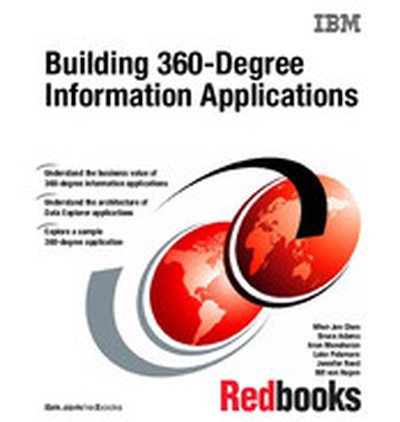
Building 360-degree Information Applications

Today's businesses, applications, social media, and online transactions generate more data than ever before. This data can be explored and analyzed to provide tremendous business value. IBM® InfoSphere® Data Explorer (Data Explorer) enables organizations to simultaneously explore and derive insights from enterprise data that was traditionally stored in "silos" in enterprise applications, different data repositories, and in different data formats. Applications developed using Data Explorer identify data relationships across these silos, unlocking the business value that is inherent in a unified, 360-degree view of the information related to business entities, such as application users, customers, products, and so on. This IBM Redbooks® publication provides information about InfoSphere Data Explorer 9.0. It gives an overview, describes the architecture, and presents use cases that you can use to accomplish the following tasks: Understand the core capabilities of Data Explorer Engine and Data Explorer Application Builder. Realize the full potential of Data Explorer applications. Describe the integration and value of the combination of Data Explorer and InfoSphere Master Data Management. Build a 360-degree information application. Learn by example by following a hands-on lab scenario.

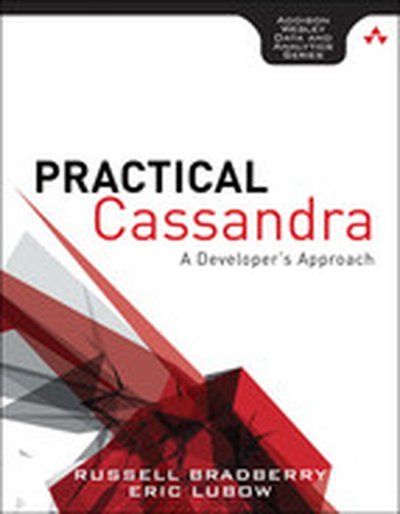
Practical Cassandra: A Developer’s Approach

Build and Deploy Massively Scalable, Super-fast Data Management Applications with Apache Cassandra is the first hands-on developer’s guide to building Cassandra systems and applications that deliver breakthrough speed, scalability, reliability, and performance. Fully up to date, it reflects the latest versions of Cassandra–including Cassandra Query Language (CQL), which dramatically lowers the learning curve for Cassandra developers. Practical Cassandra Pioneering Cassandra developers and Datastax MVPs Russell Bradberry and Eric Lubow walk you through every step of building a real production application that can store enormous amounts of structured, semi-structured, and unstructured data. Drawing on their exceptional expertise, Bradberry and Lubow share practical insights into issues ranging from querying to deployment, management, maintenance, monitoring, and troubleshooting. The authors cover key issues, from architecture to migration, and guide you through crucial decisions about configuration and data modeling. They provide tested sample code, detailed explanations of how Cassandra works ”under the covers,” and new case studies from three cutting-edge users: Ooyala, Hailo, and eBay. Coverage includes Understanding Cassandra’s approach, architecture, key concepts, and primary use cases– and why it’s so blazingly fast Getting Cassandra up and running on single nodes and large clusters Applying the new design patterns, philosophies, and features that make Cassandra such a powerful data store Leveraging CQL to simplify your transition from SQL-based RDBMSes Deploying and provisioning through the cloud or on bare-metal hardware Choosing the right configuration options for each type of workload Tweaking Cassandra to get maximum performance from your hardware, OS, and JVM Mastering Cassandra’s essential tools for maintenance and monitoring Efficiently solving the most common problems with Cassandra deployment, operation, and application development

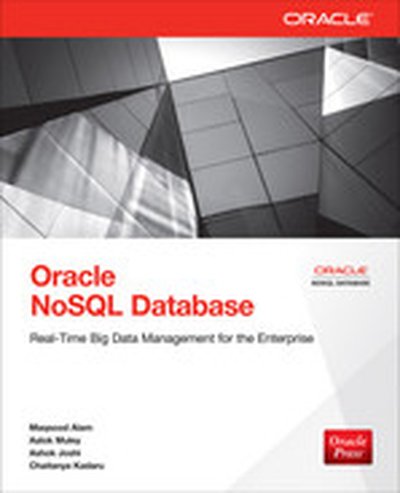
Oracle NoSQL Database

Master Oracle NoSQL Database Enable highly reliable, scalable, and available data. Oracle NoSQL Database: Real-Time Big Data Management for the Enterprise shows you how to take full advantage of this cost-effective solution for storing, retrieving, and updating high-volume, unstructured data. The book covers installation, configuration, application development, capacity planning and sizing, and integration with other enterprise data center products. Real-world examples illustrate the concepts presented in this Oracle Press guide. Understand Oracle NoSQL Database architecture and the underlying data storage engine, Oracle Berkeley DB Install and configure Oracle NoSQL Database for optimal performance Develop complex, distributed applications using a rich set of APIs Read and write data into the Oracle NoSQL Database key-value store Apply an Avro schema to the value portion of the key-value pair using Avro bindings Learn best practices for capacity planning and sizing an enterpriselevel Oracle NoSQL Database deployment Integrate Oracle NoSQL Database with Oracle Database, Oracle Event Processing, and Hadoop Code examples from the book are available for download at www.OraclePressBooks.com.

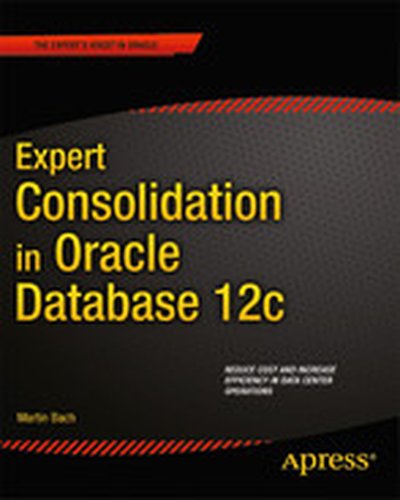
Expert Consolidation in Oracle Database 12c

Expert Consolidation in Oracle Database 12c is your key to reducing data management costs and increasing data center efficiency. Consolidation and cloud computing are converging trends sweeping the industry. The same technologies enabling cloud computing enable consolidation as well, leading to savings on all fronts from the amount of power used for servers to the amount of floor space consumed to the number of administrators needed to manage an installation. Yet the consolidation process can be a long and winding road. Success requires planning, and consideration to the impacts on supporting infrastructure. Expert Consolidation in Oracle Database 12c guides you through planning and implementing a consolidated Oracle Database installation using the many new features built into the latest release of Oracle's database management system. You'll learn to identify candidates for consolidation and to recognize instances that are best left stand-alone. The book guides in working with clustered systems and ASM storage in the consolidated environment. Focus is given to Oracle Enterprise Manager 12c Cloud Control as a monitoring and management dashboard. Always the goal is to drive towards a cost-effective environment that is efficient both in technology and people. Focuses on the new consolidation features in Oracle Database 12c Helps you evaluate and correctly decide when to consolidate Leads to cost savings and improved data center efficiency What you'll learn Master the new consolidation and cloud features in Oracle Database 12c Correctly decide when to consolidate and when to remain standalone Reduce cost by reducing demand for rack space, power, and floor space Streamline administration with Oracle Enterprise Manager 12c Cloud Control Ensure the correct supporting infrastructure for a rock-solid environment Safeguard your new consolidate infrastructure from disaster and data loss Who this book is for Expert Consolidation in Oracle Database 12c is aimed at database administrators involved in consolidation efforts, or who are interested in exploring Oracle Database 12c's strong support for consolidation and cloud computing.

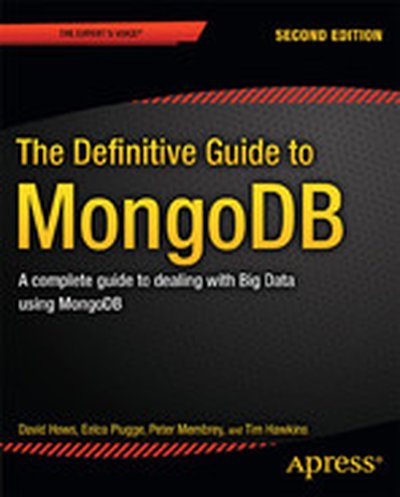
The Definitive Guide to MongoDB: A complete guide to dealing with Big Data using MongoDB, Second Edition

The Definitive Guide to MongoDB, Second Edition, is updated for the latest version and includes all of the latest MongoDB features, including the aggregation framework introduced in version 2.2 and hashed indexes in version 2.4. MongoDB is the most popular of the "Big Data" NoSQL database technologies, and it's still growing. David Hows from 10gen, along with experienced MongoDB authors Peter Membrey and Eelco Plugge, provide their expertise and experience in teaching you everything you need to know to become a MongoDB pro. The Definitive Guide to MongoDB, Second Edition, starts with the basics, including how to install on Windows, Linux, and OS X, and how MongoDB handles your data. Then you'll learn how to develop with MongoDB with both PHP and Python, including an example application using a PHP driver to create a blog application. Finally, you'll dig into more advanced but extremely important MongoDB features, including optimization, replication, and sharding -- load-balancing that makes MongoDB ideal for dealing with Big Data. If you're dealing with data, MongoDB should be on your must-learn list. The Definitive Guide to MongoDB, Second Edition, is just the book you need. What you'll learn Set up MongoDB on all major server platforms, including Windows, Linux, OS X, and cloud platforms like Rackspace, Azure, and Amazon EC2 Work with GridFS and the new aggregation framework Work with your data using non-SQL commands Write applications using either PHP or Python Optimize MongoDB Master MongoDB administration, including replication, replication tagging, and tag-aware sharding Who this book is for Database admins and developers who need to get up to speed on MongoDB and its Big Data, NoSQL approach to dealing with data management.

The Culture of Big Data

Technology does not exist in a vacuum. In the same way that a plant needs water and nourishment to grow, technology needs people and process to thrive and succeed. Culture (i.e., people and process) is integral and critical to the success of any new technology deployment or implementation. Big data is not just a technology phenomenon. It has a cultural dimension. It's vitally important to remember that most people have not considered the immense difference between a world seen through the lens of a traditional relational database system and a world seen through the lens of a Hadoop Distributed File System.This paper broadly describes the cultural challenges that accompany efforts to create and sustain big data initiatives in an evolving world whose data management processes are rooted firmly in traditional data warehouse architectures.

Using OpenRefine

Using OpenRefine provides a comprehensive guide to managing and cleaning large datasets efficiently. By following a practical, recipe-based approach, this book ensures readers can quickly master OpenRefine's features to enhance their data handling skills. Whether dealing with transformations, entity recognition, or dataset linking, you'll gain the tools to make your data work for you. What this Book will help me do Import and structure various formats of data for seamless processing. Apply both basic and advanced transformations to optimize data quality. Utilize regular expressions for sophisticated filtering and partitioning. Perform named-entity extraction and advanced reconciliation tasks. Master the General Refine Expression Language for powerful data operations. Author(s) The author is an experienced data analyst and educator, specializing in data preparation and transformation for real-world applications. Their approach combines a thorough technical understanding with an accessible teaching style, ensuring that complex concepts are easy to grasp. Who is it for? This book is crafted for anyone working with large datasets, from novices learning to handle and clean data to experienced practitioners seeking advanced techniques. If you aim to improve your data management skills or deliver quality insights from messy data, this book is for you.

Mongoose for Application Development

This book is your hands-on guide to mastering Mongoose for application development on the Node.js stack. By working through practical examples, you'll learn how to define data schemas, efficiently interact with your database, and build a real-life project management application using this powerful tool. What this Book will help me do Master connecting Node.js applications to MongoDB using Mongoose. Define and leverage data schemas and models for robust data management. Perform CRUD operations seamlessly using Mongoose's accessible APIs. Integrate advanced concepts like schema validators, population, and sub-documents. Learn to enhance productivity by developing and utilizing reusable plugins. Author(s) Simon Holmes, an experienced web developer, specializes in JavaScript, Node.js, and database technologies. Known for his clear and effective teaching style, Simon has authored several books and tutorials to help developers be more proficient and productive. His insights on Mongoose bridge the gap between practical application and theoretical knowledge. Who is it for? This book is perfect for developers interested in Node.js who want to incorporate MongoDB into their applications and need a structured yet hands-on approach. It's suitable for learners new to Mongoose as well as experienced developers seeking to optimize their database interactions. Key audiences include backend developers, full-stack developers, and software engineers aiming to enhance their database schemas and queries.

Software Development on the SAP HANA Platform

Software Development on the SAP HANA Platform equips you with all the knowledge you need to master developing on this high-performance in-memory technology. From setup and installation to deploying fully functional HANA applications, this book guides you step by step. With hands-on chapters, you'll gain the analytical tools and data management proficiency needed to excel. What this Book will help me do Set up a SAP HANA development environment from scratch. Successfully execute your first development project on SAP HANA. Utilize each type of view in SAP HANA effectively for data manipulation. Create users with appropriate authorizations for reporting purposes. Deploy reporting applications to end-user software seamlessly. Author(s) Mark Walker is a seasoned expert in SAP HANA, with years of professional experience in enterprise software development and training. He brings a passion for teaching complex technologies in an approachable and practical way. Mark's hands-on approach ensures that readers not only learn but can confidently apply their new skills. Who is it for? This book is designed for software developers and data professionals looking to expand their expertise with SAP HANA. It is ideal for those new to this platform or professionals enhancing their analytical and data management skills. Whether you're starting from scratch or upgrading your capabilities, this book suits your needs. The lessons here will assist in reaching your SAP HANA proficiency goals.