talk-data.com talk-data.com

Topic

Data Management

data_governance data_quality metadata_management

226

tagged

Activity Trend

88 peak/qtr
2020-Q1 2026-Q1

Activities

226 activities · Newest first

Snowflake: The Definitive Guide, 2nd Edition

Snowflake is reshaping data management by integrating AI, analytics, and enterprise workloads into a single cloud platform. Snowflake: The Definitive Guide is a comprehensive resource for data architects, engineers, and business professionals looking to harness Snowflake's evolving capabilities, including Cortex AI, Snowpark, and Polaris Catalog for Apache Iceberg. This updated edition provides real-world strategies and hands-on activities for optimizing performance, securing data, and building AI-driven applications. With hands-on SQL examples and best practices, this book helps readers process structured and unstructured data, implement scalable architectures, and integrate Snowflake's AI tools seamlessly. Whether you're setting up accounts, managing access controls, or leveraging generative AI, this guide equips you with the expertise to maximize Snowflake's potential. Implement AI-powered workloads with Snowflake Cortex Explore Snowsight and Streamlit for no-code development Ensure security with access control and data governance Optimize storage, queries, and computing costs Design scalable data architectures for analytics and machine learning

Elasticsearch Query Language the Definitive Guide

Streamline your workflow with ESQL enhance data analysis with real-time insights, and speed up aggregations and visualizations Key Features Apply ESQL efficiently in analytics, observability, and cybersecurity Optimize performance and scalability for high-demand environments Discover how to visualize and debug ESQL queries Purchase of the print or Kindle book includes a free PDF eBook Book Description Built to simplify high-scale data analytics in Elasticsearch, this practical guide will take you from foundational concepts to advanced applications across search, observability, and security. It will help you overcome common challenges such as efficiently querying large datasets, applying advanced analytics without deep prior knowledge, and resolving for a unique and consolidated query language. Written by senior experts at Elastic with extensive field experience, this book delivers actionable guidance rooted in solving today’s data challenges at scale. After introducing ESQL and its architecture, the chapters explore real-world applications across various domains, including analytics, raw log analysis, observability, and cybersecurity. Advanced topics such as scaling, optimization, and future developments are also covered to help you maximize your ESQL capabilities. By the end of this book, you’ll be able to leverage ESQL for comprehensive data management and analysis, optimizing your workflows and enhancing your productivity with Elasticsearch. What you will learn Gain a solid understanding of ESQL and its architecture Use ESQL for data analysis and performance monitoring Apply ESQL in cybersecurity for threat detection and incident response Find out how to perform advanced searches using ESQL Prepare for future ESQL developments Showcase ESQL in action through real-world, persona-driven use cases Who this book is for If you’re an Elasticsearch user, this book is essential for your growth. Whether you’re a data analyst looking to build analytics on top of Elasticsearch, an SRE monitoring the health of your IT system, or a cybersecurity analyst, this book will give you a complete understanding of how ESQL is built and used. Additionally, database administrators, business intelligence professionals, and operational intelligence professionals will find this book invaluable. Even with a beginner-level knowledge of Elasticsearch, you’ll be able to get started and make the most of this comprehensive guide.

PostgreSQL 18 for Developers

Developing intelligent applications that integrate AI, analytics, and transactional capabilities using the latest release of the world's most popular open-source database Key Features Practical examples demonstrating how to use Postgres to develop intelligent applications Best practices for developers of intelligent data management applications Includes the latest PostgreSQL 18 features for AI, analytics, and transactions ures for AI, analytics, and transactions Book Description In today’s data-first world, businesses need applications that blend transactions, analytics, and AI to power real-time insights at scale. Mastering PostgreSQL 18 for AI-Powered Enterprise Apps is your essential guide to building intelligent, high-performance systems with the latest features of PostgreSQL 18. Through hands-on examples and expert guidance, you’ll learn to design architectures that unite OLTP and OLAP, embed AI directly into apps, and optimize for speed, scalability, and reliability. Discover how to apply cutting-edge PostgreSQL tools for real-time decisions, predictive analytics, and automation. Go beyond basics with advanced strategies trusted by industry leaders. Whether you’re building data-rich applications, internal analytics platforms, or AI-driven services, this book equips you with the patterns and insights to deliver enterprise-grade innovation. Ideal for developers, architects, and tech leads driving digital transformation, this book empowers you to lead the future of intelligent applications. Harness the power of PostgreSQL 18—and unlock the full potential of your data. What you will learn How to leverage PostgreSQL 18 for building intelligent data-driven applications for the modern enterprise Data management principles and best practices for managing transactions, analytics, and AI use cases How to utilize Postgres capabilities to address architectural challenges and attain optimal performance for each use case Methods for utilizing the latest Postgres innovation to create integrated data management applications Guidelines on when to use Postgres and when to opt for specialized data management solutions Who this book is for This book is intended for developers creating intelligent, data-driven applications for the modern enterprise. It features hands-on examples that demonstrate how to use PostgreSQL as the database for business applications that integrate transactions, analytics, and AI. We explore the fundamental architectural principles of data management and detail how developers utilize PostgreSQL 18's latest capabilities to build AI-enabled applications. The book assumes a working knowledge of SQL and does not address the needs of data analysts or those looking to master SQL.

Managing and Visualizing BIM Data with AI

Unlock the potential of your BIM workflows with artificial intelligence and data visualization tools. This book provides guided instruction on using software like Revit, Dynamo, Python, and Power BI to automate processes, derive insights, and craft tailored dashboards that empower data-driven decisions in AEC projects. What this Book will help me do Effectively preprocess and manage BIM data for analysis and visualization. Design interactive and insightful dashboards in Power BI for project stakeholders. Integrate real-time IoT data and advanced analytics into BIM projects. Automate repetitive tasks in Revit using Dynamo and Python scripting. Understand the ethical considerations and emerging trends in AI for BIM. Author(s) Bruno Martorelli, a seasoned BIM manager, specializes in integrating technology and data analytics into construction workflows. With a background in architecture and programming, he bridges the gap between traditional methods and modern innovations. Bruno is dedicated to sharing practical strategies for data automation and visualization. Who is it for? This book is tailored for architects, engineers, and construction managers interested in elevating their BIM practices. If you're familiar with Revit and possess a basic understanding of data management, you'll find this resource invaluable. Beginners in Python or Power BI will also find accessible guidance to start applying advanced techniques in their workflows.

Engineering Lakehouses with Open Table Formats

Engineering Lakehouses with Open Table Formats introduces the architecture and capabilities of open table formats like Apache Iceberg, Apache Hudi, and Delta Lake. The book guides you through the design, implementation, and optimization of lakehouses that can handle modern data processing requirements effectively with real-world practical insights. What this Book will help me do Understand the fundamentals of open table formats and their benefits in lakehouse architecture. Learn how to implement performant data processing using tools like Apache Spark and Flink. Master advanced topics like indexing, partitioning, and interoperability between data formats. Explore data lifecycle management and integration with frameworks like Apache Airflow and dbt. Build secure lakehouses with regulatory compliance using best practices detailed in the book. Author(s) Dipankar Mazumdar and Vinoth Govindarajan are seasoned professionals with extensive experience in big data processing and software architecture. They bring their expertise from working with data lakehouses and are known for their ability to explain complex technical concepts clearly. Their collaborative approach brings valuable insights into the latest trends in data management. Who is it for? This book is ideal for data engineers, architects, and software professionals aiming to master modern lakehouse architectures. If you are familiar with data lakes or warehouses and wish to transition to an open data architectural design, this book is suited for you. Readers should have basic knowledge of databases, Python, and Apache Spark for the best experience.

Building a Data and AI Platform with PostgreSQL

In a world where data sovereignty, scalability, and AI innovation are at the forefront of enterprise strategy, PostgreSQL is emerging as the key to unlocking transformative business value. This new guide serves as your beacon for navigating the convergence of AI, open source technologies, and intelligent data platforms. Authors Tom Taulli, Benjamin Anderson, and Jozef de Vries offer a strategic and practical approach to building AI and data platforms that balance innovation with governance, empowering organizations to take control of their data future. Whether you're designing frameworks for advanced AI applications, modernizing legacy infrastructures, or solving data challenges at scale, you can use this guide to bridge the gap between technical complexity and actionable strategy. Written for IT executives, data leaders, and practitioners alike, it will equip you with the tools and insights to harness Postgre's unique capabilities—extensibility, unstructured data management, and hybrid workloads—for long-term success in an AI-driven world. Learn how to build an AI and data platform using PostgreSQL Overcome data challenges like modernization, integration, and governance Optimize AI performance with model fine-tuning and retrieval-augmented generation (RAG) best practices Discover use cases that align data strategy with business goals Take charge of your data and AI future with this comprehensive and accessible roadmap

Mastering Snowflake DataOps with DataOps.live: An End-to-End Guide to Modern Data Management

This practical, in-depth guide shows you how to build modern, sophisticated data processes using the Snowflake platform and DataOps.live —the only platform that enables seamless DataOps integration with Snowflake. Designed for data engineers, architects, and technical leaders, it bridges the gap between DataOps theory and real-world implementation, helping you take control of your data pipelines to deliver more efficient, automated solutions. . You’ll explore the core principles of DataOps and how they differ from traditional DevOps, while gaining a solid foundation in the tools and technologies that power modern data management—including Git, DBT, and Snowflake. Through hands-on examples and detailed walkthroughs, you’ll learn how to implement your own DataOps strategy within Snowflake and maximize the power of DataOps.live to scale and refine your DataOps processes. Whether you're just starting with DataOps or looking to refine and scale your existing strategies, this book—complete with practical code examples and starter projects—provides the knowledge and tools you need to streamline data operations, integrate DataOps into your Snowflake infrastructure, and stay ahead of the curve in the rapidly evolving world of data management. What You Will Learn Explore the fundamentals of DataOps , its differences from DevOps, and its significance in modern data management Understand Git’s role in DataOps and how to use it effectively Know why DBT is preferred for DataOps and how to apply it Set up and manage DataOps.live within the Snowflake ecosystem Apply advanced techniques to scale and evolve your DataOps strategy Who This Book Is For Snowflake practitioners—including data engineers, platform architects, and technical managers—who are ready to implement DataOps principles and streamline complex data workflows using DataOps.live.

Apache Polaris: The Definitive Guide

Revolutionize your understanding of modern data management with Apache Polaris (incubating), the open source catalog designed for data lakehouse industry standard Apache Iceberg. This comprehensive guide takes you on a journey through the intricacies of Apache Iceberg data lakehouses, highlighting the pivotal role of Iceberg catalogs. Authors Alex Merced, Andrew Madson, and Tomer Shiran explore Apache Polaris's architecture and features in detail, equipping you with the knowledge needed to leverage its full potential. Data engineers, data architects, data scientists, and data analysts will learn how to seamlessly integrate Apache Polaris with popular data tools like Apache Spark, Snowflake, and Dremio to enhance data management capabilities, optimize workflows, and secure datasets. Get a comprehensive introduction to Iceberg data lakehouses Understand how catalogs facilitate efficient data management and querying in Iceberg Explore Apache Polaris's unique architecture and its powerful features Deploy Apache Polaris locally, and deploy managed Apache Polaris from Snowflake and Dremio Perform basic table operations on Apache Spark, Snowflake, and Dremio

Data Modeling with Snowflake - Second Edition

Data Modeling with Snowflake provides a clear and practical guide to mastering data modeling tailored to the Snowflake Data Cloud. By integrating foundational principles of database modeling with Snowflake's unique features and functionality, this book empowers you to create scalable, cost-effective, and high-performing data solutions. What this Book will help me do Apply universal data modeling concepts within the Snowflake platform effectively. Leverage Snowflake's features such as Time Travel and Zero-Copy Cloning for optimized data solutions. Understand and utilize advanced techniques like Data Vault and Data Mesh for scalable data architecture. Master handling semi-structured data in Snowflake using practical recipes and examples. Achieve cost efficiency and resource optimization by aligning modeling principles with Snowflake's architecture. Author(s) Serge Gershkovich is an accomplished data engineer and seasoned professional in data architecture and modeling. With a passion for simplifying complex concepts, Serge's work leverages his years of hands-on experience to guide readers in mastering both foundational and advanced data management practices. His clear and practical approach ensures accessibility for all levels. Who is it for? This book is ideal for data developers and engineers seeking practical modeling guidance within Snowflake. It's suitable for data analysts looking to broaden their database design expertise, and for database beginners aiming to get a head start in structuring data. Professionals new to Snowflake will also find its clear explanations of key features aligned with modeling techniques invaluable.

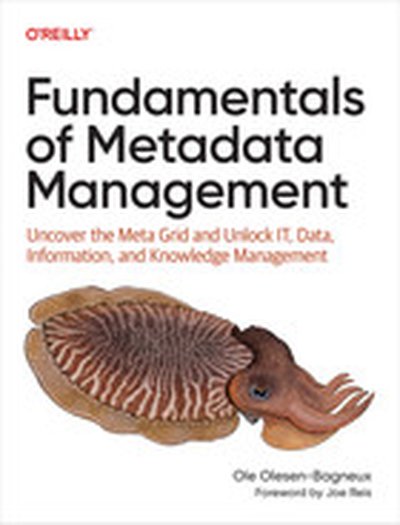
Fundamentals of Metadata Management

Whether it's to adhere to regulations, access markets by meeting specific standards, or devise data analytics and AI strategies, companies today are busy implementing metadata repositories—metadata tools about the IT, data, information, and knowledge in your company. Until now, most of these repositories have been implemented in isolation from one another, but that practice lies at the core of problems with data management in many companies today. Author Ole Olesen-Bagneux, chief evangelist at Actian, shows you how to masterfully manage your metadata repositories by properly coordinating them. That requires a data discovery team to increase insights for all key players in enterprise data management, from the CIO and CDO to enterprise and data architects. Coordinating these repositories will help you and your organization democratize data and excel at data management. This book shows you how. Learn what metadata repositories are and what they do Explore which data to represent in these repositories Set up a data discovery team to make data searchable Learn how to manage and coordinate repositories in a meta grid Increase innovation by setting up a functional data marketplace Make information security and data protection more robust Gain a deeper understanding of your company IT landscape Activate real enterprise architecture based on evidence

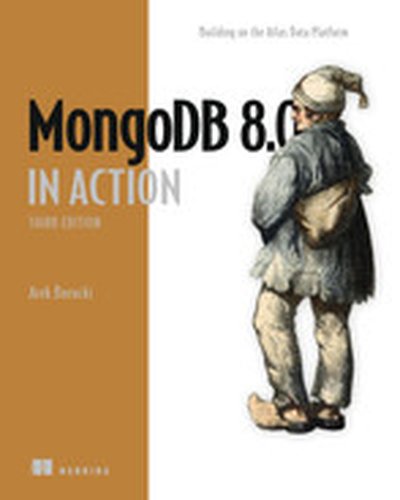
MongoDB 8.0 in Action, Third Edition

Deliver flexible, scalable, and high-performance data storage that's perfect for AI and other modern applications with MongoDB 8.0 and MongoDB Atlas multi-cloud data platform. In MongoDB 8.0 in Action, Third Edition you'll find comprehensive coverage of the latest version of MongoDB 8.0 and the MongoDB Atlas multi-cloud data platform. Learn to utilize MongoDB’s flexible schema design for data modeling, scale applications effectively using advanced sharding features, integrate full-text and vector-based semantic search, and more. This totally revised new edition delivers engaging hands-on tutorials and examples that put MongoDB into action! In MongoDB 8.0 in Action, Third Edition you'll: Master new features in MongoDB 8.0 Create your first, free Atlas cluster using the Atlas CLI Design scalable NoSQL databases with effective data modeling techniques Master Vector Search for building GenAI-driven applications Utilize advanced search capabilities in MongoDB Atlas, including full-text search Build Event-Driven Applications with Atlas Stream Processing Deploy and manage MongoDB Atlas clusters both locally and in the cloud using the Atlas CLI Leverage the Atlas SQL interface for familiar SQL querying Use MongoDB Atlas Online Archive for efficient data management Establish robust security practices including encryption Master backup and restore strategies Optimize database performance and identify slow queries MongoDB 8.0 in Action, Third Edition offers a clear, easy-to-understand introduction to everything in MongoDB 8.0 and MongoDB Atlas—including new advanced features such as embedded config servers in sharded clusters, or moving an unsharded collection to a different shard. The book also covers Atlas stream processing, full text search, and vector search capabilities for generative AI applications. Each chapter is packed with tips, tricks, and practical examples you can quickly apply to your projects, whether you're brand new to MongoDB or looking to get up to speed with the latest version. About the Technology MongoDB is the database of choice for storing structured, semi-structured, and unstructured data like business documents and other text and image files. MongoDB 8.0 introduces a range of exciting new features—from sharding improvements that simplify the management of distributed data, to performance enhancements that stay resilient under heavy workloads. Plus, MongoDB Atlas brings vector search and full-text search features that support AI-powered applications. About the Book MongoDB 8.0 in Action, Third Edition you’ll learn how to take advantage of all the new features of MongoDB 8.0, including the powerful MongoDB Atlas multi-cloud data platform. You’ll start with the basics of setting up and managing a document database. Then, you’ll learn how to use MongoDB for AI-driven applications, implement advanced stream processing, and optimize performance with improved indexing and query handling. Hands-on projects like creating a RAG-based chatbot and building an aggregation pipeline mean you’ll really put MongoDB into action! What's Inside The new features in MongoDB 8.0 Get familiar with MongoDB’s Atlas cloud platform Utilizing sharding enhancements Using vector-based search technologies Full-text search capabilities for efficient text indexing and querying About the Reader For developers and DBAs of all levels. No prior experience with MongoDB required. About the Author Arek Borucki is a MongoDB Champion, certified MongoDB and MongoDB Atlas administrator with expertise in distributed systems, NoSQL databases, and Kubernetes. Quotes An excellent resource with real-world examples and best practices to design, optimize, and scale modern applications. - Advait Patel, Broadcom Essential MongoDB resource. Covers new features such as full-text search, vector search, AI, and RAG applications. - Juan Roy, Credit Suisse Reflects author’s practical experience and clear teaching style. It’s packed with real-world examples and up-to-date insights. - Rajesh Nair, MongoDB Champion & community leader This book will definitely make you a MongoDB star! - Vinicios Wentz, JP Morgan & Chase Co.

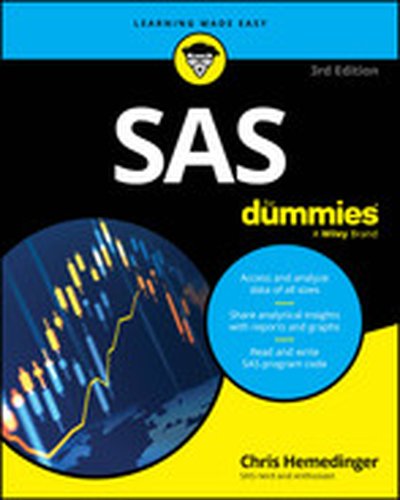
SAS For Dummies, 3rd Edition

Become data-savvy with the widely used data and AI software Data and analytics are essential for any business, giving insight into what's working, what can be improved, and what else needs to be done. SAS software helps you make sure you're doing data right, with a host of data management, reporting, and analysis tools. SAS For Dummies teaches you the essentials, helping you navigate this statistical software and turn information into value. In this book, learn how to gather data, create reports, and analyze results. You'll also discover how SAS machine learning and AI can help deliver decisions based on data. Even if you're brand new to data and analytics, this easy-to-follow guide will turn you into an SAS power user. Become familiar with the most popular SAS applications, including SAS 9 and SAS Viya Connect to data, organize your information, and adopt sound data security practices Get a primer on working with data sets, variables, and statistical analysis Explore and analyze data through SAS programming and rich application interfaces Create and share graphs interactive visualizations to deliver insights This is the perfect Dummies guide for new SAS users looking to improve their skills—in any industry and for any organization size.

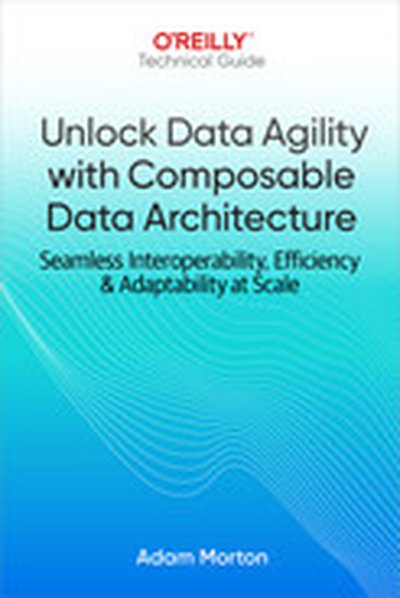
Unlock Data Agility with Composable Data Architecture

Are your data systems slowing down your AI initiatives? The potential of AI to revolutionize business is undeniable, but many organizations struggle to bridge the gap between ambitious ideas and real-world results. The cause? Traditional data architectures remain too rigid and siloed to support today's dynamic, data-intensive demands. If you're a data leader searching for a solution, composable data architecture is the answer. This essential guide provides a clear, actionable framework for you to discover how this modular, adaptable approach empowers data teams, streamlines pipelines, and fuels continuous innovation. So, you'll not only keep pace with your most agile competitors—you'll surpass them. Understand the fundamental concepts that make composable architecture a game-changer Design pipelines that optimize performance and adapt to your organization's unique data needs See how composable architecture breaks down silos, enabling faster, more collaborative data processes Discover tools to streamline data management of high-volume streams or multicloud environments Leverage flexible architecture that simplifies data sharing, enabling easier access to insights

Data Insight Foundations: Step-by-Step Data Analysis with R

This book is an essential guide designed to equip you with the vital tools and knowledge needed to excel in data science. Master the end-to-end process of data collection, processing, validation, and imputation using R, and understand fundamental theories to achieve transparency with literate programming, renv, and Git--and much more. Each chapter is concise and focused, rendering complex topics accessible and easy to understand. Data Insight Foundations caters to a diverse audience, including web developers, mathematicians, data analysts, and economists, and its flexible structure allows enables you to explore chapters in sequence or navigate directly to the topics most relevant to you. While examples are primarily in R, a basic understanding of the language is advantageous but not essential. Many chapters, especially those focusing on theory, require no programming knowledge at all. Dive in and discover how to manipulate data, ensure reproducibility, conduct thorough literature reviews, collect data effectively, and present your findings with clarity. What You Will Learn Data Management: Master the end-to-end process of data collection, processing, validation, and imputation using R. Reproducible Research: Understand fundamental theories and achieve transparency with literate programming, renv, and Git. Academic Writing: Conduct scientific literature reviews and write structured papers and reports with Quarto. Survey Design: Design well-structured surveys and manage data collection effectively. Data Visualization: Understand data visualization theory and create well-designed and captivating graphics using ggplot2. Who this Book is For Career professionals such as research and data analysts transitioning from academia to a professional setting where production quality significantly impacts career progression. Some familiarity with data analytics processes and an interest in learning R or Python are ideal.

Managing Data as a Product

Discover how to transform your data architecture with the insights and techniques presented in Managing Data as a Product by Andrea Gioia. In this comprehensive guide, you'll explore how to design, implement, and maintain data-product-centered systems to meet modern demands, achieving scalable and sustainable data management tailored to your organization's needs. What this Book will help me do Understand the principles of data-product-centered architectures and their advantages. Learn to design, develop, and operate data products in production settings. Explore strategies to manage the lifecycle of data products efficiently. Gain insights into team topologies and data ownership for distributed systems. Discover data modeling techniques for AI-ready architectures. Author(s) Andrea Gioia is a renowned data architect and the creator of the Open Data Mesh Initiative. With over 20 years of experience, Andrea has successfully led complex data projects and is passionate about sharing his expertise. His writing is practical and driven by real-world challenges, aiming to equip engineers with actionable knowledge. Who is it for? This book is ideal for data engineers, software architects, and engineering leaders involved in shaping innovative data architectures. If you have foundational knowledge of data engineering and are eager to advance your expertise by adopting data-product principles, this book will suit your needs. It is for professionals aiming to modernize and optimize their approach to organizational data management.

Evolve from Infrastructure to Innovation with SAP on AWS: Strategize Beyond Infrastructure for Extending your SAP applications, Data Management, IoT & AI/ML integration and IT Operations using AWS Services

The world of SAP is undergoing a major transformation, with many customers either planning or actively modernizing their SAP landscapes as part of the S/4HANA digital transformation. Given the extensive SAP transformation efforts adopted by nearly all SAP customers in recent years and the profound impact these digital changes have had on their business models and IT organizations, the authors decided to write this book. As customers embark on their SAP on AWS journey, they face three main challenges: deciding on the overall strategy, selecting the right business use cases and implementing them effectively. This book aims to address these challenges by guiding readers through the process of identifying and executing the appropriate use cases. It will highlight how customers can harness AWS services beyond merely hosting their SAP systems on AWS, demonstrating the potential of these services to drive innovation. This book covers the entire journey, from defining strategy and identifying business use cases to their implementation, providing practical tips, strategies, and insights. It serves as an essential guide for customers planning to migrate or those who have already migrated their SAP workloads to AWS, helping them explore beyond just the infrastructure aspects of their journey. You Will : Discover how to go beyond just hosting SAP systems on AWS, using the full range of AWS services to innovate and extend your SAP applications. Learn how to identify the right business use cases and implement them effectively, with practical examples and real-world scenarios. Develop the mindset and skills needed to architect modern, cloud-native, event-driven architectures, balancing trade-offs between simplicity, efficiency, and cost. This book is for: Business leaders, IT professionals, and SAP specialists who are looking to modernize their SAP landscapes by leveraging AWS services

Microsoft Power Apps Cookbook - Third Edition

Microsoft Power Apps Cookbook is a comprehensive guide to harnessing the full potential of Microsoft Power Apps, a powerful low-code platform for building business applications. Packed with practical recipes, this book details how to develop scalable, efficient apps, automate workflows with RPA, and utilize new capabilities like AI-powered Microsoft Copilot and the Power Apps Component Framework. What this Book will help me do Create and deploy scalable canvas and model-driven apps using Microsoft Power Apps. Utilize AI-powered features like Copilot to speed up app creation and development. Implement robust data management strategies with Microsoft Dataverse. Extend app functionalities using the Power Apps Component Framework for custom components. Design and build secure external-facing websites with Microsoft Power Pages. Author(s) Eickhel Mendoza is an experienced Microsoft Power Platform developer and educator who has helped numerous organizations enhance their capabilities through low-code app development. Authoring from extensive hands-on experience, their teaching style bridges technical theory and practical application. Eickhel is passionate about empowering users to achieve more with modern app development tools. Who is it for? This book is ideal for information workers and developers looking to streamline their application development processes with Microsoft's low-code solutions. It is particularly targeted toward users with a foundational understanding of the Power Platform looking to deepen their knowledge. Readers will benefit most if they are eager to learn how to create innovative solutions efficiently. Traditional developers aiming to explore a new paradigm of rapid application development will also find it highly beneficial.

Computational Intelligence in Sustainable Computing and Optimization

Computational Intelligence in Sustainable Computing and Optimization: Trends and Applications focuses on developing and evolving advanced computational intelligence algorithms for the analysis of data involved in applications, such as agriculture, biomedical systems, bioinformatics, business intelligence, economics, disaster management, e-learning, education management, financial management, and environmental policies. The book presents research in sustainable computing and optimization, combining methods from engineering, mathematics, artificial intelligence, and computer science to optimize environmental resources Computational intelligence in the field of sustainable computing combines computer science and engineering in applications ranging from Internet of Things (IoT), information security systems, smart storage, cloud computing, intelligent transport management, cognitive and bio-inspired computing, and management science. In addition, data intelligence techniques play a critical role in sustainable computing. Recent advances in data management, data modeling, data analysis, and artificial intelligence are finding applications in energy networks and thus making our environment more sustainable. Presents computational, intelligence–based data analysis for sustainable computing applications such as pattern recognition, biomedical imaging, sustainable cities, sustainable transport, sustainable agriculture, and sustainable financial management Develops research in sustainable computing and optimization, combining methods from engineering, mathematics, and computer science to optimize environmental resources Includes three foundational chapters dedicated to providing an overview of computational intelligence and optimization techniques and their applications for sustainable computing

Beginning Mathematica and Wolfram for Data Science: Applications in Data Analysis, Machine Learning, and Neural Networks

Enhance your data science programming and analysis with the Wolfram programming language and Mathematica, an applied mathematical tools suite. This second edition introduces the latest LLM Wolfram capabilities, delves into the exploration of data types in Mathematica, covers key programming concepts, and includes code performance and debugging techniques for code optimization. You’ll gain a deeper understanding of data science from a theoretical and practical perspective using Mathematica and the Wolfram Language. Learning this language makes your data science code better because it is very intuitive and comes with pre-existing functions that can provide a welcoming experience for those who use other programming languages. Existing topics have been reorganized for better context and to accommodate the introduction of Notebook styles. The book also incorporates new functionalities in code versions 13 and 14 for imported and exported data. You’ll see how to use Mathematica, where data management and mathematical computations are needed. Along the way, you’ll appreciate how Mathematica provides an entirely integrated platform: its symbolic and numerical calculation result in a mized syntax, allowing it to carry out various processes without superfluous lines of code. You’ll learn to use its notebooks as a standard format, which also serves to create detailed reports of the processes carried out. What You Will Learn Create datasets, work with data frames, and create tables Import, export, analyze, and visualize data Work with the Wolfram data repository Build reports on the analysis Use Mathematica for machine learning, with different algorithms, including linear, multiple, and logistic regression; decision trees; and data clustering Who This Book Is For Data scientists who are new to using Wolfram and Mathematica as a programming language or tool. Programmers should have some prior programming experience, but can be new to the Wolfram language.

Python and SQL Bible

The 'Python and SQL Bible' is a comprehensive guide to mastering both Python programming and SQL querying. Starting from the very basics, the book takes readers through advanced techniques, including data manipulation, database management, and integration of Python with SQL, all while offering hands-on examples and real-world exercises. What this Book will help me do Gain a strong foundation in Python programming, including control flow, functions, and object-oriented programming. Learn how to write advanced SQL queries for data extraction, manipulation, and reporting. Understand how to integrate Python with SQL to form a seamless data manipulation workflow. Develop data analysis skills using Python and tools such as SQLAlchemy for advanced insights. Master database administration techniques to efficiently manage and query datasets. Author(s) Cuantum Technologies LLC is a renowned tech education provider with a focus on equipping learners with in-demand programming and data management skills. Their training methods blend theory with practice, ensuring students gain hands-on experience applicable in professional environments. Their team of experts crafts content to cater to both beginners and professionals seeking to advance their skill set. Who is it for? This book is ideal for beginners who are new to programming and experienced professionals who wish to master Python and SQL for data manipulation and analysis. It is perfect for aspiring data scientists, software developers, and IT professionals looking to unlock new career opportunities. By detailing concepts and providing practical exercises, it accommodates various skill levels and prepares readers for industry demands.