talk-data.com talk-data.com

Topic

Data Management

data_governance data_quality metadata_management

53

tagged

Activity Trend

88 peak/qtr
2020-Q1 2026-Q1

Activities

Showing filtered results

Filtering by: O'Reilly Data Science Books ×
SAS For Dummies, 3rd Edition

Become data-savvy with the widely used data and AI software Data and analytics are essential for any business, giving insight into what's working, what can be improved, and what else needs to be done. SAS software helps you make sure you're doing data right, with a host of data management, reporting, and analysis tools. SAS For Dummies teaches you the essentials, helping you navigate this statistical software and turn information into value. In this book, learn how to gather data, create reports, and analyze results. You'll also discover how SAS machine learning and AI can help deliver decisions based on data. Even if you're brand new to data and analytics, this easy-to-follow guide will turn you into an SAS power user. Become familiar with the most popular SAS applications, including SAS 9 and SAS Viya Connect to data, organize your information, and adopt sound data security practices Get a primer on working with data sets, variables, and statistical analysis Explore and analyze data through SAS programming and rich application interfaces Create and share graphs interactive visualizations to deliver insights This is the perfect Dummies guide for new SAS users looking to improve their skills—in any industry and for any organization size.
Data Insight Foundations: Step-by-Step Data Analysis with R

This book is an essential guide designed to equip you with the vital tools and knowledge needed to excel in data science. Master the end-to-end process of data collection, processing, validation, and imputation using R, and understand fundamental theories to achieve transparency with literate programming, renv, and Git--and much more. Each chapter is concise and focused, rendering complex topics accessible and easy to understand. Data Insight Foundations caters to a diverse audience, including web developers, mathematicians, data analysts, and economists, and its flexible structure allows enables you to explore chapters in sequence or navigate directly to the topics most relevant to you. While examples are primarily in R, a basic understanding of the language is advantageous but not essential. Many chapters, especially those focusing on theory, require no programming knowledge at all. Dive in and discover how to manipulate data, ensure reproducibility, conduct thorough literature reviews, collect data effectively, and present your findings with clarity. What You Will Learn Data Management: Master the end-to-end process of data collection, processing, validation, and imputation using R. Reproducible Research: Understand fundamental theories and achieve transparency with literate programming, renv, and Git. Academic Writing: Conduct scientific literature reviews and write structured papers and reports with Quarto. Survey Design: Design well-structured surveys and manage data collection effectively. Data Visualization: Understand data visualization theory and create well-designed and captivating graphics using ggplot2. Who this Book is For Career professionals such as research and data analysts transitioning from academia to a professional setting where production quality significantly impacts career progression. Some familiarity with data analytics processes and an interest in learning R or Python are ideal.

Microsoft Power Apps Cookbook - Third Edition

Microsoft Power Apps Cookbook is a comprehensive guide to harnessing the full potential of Microsoft Power Apps, a powerful low-code platform for building business applications. Packed with practical recipes, this book details how to develop scalable, efficient apps, automate workflows with RPA, and utilize new capabilities like AI-powered Microsoft Copilot and the Power Apps Component Framework. What this Book will help me do Create and deploy scalable canvas and model-driven apps using Microsoft Power Apps. Utilize AI-powered features like Copilot to speed up app creation and development. Implement robust data management strategies with Microsoft Dataverse. Extend app functionalities using the Power Apps Component Framework for custom components. Design and build secure external-facing websites with Microsoft Power Pages. Author(s) Eickhel Mendoza is an experienced Microsoft Power Platform developer and educator who has helped numerous organizations enhance their capabilities through low-code app development. Authoring from extensive hands-on experience, their teaching style bridges technical theory and practical application. Eickhel is passionate about empowering users to achieve more with modern app development tools. Who is it for? This book is ideal for information workers and developers looking to streamline their application development processes with Microsoft's low-code solutions. It is particularly targeted toward users with a foundational understanding of the Power Platform looking to deepen their knowledge. Readers will benefit most if they are eager to learn how to create innovative solutions efficiently. Traditional developers aiming to explore a new paradigm of rapid application development will also find it highly beneficial.

Computational Intelligence in Sustainable Computing and Optimization

Computational Intelligence in Sustainable Computing and Optimization: Trends and Applications focuses on developing and evolving advanced computational intelligence algorithms for the analysis of data involved in applications, such as agriculture, biomedical systems, bioinformatics, business intelligence, economics, disaster management, e-learning, education management, financial management, and environmental policies. The book presents research in sustainable computing and optimization, combining methods from engineering, mathematics, artificial intelligence, and computer science to optimize environmental resources Computational intelligence in the field of sustainable computing combines computer science and engineering in applications ranging from Internet of Things (IoT), information security systems, smart storage, cloud computing, intelligent transport management, cognitive and bio-inspired computing, and management science. In addition, data intelligence techniques play a critical role in sustainable computing. Recent advances in data management, data modeling, data analysis, and artificial intelligence are finding applications in energy networks and thus making our environment more sustainable. Presents computational, intelligence–based data analysis for sustainable computing applications such as pattern recognition, biomedical imaging, sustainable cities, sustainable transport, sustainable agriculture, and sustainable financial management Develops research in sustainable computing and optimization, combining methods from engineering, mathematics, and computer science to optimize environmental resources Includes three foundational chapters dedicated to providing an overview of computational intelligence and optimization techniques and their applications for sustainable computing

Beginning Mathematica and Wolfram for Data Science: Applications in Data Analysis, Machine Learning, and Neural Networks

Enhance your data science programming and analysis with the Wolfram programming language and Mathematica, an applied mathematical tools suite. This second edition introduces the latest LLM Wolfram capabilities, delves into the exploration of data types in Mathematica, covers key programming concepts, and includes code performance and debugging techniques for code optimization. You’ll gain a deeper understanding of data science from a theoretical and practical perspective using Mathematica and the Wolfram Language. Learning this language makes your data science code better because it is very intuitive and comes with pre-existing functions that can provide a welcoming experience for those who use other programming languages. Existing topics have been reorganized for better context and to accommodate the introduction of Notebook styles. The book also incorporates new functionalities in code versions 13 and 14 for imported and exported data. You’ll see how to use Mathematica, where data management and mathematical computations are needed. Along the way, you’ll appreciate how Mathematica provides an entirely integrated platform: its symbolic and numerical calculation result in a mized syntax, allowing it to carry out various processes without superfluous lines of code. You’ll learn to use its notebooks as a standard format, which also serves to create detailed reports of the processes carried out. What You Will Learn Create datasets, work with data frames, and create tables Import, export, analyze, and visualize data Work with the Wolfram data repository Build reports on the analysis Use Mathematica for machine learning, with different algorithms, including linear, multiple, and logistic regression; decision trees; and data clustering Who This Book Is For Data scientists who are new to using Wolfram and Mathematica as a programming language or tool. Programmers should have some prior programming experience, but can be new to the Wolfram language.

Mastering Microsoft Fabric: SAASification of Analytics

Learn and explore the capabilities of Microsoft Fabric, the latest evolution in cloud analytics suites. This book will help you understand how users can leverage Microsoft Office equivalent experience for performing data management and advanced analytics activity. The book starts with an overview of the analytics evolution from on premises to cloud infrastructure as a service (IaaS), platform as a service (PaaS), and now software as a service (SaaS version) and provides an introduction to Microsoft Fabric. You will learn how to provision Microsoft Fabric in your tenant along with the key capabilities of SaaS analytics products and the advantage of using Fabric in the enterprise analytics platform. OneLake and Lakehouse for data engineering is discussed as well as OneLake for data science. Author Ghosh teaches you about data warehouse offerings inside Microsoft Fabric and the new data integration experience which brings Azure Data Factory and Power Query Editor of Power BI together in a single platform. Also demonstrated is Real-Time Analytics in Fabric, including capabilities such as Kusto query and database. You will understand how the new event stream feature integrates with OneLake and other computations. You also will know how to configure the real-time alert capability in a zero code manner and go through the Power BI experience in the Fabric workspace. Fabric pricing and its licensing is also covered. After reading this book, you will understand the capabilities of Microsoft Fabric and its Integration with current and upcoming Azure OpenAI capabilities. What You Will Learn Build OneLake for all data like OneDrive for Microsoft Office Leverage shortcuts for cross-cloud data virtualization in Azure and AWS Understand upcoming OpenAI integration Discover new event streaming and Kusto query inside Fabric real-time analytics Utilize seamless tooling for machine learning and data science Who This Book Is For Citizen users and experts in the data engineering and data science fields, along with chief AI officers

Moving Beyond Data Integration with Data Collaboration

How can you maximize data collaboration across your organization without having to build integrations between individual applications, systems, and other data sources? Data collaboration architectures that don't depend on integrations aren't a new idea, but they've assumed greater urgency as organizations increasingly struggle to manage the ever-growing numbers of data sources that exist inside their IT estates. In this report, Cinchy cofounders Dan DeMers and Karanjot Jaswal show CIOs, CTOs, CDOs, and other IT leaders how to rethink their organization's approach to data architectures, data management, and data governance. You'll learn about different approaches to creating data platforms that liberate and autonomize data, enable agile data management, apply consistent data access controls, and maximize visibility without requiring application-specific integrations. With this report, you'll discover: Why data integration is often handled piecemeal—combining one app with another rather than integrating all apps together How data collaboration platforms enable data sharing across all apps, systems, and sources without application-specific integrations Four major platforms you can use to make data available to all applications and services: Cinchy, K2View, Microsoft Dataverse, and The Modern Data Company Principles and practices for deploying the data collaboration platform of your choice Dan DeMers is the CEO and cofounder of Cinchy. Karanjot Jaswal is cofounder and CTO of Cinchy.

SPSS Statistics Workbook For Dummies

Practice making sense of data with IBM’s SPSS Statistics software SPSS Statistics Workbook For Dummies gives you the practice you need to navigate the leading statistical software suite. Data management and analysis, advanced analytics, business intelligence—SPSS is a powerhouse of a research platform, and this book helps you master the fundamentals and analyze data more effectively. You’ll work through practice problems that help you understand the calculations you need to perform, complete predictive analyses, and produce informative graphs. This workbook gives you hands-on exercises to hone your statistical analysis skills with SPSS Statistics 28. Plus, explanations and insider tips help you navigate the software with ease. Practical and easy-to-understand, in classic Dummies style. Practice organizing, analyzing, and graphing data Learn to write, edit, and format SPSS syntax Explore the upgrades and features new to SPSS 28 Try your hand at advanced data analysis procedures For academics using SPSS for research, business analysts and market researchers looking to extract valuable insights from data, and anyone with a hankering for more stats practice.

R All-in-One For Dummies

A deep dive into the programming language of choice for statistics and data With R All-in-One For Dummies, you get five mini-books in one, offering a complete and thorough resource on the R programming language and a road map for making sense of the sea of data we're all swimming in. Maybe you're pursuing a career in data science, maybe you're looking to infuse a little statistics know-how into your existing career, or maybe you're just R-curious. This book has your back. Along with providing an overview of coding in R and how to work with the language, this book delves into the types of projects and applications R programmers tend to tackle the most. You'll find coverage of statistical analysis, machine learning, and data management with R. Grasp the basics of the R programming language and write your first lines of code Understand how R programmers use code to analyze data and perform statistical analysis Use R to create data visualizations and machine learning programs Work through sample projects to hone your R coding skill This is an excellent all-in-one resource for beginning coders who'd like to move into the data space by knowing more about R.

Data Democratization with Domo

Discover how to leverage the full potential of Domo, a robust cloud-based business intelligence platform, in your organization. This comprehensive guide walks you through data integration, transformation, visualization, and governance techniques, enabling you to deliver impactful, data-driven results quickly and effectively. What this Book will help me do Understand and utilize Domo's cloud data architecture for comprehensive data analysis. Seamlessly acquire and manage data using Domo connectors and tools. Create and customize dashboards that communicate data insights effectively. Build and deploy Python applications and machine learning models on Domo. Securely govern your organization's data with robust Domo features. Author(s) The author, None Burtenshaw, is an expert in business intelligence and data platforms. With years of experience working with data integration tools, their writing combines technical thoroughness with practical insights. They aim to empower professionals with the skills to excel in data-driven decision making, reflecting their passion for making technology accessible and actionable. Who is it for? This book is ideal for business intelligence professionals, including developers and analysts, looking to elevate their understanding of Domo. It is suited for those with a fundamental knowledge of data platforms seeking advanced skills in data management and visualization. BI managers will gain insights into governance and security, while analysts will find inspiration for data storytelling. If you're aiming to master the possibilities of Domo, this book is for you.

R in Action, Third Edition

R is the most powerful tool you can use for statistical analysis. This definitive guide smooths R’s steep learning curve with practical solutions and real-world applications for commercial environments. In R in Action, Third Edition you will learn how to: Set up and install R and RStudio Clean, manage, and analyze data with R Use the ggplot2 package for graphs and visualizations Solve data management problems using R functions Fit and interpret regression models Test hypotheses and estimate confidence Simplify complex multivariate data with principal components and exploratory factor analysis Make predictions using time series forecasting Create dynamic reports and stunning visualizations Techniques for debugging programs and creating packages R in Action, Third Edition makes learning R quick and easy. That’s why thousands of data scientists have chosen this guide to help them master the powerful language. Far from being a dry academic tome, every example you’ll encounter in this book is relevant to scientific and business developers, and helps you solve common data challenges. R expert Rob Kabacoff takes you on a crash course in statistics, from dealing with messy and incomplete data to creating stunning visualizations. This revised and expanded third edition contains fresh coverage of the new tidyverse approach to data analysis and R’s state-of-the-art graphing capabilities with the ggplot2 package. About the Technology Used daily by data scientists, researchers, and quants of all types, R is the gold standard for statistical data analysis. This free and open source language includes packages for everything from advanced data visualization to deep learning. Instantly comfortable for mathematically minded users, R easily handles practical problems without forcing you to think like a software engineer. About the Book R in Action, Third Edition teaches you how to do statistical analysis and data visualization using R and its popular tidyverse packages. In it, you’ll investigate real-world data challenges, including forecasting, data mining, and dynamic report writing. This revised third edition adds new coverage for graphing with ggplot2, along with examples for machine learning topics like clustering, classification, and time series analysis. What's Inside Clean, manage, and analyze data Use the ggplot2 package for graphs and visualizations Techniques for debugging programs and creating packages A complete learning resource for R and tidyverse About the Reader Requires basic math and statistics. No prior experience with R needed. About the Author Dr. Robert I Kabacoff is a professor of quantitative analytics at Wesleyan University and a seasoned data scientist with more than 20 years of experience. Quotes Kabacoff has outdone himself by significantly improving on the already excellent previous edition. - Alain Lompo, ISO-Gruppe R in Action has been my go-to reference on R for years. The third edition contains timely updates on the tidyverse and other new tools. I would recommend this book without hesitation. - Daniel Kenney-Jung MD, Department of Pediatrics, Duke University Outstandingly well-written. The best book on R programming that I have ever read. - Kelvin Meeks, International Technology Ventures Takes the reader through a series of essential methods from basic to complex. The only R book you will ever need. - Martin Perry, Microsoft

Bioinformatics and Medical Applications

BIOINFORMATICS AND MEDICAL APPLICATIONS The main topics addressed in this book are big data analytics problems in bioinformatics research such as microarray data analysis, sequence analysis, genomics-based analytics, disease network analysis, techniques for big data analytics, and health information technology. Bioinformatics and Medical Applications: Big Data Using Deep Learning Algorithms analyses massive biological datasets using computational approaches and the latest cutting-edge technologies to capture and interpret biological data. The book delivers various bioinformatics computational methods used to identify diseases at an early stage by assembling cutting-edge resources into a single collection designed to enlighten the reader on topics focusing on computer science, mathematics, and biology. In modern biology and medicine, bioinformatics is critical for data management. This book explains the bioinformatician’s important tools and examines how they are used to evaluate biological data and advance disease knowledge. The editors have curated a distinguished group of perceptive and concise chapters that presents the current state of medical treatments and systems and offers emerging solutions for a more personalized approach to healthcare. Applying deep learning techniques for data-driven solutions in health information allows automated analysis whose method can be more advantageous in supporting the problems arising from medical and health-related information. Audience The primary audience for the book includes specialists, researchers, postgraduates, designers, experts, and engineers, who are occupied with biometric research and security-related issues.

Strategic Data Management for Successful Healthcare Outcomes

Strategy is paramount for successful modern healthcare data management. The healthcare landscape continues to evolve in an effort to accommodate our ever-connected world. A digital healthcare system poses new challenges and exposes existing issues as professionals—like you—strive to solve concerns. This book recognizes the unique tasks of dedicated professionals while attempting to decrease confusion on this key topic. It’s time to discuss why strategy is important for modern healthcare data management, how strategy can create new business or upscale a business in healthcare data management, and how these tactics assist your business in gaining a competitive advantage. Cut through the frustration generated by the staggering amount of healthcare data currently being created, collected, and distributed—this book will teach you how. This book will help you to understand: Critical types of data How to strategically manage data How to build better patient care Tips for improving performance New ways for your business to thrive And so much more…

Modern Analytics Platforms

From a global pandemic to extreme weather, the events of 2020 and 2021 have caused organizations to make quick and constant adjustments to their strategy and operations. This transformation is likely to continue and have a major impact on analytics. Not only do responders to Experian's annual Global Data Management survey confirm more demand for data insights, but most of them also believe the lack of agility hurt their organization's responses to fast-changing business needs. With this O'Reilly report, you'll learn how organizations have begun to take new approaches to analytics for business reinvention and digital transformation. Chief analytics and data officers and data analytics, data science, data visualization leaders will explore converged analytics and find out how it differs from legacy and current analytics approaches. You'll see where your organization stands in its journey to convergence--and what you need to do next. This report helps you: Examine how three organizations in different industries and with different objectives have benefited from modern analytics Learn how analytics has evolved to support greater business agility at scale Examine the alignment of people, processes, tools, and data in converged analytics Learn the five stages of analytical competition and six dimensions for benchmarking maturity Explore practices that you can adopt to improve your analytics capabilities and your agility

Beginning Mathematica and Wolfram for Data Science: Applications in Data Analysis, Machine Learning, and Neural Networks

Enhance your data science programming and analysis with the Wolfram programming language and Mathematica, an applied mathematical tools suite. The book will introduce you to the Wolfram programming language and its syntax, as well as the structure of Mathematica and its advantages and disadvantages. You’ll see how to use the Wolfram language for data science from a theoretical and practical perspective. Learning this language makes your data science code better because it is very intuitive and comes with pre-existing functions that can provide a welcoming experience for those who use other programming languages. You’ll cover how to use Mathematica where data management and mathematical computations are needed. Along the way you’ll appreciate how Mathematica provides a complete integrated platform: it has a mixed syntax as a result of its symbolic and numerical calculations allowing it to carry out various processes without superfluous lines of code. You’ll learn to use its notebooks as a standard format, which also serves to create detailed reports of the processes carried out. What You Will Learn Use Mathematica to explore data and describe the concepts using Wolfram language commands Create datasets, work with data frames, and create tables Import, export, analyze, and visualize data Work with the Wolfram data repository Build reports on the analysis Use Mathematica for machine learning, with different algorithms, including linear, multiple, and logistic regression; decision trees; and data clustering Who This Book Is For Data scientists new to using Wolfram and Mathematica as a language/tool to program in. Programmers should have some prior programming experience, but can be new to the Wolfram language.

Predictive Analytics: Data Mining, Machine Learning and Data Science for Practitioners, 2nd Edition

Use Predictive Analytics to Uncover Hidden Patterns and Correlations and Improve Decision-Making Using predictive analytics techniques, decision-makers can uncover hidden patterns and correlations in their data and leverage these insights to improve many key business decisions. In this thoroughly updated guide, Dr. Dursun Delen illuminates state-of-the-art best practices for predictive analytics for both business professionals and students. Delen provides a holistic approach covering key data mining processes and methods, relevant data management techniques, tools and metrics, advanced text and web mining, big data integration, and much more. Balancing theory and practice, Delen presents intuitive conceptual illustrations, realistic example problems, and real-world case studiesincluding lessons from failed projects. It is all designed to help you gain a practical understanding you can apply for profit. * Leverage knowledge extracted via data mining to make smarter decisions * Use standardized processes and workflows to make more trustworthy predictions * Predict discrete outcomes (via classification), numeric values (via regression), and changes over time (via time-series forecasting) * Understand predictive algorithms drawn from traditional statistics and advanced machine learning * Discover cutting-edge techniques, and explore advanced applications ranging from sentiment analysis to fraud detection .

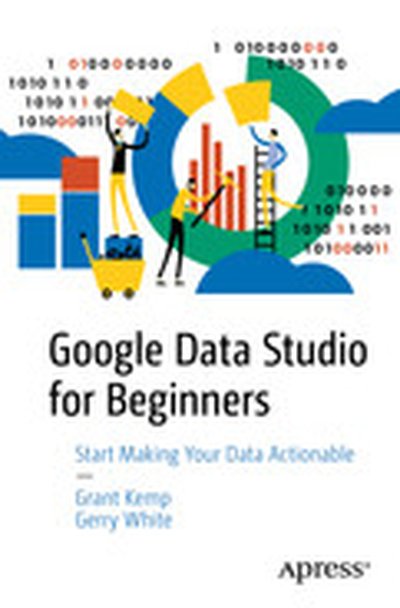
Google Data Studio for Beginners: Start Making Your Data Actionable

Google Data Studio is becoming a go-to tool in the analytics community. All business roles across the industry benefit from foundational knowledge of this now-essential technology, and Google Data Studio for Beginners is here to provide it. Release your locked-up data and turn it into beautiful, actionable, and shareable reports that can be consumed by experts and novices alike. Authors Grant Kemp and Gerry White begin by walking you through the basics, such how to create simple dashboards and interactive visualizations. As you progress through Google Data Studio for Beginners, you will build up the knowledge necessary to blend multiple data sources and create comprehensive marketing dashboards. Some intermediate features such as calculated fields, cleaning up data, and data blending to build powerhouse reports are featured as well. Presenting your data in client-ready, digestible forms is a key factor that many find to be a roadblock, and this book will help strengthen this essential skill in your organization. Centralizing the power from sources such as Google Analytics, online surveys, and a multitude of other popular data management tools puts you as a business leader and analyzer ahead of the rest. Your team as a whole will benefit from Google Data Studio for Beginners, because by using these tools, teams can collaboratively work on data to build their understanding and turn their data into action. Data Studio is quickly solidifying itself as the industry standard, and you don’t want to miss this essential guide for excelling in it. What You Will Learn Combine various data sources to create great looking and actionable visualizations Reuse and modify other dashboards that have been created by industry pros Use intermediate features such as calculated fields and data blending to build powerhouse reports Who This Book Is For Users looking to learn Google Analytics, SEO professionals, digital marketers, and other business professionals who want to mine their data into an actionable dashboard.

Advanced R 4 Data Programming and the Cloud: Using PostgreSQL, AWS, and Shiny

Program for data analysis using R and learn practical skills to make your work more efficient. This revised book explores how to automate running code and the creation of reports to share your results, as well as writing functions and packages. It includes key R 4 features such as a new color palette for charts, an enhanced reference counting system, and normalization of matrix and array types where matrix objects now formally inherit from the array class, eliminating inconsistencies. Advanced R 4 Data Programming and the Cloud is not designed to teach advanced R programming nor to teach the theory behind statistical procedures. Rather, it is designed to be a practical guide moving beyond merely using R; it shows you how to program in R to automate tasks. This book will teach you how to manipulate data in modern R structures and includes connecting R to databases such as PostgreSQL, cloud services such as Amazon Web Services (AWS), and digital dashboards such as Shiny. Each chapter also includes a detailed bibliography with references to research articles and other resources that cover relevant conceptual and theoretical topics. What You Will Learn Write and document R functions using R 4 Make an R package and share it via GitHub or privately Add tests to R code to ensure it works as intended Use R to talk directly to databases and do complex data management Run R in the Amazon cloud Deploy a Shiny digital dashboard Generate presentation-ready tables and reports using R Who This Book Is For Working professionals, researchers, and students who are familiar with R and basic statistical techniques such as linear regression and who want to learn how to take their R coding and programming to the next level.

Transforming Healthcare Analytics

Real-life examples of how to apply intelligence in the healthcare industry through innovative analytics Healthcare analytics offers intelligence for making better healthcare decisions. Identifying patterns and correlations contained in complex health data, analytics has applications in hospital management, patient records, diagnosis, operating and treatment costs, and more. Helping healthcare managers operate more efficiently and effectively. Transforming Healthcare Analytics: The Quest for Healthy Intelligence shares real-world use cases of a healthcare company that leverages people, process, and advanced analytics technology to deliver exemplary results. This book illustrates how healthcare professionals can transform the healthcare industry through analytics. Practical examples of modern techniques and technology show how unified analytics with data management can deliver insight-driven decisions. The authors—a data management and analytics specialist and a healthcare finance executive—share their unique perspectives on modernizing data and analytics platforms to alleviate the complexity of the healthcare, distributing capabilities and analytics to key stakeholders, equipping healthcare organizations with intelligence to prepare for the future, and more. This book: Explores innovative technologies to overcome data complexity in healthcare Highlights how analytics can help with healthcare market analysis to gain competitive advantage Provides strategies for building a strong foundation for healthcare intelligence Examines managing data and analytics from end-to-end, from diagnosis, to treatment, to provider payment Discusses the future of technology and focus areas in the healthcare industry Transforming Healthcare Analytics: The Quest for Healthy Intelligence is an important source of information for CFO’s, CIO, CTO, healthcare managers, data scientists, statisticians, and financial analysts at healthcare institutions.

Practical DataOps: Delivering Agile Data Science at Scale

Gain a practical introduction to DataOps, a new discipline for delivering data science at scale inspired by practices at companies such as Facebook, Uber, LinkedIn, Twitter, and eBay. Organizations need more than the latest AI algorithms, hottest tools, and best people to turn data into insight-driven action and useful analytical data products. Processes and thinking employed to manage and use data in the 20th century are a bottleneck for working effectively with the variety of data and advanced analytical use cases that organizations have today. This book provides the approach and methods to ensure continuous rapid use of data to create analytical data products and steer decision making. Practical DataOps shows you how to optimize the data supply chain from diverse raw data sources to the final data product, whether the goal is a machine learning model or other data-orientated output. The book provides an approach to eliminate wasted effort and improve collaboration between data producers, data consumers, and the rest of the organization through the adoption of lean thinking and agile software development principles. This book helps you to improve the speed and accuracy of analytical application development through data management and DevOps practices that securely expand data access, and rapidly increase the number of reproducible data products through automation, testing, and integration. The book also shows how to collect feedback and monitor performance to manage and continuously improve your processes and output. What You Will Learn Develop a data strategy for your organization to help it reach its long-term goals Recognize and eliminate barriers to delivering data to users at scale Work on the right things for the right stakeholders through agile collaboration Create trust in data via rigorous testing and effective data management Build a culture of learning and continuous improvement through monitoring deployments and measuring outcomes Create cross-functional self-organizing teams focused on goals not reporting lines Build robust, trustworthy, data pipelines in support of AI, machine learning, and other analytical data products Who This Book Is For Data science and advanced analytics experts, CIOs, CDOs (chief data officers), chief analytics officers, business analysts, business team leaders, and IT professionals (data engineers, developers, architects, and DBAs) supporting data teams who want to dramatically increase the value their organization derives from data. The book is ideal for data professionals who want to overcome challenges of long delivery time, poor data quality, high maintenance costs, and scaling difficulties in getting data science output and machine learning into customer-facing production.