talk-data.com talk-data.com

Topic

Data Management

data_governance data_quality metadata_management

1097

tagged

Activity Trend

88 peak/qtr
2020-Q1 2026-Q1

Activities

1097 activities · Newest first

HBase High Performance Cookbook

"HBase High Performance Cookbook" is your guide to mastering the optimization, scaling, and tuning of HBase systems. Covering everything from configuring HBase clusters to designing scalable table structures and performance tuning, this comprehensive book provides practical advice and strategies for leveraging HBase's full potential. By following this book's recipes, you'll supercharge your HBase expertise. What this Book will help me do Understand how to configure HBase for optimal performance, improving your data system's efficiency. Learn to design table structures to maximize scalability and functionality in HBase. Gain skills in performing CRUD operations and using advanced features like MapReduce within HBase. Discover practices for integrating HBase with other technologies such as ElasticSearch. Master the steps involved in setting up and optimizing HBase in cloud environments for enhanced performance. Author(s) Ruchir Choudhry is a seasoned data management professional with extensive experience in distributed database systems. He possesses deep expertise in HBase, Hadoop, and other big data technologies. His practical and engaging writing style aims to demystify complex technical topics, making them accessible to developers and architects alike. Who is it for? This book is tailored for developers and system architects looking to deepen their understanding of HBase. Whether you are experienced with other NoSQL databases or are new to HBase, this book provides extensive practical knowledge. Ideal for professionals working in big data applications or those eager to optimize and scale their database systems effectively.

Strategies in Biomedical Data Science

An essential guide to healthcare data problems, sources, and solutions Strategies in Biomedical Data Science provides medical professionals with much-needed guidance toward managing the increasing deluge of healthcare data. Beginning with a look at our current top-down methodologies, this book demonstrates the ways in which both technological development and more effective use of current resources can better serve both patient and payer. The discussion explores the aggregation of disparate data sources, current analytics and toolsets, the growing necessity of smart bioinformatics, and more as data science and biomedical science grow increasingly intertwined. You'll dig into the unknown challenges that come along with every advance, and explore the ways in which healthcare data management and technology will inform medicine, politics, and research in the not-so-distant future. Real-world use cases and clear examples are featured throughout, and coverage of data sources, problems, and potential mitigations provides necessary insight for forward-looking healthcare professionals. Big Data has been a topic of discussion for some time, with much attention focused on problems and management issues surrounding truly staggering amounts of data. This book offers a lifeline through the tsunami of healthcare data, to help the medical community turn their data management problem into a solution. Consider the data challenges personalized medicine entails Explore the available advanced analytic resources and tools Learn how bioinformatics as a service is quickly becoming reality Examine the future of IOT and the deluge of personal device data The sheer amount of healthcare data being generated will only increase as both biomedical research and clinical practice trend toward individualized, patient-specific care. Strategies in Biomedical Data Science provides expert insight into the kind of robust data management that is becoming increasingly critical as healthcare evolves.

Preamble

Hello and welcome to the Data Engineering Podcast, the show about modern data infrastructure Go to dataengineeringpodcast.com to subscribe to the show, sign up for the newsletter, read the show notes, and get in touch. You can help support the show by checking out the Patreon page which is linked from the site. To help other people find the show you can leave a review on iTunes, or Google Play Music, share it on social media, and tell your friends and co-workers. I’m your host, Tobias Macey, and today I’m speaking with Maxime Beauchemin about what it means to be a data engineer.

Interview

Who am I Systems administrator and software engineer, now DevOps, focus on automation Host of Podcast.init How did I get involved in data management Why am I starting a podcast about Data Engineering Interesting area with a lot of activity Not currently any shows focused on data engineering What kinds of topics do I want to cover Data stores Pipelines Tooling Automation Monitoring Testing Best practices Common challenges Defining the role/job hunting Relationship with data engineers/data analysts Get in touch and subscribe Website Newsletter Twitter Email

The intro and outro music is from The Hug by The Freak Fandango Orchestra / CC BY-SA

Support Data Engineering Podcast

Introducing and Implementing IBM FlashSystem V9000

The success or failure of businesses often depends on how well organizations use their data assets for competitive advantage. Deeper insights from data require better information technology. As organizations modernize their IT infrastructure to boost innovation rather than limit it, they need a data storage system that can keep pace with highly virtualized environments, cloud computing, mobile and social systems of engagement, and in-depth, real-time analytics. Making the correct decision on storage investment is critical. Organizations must have enough storage performance and agility to innovate as they need to implement cloud-based IT services, deploy virtual desktop infrastructure, enhance fraud detection, and use new analytics capabilities. At the same time, future storage investments must lower IT infrastructure costs while helping organizations to derive the greatest possible value from their data assets. The IBM® FlashSystem V9000 is the premier, fully integrated, Tier 1, all-flash offering from IBM. It has changed the economics of today’s data center by eliminating storage bottlenecks. Its software-defined storage features simplify data management, improve data security, and preserve your investments in storage. The IBM FlashSystem® V9000 SAS expansion enclosures provide new tiering options with read-intensive SSDs or nearline SAS HDDs. IBM FlashSystem V9000 includes IBM FlashCore® technology and advanced software-defined storage available in one solution in a compact 6U form factor. IBM FlashSystem V9000 improves business application availability. It delivers greater resource utilization so you can get the most from your storage resources, and achieve a simpler, more scalable, and cost-efficient IT Infrastructure. This IBM Redbooks® publication provides information about IBM FlashSystem V9000 Software V7.7 and introduces the recently announced V7.8. It describes the product architecture, software, hardware, and implementation, and provides hints and tips. It illustrates use cases and independent software vendor (ISV) scenarios that demonstrate real-world solutions, and also provides examples of the benefits gained by integrating the IBM FlashSystem storage into business environments. This book offers IBM FlashSystem V9000 scalability concepts and guidelines for planning, installing, and configuring, which can help environments scale up and out to add more flash capacity and expand virtualized systems. Port utilization methodologies are provided to help you maximize the full potential of IBM FlashSystem V9000 performance and low latency in your scalable environment. This book is intended for pre-sales and post-sales technical support professionals, storage administrators, and anyone who wants to understand how to implement this exciting technology.

Business Analytics Using R - A Practical Approach

Learn the fundamental aspects of the business statistics, data mining, and machine learning techniques required to understand the huge amount of data generated by your organization. This book explains practical business analytics through examples, covers the steps involved in using it correctly, and shows you the context in which a particular technique does not make sense. Further, Practical Business Analytics using R helps you understand specific issues faced by organizations and how the solutions to these issues can be facilitated by business analytics. This book will discuss and explore the following through examples and case studies: An introduction to R: data management and R functions The architecture, framework, and life cycle of a business analytics project Descriptive analytics using R: descriptive statistics and data cleaning Data mining: classification, association rules, and clustering Predictive analytics: simple regression, multiple regression, and logistic regression This book includes case studies on important business analytic techniques, such as classification, association, clustering, and regression. The R language is the statistical tool used to demonstrate the concepts throughout the book. What You Will Learn • Write R programs to handle data • Build analytical models and draw useful inferences from them • Discover the basic concepts of data mining and machine learning • Carry out predictive modeling • Define a business issue as an analytical problem Who This Book Is For Beginners who want to understand and learn the fundamentals of analytics using R. Students, managers, executives, strategy and planning professionals, software professionals, and BI/DW professionals.

Practical Business Intelligence

Master the art of business intelligence in just a few steps with this hands-on guide. By following the detailed examples and techniques in this book, you'll learn to create effective BI solutions that analyze data for strategic decision-making. You'll explore tools like D3.js, R, Tableau, QlikView, and Python to visualize data and gain actionable insights. What this Book will help me do Develop the ability to create self-service reporting environments for business analytics. Understand and apply SQL techniques to aggregate and manipulate data effectively. Design and implement data models suitable for analytical and reporting purposes. Connect data warehouses with advanced BI tools to streamline reporting processes. Analyze and visualize data using industry-leading tools like D3.js, R, Tableau, and Python. Author(s) Written by seasoned experts in data analytics and business intelligence, the authors bring years of industry experience and practical insights to this well-rounded guide. They specialize in turning complex data into manageable, insightful BI solutions. Their writing style is approachable yet detailed, ensuring you gain both foundational and advanced knowledge in a structured way. Who is it for? This book caters to data enthusiasts and professionals in roles such as data analysis, BI development, or data management. It's perfect for beginners seeking practical BI skills, as well as experienced developers looking to integrate and implement sophisticated BI tools. The focus is on actionable insights, making it ideal for anyone aiming to leverage data for business growth.

Effective SQL: 61 Specific Ways to Write Better SQL, First Edition

“Given the authors’ reputations, I expected to be impressed. I was blown away! . . . Most SQL books sit on my shelf. This one will live on my desk.” –Roger Carlson, Microsoft Access MVP (2006-2015) “Rather than stumble around reinventing wheels or catching glimpses of the proper approaches, do yourself a favor: Buy this book.” —Dave Stokes, MySQL Community Manager, Oracle Corporation brings together practical solutions and insights so you can solve complex problems with SQL and design databases that simplify data management in the future. It’s the only modern book that brings together advanced best practices and realistic example code for all of these versions of SQL: IBM DB2, Microsoft Access, Microsoft SQL Server, MySQL, Oracle Database, and PostgreSQL. Effective SQL Drawing on their immense experience as world-class database consultants and instructors, the authors identify 61 proven approaches to writing better SQL. Wherever SQL versions vary, the authors illuminate the key nuances, so you can get the most out of whatever version you prefer. This full-color guide provides clear, practical explanations; expert tips; and plenty of usable code. Going far beyond mere syntax, it addresses issues ranging from optimizing database designs to managing hierarchies and metadata. If you already know SQL’s basics, this guide will help you become a world-class SQL problem-solver. Craft better logical data models, and fix flawed models Implement indexes that improve query performance Handle external data from sources you don’t control Extract and aggregate the information you need, as efficiently as possible Write more flexible subqueries Analyze and retrieve metadata using your database platform of choice Use Cartesian Products and Tally Tables to solve problems you can’t address with conventional JOINs Model hierarchical data: managing SQL’s tradeoffs and shortcomings

In this session, Mike Flowers, Chief Analytics Officer, Enigma, sat with Vishal Kumar, CEO AnalyticsWeek and shared his journey as an analytics executive, best practices, hacks for upcoming executives, and some challenges/opportunities he's observing as a Chief Analytics Officer. Mike discussed his journey from trial prosecutor to Chief Analytics Officer, sharing some great stories on how Govt. embraces data analytics.

Timeline: 0:29 Mike's journey. 23:32 Mike's role in Enigma. 27:46 The role of CAO in Enigma. 29:50 How much Mike's role is customer-facing vs. in facing. 30:00 Getting over the roadblocks of working with the government. 34:06 Creating a data bridge. 39:17 Collaboration in the data science field. 46:02 Challenges in working with Clients at Enigma. 51:34 Benefits of having a legal background before coming to data analytics.

Podcast link: https://futureofdata.org/enigma_io/

Here's Mike Flowers Bio: Mike is Chief Analytics Officer at New York City tech start-up Enigma, an operational data management and intelligence company, where he leads data scientists assisting the development and deployment of decision-support technologies to Fortune 500 clients in compliance, manufacturing, banking, and finance, and several U.S. and foreign government agencies. In addition, he is a Senior Fellow at Bloomberg Philanthropies, working with select U.S. city governments to launch sustainable analytics programs. Mike is also an advisor to numerous organizations in a wide variety of fields, including, for example, Weil Cornell Medical College, the Inter-American Development Bank, the Office of the New York State Comptroller, the Greater London Authority, the government of New South Wales, Australia, and the French national government.

From 2014-15, Mike was an Executive-in-Residence and the first MacArthur Urban Science Fellow at NYU’s Center for Urban Science and Progress, where he advised students and faculty on projects to advance data-driven decision-making in city government.

From 2009-2013, Mike served under Mayor Michael Bloomberg as New York City’s first Chief Analytics Officer. During his tenure, he founded the Mayor’s Office of Data Analytics, which provides quantitative support to the city’s public safety, public health, infrastructure development, finance, economic development, disaster preparedness and response, legislative, sustainability, and human services efforts. In addition, Mike designed and oversaw the implementation of NYC DataBridge, a first-of-its-kind citywide analytics platform that enables the sharing and analysis of city data across agencies and with the public, and he ran the implementation of the city’s internationally-recognized Open Data initiative. For this work, Mike was twice recognized by the White House for innovation.

Follow @mpflowersnyc

The podcast is sponsored by: TAO.ai(https://tao.ai), Artificial Intelligence Driven Career Coach

About #Podcast:

FutureOfData podcast is a conversation starter to bring leaders, influencers, and lead practitioners to discuss their journey to create the data-driven future.

Want to Join? If you or any you know wants to join in, Register your interest @ http://play.analyticsweek.com/guest/

Want to sponsor? Email us @ [email protected]

Keywords:

FutureOfData #DataAnalytics #Leadership #Podcast #BigData #Strategy

Advanced R: Data Programming and the Cloud

Program for data analysis using R and learn practical skills to make your work more efficient. This book covers how to automate running code and the creation of reports to share your results, as well as writing functions and packages. Advanced R is not designed to teach advanced R programming nor to teach the theory behind statistical procedures. Rather, it is designed to be a practical guide moving beyond merely using R to programming in R to automate tasks. This book will show you how to manipulate data in modern R structures and includes connecting R to data bases such as SQLite, PostgeSQL, and MongoDB. The book closes with a hands-on section to get R running in the cloud. Each chapter also includes a detailed bibliography with references to research articles and other resources that cover relevant conceptual and theoretical topics. What You Will Learn Write and document R functions Make an R package and share it via GitHub or privately Add tests to R code to insure it works as intended Build packages automatically with GitHub Use R to talk directly to databases and do complex data management Run R in the Amazon cloud Generate presentation-ready tables and reports using R Who This Book Is For Working professionals, researchers, or students who are familiar with R and basic statistical techniques such as linear regression and who want to learn how to take their R coding and programming to the next level.

In this session, John Young, Chief Analytics Officer, Epsilon Data Management, sat with Vishal Kumar, CEO AnalyticsWeek and shared his journey to Chief Analytics Officer, life @ Epsilon, and discussed some challenges/opportunities faced by data-driven organizations, its executives and shared some best practices.

Timeline: 2:51 What's Epsilon? 5:12 John's journey. 9:24 The role of CAO in Epsilon. 12:12 How much John's role is in facing and out facing. 13:19 Best practices in data analytics at Epsilon. 16:15 Demarcating CDO and CAO. 19:52 Depth and breadth of decision making at Epsilon. 25:00 Dealing with clients of Epsilon. 28:48 Best data practices for businesses. 34:39 Build or buy data? 37:21 Creating a center of excellence with data. 40:01 Building a data team. 43:45 Tips for aspiring data analytics executives. 46:05 Art of doing business and science of doing business. 48:31 Closing remarks.

Podcast link: https://futureofdata.org/analyticsweek-leadership-podcast-with-john-young-epsilon-data-management/

Here's John's Bio: Mr. Young has general management responsibilities for the 150+ member Analytic Consulting Group at Epsilon. His responsibilities also include design and consultation on various database marketing analytic engagements, including predictive modeling, segmentation, measurement, and profiling. John also brings thought leadership on important marketing topics. John works with companies in numerous industries, including financial services, technology, retail, healthcare, and not-for-profit.

Before joining Epsilon in 1994, Mr. Young was a Marketing Research Manager at Digitas, a Market Research Manager at Citizens Bank, Research Manager at the AICPA, and an Assistant Economist at the Federal Reserve Bank of Kansas City.

Mr. Young has presented at numerous conferences, including NCDM Winter and Summer, DMA Annual, DMA Marketing Analytics, LIMRA Big Data Analytics, and Epsilon’s Client Symposiums. He has published in DM News, CRM Magazine’s Viewpoints, Chief Marketer, Loyalty 360, Colloquy, and serves on the advisory board of the DMA’s Analytics Community.

Mr. Young holds a B.S. and M.S. in Economics from Colorado State University, Fort Collins, Colorado.

The podcast is sponsored by: TAO.ai(https://tao.ai), Artificial Intelligence Driven Career Coach

About #Podcast:

FutureOfData podcast is a conversation starter to bring leaders, influencers, and lead practitioners to discuss their journey to create the data-driven future.

Want to Join? If you or any you know wants to join in, Register your interest @ http://play.analyticsweek.com/guest/

Want to sponsor? Email us @ [email protected]

Keywords:

FutureOfData #DataAnalytics #Leadership #Podcast #BigData #Strategy
podcast_episode
by Val Kroll , Julie Hoyer , Tim Wilson (Analytics Power Hour - Columbus (OH) , Josh West (Analytics Demystified) , Moe Kiss (Canva) , Michael Helbling (Search Discovery)

If you're in the U.S., happy election day! In the spirit of the mayhem and controversy that the political process brings, we're tackling a topic that is every bit as controversial: tag management. Does Adobe DTM gratuitously delete emails? Has GTM been perpetually unaware of when it is around a hot mic? What does Tealium have against coffee?! Is Signal broadcasting dog whistles to marketers about the glorious data they can collect and manage? What about Ensighten's sordid past where the CEO was spotted in public (at eMetrics) sporting a periwig? To discuss all of this (or...actual content), Josh West from Analytics Demystified joins us for a discussion that is depressingly civil and uncontentious. Many linkable things were referenced in this episode: Josh's Industry War starting blog post (from 2013), Adobe Dynamic Tag Management (DTM), Google Tag Manager (GTM), Signal, Tealium, Ensighten, Ghostery, Observepoint, Hub'scan, the Data Governance Episode of the Digital Analytics Power Hour (Episode #012),  PhoneGap, Floodlight / Doubleclick / DFA, In the Year 2000 (Conan O'Brien), Bird Law, Adobe Experience Manager (AEM), Webtrends Streams, data management platforms (DMP), the Personalization Episode of the Digital Analytics Power Hour with Matt Gershoff (Episode #031), josh.analyticsdemystified.com, and Tagtician.

Carpenter's Complete Guide to the SAS Macro Language, Third Edition, 3rd Edition

For SAS programmers or analysts who need to generalize their programs or improve programming efficiency, Art Carpenter thoroughly updates his highly successful second edition of Carpenter's Complete Guide to the SAS Macro Language with an extensive collection of new macro language techniques and examples. Addressing the composition and operation of the SAS macro facility and the SAS macro language, this third edition offers nearly 400 ready-to-use macros, macro functions, and macro tools that enable you to convert SAS code to macros, define macro variables, and more! Users with a basic understanding of Base SAS who are new to the SAS macro language will find more detail, utilities, and references to additional learning opportunities; advanced macro language programmers who need help with data-driven macros and dynamic application development will find greatly expanded treatment of these topics. This revised and enlarged edition includes the following topics: New and expanded introduction to the macro language Functions, automatic macro variables, and macro statements new to the macro language Expanded macro language tools that interface with the operating system Expanded data-driven methodologies used to build dynamic applications Expanded discussion of list processing, with four alternative approaches presented Additional file and data management examples Expanded discussion of CALL EXECUTE and DOSUBL New discussion of using the macro language on remote servers Expanded discussion and examples of macro quoting Far beyond a reference manual issued from an “ivory tower,” this book is pragmatic and example-driven: Yes, you will find syntax examples; yes, the code is explained. But the focus of this book is on actual code used to solve real-world business problems. In fact, an entire appendix is dedicated to listing the nearly 70 classes of problems that are solved by programs covered in this edition. Discussion of the examples elucidates the pros and cons of the particular solution and often suggests alternative approaches. Therefore, this book provides you both a compendium of reusable and adaptable code, and opportunities for deepening your understanding and growing as a SAS programmer.

Big Data Analytics with R

Unlock the potential of big data analytics by mastering R programming with this comprehensive guide. This book takes you step-by-step through real-world scenarios where R's capabilities shine, providing you with practical skills to handle, process, and analyze large and complex datasets effectively. What this Book will help me do Understand the latest big data processing methods and how R can enhance their application. Set up and use big data platforms such as Hadoop and Spark in conjunction with R. Utilize R for practical big data problems, such as analyzing consumption and behavioral datasets. Integrate R with SQL and NoSQL databases to maximize its versatility in data management. Discover advanced machine learning implementations using R and Spark MLlib for predictive analytics. Author(s) None Walkowiak is an experienced data analyst and R programming expert with a passion for data engineering and machine learning. With a deep knowledge of big data platforms and extensive teaching experience, they bring a clear and approachable writing style to help learners excel. Who is it for? Ideal for data analysts, scientists, and engineers with fundamental data analysis knowledge looking to enhance their big data capabilities using R. If you aim to adapt R for large-scale data management and analysis workflows, this book is your ideal companion to bridge the gap.

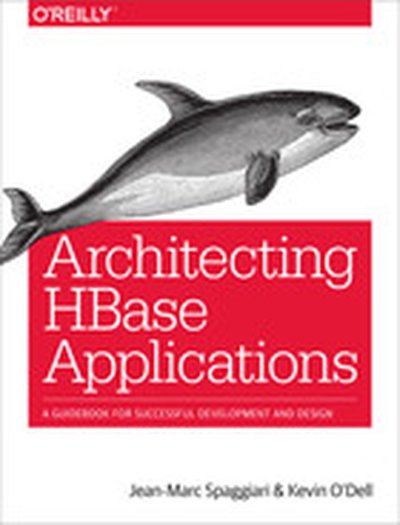
Architecting HBase Applications

HBase is a remarkable tool for indexing mass volumes of data, but getting started with this distributed database and its ecosystem can be daunting. With this hands-on guide, you’ll learn how to architect, design, and deploy your own HBase applications by examining real-world solutions. Along with HBase principles and cluster deployment guidelines, this book includes in-depth case studies that demonstrate how large companies solved specific use cases with HBase. Authors Jean-Marc Spaggiari and Kevin O’Dell also provide draft solutions and code examples to help you implement your own versions of those use cases, from master data management (MDM) and document storage to near real-time event processing. You’ll also learn troubleshooting techniques to help you avoid common deployment mistakes. Learn exactly what HBase does, what its ecosystem includes, and how to set up your environment Explore how real-world HBase instances were deployed and put into production Examine documented use cases for tracking healthcare claims, digital advertising, data management, and product quality Understand how HBase works with tools and techniques such as Spark, Kafka, MapReduce, and the Java API Learn how to identify the causes and understand the consequences of the most common HBase issues

Data Mining Models

Data mining has become the fastest growing topic of interest in business programs in the past decade. This book is intended to describe the benefits of data mining in business, the process and typical business applications, the workings of basic data mining models, and demonstrate each with widely available free software. The book focuses on demonstrating common business data mining applications. It provides exposure to the data mining process, to include problem identification, data management, and available modeling tools. The book takes the approach of demonstrating typical business data sets with open source software. KNIME is a very easy-to-use tool, and is used as the primary means of demonstration. R is much more powerful and is a commercially viable data mining tool. We also demonstrate WEKA, which is a highly useful academic software, although it is difficult to manipulate test sets and new cases, making it problematic for commercial use.

Big Data

Big Data: Principles and Paradigms captures the state-of-the-art research on the architectural aspects, technologies, and applications of Big Data. The book identifies potential future directions and technologies that facilitate insight into numerous scientific, business, and consumer applications. To help realize Big Data’s full potential, the book addresses numerous challenges, offering the conceptual and technological solutions for tackling them. These challenges include life-cycle data management, large-scale storage, flexible processing infrastructure, data modeling, scalable machine learning, data analysis algorithms, sampling techniques, and privacy and ethical issues. Covers computational platforms supporting Big Data applications Addresses key principles underlying Big Data computing Examines key developments supporting next generation Big Data platforms Explores the challenges in Big Data computing and ways to overcome them Contains expert contributors from both academia and industry

Big Data

Big Data: Storage, Sharing, and Security examines Big Data management from an R&D perspective. It covers the 3S designs-storage, sharing, and security-through detailed descriptions of Big Data concepts and implementations. Presenting the contributions of recognized Big Data experts from around the world, the book contains more than 450 pages of technical details on the most important implementation aspects regarding Big Data.

Architecting Data Lakes

Many organizations use Hadoop-driven data lakes as an adjunct staging area for their enterprise data warehouses (EDW). But for those companies ready to take the plunge, a data lake is far more useful as a one-stop-shop for extracting insights from their vast collection of data. With this eBook, you’ll learn best practices for building, maintaining, and deriving value from a Hadoop data lake in production environments. Authors Alice LaPlante and Ben Sharma explain how a data lake will enable your organization to manage an increasing volume of datasets—from blog postings and product reviews to streaming data—and to discover important relationships between them. Whether you want to control administrative costs in healthcare or reduce risk in financial services, this ebook addresses the architectural considerations and required capabilities you need to build your own data lake. With this report, you’ll learn: The key attributes of a data lake, including its ability to store information in native formats for later processing Why implementing data management and governance in your data lake is crucial How to address various challenges for building and managing a data lake Self-service options that enable different users to access the data lake without help from IT Emerging trends that will shape the future of data lakes

IT Modernization using Catalogic ECX Copy Data Management and IBM Spectrum Storage

Data is the currency of the new economy, and organizations are increasingly tasked with finding better ways to protect, recover, access, share, and use data. Traditional storage technologies are being stretched to the breaking point. This challenge is not because of storage hardware performance, but because management tools and techniques have not kept pace with new requirements. Primary data growth rates of 35% to 50% annually only amplify the problem. Organizations of all sizes find themselves needing to modernize their IT processes to enable critical new use cases such as storage self-service, Development and Operations (DevOps), and integration of data centers with the Cloud. They are equally challenged with improving management efficiencies for long established IT processes such as data protection, disaster recovery, reporting, and business analytics. Access to copies of data is the one common feature of all these use cases. However, the slow, manual processes common to IT organizations, including a heavy reliance on labor-intensive scripting and disparate tool sets, are no longer able to deliver the speed and agility required in today's fast-paced world. Copy Data Management (CDM) is an IT modernization technology that focuses on using existing data in a manner that is efficient, automated, scalable, and easy to use, delivering the data access that is urgently needed to meet the new use cases. Catalogic ECX, with IBM® storage, provides in-place copy data management that modernizes IT processes, enables key use cases, and does it all within existing infrastructure. This IBM Redbooks® publication shows how Catalogic Software and IBM have partnered together to create an integrated solution that addresses today's IT environment.

IBM Spectrum Family: IBM Spectrum Control Standard Editon

IBM® Spectrum Control (Spectrum Control), a member of the IBM Spectrum™ Family of products, is the next-generation data management solution for software-defined environments (SDEs). With support for block, file, object workloads, and software-defined storage and predictive analytics, and automated and advanced monitoring to identify proactively storage performance problems, Spectrum Control enables administrators to provide efficient management for heterogeneous storage environments. IBM Spectrum Control™ (formerly IBM Tivoli® Storage Productivity Center) delivers a complete set of functions to manage IBM Spectrum Virtualize™, IBM Spectrum Accelerate™, and IBM Spectrum Scale™ storage infrastructures, and traditional IBM and select third-party storage hardware systems. This IBM Redbooks® publication provides practical examples and use cases that can be deployed with IBM Spectrum Control Standard Edition, with an overview of IBM Spectrum Control Advanced Edition. This book complements the Spectrum Control IBM Knowledge Center, which is referenced for product details, and for installation and implementation details throughout this book. You can find this resource as the following website: IBM Spectrum Control Knowledge Center Also provided are descriptions and an architectural overview of the IBM Spectrum Family, highlighting Spectrum Control, as integrated into software-defined storage environments. This publication is intended for storage administrators, clients who are responsible for maintaining IT and business infrastructures, and anyone who wants to learn more about employing Spectrum Control and Spectrum Control Standard Edition.