
talk-data.com talk-data.com

Topic

Data Science

machine_learning statistics analytics

1516

tagged

Activity Trend

68 peak/qtr
2020-Q1 2026-Q1

Activities

1516 activities · Newest first

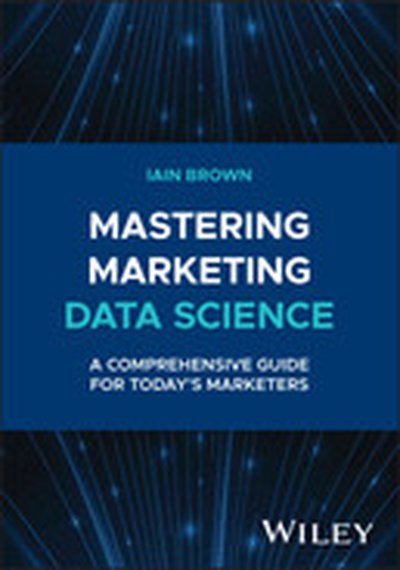
Mastering Marketing Data Science

Unlock the Power of Data: Transform Your Marketing Strategies with Data Science In the digital age, understanding the symbiosis between marketing and data science is not just an advantage; it's a necessity. In Mastering Marketing Data Science: A Comprehensive Guide for Today's Marketers, Dr. Iain Brown, a leading expert in data science and marketing analytics, offers a comprehensive journey through the cutting-edge methodologies and applications that are defining the future of marketing. This book bridges the gap between theoretical data science concepts and their practical applications in marketing, providing readers with the tools and insights needed to elevate their strategies in a data-driven world. Whether you're a master's student, a marketing professional, or a data scientist keen on applying your skills in a marketing context, this guide will empower you with a deep understanding of marketing data science principles and the competence to apply these principles effectively. Comprehensive Coverage: From data collection to predictive analytics, NLP, and beyond, explore every facet of marketing data science. Practical Applications: Engage with real-world examples, hands-on exercises in both Python & SAS, and actionable insights to apply in your marketing campaigns. Expert Guidance: Benefit from Dr. Iain Brown's decade of experience as he shares cutting-edge techniques and ethical considerations in marketing data science. Future-Ready Skills: Learn about the latest advancements, including generative AI, to stay ahead in the rapidly evolving marketing landscape. Accessible Learning: Tailored for both beginners and seasoned professionals, this book ensures a smooth learning curve with a clear, engaging narrative. Mastering Marketing Data Science is designed as a comprehensive how-to guide, weaving together theory and practice to offer a dynamic, workbook-style learning experience. Dr. Brown's voice and expertise guide you through the complexities of marketing data science, making sophisticated concepts accessible and actionable.
Ao vivo e a cores, aterrissamos no The Developer’s Conference (mais conhecido como TDC), que teve sua primeira edição com foco em Inteligência Artificial, em São Paulo.

E para responder a pergunta se “Ainda vale a pena aprender a programar, com os avanços da AI ?", devido a discussão nos últimos meses, sobre a substituição de desenvolvedores foi reacendida por episódios como a fala do CEO da Nvidia, Jensen Huang, que foi interpretada por alguns veículos como “Pare de ensinar crianças a programar”. Além desse, tivemos o surgimento do DevIn, uma IA desenvolvedora de código.

Neste episódio especial do Data Hackers — a maior comunidade de AI e Data Science do Brasil-, conheçam: Andrea Longarini, Professora de IA no Mackenzie e Cloud Solutions Architect na Microsoft; e Danilo Vitoriano, criador de conteúdo e embaixador da Woovi.

Lembrando que você pode encontrar todos os podcasts da comunidade Data Hackers no Spotify, iTunes, Google Podcast, Castbox e muitas outras plataformas. Caso queira, você também pode ouvir o episódio aqui no post mesmo!

Falamos no episódio

Conheça as pessoas convidadas:

Andrea Longarini, Professora de IA no Mackenzie e Cloud Solutions Architect na Microsoft;  Danilo Vitoriano, criador de conteúdo e embaixador da Woovi.

Nossa Bancada Data Hackers:

Paulo Vasconcellos — Co-founder Monique Femme — Head of Community Management

Referências:

Baixe o relatório completo do State of Data Brazil 2023 : https://stateofdata.datahackers.com.br/ Inscreva-se na Newsletter Data Hackers: https://www.datahackers.news/

Barry McCardel is the co-founder and CEO of Hex. Hex is an analytics tool that's structured around a notebook experience, but as you'll hear in the episode, goes well beyond the traditional notebook. We're big fans of Hex at dbt Labs, and use it for a bunch of our internal data work. In this episode, Barry and Tristan discuss notebooks and data analysis, before zooming out to discuss the hype cycle of data science, how AI is different, the experience of building AI products, and how AI will impact data practitioners. For full show notes and to read 6+ years of back issues of the podcast's companion newsletter, head to https://roundup.getdbt.com. The Analytics Engineering Podcast is sponsored by dbt Labs.

podcast_episode
by Mike Taylor (Hopkins Architects) , Alice Raucher (Hopkins Architects)

The UVA School of Data Science was formed in September 2019 and has since grown in its collaborations, partnerships, program offerings, and teaching and research personnel. We are now constructing a new facility that will house the School of Data Science at the University of Virginia.

The new building is in the first phase of development and, once complete, will link the University's Central Grounds with the athletic fields and North Grounds. The 60,000-square-foot building is the future home of the UVA School of Data Science and will serve as the gateway to the new Emmet-Ivy Corridor and the Discovery Nexus.

This bonus episode is a conversation between UVA architect Alice Raucher and Mike Taylor, a principal with Hopkins Architects. Both Alice and Mike have been instrumental in the building’s design. Alice has also played a key role in the development of the Ivy Corridor. Mike and Alice take a deep dive into the thought process behind the building’s design, its relationship to the University and its history, the land's unique topography, and its significance to future projects along the Ivy Corridor. 

Links:

Hopkins Architects

School of Data Science New Building Website

Send us a text Welcome to the cozy corner of the tech world where ones and zeros mingle with casual chit-chat. Datatopics Unplugged is your go-to spot for relaxed discussions around tech, news, data, and society. Dive into conversations that should flow as smoothly as your morning coffee (but don't), where industry insights meet laid-back banter. Whether you're a data aficionado or just someone curious about the digital age, pull up a chair, relax, and let's get into the heart of data, unplugged style!

In this episode, titled, "#46 Debunking Devon, Exploring RAG Frameworks, and Tech for a Better World", our special guest Martin Van Mollekot adds a rich layer of insight to our tech stew, covering everything from 3D-printed humanoids to the harmonious blend of AI and music, all while exploring how tech is cultivating a better world. 3D Printing: Martin discusses building a humanoid using resources from Thingiverse.AI Generated Music: Exploring Udio, an AI that not only composes music but adds vocals to match your taste.Devin Debunked: Unpacking the claims of the "First AI Software Engineer" and why it's not quite time to worry about AI taking coding jobs.GPT-4 Over Humans? A critical look at whether AI could replace junior analysts in the current tech landscape.The Data Science Dilemma: Is Data Science Dead? Discussing the evolution and future relevance of data science, with Zapier highlighted for its accessible toolset.RAG Frameworks Galore:. Discover the evolving buffet of RAG frameworks, making data handling smoother – and whether they're up to the hype: Ragflow, Pine Cone, Verba, and R2R. Tech for a Better World: Martin shares his personal story of how computer vision technology can aid farmers in managing their livestock.Hip-Hop and Generative AI: How generative AI is stirring up the music industry & tips from Bart on reproducing hit tracks.The Low-Code Revolution: Martin shares his insights on the rise of low-code/no-code platforms in data management.

There aren’t many retail giants like Walmart. In fact, there are none. The multinational generates 650bn in revenue, (including 50bn in eCommerce)—the highest revenue of any retailer globally. With over 10,000 stores worldwide and a constantly evolving product line, Walmart’s data & AI function has a lot to contend with when it comes to customer experience, demand forecasting, supply chain optimization and where to use AI effectively. So how do they do it? What can we learn from one of the most successful and well-known organizations on the planet? Swati Kirti is a Senior Director of Data Science, leading the AI/ML charter for Walmart Global Tech’s international business in Canada, Mexico, Central America, Chile, China, and South Africa. She is responsible for building AI/ML models and products to enable automation and data-driven decisions, powering superior customer experience and realizing value for omnichannel international businesses across e-commerce, stores, supply chain, and merchandising. In the episode, Swati and Richie explore the role of data and AI at Walmart, how the data and AI teams operate under Swati’s supervision, how Walmart improves customer experience through the use of data, supply chain optimization, demand forecasting, retail-specific data challenges, scaling AI solutions, innovation in retail through AI and much more.  Links Mentioned in the Show: Article - Walmart’s Generative AI search puts more time back in customers' handsWalmart Global Tech[Course] Implementing AI Solutions in BusinessRelated Episode: How Generative AI is Changing Business and Society with Bernard Marr, AI Advisor, Best-Selling Author, and FuturistRewatch sessions from RADAR: The Analytics Edition New to DataCamp? Learn on the go using the DataCamp mobile appEmpower your business with world-class data and AI skills with DataCamp for business

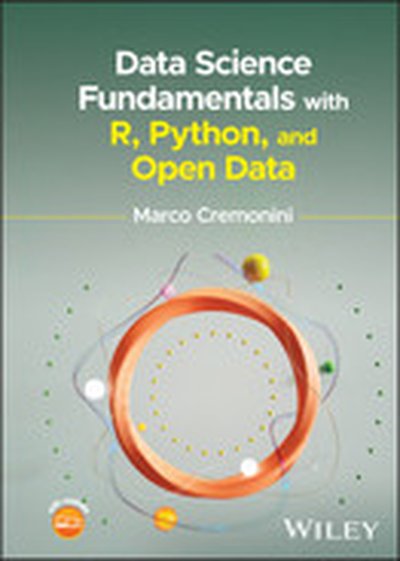
Data Science Fundamentals with R, Python, and Open Data

Data Science Fundamentals with R, Python, and Open Data Introduction to essential concepts and techniques of the fundamentals of R and Python needed to start data science projects Organized with a strong focus on open data, Data Science Fundamentals with R, Python, and Open Data discusses concepts, techniques, tools, and first steps to carry out data science projects, with a focus on Python and RStudio, reflecting a clear industry trend emerging towards the integration of the two. The text examines intricacies and inconsistencies often found in real data, explaining how to recognize them and guiding readers through possible solutions, and enables readers to handle real data confidently and apply transformations to reorganize, indexing, aggregate, and elaborate. This book is full of reader interactivity, with a companion website hosting supplementary material including datasets used in the examples and complete running code (R scripts and Jupyter notebooks) of all examples. Exam-style questions are implemented and multiple choice questions to support the readers’ active learning. Each chapter presents one or more case studies. Written by a highly qualified academic, Data Science Fundamentals with R, Python, and Open Data discuss sample topics such as: Data organization and operations on data frames, covering reading CSV dataset and common errors, and slicing, creating, and deleting columns in R Logical conditions and row selection, covering selection of rows with logical condition and operations on dates, strings, and missing values Pivoting operations and wide form-long form transformations, indexing by groups with multiple variables, and indexing by group and aggregations Conditional statements and iterations, multicolumn functions and operations, data frame joins, and handling data in list/dictionary format Data Science Fundamentals with R, Python, and Open Data is a highly accessible learning resource for students from heterogeneous disciplines where Data Science and quantitative, computational methods are gaining popularity, along with hard sciences not closely related to computer science, and medical fields using stochastic and quantitative models.

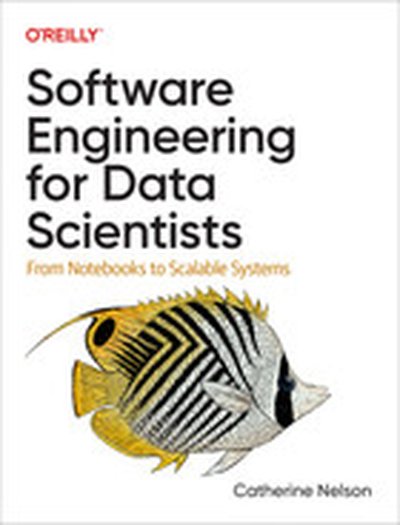
Software Engineering for Data Scientists

Data science happens in code. The ability to write reproducible, robust, scaleable code is key to a data science project's success—and is absolutely essential for those working with production code. This practical book bridges the gap between data science and software engineering, and clearly explains how to apply the best practices from software engineering to data science. Examples are provided in Python, drawn from popular packages such as NumPy and pandas. If you want to write better data science code, this guide covers the essential topics that are often missing from introductory data science or coding classes, including how to: Understand data structures and object-oriented programming Clearly and skillfully document your code Package and share your code Integrate data science code with a larger code base Learn how to write APIs Create secure code Apply best practices to common tasks such as testing, error handling, and logging Work more effectively with software engineers Write more efficient, maintainable, and robust code in Python Put your data science projects into production And more

Do Beats ao Qubits, descubra como a Computação Quântica está redefinindo e moldando o futuro da computação. Junte-se a nós para desvendar os mistérios do universo quântico, e entender o que empresas como o Itaú, vem aplicando no seu dia a dia. 

Neste episódio do Data Hackers — a maior comunidade de AI e Data Science do Brasil-, conversamos com a Samuraí Brito — Head of Quantum Technologies no Itaú, que tem artigos reconhecidos mundialmente sobre Computação Quântica, que revoluciona a forma como pensamos, e deu uma aula, sobre este universo paralelo.

Lembrando que você pode encontrar todos os podcasts da comunidade Data Hackers no Spotify, iTunes, Google Podcast, Castbox e muitas outras plataformas. Caso queira, você também pode ouvir o episódio aqui no post mesmo!

Conheça nossa convidada:

Samuraí Brito — Head of Quantum Technologies (Arq. IT Specialist II) at Itaú

Nossa Bancada Data Hackers:

Monique Femme — Head of Community Management na Data Hackers Paulo Vasconcellos — Co-founder da Data Hackers e Principal Data Scientist na Hotmart.

Referências:

Baixe o relatório completo do State of Data Brazil 2023 : https://stateofdata.datahackers.com.br/ Inscreva-se na Newsletter Data Hackers: https://www.datahackers.news/ Medium da Samuraí: https://samuraigab.medium.com/ Link artigo Samuraí: https://arxiv.org/abs/1911.05445 Livro: Quantum Computing: An Applied Approach: https://a.co/d/5TlQXRT Livro: Quantum Computing for the Quantum Curious: https://a.co/d/8vKUXdP Rede Quântica China: https://phys.org/news/2021-01-world-quantum-network.html

Vagas no Itaú:

Link portal carreiras Itaú: https://carreiras.itau.com.br/tecnologia Vagas — Banco de talentos dados: https://carreiras.itau.com.br/vaga/sao-paulo/faca-sua-carreira-de-dados-no-itau/35299/52511644368

BigQuery Studio and BigFrames are a powerful combination for scalable data science and analytics. Unify data management, analysis, and collaboration with BigQuery Studio’s intuitive interface. Scale data science and machine learning with BigFrames’ powerful Python API. Get deeper insights, faster.

Click the blue “Learn more” button above to tap into special offers designed to help you implement what you are learning at Google Cloud Next 25.

Take the next step in your AI/ML journey with streaming data. Learn to deploy and manage complete ML pipelines to run inference and predictions, classify images, run remote inference calls, build a custom model handler, and much more with the latest innovations in Dataflow ML. Learn how Spotify leveraged Dataflow for large-scale generation of ML podcast previews and how they plan to keep pushing the boundaries of what’s possible with data engineering and data science to build better experiences for their customers and creators.

Click the blue “Learn more” button above to tap into special offers designed to help you implement what you are learning at Google Cloud Next 25.

Data scientists are under pressure to produce more and better results with fewer resources. This session will explore how Vertex AI can help data scientists be more productive. Mayo Clinic will show how they make it easy for their users to analyze data, experiment, train and deploy models through the use of Vertex AI features such as Workbench, AI Studio, Model Garden, Training and Inference, and Big Query. We’ll also cover recently released features of Vertex such as Colab Enterprise and Feature Store.

Click the blue “Learn more” button above to tap into special offers designed to help you implement what you are learning at Google Cloud Next 25.

In the fast-paced world of data driven decision making, organizations are grappling with the challenge of realizing insights as quickly and efficiently as possible. While data products have been quite a steady architectural pillar within data ecosystems, AI has recently taken the world by storm - helping to accelerate insights at a pace previously unimaginable. In this session hear from Fahad Ahmad, data science leader at Halliburton, about their strategy to transform Halliburton’s previous data swamp into a decentralized data mesh architecture utilizing open AI and data products to deliver real-time insights. Fahad will discuss eliminating fragile data pipelines, fast data-driven decision making on curated datasets, and the innovative usage of ChatGPT to expedite the creation of data products.

Drawing on his 2023 book ‘Confident Data Science’, Adam Nelson will show you how to measure your organization's data culture. Learn how to use this key metric to understand how well your organization’s culture performs along four key dimensions: Offering access to quality information about the data it has; providing the right access to the right people at the right time; investing in data skills development; and maintaining high data quality standards.

We're moving into uncharted territories of emerging technologies, poised to revolutionize data science. In this panel discussion, we'll unravel the mysteries of the technological fringes and explore their imminent impact on mainstream adoption.

Our panel of experts will discuss a future where these technologies are ubiquitous, and how to prepare for the transformative shifts in daily life and industry. Let's peer beyond the horizon, contemplating the dawn of a new era in data science and beyond.

Python's dominance in data science streamlines workflows, but large-scale data processing challenges persist. Discover how BigQuery DataFrames, a Pandas and scikit-learn-like abstraction over the BigQuery engine, revolutionizes this process.

Join this session to learn about BigQuery DataFrames and witness how you can: - Effortlessly transform terabytes of data - Build efficient ML applications on massive datasets by leveraging large language models - Use your familiar Python environment

Click the blue “Learn more” button above to tap into special offers designed to help you implement what you are learning at Google Cloud Next 25.

Artificial intelligence (AI) solutions are rapidly evolving. With the exciting new developments in both predictive and generative AI, it's a crucial time for data science and ML teams to evaluate platforms for their enterprise needs. This talk provides a roadmap to navigate essential considerations such as model tuning, cost considerations, latency, security, safety, and flexibility. Attendees will gain practical insights to guide their organization's platform selection and understand how Vertex AI addresses those needs.

Click the blue “Learn more” button above to tap into special offers designed to help you implement what you are learning at Google Cloud Next 25.

Being a solitary data scientist can be lonely, whether in an embedded role or pioneering data science adoption within an organization. As you collaborate with individuals with varying business contexts, subject-matter expertise, and data backgrounds, there are strategies you can apply to set yourself up for success.

 In this session, Lauren Burke will demonstrate how solitary or siloed data scientists can thrive by gaining support and buy-in from key stakeholders. She'll cover the "road trip" strategy for identifying allies and finding quick wins to demonstrate value. She'll also discuss communicating the difference between traditional analytics and data science, as well as techniques for educating stakeholders and leveling up junior practitioners.

 Attendees will learn how to identify organizational needs and effectively scope projects, ensuring alignment with business objectives and defining clear measures of success while identifying opportunities to deliver incremental value. We'll cover the importance of creating end-user-focused documentation, where it should live, and how to use "SEO" to make your data science presence more visible. 

Join us for a dynamic discussion featuring a Chief Data Officer (CDO), Vice President of Data Science, and Technical Industry Lead as they delve into the real-world challenges of implementing AI and machine learning within Fortune 500 companies and large-scale government entities. This panel will shed light on the common pitfalls, the harsh realities faced, and practical strategies for overcoming these obstacles. Don't miss this opportunity to gain valuable insights from industry experts on navigating the complex landscape of AI/ML application in high-stakes environments.

Large Language Models like the GPT, Gemini, Gemma and Llama series are rapidly transforming the world in general and the field of data science in particular. This talk introduces deep-learning transformer architectures including LLMs. Critically, it also demonstrates the breadth of capabilities state-of-the-art LLMs can deliver, including for dramatically revolutionizing the development of machine learning models and commercially successful AI products. This talk provides an overview of the full lifecycle of LLM development, from training to production deployment, with an emphasis on leveraging the open-source Python libraries like Hugging Face Transformers and PyTorch Lightning.