talk-data.com talk-data.com

Topic

Data Science

machine_learning statistics analytics

1516

tagged

Activity Trend

68 peak/qtr
2020-Q1 2026-Q1

Activities

1516 activities · Newest first

Today marks the second episode in our DataFramed Careers Series. In this series, we will interview a diverse range of thought leaders and experts on the different aspects of landing a data role in 2022.

In the first episode of the series, Sadie discussed at great length the importance of having a solid data science portfolio to land a role in data. But what makes a great data science portfolio?

Nick Singh, co-author of Acing the Data Science Interview, joins the show to share everything you need to know to create high-quality, thorough portfolio projects.

Throughout the episode, we discuss

How portfolio projects build experience Who should be focusing on portfolio projects The different types of portfolio projects Biggest pitfalls when creating portfolio projects How to get noticed with your portfolio projects Concrete examples of great portfolio projects 

[Announcement] Join us for DataCamp Radar, our digital summit on June 23rd. During this summit, a variety of experts from different backgrounds will be discussing everything related to the future of careers in data. Whether you're recruiting for data roles or looking to build a career in data, there’s definitely something for you. Seats are limited, and registration is free, so secure your spot today on https://events.datacamp.com/radar/

Today is the start of a four-day careers series covering breaking into data science in 2022. With so so much demand for data jobs today, we wanted to demystify the ins and outs of accelerating a career in data. In this series, we will interview a diverse range of thought leaders and experts on the different aspects of standing out from the crowd in the job hunt.

Our first guest in the DataFramed Careers Series is Sadie St. Lawrence. Sadie St Lawrence is the Founder and CEO of Women in Data, the #1 Community for Women in AI and Tech. Women in Data is a community of over 20,000 individuals and has representation in 17 countries and 50 cities. She has trained over 350,000 people in data science and is the course developer for the Machine Learning Certification for UC Davis. In addition, she serves on multiple start-up boards, and is the host of the Data Bytes podcast.

Sadie joins the show to talk about her career journey in data science and shares the best lessons she has learned in launching data careers.

Throughout the episode, we discuss

The different types of data career paths available How to break into your data science career How to build strong mentor/mentee relationships Best practices to stand out in a competitive industry Building a strong resume and standing out from the crowd 

[Announcement] Join us for DataCamp Radar, our digital summit on June 23rd. During this summit, a variety of experts from different backgrounds will be discussing everything related to the future of careers in data. Whether you're recruiting for data roles or looking to build a career in data, there’s definitely something for you. Seats are limited, and registration is free, so secure your spot today on https://events.datacamp.com/radar/

Introducing the DataFramed Careers Series. Over the past year hosting the DataFramed podcast, we've had the incredible privilege of having biweekly conversations with data leaders at the forefront of the data revolution. This has led to fascinating conversations on the future of the modern data stack, the future of data skills, and how to build organizational data literacy. 

However, as the DataFramed podcast grows, we want to be able to provide the data science community across the spectrum from practitioners to leaders, with distilled insights that will help them manoeuvre their careers effectively. And we want to do that more often. 

This is why we’re excited to announce the launch of a four-day DataFramed Careers Series. Throughout next week, we will interview four different thought leaders and experts about what it takes to break into data science in 2022, best practices to stand out from the crowd, building a brand in data science, and more. Moreover, this episode series will mark DataFramed’s transition from biweekly to weekly.

Starting Monday the 30th of May, DataFramed will become a weekly podcast.

For next week’s DataFramed Careers Series, we’ll be covering the ins and outs of building a career in data, and the different aspects of standing out from the crowd during the job hunt. We’ll be hearing from Sadie St Lawrence, CEO and Founder of Women in Data on what it takes to launch a data career in 2022. Nick Singh, Co-author of Ace the Data Science Interview and 2nd time guest of DataFramed will join us to discuss what makes a great data science portfolio project. Khuyen Tran, Developer Advocate at Prefect on will outline how writing can accelerate a data career, and Jay Feng, CEO of Interview Query will join us to provide tips and frameworks on acing the data science interview.

For future DataFramed episodes, we’ll definitely still cover the different aspects of building a data-driven organization, cover the latest advancements in data science, building data careers, and more. So expect more varied guests, topics, and more specials series like this one in the future.

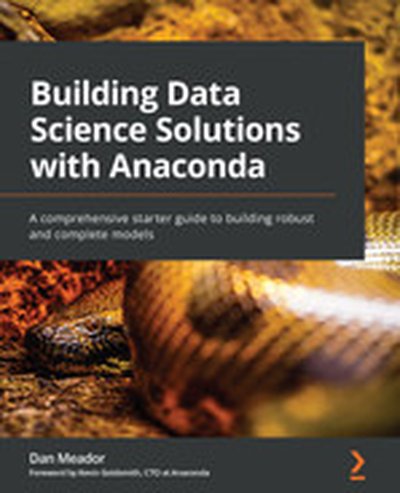
Building Data Science Solutions with Anaconda

Explore the comprehensive world of data science with "Building Data Science Solutions with Anaconda." This book covers essential topics like managing environments with Anaconda, detecting and overcoming bias, and ensuring model interpretability. Delve into practical tools and solutions, all explained in an approachable way to help you become proficient in data science workflows. What this Book will help me do Master environment management for data science projects using Anaconda and conda. Detect and mitigate dataset biases to ensure fair and ethical machine learning models. Learn advanced data science techniques with tools like NumPy, pandas, and Jupyter Notebooks. Understand and explain your machine learning models using LIME and SHAP. Grow your expertise in selecting and fine-tuning AI/ML algorithms for diverse applications. Author(s) None Meador combines extensive expertise in data science with a thorough understanding of Anaconda tools and open source software. With a background in engineering and AI model management, None provides an insightful perspective on the field. Their practical and analogy-driven approach makes technical concepts accessible to learners of any level. Who is it for? This book is ideal for data analysts, aspiring machine learning engineers, and data science professionals who wish to deepen their knowledge and make the most of Anaconda's capabilities. A prior understanding of Python and basic data science principles is assumed. If you're looking to optimize your data science workflows and gain hands-on practice, this book is for you.

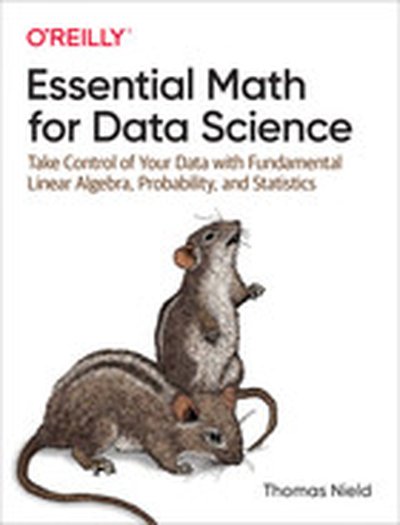
Essential Math for Data Science

Master the math needed to excel in data science, machine learning, and statistics. In this book author Thomas Nield guides you through areas like calculus, probability, linear algebra, and statistics and how they apply to techniques like linear regression, logistic regression, and neural networks. Along the way you'll also gain practical insights into the state of data science and how to use those insights to maximize your career. Learn how to: Use Python code and libraries like SymPy, NumPy, and scikit-learn to explore essential mathematical concepts like calculus, linear algebra, statistics, and machine learning Understand techniques like linear regression, logistic regression, and neural networks in plain English, with minimal mathematical notation and jargon Perform descriptive statistics and hypothesis testing on a dataset to interpret p-values and statistical significance Manipulate vectors and matrices and perform matrix decomposition Integrate and build upon incremental knowledge of calculus, probability, statistics, and linear algebra, and apply it to regression models including neural networks Navigate practically through a data science career and avoid common pitfalls, assumptions, and biases while tuning your skill set to stand out in the job market

We talked about: 

Gloria’s background Working with MATLAB, R, C, Python, and SQL Working at ICE Job hunting after the bootcamp Data engineering vs Data science Using Docker Keeping track of job applications, employers and questions Challenges during the job search and transition Concerns over data privacy Challenges with salary negotiation The importance of career coaching and support Skills learned at Spiced Retrospective on Gloria’s transition to data and advice Top skills that helped Gloria get the job Thoughts on cloud platforms Thoughts on bootcamps and courses Spiced graduation project Standing out in a sea of applicants The cohorts at Spiced Conclusion

Links:

LinkedIn: https://www.linkedin.com/in/gloria-quiceno/ Github: https://github.com/gdq12

MLOps Zoomcamp: https://github.com/DataTalksClub/mlops-zoomcamp

Join DataTalks.Club: https://datatalks.club/slack.html

Our events: https://datatalks.club/events.html

We talked about:

Jeff’s background Getting feedback to become a better teacher Going from engineering to teaching Jeff on becoming a curriculum writer Creating a curriculum that reinforces learning Jeff on starting his own data engineering bootcamp Shifting from teaching ML and data science to teaching data engineering Making sure that students get hired Screening bootcamp applicants Knowing when it’s time to apply for jobs The curriculum of JigsawLabs.io The market demand of Spark, Kafka, and Kubernetes (or lack thereof) Advice for data analysts that want to move into data engineering The market demand of ETL/ELT and DBT (or lack thereof) The importance of Python, SQL, and data modeling for data engineering roles Interview expectations How to get started in teaching The challenges of being a one-person company Teaching fundamentals vs the “shiny new stuff” JigsawLabs.io Finding Jeff online

Links: 

Jigsaw Labs: https://www.jigsawlabs.io/free Teaching my mom to code: https://www.youtube.com/watch?v=OfWwfTXGjBM Getting a Data Engineering Job Webinar with Jeff Katz: https://www.eventbrite.de/e/getting-a-data-engineering-job-tickets-310270877547

MLOps Zoomcamp: https://github.com/DataTalksClub/mlops-zoomcamp

Join DataTalks.Club: https://datatalks.club/slack.html

Our events: https://datatalks.club/events.html

Summary Many of the events, ideas, and objects that we try to represent through data have a high degree of connectivity in the real world. These connections are best represented and analyzed as graphs to provide efficient and accurate analysis of their relationships. TigerGraph is a leading database that offers a highly scalable and performant native graph engine for powering graph analytics and machine learning. In this episode Jon Herke shares how TigerGraph customers are taking advantage of those capabilities to achieve meaningful discoveries in their fields, the utilities that it provides for modeling and managing your connected data, and some of his own experiences working with the platform before joining the company.

Announcements

Hello and welcome to the Data Engineering Podcast, the show about modern data management When you’re ready to build your next pipeline, or want to test out the projects you hear about on the show, you’ll need somewhere to deploy it, so check out our friends at Linode. With their managed Kubernetes platform it’s now even easier to deploy and scale your workflows, or try out the latest Helm charts from tools like Pulsar and Pachyderm. With simple pricing, fast networking, object storage, and worldwide data centers, you’ve got everything you need to run a bulletproof data platform. Go to dataengineeringpodcast.com/linode today and get a $100 credit to try out a Kubernetes cluster of your own. And don’t forget to thank them for their continued support of this show! This episode is brought to you by Acryl Data, the company behind DataHub, the leading developer-friendly data catalog for the modern data stack. Open Source DataHub is running in production at several companies like Peloton, Optum, Udemy, Zynga and others. Acryl Data provides DataHub as an easy to consume SaaS product which has been adopted by several companies. Signup for the SaaS product at dataengineeringpodcast.com/acryl RudderStack helps you build a customer data platform on your warehouse or data lake. Instead of trapping data in a black box, they enable you to easily collect customer data from the entire stack and build an identity graph on your warehouse, giving you full visibility and control. Their SDKs make event streaming from any app or website easy, and their state-of-the-art reverse ETL pipelines enable you to send enriched data to any cloud tool. Sign up free… or just get the free t-shirt for being a listener of the Data Engineering Podcast at dataengineeringpodcast.com/rudder. Struggling with broken pipelines? Stale dashboards? Missing data? If this resonates with you, you’re not alone. Data engineers struggling with unreliable data need look no further than Monte Carlo, the leading end-to-end Data Observability Platform! Trusted by the data teams at Fox, JetBlue, and PagerDuty, Monte Carlo solves the costly problem of broken data pipelines. Monte Carlo monitors and alerts for data issues across your data warehouses, data lakes, dbt models, Airflow jobs, and business intelligence tools, reducing time to detection and resolution from weeks to just minutes. Monte Carlo also gives you a holistic picture of data health with automatic, end-to-end lineage from ingestion to the BI layer directly out of the box. Start trusting your data with Monte Carlo today! Visit http://www.dataengineeringpodcast.com/montecarlo?utm_source=rss&utm_medium=rss to learn more. Your host is Tobias Macey and today I’m interviewing Jon Herke about TigerGraph, a distributed native graph database

Interview

Introduction How did you get involved in the area of data management? Can you describe what TigerGraph is and the story behind it? What are some of the core use cases that you are focused on supporting? How has TigerGraph changed over the past 4 years since I spoke with Todd Blaschka at the Open Data Science Conference? How has the ecosystem of graph databases changed in usage and design in recent years? What are some of the persi

Hoje o seu podcast de dados favorito traz como é trabalhar com Data Science e Advanced Analytics na Bain & Company, uma das maiores e mais conceituadas consultorias do mundo! Para esse papo, trouxemos a Marianne Rodríguez (Senior Impact Lead), Danilo Carvalho (Data Science Manager), Martín Villanueva (Data Science Manager), Felipe Fiamozzini (Expert Associate Partner).

Nesse episódio eles falam sobre a jornada de quatro dias de trabalho na Bain, como equipes em diferentes países trabalham juntas, os projetos muito legais em que eles trabalham, e muito mais. Tá imperdível!

Nossos convidados Marianne Rodríguez Danilo Carvalho Martín Villanueva Felipe Fiamozzini

Acesse o link do post para ter acesso as referências e redes sociais dos convidados https://medium.com/data-hackers/advanced-analytics-na-bain-company-data-hackers-podcast-55-c23ece5cdba8

This is the second episode of a two-part series of Leaders of Analytics featuring global data science thought leader and influencer Felipe Flores. Felipe is a global thought leader and influencer in the field of data science and artificial intelligence. He is the founder of Data Futurology – a podcast and events company with more than 10,000 weekly listeners, Head of Data & Technology at Honeysuckle Health and co-organiser of Data Science Melbourne. In this episode we discuss: Felipe’s work at Honeysuckle HealthWhat Honeysuckle Health does and why the company was founded by two large insurance organisationsHow data-driven personalised health care works in practice and the typical outcomes patients seeHow data will be used to drive positive health outcomes in the future, and much more.

Michelle Carney began her career in the worlds of neuroscience and machine learning where she worked on the original Python Notebooks. As she fine-tuned ML models and started to notice discrepancies in the human experience of using these models, her interest turned towards UX. Michelle discusses how her work today as a UX researcher at Google impacts her work with teams leveraging ML in their applications. She explains how her interest in the crossover of ML and UX led her to start MLUX, a collection of meet-up events where professionals from both data science and design can connect and share methods and ideas. MLUX now hosts meet-ups in several locations as well as virtually. 

Our conversation begins with Michelle’s explanation of how she teaches data scientists to integrate UX into the development of their products. As a teacher, Michelle utilizes the IDEO Design Kit with her students at the Stanford School of Design (d.school). In her teaching she shares some of the unlearning that data scientists need to do when trying to approach their work with a UX perspective in her course, Designing Machine Learning.

Finally, we also discussed what UX designers need to know about designing for ML/AI. Michelle also talks about how model interpretability is a facet of UX design and why model accuracy isn’t always the most important element of a ML application. Michelle ends the conversation with an emphasis on the need for more interdisciplinary voices in the fields of ML and AI. 

Skip to a topic here:

Michelle talks about what drove her career shift from machine learning and neuroscience to user experience (1:15) Michelle explains what MLUX is (4:40) How to get ML teams on board with the importance of user experience (6:54) Michelle discusses the “unlearning” data scientists might have to do as they reconsider ML from a UX perspective (9:15) Brian and Michelle talk about the importance of considering the UX from the beginning of model development  (10:45) Michelle expounds on different ways to measure the effectiveness of user experience (15:10) Brian and Michelle talk about what is driving the increase in the need for designers on ML teams (19:59) Michelle explains the role of design around model interpretability and explainability (24:44)

Quotes from Today’s Episode “The first step to business value is the hurdle of adoption. A user has to be willing to try—and care—before you ever will get to business value.” - Brian O’Neill (13:01)

“There’s so much talk about business value and there’s very little talk about adoption. I think providing value to the end-user is the gateway to getting any business value. If you’re building anything that has a human in the loop that’s not fully automated, you can’t get to business value if you don’t get through the first gate of adoption.” - Brian O’Neill (13:17)

“I think that designers who are able to design for ambiguity are going to be the ones that tackle a lot of this AI and ML stuff.” - Michelle Carney (19:43)

“That’s something that we have to think about with our ML models. We’re coming into this user’s life where there’s a lot of other things going on and our model is not their top priority, so we should design it so that it fits into their ecosystem.” - Michelle Carney (3:27)

“If we aren’t thinking about privacy and ethics and explainability and usability from the beginning, then it’s not going to be embedded into our products. If we just treat usability of our ML models as a checkbox, then it just plays the role of a compliance function.” - Michelle Carney (11:52)

“I don’t think you need to know ML or machine learning in order to design for ML and machine learning. You don’t need to understand how to build a model, you need to understand what the model does. You need to understand what the inputs and the outputs are.” - Michelle Carney (18:45)

Links Twitter @mluxmeetup: https://twitter.com/mluxmeetup MLUX LinkedIn: https://www.linkedin.com/company/mlux/ MLUX YouTube channel: https://bit.ly/mluxyoutube Twitter @michelleRcarney: https://twitter.com/michelleRcarney IDEO Design Kit - https://tinyurl.com/2p984znh 

Automated decisions, personalised customer and employee experiences and data-driven decision-making are at the core of digital transformation in the 2020s. In other words, data is eating the world and all modern leaders must know how to use data, analytics and advanced data science to power their organisations. So, how do organisations set themselves up for success in a data-driven world, technically and culturally? To answer this question and many more relating to data-driven innovation and intrapreneurship, I recently spoke to Felipe Flores. Felipe is a global thought leader and influencer in the field of data science and artificial intelligence. He is the founder of Data Futurology – a podcast and events company with more than 10,000 weekly listeners, Head of Data & Technology at Honeysuckle Health and co-organiser of Data Science Melbourne. In this first episode of a two-part series of Leaders of Analytics featuring Felipe, we discuss: Felipe’s journey from a young backpacker to a global data science executiveWhat Data Futurology does and why Felipe started itHow to innovate with data scienceThe biggest trends in data science in the next 1-3 yearsWhat the perfect data-driven organisation looks like and much more.Felipe on LinkedIn: https://www.linkedin.com/in/felipe-flores-analytics/ Data Futurology: https://www.datafuturology.com/ Honeysuckle Health: https://www.honeysucklehealth.com.au/

We talked about:

Christopher’s background The essence of DataOps Also known as Agile Analytics Operations or DevOps for Data Science Defining processes and automating them (defining “done” and “good”) The balance between heroism and fear (avoiding deferred value) The Lean approach Avoiding silos The 7 steps to DataOps Wanting to become replaceable DataOps is doable Testing tools DataOps vs MLOps The Head Chef at Data Kitchen What’s grilling at Data Kitchen? The DataOps Cookbook

Links:

DataOps Manifesto website: https://dataopsmanifesto.org/en/ DataOps Cookbook: https://dataops.datakitchen.io/pf-cookbook Recipes for DataOps Success: https://dataops.datakitchen.io/pf-recipes-for-dataops-success DataOps Certification Course: https://info.datakitchen.io/training-certification-dataops-fundamentals DataOps Blog: https://datakitchen.io/blog/ DataOps Maturity Model: https://datakitchen.io/dataops-maturity-model/ DataOps Webinars: https://datakitchen.io/webinars/

Join DataTalks.Club: https://datatalks.club/slack.html  

Our events: https://datatalks.club/events.html

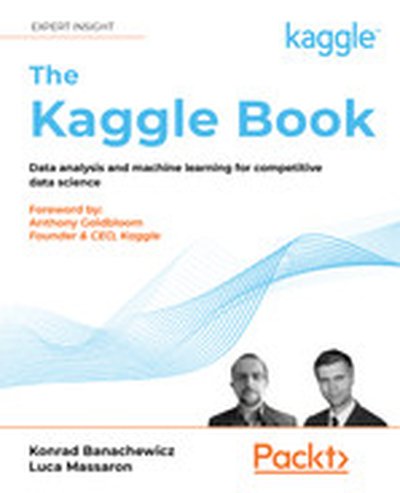
The Kaggle Book

The Kaggle Book is an essential guide for anyone aiming to excel in data science through Kaggle competitions. With expert advice from Kaggle Grandmasters, you'll learn practical techniques for handling data, creating robust models, and improving your ranking in competitions. This book is packed with insights on advanced topics like ensembling, validation, and evaluation metrics. What this Book will help me do Master the Kaggle platform, including its Notebooks, Datasets, and Discussion capabilities. Enhance model performance using techniques like feature engineering, AutoML, and ensembling strategies. Apply advanced validation schemes to improve the reliability of your predictions. Tackle diverse competition types, including NLP, computer vision, and optimization challenges. Build a professional portfolio to showcase your data science expertise and attract career opportunities. Author(s) Konrad Banachewicz and Luca Massaron, authoritative Kaggle Grandmasters, bring their wealth of experience in competitive data science to this book. They have collectively competed in numerous Kaggle challenges and possess deep insights into what differentiates successful Kagglers. Their guidance combines practicality with expertise, making this book a must-have for aspiring data scientists looking to make an impact. Who is it for? This book is tailored for data analysts and scientists interested in enhancing their Kaggle performance, as well as those new to Kaggle who wish to explore competitive data science. It suits individuals with basic knowledge of machine learning, aiming to develop and demonstrate their skills further. The content is valuable for practitioners aiming to build a professional profile or secure roles in the tech industry.

Dashboards are at the forefront of today’s episode, and so I will be responding to some reader questions who wrote in to one of my weekly mailing list missives about this topic. I’ve not talked much about dashboards despite their frequent appearance in data product UIs, and in this episode, I’ll explain why. Here are some of the key points and the original questions asked in this episode:

My introduction to dashboards (00:00) Some overall thoughts on dashboards (02:50) What the risk is to the user if the insights are wrong or misinterpreted (4:56) Your data outputs create an experience, whether intentional or not (07:13) John asks: How do we figure out exactly what the jobs are that the dashboard user is trying to do? Are they building next year's budget or looking for broken widgets?  What does this user value today? Is a low resource utilization percentage something to be celebrated or avoided for this dashboard user today?  (13:05) Value is not intrinsically in the dashboard (18:47) Mareike asks: How do we provide Information in a way that people are able to act upon the presented Information?  How do we translate the presented Information into action? What can we learn about user expectation management when designing dashboard/analytics solutions? (22:00) The change towards predictive and prescriptive analytics (24:30) The upfront work that needs to get done before the technology is in front of the user (30:20) James asks: How can we get people to focus less on the assumption-laden and often restrictive term "dashboard", and instead worry about designing solutions focused on outcomes for particular personas and workflows that happen to have some or all of the typical ingredients associated with the catch-all term "dashboards?” (33:30) Stop measuring the creation of outputs and focus on the user workflows and the jobs to be done (37:00) The data product manager shouldn’t just be focused on deliverables (42:28)

Quotes from Today’s Episode “The term dashboards is almost meaningless today, it seems to mean almost any home default screen in a data product. It also can just mean a report. For others, it means an entire monitoring tool, for some, it means the summary of a bunch of data that lives in some other reports. The terms are all over the place.”- Brian (@rhythmspice) (01:36)

“The big idea here that I really want leaders to be thinking about here is you need to get your teams focused on workflows—sometimes called jobs to be done—and the downstream decisions that users want to make with machine-learning or analytical insights. ” - Brian (@rhythmspice) (06:12)

“This idea of human-centered design and user experience is really about trying to fit the technology into their world, from their perspective as opposed to building something in isolation where we then try to get them to adopt our thing.  This may be out of phase with the way people like to do their work and may lead to a much higher barrier to adoption.” - Brian (@rhythmspice) (14:30)

“Leaders who want their data science and analytics efforts to show value really need to understand that value is not intrinsically in the dashboard or the model or the engineering or the analysis.” - Brian (@rhythmspice) (18:45)

“There's a whole bunch of plumbing that needs to be done, and it’s really difficult. The tool that we end up generating in those situations tends to be a tool that’s modeled around the data and not modeled around [the customers] mental model of this space, the customer purchase space, the marketing spend space, the sales conversion, or propensity-to-buy space.” - Brian (@rhythmspice) (27:48)

“Data product managers should be these problem owners, if there has to be a single entity for this. When we’re talking about different initiatives in the enterprise or for a commercial software company, it’s really sits at this product management function.”  - Brian (@rhythmspice) (34:42)

“It’s really important that [data product managers] are not just focused on deliverables; they need to really be the ones that summarize the problem space for the entire team, and help define a strategy with the entire team that clarifies the direction the team is going in. They are not a project manager; they are someone responsible for delivering value.” - Brian (@rhythmspice) (42:23)

Links Referenced:

Mailing List: https://designingforanalytics.com/list CED UX Framework for Advanced Analytics:Original Article: https://designingforanalytics.com/ced Podcast/Audio Episode: https://designingforanalytics.com/resources/episodes/086-ced-my-ux-framework-for-designing-analytics-tools-that-drive-decision-making/ 

My LinkedIn Live about Measuring the Usability of Data Products: https://www.linkedin.com/video/event/urn:li:ugcPost:6911800738209800192/ Work With Me / My Services: https://designingforanalytics.com/services

We talked about:

Stefan’s background Applications of machine learning in healthcare Sidekick Health – gamified therapeutics How is working for King different from Sidekick Health? The rewards systems in gamified apps The importance of building a strong foundation for a data science team The challenges of building an app in the healthcare industry Dealing with ethics issues Sidekick Health’s personalized recommendations and content The importance of having the right approach in A/B tests (strong analytics and good data) The importance of having domain knowledge to work as a data professional in the healthcare industry Making a data-driven company Risks for Sidekick Health Sidekick Health growth strategy Using AI to help people live better lives

Links:

LinkedIn: https://www.linkedin.com/in/stefanfreyrgudmundsson/  Job listings: https://sidekickhealth.bamboohr.com/jobs/

Join DataTalks.Club: https://datatalks.club/slack.html

Our events: https://datatalks.club/events.html

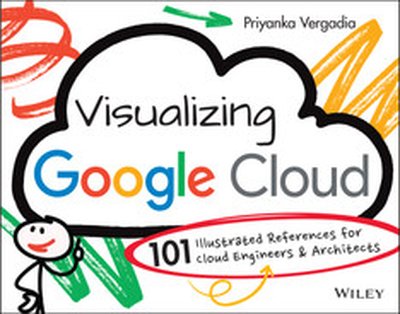
Visualizing Google Cloud

Easy-to-follow visual walkthrough of every important part of the Google Cloud Platform The Google Cloud Platform incorporates dozens of specialized services that enable organizations to offload technological needs onto the cloud. From routine IT operations like storage to sophisticated new capabilities including artificial intelligence and machine learning, the Google Cloud Platform offers enterprises the opportunity to scale and grow efficiently. In Visualizing Google Cloud: Illustrated References for Cloud Engineers & Architects, Google Cloud expert Priyanka Vergadia delivers a fully illustrated, visual guide to matching the best Google Cloud Platform services to your own unique use cases. After a brief introduction to the major categories of cloud services offered by Google, the author offers approximately 100 solutions divided into eight categories of services included in Google Cloud Platform: Compute Storage Databases Data Analytics Data Science, Machine Learning and Artificial Intelligence Application Development and Modernization with Containers Networking Security You’ll find richly illustrated flowcharts and decision diagrams with straightforward explanations in each category, making it easy to adopt and adapt Google’s cloud services to your use cases. With coverage of the major categories of cloud models—including infrastructure-, containers-, platforms-, functions-, and serverless—and discussions of storage types, databases and Machine Learning choices, Visualizing Google Cloud: Illustrated References for Cloud Engineers & Architects is perfect for Every Google Cloud enthusiast, of course. It is for anyone who is planning a cloud migration or new cloud deployment. It is for anyone preparing for cloud certification, and for anyone looking to make the most of Google Cloud. It is for cloud solutions architects, IT decision-makers, and cloud data and ML engineers. In short, this book is for YOU.

We talked about:

Liesbeth’s background What is design? The importance of interaction in design Design as a process (Double Diamond technique) How long does it take to go from an idea to finishing the second diamond? Design thinking (Google’s PAIR) What is a Design Sprint and who should participate in it? Why should data specialists care about design? Challenging your task-giver (asking “why”) How to avoid the “Chinese whisper game” (reiterating the problem) Defining the roadmap for data science teams What is innovation? Bringing innovation to your management Task force-team approach to solving problems Innovation, resource management issues, and using data to back your ideas Words of advice for those interested in design and innovation

Links:

LinkedIn: https://www.linkedin.com/in/liesbeth-dingemans/ Medium posts on design, innovation, art and AI: https://medium.com/@liesbethmd

Join DataTalks.Club: https://datatalks.club/slack.html

Our events: https://datatalks.club/events.html

Mike Oren, Head of Design Research at Klaviyo, joins today’s episode to discuss how we do UX research for data products—and why qualitative research matters. Mike and I recently met in Lou Rosenfeld’s Quant vs. Qual group, which is for people interested in both qualitative and quantitative methods for conducting user research. Mike goes into the details on how Klaviyo and his teams are identifying what customers need through research, how they use data to get to that point, what data scientists and non-UX professionals need to know about conducting UX research, and some tips for getting started quickly. He also explains how Klaviyo’s data scientists—not just the UX team—are directly involved in talking to users to develop an understanding of their problem space.

Klaviyo is a communications platform that allows customers to personalize email and text messages powered by data. In this episode, Mike talks about how to ask research questions to get at what customers actually need. Mikes also offers some excellent “getting started” techniques for conducting interviews (qualitative research), the kinds of things to be aware of and avoid when interviewing users, and some examples of the types of findings you might learn. He also gives us some examples of how these research insights become features or solutions in the product, and how they interpret whether their design choices are actually useful and usable once a customer interacts with them. I really enjoyed Mike’s take on designing data-driven solutions, his ideas on data literacy (for both designers, and users), and hearing about the types of dinner conversations he has with his wife who is an economist ;-) . Check out our conversation for Mike’s take on the relevance of research for data products and user experience. 

In this episode, we cover:

Using “small data” such as qualitative user feedback  to improve UX and data products—and the #1 way qualitative data beats quantitative data  (01:45) Mike explains what Klaviyo is, and gives an example of how they use qualitative information to inform the design of this communications product  (03:38) Mike discusses Klaviyo data scientists doing research and their methods for conducting research with their customers (09:45) Mike’s tips on what to avoid when you’re conducting research so you get objective, useful feedback on your data product  (12:45) Why dashboards are Mike’s pet peeve (17:45) Mike’s thoughts about data illiteracy, how much design needs to accommodate it, and how design can help with it (22:36) How Mike conveys the research to other teams that help mitigate risk  (32:00) Life with an economist! (36:00) What the UX and design community needs to know about data (38:30)

Quotes from Today’s Episode “I actually tell my team never to do any qualitative research around preferences…Preferences are usually something that you’re not going to get a reliable enough sample from if you’re just getting it qualitatively, just because preferences do tend to vary a lot from individual to individual; there’s lots of other factors. ”- Mike (@mikeoren) (03:05)

“[Discussing a product design choice influenced by research findings]: Three options gave [the customers a] feeling of more control. In terms of what actual options they wanted, two options was really the most practical, but the thing was that we weren’t really answering the main question that they had, which was what was going to happen with their data if they restarted the test with a new algorithm that was being used. That was something that we wouldn’t have been able to identify if we were only looking at the quantitative data if we were only serving them; we had to get them to voice through their concerns about it.” - Mike (@mikeoren) (07:00)

“When people create dashboards, they stick everything on there. If a stakeholder within the organization asked for a piece of data, that goes on the dashboard. If one time a piece of information was needed with other pieces of information that are already on the dashboard, that now gets added to the dashboard. And so you end up with dashboards that just have all these different things on them…you no longer have a clear line of signal.” - Mike (@mikeoren) (17:50)

“Part of the experience we need to talk about when we talk about experiencing data is that the experience can happen in more additional vehicles besides a dashboard: A text message, an email notification, there’s other ways to experience the effects of good, intelligent data product work. Pushing the right information at the right time instead of all the information all the time.” - Brian (@rhythmspice) (20:00)

“[Data illiteracy is] everyone’s problem. Depending upon what type of data we’re talking about, and what that product is doing, if an organization is truly trying to make data-driven decisions, but then they haven’t trained their leaders to understand the data in the right way, then they’re not actually making data-driven decisions; they’re really making instinctual decisions, or they’re pretending that they’re using the data.” - Mike (@mikeoren)(23:50)

“Sometimes statistical significance doesn’t matter to your end-users. More often than not organizations aren’t looking for 95% significance. Usually, 80% is actually good enough for most business decisions. Depending upon the cost of getting a high level of confidence, they might not even really value that additional 15% significance.” - Mike (@mikeoren) (31:06)

“In order to effectively make software easier for people to use, to make it useful to people, [designers have] to learn a minimum amount about that medium in order to start crafting those different pieces of the experience that we’re preparing to provide value to people. We’re running into the same thing with data applications where it’s not enough to just know that numbers exist and those are a thing, or to know some graphic primitives of line charts, bar charts, et cetera. As a designer, we have to understand that medium well enough that we can have a conversation with our partners on the data science team.” - Mike (@mikeoren) (39:30)

We talked about:

Marijn’s background Standing out in data science Doing the opposite of what people tell you Don’t shoot the messenger (carefully sharing your findings) Advising the seniors Bite off more than you can chew, then chew Marijn’s side projects (finding value in doing things you find interesting) Building a project portfolio Marijn’s NGO project The importance of a team Open source intelligence (OSINT) The importance of soft skills for data experts Marijn’s LinkedIn growth strategy and tips

Links:  

Twitter: https://twitter.com/MarijnMarkus LinkedIn: https://www.linkedin.com/in/marijnmarkus/

Join DataTalks.Club: https://datatalks.club/slack.html

Our events: https://datatalks.club/events.html