talk-data.com talk-data.com

Topic

DataViz

Data Visualization

bi charts dashboards

434

tagged

Activity Trend

43 peak/qtr
2020-Q1 2026-Q1

Activities

434 activities · Newest first

Data Insight Foundations: Step-by-Step Data Analysis with R

This book is an essential guide designed to equip you with the vital tools and knowledge needed to excel in data science. Master the end-to-end process of data collection, processing, validation, and imputation using R, and understand fundamental theories to achieve transparency with literate programming, renv, and Git--and much more. Each chapter is concise and focused, rendering complex topics accessible and easy to understand. Data Insight Foundations caters to a diverse audience, including web developers, mathematicians, data analysts, and economists, and its flexible structure allows enables you to explore chapters in sequence or navigate directly to the topics most relevant to you. While examples are primarily in R, a basic understanding of the language is advantageous but not essential. Many chapters, especially those focusing on theory, require no programming knowledge at all. Dive in and discover how to manipulate data, ensure reproducibility, conduct thorough literature reviews, collect data effectively, and present your findings with clarity. What You Will Learn Data Management: Master the end-to-end process of data collection, processing, validation, and imputation using R. Reproducible Research: Understand fundamental theories and achieve transparency with literate programming, renv, and Git. Academic Writing: Conduct scientific literature reviews and write structured papers and reports with Quarto. Survey Design: Design well-structured surveys and manage data collection effectively. Data Visualization: Understand data visualization theory and create well-designed and captivating graphics using ggplot2. Who this Book is For Career professionals such as research and data analysts transitioning from academia to a professional setting where production quality significantly impacts career progression. Some familiarity with data analytics processes and an interest in learning R or Python are ideal.
In this episode I'll show you what it takes to land data analyst jobs! I'll provide in-depth insights and tips for six data analyst positions with salaries ranging from $35K to $200K-- and why should you apply even if you don't meet all the requirements. 💌 Join 10k+ aspiring data analysts & get my tips in your inbox weekly 👉 https://www.datacareerjumpstart.com/newsletter 🆘 Feeling stuck in your data journey? Come to my next free "How to Land Your First Data Job" training 👉 https://www.datacareerjumpstart.com/training 👩‍💻 Want to land a data job in less than 90 days? 👉 https://www.datacareerjumpstart.com/daa 👔 Ace The Interview with Confidence 👉 https://www.datacareerjumpstart.com/interviewsimulator No College Degree As A Data Analyst Playlist: https://youtu.be/mSWtnjq4LRE?si=FlfChqSxIPBXc_Lb ⌚ TIMESTAMPS Data Analyst Jobs: How Much $$$ Could You ACTUALLY Make??? 00:00 - Introduction 00:21 - Data Analyst Job #1: Data Specialist ($35k) 04:00 - Data Analyst Job #2: Business and Data Analyst ($55k) 07:48 - Data Analyst Job #3: Data Visualization Analyst ($75k) 10:21 - Data Analyst Job #4: Senior Financial Analyst ($90k) 13:04 - Data Analyst Job #5: Senior Investment Operations Data Analyst ($125k) 14:35 - Data Analyst Job #6: Business Intelligence Engineer ($107k to $189k) 🔗 CONNECT WITH AVERY 🎥 YouTube Channel: https://www.youtube.com/@averysmith 🤝 LinkedIn: https://www.linkedin.com/in/averyjsmith/ 📸 Instagram: https://instagram.com/datacareerjumpstart 🎵 TikTok: https://www.tiktok.com/@verydata 💻 Website: https://www.datacareerjumpstart.com/ Mentioned in this episode: Join the last cohort of 2025! The LAST cohort of The Data Analytics Accelerator for 2025 kicks off on Monday, December 8th and enrollment is officially open!

To celebrate the end of the year, we’re running a special End-of-Year Sale, where you’ll get: ✅ A discount on your enrollment 🎁 6 bonus gifts, including job listings, interview prep, AI tools + more

If your goal is to land a data job in 2026, this is your chance to get ahead of the competition and start strong.

👉 Join the December Cohort & Claim Your Bonuses: https://DataCareerJumpstart.com/daa https://www.datacareerjumpstart.com/daa

Dashboards are everywhere in the data industry, but are they being used effectively? Many professionals find themselves creating dashboards that end up underutilized or misunderstood. The key is not just in the data presented, but in how it's communicated and used. How can you rethink your approach to dashboarding to ensure it aligns with business goals? What methods can you employ to engage users and drive meaningful actions? Lee is the President at DecisionViz, who provides training and consulting to organizations to improve their people, process, and culture around visualization and storytelling. He's a course creator for the University of Chicago, an instructor for TDWI, and an Adjunct Faculty Instructor for NYU School of Professional Studies. Lee is also a Tableau Certified Associate Consultant, 4 times Tableau Ambassador, and a long-term Tableau Partner. Previously, he was a Research Advisor for the International Institute of Analytics, the Founder of the 501c data community, and a senior manager at Nokia. In the episode, Richie and Lee explore the limitations of traditional dashboards, the importance of a product mindset in data visualization, the role of communication and standardization in analytics, the intersection of AI with dashboarding, and much more. Links Mentioned in the Show: DecisionVizConnect with LeeCourse: Understanding Data VisualizationRelated Episode: Data Storytelling and Visualization with Lea Pica from Present Beyond MeasureSign up to attend RADAR: Skills Edition New to DataCamp? Learn on the go using the DataCamp mobile appEmpower your business with world-class data and AI skills with DataCamp for business

Supported by Our Partners • WorkOS — The modern identity platform for B2B SaaS • CodeRabbit — Cut code review time and bugs in half • Augment Code — AI coding assistant that pro engineering teams love — How do you architect a live streaming system to deal with more load than it’s ever been done before? Today, we hear from an architect of such a system: Ashutosh Agrawal, formerly Chief Architect of JioCinema (and currently Staff Software Engineer at Google DeepMind.) We take a deep dive into video streaming architecture, tackling the complexities of live streaming at scale (at tens of millions of parallel streams) and the challenges engineers face in delivering seamless experiences. We talk about the following topics:  • How large-scale live streaming architectures are designed • Tradeoffs in optimizing performance • Early warning signs of streaming failures and how to detect them • Why capacity planning for streaming is SO difficult • The technical hurdles of streaming in APAC regions • Why Ashutosh hates APMs (Application Performance Management systems) • Ashutosh’s advice for those looking to improve their systems design expertise • And much more! — Timestamps (00:00) Intro (01:28) The world record-breaking live stream and how support works with live events (05:57) An overview of streaming architecture (21:48) The differences between internet streaming and traditional television.l (22:26) How adaptive bitrate streaming works (25:30) How throttling works on the mobile tower side  (27:46) Leading indicators of streaming problems and the data visualization needed (31:03) How metrics are set  (33:38) Best practices for capacity planning  (35:50) Which resources are planned for in capacity planning  (37:10) How streaming services plan for future live events with vendors (41:01) APAC specific challenges (44:48) Horizontal scaling vs. vertical scaling  (46:10) Why auto-scaling doesn’t work (47:30) Concurrency: the golden metric to scale against (48:17) User journeys that cause problems  (49:59) Recommendations for learning more about video streaming  (51:11) How Ashutosh learned on the job (55:21) Advice for engineers who would like to get better at systems (1:00:10) Rapid fire round — The Pragmatic Engineer deepdives relevant for this episode: • Software architect archetypes https://newsletter.pragmaticengineer.com/p/software-architect-archetypes  • Engineering leadership skill set overlaps https://newsletter.pragmaticengineer.com/p/engineering-leadership-skillset-overlaps  • Software architecture with Grady Booch https://newsletter.pragmaticengineer.com/p/software-architecture-with-grady-booch — See the transcript and other references from the episode at ⁠⁠https://newsletter.pragmaticengineer.com/podcast⁠⁠ — Production and marketing by ⁠⁠⁠⁠⁠⁠⁠⁠https://penname.co/⁠⁠⁠⁠⁠⁠⁠⁠. For inquiries about sponsoring the podcast, email [email protected].

Get full access to The Pragmatic Engineer at newsletter.pragmaticengineer.com/subscribe

Supported by Our Partners • WorkOS — The modern identity platform for B2B SaaS • CodeRabbit — Cut code review time and bugs in half • Augment Code — AI coding assistant that pro engineering teams love — How do you architect a live streaming system to deal with more load than it’s ever been done before? Today, we hear from an architect of such a system: Ashutosh Agrawal, formerly Chief Architect of JioCinema (and currently Staff Software Engineer at Google DeepMind.) We take a deep dive into video streaming architecture, tackling the complexities of live streaming at scale (at tens of millions of parallel streams) and the challenges engineers face in delivering seamless experiences. We talk about the following topics:  • How large-scale live streaming architectures are designed • Tradeoffs in optimizing performance • Early warning signs of streaming failures and how to detect them • Why capacity planning for streaming is SO difficult • The technical hurdles of streaming in APAC regions • Why Ashutosh hates APMs (Application Performance Management systems) • Ashutosh’s advice for those looking to improve their systems design expertise • And much more! — Timestamps (00:00) Intro (01:28) The world record-breaking live stream and how support works with live events (05:57) An overview of streaming architecture (21:48) The differences between internet streaming and traditional television.l (22:26) How adaptive bitrate streaming works (25:30) How throttling works on the mobile tower side  (27:46) Leading indicators of streaming problems and the data visualization needed (31:03) How metrics are set  (33:38) Best practices for capacity planning  (35:50) Which resources are planned for in capacity planning  (37:10) How streaming services plan for future live events with vendors (41:01) APAC specific challenges (44:48) Horizontal scaling vs. vertical scaling  (46:10) Why auto-scaling doesn’t work (47:30) Concurrency: the golden metric to scale against (48:17) User journeys that cause problems  (49:59) Recommendations for learning more about video streaming  (51:11) How Ashutosh learned on the job (55:21) Advice for engineers who would like to get better at systems (1:00:10) Rapid fire round — The Pragmatic Engineer deepdives relevant for this episode: • Software architect archetypes https://newsletter.pragmaticengineer.com/p/software-architect-archetypes  • Engineering leadership skill set overlaps https://newsletter.pragmaticengineer.com/p/engineering-leadership-skillset-overlaps  • Software architecture with Grady Booch https://newsletter.pragmaticengineer.com/p/software-architecture-with-grady-booch — See the transcript and other references from the episode at ⁠⁠https://newsletter.pragmaticengineer.com/podcast⁠⁠ — Production and marketing by ⁠⁠⁠⁠⁠⁠⁠⁠https://penname.co/⁠⁠⁠⁠⁠⁠⁠⁠. For inquiries about sponsoring the podcast, email [email protected].

Get full access to The Pragmatic Engineer at newsletter.pragmaticengineer.com/subscribe

Help us become the #1 Data Podcast by leaving a rating & review! We are 67 reviews away! Cole Nussbaumer Knaflic, author of 'Storytelling with Data' and 'Daphne Draws Data,' shares her journey from studying mathematics to becoming a leading figure in data visualization. Cole discusses her career path, the importance of clear communication in data visualization, and tips on how to make complex data understandable. 💌 Join 30k+ aspiring data analysts & get my tips in your inbox weekly 👉 https://www.datacareerjumpstart.com/newsletter 🆘 Feeling stuck in your data journey? Come to my next free "How to Land Your First Data Job" training 👉 https://www.datacareerjumpstart.com/training 👩‍💻 Want to land a data job in less than 90 days? 👉 https://www.datacareerjumpstart.com/daa 👔 Ace The Interview with Confidence 👉 https://www.datacareerjumpstart.com//interviewsimulator ⌚ TIMESTAMPS 00:51 Cole's Background and Career 06:25 The Importance of Effective Data Communication 13:07 Tailoring Data Presentations to Different Audiences 16:06 Practical Tips for Data Visualization 20:23 Advice for Aspiring Data Professionals 26:36 Introducing Her New Book (Daphne Draws Data)  🔗 CONNECT WITH  COLE KNAFLIC 🤝 LinkedIn: https://www.linkedin.com/in/colenussbaumer 📕 Storytelling with Data by Cole Knafflic: https://amzn.to/3ZYHhsG 📒 Daphne Draws Data: https://amzn.to/4fJkIOt 📖 Books: https://www.storytellingwithdata.com/books 🔗 CONNECT WITH AVERY 🎥 YouTube Channel 🤝 LinkedIn 📸 Instagram 🎵 TikTok 💻 Website Mentioned in this episode: Join the last cohort of 2025! The LAST cohort of The Data Analytics Accelerator for 2025 kicks off on Monday, December 8th and enrollment is officially open!

To celebrate the end of the year, we’re running a special End-of-Year Sale, where you’ll get: ✅ A discount on your enrollment 🎁 6 bonus gifts, including job listings, interview prep, AI tools + more

If your goal is to land a data job in 2026, this is your chance to get ahead of the competition and start strong.

👉 Join the December Cohort & Claim Your Bonuses: https://DataCareerJumpstart.com/daa https://www.datacareerjumpstart.com/daa

As we look back at 2024, we're highlighting some of our favourite episodes of the year, and with 100 of them to choose from, it wasn't easy! The four guests we'll be recapping with are: Lea Pica - A celebrity in the data storytelling and visualisation space. Richie and Lea cover the full picture of data presentation, how to understand your audience, how to leverage hollywood storytelling and more. Out December 19.Alex Banks - Founder of Sunday Signal. Adel and Alex cover Alex’s journey into AI and what led him to create Sunday Signal, the potential of AI, prompt engineering at its most basic level, chain of thought prompting, the future of LLMs and more. Out December 23.Don Chamberlin - The renowned co-inventor of SQL. Richie and Don explore the early development of SQL, how it became standardized, the future of SQL through NoSQL and SQL++ and more. Out December 26.Tom Tunguz - general Partner at Theory Ventures, a $235m VC firm. Richie and Tom explore trends in generative AI, cloud+local hybrid workflows, data security, the future of business intelligence and data analytics, AI in the corporate sector and more. Out December 30. Rapid change seems to be the new norm within the data and AI space, and due to the ecosystem constantly changing, it can be tricky to keep up. Fortunately, any self-respecting venture capitalist looking into data and AI will stay on top of what’s changing and where the next big breakthroughs are likely to come from. We all want to know which important trends are emerging and how we can take advantage of them, so why not learn from a leading VC.  Tomasz Tunguz is a General Partner at Theory Ventures, a $235m early-stage venture capital firm. He blogs sat tomtunguz.com & co-authored Winning with Data. He has worked or works with Looker, Kustomer, Monte Carlo, Dremio, Omni, Hex, Spot, Arbitrum, Sui & many others. He was previously the product manager for Google's social media monetization team, including the Google-MySpace partnership, and managed the launches of AdSense into six new markets in Europe and Asia. Before Google, Tunguz developed systems for the Department of Homeland Security at Appian Corporation.  In the episode, Richie and Tom explore trends in generative AI, the impact of AI on professional fields, cloud+local hybrid workflows, data security, and changes in data warehousing through the use of integrated AI tools, the future of business intelligence and data analytics, the challenges and opportunities surrounding AI in the corporate sector. You'll also get to discover Tom's picks for the hottest new data startups. Links Mentioned in the Show: Tom’s BlogTheory VenturesArticle: What Air Canada Lost In ‘Remarkable’ Lying AI Chatbot Case[Course] Implementing AI Solutions in BusinessRelated Episode: Making Better Decisions using Data & AI with Cassie Kozyrkov, Google's First Chief Decision ScientistSign up to RADAR: AI...

As we look back at 2024, we're highlighting some of our favourite episodes of the year, and with 100 of them to choose from, it wasn't easy! The four guests we'll be recapping with are: Lea Pica - A celebrity in the data storytelling and visualisation space. Richie and Lea cover the full picture of data presentation, how to understand your audience, how to leverage hollywood storytelling and more. Out December 19.Alex Banks - Founder of Sunday Signal. Adel and Alex cover Alex’s journey into AI and what led him to create Sunday Signal, the potential of AI, prompt engineering at its most basic level, chain of thought prompting, the future of LLMs and more. Out December 23.Don Chamberlin - The renowned co-inventor of SQL. Richie and Don explore the early development of SQL, how it became standardized, the future of SQL through NoSQL and SQL++ and more. Out December 26.Tom Tunguz - general Partner at Theory Ventures, a $235m VC firm. Richie and Tom explore trends in generative AI, cloud+local hybrid workflows, data security, the future of business intelligence and data analytics, AI in the corporate sector and more. Out December 30. For our 200th episode, we bring you a special guest and taking a walk down memory lane—to the creation and development of one of the most popular programming languages in the world. Don Chamberlin is renowned as the co-inventor of SQL (Structured Query Language), the predominant database language globally, which he developed with Raymond Boyce in the mid-1970s. Chamberlin's professional career began at IBM Research in Yorktown Heights, New York, following a summer internship there during his academic years. His work on IBM's System R project led to the first SQL implementation and significantly advanced IBM’s relational database technology. His contributions were recognized when he was made an IBM Fellow in 2003 and later a Fellow of the Computer History Museum in 2009 for his pioneering work on SQL and database architectures. Chamberlin also contributed to the development of XQuery, an XML query language, as part of the W3C, which became a W3C Recommendation in January 2007. Additionally, he holds fellowships with ACM and IEEE and is a member of the National Academy of Engineering. In the episode, Richie and Don explore his early career at IBM and the development of his interest in databases alongside Ray Boyce, the database task group (DBTG), the transition to relational databases and the early development of SQL, the commercialization and adoption of SQL, how it became standardized, how it evolved and spread via open source, the future of SQL through NoSQL and SQL++ and much more.  Links Mentioned in the Show: The first-ever journal paper on SQL. SEQUEL: A Structured English Query LanguageDon’s Book: SQL++ for SQL Users: A TutorialSystem R: Relational approach to database managementSQL CoursesSQL Articles, Tutorials and Code-AlongsRelated Episode: Scaling Enterprise Analytics with...

As we look back at 2024, we're highlighting some of our favourite episodes of the year, and with 100 of them to choose from, it wasn't easy! The four guests we'll be recapping with are: Lea Pica - A celebrity in the data storytelling and visualisation space. Richie and Lea cover the full picture of data presentation, how to understand your audience, how to leverage hollywood storytelling and more. Out December 19.Alex Banks - Founder of Sunday Signal. Adel and Alex cover Alex’s journey into AI and what led him to create Sunday Signal, the potential of AI, prompt engineering at its most basic level, chain of thought prompting, the future of LLMs and more. Out December 23.Don Chamberlin - The renowned co-inventor of SQL. Richie and Don explore the early development of SQL, how it became standardized, the future of SQL through NoSQL and SQL++ and more. Out December 26.Tom Tunguz - general Partner at Theory Ventures, a $235m VC firm. Richie and Tom explore trends in generative AI, cloud+local hybrid workflows, data security, the future of business intelligence and data analytics, AI in the corporate sector and more. Out December 30. Since the launch of ChatGPT, one of the trending terms outside of ChatGPT itself has been prompt engineering. This act of carefully crafting your instructions is treated as alchemy by some and science by others. So what makes an effective prompt? Alex Banks has been building and scaling AI products since 2021. He writes Sunday Signal, a newsletter offering a blend of AI advancements and broader thought-provoking insights. His expertise extends to social media platforms on X/Twitter and LinkedIn, where he educates a diverse audience on leveraging AI to enhance productivity and transform daily life. In the episode, Alex and Adel cover Alex’s journey into AI and what led him to create Sunday Signal, the potential of AI, prompt engineering at its most basic level, strategies for better prompting, chain of thought prompting, prompt engineering as a skill and career path, building your own AI tools rather than using consumer AI products, AI literacy, the future of LLMs and much more.  Links Mentioned in the Show: [Alex’s Free Course on DataCamp] Understanding Prompt EngineeringSunday SignalPrinciples by Ray Dalio: Life and WorkRelated Episode: [DataFramed AI Series #1] ChatGPT and the OpenAI Developer EcosystemRewatch sessions from RADAR: The Analytics Edition New to DataCamp? Learn on the go using the DataCamp mobile appEmpower your business with world-class data and AI skills with DataCamp for business

Hamilton Ulmer is working at the intersection of UI, Exploratory Data Analysis, and SQL at MotherDuck, and he's built a long career in EDA. Hamilton and Tristan dive deep into the history of exploratory data analysis. Even if you spend most of your time below the frontend layer of the stack, it is important to understand the trends in both the practice of data visualization  and the technologies that underlie that practice. For full show notes and to read 6+ years of back issues of the podcast's companion newsletter, head to https://roundup.getdbt.com. The Analytics Engineering Podcast is sponsored by dbt Labs.

Key Takeaways: 1. Why Plotly is a Game-Changer Unlike Matplotlib or Seaborn, Plotly offers interactive and dynamic visualizations that are perfect for storytelling.Unlock powerful features that go beyond basic bar charts or scatter plots.2. 9 Hidden Plotly Tricks: Custom Pairwise Correlation Matrix: Add annotations and custom color scales for deeper insights.Dynamic Data Highlighting: Like Excel, conditional formatting but on steroids.Density Contours: Visualize class distribution and clustering with ease.Faceted Histograms: Compare subgroups in a single view.Threshold Lines: Emphasize decision boundaries effectively.Custom Annotations: Turn visuals into storytelling tools.3D Scatter Plots: Explore invisible relationships in 3D.Animated Visualizations: Reveal dynamic patterns over time.Interactive Tooltips: Make charts engaging and informative.3. Real-world Applications Business intelligence, scientific research, and education examples.Techniques aren’t just about aesthetics—they’re about actionable insights.4. Bonus Resources Complete code examples are in the links below: Medium Members: https://medium.com/towards-artificial-intelligence/9-hidden-plotly-tricks-every-data-scientist-needs-to-know-eb7f2181df56Non-Medium Members can read for Free here: https://mukundansankar.substack.com/p/9-hidden-plotly-tricks-every-dataDatasets from the UCI Machine Learning Repository for hands-on practice.https://archive.ics.uci.edu/datasetsTwitter: @sankarmukund475

As we look back at 2024, we're highlighting some of our favourite episodes of the year, and with 100 of them to choose from, it wasn't easy! The four guests we'll be recapping with are: Lea Pica - A celebrity in the data storytelling and visualisation space. Richie and Lea cover the full picture of data presentation, how to understand your audience, how to leverage hollywood storytelling and more. Out December 19.Alex Banks - Founder of Sunday Signal. Adel and Alex cover Alex’s journey into AI and what led him to create Sunday Signal, the potential of AI, prompt engineering at its most basic level, chain of thought prompting, the future of LLMs and more. Out December 23.Don Chamberlin - The renowned co-inventor of SQL. Richie and Don explore the early development of SQL, how it became standardized, the future of SQL through NoSQL and SQL++ and more. Out December 26.Tom Tunguz - general Partner at Theory Ventures, a $235m VC firm. Richie and Tom explore trends in generative AI, cloud+local hybrid workflows, data security, the future of business intelligence and data analytics, AI in the corporate sector and more. Out December 30. Your data project doesn't end once you have results. In order to have impact, you need to communicate those results to others. Presentations filled with endless tables and technical jargon can easily become tedious, leading your audience to lose interest or misunderstand your point. Data storytelling provides a solution to this: by creating a narrative around your results you can increase engagement and understanding from your audience. This is an art, and there are so many factors that contribute to visualizing data and creating a compelling story, it can be overwhelming. However, with the right approach, creating data stories can become second nature. In this special episode of DataFramed, we join forces with the Present Beyond Measure podcast to glean the best data presentation practices from one of the leading voices in the space. Lea Pica host of the Founder and Host of the Present Beyond Measure podcast and is a seasoned digital analytics practitioner, social media marketer and blogger with over 11 years of experience building search marketing and digital analytics practices for companies like Scholastic, Victoria’s Secret and Prudential. Present Beyond Measure’s mission is to bring their teachings to the digital marketing and web analytics communities, and empower anyone responsible for presenting data to an audience. In the full episode, Richie and Lea cover the full picture of data presentation, how to understand your audience, leverage hollywood storytelling, data storyboarding and visualization, the use of imagery in presentations, cognitive load management, the use of throughlines in presentations, how to improve your speaking and engagement skills, data visualization techniques in business setting and much more.  Links Mentioned in the Show: Present Beyond MeasureLea’s BookConnect with Lea on LinkedinHollywood Storytelling[Course] Data Storytelling Concepts New to DataCamp? Learn on the go using thea href="https://www.datacamp.com/mobile" rel="noopener...

Data Visualization in R and Python

Communicate the data that is powering our changing world with this essential text The advent of machine learning and neural networks in recent years, along with other technologies under the broader umbrella of ‘artificial intelligence,’ has produced an explosion in Data Science research and applications. Data Visualization, which combines the technical knowledge of how to work with data and the visual and communication skills required to present it, is an integral part of this subject. The expansion of Data Science is already leading to greater demand for new approaches to Data Visualization, a process that promises only to grow. Data Visualization in R and Python offers a thorough overview of the key dimensions of this subject. Beginning with the fundamentals of data visualization with Python and R, two key environments for data science, the book proceeds to lay out a range of tools for data visualization and their applications in web dashboards, data science environments, graphics, maps, and more. With an eye towards remarkable recent progress in open-source systems and tools, this book offers a cutting-edge introduction to this rapidly growing area of research and technological development. Data Visualization in R and Python readers will also find: Coverage suitable for anyone with a foundational knowledge of R and Python Detailed treatment of tools including the Ggplot2, Seaborn, and Altair libraries, Plotly/Dash, Shiny, and others Case studies accompanying each chapter, with full explanations for data operations and logic for each, based on Open Data from many different sources and of different formats Data Visualization in R and Python is ideal for any student or professional looking to understand the working principles of this key field.

Just Enough Data Science and Machine Learning: Essential Tools and Techniques

An accessible introduction to applied data science and machine learning, with minimal math and code required to master the foundational and technical aspects of data science. In Just Enough Data Science and Machine Learning, authors Mark Levene and Martyn Harris present a comprehensive and accessible introduction to data science. It allows the readers to develop an intuition behind the methods adopted in both data science and machine learning, which is the algorithmic component of data science involving the discovery of patterns from input data. This book looks at data science from an applied perspective, where emphasis is placed on the algorithmic aspects of data science and on the fundamental statistical concepts necessary to understand the subject. The book begins by exploring the nature of data science and its origins in basic statistics. The authors then guide readers through the essential steps of data science, starting with exploratory data analysis using visualisation tools. They explain the process of forming hypotheses, building statistical models, and utilising algorithmic methods to discover patterns in the data. Finally, the authors discuss general issues and preliminary concepts that are needed to understand machine learning, which is central to the discipline of data science. The book is packed with practical examples and real-world data sets throughout to reinforce the concepts. All examples are supported by Python code external to the reading material to keep the book timeless. Notable features of this book: Clear explanations of fundamental statistical notions and concepts Coverage of various types of data and techniques for analysis In-depth exploration of popular machine learning tools and methods Insight into specific data science topics, such as social networks and sentiment analysis Practical examples and case studies for real-world application Recommended further reading for deeper exploration of specific topics. ....

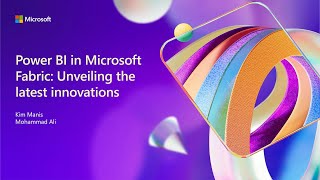
Power BI in Microsoft Fabric: unveiling the latest innovations | BRK202

Join us as we unveil the latest announcements for Power BI in Microsoft Fabric. Explore how Copilot's advanced AI capabilities are transforming data analytics by automating report creation, generating intelligent insights, and enhancing data visualization. Discover how Power BI seamlessly integrates to enable smooth data flow and enhance collaboration. We'll also share real-world success stories, demonstrating the profound impact of this innovation on data analytics.

𝗦𝗽𝗲𝗮𝗸𝗲𝗿𝘀: * Mohammad Ali * Kimberly Manis

𝗦𝗲𝘀𝘀𝗶𝗼𝗻 𝗜𝗻𝗳𝗼𝗿𝗺𝗮𝘁𝗶𝗼𝗻: This is one of many sessions from the Microsoft Ignite 2024 event. View even more sessions on-demand and learn about Microsoft Ignite at https://ignite.microsoft.com

BRK202 | English (US) | Data

MSIgnite

Help us become the #1 Data Podcast by leaving a rating & review! We are 67 reviews away! Travel back to 1854 London and see how data visualization saved lives. John Snow’s use of data analytics to fight cholera is a groundbreaking story that still inspires analysts today. 💌 Join 30k+ aspiring data analysts & get my tips in your inbox weekly 👉 https://www.datacareerjumpstart.com/newsletter 🆘 Feeling stuck in your data journey? Come to my next free "How to Land Your First Data Job" training 👉 https://www.datacareerjumpstart.com/training 👩‍💻 Want to land a data job in less than 90 days? 👉 https://www.datacareerjumpstart.com/daa 👔 Ace The Interview with Confidence 👉 https://www.datacareerjumpstart.com//interviewsimulator ⌚ TIMESTAMPS 00:24 The Cholera Outbreak in London 01:04 John Snow's Revolutionary Hypothesis 02:58 Lessons for Modern Data Analysts 🔗 CONNECT WITH AVERY 🔗 CONNECT WITH AVERY 🎥 YouTube Channel 🤝 LinkedIn 📸 Instagram 🎵 TikTok 💻 Website Mentioned in this episode: Join the last cohort of 2025! The LAST cohort of The Data Analytics Accelerator for 2025 kicks off on Monday, December 8th and enrollment is officially open!

To celebrate the end of the year, we’re running a special End-of-Year Sale, where you’ll get: ✅ A discount on your enrollment 🎁 6 bonus gifts, including job listings, interview prep, AI tools + more

If your goal is to land a data job in 2026, this is your chance to get ahead of the competition and start strong.

👉 Join the December Cohort & Claim Your Bonuses: https://DataCareerJumpstart.com/daa https://www.datacareerjumpstart.com/daa

Every organization today is exploring generative AI to drive value and push their business forward. But a common pitfall is that AI strategies often don’t align with business objectives, leading companies to chase flashy tools rather than focusing on what truly matters. How can you avoid these traps and ensure your AI efforts are not only innovative but also aligned with real business value?  Leon Gordon, is a leader in data analytics and AI. A current Microsoft Data Platform MVP based in the UK, founder of Onyx Data. During the last decade, he has helped organizations improve their business performance, use data more intelligently, and understand the implications of new technologies such as artificial intelligence and big data. Leon is an Executive Contributor to Brainz Magazine, a Thought Leader in Data Science for the Global AI Hub, chair for the Microsoft Power BI – UK community group and the DataDNA data visualization community as well as an international speaker and advisor. In the episode, Adel and Leon explore aligning AI with business strategy, building AI use-cases, enterprise AI-agents, AI and data governance, data-driven decision making, key skills for cross-functional teams, AI for automation and augmentation, privacy and AI and much more.  Links Mentioned in the Show: Onyx DataConnect with LeonLeon’s Linkedin Course - How to Build and Execute a Successful Data StrategySkill Track: AI Business FundamentalsRelated Episode: Generative AI in the Enterprise with Steve Holden, Senior Vice President and Head of Single-Family Analytics at Fannie MaeRewatch sessions from RADAR: AI Edition New to DataCamp? Learn on the go using the DataCamp mobile appEmpower your business with world-class data and AI skills with DataCamp for business

For over three decades we have been powering people and businesses to think and behave differently. In this session, we will share our insights into how you can build the right data culture, by SEEing the value of data through three key pillars: Sponsorship, Education, and Embedding. Detail ? Data helps us to make better, more informed decisions ? and the role of data should not be considered as an ?add-on? to existing capabilities but something that underpins all of those capabilities. Organisations need to understand that this is not just an incremental, evolutionary shift that gives better access to data and richer visualisation ? but something truly transformative when a strong data culture is embedded, alongside elements such as predictive analytics and artificial intelligence. We will discuss with attendees: The importance of adopting a ?shift left? mindset to the use of data in understanding problems, and the designing, developing, testing and operating of solutions. The criticality of investing in culture, which has a disproportionately positive impact on the success of data transformation programmes. The success which can be achieved by following the SEEing model: ~ Sponsorship means demanding better data in order to make better decisions from the Board downwards, and equipping sponsors of business and change programmes to seek and know how to use the right data to deliver better outcomes. ~ Education means helping people understand the value that data can give them; driving demand for data and helping people to see that it should be a foundation in everything they do. ~ Embedding means making data experts integral to teams, in a similar way that DevOps brought operational staff into development teams, which helps to build up understanding and trust between data experts and data users/beneficiaries, increasing domain knowledge in data experts and data/analytics knowledge in the rest of the team. The session will conclude with Q+A.

Let's Get the Basics Right Data is everywhere but how much of it is communicated effectively? Lots of work goes into the curation of data sets only for it to fall at the last hurdle as the key insights are lost through poor visualisation and storytelling. This session will cover some of the foundations of data storytelling and data visualisation. Think is it as a to do list that will help you ta-dah your stakeholders.