Unlock the true potential of your enterprise data with AI agents that transcend chat. This panel explores how leading companies build production-ready AI agents that deliver real-world impact. We’ll examine Google Cloud, MongoDB, Elastic, and open source tools, including generative AI and large language model (LLM) optimization with efficient data handling. Learn practical approaches and build the next wave of AI solutions.
talk-data.com
Topic
ELK
Elasticsearch/ELK Stack
168
tagged
Activity Trend
Top Events
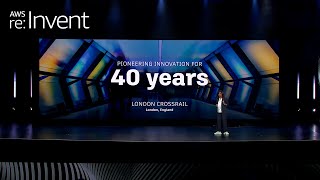
Design software pioneer Autodesk is transforming computer-aided design (CAD) by harnessing generative AI and Amazon Web Services (AWS). The company is developing advanced AI foundation models, like "Project Bernini," which can generate precise 2D and 3D geometric designs based on physical principles.
By utilizing AWS technologies such as Amazon DynamoDB, Elastic MapReduce (EMR), Amazon SageMaker, and Elastic Fabric Adapter, Autodesk has significantly enhanced its AI development process. These innovations have halved foundation model development time and increased AI productivity by 30%.
Learn more about AWS events: https://go.aws/events
Subscribe: More AWS videos: http://bit.ly/2O3zS75 More AWS events videos: http://bit.ly/316g9t4
ABOUT AWS Amazon Web Services (AWS) hosts events, both online and in-person, bringing the cloud computing community together to connect, collaborate, and learn from AWS experts. AWS is the world’s most comprehensive and broadly adopted cloud platform, offering over 200 fully featured services from data centers globally. Millions of customers—including the fastest-growing startups, largest enterprises, and leading government agencies—are using AWS to lower costs, become more agile, and innovate faster.
reInvent2024 #AWSreInvent2024 #AWSEvents
A practical introduction to data engineering on the powerful Snowflake cloud data platform. Data engineers create the pipelines that ingest raw data, transform it, and funnel it to the analysts and professionals who need it. The Snowflake cloud data platform provides a suite of productivity-focused tools and features that simplify building and maintaining data pipelines. In Snowflake Data Engineering, Snowflake Data Superhero Maja Ferle shows you how to get started. In Snowflake Data Engineering you will learn how to: Ingest data into Snowflake from both cloud and local file systems Transform data using functions, stored procedures, and SQL Orchestrate data pipelines with streams and tasks, and monitor their execution Use Snowpark to run Python code in your pipelines Deploy Snowflake objects and code using continuous integration principles Optimize performance and costs when ingesting data into Snowflake Snowflake Data Engineering reveals how Snowflake makes it easy to work with unstructured data, set up continuous ingestion with Snowpipe, and keep your data safe and secure with best-in-class data governance features. Along the way, you’ll practice the most important data engineering tasks as you work through relevant hands-on examples. Throughout, author Maja Ferle shares design tips drawn from her years of experience to ensure your pipeline follows the best practices of software engineering, security, and data governance. About the Technology Pipelines that ingest and transform raw data are the lifeblood of business analytics, and data engineers rely on Snowflake to help them deliver those pipelines efficiently. Snowflake is a full-service cloud-based platform that handles everything from near-infinite storage, fast elastic compute services, inbuilt AI/ML capabilities like vector search, text-to-SQL, code generation, and more. This book gives you what you need to create effective data pipelines on the Snowflake platform. About the Book Snowflake Data Engineering guides you skill-by-skill through accomplishing on-the-job data engineering tasks using Snowflake. You’ll start by building your first simple pipeline and then expand it by adding increasingly powerful features, including data governance and security, adding CI/CD into your pipelines, and even augmenting data with generative AI. You’ll be amazed how far you can go in just a few short chapters! What's Inside Ingest data from the cloud, APIs, or Snowflake Marketplace Orchestrate data pipelines with streams and tasks Optimize performance and cost About the Reader For software developers and data analysts. Readers should know the basics of SQL and the Cloud. About the Author Maja Ferle is a Snowflake Subject Matter Expert and a Snowflake Data Superhero who holds the SnowPro Advanced Data Engineer and the SnowPro Advanced Data Analyst certifications. Quotes An incredible guide for going from zero to production with Snowflake. - Doyle Turner, Microsoft A must-have if you’re looking to excel in the field of data engineering. - Isabella Renzetti, Data Analytics Consultant & Trainer Masterful! Unlocks the true potential of Snowflake for modern data engineers. - Shankar Narayanan, Microsoft Valuable insights will enhance your data engineering skills and lead to cost-effective solutions. A must read! - Frédéric L’Anglais, Maxa Comprehensive, up-to-date and packed with real-life code examples. - Albert Nogués, Danone
Ford Motor Company operates extensively across various nations. The Data Operations (DataOps) team for Advanced Driver Assistance Systems (ADAS) at Ford is tasked with the processing of terabyte-scale daily data from lidar, radar, and video. To manage this, the DataOps team is challenged with orchestrating diverse, compute-intensive pipelines across both on-premises infrastructure and the GCP and deal with sensitive of customer data across both environments The team is also responsible for facilitating the execution of on-demand, compute-intensive algorithms at scale through. To achieve these objectives, the team employs Astronomer/Airflow at the core of its strategic approach. This involves various deployments of Astronomer/Airflow that integrate seamlessly and securely (via Apigee) to initiate batch data processing and ML jobs on the cloud, as well as compute-intensive computer vision tasks on-premises, with essential alerting provided through the ELK stack. This presentation will delve into the architecture and strategic planning surrounding the hybrid batch router, highlighting its pivotal role in promoting rapid innovation and scalability in the development of ADAS features.
Unlock the potential of the Elastic Stack with the "Elastic Stack 8.x Cookbook." This book provides over 80 hands-on recipes, guiding you through ingesting, processing, and visualizing data using Elasticsearch, Logstash, Kibana, and more. You'll also explore advanced features like machine learning and observability to create data-driven applications with ease. What this Book will help me do Implement a robust workflow for ingesting, transforming, and visualizing diverse datasets. Utilize Kibana to create insightful dashboards and visual analytics. Leverage Elastic Stack's AI capabilities, such as natural language processing and machine learning. Develop search solutions and integrate advanced features like vector search. Monitor and optimize your Elastic Stack deployments for performance and security. Author(s) Huage Chen and Yazid Akadiri are experienced professionals in the field of Elastic Stack. They bring years of practical experience in data engineering, observability, and software development. Huage and Yazid aim to provide a clear, practical pathway for both beginners and experienced users to get the most out of the Elastic Stack's capabilities. Who is it for? This book is perfect for developers, data engineers, and observability practitioners looking to harness the power of Elastic Stack. It caters to both beginners and experts, providing clear instructions to help readers understand and implement powerful data solutions. If you're working with search applications, data analysis, or system observability, this book is an ideal resource.
Elastic on Google Cloud allows you to modernize your AI-powered search experiences, predictively find and resolve problems, and protect against cyber threats. Learn how to derive actionable intelligence through AI-driven insights to get the most out of your data and infrastructure using the Elastic AI Assistants for Observability and Security. By attending this session, your contact information may be shared with the sponsor for relevant follow up for this event only.
Click the blue “Learn more” button above to tap into special offers designed to help you implement what you are learning at Google Cloud Next 25.
Big Data Europe Onsite and online on 22-25 November in 2022 Learn more about the conference: https://bit.ly/3BlUk9q
Join our next Big Data Europe conference on 22-25 November in 2022 where you will be able to learn from global experts giving technical talks and hand-on workshops in the fields of Big Data, High Load, Data Science, Machine Learning and AI. This time, the conference will be held in a hybrid setting allowing you to attend workshops and listen to expert talks on-site or online.
Elastic on Google Cloud allows you to modernize your AI-powered search experiences, predictively find and resolve problems, and protect against cyber threats. Learn how to derive actionable intelligence through AI-driven insights to get the most out of your data and infrastructure using the Elastic AI Assistants for Observability and Security. By attending this session, your contact information may be shared with the sponsor for relevant follow up for this event only.
Click the blue “Learn more” button above to tap into special offers designed to help you implement what you are learning at Google Cloud Next 25.
Elasticsearch and Kibana added a brand new query language: ES|QL — coming with a new endpoint (_query) and a simpler syntax. It lets you refine your results one step at a time and adds new features like data enrichment and processing right in your query. And you can use it across the Elastic Stack — from the Elasticsearch API to Discover and Alerting in Kibana. But the biggest change is behind the scenes: Using a new compute engine that was built with performance in mind. Join us for a quick overview and a look at syntax and internals.
Migrating a large mission-critical Elasticsearch cluster to the latest version of Elasticsearch came with quite some challenges. In this talk, we will highlight some surprises and learnings from this process.
Kibana 8.x - A Quick Start Guide to Data Analysis is an essential resource for anyone wanting to harness the robust capabilities of Kibana to analyze, visualize, and make sense of their data. Through clear explanations and practical exercises, this guide breaks down topics like creating dashboards, exploring datasets, and configuring Kibana's powerful features. What this Book will help me do Understand Kibana's interface and functionalities to manage Elasticsearch data. Learn how to create intuitive visualizations and customize dashboards. Explore features such as data discovery and real-time updates for analytics. Optimize and query datasets using ESQL and detailed analytics techniques. Master the process of embedding dashboards and exporting insights. Author(s) None Shah is an experienced data analytics professional with a deep understanding of the Elastic Stack, including Kibana and Elasticsearch. Having spent years working on big data projects, Shah is dedicated to helping technologists turn data into actionable insights. Her writing aims to simplify complex concepts into achievable learning milestones. Who is it for? This book is ideal for data analysts, data engineers, and anyone working extensively with Elasticsearch datasets. If you aim to gain hands-on experience with building interactive dashboards and visualizing data trends, this book is tailored for you. A foundational understanding of Elasticsearch would be beneficial but is not strictly required. Perfect for advancing decision-making with data insights.
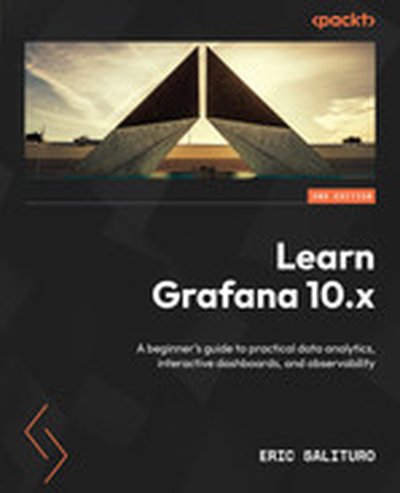
Learn Grafana 10.x is your essential guide to mastering the art of data visualization and monitoring through interactive dashboards. Whether you're starting from scratch or updating your knowledge to Grafana 10.x, this book walks you through installation, implementation, data transformation, and effective visualization techniques. What this Book will help me do Install and configure Grafana 10.x for real-time data visualization and analytics. Create and manage insightful dashboards with Grafana's enhanced features. Integrate Grafana with diverse data sources such as Prometheus, InfluxDB, and Elasticsearch. Set up dynamic templated dashboards and alerting systems for proactive monitoring. Implement Grafana's user authentication mechanisms for enhanced security. Author(s) None Salituro is a seasoned expert in data analytics and observability platforms with extensive experience working with time-series data using Grafana. Their practical teaching approach and passion for sharing insights make this book an invaluable resource for both newcomers and experienced users. Who is it for? This book is perfect for business analysts, data visualization enthusiasts, and developers interested in analyzing and monitoring time-series data. Whether you're a newcomer or have some background knowledge, this book offers accessible guidance and advanced tips suitable for all levels. If you're aiming to efficiently build and utilize Grafana dashboards, this is the book for you.
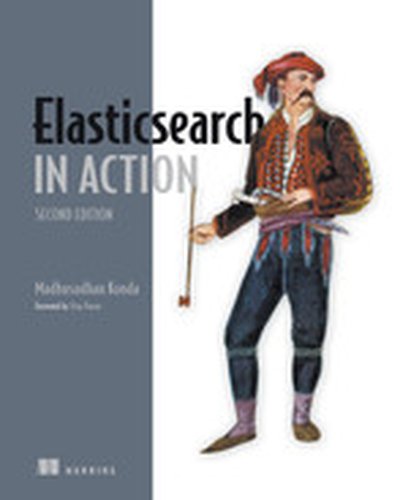
Build powerful, production-ready search applications using the incredible features of Elasticsearch. In Elasticsearch in Action, Second Edition you will discover: Architecture, concepts, and fundamentals of Elasticsearch Installing, configuring, and running Elasticsearch and Kibana Creating an index with custom settings Data types, mapping fundamentals, and templates Fundamentals of text analysis and working with text analyzers Indexing, deleting, and updating documents Indexing data in bulk, and reindexing and aliasing operations Learning search concepts, relevancy scores, and similarity algorithms Elasticsearch in Action, Second Edition teaches you to build scalable search applications using Elasticsearch. This completely new edition explores Elasticsearch fundamentals from the ground up. You’ll deep dive into design principles, search architectures, and Elasticsearch’s essential APIs. Every chapter is clearly illustrated with diagrams and hands-on examples. You’ll even explore real-world use cases for full text search, data visualizations, and machine learning. Plus, its comprehensive nature means you’ll keep coming back to the book as a handy reference! About the Technology Create fully professional-grade search engines with Elasticsearch and Kibana! Rewritten for the latest version of Elasticsearch, this practical book explores Elasticsearch’s high-level architecture, reveals infrastructure patterns, and walks through the search and analytics capabilities of numerous Elasticsearch APIs. About the Book Elasticsearch in Action, Second Edition teaches you how to add modern search features to websites and applications using Elasticsearch 8. In it, you’ll quickly progress from the basics of installation and configuring clusters, to indexing documents, advanced aggregations, and putting your servers into production. You’ll especially appreciate the mix of technical detail with techniques for designing great search experiences. What's Inside Understanding search architecture Full text and term-level search queries Analytics and aggregations High-level visualizations in Kibana Configure, scale, and tune clusters About the Reader For application developers comfortable with scripting and command-line applications. About the Author Madhusudhan Konda is a full-stack lead engineer, architect, mentor, and conference speaker. He delivers live online training on Elasticsearch and the Elastic Stack. Quotes Madhu’s passion comes across in the depth and breadth of this book, the enthusiastic tone, and the hands-on examples. I hope you will take what you have read and put it ‘in action’. - From the Foreword by Shay Banon, Founder of Elasticsearch Practical and well-written. A great starting point for beginners and a comprehensive guide for more experienced professionals. - Simona Russo, Serendipity The author’s excitement is evident from the first few paragraphs. Couple that with extensive experience and technical prowess, and you have an instant classic. - Herodotos Koukkides and Semi Koen, Global Japanese Financial Institution
Discover the power of enriching postal addresses with the Elastic Stack in this live coding session led by David Pilato. 🌍🛠️ Learn how to transform poorly formatted addresses into valuable location data and vice versa using Elasticsearch, Logstash, and Kibana, with a special emphasis on Elasticsearch's ingest pipelines. Don't miss out on unlocking the potential to map customer locations and enhance your data systems!📍📈 #ElasticStack #AddressEnrichment
✨ H I G H L I G H T S ✨
🙌 A huge shoutout to all the incredible participants who made Big Data Conference Europe 2023 in Vilnius, Lithuania, from November 21-24, an absolute triumph! 🎉 Your attendance and active participation were instrumental in making this event so special. 🌍
Don't forget to check out the session recordings from the conference to relive the valuable insights and knowledge shared! 📽️
Once again, THANK YOU for playing a pivotal role in the success of Big Data Conference Europe 2023. 🚀 See you next year for another unforgettable conference! 📅 #BigDataConference #SeeYouNextYear
Embark on a journey into the future of search with David Pilato as he unveils 'Search: A New Era.' 🚀🔍 Explore the evolution from traditional TF/IDF to cutting-edge machine learning and models in search technology. Dive deep into topics like vector search, OpenAI's ChatGPT integration, and the latest advancements in search methodologies, including demonstrations on generating music embeddings and more! 🎶💡 #SearchTechnology #MachineLearning #elasticsearch
✨ H I G H L I G H T S ✨
🙌 A huge shoutout to all the incredible participants who made Big Data Conference Europe 2023 in Vilnius, Lithuania, from November 21-24, an absolute triumph! 🎉 Your attendance and active participation were instrumental in making this event so special. 🌍
Don't forget to check out the session recordings from the conference to relive the valuable insights and knowledge shared! 📽️
Once again, THANK YOU for playing a pivotal role in the success of Big Data Conference Europe 2023. 🚀 See you next year for another unforgettable conference! 📅 #BigDataConference #SeeYouNextYear
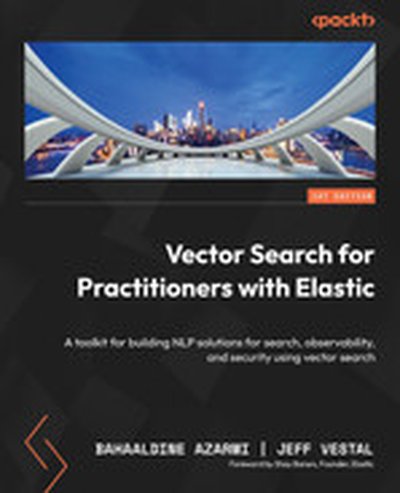
The book "Vector Search for Practitioners with Elastic" provides a comprehensive guide to leveraging vector search technology within Elastic for applications in NLP, cybersecurity, and observability. By exploring practical examples and advanced techniques, this book teaches you how to optimize and implement vector search to address complex challenges in modern data management. What this Book will help me do Gain a deep understanding of implementing vector search with Elastic. Learn techniques to optimize vector data storage and retrieval for practical applications. Understand how to apply vector search for image similarity in Elastic. Discover methods for utilizing vector search for security and observability enhancements. Develop skills to integrate modern NLP tools with vector databases and Elastic. Author(s) Bahaaldine Azarmi, with his extensive experience in Elastic and NLP technologies, brings a practitioner's insight into the world of vector search. Co-author None Vestal contributes expertise in observability and system optimization. Together, they deliver practical and actionable knowledge in a clear and approachable manner. Who is it for? This book is designed for data professionals seeking to deepen their expertise in vector search and Elastic technologies. It is ideal for individuals in observability, search technology, or cybersecurity roles. If you have foundational knowledge in machine learning models, Python, and Elastic, this book will enable you to effectively utilize vector search in your projects.
Summary
Databases are the core of most applications, whether transactional or analytical. In recent years the selection of database products has exploded, making the critical decision of which engine(s) to use even more difficult. In this episode Tanya Bragin shares her experiences as a product manager for two major vendors and the lessons that she has learned about how teams should approach the process of tool selection.
Announcements
Hello and welcome to the Data Engineering Podcast, the show about modern data management Introducing RudderStack Profiles. RudderStack Profiles takes the SaaS guesswork and SQL grunt work out of building complete customer profiles so you can quickly ship actionable, enriched data to every downstream team. You specify the customer traits, then Profiles runs the joins and computations for you to create complete customer profiles. Get all of the details and try the new product today at dataengineeringpodcast.com/rudderstack You shouldn't have to throw away the database to build with fast-changing data. You should be able to keep the familiarity of SQL and the proven architecture of cloud warehouses, but swap the decades-old batch computation model for an efficient incremental engine to get complex queries that are always up-to-date. With Materialize, you can! It’s the only true SQL streaming database built from the ground up to meet the needs of modern data products. Whether it’s real-time dashboarding and analytics, personalization and segmentation or automation and alerting, Materialize gives you the ability to work with fresh, correct, and scalable results — all in a familiar SQL interface. Go to dataengineeringpodcast.com/materialize today to get 2 weeks free! This episode is brought to you by Datafold – a testing automation platform for data engineers that finds data quality issues before the code and data are deployed to production. Datafold leverages data-diffing to compare production and development environments and column-level lineage to show you the exact impact of every code change on data, metrics, and BI tools, keeping your team productive and stakeholders happy. Datafold integrates with dbt, the modern data stack, and seamlessly plugs in your data CI for team-wide and automated testing. If you are migrating to a modern data stack, Datafold can also help you automate data and code validation to speed up the migration. Learn more about Datafold by visiting dataengineeringpodcast.com/datafold Data projects are notoriously complex. With multiple stakeholders to manage across varying backgrounds and toolchains even simple reports can become unwieldy to maintain. Miro is your single pane of glass where everyone can discover, track, and collaborate on your organization's data. I especially like the ability to combine your technical diagrams with data documentation and dependency mapping, allowing your data engineers and data consumers to communicate seamlessly about your projects. Find simplicity in your most complex projects with Miro. Your first three Miro boards are free when you sign up today at dataengineeringpodcast.com/miro. That’s three free boards at dataengineeringpodcast.com/miro. Your host is Tobias Macey and today I'm interviewing Tanya Bragin about her views on the database products market
Interview
Introduction How did you get involved in the area of data management? What are the aspects of the database market that keep you interested as a VP of product?
How have your experiences at Elastic informed your current work at Clickhouse?
What are the main product categories for databases today?
What are the industry trends that have the most impact on the development and growth of different product categories? Which categories do you see growing the fastest?
When a team is selecting a database technology for a given task, what are the types of questions that they should be asking? Transactional engines like Postgres, SQL Server, Oracle, etc. were long used