talk-data.com talk-data.com

Topic

JSON

JavaScript Object Notation (JSON)

data_format lightweight web_development file_format

129

tagged

Activity Trend

9 peak/qtr
2020-Q1 2026-Q1

Activities

129 activities · Newest first

AWS re:Invent 2024 - Deep dive into Amazon DocumentDB and its innovations (DAT324)

Amazon DocumentDB (with MongoDB compatibility) is a fully managed native JSON document database that makes it easy and cost-effective to operate critical document workloads at virtually any scale without managing infrastructure. In this session, take a deep dive into the most exciting new features Amazon DocumentDB offers including global cluster failover, global cluster switchover, compression, and the latest query APIs. Learn how the implementation of these features in your organization can improve resilience, performance, and the effectiveness of your applications.

Learn more: AWS re:Invent: https://go.aws/reinvent. More AWS events: https://go.aws/3kss9CP

Subscribe: More AWS videos: http://bit.ly/2O3zS75 More AWS events videos: http://bit.ly/316g9t4

About AWS: Amazon Web Services (AWS) hosts events, both online and in-person, bringing the cloud computing community together to connect, collaborate, and learn from AWS experts. AWS is the world's most comprehensive and broadly adopted cloud platform, offering over 200 fully featured services from data centers globally. Millions of customers—including the fastest-growing startups, largest enterprises, and leading government agencies—are using AWS to lower costs, become more agile, and innovate faster.

AWSreInvent #AWSreInvent2024

Full Stack FastAPI, React, and MongoDB - Second Edition

Full Stack FastAPI, React, and MongoDB guides you step-by-step through creating web applications using the FARM stack. This hands-on resource teaches you how to integrate FastAPI, a modern Python framework, React for front-end development, and MongoDB for data storage to build and deploy powerful, scalable web applications. What this Book will help me do Master the essentials of MongoDB, including creating and managing document-based databases. Gain proficiency in building APIs using FastAPI and Python for robust backend systems. Develop dynamic frontends using React, integrating seamlessly with a FastAPI backend. Securely authenticate and authorize users using JSON Web Tokens in your applications. Explore advanced features like integrating AI models and building with Next.js for production-ready development. Author(s) Marko Aleksendrić, Shrey Batra, Rachelle Palmer, and Shubham Ranjan combine their expertise in web development and software engineering in this book. Together, they bring years of professional experience and a passion for teaching developers to create modern web applications effectively using cutting-edge tools. Who is it for? Intermediate web developers who possess foundational JavaScript and Python skills are the ideal audience for this book. If you want to advance your skills by mastering modern web application development with the FARM stack, this book will guide you comprehensively. With practical, real-world examples, it is designed for developers aiming to build production-grade applications.

DuckDB in Action

Dive into DuckDB and start processing gigabytes of data with ease—all with no data warehouse. DuckDB is a cutting-edge SQL database that makes it incredibly easy to analyze big data sets right from your laptop. In DuckDB in Action you’ll learn everything you need to know to get the most out of this awesome tool, keep your data secure on prem, and save you hundreds on your cloud bill. From data ingestion to advanced data pipelines, you’ll learn everything you need to get the most out of DuckDB—all through hands-on examples. Open up DuckDB in Action and learn how to: Read and process data from CSV, JSON and Parquet sources both locally and remote Write analytical SQL queries, including aggregations, common table expressions, window functions, special types of joins, and pivot tables Use DuckDB from Python, both with SQL and its "Relational"-API, interacting with databases but also data frames Prepare, ingest and query large datasets Build cloud data pipelines Extend DuckDB with custom functionality Pragmatic and comprehensive, DuckDB in Action introduces the DuckDB database and shows you how to use it to solve common data workflow problems. You won’t need to read through pages of documentation—you’ll learn as you work. Get to grips with DuckDB's unique SQL dialect, learning to seamlessly load, prepare, and analyze data using SQL queries. Extend DuckDB with both Python and built-in tools such as MotherDuck, and gain practical insights into building robust and automated data pipelines. About the Technology DuckDB makes data analytics fast and fun! You don’t need to set up a Spark or run a cloud data warehouse just to process a few hundred gigabytes of data. DuckDB is easily embeddable in any data analytics application, runs on a laptop, and processes data from almost any source, including JSON, CSV, Parquet, SQLite and Postgres. About the Book DuckDB in Action guides you example-by-example from setup, through your first SQL query, to advanced topics like building data pipelines and embedding DuckDB as a local data store for a Streamlit web app. You’ll explore DuckDB’s handy SQL extensions, get to grips with aggregation, analysis, and data without persistence, and use Python to customize DuckDB. A hands-on project accompanies each new topic, so you can see DuckDB in action. What's Inside Prepare, ingest and query large datasets Build cloud data pipelines Extend DuckDB with custom functionality Fast-paced SQL recap: From simple queries to advanced analytics About the Reader For data pros comfortable with Python and CLI tools. About the Authors Mark Needham is a blogger and video creator at @‌LearnDataWithMark. Michael Hunger leads product innovation for the Neo4j graph database. Michael Simons is a Java Champion, author, and Engineer at Neo4j. Quotes I use DuckDB every day, and I still learned a lot about how DuckDB makes things that are hard in most databases easy! - Jordan Tigani, Founder, MotherDuck An excellent resource! Unlocks possibilities for storing, processing, analyzing, and summarizing data at the edge using DuckDB. - Pramod Sadalage, Director, Thoughtworks Clear and accessible. A comprehensive resource for harnessing the power of DuckDB for both novices and experienced professionals. - Qiusheng Wu, Associate Professor, University of Tennessee Excellent! The book all we ducklings have been waiting for! - Gunnar Morling, Decodable

Pandas Workout

Practice makes perfect pandas! Work out your pandas skills against dozens of real-world challenges, each carefully designed to build an intuitive knowledge of essential pandas tasks. In Pandas Workout you’ll learn how to: Clean your data for accurate analysis Work with rows and columns for retrieving and assigning data Handle indexes, including hierarchical indexes Read and write data with a number of common formats, such as CSV and JSON Process and manipulate textual data from within pandas Work with dates and times in pandas Perform aggregate calculations on selected subsets of data Produce attractive and useful visualizations that make your data come alive Pandas Workout hones your pandas skills to a professional-level through two hundred exercises, each designed to strengthen your pandas skills. You’ll test your abilities against common pandas challenges such as importing and exporting, data cleaning, visualization, and performance optimization. Each exercise utilizes a real-world scenario based on real-world data, from tracking the parking tickets in New York City, to working out which country makes the best wines. You’ll soon find your pandas skills becoming second nature—no more trips to StackOverflow for what is now a natural part of your skillset. About the Technology Python’s pandas library can massively reduce the time you spend analyzing, cleaning, exploring, and manipulating data. And the only path to pandas mastery is practice, practice, and, you guessed it, more practice. In this book, Python guru Reuven Lerner is your personal trainer and guide through over 200 exercises guaranteed to boost your pandas skills. About the Book Pandas Workout is a thoughtful collection of practice problems, challenges, and mini-projects designed to build your data analysis skills using Python and pandas. The workouts use realistic data from many sources: the New York taxi fleet, Olympic athletes, SAT scores, oil prices, and more. Each can be completed in ten minutes or less. You’ll explore pandas’ rich functionality for string and date/time handling, complex indexing, and visualization, along with practical tips for every stage of a data analysis project. What's Inside Clean data with less manual labor Retrieving and assigning data Process and manipulate text Calculations on selected data subsets About the Reader For Python programmers and data analysts. About the Author Reuven M. Lerner teaches Python and data science around the world and publishes the “Bamboo Weekly” newsletter. He is the author of Manning’s Python Workout (2020). Quotes A carefully crafted tour through the pandas library, jam-packed with wisdom that will help you become a better pandas user and a better data scientist. - Kevin Markham, Founder of Data School, Creator of pandas in 30 days Will help you apply pandas to real problems and push you to the next level. - Michael Driscoll, RFA Engineering, creator of Teach Me Python The explanations, paired with Reuven’s storytelling and personal tone, make the concepts simple. I’ll never get them wrong again! - Rodrigo Girão Serrão, Python developer and educator The definitive source! - Kiran Anantha, Amazon

Digital Transformation of SAP Supply Chain Processes: Build Mobile Apps Using SAP BTP and SAP Mobile Services

Take a high-level tour of SAP oDATA integrations with frontend technologies like Angular using the SAP Mobile Services Platform. This book will give you a different perspective on executing SAP transactions on iOS using Angular instead of SAP-provided Fiori-based applications. You’ll start by learning about SAP supply chain processes such as Goods Receipt, Transfer Posting, Goods Issue, and Inventory Search. You’ll then move on to understanding the thought process involved in integrating SAP's backend (SAP ECC) with Angular iOS app using SAP Mobile Services running on SAP BTP. All this will serve as a guide tailored to SAP functional and technical consultants actively engaged in client-facing roles. You’ll follow a roadmap for modernizing and streamlining supply chain operations by leveraging Angular iOS apps. Digital Transformation of SAP Supply Chain Processes provides the essential tools for businesses looking to stay competitive in today's technology-driven landscape. What You Will Learn Study the fundamental procedures to set up the Authorization Endpoint, Token Endpoint, and base URL within SAP Mobile Services. Manage attachments in mobile applications and store them in an external content repository. Gain proficiency in testing OData services using the POSTMAN API client with OAuth protocol. Acquire knowledge about the JSON messages, CORS protocol, and X-CSRF token exchange. Link Zebra Printers through the Zebra Native Printing app on iOS App to print SAP forms on mobile printers. Who This Book Is For SAP Consultants with an interest in the Digital Transformation of SAP Supply Chain Processes to iOS-based SAP transactions.

Redis Stack for Application Modernization

In "Redis Stack for Application Modernization," you will explore how the Redis Stack extends traditional Redis capabilities, allowing you to innovate in building real-time, scalable, multi-model applications. Through practical examples and hands-on sessions, this book equips you with skills to manage, implement, and optimize data flows and database features. What this Book will help me do Learn how to use Redis Stack for handling real-time data with JSON, hash, and other document types. Discover modern techniques for performing vector similarity searches and hybrid workflows. Become proficient in integrating Redis Stack with programming languages like Java, Python, and Node.js. Gain skills to configure Redis Stack server for scalability, security, and high availability. Master RedisInsight for data visualization, analysis, and efficient database management. Author(s) Luigi Fugaro and None Ortensi are experienced software professionals with deep expertise in database systems and application architecture. They bring years of experience working with Redis and developing real-world applications. Their hands-on approach to teaching and real-world examples make this book a valuable resource for professionals in the field. Who is it for? This book is ideal for database administrators, developers, and architects looking to leverage Redis Stack for real-time multi-model applications. It requires a basic understanding of Redis and any programming language such as Python or Java. If you wish to modernize your applications and efficiently manage databases, this book is for you.

Roberto Freato: Green Must Be Convenient

Join Roberto Freato in his session 'Green Must Be Convenient' as he unveils the evolution of database storage practices, demonstrating how Azure SQL Database efficiently manages vast amounts of JSON objects. Discover how this bridges the gap between raw data in a data lake and the relational view used by analytical applications. 🌱💾 #DatabaseStorage #azuresql

✨ H I G H L I G H T S ✨

🙌 A huge shoutout to all the incredible participants who made Big Data Conference Europe 2023 in Vilnius, Lithuania, from November 21-24, an absolute triumph! 🎉 Your attendance and active participation were instrumental in making this event so special. 🌍

Don't forget to check out the session recordings from the conference to relive the valuable insights and knowledge shared! 📽️

Once again, THANK YOU for playing a pivotal role in the success of Big Data Conference Europe 2023. 🚀 See you next year for another unforgettable conference! 📅 #BigDataConference #SeeYouNextYear

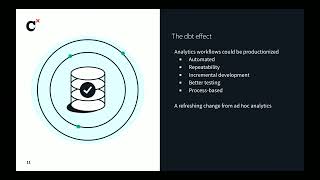
Scaling dbt models for CDC on large databases - Coalesce 2023

Unlike transforming staged data to marts, ingesting data into staging requires robustness to data volume and type changes, schema evolution, and data drift. Especially when performing change data capture (CDC) on large databases (~100 tables to a database), we’ll ideally reinforce our dbt models with automatic:

  • Mapping of dynamic columns and data types between the source and the target stag
  • evolution of stage table schemas at pace with incoming data, including for nested data structures
  • parsing and flattening of any arrays and JSON structs in the data.

Manually performing these tasks for data at scale is a tall order due to the many permutations with which CDC data can deviate. Waiting to implement them in mart transformation models is potentially detrimental to the business, as well as doesn’t reduce the complexity. Santona Tuli shares learnings from integrating dbt Core into high-scale data ingestion workloads, including trade-offs between ease-of-use and scale.

Speaker: Santona Tuli, Head/Director of Data, Upsolver

Register for Coalesce at https://coalesce.getdbt.com

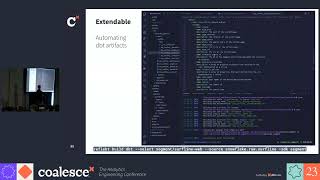
Using JSON schema to set the (dbt) stage for product analytics - Coalesce 2023

Surfline uses Segment to collect product analytics events to understand how surfers use their forecasts and live surf cameras across 9000+ surf spots worldwide. An open source tool was developed to define and manage product analytics event schemas using JSON schema which are used to build dbt staging models for all events.

With this solution, the data team has more time to build intermediate and mart models in dbt, knowing that our staging layer fully reflects Surfline’s product analytics events. This presentation is a real-life example on how schemas (or data contracts) can be used as a medium to build consensus, enforce standards, improve data quality, and speed up the dbt workflow for product analytics.

Speaker: Greg Clunies, Senior Analytics Engineer, Surfline

Register for Coalesce at https://coalesce.getdbt.com/

Fuzzy Data Matching with SQL

If you were handed two different but related sets of data, what tools would you use to find the matches? What if all you had was SQL SELECT access to a database? In this practical book, author Jim Lehmer provides best practices, techniques, and tricks to help you import, clean, match, score, and think about heterogeneous data using SQL. DBAs, programmers, business analysts, and data scientists will learn how to identify and remove duplicates, parse strings, extract data from XML and JSON, generate SQL using SQL, regularize data and prepare datasets, and apply data quality and ETL approaches for finding the similarities and differences between various expressions of the same data. Full of real-world techniques, the examples in the book contain working code. You'll learn how to: Identity and remove duplicates in two different datasets using SQL Regularize data and achieve data quality using SQL Extract data from XML and JSON Generate SQL using SQL to increase your productivity Prepare datasets for import, merging, and better analysis using SQL Report results using SQL Apply data quality and ETL approaches to finding similarities and differences between various expressions of the same data

Summary

A significant amount of time in data engineering is dedicated to building connections and semantic meaning around pieces of information. Linked data technologies provide a means of tightly coupling metadata with raw information. In this episode Brian Platz explains how JSON-LD can be used as a shared representation of linked data for building semantic data products.

Announcements

Hello and welcome to the Data Engineering Podcast, the show about modern data management This episode is brought to you by Datafold – a testing automation platform for data engineers that finds data quality issues before the code and data are deployed to production. Datafold leverages data-diffing to compare production and development environments and column-level lineage to show you the exact impact of every code change on data, metrics, and BI tools, keeping your team productive and stakeholders happy. Datafold integrates with dbt, the modern data stack, and seamlessly plugs in your data CI for team-wide and automated testing. If you are migrating to a modern data stack, Datafold can also help you automate data and code validation to speed up the migration. Learn more about Datafold by visiting dataengineeringpodcast.com/datafold Introducing RudderStack Profiles. RudderStack Profiles takes the SaaS guesswork and SQL grunt work out of building complete customer profiles so you can quickly ship actionable, enriched data to every downstream team. You specify the customer traits, then Profiles runs the joins and computations for you to create complete customer profiles. Get all of the details and try the new product today at dataengineeringpodcast.com/rudderstack You shouldn't have to throw away the database to build with fast-changing data. You should be able to keep the familiarity of SQL and the proven architecture of cloud warehouses, but swap the decades-old batch computation model for an efficient incremental engine to get complex queries that are always up-to-date. With Materialize, you can! It’s the only true SQL streaming database built from the ground up to meet the needs of modern data products. Whether it’s real-time dashboarding and analytics, personalization and segmentation or automation and alerting, Materialize gives you the ability to work with fresh, correct, and scalable results — all in a familiar SQL interface. Go to dataengineeringpodcast.com/materialize today to get 2 weeks free! If you’re a data person, you probably have to jump between different tools to run queries, build visualizations, write Python, and send around a lot of spreadsheets and CSV files. Hex brings everything together. Its powerful notebook UI lets you analyze data in SQL, Python, or no-code, in any combination, and work together with live multiplayer and version control. And now, Hex’s magical AI tools can generate queries and code, create visualizations, and even kickstart a whole analysis for you – all from natural language prompts. It’s like having an analytics co-pilot built right into where you’re already doing your work. Then, when you’re ready to share, you can use Hex’s drag-and-drop app builder to configure beautiful reports or dashboards that anyone can use. Join the hundreds of data teams like Notion, AllTrails, Loom, Mixpanel and Algolia using Hex every day to make their work more impactful. Sign up today at dataengineeringpodcast.com/hex to get a 30-day free trial of the Hex Team plan! Your host is Tobias Macey and today I'm interviewing Brian Platz about using JSON-LD for building linked-data products

Interview

Introduction How did you get involved in the area of data management? Can you describe what the term "linked data product" means and some examples of when you might build one?

What is the overlap between knowledge graphs and "linked data products"?

What is JSON-LD?

What are the domains in which it is typically used? How does it assist in developing linked data products?

what are the characterist

Streaming Schema Drift Discovery and Controlled Mitigation

When creating streaming workloads with Databricks, it can sometimes be difficult to capture and understand the current structure of your source data. For example, what happens if you are ingesting JSON events from a vendor, and the keys are very sparsely populated, or contain dynamic content? Ideally, data engineers want to "lock in" a target schema in order to minimize complexity and maximize performance for known access patterns. What do you do when your data sources just don't cooperate with that vision? The first step is to quantify how far your current source data is drifting from your established Delta table. But how?

This session will demonstrate a way to capture and visual drift across all your streaming tables. The next question is, "Now that I see all of the data I'm missing, how do I selectively promote some of these keys into DataFrame columns?" The second half of this session will demonstrate precisely how to do a schema migration with minimal job downtime.

Talk by: Alexander Vanadio

Connect with us: Website: https://databricks.com Twitter: https://twitter.com/databricks LinkedIn: https://www.linkedin.com/company/databricks Instagram: https://www.instagram.com/databricksinc Facebook: https://www.facebook.com/databricksinc

Data Extraction and Sharing Via The Delta Sharing Protocol

The Delta Sharing open protocol for secure sharing and distribution of Lakehouse data is designed to reduce friction in getting data to users. Delivering custom data solutions from this protocol further leverages the technical investment committed to your Delta Lake infrastructure. There are key design and computational concepts unique to Delta Sharing to know when undertaking development. And there are pitfalls and hazards to avoid when delivering modern cloud data to traditional data platforms and users.

In this session, we introduce Delta Sharing Protocol development and examine our journey and the lessons learned while creating the Delta Sharing Excel Add-in. We will demonstrate scenarios of overfetching, underfetching, and interpretation of types. We will suggest methods to overcome these development challenges. The session will combine live demonstrations that exercise the Delta Sharing REST protocol with detailed analysis of the responses. The demonstrations will elaborate on optional capabilities of the protocol’s query mechanism, and how they are used and interpreted in real-life scenarios. As a reference baseline for data professionals, the Delta Sharing exercises will be framed relative to SQL counterparts. Specific attention will be paid to how they differ, and how Delta Sharing’s Change Data Feed (CDF) can power next-generation data architectures. The session will conclude with a survey of available integration solutions for getting the most out of your Delta Sharing environment, including frameworks, connectors, and managed services.

Attendees are encouraged to be familiar with REST, JSON, and modern programming concepts. A working knowledge of Delta Lake, the Parquet file format, and the Delta Sharing Protocol are advised.

Talk by: Roger Dunn

Here’s more to explore: A New Approach to Data Sharing: https://dbricks.co/44eUnT1

Connect with us: Website: https://databricks.com Twitter: https://twitter.com/databricks LinkedIn: https://www.linkedin.com/company/databricks Instagram: https://www.instagram.com/databricksinc Facebook: https://www.facebook.com/databricksinc

As user of Airflow we often use DagRun.conf attributes to control content and flow of a DAG run. Previously the Airflow UI only allowed to launch via JSON in the UI. This was technically feasible but not user friendly. A user needs to model, check and understand the JSON and enter parameters manually without the option to validate before trigger. Similar like Jenkins or Github/Azure pipelines we desire an UI option to trigger with a UI and specifying parameters. With Airflow 2.6.0 now the DAG.params are used to render a nice entry form and with a bit of options a user friendly trigger UI can be implemented. This session is showing how the new feature works and provides some examples how to use it for your purposes.

A Deep Dive into the dbt Manifest | Squarespace

ABOUT THE TALK: Ever noticed the manifest.json file that dbt puts into your target folder? This little file contains rich information about your dbt project that enables numerous fun use cases! These include complex deployment configurations, quality enforcement, and streamlined development workflows. This talk will go over what the manifest is and how it is produced, along with case studies of how the manifest is used across the community and in Squarespace’s data pipelines.

ABOUT THE SPEAKER: Aaron Richter is a software developer with a passion for all things data. His work involves making sure data is clean and accessible, and that the tools to access it are at peak performance. Aaron is currently a data engineer at Squarespace, where he supports the company’s analytics platform. Previously, he built the data warehouse at Modernizing Medicine, and worked as a data science advocate at Saturn Cloud.

ABOUT DATA COUNCIL: Data Council (https://www.datacouncil.ai/) is a community and conference series that provides data professionals with the learning and networking opportunities they need to grow their careers.

Make sure to subscribe to our channel for the most up-to-date talks from technical professionals on data related topics including data infrastructure, data engineering, ML systems, analytics and AI from top startups and tech companies.

FOLLOW DATA COUNCIL: Twitter: https://twitter.com/DataCouncilAI LinkedIn: https://www.linkedin.com/company/datacouncil-ai/

SQL Query Design Patterns and Best Practices

This book, "SQL Query Design Patterns and Best Practices," provides a thorough and practical exploration of SQL query techniques that focus on efficiency, clarity, and maintainability. By learning and applying the patterns and methodologies outlined in this guide, readers will enhance their ability to solve complex data problems, optimize query performance, and work effectively with modern data platforms. What this Book will help me do Learn how to write efficient SQL queries by optimizing result sets, enabling better handling of large datasets. Master advanced SQL techniques, including the use of common table expressions and window functions for solving real-world challenges. Gain insights into query optimization with tools like query execution plans and indexes to boost database performance. Understand the interaction of modern data types such as JSON and their integration in SQL workflows. Organize and document SQL queries effectively using tools such as Jupyter notebooks for collaborative and reproducible work. Author(s) The authors of this book are seasoned SQL professionals with rich experience in database management and optimization. Steven Hughes, Ram Babu Singh, Shabbir Mala, and others bring their deep knowledge in SQL query practices and real-world problem-solving to this guide. With a commitment to helping readers harness the power of SQL, the authors have crafted content that is both technically robust and approachable for learners. Who is it for? This book is designed for SQL practitioners ranging from beginners to intermediate levels, including SQL developers, data analysts, and database enthusiasts. If you aim to refine your SQL skills, optimize query designs, and tackle complex data challenges, this book will serve as your reliable companion. Novice readers will quickly build a strong foundation, while experienced professionals will find valuable techniques to enhance their workflow.

Modern Oracle Database Programming: Level Up Your Skill Set to Oracle's Latest and Most Powerful Features in SQL, PL/SQL, and JSON

Level up your skill set to the latest that Oracle Database can offer. This book introduces features that are not well known that can transform your development efforts. You’ll discover built-in functionality that can save you massive amounts of time that otherwise would be spent reinventing the wheel. You’ll find that what used to take a lot of programming some years ago can be done with less code in a more reliable way today. Anyone using Oracle Database without the knowledge in this book is leaving valuable functionality–that their company has paid for–on the table, and this book opens the door to that functionality so that you can deliver reliable and performant solutions faster and more easily than ever. Part I looks at features in SQL and PL/SQL that are underused and not well known. You’ll learn about new join types, pattern matching across rows, Top N pagination (useful in reporting!), qualified expressions, and enhancements to iterators that reduce code complexity and make your logic easier to understand. Part II covers how and when to invoke PL/SQL from SQL while maintaining performance. You'll learn about SQL macro functions for creating reusable SQL fragments, polymorphic table functions with return types determined by incoming argument types, and constructing and parsing JSON documents for data interchange with other systems. Part III introduces a vast array of built-in functionality that Oracle provides that is just waiting to be used. Edition-based redefinition enables zero-downtime application and schema upgrades. Data redaction enables easier compliance with privacy laws and similar regulations by protecting sensitive data from those who have no need to see it. Virtual private databases provide the appearance of giving each user their own database, again helping to secure sensitive data. These features are just a taste of what the book provides. Soon you’ll be improving your skillsand wondering why you ever worked so hard to solve problems that Oracle Database already solves for you. What You Will Learn Write more powerful code by incorporating underused features in SQL and PL/SQL Optimize your integration between SQL and PL/SQL for best performance Take advantage of enhanced set operators, lateral joins, row-based pattern matching, and other advanced features in SQL Make your code easier to understand through your use of newer PL/SQL features, such as qualified expressions and iterator enhancements Integrate with web services and external data sources directly from the database Create and parse JSON documents for easy data exchange and flexible schema design Who This Book Is For Any developer who is writing SQL or PL/SQL, PL/SQL experts who want to level up their knowledgeand skills to the latest features that Oracle Database provides, and developers who don’t want to write their own solutions only to find out later that they’ve wasted their time by building something that Oracle Database provides out of the box

Pro Oracle SQL Development: Best Practices for Writing Advanced Queries

Write SQL statements that are more powerful, simpler, and faster using the advanced features of Oracle SQL. This updated second edition includes the newest advanced features: improved data structures (such as more JSON support and more table options), improved automated processes (such as automatic indexing), and improved SQL language extensions (such as polymorphic table functions, SQL macros, and the multilingual engine). Pro Oracle SQL Development is for anyone who already knows Oracle SQL and is ready to take their skills to the next level. This book provides a clearer way of thinking about SQL by building sets, and it provides practical advice for using complex features while avoiding anti-patterns that lead to poor performance and wrong results. Relevant theories, real-world best practices, and style guidelines help you get the most out of Oracle SQL. Many developers, testers, analysts, and administrators use Oracle databases frequently, but their queries are limited because they do not take advantage of Oracle’s advanced features. This book inspires you to achieve more with your Oracle SQL statements by creating your own style for writing simple, yet powerful, SQL. It teaches you how to think about and solve performance problems in Oracle SQL, and it covers enough advanced topics to put you on the path to becoming an Oracle expert. What You'll Learn Solve challenging problems with declarative SQL instead of procedural languages Write SQL statements that are large and powerful, but also elegant and fast Create development environments that are simple, scalable, and conducive to learning Visualize and understand SQL more intuitively Apply advanced syntax, objects, and architecture Avoid SQL anti-patterns that accumulate technical debt Tune SQL statements with multiple strategies that can significantly improve performance Who This Book Is For Developers, testers, analysts, and administrators who want to harness the full power of Oracle SQL to solve their problems as simply and as quickly as possible; traditional database professionals looking for new ways of thinking about the language they have used for so long; and modern full stack developers who need an explanation of how a database can be much more than simply a place to store data

Creating Business Applications with Microsoft 365: Techniques in Power Apps, Power BI, SharePoint, and Power Automate

Learn how to automate processes, visualize your data, and improve productivity using Power Apps, Power Automate, Power BI, SharePoint, Forms, Teams, and more. This book will help you build complete solutions that often involve storing data in SharePoint, creating a front-end application in Power Apps or Forms, adding additional functionality with Power Automate, and effective reports and dashboards in Power BI. This new edition greatly expands the focus on Power Apps, Power BI, Power Automate, and Teams, along with SharePoint and Microsoft Forms. It starts with the basics of programming and shows how to build a simple email application in .NET, HTML/JavaScript, Power Apps on its own, and Power Apps and Power Automate in combination. It then covers how to connect Power Apps to SharePoint, create an approval process in Power Automate, visualize surveys in Power BI, and create your own survey solution with the combination of a number of Microsoft 365 tools. You’ll work with anextended example that shows how to use Power Apps and SharePoint together to create your own help ticketing system. This book offers a deep dive into Power BI, including working with JSON, XML, and Yes/No data, as well as visualizing learning data and using it to detect inconsistencies between Excel files. You’ll also see how to connect to Remedy and to the help system you will have created. Under author Jeffrey Rhodes’s guidance, you’ll delve into the Power Apps collection to learn how to avoid dreaded "delegation" issues with larger data sets. Back on applications, you will create a training class sign-up solution to only allow users to choose classes with available seats. Digging deeper into Teams, you’ll learn how to send chats, posts, and "adaptive cards" from Power Automate. Rounding things out, you’ll save Forms attachments to SharePoint with Power Automate, create your own "Employee Recognition" app with all of the Power Platform and Teams, add or edit weekly status reports, and learn how to create reservation and scoring applications. After reading the book, you will be able to build powerful applications using Power Apps, Power Automate, Power BI, SharePoint, Forms, and Teams. What You Will Learn Create productivity-enhancing applications with Power Apps, Power Automate, SharePoint, Forms, and/or Teams Transform and visualize data with Power BI to include custom columns, measures, and pivots Avoid delegation issues and tackle complicated Power Apps issues like complex columns, filtering, and ForAll loops Build scheduled or triggered Power Automate flows to schedule Teams Meetings, send emails, launch approvals, and much more Who This Book Is For Business and application developers.

SQL Server 2022 Revealed: A Hybrid Data Platform Powered by Security, Performance, and Availability

Know how to use the new capabilities and cloud integrations in SQL Server 2022. This book covers the many innovative integrations with the Azure Cloud that make SQL Server 2022 the most cloud-connected edition ever. The book covers cutting-edge features such as the blockchain-based Ledger for creating a tamper-evident record of changes to data over time that you can rely on to be correct and reliable. You'll learn about built-in Query Intelligence capabilities to help you to upgrade with confidence that your applications will perform at least as fast after the upgrade than before. In fact, you'll probably see an increase in performance from the upgrade, with no code changes needed. Also covered are innovations such as contained availability groups and data virtualization with S3 object storage. New cloud integrations covered in this book include Microsoft Azure Purview and the use of Azure SQL for high availability and disaster recovery. The bookcovers Azure Synapse Link with its built-in capabilities to take changes and put them into Synapse automatically. Anyone building their career around SQL Server will want this book for the valuable information it provides on building SQL skills from edge to the cloud. ​ What You Will Learn Know how to use all of the new capabilities and cloud integrations in SQL Server 2022 Connect to Azure for disaster recovery, near real-time analytics, and security Leverage the Ledger to create a tamper-evident record of data changes over time Upgrade from prior releases and achieve faster and more consistent performance with no code changes Access data and storage in different and new formats, such as Parquet and S3, without moving the data and using your existing T-SQL skills Explore new application scenarios using innovations with T-SQL in areassuch as JSON and time series Who This Book Is For SQL Server professionals who want to upgrade their skills to the latest edition of SQL Server; those wishing to take advantage of new integrations with Microsoft Azure Purview (governance), Azure Synapse (analytics), and Azure SQL (HA and DR); and those in need of the increased performance and security offered by Query Intelligence and the new Ledger