Overview of Microsoft Applied Skills Credentials related to Fabric analytics.
 talk-data.com
Topic
Fabric
Microsoft Fabric
databricks
data_plaform
microsoft
azure
data_warehouse
analytics
data_analysis
323
tagged
Activity Trend
67
peak/qtr
2020-Q1
2026-Q2
Top Events
Microsoft Ignite 2025
61
O'Reilly Data Engineering Books
40
O'Reilly Data Science Books
18
Microsoft Ignite 2023
16
Big Data LDN 2024
11
Big Data LDN 2025
9
Secrets of Data Analytics Leaders
8
gartner-data-analytics-uk-2025
8
gartner-data-analytics-india-2025
6
gartner-data-analytics-us-2026
5
Data Engineering Podcast
5
Data + AI Summit 2025
5
Session on querying data using KQL in Microsoft Fabric.
Discussion on real-time event streams within Microsoft Fabric.
Live demo to use Data Factory in Microsoft Fabric to build a Power BI report, starting with a Dataflow Gen2 in a Lakehouse, orchestrating its refresh schedule with a Data Pipeline and using Tabular Editor to build the report. Date: 2024-04-24. Starts at 7 PM CET via MS Teams.
Generative AI is rapidly changing the landscape of the fashion industry, impacting everything from ideation, design, manufacturing, supply chain to branding. This talk demonstrates how we can leverage Google’s multimodal generative AI tools to enhance our creativity throughout the design process: from fashion trend analysis, finding design inspiration, garment style design, fabric print design, render of the final look, to branding and social media engagement. This talk is for anyone interested in the future of fashion with generative AI.
Click the blue “Learn more” button above to tap into special offers designed to help you implement what you are learning at Google Cloud Next 25.
We're in the a Cambrian Explosion of data architectures. In the last two years, dozens of vendors have each championed their own version of ‘the modern data architecture solution’, all claiming to be the future of IT in a data-driven enterprise. The sheer volume of architectures is daunting: Streaming data platforms, data lakes, structured/semi-structured/unstructured data, cloud data warehouses supporting external tables and federated query processing, lakehouses, data fabric, and layers of federated query platforms that offer virtual views of data. All claim to support the building of data products.
No surprise that customers are confused as to which option to choose.
However, key changes have emerged including much broader support for open table formats such as Apache Iceberg, Apache Hudi and Delta Lake in many other vendor data platforms. In addition, we have seen significant new milestones in extending the ISO SQL Standard to support new kinds of analytics in general purpose SQL. Also, AI has also advanced to work across any type of data.
What does this all mean for data management? What is the impact of this on analytical data platforms and what does it mean for customers? What opportunities does this evolution open up for tools vendors whose data foundation is reliant on other vendor database management systems and data platforms? This session looks at this evolution, helping vendors and IT professionals alike realise the potential of what’s now possible and how they can exploit it for competitive advantage.
by
Claes Adamsson
(IKEA)
,
Christopher Dee
(Citadel Securities)
,
Muninder Sambi
(Google Cloud)
,
Allan Beaufour
(Spotify)
Enterprises are operating in hybrid and multi-cloud environments, data is becoming more distributed, and AI has brought an inflection point for enterprises looking to gain business agility. The network is the fabric that connects these workloads and ensures business critical information is available to act. Join us to learn how Google Cloud Network can secure, streamline, and scale your network to ensure your business runs effectively.
Click the blue “Learn more” button above to tap into special offers designed to help you implement what you are learning at Google Cloud Next 25.
In today's data-driven world, organizations face the challenge of not only harnessing the power of data but also ensuring its responsible and effective use. This panel discussion will delve into the critical components of embedding data governance and data literacy into the fabric of organizational culture. Data governance forms the foundation of a robust data strategy, encompassing policies, processes, and frameworks to ensure data quality, integrity, and security. However, effective governance requires more than just frameworks; it necessitates a cultural shift where data stewardship is ingrained into every aspect of organizational operations. Moreover, data literacy is paramount in enabling individuals across an organization to effectively interpret, analyze, and derive insights from data. By cultivating a culture of data literacy, organizations empower employees to make informed decisions, driving innovation and growth. This panel will explore strategies for fostering a culture of accountability, collaboration, and trust around data practices driving sustainable success in today's dynamic business landscape.
This session explores data fabric and data mesh architectures and the common need for a Data Center of Excellence, including standardized practices, resources, compliance policies and security standards. By establishing a DCoE, organizations can navigate the complexities of data compliance and drive business growth in today’s competitive landscape.
Complex world, sustainable future? More than growth or tech needed. Weave diversity, equity, and inclusion into the fabric of progress. This talk explores embedding it not as an afterthought, but a foundational principle shaping infrastructure, data, structures, and systems. It's about intentional integration across all development facets.
Click the blue “Learn more” button above to tap into special offers designed to help you implement what you are learning at Google Cloud Next 25.
Matt Turck has been publishing his ecosystem map since 2012. It was first called the Big Data Landscape. Now it's the Machine Learning, AI & Data (MAD) Landscape. The 2024 MAD Landscape includes 2,011(!) logos, which Matt attributes first a data infrastructure cycle and now an ML/AI cycle. As Matt writes, "Those two waves are intimately related. A core idea of the MAD Landscape every year has been to show the symbiotic relationship between data infrastructure, analytics/BI, ML/AI, and applications." Matt and Tristan discuss themes in Matt's post: generative AI's impact on data analytics, the modern AI stack compared to the modern data stack, and Databricks vs. Snowflake (plus Microsoft Fabric). For full show notes and to read 7+ years of back issues of the podcast's companion newsletter, head to https://roundup.getdbt.com. The Analytics Engineering Podcast is sponsored by dbt Labs.
Send us a text Welcome to the cozy corner of the tech world where ones and zeros mingle with casual chit-chat. Datatopics Unplugged is your go-to spot for relaxed discussions around tech, news, data, and society. Dive into conversations that should flow as smoothly as your morning coffee (but don't), where industry insights meet laid-back banter. Whether you're a data aficionado or just someone curious about the digital age, pull up a chair, relax, and let's get into the heart of data, unplugged style! In this episode #42, titled "Unraveling the Fabric of Data: Microsoft's Ecosystem and Beyond," we're joined once again by the tech maestro and newly minted Microsoft MVP, Sam Debruyn. Sam brings to the table a bevy of updates from his recent accolades to the intricacies of Microsoft's data platforms and the world of SQL.
Biz Buzz: From Reddit's IPO to the performance versus utility debate in database selection, we dissect the big moves shaking up the business side of tech. Read about Reddit's IPO.Microsoft's Fabric Unraveled: Get the lowdown on Microsoft's Fabric, the one-stop AI platform, as Sam Debruyn gives us a deep dive into its capabilities and integration with Azure Databricks and Power BI. Discover more about Fabric and dive into Sam's blog.dbt Developments: Sam talks dbt and the exciting new SQL tool for data pipeline building with upcoming unit testing capabilities.Polaris Project: Delving into Microsoft's internal storage projects, including insights on Polaris and its integration with Synapse SQL. Read the paper here.AI Advances: From the release of Grok-1 and Apple's MM1 AI model to GPT-4's trillion parameters, we discuss the leaps in artificial intelligence.Stability in Motion: After OpenAI's Sora, we look at Stability AI's new venture into motion with Stable Video. Check out Stable Video.Benchmarking Debate: A critical look at performance benchmarks in database selection and the ongoing search for the 'best' database. Contemplate benchmarking perspectives.Versioning Philosophy: Hot takes on semantic versioning and what stability really means in software development. Dive into Semantic Versioning.
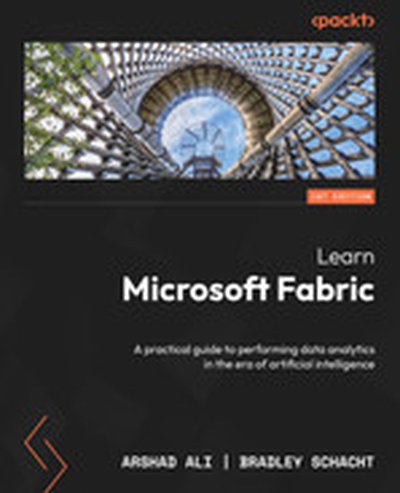
Dive into the wonders of Microsoft Fabric, the ultimate solution for mastering data analytics in the AI era. Through engaging real-world examples and hands-on scenarios, this book will equip you with all the tools to design, build, and maintain analytics systems for various use cases like lakehouses, data warehouses, real-time analytics, and data science. What this Book will help me do Understand and utilize the key components of Microsoft Fabric for modern analytics. Build scalable and efficient data analytics solutions with medallion architecture. Implement real-time analytics and machine learning models to derive actionable insights. Monitor and administer your analytics platform for high performance and security. Leverage AI-powered assistant Copilot to boost analytics productivity. Author(s) Arshad Ali and None Schacht bring years of expertise in data analytics and system architecture to this book. Arshad is a seasoned professional specialized in AI-integrated analytics platforms, while None Schacht has a proven track record in deploying enterprise data solutions. Together, they provide deep insights and practical knowledge with a structured and approachable teaching method. Who is it for? Ideal for data professionals such as data analysts, engineers, scientists, and AI/ML experts aiming to enhance their data analytics skills and master Microsoft Fabric. It's also suited for students and new entrants to the field looking to establish a firm foundation in analytics systems. Requires a basic understanding of SQL and Spark.
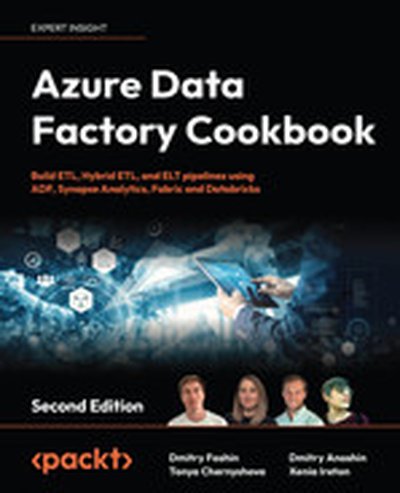
This comprehensive guide to Azure Data Factory shows you how to create robust data pipelines and workflows to handle both cloud and on-premises data solutions. Through practical recipes, you will learn to build, manage, and optimize ETL, hybrid ETL, and ELT processes. The book offers detailed explanations to help you integrate technologies like Azure Synapse, Data Lake, and Databricks into your projects. What this Book will help me do Master building and managing data pipelines using Azure Data Factory's latest versions and features. Leverage Azure Synapse and Azure Data Lake for streamlined data integration and analytics workflows. Enhance your ETL/ELT solutions with Microsoft Fabric, Databricks, and Delta tables. Employ debugging tools and workflows in Azure Data Factory to identify and solve data processing issues efficiently. Implement industry-grade best practices for reliable and efficient data orchestration and integration pipelines. Author(s) Dmitry Foshin, Tonya Chernyshova, Dmitry Anoshin, and Xenia Ireton collectively bring years of expertise in data engineering and cloud-based solutions. They are recognized professionals in the Azure ecosystem, dedicated to sharing their knowledge through detailed and actionable content. Their collaborative approach ensures that this book provides practical insights for technical audiences. Who is it for? This book is ideal for data engineers, ETL developers, and professional architects who work with cloud and hybrid environments. If you're looking to upskill in Azure Data Factory or expand your knowledge into related technologies like Synapse Analytics or Databricks, this is for you. Readers should have a foundational understanding of data warehousing concepts to fully benefit from the material.
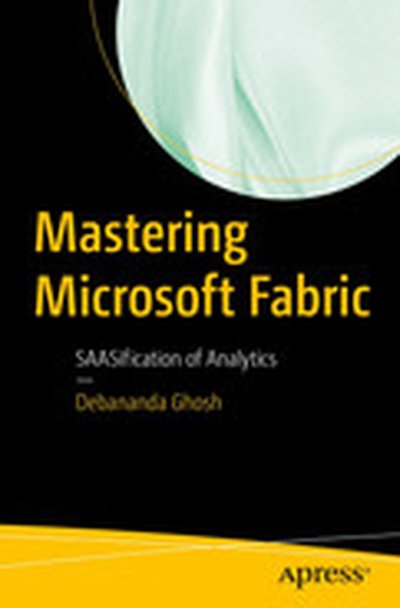
Learn and explore the capabilities of Microsoft Fabric, the latest evolution in cloud analytics suites. This book will help you understand how users can leverage Microsoft Office equivalent experience for performing data management and advanced analytics activity. The book starts with an overview of the analytics evolution from on premises to cloud infrastructure as a service (IaaS), platform as a service (PaaS), and now software as a service (SaaS version) and provides an introduction to Microsoft Fabric. You will learn how to provision Microsoft Fabric in your tenant along with the key capabilities of SaaS analytics products and the advantage of using Fabric in the enterprise analytics platform. OneLake and Lakehouse for data engineering is discussed as well as OneLake for data science. Author Ghosh teaches you about data warehouse offerings inside Microsoft Fabric and the new data integration experience which brings Azure Data Factory and Power Query Editor of Power BI together in a single platform. Also demonstrated is Real-Time Analytics in Fabric, including capabilities such as Kusto query and database. You will understand how the new event stream feature integrates with OneLake and other computations. You also will know how to configure the real-time alert capability in a zero code manner and go through the Power BI experience in the Fabric workspace. Fabric pricing and its licensing is also covered. After reading this book, you will understand the capabilities of Microsoft Fabric and its Integration with current and upcoming Azure OpenAI capabilities. What You Will Learn Build OneLake for all data like OneDrive for Microsoft Office Leverage shortcuts for cross-cloud data virtualization in Azure and AWS Understand upcoming OpenAI integration Discover new event streaming and Kusto query inside Fabric real-time analytics Utilize seamless tooling for machine learning and data science Who This Book Is For Citizen users and experts in the data engineering and data science fields, along with chief AI officers