Send us a text Get ready for an insightful conversation on the future of data integration and real-time decision making with Dima Spivak, Director of Product Management at StreamSets. We cover everything from the “why StreamSets” story to its secret sauce, how it plays in regulated industries, and what makes it a powerful player in data fabric, AI, and streaming use cases. If you’re passionate about the future of data pipelines, governance, and AI-driven insights, this one’s for you! ⏱️ Episode Guide: 02:02 | Meet Dima Spivak04:19 | Why StreamSets?06:00 | What is StreamSets?09:48 | On-Demand Expense11:34 | Regulated Industries12:36 | The Secret Sauce14:41 | A Competitive View15:50 | Data Fabric + StreamSets18:25 | StreamSets + AI21:12 | Use Cases That Matter24:02 | The Future of Streaming25:48 | Quality + Testing31:19 | For Fun 🎉🔗 Connect with Dima: LinkedIn: linkedin.com/in/dmitryspivak Website: https://www.ibm.com/blog/announcement/ibm-acquires-streamSets/ Want to be featured as a guest on Making Data Simple? Reach out to us at [email protected] and tell us why you should be next. The Making Data Simple Podcast is hosted by Al Martin, WW VP Technical Sales, IBM, where we explore trending technologies, business innovation, and leadership ... while keeping it simple & fun.
 talk-data.com
Topic
Fabric
Microsoft Fabric
323
tagged
Activity Trend
Top Events
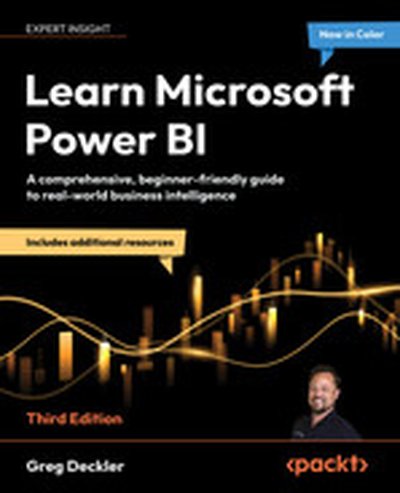
This comprehensive guide provides the perfect introduction to Microsoft Power BI, offering practical examples to help you learn the key tools and concepts of data visualization and analytics. By exploring real-world use cases, you'll gain the skills necessary to manage data, build interactive dashboards, and unlock valuable business insights. What this Book will help me do Learn the fundamentals of Power BI and business intelligence. Understand advanced features like Microsoft Fabric and Copilot. Transform raw data into meaningful visualizations and reports. Design professional dashboards to convey data insights clearly. Deploy and share reports effectively within your organization. Author(s) Greg Deckler is a recognized authority in Microsoft Power BI, holding the title of a 7-time Microsoft MVP. With extensive experience in business intelligence, Greg is known for his ability to distill complex concepts into clear and practical advice. His approachable teaching style makes technical learning accessible and engaging. Who is it for? This book is ideal for aspiring data analysts or IT professionals looking to gain a solid foundation in Power BI. Beginners with no prior experience in Power BI or business intelligence will find it especially useful. It's also suitable for professionals transitioning from other BI tools. Whether you're looking to enhance your current career or start a new one, this book is for you.
Microsoft Fabric was announced during Microsoft Build 2023. Which caused a lot of excitement in the Microsoft Data Platform community. Last year, the ability to configure GitHub as a provider for Git integration was introduced. In this session I give a brief overview of Microsoft Fabric before providing a basic introduction to GitHub. I then into details about how you can use GitHub with Microsoft Fabric at this moment in time. Including Git integration and other ways that you can connect up to the Data Warehouse experience. During the session I will also introduce some GitHub best practices. Including naming conventions and security. Plus, show some demos. By the end of this session, you will have a better understanding of how you can use GitHub with Microsoft Fabric.
Leveraging Project files and TMDL for agent reasoning
Connecting Fabric data with LLM-based agents
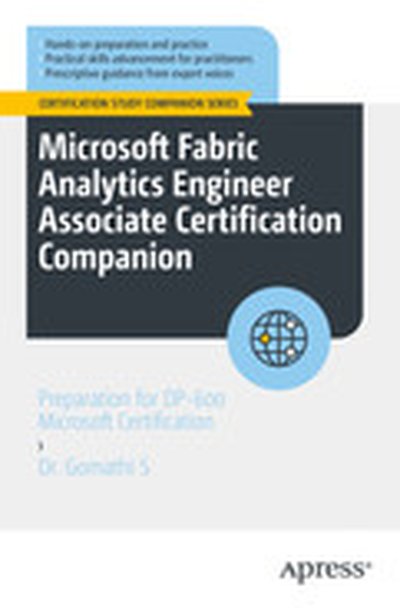
As organizations increasingly leverage Microsoft Fabric to unify their data engineering, analytics, and governance strategies, the role of the Fabric Analytics Engineer has become more crucial than ever. This book equips readers with the knowledge and hands-on skills required to excel in this domain and pass the DP-600 certification exam confidently. This book covers the entire certification syllabus with clarity and depth, beginning with an overview of Microsoft Fabric. You will gain an understanding of the platform’s architecture and how it integrates with data and AI workloads to provide a unified analytics solution. You will then delve into implementing a data warehouse in Microsoft Fabric, exploring techniques to ingest, transform, and store data efficiently. Next, you will learn how to work with semantic models in Microsoft Fabric, enabling them to create intuitive, meaningful data representations for visualization and reporting. Then, you will focus on administration and governance in Microsoft Fabric, emphasizing best practices for security, compliance, and efficient management of analytics solutions. Lastly, you will find detailed practice tests and exam strategies along with supplementary materials to reinforce key concepts. After reading the book, you will have the background and capability to learn the skills and concepts necessary both to pass the DP-600 exam and become a confident Fabric Analytics Engineer. What You Will Learn A complete understanding of all DP-600 certification exam objectives and requirements Key concepts and terminology related to Microsoft Fabric Analytics Step-by-step preparation for successfully passing the DP-600 certification exam Insights into exam structure, question patterns, and strategies for tackling challenging sections Confidence in demonstrating skills validated by the Microsoft Certified: Fabric Analytics Engineer Associate credential Who This Book Is For Data engineers, analysts, and professionals with some experience in data engineering or analytics, seeking to expand their knowledge of Microsoft Fabric
Fabric también es ideal para pequeñas empresas. En Casa Vicens Gaudí, Esbrina extrajo todas las reservas al Lakehouse y construyó un modelo semántico en modo importación. Como era la única carga de trabajo, se usó una logic app en Azure para activar y desactivar la capacidad, optimizando así los costes.
Dive into a 30-minute, slide-free session building live on Microsoft Fabric—hands-on coding & live demos, real-time insights, pro tips and zero fluff.
Se desarrolló una solución en Microsoft Fabric que registra automáticamente la trazabilidad de datos en Purview desde notebooks Spark. Usando PyApacheAtlas y autenticación con Service Principal en Key Vault, se crean entidades y procesos que permiten visualizar el flujo de datos entre tablas del Lakehouse.
Microsoft Fabric is transforming how organizations build unified data platforms for analytics, data science, and business intelligence. Until recently, deploying and managing Fabric resources required manual effort or ad hoc automation. That changed with the release of the Terraform provider for Microsoft Fabric last year, enabling teams to manage Fabric infrastructure as code. In this session, you'll learn how to get started using Terraform to provision and manage Microsoft Fabric components — including workspaces, pipelines, dataflows, and more — in a repeatable and scalable way. Aimed at data engineers, cloud architects, and DevOps professionals, we'll cover core Terraform concepts, walk through practical examples, and share best practices for integrating with Azure and CI/CD workflows. By the end of the session, you'll be equipped to bring automation, consistency, and governance to your Microsoft Fabric environments using Terraform.
Microsoft Fabric is the cutting-edge software-as-a-service (SAAS) analytical service offering that has disturbed the market since its arrival. Come and join this session to learn what Microsoft Fabric is, what are the workloads of it (including but not limited to Data Factory, Data Engineering, Data Warehousing, Data Science, real-time Analytics, Power BI, Data Activator, and OneLake), how it can be used to build an analytical solution, and also learn about what is the impact of Microsoft Fabric in the Analytics career. Learn the changes in the Power BI architecture and development now that Fabric is announced, and how the licensing of this new service offering works and how it impacts licensing, adoption, and implementations of Power BI in organizations. This is a session for you if you just started to use Fabric or are considering using it and want to know its features and impacts on your analytical solution.
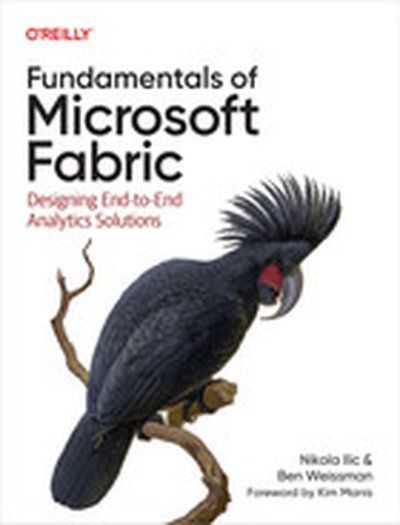
In the rapidly evolving world of data and analytics, professionals face the challenge of navigating complex platforms in order to build more efficient solutions. Microsoft Fabric, hailed as Microsoft’s “biggest data product in history after SQL Server,” offers powerful capabilities but comes with a steep learning curve. The myriad of choices within Fabric can be overwhelming, with multiple ways to tackle tasks, not all of which are equally efficient. This book serves as a definitive roadmap to understanding Microsoft Fabric—and leveraging it to suit your needs. Authors Nikola Ilic and Ben Weissman demystify the core concepts and components necessary to build, manage, and administer robust data solutions within this game-changing product. Discover the core Microsoft Fabric components and understand key concepts and techniques for building a robust data platform Learn to apply Microsoft Fabric effectively in your day-to-day job Understand the concept of a lake-centric architecture Gain the skills to implement a scalable and efficient end-to-end analytics solution Manage and administer a Fabric tenant
Depuis l’annonce de Real-Time Intelligence (RTI) dans Microsoft Fabric (GA à Ignite), cette session démystifie RTI et couvre: cas d’usage concrets chez les clients, insights sur le produit, patterns d’architecture modernes et une démo technique autour d’une solution réelle.
Date: 2025-06-19. AMA session panel focusing on Power BI and Microsoft Fabric questions. 18:00-19:00.
Urgent Investments in data, analytics and AI use cases has put the spotlight once more on strong data management foundations. Is our Data even Ready for upcoming AI, analytics and data sharing initiatives is now top of mindshare for heads of data, CDAOs and their counterparts. Data Fabrics have emerged as a long term, foundational data management architecture that you should now pursue for sustained D&A success. This session will:
1. Help understand what data Fabrics are and what they mean for your data strategy and architecture
2. Help decide how to build and where to buy
3. Navigate the vendor landscape to assist in tech procurement decisions to aid your fabric journey
SAP’s data and analytics solutions serve as the foundation for this data fabric; delivering an integrated, semantically-rich data layer that ensures seamless and scalable access to data without duplication.
Join this session to learn how Endeavour Energy is leveraging SAP’s data and analytic capabilities to build a flexible, business-ready data foundation critical for delivering analytical insights. We’ll explore the journey they took to get here, and the future they are building, including a look into SAP Business Data Cloud and, with Databricks, can facilitate a unified data platform to thrive in the AI economy.
Hear the latest best practices for harnessing Appian’s low-code, process automation platform including key technologies such as data fabric and Process HQ. Discover the power of real time, business generated data insights, dashboards and process insights that can transform the way business owners make agile, data-based decisions.
Eli Lilly and Company, a leading bio-pharma company, is revolutionizing manufacturing with next-gen fully digital sites. Lilly and Tredence have partnered to establish a Databricks-powered Global Manufacturing Data Fabric (GMDF), laying the groundwork for transformative data products used by various personas at sites and globally. By integrating data from various manufacturing systems into a unified data model, GMDF has delivered actionable insights across several use cases such as batch release by exception, predictive maintenance, anomaly detection, process optimization and more. Our serverless architecture leverages Databricks Auto Loader for real-time data streaming, PySpark for automation and Unity Catalog for governance, ensuring seamless data processing and optimization. This platform is the foundation for data driven processes, self-service analytics, AI and more. This session will provide details on the data architecture and strategy and share a few use cases delivered.
Building an open data lakehouse? Start with the right blueprint. This session walks through common reference architectures for interoperable lakehouse deployments across AWS, Google Cloud, Azure and tools like Snowflake, BigQuery and Microsoft Fabric. Learn how to design for cross-platform data access, unify governance with Unity Catalog and ensure your stack is future-ready — no matter where your data lives.
Unlock the power of your SAP data with SAP Business Data Cloud—a fully managed SaaS solution that unifies and governs all SAP data while seamlessly connecting it with third-party data. As part of SAP Business Data Cloud, SAP Databricks brings together trusted, semantically rich business data with industry-leading capabilities in AI, machine learning, and data engineering. Discover how to access curated SAP data products across critical business processes, enrich and harmonize your data without data copies using Delta Sharing, and leverage the results across your business data fabric. See it all in action with a demonstration.