It is an innovative application that enables users to scan exhibition press texts, typically written in International Art English—a unique and often criticized jargon prevalent in the contemporary art world, noted for its complex, abstract vocabulary and a style distinct from everyday language. Using a smartphone camera, the app simplifies these texts into a single, easily comprehensible sentence. Additionally, ArtSpeak Simplifier analyzes the accompanying image (often a central piece of the exhibition) and succinctly describes it in one sentence.
 talk-data.com
Topic
NLP
Natural Language Processing (NLP)
ai
machine_learning
text_analysis
252
tagged
Activity Trend
24
peak/qtr
2020-Q1
2026-Q2
Top Events
Based on vacancies from various sources (Xing, Indeed, LinkedIn) this app supports lateral movers (ie, people who want to switch fields) by answering questions like: What do jobs in my target field pay? In which cities/regions of Germany are most jobs in my target field (eg, “Data Science”) concentrated? What are the most requested skills in my target field? (this is an NLP task).
The project aims to develop an innovative e-commerce brand management application. Utilizes NLP to process and respond to user queries. Integrates AI for efficient data storage and management. Aims to be a cutting-edge AI product in the e-commerce domain.
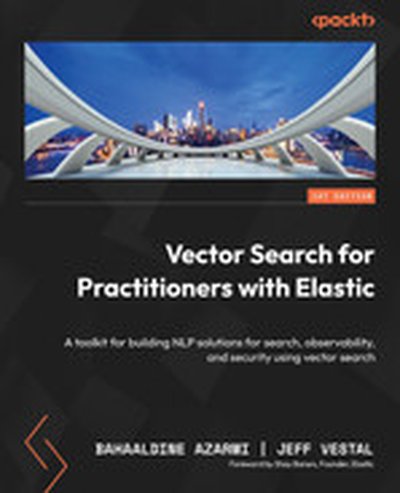
The book "Vector Search for Practitioners with Elastic" provides a comprehensive guide to leveraging vector search technology within Elastic for applications in NLP, cybersecurity, and observability. By exploring practical examples and advanced techniques, this book teaches you how to optimize and implement vector search to address complex challenges in modern data management. What this Book will help me do Gain a deep understanding of implementing vector search with Elastic. Learn techniques to optimize vector data storage and retrieval for practical applications. Understand how to apply vector search for image similarity in Elastic. Discover methods for utilizing vector search for security and observability enhancements. Develop skills to integrate modern NLP tools with vector databases and Elastic. Author(s) Bahaaldine Azarmi, with his extensive experience in Elastic and NLP technologies, brings a practitioner's insight into the world of vector search. Co-author None Vestal contributes expertise in observability and system optimization. Together, they deliver practical and actionable knowledge in a clear and approachable manner. Who is it for? This book is designed for data professionals seeking to deepen their expertise in vector search and Elastic technologies. It is ideal for individuals in observability, search technology, or cybersecurity roles. If you have foundational knowledge in machine learning models, Python, and Elastic, this book will enable you to effectively utilize vector search in your projects.
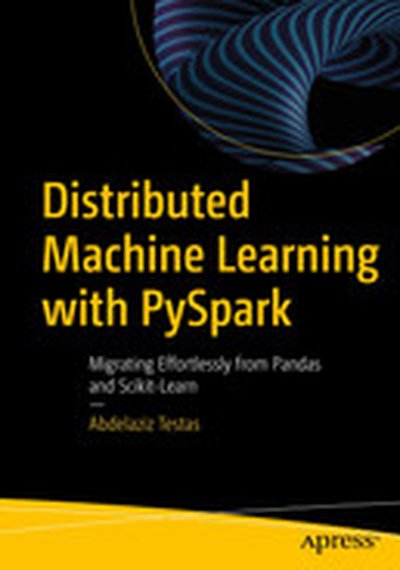
Migrate from pandas and scikit-learn to PySpark to handle vast amounts of data and achieve faster data processing time. This book will show you how to make this transition by adapting your skills and leveraging the similarities in syntax, functionality, and interoperability between these tools. Distributed Machine Learning with PySpark offers a roadmap to data scientists considering transitioning from small data libraries (pandas/scikit-learn) to big data processing and machine learning with PySpark. You will learn to translate Python code from pandas/scikit-learn to PySpark to preprocess large volumes of data and build, train, test, and evaluate popular machine learning algorithms such as linear and logistic regression, decision trees, random forests, support vector machines, Naïve Bayes, and neural networks. After completing this book, you will understand the foundational concepts of data preparation and machine learning and will have the skills necessary toapply these methods using PySpark, the industry standard for building scalable ML data pipelines. What You Will Learn Master the fundamentals of supervised learning, unsupervised learning, NLP, and recommender systems Understand the differences between PySpark, scikit-learn, and pandas Perform linear regression, logistic regression, and decision tree regression with pandas, scikit-learn, and PySpark Distinguish between the pipelines of PySpark and scikit-learn Who This Book Is For Data scientists, data engineers, and machine learning practitioners who have some familiarity with Python, but who are new to distributed machine learning and the PySpark framework.
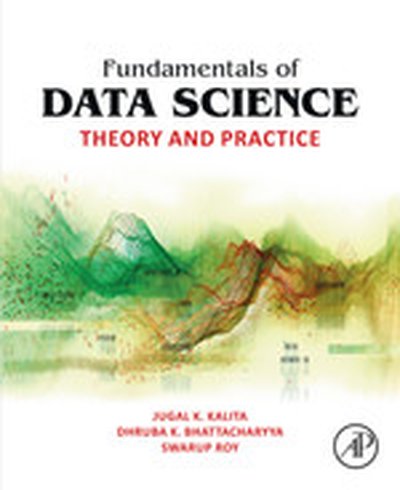
Fundamentals of Data Science: Theory and Practice presents basic and advanced concepts in data science along with real-life applications. The book provides students, researchers and professionals at different levels a good understanding of the concepts of data science, machine learning, data mining and analytics. Users will find the authors’ research experiences and achievements in data science applications, along with in-depth discussions on topics that are essential for data science projects, including pre-processing, that is carried out before applying predictive and descriptive data analysis tasks and proximity measures for numeric, categorical and mixed-type data. The book's authors include a systematic presentation of many predictive and descriptive learning algorithms, including recent developments that have successfully handled large datasets with high accuracy. In addition, a number of descriptive learning tasks are included. Presents the foundational concepts of data science along with advanced concepts and real-life applications for applied learning Includes coverage of a number of key topics such as data quality and pre-processing, proximity and validation, predictive data science, descriptive data science, ensemble learning, association rule mining, Big Data analytics, as well as incremental and distributed learning Provides updates on key applications of data science techniques in areas such as Computational Biology, Network Intrusion Detection, Natural Language Processing, Software Clone Detection, Financial Data Analysis, and Scientific Time Series Data Analysis Covers computer program code for implementing descriptive and predictive algorithms
by
Matt Fornito
Curious about the world of #artificialintelligence (#AI)? How is it helping #evolve the #data #industry and #organizations in it? And what #career paths should people be considering when looking into the #technology industry? Find the answer to these questions and more as Matt Fornito '#TheAIGuy,' as dubbed by #NVIDIA #Executives, joins us on this #podcast #episode of Data Unchained!
AIAdvisor #fortune500 #Fortune100 #organizations #business #robotics #NLP #machinelearning #python #PHD #Phsycology #growth #autoML #MLOps #scientist #engineers #datascientists #datascience #dataengineers
Cyberpunk by jiglr | https://soundcloud.com/jiglrmusic Music promoted by https://www.free-stock-music.com Creative Commons Attribution 3.0 Unported License https://creativecommons.org/licenses/by/3.0/deed.en_US Hosted on Acast. See acast.com/privacy for more information.
In this demo intensive session Alan will show you how to use Azure Open AI Service to build natural language solutions from scratch. He will explain basic concepts of natural language processing, such as tokens, embeddings, and transformers. He will demonstrate how to use the Azure Open AI Service portal to create and deploy natural language models using pre-trained or custom data. He will also show you how to use the Azure Open AI Service SDK to interact with the models programmatically and integrate them with other Azure services.
This talk describes the newest trend in speech synthesis, where large autoregressive transformers push forward the quality of artificial speech. We will explore new emerging capabilities of state-of-the-art models and observe peculiar analogies with large language models.
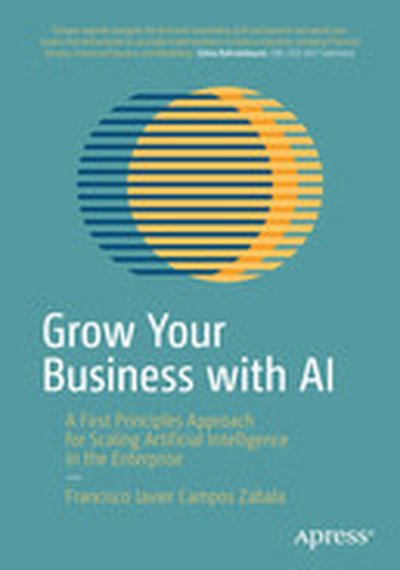
Leverage the power of Artificial Intelligence (AI) to drive the growth and success of your organization. This book thoroughly explores the reasons why it is so hard to implement AI, and highlights the need to reconcile the motivations and goals of two very different groups of people, business-minded and technical-minded. Divided into four main parts (First Principles, The Why, The What, The How), you'll review case studies and examples from companies that have successfully implemented AI. Part 1 provides a comprehensive overview of the First Principles approach and its basic conventions. Part 2 provides an in-depth look at the current state of AI and why it is increasingly important to businesses of all sizes. Part 3 delves into the key concepts and technologies of AI. Part 4 shares practical guidance and actionable steps for businesses looking to implement AI. Grow Your Business with AI is a must-read for anyone looking to understand and harness the power of AI for business growth and to stay ahead of the curve. What You'll Learn Review the key concepts and technologies of AI, including machine learning, natural language processing, and computer vision Apply the benefits of AI, including increased efficiency, improved decision-making, and new revenue streams in different industries Integrate AI into existing systems and processes. Who This Book Is For Entrepreneurs, business leaders, and professionals looking to leverage the power of AI to drive growth and success for their organizations.
The idea is to evaluate a text (e.g., a Tweet) and to provide references pointing to an official source (e.g., official statistics from the German federal government). Since automatic fact checking proves to be hard and a slippery affair, the stats servant is supposed to make it easy for humans to spot and counter disinformation. By delivering official statistics in reference to allegations made on social media, we build a little helper to sober debate on the internet. Starting small with statistics for a narrowly defined subject area it would be nice to branch out to areas populists usually exploit.
For the past few years, we've seen the importance of data literacy and why organizations must invest in a data-driven culture, mindset, and skillset. However, as generative AI tools like ChatGPT have risen to prominence in the past year, AI literacy has never been more important. But how do we begin to approach AI literacy? Is it an extension of data literacy, a complement, or a new paradigm altogether? How should you get started on your AI literacy ambitions? Cindi Howson is the Chief Data Strategy Officer at ThoughtSpot and host of The Data Chief podcast. Cindi is a data analytics, AI, and BI thought leader and an expert with a flair for bridging business needs with technology. As Chief Data Strategy Officer at ThoughtSpot, she advises top clients on data strategy and best practices to become data-driven, speaks internationally on top trends such as AI ethics, and influences ThoughtSpot’s product strategy.
Cindi was previously a Gartner Research Vice President, the lead author for the data and analytics maturity model and analytics and BI Magic Quadrant, and a popular keynote speaker. She introduced new research in data and AI for good, NLP/BI Search, and augmented analytics, bringing both BI bake-offs and innovation panels to Gartner globally. She’s frequently quoted in MIT, Harvard Business Review, and Information Week. She is rated a top 12 influencer in big data and analytics by Analytics Insight, Onalytca, Solutions Review, and Humans of Data.
In the episode, Cindi and Adel discuss how generative AI accelerates an organization’s data literacy, how leaders can think beyond data literacy and start to think about AI literacy, the importance of responsible use of AI, how to best communicate the value of AI within your organization, what generative AI means for data teams, AI use-cases in the data space, the psychological barriers blocking AI adoption, and much more.
Links Mentioned in the Show: The Data Chief Podcast ThoughtSpot Sage BloombergGPT Radar: Data & AI Literacy Course: AI Ethics Course: Generative AI Concepts Course: Implementing AI Solutions in Business
We talked about:
Aleksander's background Aleksander as a Causal Ambassador Using causality to make decisions Counterfactuals and and Judea Pearl Meta-learners vs classical ML models Average treatment effect Reducing causal bias, the super efficient estimator, and model uplifting Metrics for evaluating a causal model vs a traditional ML model Is the added complexity of a causal model worth implementing? Utilizing LLMs in causal models (text as outcome) Text as treatment and style extraction The viability of A/B tests in causal models Graphical structures and nonparametric identification Aleksander's resource recommendations
Links:
The Book of Why: https://amzn.to/3OZpvBk Causal Inference and Discovery in Python: https://amzn.to/46Pperr Book's GitHub repo: https://github.com/PacktPublishing/Causal-Inference-and-Discovery-in-Python The Battle of Giants: Causality vs NLP (PyData Berlin 2023): https://www.youtube.com/watch?v=Bd1XtGZhnmw New Frontiers in Causal NLP (papers repo): https://bit.ly/3N0TFTL
Free MLOps course: https://github.com/DataTalksClub/mlops-zoomcamp Join DataTalks.Club: https://datatalks.club/slack.html Our events: https://datatalks.club/events.html
Maddie is a Sr. ML / Research Engineer in industry, published author and seasoned open-source AI leader, with 6+ years of experience in ML R&D. Her areas of interest include generative models, NLP and Human <> AI interactions. She was also a 2x startup founder, a Blockchain educator/researcher, Founder of Women Who Code - Data Science, and technical advisor to various startups and Di…
Maddie Shang - OpenMined (Sr. AI Research Engineer)
Maddie is a Sr. ML / Research Engineer in industry, published author and seasoned open-source AI leader, with 6+ years of experience in ML R&D. Her areas of interest include generative models, NLP and Human <> AI interactions. She was also a 2x startup founder, a Blockchain educator/researcher, Founder of Women Who Code - Data Science, and technical advisor to various startups and Di…
Send us a text "Insights from Luke Arrigoni, CEO of Arricor, on AI Innovations and Business Impact" Description: Welcome to an enlightening episode of our podcast as we dive into the fascinating world of Generative AI, Vision AI, and Natural Language Processing (NLP) with the esteemed Luke Arrigoni. In this Part 1 interview, Luke, Chief Executive Officer at Arricor, takes us on a journey through AI's transformative potential. Discover the minds behind AI advancements as we delve into topics like facial recognition for privacy, Arricor's mission, Prompt engineering, and the myriad use cases that these technologies unlock. Gain valuable insights into Large Language Models (LLMs) and the role of prompt engineering in optimizing AI's capabilities. Luke Arrigoni shares his expertise on avoiding AI hallucinations, the unique differentiation of Arricor, and the remarkable business impact of Generative AI. Join us to explore the present and future of AI through this engaging discussion. Don't miss this opportunity to gain insights from a visionary in the AI field. Connect with Luke Arrigoni on LinkedIn [https://www.linkedin.com/in/lukearrigoni/] and learn more about Arricor's work on their website [http://arricor.com/]. Stay tuned for Part 2 as we continue our conversation on AI's groundbreaking potential.
01:40 Meet Luke Arrigoni04:13 Facial recognition for privacy06:21 Arricor mission08:39 More on LLMs10:29 Prompt engineering13:30 Use cases16:30 Arricor differentiation20:59 Avoiding hallucinations26:13 Business impact of GenAILinkedIn: https://www.linkedin.com/in/lukearrigoni/ Website: http://arricor.com/ Want to be featured as a guest on Making Data Simple? Reach out to us at [email protected] and tell us why you should be next. The Making Data Simple Podcast is hosted by Al Martin, WW VP Technical Sales, IBM, where we explore trending technologies, business innovation, and leadership ... while keeping it simple & fun.
Want to be featured as a guest on Making Data Simple? Reach out to us at [email protected] and tell us why you should be next. The Making Data Simple Podcast is hosted by Al Martin, WW VP Technical Sales, IBM, where we explore trending technologies, business innovation, and leadership ... while keeping it simple & fun.
Maddie is a Sr. ML / Research Engineer in industry, published author and seasoned open-source AI leader, with 6+ years of experience in ML R&D. Her areas of interest include generative models, NLP and Human <> AI interactions. She was also a 2x startup founder, a Blockchain educator/researcher, Founder of Women Who Code - Data Science, and technical advisor to various startups and Di…
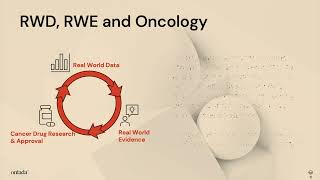
Ontada, a McKesson business, is an oncology real-world data and evidence, clinical education and provider of technology business dedicated to transforming the fight against cancer. Core to Ontada’s mission is using real-world data (RWD) and evidence generation to improve patient health outcomes and to accelerate life science research.
To support its mission, Ontada embarked on a journey to migrate its enterprise data warehouse (EDW) from an on-premise Oracle database to Databricks Lakehouse. This move allows Ontada to now consume data from any source, including structured and unstructured data from its own EHR and genomics lab results, and realize faster time to insight. In addition, using the Lakehouse has helped Ontada eliminate data silos, enabling the organization to realize the full potential of RWD – from running traditional descriptive analytics to extracting biomarkers from unstructured data. The session will cover the following topics:
- Oracle to Databricks: migration best practices and lessons learned
- People, process, and tools: expediting innovation while protecting patient information using Unity Catalog
- Getting the most out of the Databricks Lakehouse: from BI to genomics, running all analytics under one platform
- Hyperscale biomarker abstraction: reducing the manual effort needed to extract biomarkers from large unstructured data (medical notes, scanned/faxed documents) using spaCY and John Snow Lab NLP libraries
Join this session to hear how Ontada is transforming RWD to deliver safe and effective cancer treatment.
Talk by: Donghwa Kim
Connect with us: Website: https://databricks.com Twitter: https://twitter.com/databricks LinkedIn: https://www.linkedin.com/company/databricks Instagram: https://www.instagram.com/databricksinc Facebook: https://www.facebook.com/databricksinc
JetBlue has embarked over the past year on an AI and ML transformation. Databricks has been instrumental in this transformation due to the ability to integrate streaming pipelines, ML training using MLflow, ML API serving using ML registry and more in one cohesive platform. Using real-time streams of weather, aircraft sensors, FAA data feeds, JetBlue operations and more are used for the world's first AI and ML operating system orchestrating a digital-twin, known as BlueSky for efficient and safe operations. JetBlue has over 10 ML products (multiple models each product) in production across multiple verticals including dynamic pricing, customer recommendation engines, supply chain optimization, customer sentiment NLP and several more.
The core JetBlue data science and analytics team consists of Operations Data Science, Commercial Data Science, AI and ML engineering and Business Intelligence. To facilitate the rapid growth and faster go-to-market strategy, the team has built an internal Data Catalog + AutoML + AutoDeploy wrapper called BlueML using Databricks features to empower data scientists including advanced analysts with the ability to train and deploy ML models in less than five lines of code.
Talk by: Derrick Olson and Rob Bajra
Connect with us: Website: https://databricks.com Twitter: https://twitter.com/databricks LinkedIn: https://www.linkedin.com/company/databricks Instagram: https://www.instagram.com/databricksinc Facebook: https://www.facebook.com/databricksinc
International Finance Corporation (IFC) is using data and AI to build machine learning solutions that create analytical capacity to support the review of ESG issues at scale. This includes natural language processing and requires entity recognition and other applications to support the work of IFC’s experts and other investors working in emerging markets. These algorithms are available via IFC’s Machine Learning ESG Analyst (MALENA) platform to enable rapid analysis, increase productivity, and build investor confidence. In this manner, IFC, a development finance institution with the mandate to address poverty in emerging markets, is making use of its historical datasets and open source AI solutions to build custom-AI applications that democratize access to ESG capacity to read and classify text.
In this session, you will learn the unique flexibility of the Apache Spark™ ecosystem from Databricks and how that has allowed IFC’s MALENA project to connect to scalable data lake storage, use different natural language processing models and seamlessly adopt MLOps.
Talk by: Atiyah Curmally and Blaise Sandwidi
Connect with us: Website: https://databricks.com Twitter: https://twitter.com/databricks LinkedIn: https://www.linkedin.com/company/databricks Instagram: https://www.instagram.com/databricksinc Facebook: https://www.facebook.com/databricksinc