talk-data.com talk-data.com

Topic

nosql-databases

121

tagged

Activity Trend

1 peak/qtr
2020-Q1 2026-Q1

Activities

121 activities · Newest first

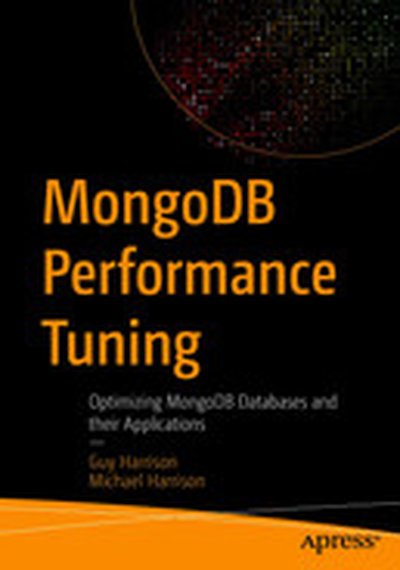
MongoDB Performance Tuning: Optimizing MongoDB Databases and their Applications

Use this fast and complete guide to optimize the performance of MongoDB databases and the applications that depend on them. You will be able to turbo-charge the performance of your MongoDB applications to provide a better experience for your users, reduce your running costs, and avoid application growing pains. MongoDB is the world’s most popular document database and the foundation for thousands of mission-critical applications. This book helps you get the best possible performance from MongoDB. MongoDB Performance Tuning takes a methodical and comprehensive approach to performance tuning that begins with application and schema design and goes on to cover optimization of code at all levels of an application. The book also explains how to configure MongoDB hardware and cluster configuration for optimal performance. The systematic approach in the book helps you treat the true causes of performance issues and get the best return on your tuninginvestment. Even when you’re under pressure and don’t know where to begin, simply follow the method in this book to set things right and get your MongoDB performance back on track. What You Will Learn Apply a methodical approach to MongoDB performance tuning Understand how to design an efficient MongoDB application Optimize MongoDB document design and indexing strategies Tune MongoDB queries, aggregation pipelines, and transactions Optimize MongoDB server resources: CPU, memory, disk Configure MongoDB Replica sets and Sharded clusters for optimal performance Who This Book Is For Developers and administrators of high-performance MongoDB applications who want to be sure they are getting the best possible performance from their MongoDB system. For developers who wish to create applications that are fast, scalable,and cost-effective. For administrators who want to optimize their MongoDB server and hardware configuration.
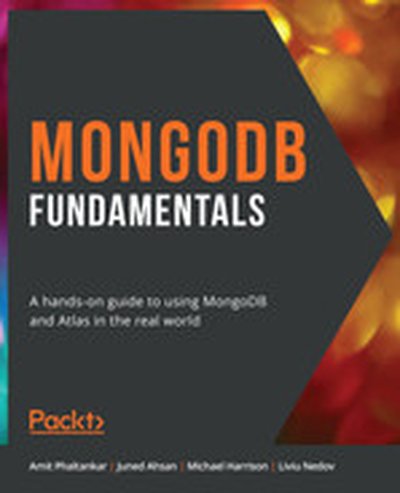
MongoDB Fundamentals

This book, "MongoDB Fundamentals", is the ideal hands-on guide to learning MongoDB. By starting from the basics of NoSQL databases and progressing to cloud integration using MongoDB Atlas, you will gain practical experience managing, querying, and visualizing data effectively for real-world applications. What this Book will help me do Set up and manage a MongoDB database with both local and cloud environments. Master querying and modifying data using the aggregation framework for complex operations. Implement effective database architecture with replication and sharding techniques. Ensure data security and resilience through user management and efficient backup/restore methods. Visualize data insights through dynamic reports and charts using MongoDB Charts. Author(s) Amit Phaltankar, Juned Ahsan, Michael Harrison, and Liviu Nedov are seasoned professionals in the field of database management systems, each bringing extensive experience working with MongoDB and cloud technologies. They excel at translating technical concepts into accessible, actionable insights, and have a passion for enabling IT professionals to create high-performance database solutions. Who is it for? "MongoDB Fundamentals" is tailored for developers, database administrators, system administrators, and cloud architects who are new to MongoDB but are looking to integrate it into their data processing workflows. It's perfect for those who aim to enhance their skills in handling data within cloud computing environments and have some basic programming or database experience.

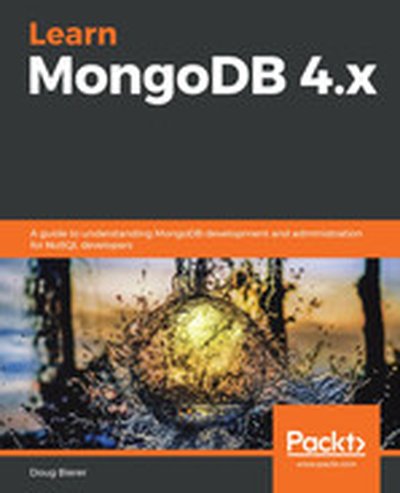
Learn MongoDB 4.x

Explore the capabilities of MongoDB 4.x with this comprehensive guide designed for developers and administrators working with NoSQL databases. Dive into topics such as database design, advanced query handling, and security configuration, and gain hands-on experience through practical examples and insights. What this Book will help me do Learn to configure and install MongoDB 4.x for development and administration. Understand the principles of NoSQL schema design for optimal performance. Perform complex queries and operations to manage your MongoDB databases. Secure your MongoDB setup with role-based access control and encryption techniques. Monitor and optimize database performance for production environments. Author(s) None Bierer, the author of 'Learn MongoDB 4.x,' is a seasoned database expert with extensive experience in NoSQL technologies. With a focus on practicality and clear explanations, None brings deep insights into MongoDB's development and administration. Who is it for? This book is ideal for early-career developers, system administrators, and database enthusiasts eager to break into NoSQL technologies. If you are familiar with Python and basic database concepts, this book will guide you through mastering MongoDB. It's perfect for those building dynamic backend systems.

MongoDB Topology Design: Scalability, Security, and Compliance on a Global Scale

Create a world-class MongoDB cluster that is scalable, reliable, and secure. Comply with mission-critical regulatory regimes such as the European Union’s General Data Protection Regulation (GDPR). Whether you are thinking of migrating to MongoDB or need to meet legal requirements for an existing self-managed cluster, this book has you covered. It begins with the basics of replication and sharding, and quickly scales up to cover everything you need to know to control your data and keep it safe from unexpected data loss or downtime. This book covers best practices for stable MongoDB deployments. For example, a well-designed MongoDB cluster should have no single point of failure. The book covers common use cases when only one or two data centers are available. It goes into detail about creating geopolitical sharding configurations to cover the most stringent data protection regulation compliance. The book also covers different tools and approaches for automating and monitoring a cluster with Kubernetes, Docker, and popular cloud provider containers. What You Will Learn Get started with the basics of MongoDB clusters Protect and monitor a MongoDB deployment Deepen your expertise around replication and sharding Keep effective backups and plan ahead for disaster recovery Recognize and avoid problems that can occur in distributed databases Build optimal MongoDB deployments within hardware and data center limitations Who This Book Is For Solutions architects, DevOps architects and engineers, automation and cloud engineers, and database administrators who are new to MongoDB and distributed databases or who need to scale up simple deployments. This book is a complete guide to planning a deployment for optimal resilience, performance, and scaling, and covers all the details required to meet the new set of data protection regulations such as the GDPR. This book is particularly relevant for large global organizations such as financial and medical institutions, as well as government departments that need to control data in the whole stack and are prohibited from using managed cloud services.

Cassandra: The Definitive Guide, 3rd Edition

Imagine what you could do if scalability wasn't a problem. With this hands-on guide, you’ll learn how the Cassandra database management system handles hundreds of terabytes of data while remaining highly available across multiple data centers. This third edition—updated for Cassandra 4.0—provides the technical details and practical examples you need to put this database to work in a production environment. Authors Jeff Carpenter and Eben Hewitt demonstrate the advantages of Cassandra’s nonrelational design, with special attention to data modeling. If you’re a developer, DBA, or application architect looking to solve a database scaling issue or future-proof your application, this guide helps you harness Cassandra’s speed and flexibility. Understand Cassandra’s distributed and decentralized structure Use the Cassandra Query Language (CQL) and cqlsh—the CQL shell Create a working data model and compare it with an equivalent relational model Develop sample applications using client drivers for languages including Java, Python, and Node.js Explore cluster topology and learn how nodes exchange data

MongoDB Recipes: With Data Modeling and Query Building Strategies

Get the most out of MongoDB using a problem-solution approach. This book starts with recipes on the MongoDB query language, including how to query various data structures stored within documents. These self-contained code examples allow you to solve your MongoDB problems without fuss. MongoDB Recipes describes how to use advanced querying in MongoDB, such as indexing and the aggregation framework. It demonstrates how to use the Compass function, a GUI client interacting with MongoDB, and how to apply data modeling to your MongoDB application. You’ll see recipes on the latest features of MongoDB 4 allowing you to manage data in an efficient manner using MongoDB. What You Will Learn Work with the MongoDB document model Design MongoDB schemas Use the MongoDB query language Harness the aggregation framework Create replica sets and sharding in MongoDB Who This Book Is For Developers and professionals who work with MongoDB.

MongoDB: The Definitive Guide, 3rd Edition

Manage your data with a system designed to support modern application development. Updated for MongoDB 4.2, the third edition of this authoritative and accessible guide shows you the advantages of using document-oriented databases. You’ll learn how this secure, high-performance system enables flexible data models, high availability, and horizontal scalability. Authors Shannon Bradshaw, Eoin Brazil, and Kristina Chodorow provide guidance for database developers, advanced configuration for system administrators, and use cases for a variety of projects. NoSQL newcomers and experienced MongoDB users will find updates on querying, indexing, aggregation, transactions, replica sets, ops management, sharding and data administration, durability, monitoring, and security. In six parts, this book shows you how to: Work with MongoDB, perform write operations, find documents, and create complex queries Index collections, aggregate data, and use transactions for your application Configure a local replica set and learn how replication interacts with your application Set up cluster components and choose a shard key for a variety of applications Explore aspects of application administration and configure authentication and authorization Use stats when monitoring, back up and restore deployments, and use system settings when deploying MongoDB

Mastering MongoDB 4.x - Second Edition

This book, Mastering MongoDB 4.x, provides an in-depth exploration of MongoDB's features and capabilities, empowering readers to create high-performance and fault-tolerant database solutions. Through practical examples and clear explanations, you will learn how to implement complex queries, optimize database performance, manage large-scale clusters, and ensure robust failover and backup strategies. What this Book will help me do Understand advanced querying techniques and best practices in data indexing and management. Effectively configure and monitor MongoDB instances for scalability and optimized performance. Master techniques for replication and sharding to support high-availability systems. Deploy MongoDB-based applications seamlessly across on-premise and cloud environments. Learn to integrate MongoDB with modern technologies like big data platforms, containers, and IoT applications. Author(s) Alex Giamas is a seasoned database administrator and developer with significant experience in working with both relational and non-relational databases. Having authored numerous articles and given lectures on MongoDB and other data management technologies, Alex brings practical insights to his writing. He emphasizes real-world applications with examples drawn from his extensive career. Who is it for? This book is designed for developers and database administrators already familiar with MongoDB and basic database concepts, who are looking to enhance their expertise for implementing advanced MongoDB solutions. It is also suitable for professionals aspiring to earn MongoDB certifications and expand their skills to manage large, high-performance database systems efficiently.

Mastering Apache Cassandra 3.x - Third Edition

This expert guide, "Mastering Apache Cassandra 3.x," is designed for individuals looking to achieve scalable and fault-tolerant database deployment using Apache Cassandra. From mastering the foundational components of Cassandra architecture to advanced topics like clustering and analytics integration with Apache Spark, this book equips readers with practical, actionable skills. What this Book will help me do Understand and deploy Apache Cassandra clusters for fault-tolerant and scalable databases. Use advanced features of CQL3 to streamline database queries and operations. Optimize and configure Cassandra nodes to improve performance for demanding applications. Monitor and manage Cassandra clusters effectively using best practices. Combine Cassandra with Apache Spark to build robust data analytics pipelines. Author(s) None Ploetz and None Malepati are experienced technologists and software professionals with extensive expertise in distributed database systems and big data algorithms. They've combined their industry knowledge and teaching backgrounds to create accessible and practical guides for learners worldwide. Their collaborative work is focused on demystifying complex systems for maximum learning impact. Who is it for? This book is ideal for database administrators, software developers, and big data specialists seeking to expand their skill set into scalable data storage using Cassandra. Readers should have a basic understanding of database concepts and some programming experience. If you're looking to design robust databases optimized for modern big data use-cases, this book will serve as a valuable resource.

Redash v5 Quick Start Guide

In the 'Redash v5 Quick Start Guide', you'll learn everything you need to master the Redash data visualization platform and confidently create compelling dashboards. This book covers how to connect to different data sources, use SQL to query data, and design and share insightful visualizations. What this Book will help me do Understand how to install, configure, and troubleshoot Redash for your data projects. Gain skills in managing user roles and permissions to ensure secure data collaboration. Learn to connect Redash to various data sources and fetch, process, and handle data. Master the creation of advanced visualizations to effectively present complex data. Develop proficiency in utilizing the Redash API for integrating programmatic interactions. Author(s) None Leibzon is a recognized expert in data visualization and Business Intelligence tools, with years of experience working with data-driven systems. Drawing from his deep practical knowledge of Redash and its applications, None has crafted this guide to be accessible and highly practical. His goal is to enable learners and professionals to unlock the power of data storytelling through intuitive and actionable visualization. Who is it for? If you're a Data Analyst, BI professional, or Data Developer with basic SQL skills, this book is tailored for you. It assumes no prior knowledge of Redash but benefits those who understand fundamental Business Intelligence concepts. Whether you're looking to create your first visualization or streamline data collaboration, this guide will help you achieve your goals.

MongoDB 4 Quick Start Guide

"MongoDB 4 Quick Start Guide" is your gateway into understanding and utilizing MongoDB, the world's leading NoSQL database alternative. Through this approachable guide, you will quickly learn how to install, secure, and effectively perform database operations using MongoDB Version 4. What this Book will help me do Master the installation and configuration of MongoDB to prepare for secure database setups. Execute CRUD operations seamlessly to manage your data through the MongoDB shell. Construct queries using the aggregation pipeline for robust data analysis. Implement replication and sharding to ensure data safety and scaleability. Use the PHP MongoDB driver to integrate MongoDB effectively with web applications. Author(s) None Bierer is an expert in database technologies with extensive experience in NoSQL solutions, particularly MongoDB. Their passion for teaching developers new and efficient ways to work with databases shines through in this practical and hands-on guide. Who is it for? This book is perfect for web developers looking to enhance their understanding of modern databases, IT professionals interested in NoSQL solutions, and DBAs transitioning from relational databases to document-oriented databases. Prior experience with databases can be helpful, but this guide is accessible even for enthusiastic beginners seeking to learn MongoDB.

Cosmos DB for MongoDB Developers: Migrating to Azure Cosmos DB and Using the MongoDB API

Learn Azure Cosmos DB and its MongoDB API with hands-on samples and advanced features such as the multi-homing API, geo-replication, custom indexing, TTL, request units (RU), consistency levels, partitioning, and much more. Each chapter explains Azure Cosmos DB’s features and functionalities by comparing it to MongoDB with coding samples. Cosmos DB for MongoDB Developers starts with an overview of NoSQL and Azure Cosmos DB and moves on to demonstrate the difference between geo-replication of Azure Cosmos DB compared to MongoDB. Along the way you’ll cover subjects including indexing, partitioning, consistency, and sizing, all of which will help you understand the concepts of read units and how this calculation is derived from an existing MongoDB’s usage. The next part of the book shows you the process and strategies for migrating to Azure Cosmos DB. You will learn the day-to-day scenarios of using Azure Cosmos DB, its sizing strategies, and optimizing techniques for the MongoDB API. This information will help you when planning to migrate from MongoDB or if you would like to compare MongoDB to the Azure Cosmos DB MongoDB API before considering the switch. What You Will Learn Migrate to MongoDB and understand its strategies Develop a sample application using MongoDB’s client driver Make use of sizing best practices and performance optimization scenarios Optimize MongoDB’s partition mechanism and indexing Who This Book Is For MongoDB developers who wish to learn Azure Cosmos DB. It specifically caters to a technical audience, working on MongoDB.

Data Science Fundamentals for Python and MongoDB

Build the foundational data science skills necessary to work with and better understand complex data science algorithms. This example-driven book provides complete Python coding examples to complement and clarify data science concepts, and enrich the learning experience. Coding examples include visualizations whenever appropriate. The book is a necessary precursor to applying and implementing machine learning algorithms. The book is self-contained. All of the math, statistics, stochastic, and programming skills required to master the content are covered. In-depth knowledge of object-oriented programming isn’t required because complete examples are provided and explained. Data Science Fundamentals with Python and MongoDB is an excellent starting point for those interested in pursuing a career in data science. Like any science, the fundamentals of data science are a prerequisite to competency. Without proficiency in mathematics, statistics, data manipulation, and coding, the path to success is “rocky” at best. The coding examples in this book are concise, accurate, and complete, and perfectly complement the data science concepts introduced. What You'll Learn Prepare for a career in data science Work with complex data structures in Python Simulate with Monte Carlo and Stochastic algorithms Apply linear algebra using vectors and matrices Utilize complex algorithms such as gradient descent and principal component analysis Wrangle, cleanse, visualize, and problem solve with data Use MongoDB and JSON to work with data Who This Book Is For The novice yearning to break into the data science world, and the enthusiast looking to enrich, deepen, and develop data science skills through mastering the underlying fundamentalsthat are sometimes skipped over in the rush to be productive. Some knowledge of object-oriented programming will make learning easier.

A Deep Dive into NoSQL Databases: The Use Cases and Applications

A Deep Dive into NoSQL Databases: The Use Cases and Applications, Volume 109, the latest release in the Advances in Computers series first published in 1960, presents detailed coverage of innovations in computer hardware, software, theory, design and applications. In addition, it provides contributors with a medium in which they can explore their subjects in greater depth and breadth. This update includes sections on NoSQL and NewSQL databases for big data analytics and distributed computing, NewSQL databases and scalable in-memory analytics, NoSQL web crawler application, NoSQL Security, a Comparative Study of different In-Memory (No/New)SQL Databases, NoSQL Hands On-4 NoSQLs, the Hadoop Ecosystem, and more. Provides a very comprehensive, yet compact, book on the popular domain of NoSQL databases for IT professionals, practitioners and professors Articulates and accentuates big data analytics and how it gets simplified and streamlined by NoSQL database systems Sets a stimulating foundation with all the relevant details for NoSQL database researchers, developers and administrators

Seven NoSQL Databases in a Week

Learn the fundamentals of seven essential NoSQL databases in just one week with this book. Covering MongoDB, DynamoDB, Redis, Cassandra, Neo4j, InfluxDB, and HBase, you'll explore their functionalities and practical applications. Designed to give you a working understanding of NoSQL database types, this guide helps aspiring DBAs and developers comprehend and utilize modern data solutions. What this Book will help me do Master the fundamentals of MongoDB, including high-performance, high-availability, and scaling features. Gain hands-on experience with Neo4j to perform database queries and integrate with Python and Java applications. Learn efficient querying with Redis for storage and retrieval tasks. Understand Cassandra's powerful solution for scalable and fault-tolerant systems. Get well-versed with HBase for creating tables, and reading and writing data efficiently. Author(s) Sudarshan Kadambi and Xun (Brian) Wu bring a wealth of experience in database technologies. They have worked extensively in the software development and database management fields. With their practical and concise teaching approach, the authors make complex topics accessible for readers. Who is it for? This book is ideal for budding DBAs and developers looking to understand NoSQL databases. It is particularly useful for those transitioning from relational databases who want to learn about modern database technologies. Suitable for both beginners and those with some database knowledge, it aims to bridge skill gaps and expand the reader's technical expertise.

MarkLogic Cookbook

Learn how to get the most out of MarkLogic with recipes from people who understand this powerful multi-model database platform from the inside out. MarkLogic comes with a broad set of capabilities to help you quickly integrate data from silos, but it takes time to learn how to harness that power. In this three-part series, key members of the MarkLogic team—including engineers who built the database—provide targeted recipes to get you up to speed. In Part 1, you’ll learn how to solve real-world problems with XQuery, the functional language for working with hierarchical data structures such as XML. Part 2 helps you solve common search-related problems with recipes that work with MarkLogic 9 as well as with older versions. With recipes in Part 3, you’ll explore the multiple ways MarkLogic represents data. XQuery: Gain XQuery peak performance, and explore its use in maps, documents, document security, the task server, and administration Search-related problems: Conduct document searches, score search results, understand how data is used, and search with the Optic API MarkLogic and data: Work with input transformations, tokenization, template-driven extraction, and redaction

Redis 4.x Cookbook

Redis 4.x Cookbook offers practical solutions for developers and administrators to master Redis, a popular key-value database. This book contains over 80 step-by-step recipes covering topics like installation, replication, high availability, and troubleshooting, making it an indispensable resource for enhancing your Redis expertise. What this Book will help me do Master the installation and configuration of a Redis instance for optimal setups. Learn how to use Redis data types effectively in various application scenarios. Implement replication and high availability to ensure reliability and scale. Gain skills to troubleshoot, benchmark, and fine-tune Redis deployments. Extend Redis functionalities with modules for custom needs. Author(s) The authors of Redis 4.x Cookbook are seasoned database administrators and developers with extensive expertise in Redis and distributed systems. Their practical experience shapes this book, offering proven insights and techniques. They are adept at conveying technical concepts in an engaging and clear manner. Who is it for? This book is ideal for developers, database administrators, and architects familiar with basic Redis concepts who want a comprehensive guide to address advanced Redis tasks. Readers seeking to implement, optimize, and troubleshoot Redis in production environments will find this resource invaluable.

Expert Apache Cassandra Administration

Follow this handbook to build, configure, tune, and secure Apache Cassandra databases. Start with the installation of Cassandra and move on to the creation of a single instance, and then a cluster of Cassandra databases. Cassandra is increasingly a key player in many big data environments, and this book shows you how to use Cassandra with Apache Spark, a popular big data processing framework. Also covered are day-to-day topics of importance such as the backup and recovery of Cassandra databases, using the right compression and compaction strategies, and loading and unloading data. Expert Apache Cassandra Administration provides numerous step-by-step examples starting with the basics of a Cassandra database, and going all the way through backup and recovery, performance optimization, and monitoring and securing the data. The book serves as an authoritative and comprehensive guide to the building and management of simpleto complex Cassandra databases. The book: Takes you through building a Cassandra database from installation of the software and creation of a single database, through to complex clusters and data centers Provides numerous examples of actual commands in a real-life Cassandra environment that show how to confidently configure, manage, troubleshoot, and tune Cassandra databases Shows how to use the Cassandra configuration properties to build a highly stable, available, and secure Cassandra database that always operates at peak efficiency What You'll Learn Install the Cassandra software and create your first database Understand the Cassandra data model, and the internal architecture of a Cassandra database Create your own Cassandra cluster, step-by-step Run a Cassandra cluster on Docker Work with Apache Spark by connecting to a Cassandra database Deploy Cassandra clusters in your data center, or on Amazon EC2 instances Back up and restore mission-critical Cassandra databases Monitor, troubleshoot, and tune production Cassandra databases, and cut your spending on resources such as memory, servers, and storage Who This Book Is For Database administrators, developers, and architects who are looking for an authoritative and comprehensive single volume for all their Cassandra administration needs. Also for administrators who are tasked with setting up and maintaining highly reliable and high-performing Cassandra databases. An excellent choice for big data administrators, database administrators, architects, and developers who use Cassandra as their key data store, to support high volume online transactions, or as a decentralized, elastic data store.

Mastering MongoDB 3.x

"Mastering MongoDB 3.x" is your comprehensive guide to mastering the world of MongoDB, the leading NoSQL database. This book equips you with both foundational and advanced skills to effectively design, develop, and manage MongoDB-powered applications. Discover how to build fault-tolerant systems and dive deep into database internals, deployment strategies, and much more. What this Book will help me do Gain expertise in advanced querying using indexing and data expressions for efficient data retrieval. Master MongoDB administration for both on-premise and cloud-based environments efficiently. Learn data sharding and replication techniques to ensure scalability and fault tolerance. Understand the intricacies of MongoDB internals, including performance optimization techniques. Leverage MongoDB for big data processing by integrating with complex data pipelines. Author(s) Alex Giamas is a seasoned database developer and administrator with strong expertise in NoSQL technologies, particularly MongoDB. With years of experience guiding teams on creating and optimizing database structures, Alex ensures clear and practical methods for learning the essential aspects of MongoDB. His writing focuses on actionable knowledge and practical solutions for modern database challenges. Who is it for? This book is perfect for database developers, system architects, and administrators who are already familiar with database concepts and are looking to deepen their knowledge in NoSQL databases, specifically MongoDB. Whether you're working on building web applications, scaling data systems, or ensuring fault tolerance, this book provides the guidance to optimize your database management skill set.

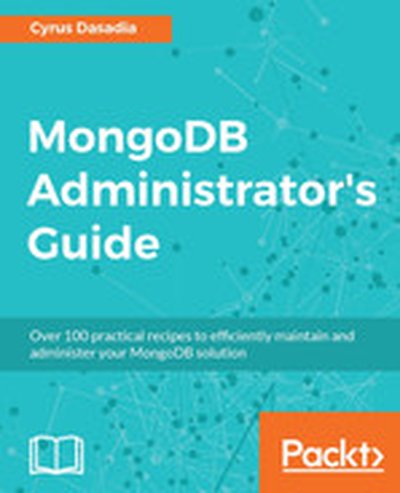
MongoDB Administrator's Guide

The "MongoDB Administrator's Guide" is an indispensable resource for database administrators and developers looking to gain mastery over administrating MongoDB systems. This book offers over 100 practical recipes, designed to simplify the tasks of maintaining, optimizing, and securing MongoDB deployments. What this Book will help me do Deploy and configure production-grade MongoDB environments efficiently. Manage and optimize MongoDB indexing to improve query performance. Implement and maintain high availability through replication and sharding. Ensure database security with robust authentication and authorization. Perform efficient backups, recovery, and database performance monitoring. Author(s) None Dasadia is a seasoned MongoDB expert with extensive experience in database administration and optimization. Having worked extensively in developing and managing high-performance database systems, None ensures a hands-on and practical approach in their writing. Their aim is to guide readers to effectively solve real-world database challenges with MongoDB. Who is it for? This book is ideal for database administrators with a foundational understanding of MongoDB, as well as developers aiming to enhance their administration skills in this NoSQL ecosystem. Whether you're seeking best practices for routine tasks or scalable solutions for enterprise-level applications, this guide has comprehensive coverage tailored for you.