talk-data.com talk-data.com

Topic

Python

programming_language data_science web_development

220

tagged

Activity Trend

185 peak/qtr
2020-Q1 2026-Q1

Activities

Showing filtered results

Filtering by: O'Reilly Data Science Books ×
Principles of Data Science

If you've ever wondered how to bridge the gap between mathematics, programming, and actionable data insights, 'Principles of Data Science' is the guide for you. This book explores the full data science pipeline, providing you with tools and knowledge to transform raw data into impactful decisions. With practical lessons and hands-on tutorials, you'll master the essential skills of a data scientist. What this Book will help me do Understand and apply the five core steps of the data science process. Gain insight into data cleaning, visualization, and effective communication of results. Learn and implement foundational machine learning models using Python or R. Bridge gaps between mathematics, statistics, and programming to solve data-driven problems. Evaluate machine learning models using key metrics for better predictive capabilities. Author(s) The author, a seasoned data scientist with years of professional experience in analytics and software development, brings a rich perspective to the topic. Combining a strong foundation in mathematics with expertise in Python and R, they have worked on diverse real-world data projects. Their teaching philosophy emphasizes clarity and practical application, ensuring you not only gain knowledge but also know how to apply it effectively. Who is it for? This book is intended for individuals with a basic understanding of algebra and some programming experience in Python or R. It is perfect for programmers who wish to dive into the world of data science or for those with math skills looking to apply them practically. If you seek to turn raw data into valuable insights and predictions, this book is tailored for you.
Python Data Science Handbook

For many researchers, Python is a first-class tool mainly because of its libraries for storing, manipulating, and gaining insight from data. Several resources exist for individual pieces of this data science stack, but only with the Python Data Science Handbook do you get them all—IPython, NumPy, Pandas, Matplotlib, Scikit-Learn, and other related tools. Working scientists and data crunchers familiar with reading and writing Python code will find this comprehensive desk reference ideal for tackling day-to-day issues: manipulating, transforming, and cleaning data; visualizing different types of data; and using data to build statistical or machine learning models. Quite simply, this is the must-have reference for scientific computing in Python. With this handbook, you’ll learn how to use: IPython and Jupyter: provide computational environments for data scientists using Python NumPy: includes the ndarray for efficient storage and manipulation of dense data arrays in Python Pandas: features the DataFrame for efficient storage and manipulation of labeled/columnar data in Python Matplotlib: includes capabilities for a flexible range of data visualizations in Python Scikit-Learn: for efficient and clean Python implementations of the most important and established machine learning algorithms

2016 Data Science Salary Survey

In this fourth edition of O’Reilly’s Data Science Salary Survey, 983 respondents working across a variety of industries answered questions about the tools they use, the tasks they engage in, and the salaries they make. This year’s survey includes data scientists, engineers, and others in the data space from 45 countries and 45 US states. The 2016 survey included new questions, most notably about specific data-related tasks that may affect salary. Plug in your own data points to the survey model and see how you compare to other data science professionals in your industry. With this report, you’ll learn: Where data scientists make the highest salaries—by country and by US state Tools that respondents most commonly use on the job, and tools that contribute most to salary Two activities that contribute to higher earnings among respondents How gender and bargaining skills affect salaries when all other factors are equal Salary differences between those using open source tools vs those using proprietary tools Salary differences between those who rely on Python vs those who use several tools Participate in the 2017 Survey The survey is now open for the 2017 report. Spend just 5 to 10 minutes and take the anonymous salary survey here: https://www.oreilly.com/ideas/take-the-2​017-data-science-salary-survey.

Mastering Python Data Analysis

Mastering Python Data Analysis provides a comprehensive roadmap for Python developers to enhance their data analysis skills to tackle real-world problems. This book delves into advanced statistical analysis, covering tools, models, and methods to transform raw data into valuable insights. What this Book will help me do Effectively handle and preprocess data using Python and Pandas. Explore statistical models to identify patterns and gain insights from data. Learn clustering approaches to detect data groupings and predict outcomes. Utilize Bayesian methods for quantifying causal relationships. Generate professional reports and visualizations with Python tools like Jupyter Notebook. Author(s) None Vilhelm Persson is a seasoned software developer and data analyst with expertise in leveraging Python for sophisticated data analysis and machine learning tasks. Drawing from years of experience in the tech industry, None provides practical, real-world insights throughout the book. His approachable writing style ensures technical concepts are conveyed with clarity, making data analysis accessible to developers at varying skill levels. Who is it for? This book is ideal for intermediate Python developers seeking to elevate their data analysis skills. If you are familiar with Python libraries and have an interest in solving complex data problems, this guide will serve as a stepping stone to mastery. Advanced beginners with a curiosity for statistical methods and a desire to learn through practical examples will find this book invaluable. It is also perfect for professionals aiming to integrate Python-based statistical techniques into their workflow.

Python: Real-World Data Science

Unleash the power of Python and its robust data science capabilities About This Book Unleash the power of Python 3 objects Learn to use powerful Python libraries for effective data processing and analysis Harness the power of Python to analyze data and create insightful predictive models Unlock deeper insights into machine learning with this vital guide to cutting-edge predictive analytics Who This Book Is For Entry-level analysts who want to enter in the data science world will find this course very useful to get themselves acquainted with Python's data science capabilities for doing real-world data analysis. What You Will Learn Install and setup Python Implement objects in Python by creating classes and defining methods Get acquainted with NumPy to use it with arrays and array-oriented computing in data analysis Create effective visualizations for presenting your data using Matplotlib Process and analyze data using the time series capabilities of pandas Interact with different kind of database systems, such as file, disk format, Mongo, and Redis Apply data mining concepts to real-world problems Compute on big data, including real-time data from the Internet Explore how to use different machine learning models to ask different questions of your data In Detail The Python: Real-World Data Science course will take you on a journey to become an efficient data science practitioner by thoroughly understanding the key concepts of Python. This learning path is divided into four modules and each module are a mini course in their own right, and as you complete each one, you'll have gained key skills and be ready for the material in the next module. The course begins with getting your Python fundamentals nailed down. After getting familiar with Python core concepts, it's time that you dive into the field of data science. In the second module, you'll learn how to perform data analysis using Python in a practical and example-driven way. The third module will teach you how to design and develop data mining applications using a variety of datasets, starting with basic classification and affinity analysis to more complex data types including text, images, and graphs. Machine learning and predictive analytics have become the most important approaches to uncover data gold mines. In the final module, we'll discuss the necessary details regarding machine learning concepts, offering intuitive yet informative explanations on how machine learning algorithms work, how to use them, and most importantly, how to avoid the common pitfalls. Style and approach This course includes all the resources that will help you jump into the data science field with Python and learn how to make sense of data. The aim is to create a smooth learning path that will teach you how to get started with powerful Python libraries and perform various data science techniques in depth.

Introducing Data Science

Introducing Data Science teaches you how to accomplish the fundamental tasks that occupy data scientists. Using the Python language and common Python libraries, you'll experience firsthand the challenges of dealing with data at scale and gain a solid foundation in data science. About the Technology Many companies need developers with data science skills to work on projects ranging from social media marketing to machine learning. Discovering what you need to learn to begin a career as a data scientist can seem bewildering. This book is designed to help you get started. About the Book Introducing Data Science explains vital data science concepts and teaches you how to accomplish the fundamental tasks that occupy data scientists. You'll explore data visualization, graph databases, the use of NoSQL, and the data science process. You'll use the Python language and common Python libraries as you experience firsthand the challenges of dealing with data at scale. Discover how Python allows you to gain insights from data sets so big that they need to be stored on multiple machines, or from data moving so quickly that no single machine can handle it. This book gives you hands-on experience with the most popular Python data science libraries, Scikit-learn and StatsModels. After reading this book, you'll have the solid foundation you need to start a career in data science. What's Inside Handling large data Introduction to machine learning Using Python to work with data Writing data science algorithms About the Reader This book assumes you're comfortable reading code in Python or a similar language, such as C, Ruby, or JavaScript. No prior experience with data science is required. About the Authors Davy Cielen, Arno D. B. Meysman, and Mohamed Ali are the founders and managing partners of Optimately and Maiton, where they focus on developing data science projects and solutions in various sectors. Quotes Read this book if you want to get a quick overview of data science, with lots of examples to get you started! - Alvin Raj, Oracle The map that will help you navigate the data science oceans. - Marius Butuc, Shopify Covers the processes involved in data science from end to end… A complete overview. - Heather Campbell, Kainos A must-read for anyone who wants to get into the data science world. - Hector Cuesta, Big Data Bootcamp

Practical Data Analysis Cookbook

Practical Data Analysis Cookbook takes you on a comprehensive journey to mastering data exploration and analysis using Python. From data cleaning and transformation to building predictive and classification models, this book provides practical recipes for tackling real-world data challenges and extracting valuable insights. What this Book will help me do Efficiently clean, transform, and explore datasets using tools like pandas and OpenRefine. Develop predictive models for time series and other datasets using Python libraries such as scikit-learn and Statsmodels. Apply clustering and classification techniques to real-world data problems to gain actionable insights. Explore advanced topics like natural language processing and graph theory concepts using specialized tools. Build the skills to solve practical data modeling problems encountered in a data science role. Author(s) None Drabas is an experienced data scientist and author who specializes in Python-based data analysis. With a background in tackling intricate data-driven problems, None brings real-world experience to the readers. In creating this Cookbook, None adopts a step-by-step approach, making complex techniques accessible to learners of all backgrounds. Who is it for? If you are a data analyst, data scientist, or someone interested in exploring Python for practical data problems, this book is for you. It suits beginners starting their data journey and intermediate professionals looking to enhance their toolset. With clear instructions, it's ideal for anyone willing to build practical skills and tackle real-world challenges in data analysis.

NumPy Essentials

NumPy Essentials is your guide to mastering NumPy, the powerful Python library for scientific computing. In this book, you'll discover how to manipulate arrays, perform mathematical operations, and create advanced models. With its clear examples and practical exercises, you'll build the skills needed to efficiently tackle analytical challenges. What this Book will help me do Learn to manipulate data efficiently with NumPy array objects and universal functions. Gain proficiency in solving linear algebra problems using NumPy's powerful modules. Master regression techniques and curve fitting for statistical modeling. Apply Fourier Transform and spectral analysis in solving real-world problems. Integrate and optimize Python code using Cython and the NumPy C API for higher performance. Author(s) Jaidev Deshpande, None Chin, Tanmay Dutta, and Shane Holloway are seasoned developers passionate about Python and scientific computing. With experience across diverse projects, they bring practical insights and accessible explanations to their writing. Who is it for? This book is ideal for Python developers seeking to sharpen their numerical computing skills. Prior experience with Python is expected, as the content progresses quickly to advanced topics. Whether you're working in data analysis, scientific research, or machine learning, this book will provide valuable tools and insights.

Regression Analysis with Python

Dive into the world of regression analysis guided by Python in this comprehensive book. From simple linear regression to complex models, you'll gain a deep understanding of how to analyze data and predict outcomes. By the end of this book, you will be equipped with the skills to tidy data, build models, and apply regression techniques to real-world problems. What this Book will help me do Understand and format datasets to prepare them for regression analysis efficiently. Build and implement various regression models, such as linear and logistic regression, to solve data science problems. Develop techniques to combat overfitting and ensure predictive accuracy. Learn to scale and adapt regression models to large datasets and apply incremental learning. Apply the skills gained to make informed business decisions using predictive insights from regression models. Author(s) Luca Massaron and Alberto Boschetti are seasoned data professionals with years of expertise in data science, regression analysis, and Python programming. They are passionate about teaching and have crafted this book to demystify regression for learners interested in predictive analytics. Their approachable style ensures concepts are accessible yet comprehensive. Who is it for? This book is ideal for Python developers and data scientists who have a foundational knowledge of math and statistics. Whether you're looking to delve deeper into predictive modeling or efficiently analyze datasets, this book provides step-by-step guidance. If you've dabbled in data science and wish to expand your skillset to include regression analysis, this book is for you!

Data Wrangling with Python

How do you take your data analysis skills beyond Excel to the next level? By learning just enough Python to get stuff done. This hands-on guide shows non-programmers like you how to process information that’s initially too messy or difficult to access. You don't need to know a thing about the Python programming language to get started. Through various step-by-step exercises, you’ll learn how to acquire, clean, analyze, and present data efficiently. You’ll also discover how to automate your data process, schedule file- editing and clean-up tasks, process larger datasets, and create compelling stories with data you obtain. Quickly learn basic Python syntax, data types, and language concepts Work with both machine-readable and human-consumable data Scrape websites and APIs to find a bounty of useful information Clean and format data to eliminate duplicates and errors in your datasets Learn when to standardize data and when to test and script data cleanup Explore and analyze your datasets with new Python libraries and techniques Use Python solutions to automate your entire data-wrangling process

Sports Analytics and Data Science: Winning the Game with Methods and Models

TO BUILD WINNING TEAMS AND SUCCESSFUL SPORTS BUSINESSES, GUIDE YOUR DECISIONS WITH DATA This up-to-the-minute reference will help you master all three facets of sports analytics – and use it to win! Sports Analytics and Data Science is the most accessible and practical guide to sports analytics for everyone who cares about winning and everyone who is interested in data science. You’ll discover how successful sports analytics blends business and sports savvy, modern information technology, and sophisticated modeling techniques. You’ll master the discipline through realistic sports vignettes and intuitive data visualizations—not complex math. Thomas W. Miller, leader of Northwestern University’s pioneering program in predictive analytics, guides you through defining problems, identifying data, crafting and optimizing models, writing effective R and Python code, interpreting your results, and more. Every chapter focuses on one key sports analytics application. Miller guides you through assessing players and teams, predicting scores and making game-day decisions, crafting brands and marketing messages, increasing revenue and profitability, and much more. Step by step, you’ll learn how analysts transform raw data and analytical models into wins: both on the field and in any sports business. Whether you’re a team executive, coach, fan, fantasy player, or data scientist, this guide will be a powerful source of competitive advantage… in any sport, by any measure. All data sets, extensive R and Python code, and additional examples available for download at http://www.ftpress.com/miller/ This exceptionally complete and practical guide to sports data science and modeling teaches through realistic examples from sports industry economics, marketing, management, performance measurement, and competitive analysis. Thomas W. Miller, faculty director of Northwestern University’s pioneering Predictive Analytics program, shows how to use advanced measures of individual and team performance to judge the competitive position of both individual athletes and teams, and to make more accurate predictions about their future performance. Miller’s modeling techniques draw on methods from economics, accounting, finance, classical and Bayesian statistics, machine learning, simulation, and mathematical programming. Miller illustrates them through realistic case studies, with fully worked examples in both R and Python. Sports Analytics and Data Science will be an invaluable resource for everyone who wants to seriously investigate and more accurately predict player, team, and sports business performance, including students, teachers, sports analysts, sports fans, trainers, coaches, and team and sports business managers. It will also be valuable to all students of analytics and data science who want to build their skills through familiar and accessible sports applications Gain powerful, actionable insights for: Understanding sports markets Assessing players Ranking teams Predicting scores Making game day decisions Crafting marketing messages Promoting brands and products Growing revenues Managing finances Playing what-if games And much more

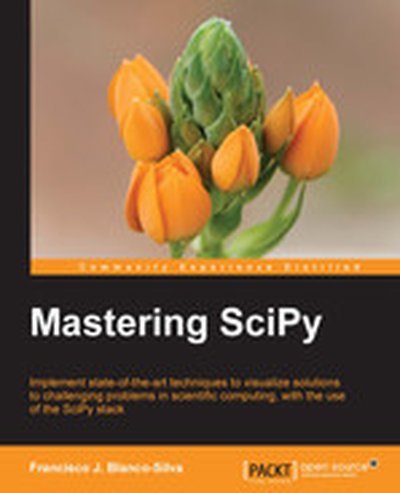
Mastering SciPy

Dive into 'Mastering SciPy' to unlock the full potential of the SciPy ecosystem for scientific computation and data analysis. This book thoughtfully combines mathematical concepts with Python programming to tackle real-world computational challenges. What this Book will help me do Effectively implement algorithms for data interpolation, approximation, and function optimization. Develop strategies for managing large datasets and performing linear algebra computations. Create and solve differential equations for scientific modeling and simulations. Apply advanced data analysis, statistical methods, and machine learning algorithms. Utilize computational geometry techniques for applications in engineering and data science. Author(s) The authors, None Blanco-Silva and Francisco Javier B Silva, are practitioners and educators in scientific computing and Python programming. They bring a wealth of experience in using SciPy to solve practical scientific challenges. Their clear and engaging approach makes these complex topics accessible and applicable. Who is it for? This book is tailored for professionals and researchers who use Python and are familiar with numerical methods. If you are looking to deepen your understanding of SciPy's capabilities to solve scientific and engineering problems, this book is ideal for you. Readers with a background in IPython and computational mathematics will benefit the most. Beginners in scientific Python can also learn by following the hands-on examples and clear explanations.

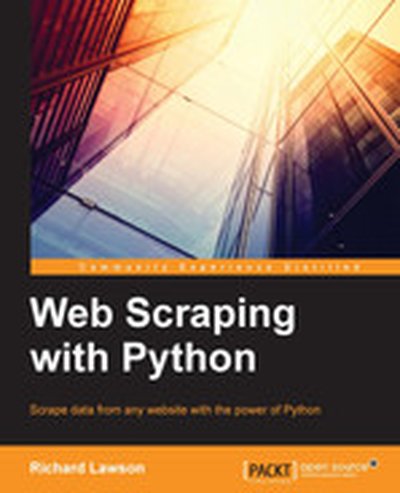
Python Web Scraping

Explore the possibilities of web scraping using Python with this practical guide. The book provides a comprehensive introduction to extracting information from web pages, managing complex scraping scenarios, and utilizing specialized tools such as Scrapy. Whether you're dealing with static pages or interactive web content, this book equips you with the skills to gather and process web data efficiently. What this Book will help me do Gain proficiency in writing Python scripts to extract data from web pages. Learn to build and manage multithreaded crawlers to handle large-scale scraping tasks. Master techniques for interacting with dynamic web content and JavaScript-rendered pages. Understand how to work with web forms, sessions, and tackle challenges like CAPTCHA. Implement practical examples of web scraping using Scrapy for real-world data projects. Author(s) Richard Penman is an experienced software engineer and an expert in Python programming and web development. With years of practical expertise in web crawling and data extraction, Richard shares his extensive knowledge in this field to make complex tasks accessible to developers of all levels. His thoughtful approach aims to empower readers to confidently tackle data challenges on the web. Who is it for? This book is ideal for developers and technical professionals who want to learn effective techniques for web scraping with Python. A basic understanding of programming concepts and experience with Python will help readers get the most out of the practical examples. It's also suitable for advanced learners looking to apply Python skills for automating web data extraction tasks. If you're enthusiastic about turning web data into actionable insights, this guide is for you.

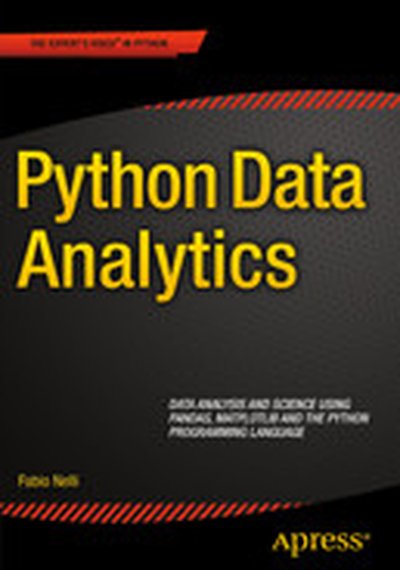
Python Data Analytics: Data Analysis and Science Using Pandas, matplotlib, and the Python Programming Language

Python Data Analytics will help you tackle the world of data acquisition and analysis using the power of the Python language. At the heart of this book lies the coverage of pandas, an open source, BSD-licensed library providing high-performance, easy-to-use data structures and data analysis tools for the Python programming language. Author Fabio Nelli expertly shows the strength of the Python programming language when applied to processing, managing and retrieving information. Inside, you will see how intuitive and flexible it is to discover and communicate meaningful patterns of data using Python scripts, reporting systems, and data export. This book examines how to go about obtaining, processing, storing, managing and analyzing data using the Python programming language. You will use Python and other open source tools to wrangle data and tease out interesting and important trends in that data that will allow you to predict future patterns. Whether you are dealing with sales data, investment data (stocks, bonds, etc.), medical data, web page usage, or any other type of data set, Python can be used to interpret, analyze, and glean information from a pile of numbers and statistics. This book is an invaluable reference with its examples of storing and accessing data in a database; it walks you through the process of report generation; it provides three real world case studies or examples that you can take with you for your everyday analysis needs.

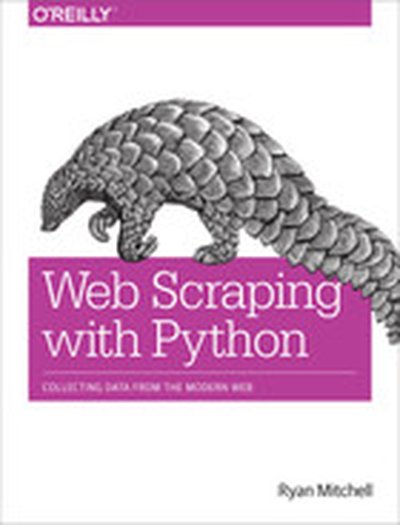
Web Scraping with Python

Learn web scraping and crawling techniques to access unlimited data from any web source in any format. With this practical guide, you’ll learn how to use Python scripts and web APIs to gather and process data from thousands—or even millions—of web pages at once. Ideal for programmers, security professionals, and web administrators familiar with Python, this book not only teaches basic web scraping mechanics, but also delves into more advanced topics, such as analyzing raw data or using scrapers for frontend website testing. Code samples are available to help you understand the concepts in practice.

Bioinformatics Data Skills

Learn the data skills necessary for turning large sequencing datasets into reproducible and robust biological findings. With this practical guide, you’ll learn how to use freely available open source tools to extract meaning from large complex biological data sets. At no other point in human history has our ability to understand life’s complexities been so dependent on our skills to work with and analyze data. This intermediate-level book teaches the general computational and data skills you need to analyze biological data. If you have experience with a scripting language like Python, you’re ready to get started. Go from handling small problems with messy scripts to tackling large problems with clever methods and tools Process bioinformatics data with powerful Unix pipelines and data tools Learn how to use exploratory data analysis techniques in the R language Use efficient methods to work with genomic range data and range operations Work with common genomics data file formats like FASTA, FASTQ, SAM, and BAM Manage your bioinformatics project with the Git version control system Tackle tedious data processing tasks with with Bash scripts and Makefiles

Bioinformatics with Python Cookbook

Dive into the intersection of biology and data science with 'Bioinformatics with Python Cookbook.' This book equips you to leverage Python and its ecosystem of libraries to tackle complex challenges in computational biology, covering topics like genomics, phylogenetics, and big data bioinformatics. What this Book will help me do Understand the Python ecosystem specifically tailored for computational biology applications. Analyze and visualize next-generation sequencing data effectively. Explore and simulate population genetics for robust biological research. Utilize the Protein Data Bank to extract critical insights about proteins. Handle big genomics datasets with Python tools for large-scale bioinformatics studies. Author(s) Tiago Antao is an established bioinformatician with expertise in Python programming. With years of practical experience in computational biology, he has tailored this cookbook with detailed and actionable examples. Tiago's mission is to make bioinformatic techniques using Python accessible to researchers of varying skill levels. Who is it for? This book is ideal for researchers, biologists, and data scientists with intermediate Python skills looking to expand their expertise in bioinformatics. It caters to professionals wanting to utilize computational tools for solving biological problems. If you're involved in work or study related to genomics, phylogenetics, or large-scale biology datasets, this guide offers practical solutions. Make the most out of Python in your research journey.

Numpy Beginner's Guide (Update)

Delve into the capabilities of NumPy, the cornerstone of mathematical computations in Python. In this guide, you will learn how to utilize NumPy to its fullest by exploring its powerful array and matrix operations, and also integrate it with other libraries like SciPy and matplotlib for advanced analysis and visualization. What this Book will help me do Master the installation and configuration of the NumPy library on different systems. Perform advanced array and matrix operations efficiently using NumPy. Understand and utilize commonly used NumPy modules for computational tasks. Design and generate complex plots using the matplotlib library. Learn best practices for testing and validating numerical computations with NumPy. Author(s) Ivan Idris is an experienced data analyst and Python enthusiast, proficient in utilizing numerical and scientific libraries to address complex problems. With a strong background in mathematics and computer science, Ivan brings a practical approach to his teachings. He emphasizes clarity and hands-on practice, making expert-level concepts accessible and engaging for learners. Who is it for? This book is perfect for scientists, engineers, and data professionals with a solid foundation in Python. It's meant for those seeking to deepen their understanding of numerical methods and scientific computing. If you want to harness the power of NumPy to streamline your computations and develop high-performance solutions, this guide is for you.

Mastering Pandas for Finance

"Mastering Pandas for Finance" takes a deep dive into applying Python and the pandas library to solve real-world financial data analysis problems. With a focus on financial modeling, backtesting trading strategies, and analyzing large datasets, this book equips you with the skills to leverage pandas effectively. What this Book will help me do Utilize pandas DataFrame for efficient financial data handling and manipulation. Develop robust time-series models and perform statistical analysis on financial data. Backtest algorithmic trading strategies including momentum and mean reversion. Price complex financial options and calculate Value at Risk for portfolio management. Optimize portfolio allocation and model financial performance using industry techniques. Author(s) Michael Heydt is an experienced software engineer and data scientist with a strong background in quantitative finance. He specializes in using Python for data analysis and has spent years teaching and writing about technical subjects. His detailed yet approachable writing style makes complex topics accessible to all. Who is it for? "Mastering Pandas for Finance" is perfect for finance professionals seeking to integrate Python into their workflows, data analysts exploring quantitative finance applications, and programmers aiming to specialize in financial analytics. Some baseline Python and pandas knowledge is recommended, but the book is structured to guide you effectively through advanced concepts too.

Marketing Data Science: Modeling Techniques in Predictive Analytics with R and Python

Now a leader of Northwestern University's prestigious analytics program presents a fully-integrated treatment of both the business and academic elements of marketing applications in predictive analytics. Writing for both managers and students, Thomas W. Miller explains essential concepts, principles, and theory in the context of real-world applications. , Building on Miller's pioneering program, thoroughly addresses segmentation, target marketing, brand and product positioning, new product development, choice modeling, recommender systems, pricing research, retail site selection, demand estimation, sales forecasting, customer retention, and lifetime value analysis. Marketing Data Science Starting where Miller's widely-praised Modeling Techniques in Predictive Analytics left off, he integrates crucial information and insights that were previously segregated in texts on web analytics, network science, information technology, and programming. Coverage includes: The role of analytics in delivering effective messages on the web Understanding the web by understanding its hidden structures Being recognized on the web – and watching your own competitors Visualizing networks and understanding communities within them Measuring sentiment and making recommendations Leveraging key data science methods: databases/data preparation, classical/Bayesian statistics, regression/classification, machine learning, and text analytics Six complete case studies address exceptionally relevant issues such as: separating legitimate email from spam; identifying legally-relevant information for lawsuit discovery; gleaning insights from anonymous web surfing data, and more. This text's extensive set of web and network problems draw on rich public-domain data sources; many are accompanied by solutions in Python and/or R. will be an invaluable resource for all students, faculty, and professional marketers who want to use business analytics to improve marketing performance. Marketing Data Science