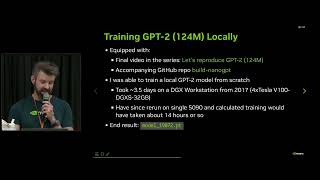
From the speaker who got kicked off the stage after 54 minutes of his 45-minute PyParallel talk at PyData NYC 2013, comes a new talk foaming about the virtues of Python's new free-threaded support!
 talk-data.com
Topic
15
tagged
From the speaker who got kicked off the stage after 54 minutes of his 45-minute PyParallel talk at PyData NYC 2013, comes a new talk foaming about the virtues of Python's new free-threaded support!
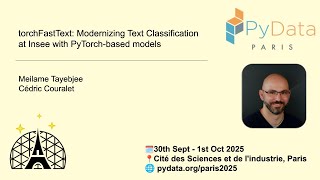
Discover how Insee transitioned from fastText to a PyTorch-based model for text classification by developing and open-sourcing the torchFastText package. This presentation will cover the creation, deployment, and practical applications of torchFastText in modernizing automatic coding systems, benefiting Insee and other European National Statistical Institutes (NSIs).
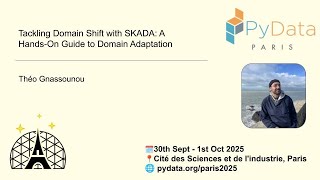
Domain adaptation addresses the challenge of applying ML models to data that differs from the training distribution—a common issue in real-world applications. SKADA is a new Python library that brings domain adaptation tools to the sci-kit-learn and PyTorch ecosystem. This talk covers SKADA’s design, its integration with standard ML workflows, and how it helps practitioners build models that generalize better across domains.
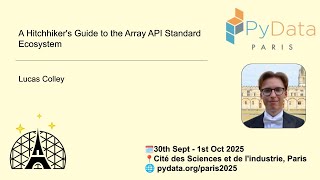
The array API standard is unifying the ecosystem of Python array computing, facilitating greater interoperability between code written for different array libraries, including NumPy, CuPy, PyTorch, JAX, and Dask.
But what are all of these "array-api-" libraries for? How can you use these libraries to 'future-proof' your libraries, and provide support for GPU and distributed arrays to your users? Find out in this talk, where I'll guide you through every corner of the array API standard ecosystem, explaining how SciPy and scikit-learn are using all of these tools to adopt the standard. I'll also be sharing progress updates from the past year, to give you a clear picture of where we are now, and what the future holds.
If we want to run data science workloads (e.g. using Tensorflow, PyTorch, and others) in containers (for local development or production on Kubernetes), we need to build container images. Doing that with a Dockerfile is fairly straightforward, but is it the best method? In this talk, we'll take a well-known speech-to-text model (Whisper) and show various ways to run it in containers, comparing the outcomes in terms of image size and build time.
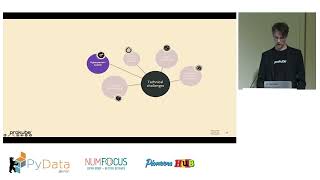
Building and deploying scalable, reproducible machine learning pipelines can be challenging, especially when working with orchestration tools like Slurm or Kubernetes. In this talk, we demonstrate how to create an end-to-end ML pipeline for anomaly detection in International Space Station (ISS) telemetry data using only Python code.
We show how Kubeflow Pipelines, MLFlow, and other open-source tools enable the seamless orchestration of critical steps: distributed preprocessing with Dask, hyperparameter optimization with Katib, distributed training with PyTorch Operator, experiment tracking and monitoring with MLFlow, and scalable model serving with KServe. All these steps are integrated into a holistic Kubeflow pipeline.
By leveraging Kubeflow's Python SDK, we simplify the complexities of Kubernetes configurations while achieving scalable, maintainable, and reproducible pipelines. This session provides practical insights, real-world challenges, and best practices, demonstrating how Python-first workflows empower data scientists to focus on machine learning development rather than infrastructure.
The last year has seen the rapid progress of Open Source GenAI models and frameworks. This talk covers best practices for custom training and OSS GenAI finetuning on Databricks, powered by the newly announced Serverless GPU Compute. We’ll cover how to use Serverless GPU compute to power AI training/GenAI finetuning workloads and framework support for libraries like LLM Foundry, Composer, HuggingFace, and more. Lastly, we’ll cover how to leverage MLFlow and the Databricks Lakehouse to streamline the end to end development of these models. Key takeaways include: How Serverless GPU compute saves customers valuable developer time and overhead when dealing with GPU infrastructure Best practices for training custom deep learning models (forecasting, recommendation, personalization) and finetuning OSS GenAI Models on GPUs across the Databricks stack Leveraging distributed GPU training frameworks (e.g. Pytorch, Huggingface) on Databricks Streamlining the path to production for these models Join us to learn about the newly announced Serverless GPU Compute and the latest updates to GPU training and finetuning on Databricks!
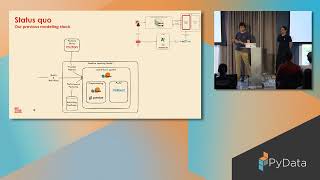
GetYourGuide, a global marketplace for travel experiences, reached diminishing returns with its XGBoost-based ranking system. We switched to a Deep Learning pipeline in just nine months, maintaining high throughput and low latency. We iterated on over 50 offline models and conducted more than 10 live A/B tests, ultimately deploying a PyTorch transformer that yielded significant gains. In this talk, we will share our phased approach—from a simple baseline to a high-impact launch—and discuss the key operational and modeling challenges we faced. Learn how to transition from tree-based methods to neural networks and unlock new possibilities for real-time ranking.
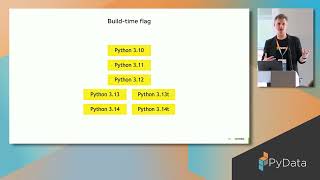
This talk examines multi-threaded parallel inference on PyTorch models using the new No-GIL, free-threaded version of Python. Using a simple 124M parameter GPT2 model that we train from scratch, we explore the novel new territory unlocked by free-threaded Python: parallel PyTorch model inference, where multiple threads, unimpeded by the Python GIL, attempt to generate text from a transformer-based model in parallel.
Delta Lake is an open-source storage format that can be ideally used for storing large-scale datasets, which can be used for single-node and distributed training of deep learning models. Delta Lake storage format gives deep learning practitioners unique data management capabilities for working with their datasets. The challenge is that, as of now, it’s not possible to use Delta Lake to train PyTorch models directly.
PyTorch community has recently introduced a Torchdata library for efficient data loading. This library supports many formats out of the box, but not Delta Lake. This talk will demonstrate using the Delta Lake storage format for single-node and distributed PyTorch training using the torchdata framework and standalone delta-rs Delta Lake implementation.
Talk by: Michael Shtelma
Connect with us: Website: https://databricks.com Twitter: https://twitter.com/databricks LinkedIn: https://www.linkedin.com/company/databricks Instagram: https://www.instagram.com/databricksinc Facebook: https://www.facebook.com/databricksinc

The US Army Corps of Engineers (USACE) is responsible for maintaining and improving nearly 12,000 miles of shallow-draft (9'-14') inland and intracoastal waterways, 13,000 miles of deep-draft (14' and greater) coastal channels, and 400 ports, harbors, and turning basins throughout the United States. Because these components of the national waterway network are considered assets to both US commerce and national security, they must be carefully managed to keep marine traffic operating safely and efficiently.
The National DQM Program is tasked with providing USACE a nationally standardized remote monitoring and documentation system across multiple vessel types with timely data access, reporting, dredge certifications, data quality control, and data management. Government systems have often lagged commercial systems in modernization efforts, and the emergence of the cloud and Data Lakehouse Architectures have empowered USACE to successfully move into the modern data era.
This session incorporates aspects of these topics: Data Lakehouse Architecture: Delta Lake, platform security and privacy, serverless, administration, data warehouse, Data Lake, Apache Iceberg, Data Mesh GIS: H3, MOSAIC, spatial analysis data engineering: data pipelines, orchestration, CDC, medallion architecture, Databricks Workflows, data munging, ETL/ELT, lakehouses, data lakes, Parquet, Data Mesh, Apache Spark™ internals. Data Streaming: Apache Spark Structured Streaming, real-time ingestion, real-time ETL, real-time ML, real-time analytics, and real-time applications, Delta Live Tables. ML: PyTorch, TensorFlow, Keras, scikit-learn, Python and R ecosystems data governance: security, compliance, RMF, NIST data sharing: sharing and collaboration, delta sharing, data cleanliness, APIs.
Talk by: Jeff Mroz
Connect with us: Website: https://databricks.com Twitter: https://twitter.com/databricks LinkedIn: https://www.linkedin.com/company/databricks Instagram: https://www.instagram.com/databricksinc Facebook: https://www.facebook.com/databricksinc
Delta Lake is an open-source storage format that can be ideally used for storing large-scale datasets, which can be used for single-node and distributed training of deep learning models. Delta Lake storage format gives deep learning practitioners unique data management capabilities for working with their datasets. The challenge is that, as of now, it’s not possible to use Delta Lake to train PyTorch models directly.
PyTorch community has recently introduced a Torchdata library for efficient data loading. This library supports many formats out of the box, but not Delta Lake. This talk will demonstrate using the Delta Lake storage format for single-node and distributed PyTorch training using the torchdata framework and standalone delta-rs Delta Lake implementation.
Talk by: Michael Shtelma
Connect with us: Website: https://databricks.com Twitter: https://twitter.com/databricks LinkedIn: https://www.linkedin.com/company/databricks Instagram: https://www.instagram.com/databricksinc Facebook: https://www.facebook.com/databricksinc
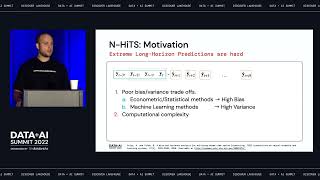
Time series forecasting has a wide range of applications: finance, retail, healthcare, IoT, etc. Recently deep learning models such as ESRNN or N-BEATS have proven to have state-of-the-art performance in these tasks. Nixtlats is a python library that we have developed to facilitate the use of these state-of-the-art models to data scientists and developers, so that they can use them in productive environments. Written in pytorch, its design is focused on usability and reproducibility of experiments. For this purpose, nixtlats has several modules:
Data: contains datasets of various time series competencies. Models: includes state-of-the-art models. Evaluation: has various loss functions and evaluation metrics.
Objective:
Project repository: https://github.com/Nixtla/nixtlats.
Connect with us: Website: https://databricks.com Facebook: https://www.facebook.com/databricksinc Twitter: https://twitter.com/databricks LinkedIn: https://www.linkedin.com/company/data... Instagram: https://www.instagram.com/databricksinc/
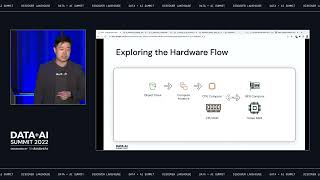
Training modern Deep Learning models in a timely fashion requires leveraging GPUs to accelerate the process. Ensuring that this expensive hardware is properly utilised and scales efficiently is complex however. All the steps, from data storage and loading through to preprocessing and finally distributing the model training process requires careful thought.
To reduce the cost of training a model, we need to ensure that we are making best use of our hardware resources. Typically, the GPUs that we rely on are memory constrained with much smaller amounts of VRAM being available relative to CPU RAM. As such we will need to leverage a variety of libraries to help ensure that we can keep our GPUs running.
Through the use of libraries like Petastorm to handle the data loading side, PyTorch Lightning and Horovod to handle the model distribution side we can accelerate can leverage commodity spark clusters to accelerate the training process for our Deep Learning Models.
Connect with us: Website: https://databricks.com Facebook: https://www.facebook.com/databricksinc Twitter: https://twitter.com/databricks LinkedIn: https://www.linkedin.com/company/data... Instagram: https://www.instagram.com/databricksinc/
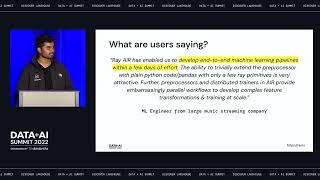
Deep learning has had an enormous impact in a variety of domains, however, with model and data size growing at a rapid pace, scaling out deep learning training has become essential for practical use.
In this talk, you will learn about the challenges and various solutions for distributed deep learning.
We will first cover some of the common patterns used to scale out deep learning training.
We will then describe some of the challenges with distributed deep learning in practice: Infrastructure and hardware management Spending too much time managing clusters, resources, and the scheduling/placement of jobs or processes. Developer iteration speed. Too much overhead to go from small-scale local ML development to large-scale training Hard to run distributed training jobs in a notebook/interactive environment. Difficulty integrating with open source software. Scale out training while still being able to leverage open source tools such as MLflow, Pytorch Lightning, and Huggingface Managing large-scale training data. Efficiently ingest large amounts of training data to my distributed machine learning model. Cloud compute costs. Leverage cheaper spot instances, without having to restart training in case of node pre-emption. Easily switch between cloud providers to reduce costs without rewriting all my code
Then, we will share the merits of the ML open source ecosystem for distributed deep learning. In particular, we will introduce Ray Train, an open source library built on the Ray distributed execution framework, and show how it’s integrations with other open source libraries (PyTorch, Huggingface, MLflow, etc.) alleviate the pain points above.
We will conclude with a live demo showing large-scale distributed training using these open source tools.
Connect with us: Website: https://databricks.com Facebook: https://www.facebook.com/databricksinc Twitter: https://twitter.com/databricks LinkedIn: https://www.linkedin.com/company/data... Instagram: https://www.instagram.com/databricksinc/