talk-data.com talk-data.com

Topic

PyTorch

deep_learning machine_learning neural_networks

15

tagged

Activity Trend

16 peak/qtr
2020-Q1 2026-Q1

Activities

15 activities · Newest first

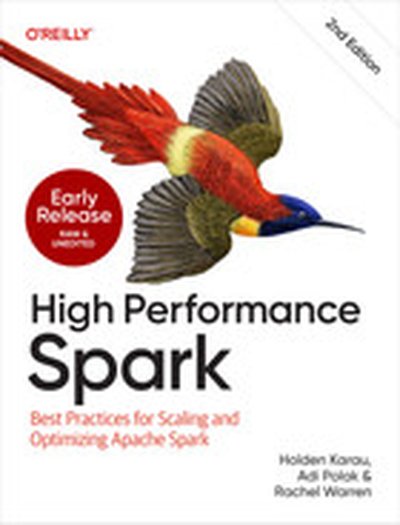
High Performance Spark, 2nd Edition

Apache Spark is amazing when everything clicks. But if you haven't seen the performance improvements you expected or still don't feel confident enough to use Spark in production, this practical book is for you. Authors Holden Karau, Rachel Warren, and Anya Bida walk you through the secrets of the Spark code base, and demonstrate performance optimizations that will help your data pipelines run faster, scale to larger datasets, and avoid costly antipatterns. Ideal for data engineers, software engineers, data scientists, and system administrators, the second edition of High Performance Spark presents new use cases, code examples, and best practices for Spark 3.x and beyond. This book gives you a fresh perspective on this continually evolving framework and shows you how to work around bumps on your Spark and PySpark journey. With this book, you'll learn how to: Accelerate your ML workflows with integrations including PyTorch Handle key skew and take advantage of Spark's new dynamic partitioning Make your code reliable with scalable testing and validation techniques Make Spark high performance Deploy Spark on Kubernetes and similar environments Take advantage of GPU acceleration with RAPIDS and resource profiles Get your Spark jobs to run faster Use Spark to productionize exploratory data science projects Handle even larger datasets with Spark Gain faster insights by reducing pipeline running times

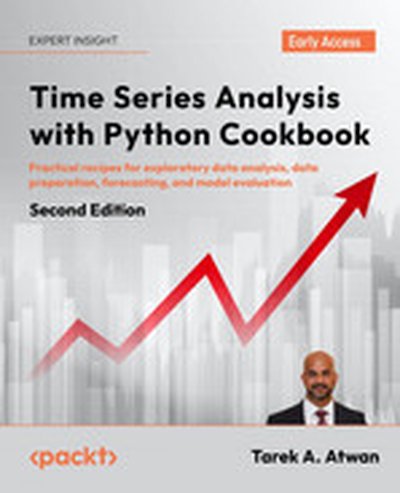
Time Series Analysis with Python Cookbook - Second Edition

Perform time series analysis and forecasting confidently with this Python code bank and reference manual Purchase of the print or Kindle book includes a free PDF eBook Key Features Explore up-to-date forecasting and anomaly detection techniques using statistical, machine learning, and deep learning algorithms Learn different techniques for evaluating, diagnosing, and optimizing your models Work with a variety of complex data with trends, multiple seasonal patterns, and irregularities Book Description To use time series data to your advantage, you need to be well-versed in data preparation, analysis, and forecasting. This fully updated second edition includes chapters on probabilistic models and signal processing techniques, as well as new content on transformers. Additionally, you will leverage popular libraries and their latest releases covering Pandas, Polars, Sktime, stats models, stats forecast, Darts, and Prophet for time series with new and relevant examples. You'll start by ingesting time series data from various sources and formats, and learn strategies for handling missing data, dealing with time zones and custom business days, and detecting anomalies using intuitive statistical methods. Further, you'll explore forecasting using classical statistical models (Holt-Winters, SARIMA, and VAR). Learn practical techniques for handling non-stationary data, using power transforms, ACF and PACF plots, and decomposing time series data with multiple seasonal patterns. Then we will move into more advanced topics such as building ML and DL models using TensorFlow and PyTorch, and explore probabilistic modeling techniques. In this part, you’ll also learn how to evaluate, compare, and optimize models, making sure that you finish this book well-versed in wrangling data with Python. What you will learn Understand what makes time series data different from other data Apply imputation and interpolation strategies to handle missing data Implement an array of models for univariate and multivariate time series Plot interactive time series visualizations using hvPlot Explore state-space models and the unobserved components model (UCM) Detect anomalies using statistical and machine learning methods Forecast complex time series with multiple seasonal patterns Use conformal prediction for constructing prediction intervals for time series Who this book is for This book is for data analysts, business analysts, data scientists, data engineers, and Python developers who want practical Python recipes for time series analysis and forecasting techniques. Fundamental knowledge of Python programming is a prerequisite. Prior experience working with time series data to solve business problems will also help you to better utilize and apply the different recipes in this book.

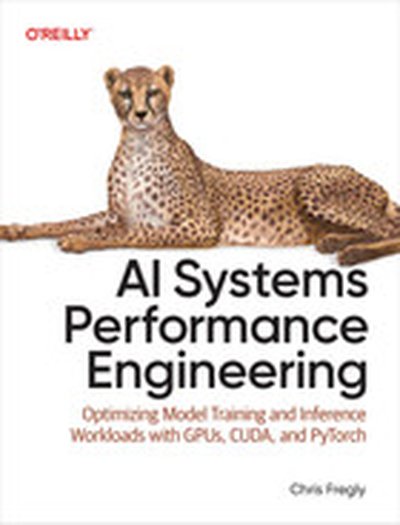
AI Systems Performance Engineering

Elevate your AI system performance capabilities with this definitive guide to maximizing efficiency across every layer of your AI infrastructure. In today's era of ever-growing generative models, AI Systems Performance Engineering provides engineers, researchers, and developers with a hands-on set of actionable optimization strategies. Learn to co-optimize hardware, software, and algorithms to build resilient, scalable, and cost-effective AI systems that excel in both training and inference. Authored by Chris Fregly, a performance-focused engineering and product leader, this resource transforms complex AI systems into streamlined, high-impact AI solutions. Inside, you'll discover step-by-step methodologies for fine-tuning GPU CUDA kernels, PyTorch-based algorithms, and multinode training and inference systems. You'll also master the art of scaling GPU clusters for high performance, distributed model training jobs, and inference servers. The book ends with a 175+-item checklist of proven, ready-to-use optimizations. Codesign and optimize hardware, software, and algorithms to achieve maximum throughput and cost savings Implement cutting-edge inference strategies that reduce latency and boost throughput in real-world settings Utilize industry-leading scalability tools and frameworks Profile, diagnose, and eliminate performance bottlenecks across complex AI pipelines Integrate full stack optimization techniques for robust, reliable AI system performance

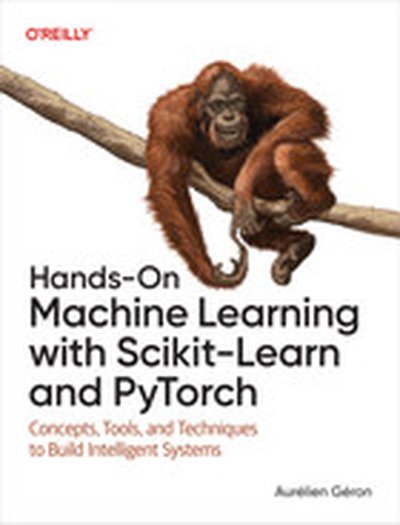
Hands-On Machine Learning with Scikit-Learn and PyTorch

The potential of machine learning today is extraordinary, yet many aspiring developers and tech professionals find themselves daunted by its complexity. Whether you're looking to enhance your skill set and apply machine learning to real-world projects or are simply curious about how AI systems function, this book is your jumping-off place. With an approachable yet deeply informative style, author Aurélien Géron delivers the ultimate introductory guide to machine learning and deep learning. Drawing on the Hugging Face ecosystem, with a focus on clear explanations and real-world examples, the book takes you through cutting-edge tools like Scikit-Learn and PyTorch—from basic regression techniques to advanced neural networks. Whether you're a student, professional, or hobbyist, you'll gain the skills to build intelligent systems. Understand ML basics, including concepts like overfitting and hyperparameter tuning Complete an end-to-end ML project using scikit-Learn, covering everything from data exploration to model evaluation Learn techniques for unsupervised learning, such as clustering and anomaly detection Build advanced architectures like transformers and diffusion models with PyTorch Harness the power of pretrained models—including LLMs—and learn to fine-tune them Train autonomous agents using reinforcement learning

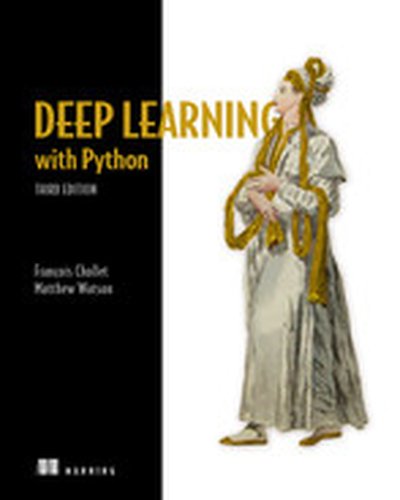
Deep Learning with Python, Third Edition

The bestselling book on Python deep learning, now covering generative AI, Keras 3, PyTorch, and JAX! Deep Learning with Python, Third Edition puts the power of deep learning in your hands. This new edition includes the latest Keras and TensorFlow features, generative AI models, and added coverage of PyTorch and JAX. Learn directly from the creator of Keras and step confidently into the world of deep learning with Python. In Deep Learning with Python, Third Edition you’ll discover: Deep learning from first principles The latest features of Keras 3 A primer on JAX, PyTorch, and TensorFlow Image classification and image segmentation Time series forecasting Large Language models Text classification and machine translation Text and image generation—build your own GPT and diffusion models! Scaling and tuning models With over 100,000 copies sold, Deep Learning with Python makes it possible for developers, data scientists, and machine learning enthusiasts to put deep learning into action. In this expanded and updated third edition, Keras creator François Chollet offers insights for both novice and experienced machine learning practitioners. You'll master state-of-the-art deep learning tools and techniques, from the latest features of Keras 3 to building AI models that can generate text and images. About the Technology In less than a decade, deep learning has changed the world—twice. First, Python-based libraries like Keras, TensorFlow, and PyTorch elevated neural networks from lab experiments to high-performance production systems deployed at scale. And now, through Large Language Models and other generative AI tools, deep learning is again transforming business and society. In this new edition, Keras creator François Chollet invites you into this amazing subject in the fluid, mentoring style of a true insider. About the Book Deep Learning with Python, Third Edition makes the concepts behind deep learning and generative AI understandable and approachable. This complete rewrite of the bestselling original includes fresh chapters on transformers, building your own GPT-like LLM, and generating images with diffusion models. Each chapter introduces practical projects and code examples that build your understanding of deep learning, layer by layer. What's Inside Hands-on, code-first learning Comprehensive, from basics to generative AI Intuitive and easy math explanations Examples in Keras, PyTorch, JAX, and TensorFlow About the Reader For readers with intermediate Python skills. No previous experience with machine learning or linear algebra required. About the Authors François Chollet is the co-founder of Ndea and the creator of Keras. Matthew Watson is a software engineer at Google working on Gemini and a core maintainer of Keras. Quotes Perfect for anyone interested in learning by doing from one of the industry greats. - Anthony Goldbloom, Founder of Kaggle A sharp, deeply practical guide that teaches you how to think from first principles to build models that actually work. - Santiago Valdarrama, Founder of ml.school The most up-to-date and complete guide to deep learning you’ll find today! - Aran Komatsuzaki, EleutherAI Masterfully conveys the true essence of neural networks. A rare case in recent years of outstanding technical writing. - Salvatore Sanfilippo, Creator of Redis

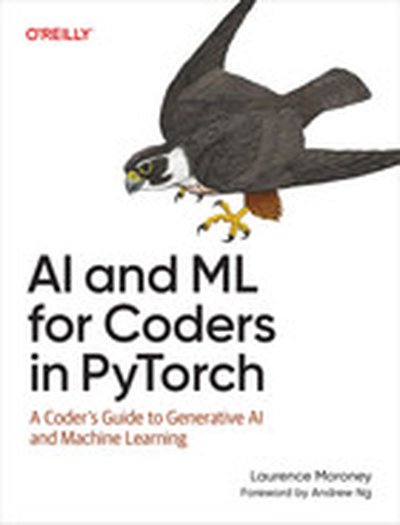
AI and ML for Coders in PyTorch

Eager to learn AI and machine learning but unsure where to start? Laurence Moroney's hands-on, code-first guide demystifies complex AI concepts without relying on advanced mathematics. Designed for programmers, it focuses on practical applications using PyTorch, helping you build real-world models without feeling overwhelmed. From computer vision and natural language processing (NLP) to generative AI with Hugging Face Transformers, this book equips you with the skills most in demand for AI development today. You'll also learn how to deploy your models across the web and cloud confidently. Gain the confidence to apply AI without needing advanced math or theory expertise Discover how to build AI models for computer vision, NLP, and sequence modeling with PyTorch Learn generative AI techniques with Hugging Face Diffusers and Transformers

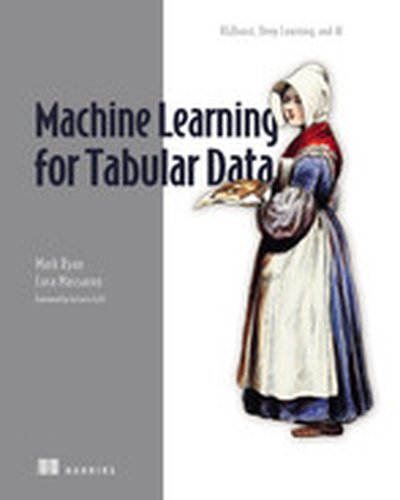
Machine Learning for Tabular Data

Business runs on tabular data in databases, spreadsheets, and logs. Crunch that data using deep learning, gradient boosting, and other machine learning techniques. Machine Learning for Tabular Data teaches you to train insightful machine learning models on common tabular business data sources such as spreadsheets, databases, and logs. You’ll discover how to use XGBoost and LightGBM on tabular data, optimize deep learning libraries like TensorFlow and PyTorch for tabular data, and use cloud tools like Vertex AI to create an automated MLOps pipeline. Machine Learning for Tabular Data will teach you how to: Pick the right machine learning approach for your data Apply deep learning to tabular data Deploy tabular machine learning locally and in the cloud Pipelines to automatically train and maintain a model Machine Learning for Tabular Data covers classic machine learning techniques like gradient boosting, and more contemporary deep learning approaches. By the time you’re finished, you’ll be equipped with the skills to apply machine learning to the kinds of data you work with every day. About the Technology Machine learning can accelerate everyday business chores like account reconciliation, demand forecasting, and customer service automation—not to mention more exotic challenges like fraud detection, predictive maintenance, and personalized marketing. This book shows you how to unlock the vital information stored in spreadsheets, ledgers, databases and other tabular data sources using gradient boosting, deep learning, and generative AI. About the Book Machine Learning for Tabular Data delivers practical ML techniques to upgrade every stage of the business data analysis pipeline. In it, you’ll explore examples like using XGBoost and Keras to predict short-term rental prices, deploying a local ML model with Python and Flask, and streamlining workflows using large language models (LLMs). Along the way, you’ll learn to make your models both more powerful and more explainable. What's Inside Master XGBoost Apply deep learning to tabular data Deploy models locally and in the cloud Build pipelines to train and maintain models About the Reader For readers experienced with Python and the basics of machine learning. About the Authors Mark Ryan is the AI Lead of the Developer Knowledge Platform at Google. A three-time Kaggle Grandmaster, Luca Massaron is a Google Developer Expert (GDE) in machine learning and AI. He has published 17 other books. Quotes

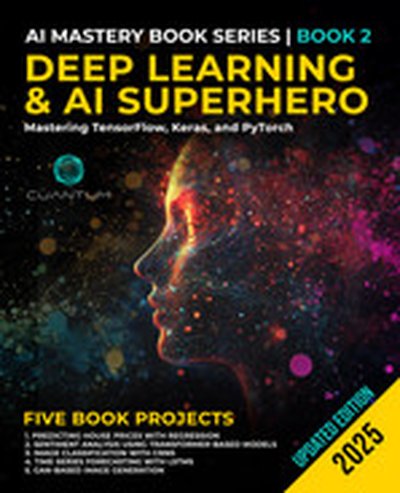
Deep Learning and AI Superhero

"Deep Learning and AI Superhero" is an extensive resource for mastering the core concepts and advanced techniques in AI and deep learning using TensorFlow, Keras, and PyTorch. This comprehensive guide walks you through topics from foundational neural network concepts to implementing real-world machine learning solutions. You will gain hands-on experience and theoretical knowledge to elevate your AI development skills. What this Book will help me do Develop a solid foundation in neural networks, their structure, and their training methodologies. Understand and implement deep learning models using TensorFlow and Keras effectively. Gain experience using PyTorch for creating, training, and optimizing advanced machine learning models. Learn advanced applications such as CNNs for computer vision, RNNs for sequential data, and Transformers for natural language processing. Deploy AI models on cloud and edge platforms through practical examples and optimized workflows. Author(s) Cuantum Technologies LLC has established itself as a pioneer in creating educational resources for advanced AI technologies. Their team consists of experts and practitioners in the field, combining years of industry and academic experience. Their books are crafted to ensure readers can practically apply cutting-edge AI techniques with clarity and confidence. Who is it for? This book is ideally suited for software developers, AI enthusiasts, and data scientists who have a basic understanding of programming and machine learning concepts. It's perfect for those seeking to enhance their skills and tackle real-world AI challenges. Whether your goals are professional development, research, or personal learning, you'll find practical and detailed guidance throughout this book.

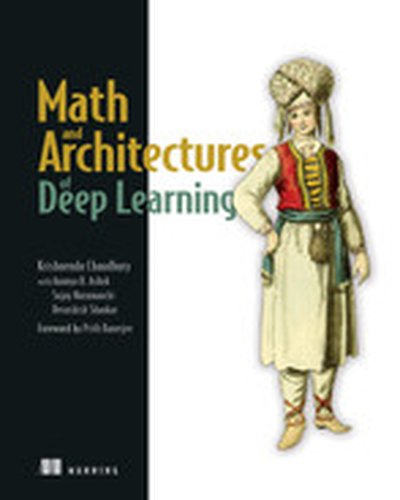
Math and Architectures of Deep Learning

Shine a spotlight into the deep learning “black box”. This comprehensive and detailed guide reveals the mathematical and architectural concepts behind deep learning models, so you can customize, maintain, and explain them more effectively. Inside Math and Architectures of Deep Learning you will find: Math, theory, and programming principles side by side Linear algebra, vector calculus and multivariate statistics for deep learning The structure of neural networks Implementing deep learning architectures with Python and PyTorch Troubleshooting underperforming models Working code samples in downloadable Jupyter notebooks The mathematical paradigms behind deep learning models typically begin as hard-to-read academic papers that leave engineers in the dark about how those models actually function. Math and Architectures of Deep Learning bridges the gap between theory and practice, laying out the math of deep learning side by side with practical implementations in Python and PyTorch. Written by deep learning expert Krishnendu Chaudhury, you’ll peer inside the “black box” to understand how your code is working, and learn to comprehend cutting-edge research you can turn into practical applications. About the Technology Discover what’s going on inside the black box! To work with deep learning you’ll have to choose the right model, train it, preprocess your data, evaluate performance and accuracy, and deal with uncertainty and variability in the outputs of a deployed solution. This book takes you systematically through the core mathematical concepts you’ll need as a working data scientist: vector calculus, linear algebra, and Bayesian inference, all from a deep learning perspective. About the Book Math and Architectures of Deep Learning teaches the math, theory, and programming principles of deep learning models laid out side by side, and then puts them into practice with well-annotated Python code. You’ll progress from algebra, calculus, and statistics all the way to state-of-the-art DL architectures taken from the latest research. What's Inside The core design principles of neural networks Implementing deep learning with Python and PyTorch Regularizing and optimizing underperforming models About the Reader Readers need to know Python and the basics of algebra and calculus. About the Author Krishnendu Chaudhury is co-founder and CTO of the AI startup Drishti Technologies. He previously spent a decade each at Google and Adobe. Quotes Machine learning uses a cocktail of linear algebra, vector calculus, statistical analysis, and topology to represent, visualize, and manipulate points in high dimensional spaces. This book builds that foundation in an intuitive way–along with the PyTorch code you need to be a successful deep learning practitioner. - Vineet Gupta, Google Research A thorough explanation of the mathematics behind deep learning! - Grigory Sapunov, Intento Deep learning in its full glory, with all its mathematical details. This is the book! - Atul Saurav, Genworth Financial

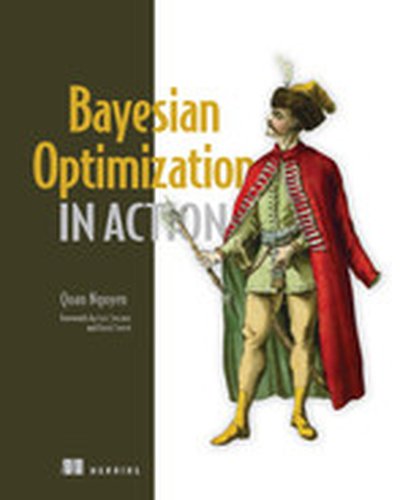
Bayesian Optimization in Action

Bayesian optimization helps pinpoint the best configuration for your machine learning models with speed and accuracy. Put its advanced techniques into practice with this hands-on guide. In Bayesian Optimization in Action you will learn how to: Train Gaussian processes on both sparse and large data sets Combine Gaussian processes with deep neural networks to make them flexible and expressive Find the most successful strategies for hyperparameter tuning Navigate a search space and identify high-performing regions Apply Bayesian optimization to cost-constrained, multi-objective, and preference optimization Implement Bayesian optimization with PyTorch, GPyTorch, and BoTorch Bayesian Optimization in Action shows you how to optimize hyperparameter tuning, A/B testing, and other aspects of the machine learning process by applying cutting-edge Bayesian techniques. Using clear language, illustrations, and concrete examples, this book proves that Bayesian optimization doesn’t have to be difficult! You’ll get in-depth insights into how Bayesian optimization works and learn how to implement it with cutting-edge Python libraries. The book’s easy-to-reuse code samples let you hit the ground running by plugging them straight into your own projects. About the Technology In machine learning, optimization is about achieving the best predictions—shortest delivery routes, perfect price points, most accurate recommendations—in the fewest number of steps. Bayesian optimization uses the mathematics of probability to fine-tune ML functions, algorithms, and hyperparameters efficiently when traditional methods are too slow or expensive. About the Book Bayesian Optimization in Action teaches you how to create efficient machine learning processes using a Bayesian approach. In it, you’ll explore practical techniques for training large datasets, hyperparameter tuning, and navigating complex search spaces. This interesting book includes engaging illustrations and fun examples like perfecting coffee sweetness, predicting weather, and even debunking psychic claims. You’ll learn how to navigate multi-objective scenarios, account for decision costs, and tackle pairwise comparisons. What's Inside Gaussian processes for sparse and large datasets Strategies for hyperparameter tuning Identify high-performing regions Examples in PyTorch, GPyTorch, and BoTorch About the Reader For machine learning practitioners who are confident in math and statistics. About the Author Quan Nguyen is a research assistant at Washington University in St. Louis. He writes for the Python Software Foundation and has authored several books on Python programming. Quotes Using a hands-on approach, clear diagrams, and real-world examples, Quan lifts the veil off the complexities of Bayesian optimization. - From the Foreword by Luis Serrano, Author of Grokking Machine Learning This book teaches Bayesian optimization, starting from its most basic components. You’ll find enough depth to make you comfortable with the tools and methods and enough code to do real work very quickly. - From the Foreword by David Sweet, Author of Experimentation for Engineers Combines modern computational frameworks with visualizations and infographics you won’t find anywhere else. It gives readers the confidence to apply Bayesian optimization to real world problems! - Ravin Kumar, Google

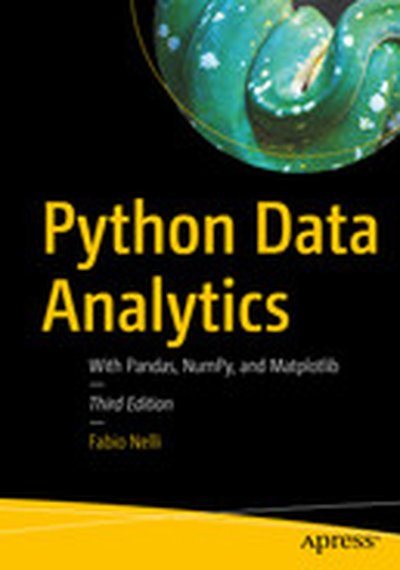
Python Data Analytics: With Pandas, NumPy, and Matplotlib

Explore the latest Python tools and techniques to help you tackle the world of data acquisition and analysis. You'll review scientific computing with NumPy, visualization with matplotlib, and machine learning with scikit-learn. This third edition is fully updated for the latest version of Python and its related libraries, and includes coverage of social media data analysis, image analysis with OpenCV, and deep learning libraries. Each chapter includes multiple examples demonstrating how to work with each library. At its heart lies the coverage of pandas, for high-performance, easy-to-use data structures and tools for data manipulation Author Fabio Nelli expertly demonstrates using Python for data processing, management, and information retrieval. Later chapters apply what you've learned to handwriting recognition and extending graphical capabilities with the JavaScript D3 library. Whether you are dealing with sales data, investment data, medical data, web page usage, or other data sets, Python Data Analytics, Third Edition is an invaluable reference with its examples of storing, accessing, and analyzing data. What You'll Learn Understand the core concepts of data analysis and the Python ecosystem Go in depth with pandas for reading, writing, and processing data Use tools and techniques for data visualization and image analysis Examine popular deep learning libraries Keras, Theano,TensorFlow, and PyTorch Who This Book Is For Experienced Python developers who need to learn about Pythonic tools for data analysis

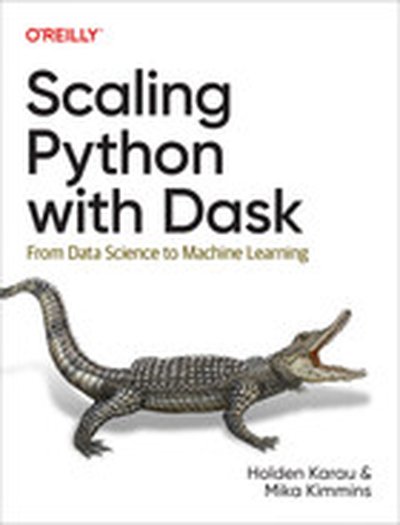
Scaling Python with Dask

Modern systems contain multi-core CPUs and GPUs that have the potential for parallel computing. But many scientific Python tools were not designed to leverage this parallelism. With this short but thorough resource, data scientists and Python programmers will learn how the Dask open source library for parallel computing provides APIs that make it easy to parallelize PyData libraries including NumPy, pandas, and scikit-learn. Authors Holden Karau and Mika Kimmins show you how to use Dask computations in local systems and then scale to the cloud for heavier workloads. This practical book explains why Dask is popular among industry experts and academics and is used by organizations that include Walmart, Capital One, Harvard Medical School, and NASA. With this book, you'll learn: What Dask is, where you can use it, and how it compares with other tools How to use Dask for batch data parallel processing Key distributed system concepts for working with Dask Methods for using Dask with higher-level APIs and building blocks How to work with integrated libraries such as scikit-learn, pandas, and PyTorch How to use Dask with GPUs

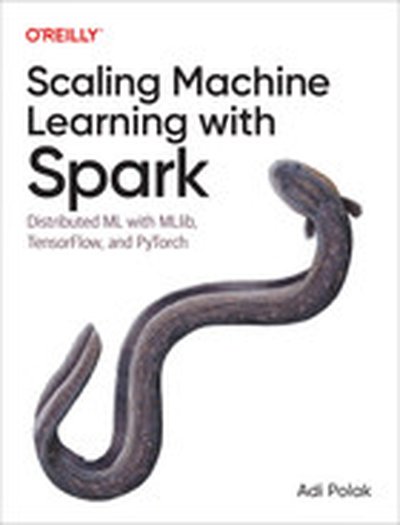
Scaling Machine Learning with Spark

Learn how to build end-to-end scalable machine learning solutions with Apache Spark. With this practical guide, author Adi Polak introduces data and ML practitioners to creative solutions that supersede today's traditional methods. You'll learn a more holistic approach that takes you beyond specific requirements and organizational goals--allowing data and ML practitioners to collaborate and understand each other better. Scaling Machine Learning with Spark examines several technologies for building end-to-end distributed ML workflows based on the Apache Spark ecosystem with Spark MLlib, MLflow, TensorFlow, and PyTorch. If you're a data scientist who works with machine learning, this book shows you when and why to use each technology. You will: Explore machine learning, including distributed computing concepts and terminology Manage the ML lifecycle with MLflow Ingest data and perform basic preprocessing with Spark Explore feature engineering, and use Spark to extract features Train a model with MLlib and build a pipeline to reproduce it Build a data system to combine the power of Spark with deep learning Get a step-by-step example of working with distributed TensorFlow Use PyTorch to scale machine learning and its internal architecture

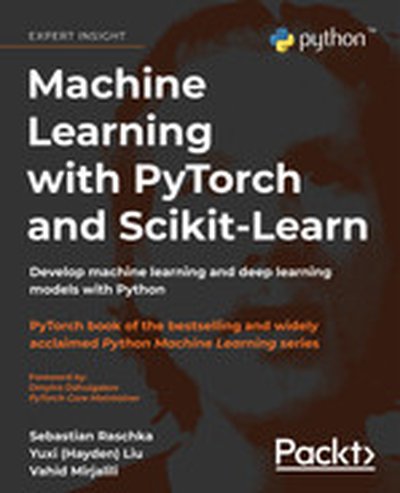
Machine Learning with PyTorch and Scikit-Learn

Machine Learning with PyTorch and Scikit-Learn is a comprehensive resource for developers looking to dive deep into the world of machine learning. It introduces foundational concepts alongside practical implementations using Python and leading libraries such as PyTorch and Scikit-Learn. With well-explained techniques and real-world examples, you'll gain the knowledge needed to design, build, and optimize machine learning systems. What this Book will help me do Understand and apply core concepts in machine learning using Scikit-Learn. Develop and deploy deep learning models using PyTorch efficiently. Configure and optimize neural networks, transformers, and GANs for various applications. Handle and preprocess data effectively for building robust models. Follow best practices for model evaluation, tuning, and deployment. Author(s) Sebastian Raschka, Yuxi (Hayden) Liu, and Vahid Mirjalili are experienced professionals in the field of machine learning with extensive teaching and writing backgrounds. They bring their expertise in Python and machine learning frameworks like PyTorch to provide both theoretical and practical insights helpful for learners. Their combined knowledge ensures a thorough and engaging learning experience suited for aspiring data scientists. Who is it for? This book is tailored for Python developers and data scientists eager to master machine learning and deep learning techniques. If you're familiar with Python programming and possess fundamental knowledge of calculus and linear algebra, you will find this book incredibly insightful. Whether you're entering the field or seeking to enhance your expertise, this resource caters to your professional growth in building advanced machine learning systems.

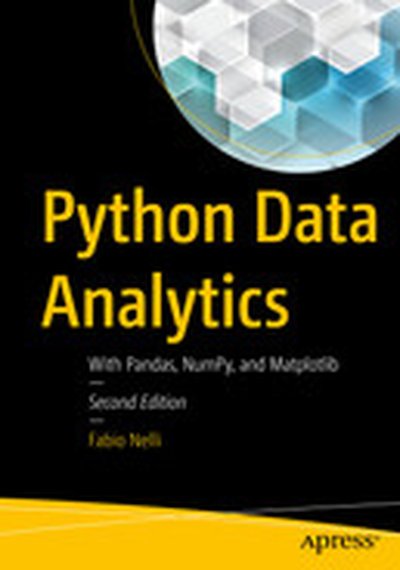
Python Data Analytics: With Pandas, NumPy, and Matplotlib

Explore the latest Python tools and techniques to help you tackle the world of data acquisition and analysis. You'll review scientific computing with NumPy, visualization with matplotlib, and machine learning with scikit-learn. This revision is fully updated with new content on social media data analysis, image analysis with OpenCV, and deep learning libraries. Each chapter includes multiple examples demonstrating how to work with each library. At its heart lies the coverage of pandas, for high-performance, easy-to-use data structures and tools for data manipulation Author Fabio Nelli expertly demonstrates using Python for data processing, management, and information retrieval. Later chapters apply what you've learned to handwriting recognition and extending graphical capabilities with the JavaScript D3 library. Whether you are dealing with sales data, investment data, medical data, web page usage, or other data sets, Python Data Analytics, Second Edition is an invaluable reference with its examples of storing, accessing, and analyzing data. What You'll Learn Understand the core concepts of data analysis and the Python ecosystem Go in depth with pandas for reading, writing, and processing data Use tools and techniques for data visualization and image analysis Examine popular deep learning libraries Keras, Theano,TensorFlow, and PyTorch Who This Book Is For Experienced Python developers who need to learn about Pythonic tools for data analysis