talk-data.com talk-data.com

Topic

Cyber Security

cybersecurity information_security data_security privacy

615

tagged

Activity Trend

297 peak/qtr
2020-Q1 2026-Q1

Activities

Showing filtered results

Filtering by: O'Reilly Data Engineering Books ×
IBM System Storage Solutions Handbook

The IBM® System Storage® Solutions Handbook helps you solve your current and future data storage business requirements to achieve enhanced storage efficiency by design to allow managed cost, capacity of growth, greater mobility, and stronger control over storage performance and management. It describes the current IBM storage products, including IBM FlashSystem™, disk, and tape, and virtualized solutions, such as IBM Storage Cloud, IBM SmartCloud® Virtual Storage Center, and IBM Spectrum™ Storage. This IBM Redbooks® publication provides overviews and pointers for information about the current IBM System Storage products, showing how IBM delivers the right mix of products for nearly every aspect of business continuance and business efficiency. IBM storage products can help you store, safeguard, retrieve, and share your data. The following topics are covered: Part 1 introduces IBM storage solutions. It provides overviews of the IBM storage solutions, including IBM Spectrum Storage™, IBM Storage Cloud, IBM SmartCloud Virtual Storage Center (VSC), and the IBM PureSystems® products. Part 2 describes the IBM disk and flash products that include IBM DS Series (entry-level, midrange, and enterprise offerings), IBM XIV® storage, IBM Storwize® products, and the IBM FlashSystem offerings. Part 3 is an overview of the IBM tape drives, IBM tape automation products, and IBM tape virtualization solutions and products. Part 4 describes storage networking infrastructure, switches and directors to form storage area network (SAN) solutions, and converged networks and data center networking. Part 5 describes the IBM storage software portfolio, including IBM SAN Volume Controller, IBM Tivoli® Storage Manager, Tivoli Storage Productivity Center, and IBM Security Key Lifecycle Manager. Part 6 describes the IBM z/OS® storage management software and tools. The appendixes provide information about the High Performance Storage System (HPSS) and recently withdrawn IBM storage products. This book is intended as a reference for basic and comprehensive information about the IBM Storage products portfolio. It provides a starting point for establishing your own enterprise storage environment.
Designing and Operating a Data Reservoir

Together, big data and analytics have tremendous potential to improve the way we use precious resources, to provide more personalized services, and to protect ourselves from unexpected and ill-intentioned activities. To fully use big data and analytics, an organization needs a system of insight. This is an ecosystem where individuals can locate and access data, and build visualizations and new analytical models that can be deployed into the IT systems to improve the operations of the organization. The data that is most valuable for analytics is also valuable in its own right and typically contains personal and private information about key people in the organization such as customers, employees, and suppliers. Although universal access to data is desirable, safeguards are necessary to protect people's privacy, prevent data leakage, and detect suspicious activity. The data reservoir is a reference architecture that balances the desire for easy access to data with information governance and security. The data reservoir reference architecture describes the technical capabilities necessary for a system of insight, while being independent of specific technologies. Being technology independent is important, because most organizations already have investments in data platforms that they want to incorporate in their solution. In addition, technology is continually improving, and the choice of technology is often dictated by the volume, variety, and velocity of the data being managed. A system of insight needs more than technology to succeed. The data reservoir reference architecture includes description of governance and management processes and definitions to ensure the human and business systems around the technology support a collaborative, self-service, and safe environment for data use. The data reservoir reference architecture was first introduced in Governing and Managing Big Data for Analytics and Decision Makers, REDP-5120, which is available at: http://www.redbooks.ibm.com/redpieces/abstracts/redp5120.html. This IBM® Redbooks publication, Designing and Operating a Data Reservoir, builds on that material to provide more detail on the capabilities and internal workings of a data reservoir.

FileMaker Pro 14: The Missing Manual

You don’t need a technical background to build powerful databases with FileMaker Pro 14. This crystal-clear, objective guide shows you how to create a database that lets you do almost anything with your data so you can quickly achieve your goals. Whether you’re creating catalogs, managing inventory and billing, or planning a wedding, you’ll learn how to customize your database to run on a PC, Mac, web browser, or iOS device. The important stuff you need to know: Dive into relational data. Solve problems quickly by connecting and combining data from different tables. Create professional documents. Publish reports, charts, invoices, catalogs, and other documents with ease. Access data anywhere. Use FileMaker Go on your iPad or iPhone—or share data on the Web. Harness processing power. Use new calculation and scripting tools to crunch numbers, search text, and automate tasks. Run your database on a secure server. Learn the high-level features of FileMaker Pro Advanced. Keep your data safe. Set privileges and allow data sharing with FileMaker’s streamlined security features.

Apache Oozie

Get a solid grounding in Apache Oozie, the workflow scheduler system for managing Hadoop jobs. With this hands-on guide, two experienced Hadoop practitioners walk you through the intricacies of this powerful and flexible platform, with numerous examples and real-world use cases. Once you set up your Oozie server, you’ll dive into techniques for writing and coordinating workflows, and learn how to write complex data pipelines. Advanced topics show you how to handle shared libraries in Oozie, as well as how to implement and manage Oozie’s security capabilities. Install and configure an Oozie server, and get an overview of basic concepts Journey through the world of writing and configuring workflows Learn how the Oozie coordinator schedules and executes workflows based on triggers Understand how Oozie manages data dependencies Use Oozie bundles to package several coordinator apps into a data pipeline Learn about security features and shared library management Implement custom extensions and write your own EL functions and actions Debug workflows and manage Oozie’s operational details

IBM z13 Technical Guide

Digital business has been driving the transformation of underlying IT infrastructure to be more efficient, secure, adaptive, and integrated. Information Technology (IT) must be able to handle the explosive growth of mobile clients and employees. IT also must be able to use enormous amounts of data to provide deep and real-time insights to help achieve the greatest business impact. This IBM® Redbooks® publication addresses the new IBM Mainframe, the IBM z13. The IBM z13 is the trusted enterprise platform for integrating data, transactions, and insight. A data-centric infrastructure must always be available with a 99.999% or better availability, have flawless data integrity, and be secured from misuse. It needs to be an integrated infrastructure that can support new applications. It needs to have integrated capabilities that can provide new mobile capabilities with real-time analytics delivered by a secure cloud infrastructure. IBM z13 is designed with improved scalability, performance, security, resiliency, availability, and virtualization. The superscalar design allows the z13 to deliver a record level of capacity over the prior z Systems. In its maximum configuration, z13 is powered by up to 141 client characterizable microprocessors (cores) running at 5 GHz. This configuration can run more than 110,000 millions of instructions per second (MIPS) and up to 10 TB of client memory. The IBM z13 Model NE1 is estimated to provide up to 40% more total system capacity than the IBM zEnterprise® EC12 (zEC1) Model HA1. This book provides information about the IBM z13 and its functions, features, and associated software support. Greater detail is offered in areas relevant to technical planning. It is intended for systems engineers, consultants, planners, and anyone who wants to understand the IBM z Systems functions and plan for their usage. It is not intended as an introduction to mainframes. Readers are expected to be generally familiar with existing IBM z Systems technology and terminology.

The Security Data Lake

Companies of all sizes are considering data lakes as a way to deal with terabytes of security data that can help them conduct forensic investigations and serve as an early indicator to identify bad or relevant behavior. Many think about replacing their existing SIEM (security information and event management) systems with Hadoop running on commodity hardware. Before your company jumps into the deep end, you first need to weigh several critical factors. This O'Reilly report takes you through technological and design options for implementing a data lake. Each option not only supports your data analytics use cases, but is also accessible by processes, workflows, third-party tools, and teams across your organization. Within this report, you'll explore: Five questions to ask before choosing architecture for your backend data store How data lakes can overcome scalability and data duplication issues Different options for storing context and unstructured log data Data access use cases covering both search and analytical queries via SQL Processes necessary for ingesting data into a data lake, including parsing, enrichment, and aggregation Four methods for embedding your SIEM into a data lake

Advanced Analytics with Spark

In this practical book, four Cloudera data scientists present a set of self-contained patterns for performing large-scale data analysis with Spark. The authors bring Spark, statistical methods, and real-world data sets together to teach you how to approach analytics problems by example. You’ll start with an introduction to Spark and its ecosystem, and then dive into patterns that apply common techniques—classification, collaborative filtering, and anomaly detection among others—to fields such as genomics, security, and finance. If you have an entry-level understanding of machine learning and statistics, and you program in Java, Python, or Scala, you’ll find these patterns useful for working on your own data applications.

PostgreSQL for Data Architects

Dive into the world of scalable and maintainable PostgreSQL databases with 'PostgreSQL for Data Architects.' This book is your companion to mastering PostgreSQL and learning how to configure, optimize, and manage database systems effectively. Whether you are designing a new database or maintaining and improving an existing one, you'll find practical tips and techniques tailored for data-intensive applications. What this Book will help me do Master PostgreSQL architecture, compilation, and configuration for custom setups. Optimize database performance with advanced indexing, query tuning, and parameter adjustments. Leverage replication to scale databases horizontally and ensure high availability. Set up robust backup and recovery processes to secure and manage data effectively. Troubleshoot effectively using PostgreSQL's tools and logging mechanisms to resolve issues promptly. Author(s) Jayadevan M is a seasoned data architect with years of experience working on database design and optimization for diverse applications. His expertise spans various database management systems with a focus on practical, performance-oriented solutions. Through his writing, Jayadevan aims to make sophisticated database concepts accessible to developers seeking to advance their skills and build resilient, scalable systems. Who is it for? This book is perfect for developers and data architects who already have a basic understanding of database structures, such as tables and security configurations, looking to deepen their PostgreSQL skills. If your goal is to design, manage, or optimize database applications with PostgreSQL effectively, this guide will act as a vital resource. Additionally, those involved in performance tuning or database scalability projects will find it invaluable.

Centrally Managing Access to Self-Encrypting Drives in Lenovo System x Servers Using IBM Security Key Lifecycle Manager

Data security is one of the paramount requirements for organizations of all sizes. Although many companies invested heavily in protection from network-based attacks and other threats, few effective safeguards are available to protect against potentially costly exposures of proprietary data that results from a hard disk drive being stolen, misplaced, retired, or redeployed. Self-encrypting drives (SEDs) can satisfy this need by providing the ultimate in security for data-at-rest and can help reduce IT drive retirement costs in the data center. Self-encrypting drives are also an excellent choice if you must comply with government or industry regulations for data privacy and encryption. To effectively manage a large deployment of SEDs in Lenovo® System x® servers, an organization must rely on a centralized key management solution. This IBM Redbooks® publication explains the technology behind SEDs and demonstrates how to deploy a key management solution that uses IBM Security Key Lifecycle Manager and properly setup your System x servers.

Field Guide to Hadoop

If your organization is about to enter the world of big data, you not only need to decide whether Apache Hadoop is the right platform to use, but also which of its many components are best suited to your task. This field guide makes the exercise manageable by breaking down the Hadoop ecosystem into short, digestible sections. You’ll quickly understand how Hadoop’s projects, subprojects, and related technologies work together. Each chapter introduces a different topic—such as core technologies or data transfer—and explains why certain components may or may not be useful for particular needs. When it comes to data, Hadoop is a whole new ballgame, but with this handy reference, you’ll have a good grasp of the playing field. Topics include: Core technologies—Hadoop Distributed File System (HDFS), MapReduce, YARN, and Spark Database and data management—Cassandra, HBase, MongoDB, and Hive Serialization—Avro, JSON, and Parquet Management and monitoring—Puppet, Chef, Zookeeper, and Oozie Analytic helpers—Pig, Mahout, and MLLib Data transfer—Scoop, Flume, distcp, and Storm Security, access control, auditing—Sentry, Kerberos, and Knox Cloud computing and virtualization—Serengeti, Docker, and Whirr

Apache Hive Essentials

Apache Hive Essentials is the perfect guide for understanding and mastering Hive, the SQL-like big data query language built on top of Hadoop. With this book, you will gain the skills to effectively use Hive to analyze and manage large data sets. Whether you're a developer, data analyst, or just curious about big data, this hands-on guide will enhance your capabilities. What this Book will help me do Understand the core concepts of Hive and its relation to big data and Hadoop. Learn how to set up a Hive environment and integrate it with Hadoop. Master the SQL-like query functionalities of Hive to select, manipulate, and analyze data. Develop custom functions in Hive to extend its functionality for your own specific use cases. Discover best practices for optimizing Hive performance and ensuring data security. Author(s) Dayong Du is an expert in big data analytics with extensive experience in implementing and using tools like Hive in professional settings. Having worked on practical big data solutions, Dayong brings a wealth of knowledge and insights to his writing. His clear, approachable style makes complex topics accessible to readers. Who is it for? This book is ideal for developers, data analysts, and data engineers looking to leverage Hive for big data analysis. If you are familiar with SQL and Hadoop basics and aim to enhance your understanding of Hive, this book is for you. Beginners with some programming background eager to dive into big data technologies will also benefit. It's tailored for learners wanting actionable knowledge to advance their data processing skills.

IBM Tape Library Guide for Open Systems

This IBM® Redbooks® publication presents a general introduction to Linear Tape-Open (LTO) technology and the implementation of corresponding IBM products. The high-performance, high-capacity, and cost-effective IBM TS1150 tape drive is included. The book highlights the IBM TS4500 tape library, which is the next-generation storage solution that is designed to help midsize and large enterprises respond to storage challenges. The IBM TS1150 tape drive gives organizations an easy way to deliver fast access to data, improve security, and provide long-term retention for less expense than disk solutions. TS1150 offers high-performance, flexible data storage with support for data encryption. This fifth-generation drive can help protect investments in tape automation by offering compatibility with existing automation. This eleventh edition includes information about the latest enhancements to the IBM Ultrium family of tape drives and tape libraries. In particular, it includes details of the latest IBM LTO Ultrium 6 tape drive technology and its implementation in IBM tape libraries. It contains technical information about each IBM tape product for open systems and includes generalized sections about Small Computer System Interface (SCSI) and Fibre Channel connections and multipath architecture configurations. This edition also includes details about Tape System Library Manager (TSLM), which consolidates and simplifies large TS3500 tape library environments, including the IBM Shuttle Complex. This book also covers tools and techniques for library management. It is intended for anyone who wants to understand more about IBM tape products and their implementation. It is suitable for IBM clients, IBM Business Partners, IBM specialist sales representatives, and technical specialists. If you do not have a background in computer tape storage products, you might need to read other sources of information. In the interest of being concise, topics that are generally understood are not covered in detail.

Extending IBM Business Process Manager to the Mobile Enterprise with IBM Worklight

In today's business in motion environments, workers expect to be connected to their critical business processes while on-the-go. It is imperative to deliver more meaningful user engagements by extending business processes to the mobile working environments. This IBM® Redbooks® publication provides an overview of the market forces that push organizations to reinvent their process with Mobile in mind. It describes IBM Mobile Smarter Process and explains how the capabilities provided by the offering help organizations to mobile-enable their processes. This book outlines an approach that organizations can use to identify where within the organization mobile technologies can offer the greatest benefits. It provides a high-level overview of the IBM Business Process Manager and IBM Worklight® features that can be leveraged to mobile-enable processes and accelerate the adoption of mobile technologies, improving time-to-value. Key IBM Worklight and IBM Business Process Manager capabilities are showcased in the examples included in this book. The examples show how to integrate with IBM Bluemix™ as the platform to implement various supporting processes. This IBM Redbooks publication discusses architectural patterns for exposing business processes to mobile environments. It includes an overview of the IBM MobileFirst reference architecture and deployment considerations. Through use cases and usage scenarios, this book explains how to build and deliver a business process using IBM Business Process Manager and how to develop a mobile app that enables remote users to interact with the business process while on-the-go, using the IBM Worklight Platform. The target audience for this book consists of solution architects, developers, and technical consultants who will learn the following information: What is IBM Mobile Smarter Process Patterns and benefits of a mobile-enabled Smarter Process IBM BPM features to mobile-enable processes IBM Worklight features to mobile-enable processes Mobile architecture and deployment topology IBM BPM interaction patterns Enterprise mobile security with IBM Security Access Manager and IBM Worklight Implementing mobile apps to mobile-enabled business processes

Extend Microsoft Access Applications to the Cloud

Learn how to create an Access web app, and move your database into the cloud. This practical book shows you how to design an Access web app for Microsoft Office 365, and convert existing Access desktop databases to a web app as well. You’ll quickly learn your way around the web app design environment, including how to capitalize on its strengths and avoid the pitfalls. You don’t need any special web skills to get started. Discover how to: Make your desktop database compatible with web app table structures Create tables, views, and queries Customize the table selector and work with popup views to provide a navigation interface Implement business rules using the Macro Programming Tools Develop using Office 365 and SharePoint 2013 Use SQL Azure to investigate how your web app is structured Design, test, and troubleshoot Data Macros Understand how security links between a web app and Office 365 Deploy a public facing web app on your Office 365 public website

Data Privacy for the Smart Grid

Privacy for the Smart Grid provides easy-to-understand guidance on data privacy issues and the implications for creating privacy risk management programs, along with privacy policies and practices required to ensure Smart Grid privacy. It addresses privacy in electric, natural gas, and water grids from two different perspectives of the topic, one from a Smart Grid expert and another from a privacy and information security expert. While considering privacy in the Smart Grid, the book also examines the data created by Smart Grid technologies and machine-to-machine applications.

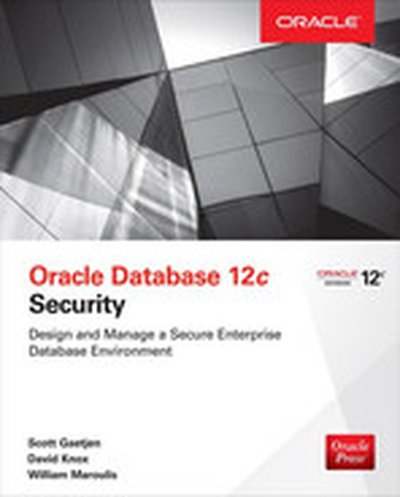
Oracle Database 12c Security

Best Practices for Comprehensive Oracle Database Security Written by renowned experts from Oracle's National Security Group, Oracle Database 12c Security provides proven techniques for designing, implementing, and certifying secure Oracle Database systems in a multitenant architecture. The strategies are also applicable to standalone databases. This Oracle Press guide addresses everything from infrastructure to audit lifecycle and describes how to apply security measures in a holistic manner. The latest security features of Oracle Database 12c are explored in detail with practical and easy-to-understand examples. Connect users to databases in a secure manner Manage identity, authentication, and access control Implement database application security Provide security policies across enterprise applications using Real Application Security Control data access with Oracle Virtual Private Database Control sensitive data using data redaction and transparent sensitive data protection Control data access with Oracle Label Security Use Oracle Database Vault and Transparent Data Encryption for compliance, cybersecurity, and insider threats Implement auditing technologies, including Unified Audit Trail Manage security policies and monitor a secure database environment with Oracle Enterprise Manager Cloud Control

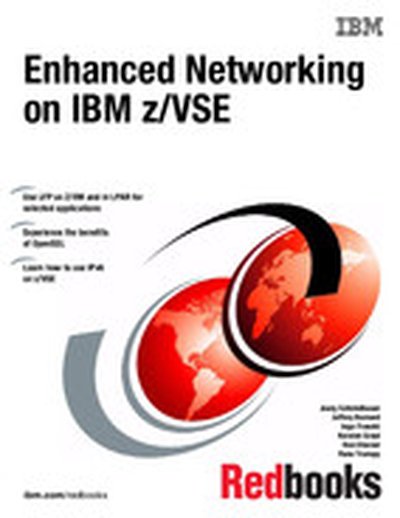
Enhanced Networking on IBM z/VSE

The importance of modern computer networks is steadily growing as increasing amounts of data are exchanged over company intranets and the Internet. Understanding current networking technologies and communication protocols that are available for the IBM® mainframe and System z® operating systems is essential for setting up your network infrastructure with IBM z/VSE®. This IBM Redbooks® publication helps you install, tailor, and configure new networking options for z/VSE that are available with TCP/IP for VSE/ESA, IPv6/VSE, and Fast Path to Linux on System z (Linux Fast Path). We put a strong focus on network security and describe how the new OpenSSL-based SSL runtime component can be used to enhance the security of your business. This IBM Redbooks publication extends the information that is provided in Security on IBM z/VSE, SG24-7691.

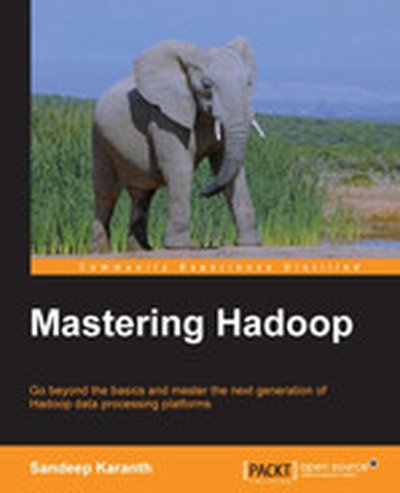
Mastering Hadoop

Embark on a journey to master Hadoop and its advanced features with this comprehensive book. "Mastering Hadoop" equips you with the knowledge needed to tackle complex data processing challenges and optimize your Hadoop workflows. With clear explanations and practical examples, this book is your guide to becoming proficient in leveraging Hadoop technologies. What this Book will help me do Optimize Hadoop MapReduce jobs, Pig scripts, and Hive queries for better performance. Understand and employ advanced data formats and Hadoop I/O techniques. Learn to integrate low-latency processing with Storm on YARN. Explore the cloud deployment of Hadoop and advanced HDFS alternatives. Enhance Hadoop security and master techniques for analytics using Hadoop. Author(s) None Karanth is an experienced Hadoop professional with years of expertise in data processing and distributed computing. With a practical and methodical approach, None has crafted this book to empower learners with the essentials and advanced features of Hadoop. None's focus on performance optimization and real-world applications helps bridge the gap between theory and practice. Who is it for? This book is ideal for data engineers and software developers familiar with the basics of Hadoop who seek to advance their understanding. If you aim to enhance Hadoop performance or adopt new features like YARN and Storm, this book is for you. Readers interested in Hadoop deployment, optimization, and newer capabilities will also greatly benefit. It's perfect for anyone aiming to become a Hadoop expert, from intermediate learners to advanced practitioners.

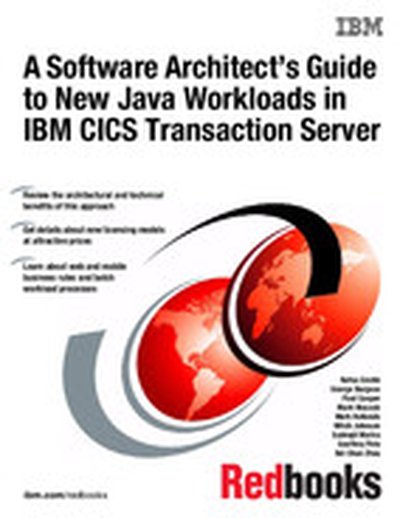
A Software Architect's Guide to New Java Workloads in IBM CICS Transaction Server

This IBM® Redpaper Redbooks® publication introduces the IBM System z® New Application License Charges (zNALC) pricing structure and provides examples of zNALC workload scenarios. It describes the products that can be run on a zNALC logical partition (LPAR), reasons to consider such an implementation, and covers the following topics: Using the IBM WebSphere Application Server Liberty profile to host applications within an IBM CICS® environment and how it interacts with CICS applications and resources Security technologies available to applications that are hosted within a WebSphere Application Server Liberty profile in CICS How to implement modern presentation in CICS with a CICS Liberty Java virtual machine (JVM) server How to share scenarios to develop Liberty JVM applications to gain benefits from IBM CICS Transaction Server for IBM z/OS® Value Unit Edition Considerations when using mobile devices to interact with CICS applications and explains specific CICS technologies for connecting mobile devices by using the z/OS Value Unit Edition How IBM Operational Decision Manager for z/OS runs in the transaction server to provide decision management services for CICS COBOL and PL/I applications Installing the CICS Transaction Server for z/OS (CICS TS) Feature Pack for Modern Batch to enable the IBM WebSphere® batch environment to schedule and manage batch applications in CICS This book also covers what is commonly referred to as plain old Java objects (POJOs). The Java virtual machine (JVM) server is a full-fledged JVM that includes support for Open Service Gateway initiative (OSGi) bundles. It can be used to host open source Java frameworks and does just about anything you want to do with Java on the mainframe. POJO applications can also qualify for deployment using the Value Unit Edition. Read about how to configure and deploy them in this companion Redbooks publication: IBM CICS and the JVM server: Developing and Deploying Java Applications, SG24-8038 Examples of POJOs are terminal-initiated transactions, CICS web support, web services, requests received via IP CICS sockets, and messages coming in via IBM WebSphere MQ messaging software.

Practical Hadoop Security

Practical Hadoop Security is an excellent resource for administrators planning a production Hadoop deployment who want to secure their Hadoop clusters. A detailed guide to the security options and configuration within Hadoop itself, author Bhushan Lakhe takes you through a comprehensive study of how to implement defined security within a Hadoop cluster in a hands-on way. You will start with a detailed overview of all the security options available for Hadoop, including popular extensions like Kerberos and OpenSSH, and then delve into a hands-on implementation of user security (with illustrated code samples) with both in-the-box features and with security extensions implemented by leading vendors. No security system is complete without a monitoring and tracing facility, so Practical Hadoop Security next steps you through audit logging and monitoring technologies for Hadoop, as well as ready to use implementation and configuration examples--again with illustrated code samples. The book concludes with the most important aspect of Hadoop security – encryption. Both types of encryptions, for data in transit and data at rest, are discussed at length with leading open source projects that integrate directly with Hadoop at no licensing cost. Practical Hadoop Security: Explains importance of security, auditing and encryption within a Hadoop installation Describes how the leading players have incorporated these features within their Hadoop distributions and provided extensions Demonstrates how to set up and use these features to your benefit and make your Hadoop installation secure without impacting performance or ease of use