talk-data.com talk-data.com

Topic

SQL

Structured Query Language (SQL)

database_language data_manipulation data_definition programming_language

780

tagged

Activity Trend

107 peak/qtr
2020-Q1 2026-Q1

Activities

Showing filtered results

Filtering by: O'Reilly Data Engineering Books ×
Oracle Exadata Survival Guide

Oracle Exadata Survival Guide is a hands-on guide for busy Oracle database administrators who are migrating their skill sets to Oracle's Exadata database appliance. The book covers the concepts behind Exadata, and the available configurations for features such as smart scans, storage indexes, Smart Flash Cache, hybrid columnar compression, and more. You'll learn about performance metrics and execution plans, and how to optimize SQL running in Oracle's powerful, new environment. The authors also cover migration from other servers. Oracle Exadata is fast becoming the standard for large installations such as those running data warehouse, business intelligence, and large-scale OLTP systems. Exadata is like no other platform, and is new ground even for experienced Oracle database administrators. The Oracle Exadata Survival Guide helps you navigate the ins and outs of this new platform, de-mystifying this amazing appliance and its exceptional performance. The book takes a highly practical approach, not diving too deeply into the details, but giving you just the right depth of information to quickly transfer your skills to Oracle's important new platform. Helps transfer your skills to the platform of the future Covers the important ground without going too deep Takes a practical and hands-on approach to everyday tasks What you'll learn Learn the components and basic architecture of an Exadata machine Reduce data transfer overhead by processing queries in the storage layer Examine and take action on Exadata-specific performance metrics Deploy Hybrid Columnar Compression to reduce storage and I/O needs Create worry-free migrations from existing databases into Exadata Understand and address issues specific to ERP migrations Who this book is for Oracle Exadata Survival Guide is for the busy enterprise Oracle DBA who has suddenly been thrust into the Exadata arena. Readers should have a sound grasp of traditional Oracle database administration, and be prepared to learn new aspects that are specific to the Exadata appliance.
The Definitive Guide to MongoDB: A complete guide to dealing with Big Data using MongoDB, Second Edition

The Definitive Guide to MongoDB, Second Edition, is updated for the latest version and includes all of the latest MongoDB features, including the aggregation framework introduced in version 2.2 and hashed indexes in version 2.4. MongoDB is the most popular of the "Big Data" NoSQL database technologies, and it's still growing. David Hows from 10gen, along with experienced MongoDB authors Peter Membrey and Eelco Plugge, provide their expertise and experience in teaching you everything you need to know to become a MongoDB pro. The Definitive Guide to MongoDB, Second Edition, starts with the basics, including how to install on Windows, Linux, and OS X, and how MongoDB handles your data. Then you'll learn how to develop with MongoDB with both PHP and Python, including an example application using a PHP driver to create a blog application. Finally, you'll dig into more advanced but extremely important MongoDB features, including optimization, replication, and sharding -- load-balancing that makes MongoDB ideal for dealing with Big Data. If you're dealing with data, MongoDB should be on your must-learn list. The Definitive Guide to MongoDB, Second Edition, is just the book you need. What you'll learn Set up MongoDB on all major server platforms, including Windows, Linux, OS X, and cloud platforms like Rackspace, Azure, and Amazon EC2 Work with GridFS and the new aggregation framework Work with your data using non-SQL commands Write applications using either PHP or Python Optimize MongoDB Master MongoDB administration, including replication, replication tagging, and tag-aware sharding Who this book is for Database admins and developers who need to get up to speed on MongoDB and its Big Data, NoSQL approach to dealing with data management.

Pro Oracle SQL, Second Edition

Pro Oracle SQL, Second Edition unlocks the power of SQL in the Oracle database—one of the most potent SQL implementations on the market today. To master it requires a multi-pronged approach: learn the language features, learn how and why the language features work, learn the supporting features that Oracle provides to help use the language effectively, and learn to think and work in sets. Karen Morton has updated the content for Oracle version 12c and helps you master powerful aspects of Oracle SQL from the inside-out. You'll learn analytic functions, the MODEL clause, and advanced grouping syntax—features that will help in creating good queries for reporting and business intelligence applications. Pro Oracle SQL, Second Edition also helps you minimize parsing overhead, read execution plans, test for correct results, understand performance management, and exert control over SQL execution in your database. You'll learn when to create indexes, how to verify that they make a difference, how to use SQL Baselines and Profiles to optimize and stabilize SQL execution plans, and much more. You'll also understand how SQL is optimized for working in sets, and that the key to getting accurate results lies in making sure that queries ask clear and precise questions. Pro Oracle SQL, Second Edition helps you work at a truly professional level in the Oracle dialect of SQL. You'll master the language, the tools to work effectively with the language, and the right way to think about a problem in SQL. Endorsed by the OakTable Network, a group of Oracle technologists well-known for their rigorous and scientific approach to Oracle Database performance Comprehensive—goes beyond the language with a focus on what you need to know to write successful queries and data manipulation statements. Performance focused—teaches you how to measure the performance of your SQL statements and not just the syntax. What you'll learn Master powerful SQL features implemented in the Oracle Database Understand how the Oracle Optimizer develops execution plans Read and interpret SQL execution plans Quickly diagnose and fix badly performing SQL Control execution plans through hints, profiles, and plan baselines Optimize queries within packaged applications without touching the code Recognize when not to waste time on SQL that is performing optimally Who this book is for Pro Oracle SQL, Second Edition is aimed at developers and database administrators who submit SQL for execution by an Oracle database. Readers should already know the basic four SQL statements, and be ready to learn deeply about Oracle's specific implementation of the language, including Oracle-specific features and syntax. Readers should also want to learn about Oracle Database features such as analytic queries, the MODEL clause, and the WITH clause (subquery factoring) that are designed to help developers and database administrators exert control over their SQL environment and its execution.

Oracle Database 12c Install, Configure & Maintain Like a Professional

Master the Fundamentals of Oracle Database 12c Filled with easy-to-follow tutorials, this Oracle Press guide provides detailed coverage of core database concepts, the role of the administrator, and enterprise database capabilities. Oracle Database 12c: Install, Configure & Maintain Like a Professional walks you through database configuration, administration, programming, backup and recovery, and high availability. You'll get in-depth introductions to SQL and PL/SQL as well as important information on managing large databases and using Oracle's engineered systems. This essential beginner's resource features: Critical Skills--Lists of specific skills covered in each chapter Projects--Practical exercises that show how to apply the critical skills learned in each chapter Progress Checks--Quick self-assessment sections to check your progress Ask the Expert--Q&A sections filled with helpful tips Notes--Extra information related to the topic being covered Mastery Checks--Chapter-ending quizzes to test your knowledge

Joe Celko’s Complete Guide to NoSQL

Joe Celko's Complete Guide to NoSQL provides a complete overview of non-relational technologies so that you can become more nimble to meet the needs of your organization. As data continues to explode and grow more complex, SQL is becoming less useful for querying data and extracting meaning. In this new world of bigger and faster data, you will need to leverage non-relational technologies to get the most out of the information you have. Learn where, when, and why the benefits of NoSQL outweigh those of SQL with Joe Celko's Complete Guide to NoSQL. This book covers three areas that make today's new data different from the data of the past: velocity, volume and variety. When information is changing faster than you can collect and query it, it simply cannot be treated the same as static data. Celko will help you understand velocity, to equip you with the tools to drink from a fire hose. Old storage and access models do not work for big data. Celko will help you understand volume, as well as different ways to store and access data such as petabytes and exabytes. Not all data can fit into a relational model, including genetic data, semantic data, and data generated by social networks. Celko will help you understand variety, as well as the alternative storage, query, and management frameworks needed by certain kinds of data. Gain a complete understanding of the situations in which SQL has more drawbacks than benefits so that you can better determine when to utilize NoSQL technologies for maximum benefit Recognize the pros and cons of columnar, streaming, and graph databases Make the transition to NoSQL with the expert guidance of best-selling SQL expert Joe Celko

Oracle to DB2 Conversion Guide: Compatibility Made Easy

This IBM® Redbooks® publication describes IBM DB2® SQL compatibility features. The latest version of DB2 includes extensive native support for the PL/SQL procedural language, new data types, scalar functions, improved concurrency, built-in packages, OCI, SQL*Plus, and more. These features can help with developing applications that run on both DB2 and Oracle and can help simplify the process of moving from Oracle to DB2. In addition, IBM now provides tools to simplify the enablement process, such as the highly scalable IBM Data Movement Tool for moving schema and data into DB2, and an Editor and Profiler for PL/SQL provided by the IBM Data Studio tool suite. This Oracle to DB2 migration guide describes new technology, preferred practices for moving to DB2, and common scenarios that can help you as you move from Oracle to DB2. This book is intended for IT architects and developers who are converting from Oracle to DB2. DB2 compatibility with Oracle is provided through native support. The new capabilities in DB2 that provide compatibility are implemented at the lowest and most intimate levels of the database kernel, as though they were originally engineered for DB2. means that the DB2 implementation is done without the aid of an emulation layer. This intimacy leads to the scalable implementation that DB2 offers, providing identical performance between DB2 compatibility features and DB2 other language elements. For example, DB2 runs SQL PL at the same performance as PL/SQL implementations of the same function.

BizTalk 2013 EDI for Supply Chain Management: Working with Invoices, Purchase Orders and Related Document Types

Building a successful supply chain processing EDI implementation in BizTalk Server can be complex. Decisions must be made around how to extract and publish data, how to map to the various EDI standards, and how to appropriately batch and deliver data. If architected properly, your BizTalk solution can be highly efficient, simple, and something that can be managed and extended for years to come. The topics in this book include building complete inbound and outbound solutions for 810, 845, and 850 EDI document types, which will lay the groundwork for any document type you may be implementing. In addition, topics on how to set up FTP, SFTP, and AS2 protocols for document exchange, working with 997/999 acknowledgements, and creating custom applications for archiving and monitoring data are included. Covering mapping, architectural patterns, orchestrations, trading partner configurations, AS2, SFTP, FTP, usage of role links, and data routing, you will find that BizTalk 2013 EDI for Supply Chain Management gives you the detail and knowledge needed for success with your own implementations. What you'll learn Successfully create professional, industry-standard and compliant implementations Build fully operational inbound and outbound processes using AS2, SFTP, and FTP Integrate with SQL Server, .NET Libraries, and other platforms and technologies Develop maps, schemas, orchestrations and configure encrypted file delivery Configure role links to allow for shipment of outbound data to multiple parties Who this book is for BizTalk Developers, technical architects, and executives of manufacturing or supply companies looking to implement EDI on BizTalk

Making Sense of NoSQL

Making Sense of NoSQL clearly and concisely explains the concepts, features, benefits, potential, and limitations of NoSQL technologies. Using examples and use cases, illustrations, and plain, jargon-free writing, this guide shows how you can effectively assemble a NoSQL solution to replace or augment the traditional RDBMS you have now. About the Technology About the Book If you want to understand and perhaps start using the new data storage and analysis technologies that go beyond the SQL database model, this book is for you. Written in plain language suitable for technical managers and developers, and using many examples, use cases, and illustrations, this book explains the concepts, features, benefits, potential, and limitations of NoSQL. Making Sense of NoSQL starts by comparing familiar database concepts to the new NoSQL patterns that augment or replace them. Then, you'll explore case studies on big data, search, reliability, and business agility that apply these new patterns to today's business problems. You'll see how NoSQL systems can leverage the resources of modern cloud computing and multiple-CPU data centers. The final chapters show you how to choose the right NoSQL technologies for your own needs. What's Inside NoSQL data architecture patterns NoSQL for big data Search, high availability, and security Choosing an architecture About the Reader Managers and developers will welcome this lucid overview of the potential and capabilities of NoSQL technologies. About the Authors Dan McCreary and Ann Kelly lead an independent training and consultancy firm focused on NoSQL solutions and are cofounders of the NoSQL Now! Conference. Quotes Easily digestible, practical advice for technical managers, architects, and developers. - From the Foreword by Tony Shaw, CEO of DATAVERSITY Cuts through the jargon and gives you the information you need to know. - Craig Smith, Unbound DNA A concise yet thorough description of the many facets of NoSQL, from big data to search. - John Guthrie, Pivotal Brings common sense to the world of NoSQL. - Ignacio Lopez Vellon, Atos Worldgrid Get ahead of your peers ... fast-track to NoSQL now! - Ian Stirk, Stirk Consultancy, Ltd

SQL For Dummies, 8th Edition

Uncover the secrets of SQL and start building better relational databases today! This fun and friendly guide will help you demystify database management systems so you can create more powerful databases and access information with ease. Updated for the latest SQL functionality, SQL For Dummies, 8th Edition covers the core SQL language and shows you how to use SQL to structure a DBMS, implement a database design, secure your data, and retrieve information when you need it. Includes new enhancements of SQL:2011, including temporal data functionality which allows you to set valid times for transactions to occur and helps prevent database corruption Covers creating, accessing, manipulating, maintaining, and storing information in relational database management systems like Access, Oracle, SQL Server, and MySQL Provides tips for keeping your data safe from theft, accidental or malicious corruption, or loss due to equipment failures and advice on eliminating errors in your work Don't be daunted by database development anymore - get SQL For Dummies, 8th Edition, and you'll be on your way to SQL stardom.

Professional Access 2013 Programming

Authoritative and comprehensive coverage for building Access 2013 Solutions Access, the most popular database system in the world, just opened a new frontier in the Cloud. Access 2013 provides significant new features for building robust line-of-business solutions for web, client and integrated environments. This book was written by a team of Microsoft Access MVPs, with consulting and editing by Access experts, MVPs and members of the Microsoft Access team. It gives you the information and examples to expand your areas of expertise and immediately start to develop and upgrade projects. Explores the new development environment for Access web apps Focuses on the tools and techniques for developing robust web applications Demonstrates how to monetize your apps with Office Store and create e-commerce solutions Explains how to use SQL Server effectively to support both web and client solutions Provides techniques to add professional polish and deploy desktop application Shows you how to automate other programs using Macros, VBA, API calls and more. Professional Access 2013 Programming is a complete guide on the latest tools and techniques for building Access 2013 applications for both the web and the desktop so that developers and businesses can move forward with confidence. Whether you want to add expand your expertise with Client/Server deployments or start developing web apps, you will want this book as a companion and reference.

Oracle Database 12c The Complete Reference

Master the Cutting-Edge Features of Oracle Database 12c Maintain a scalable, highly available enterprise platform and reduce complexity by leveraging the powerful new tools and cloud enhancements of Oracle Database 12c. This authoritative Oracle Press guide offers complete coverage of installation, configuration, tuning, and administration. Find out how to build and populate Oracle databases, perform effective queries, design applications, and secure your enterprise data. Oracle Database 12c: The Complete Reference also contains a comprehensive appendix covering commands, keywords, features, and functions. Set up Oracle Database 12c or upgrade from an earlier version Design Oracle databases and plan for application implementation Construct SQL and SQLPlus statements and execute powerful queries Secure data with roles, privileges, virtualization, and encryption Move data with SQLLoader and Oracle Data Pump Restore databases using flashback and the Oracle Database Automatic Undo Management feature Build and deploy PL/SQL triggers, procedures, and packages Work with Oracle pluggable and container databases Develop database applications using Java, JDBC, and XML Optimize performance with Oracle Real Application Clusters

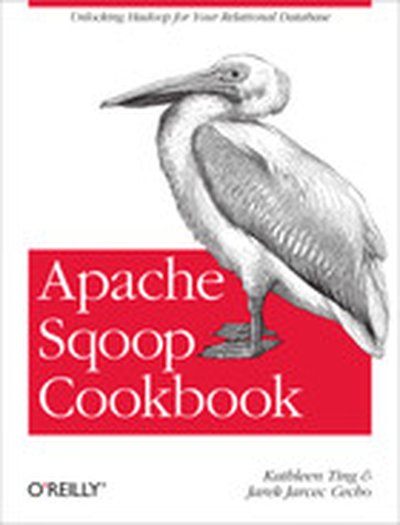
Apache Sqoop Cookbook

Integrating data from multiple sources is essential in the age of big data, but it can be a challenging and time-consuming task. This handy cookbook provides dozens of ready-to-use recipes for using Apache Sqoop, the command-line interface application that optimizes data transfers between relational databases and Hadoop. Sqoop is both powerful and bewildering, but with this cookbook’s problem-solution-discussion format, you’ll quickly learn how to deploy and then apply Sqoop in your environment. The authors provide MySQL, Oracle, and PostgreSQL database examples on GitHub that you can easily adapt for SQL Server, Netezza, Teradata, or other relational systems. Transfer data from a single database table into your Hadoop ecosystem Keep table data and Hadoop in sync by importing data incrementally Import data from more than one database table Customize transferred data by calling various database functions Export generated, processed, or backed-up data from Hadoop to your database Run Sqoop within Oozie, Hadoop’s specialized workflow scheduler Load data into Hadoop’s data warehouse (Hive) or database (HBase) Handle installation, connection, and syntax issues common to specific database vendors

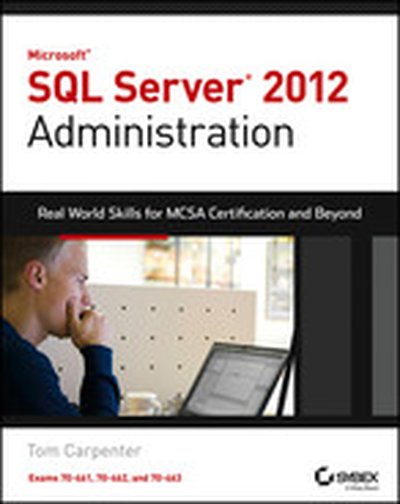
Microsoft SQL Server 2012 Administration: Real-World Skills for MCSA Certification and Beyond (Exams 70-461, 70-462, and 70-463)

Implement, maintain, and repair SQL Server 2012 databases As the most significant update since 2008, Microsoft SQL Server 2012 boasts updates and new features that are critical to understand. Whether you manage and administer SQL Server 2012 or are planning to get your MCSA: SQL Server 2012 certification, this book is the perfect supplement to your learning and preparation. From understanding SQL Server's roles to implementing business intelligence and reporting, this practical book explores tasks and scenarios that a working SQL Server DBA faces regularly and shows you step by step how to handle them. Includes practice exams and coverage of exam objectives for those seeking MSCA: SQL Server 2012 certification Explores the skills you'll need on the job as a SQL Server 2012 DBA Discusses designing and implementing database solutions Walks you through administrating, maintaining, and securing SQL Server 2012 Addresses implementing high availability and data distribution Includes bonus videos where the author walks you through some of the more difficult tasks expected of a DBA Featuring hands-on exercises and real-world scenarios, this resource guides you through the essentials of implementing, maintaining, and repairing SQL Server 2012 databases. Note: The ebook version does not provide access to the companion files.

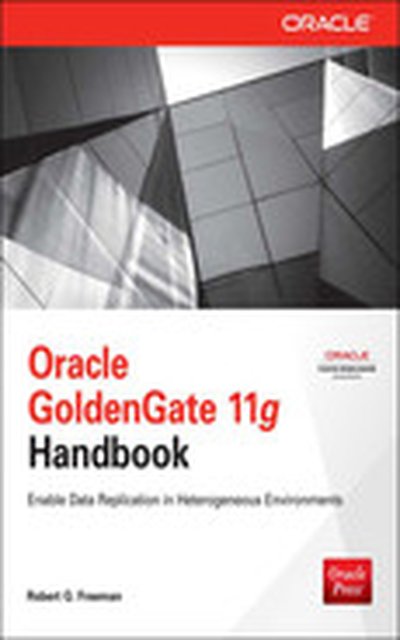
Oracle GoldenGate 11g Handbook

Master Oracle GoldenGate 11 g Enable highly available, real-time access to enterprise data in heterogeneous environments. Featuring hands-on workshops, Oracle GoldenGate 11g Handbook shows you how to install, configure, and implement this high-performance application. You’ll learn how to replicate data across Oracle databases and other platforms, including MySQL and Microsoft SQL Server, and perform near-zero-downtime migrations and upgrades. Monitoring, performance tuning, and troubleshooting are also discussed in this Oracle Press guide. Install and configure Oracle GoldenGate Implement Oracle GoldenGate one-way replication Configure multitarget and cascading replication Use bidirectional replication to build a heterogeneous database infrastructure Secure your environment, control and manipulate data, and prevent errors Configure Oracle GoldenGate for Oracle Clusterware and Oracle Real Application Clusters Use Oracle GoldenGate with MySQL and Microsoft SQL Server Perform near-zero-downtime upgrades and migrations Use Oracle GoldenGate Monitor and Oracle GoldenGate Director Ensure data quality with Oracle GoldenGate Veridata Implement nondatabase integration options

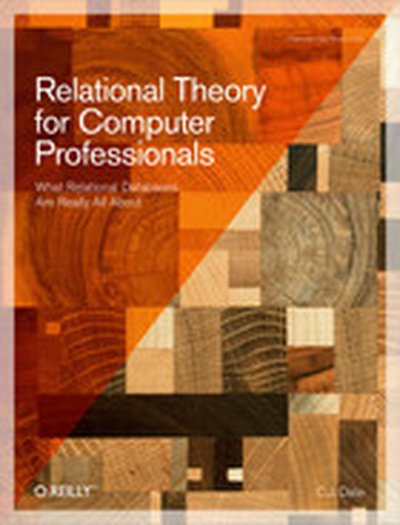
Relational Theory for Computer Professionals

All of today’s mainstream database products support the SQL language, and relational theory is what SQL is supposed to be based on. But are those products truly relational? Sadly, the answer is no. This book shows you what a real relational product would be like, and how and why it would be so much better than what’s currently available. With this unique book, you will: Learn how to see database systems as programming systems Get a careful, precise, and detailed definition of the relational model Explore a detailed analysis of SQL from a relational point of view There are literally hundreds of books on relational theory or the SQL language or both. But this one is different. First, nobody is more qualified than Chris Date to write such a book. He and Ted Codd, inventor of the relational model, were colleagues for many years, and Chris’s involvement with the technology goes back to the time of Codd’s first papers in 1969 and 1970. Second, most books try to use SQL as a vehicle for teaching relational theory, but this book deliberately takes the opposite approach. Its primary aim is to teach relational theory as such. Then it uses that theory as a vehicle for teaching SQL, showing in particular how that theory can help with the practical problem of using SQL correctly and productively. Any computer professional who wants to understand what relational systems are all about can benefit from this book. No prior knowledge of databases is assumed.

MySQL Workbench: Data Modeling & Development

The only Oracle Press guide to MySQL Workbench explains how to design and model MySQL databases. MySQL Workbench Data Modeling and Development helps developers learn how to effectively use this powerful product for database modeling, reverse engineering, and interaction with the database without writing SQL statements. MySQL Workbench is a graphical user interface that can be used to create and maintain MySQL databases without coding. The book covers the interface and explains how to accomplish each step by illustrating best practices visually. Clear examples, instructions, and explanations reveal, in a single volume, the art of database modeling. This Oracle Press guide shows you how to get the tool to do what you want. Annotated screen shots demonstrate all interactions with the tool, and text explains the how, what, and why of each step. Complete coverage Installation and Configuration; Creating and Managing Connections; Data Modeling Concepts; Creating an ERD; Defining the Physical Schemata; Creating and Managing Tables; Creating and Managing Relationships; Creating and Managing Views; Creating and Managing Routines; Creating and Managing Routine Groups; Creating and Managing User & Groups; Creating and Managing SQL Scripts; Generating SQL Scripts; Forward Engineering a Data Model; Synchronize a Model with a Database; Reverse Engineering a Database; Managing Differences in the Data Catalog; Creating and Managing Model Notes; Editing Table Data; Editing Generated Scripts; Creating New Instances; Managing Import and Export; Managing Security; Managing Server Instances

Access 2013: The Missing Manual

Unlock the secrets of Access 2013 and discover how to use your data in creative ways. With this book’s easy step-by-step instructions, you’ll learn how to build and maintain a full-featured database and even turn it into a web app. You also get tips and practices from the pros for good database design—ideal whether you’re using Access for business, school, or at home. The important stuff you need to know Build a database with ease. Organize and update lists, documents, catalogs, and other types of information. Create your own web app. Let your whole team work on a database in the cloud. Share your database on a network. Link your Access database to SQL Server or SharePoint. Customize the interface. Make data entry a breeze by building your own templates Find what you need fast. Search, sort, and summarize huge amounts of data in minutes. Put your info to use. Turn raw info into well-formatted printed reports. Dive into Access programming. Automate complex tasks and solve common challenges.

Access® 2013 Absolute Beginner’s Guide

Make the most of Access 2013— without becoming a technical expert! This book is the fastest way to master Access and use it to build powerful, useful databases of all kinds—even web application databases! Even if you’ve never used Access before, you’ll learn how to do what you want, one incredibly clear and easy step at a time. Access has never, ever been this simple! Who knew how simple Access® 2013 could be? This is the easiest, most practical beginner’s guide to using Microsoft’s incredibly powerful new Access 2013 database program… simple, reliable instructions for doing everything you really want to do! Here’s a small sample of what you’ll learn: • Create tables to efficiently store and navigate your data • Build queries that retrieve exactly the information you want • Design intuitive forms that help your users work more efficiently • Build reports that answer key questions intuitively and visually • Learn easy techniques for designing more reliable databases • Work faster with AutoForms, AutoReports, and other shortcuts • Automate repetitive tasks and build more polished databases with macros • Share Access data with Excel, SQL Server, and other applications • Solve complex problems with advanced query, form, and reporting techniques • Build modern web databases that serve users through browsers • Run your database on the cloud through Microsoft Office 365 • Construct a complete database application from start to finish • And much more… Alison Balter , President of InfoTech Services Group, Inc., has spent 25 years training and consulting on Microsoft Access and related applications with top organizations such as Cisco, Shell, Accenture, Northrop, the U.S. Drug Enforcement Administration, Prudential, Transamerica, Fox Broadcasting, and the U.S. Navy. She travels throughout North America delivering seminars on Access and has authored 14 books and videos for Pearson, including Microsoft Access 2010 LiveLessons and Alison Balter’s Mastering Access 2007 Development. She is past president of the Independent Computer Consultants Association of Los Angeles. Category: Databases Covers: Microsoft® Access® 2013 User Level: Beginning

Microsoft SQL Server 2012 Reporting Services

Use your SQL Server skills to create and manage key data reports Deliver interactive business intelligence reports using SQL Server 2012 Reporting Services, and help facilitate real-time decision making throughout the enterprise. SQL Server expert Stacia Misner shows you in detail how to design, manage, and access custom reports that capture data from multiple sources. This book is ideal for experienced SQL Server developers, whether you’re new to Reporting Services or upgrading from an earlier version. Discover how to: Use the latest features, including the Power View ad hoc reporting tool Design reports by understanding how your audience accesses and uses data Add interactive features to help end users sort and filter data Create rich data visualization with charts, gauges, indictors, and data maps Configure your report server, provide security, and monitor report contents Use SharePoint or Report Manager to search and access reports online Create a library of report parts that clients can use for ad hoc reporting Build and manage reports using Reporting Services as a development platform

MySQL, 5th Edition

MySQL, Fifth Edition by Paul DuBois The definitive guide to using, programming and administering MySQL 5.5 and MySQL 5.6 MySQL provides a comprehensive guide to effectively using and administering the MySQL database management system (DBMS). Author Paul DuBois describes everything from the basics of getting information into a database and formulating queries, to using MySQL with PHP or Perl to generate dynamic web pages, to writing your own programs that access MySQL databases, to administering MySQL servers. The book also includes a comprehensive reference section providing detailed information on MySQL’s structure, language, syntax, and APIs. The fifth edition of this bestselling book has been meticulously revised and updated to thoroughly cover the latest features and capabilities of MySQL 5.5, as well as to add new coverage of features introduced with MySQL 5.6. MySQL is an open source relational database management system (DBMS) that has experienced a phenomenal growth in popularity and use. Known for its speed and ease of use, MySQL has proven itself to be particularly well-suited for developing database-backed websites and applications. MySQL runs on anything from modest hardware all the way up to enterprise servers, and its performance rivals any database system put up against it. Paul DuBois’ MySQL, Fifth Edition, is the definitive guide to fully exploiting all the power and versatility of MySQL 5.5 and MySQL 5.6 Contents at a Glance Part I: General MySQL Use Chapter 1 Getting Started with MySQL Chapter 2 Using SQL to Manage Data Chapter 3 Data Types Chapter 4 Views and Stored Programs Chapter 5 Query Optimization Part II: Using MySQL Programming Interfaces Chapter 6 Introduction to MySQL Programming Chapter 7 Writing MySQL Programs Using C Chapter 8 Writing MySQL Programs Using Perl DBI Chapter 9 Writing MySQL Programs Using PHP Part III: MySQL Administration Chapter 10 Introduction to MySQL Administration Chapter 11 The MySQL Data Directory Chapter 12 General MySQL Administration Chapter 13 Security and Access Control Chapter 14 Database Maintenance, Backups, and Replication Part IV: Appendixes Appendix A Software Required to Use This Book Appendix B Data Type Reference Appendix C Operator and Function Reference Appendix D System, Status, and User Variable Reference Appendix E SQL Syntax Reference Appendix F MySQL Program Reference Online Appendixes: Appendix G C API Reference Appendix H Perl DBI API Reference Appendix I PHP API Reference .