talk-data.com talk-data.com

Topic

SQL

Structured Query Language (SQL)

database_language data_manipulation data_definition programming_language

780

tagged

Activity Trend

107 peak/qtr
2020-Q1 2026-Q1

Activities

Showing filtered results

Filtering by: O'Reilly Data Engineering Books ×
Pro T-SQL 2019: Toward Speed, Scalability, and Standardization for SQL Server Developers

Design and write simple and efficient T-SQL code in SQL Server 2019 and beyond. Writing T-SQL that pulls back correct results can be challenging. This book provides the help you need in writing T-SQL that performs fast and is easy to maintain. You also will learn how to implement version control, testing, and deployment strategies. Hands-on examples show modern T-SQL practices and provide straightforward explanations. Attention is given to selecting the right data types and objects when designing T-SQL solutions. Author Elizabeth Noble teaches you how to improve your T-SQL performance through good design practices that benefit programmers and ultimately the users of the applications. You will know the common pitfalls of writing T-SQL and how to avoid those pitfalls going forward. What You Will Learn Choose correct data types and database objects when designing T-SQL Write T-SQL that searches data efficiently and uses hardware effectively Implement source control and testing methods to streamline the deployment process Design T-SQL that can be enhanced or modified with less effort Plan for long-term data management and storage Who This Book Is For Database developers who want to improve the efficiency of their applications, and developers who want to solve complex query and data problems more easily by writing T-SQL that performs well, brings back correct results, and is easy for other developers to understand and maintain

Refactoring Legacy T-SQL for Improved Performance: Modern Practices for SQL Server Applications

Breathe new life into older applications by refactoring T-SQL queries and code using modern techniques. This book shows you how to significantly improve the performance of older applications by finding common anti-patterns in T-SQL code, then rewriting those anti-patterns using new functionality that is supported in current versions of SQL Server, including SQL Server 2019. The focus moves through the different types of database objects and the code used to create them, discussing the limitations and anti-patterns commonly found for each object type in your database. Legacy code isn’t just found in queries and external applications. It’s also found in the definitions of underlying database objects such as views and tables. This book helps you quickly find problematic code throughout the database and points out where and how modern solutions can replace older code, thereby making your legacy applications run faster and extending their lifetimes. Author Lisa Bohm explains the logic behind each anti-pattern, helping you understand why each pattern is a problem and showing how it can be avoided. Good coding habits are discussed, including guidance on topics such as readability and maintainability. What You Will Learn Find specific areas in code to target for performance gains Identify pain points quickly and understand why they are problematic Rewrite legacy T-SQL to reduce or eliminate hidden performance issues Write modern code with an awareness of readability and maintainability Recognize and correlate T-SQL anti-patterns with techniques for better solutions Make a positive impact on application user experience in your organization Who This Book Is For Database administrators or developers who maintain older code, those frustrated with complaints about slow codewhen there is so much of it to fix, and those who want a head start in making a positive impact on application user experience in their organization

The SQL Workshop

The SQL Workshop is your go-to guide for delving into the essential techniques and best practices of working with SQL. You'll start with the basics of querying and database management, progressing to advanced concepts like joins, normalization, and database security. What this Book will help me do Construct and maintain relational databases that meet real-world requirements. Perform CRUD operations efficiently using SQL queries. Design effective and optimized database schemas through normalization. Secure and safeguard data with access controls and privilege management. Leverage SQL for data analysis and reporting through advanced query techniques. Author(s) Frank Solomon, Prashanth Jayaram, and Awni Al Saqqa bring together decades of practical and academic experience in SQL and database management. Their informative and hands-on approach helps readers bridge the gap between theoretical concepts and practical applications. Who is it for? Written for newcomers and intermediate learners, this book is ideal for aspiring software developers, data scientists, and database managers looking to advance their SQL skills. Beginners with no database experience will find this book's gradual learning curve approachable.

PolyBase Revealed: Data Virtualization with SQL Server, Hadoop, Apache Spark, and Beyond

Harness the power of PolyBase data virtualization software to make data from a variety of sources easily accessible through SQL queries while using the T-SQL skills you already know and have mastered. PolyBase Revealed shows you how to use the PolyBase feature of SQL Server 2019 to integrate SQL Server with Azure Blob Storage, Apache Hadoop, other SQL Server instances, Oracle, Cosmos DB, Apache Spark, and more. You will learn how PolyBase can help you reduce storage and other costs by avoiding the need for ETL processes that duplicate data in order to make it accessible from one source. PolyBase makes SQL Server into that one source, and T-SQL is your golden ticket. The book also covers PolyBase scale-out clusters, allowing you to distribute PolyBase queries among several SQL Server instances, thus improving performance. With great flexibility comes great complexity, and this book shows you where to look when queries fail, complete with coverageof internals, troubleshooting techniques, and where to find more information on obscure cross-platform errors. Data virtualization is a key target for Microsoft with SQL Server 2019. This book will help you keep your skills current, remain relevant, and build new business and career opportunities around Microsoft’s product direction. What You Will Learn Install and configure PolyBase as a stand-alone service, or unlock its capabilities with a scale-out cluster Understand how PolyBase interacts with outside data sources while presenting their data as regular SQL Server tables Write queries combining data from SQL Server, Apache Hadoop, Oracle, Cosmos DB, Apache Spark, and more Troubleshoot PolyBase queries using SQL Server Dynamic Management Views Tune PolyBase queries using statistics and execution plans Solve common business problems, including "cold storage" of infrequentlyaccessed data and simplifying ETL jobs Who This Book Is For SQL Server developers working in multi-platform environments who want one easy way of communicating with, and collecting data from, all of these sources

Hands On Google Cloud SQL and Cloud Spanner: Deployment, Administration and Use Cases with Python

Discover the methodologies and best practices for getting started with Google Cloud Platform relational services – CloudSQL and CloudSpanner. The book begins with the basics of working with the Google Cloud Platform along with an introduction to the database technologies available for developers from Google Cloud. You'll then take an in-depth hands on journey into Google CloudSQL and CloudSpanner, including choosing the right platform for your application needs, planning, provisioning, designing and developing your application. Sample applications are given that use Python to connect to CloudSQL and CloudSpanner, along with helpful features provided by the engines. You''ll also implement practical best practices in the last chapter. Hands On Google Cloud SQL and Cloud Spanner is a great starting point to apply GCP data offerings in your technology stack and the code used allows you to try out the examples and extend them in interestingways. What You'll Learn Get started with Big Data technologies on the Google Cloud Platform Review CloudSQL and Cloud Spanner from basics to administration Apply best practices and use Google’s CloudSQL and CloudSpanner offering Work with code in Python notebooks and scripts Who This Book Is For Application architects, database architects, software developers, data engineers, cloud architects.

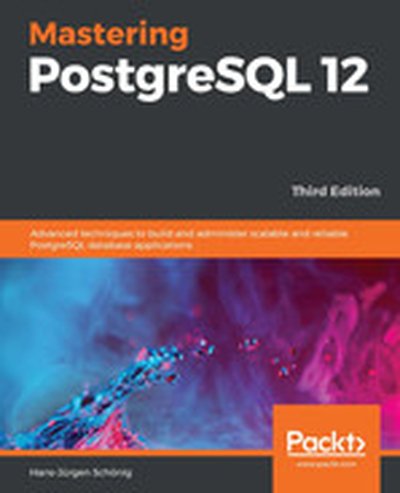
Mastering PostgreSQL 12 - Third Edition

Mastering PostgreSQL 12 delves into advanced features of PostgreSQL to help database professionals optimize, secure, and scale their database systems. Through practical examples, this book equips you with the necessary skills to address challenges in modern PostgreSQL environments. What this Book will help me do Gain expertise in PostgreSQL 12's advanced SQL functions and features. Master replication and backup techniques for scalable and fault-tolerant databases. Effectively optimize PostgreSQL queries and index utilization for performance gains. Enhance the security of PostgreSQL servers to ensure data integrity. Acquire hands-on experience in troubleshooting and resolving PostgreSQL-related issues. Author(s) Hans-Jürgen Schönig is a renowned database expert specializing in PostgreSQL. With years of experience in both database administration and development, he brings clarity to complex technical topics. His teaching approach emphasizes practical applications, making PostgreSQL's advanced features accessible for professionals. Who is it for? This book is ideal for PostgreSQL developers, administrators, and database professionals who have foundational knowledge and intend to enhance their expertise. Readers should be familiar with general database concepts and aim to master PostgreSQL's advanced functionalities. Whether you are handling enterprise environments or exploring data topology, this book serves as a vital resource.

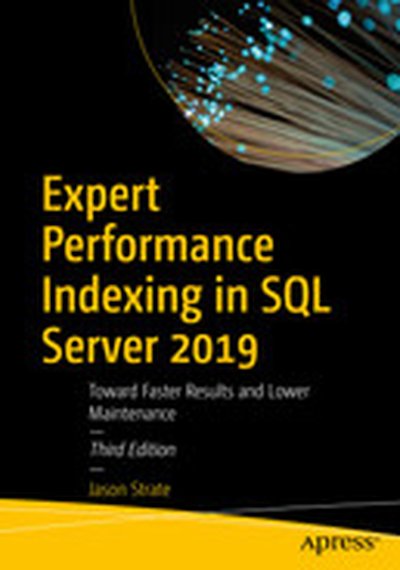
Expert Performance Indexing in SQL Server 2019: Toward Faster Results and Lower Maintenance

Take a deep dive into perhaps the single most important facet of good performance: indexes, and how to best use them. Recent updates to SQL Server have made it possible to create indexes in situations that in the past would have prevented their use. Other improvements covered in this book include new dynamic management views, the ability to pause and resume index maintenance, and the ability to more easily recover from failures during index creation and maintenance operations. This new edition also brings new content around the indexing of columnstore and in-memory tables, showing how these new types of tables and the queries that execute against them can also benefit from good indexing practices. The book begins with explanations of the types of indexes and how they are stored in databases. Moving deeper into the topic, and further into the book, you will look at the statistics that are accumulated both by indexes and on indexes. You will better understand what indexes are doing in the database and what can be done to mitigate and improve their effect on performance. You will get a look at the Index Advisor now available in Azure SQL Database, and learn how to review and maintain the health of your indexes. The final chapters present a guided tour through a number of scenarios showing approaches you can take to investigate, mitigate, and improve the performance of your database. What You Will Learn Properly index row store, columnstore, and in-memory tables Review statistics to understand indexing choices made by the optimizer Apply indexing strategies such as covering indexes, included columns, and index intersections Recognize and remove unnecessary indexes Design effective indexes for full-text, spatial, and XML data types Manage the big picture: Encompass all indexes in adatabase, and all database instances on a server Who This Book Is For Database administrators and developers who are ready to lift the performance of their database environment by thoughtfully building indexes to speed up queries that matter the most and make a difference to the business

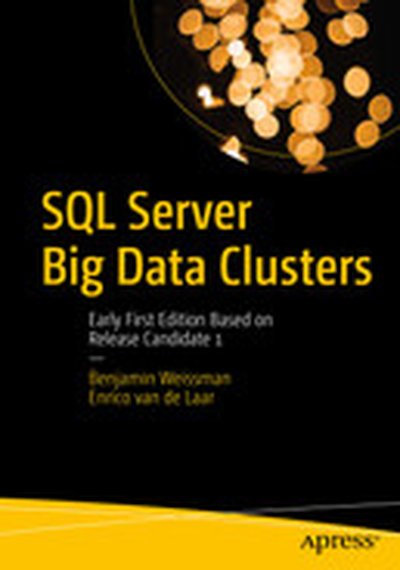
SQL Server Big Data Clusters: Early First Edition Based on Release Candidate 1

Get a head-start on learning one of SQL Server 2019’s latest and most impactful features—Big Data Clusters—that combines large volumes of non-relational data for analysis along with data stored relationally inside a SQL Server database. This book provides a first look at Big Data Clusters based upon SQL Server 2019 Release Candidate 1. Start now and get a jump on your competition in learning this important new feature. Big Data Clusters is a feature set covering data virtualization, distributed computing, and relational databases and provides a complete AI platform across the entire cluster environment. This book shows you how to deploy, manage, and use Big Data Clusters. For example, you will learn how to combine data stored on the HDFS file system together with data stored inside the SQL Server instances that make up the Big Data Cluster. Filled with clear examples and use cases, this book provides everything necessary to get started working with Big Data Clusters in SQL Server 2019 using Release Candidate 1. You will learn about the architectural foundations that are made up from Kubernetes, Spark, HDFS, and SQL Server on Linux. You then are shown how to configure and deploy Big Data Clusters in on-premises environments or in the cloud. Next, you are taught about querying. You will learn to write queries in Transact-SQL—taking advantage of skills you have honed for years—and with those queries you will be able to examine and analyze data from a wide variety of sources such as Apache Spark. Through the theoretical foundation provided in this book and easy-to-follow example scripts and notebooks, you will be ready to use and unveil the full potential of SQL Server 2019: combining different types of data spread across widely disparate sources into a single view that is useful for business intelligence and machine learning analysis. What You Will Learn Install, manage, and troubleshoot Big Data Clusters in cloud or on-premise environments Analyze large volumes of data directly from SQL Server and/or Apache Spark Manage data stored in HDFS from SQL Server as if it were relational data Implement advanced analytics solutions through machine learning and AI Expose different data sources as a single logical source using data virtualization Who This Book Is For For data engineers, data scientists, data architects, and database administrators who want to employ data virtualization and big data analytics in their environment

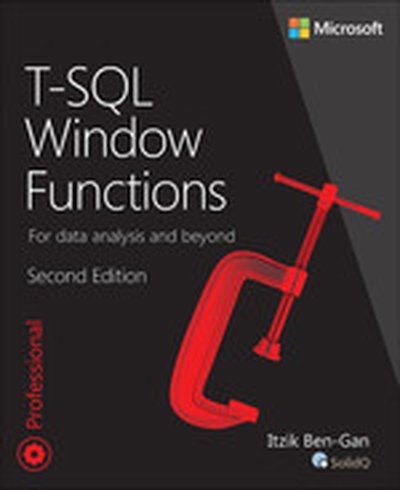
T-SQL Window Functions: For data analysis and beyond, 2nd Edition

Use window functions to write simpler, better, more efficient T-SQL queries Most T-SQL developers recognize the value of window functions for data analysis calculations. But they can do far more, and recent optimizations make them even more powerful. In T-SQL Window Functions, renowned T-SQL expert Itzik Ben-Gan introduces breakthrough techniques for using them to handle many common T-SQL querying tasks with unprecedented elegance and power. Using extensive code examples, he guides you through window aggregate, ranking, distribution, offset, and ordered set functions. You'll find a detailed section on optimization, plus an extensive collection of business solutions — including novel techniques available in no other book. Microsoft MVP Itzik Ben-Gan shows how to: • Use window functions to improve queries you previously built with predicates • Master essential SQL windowing concepts, and efficiently design window functions • Effectively utilize partitioning, ordering, and framing • Gain practical in-depth insight into window aggregate, ranking, offset, and statistical functions • Understand how the SQL standard supports ordered set functions, and find working solutions for functions not yet available in the language • Preview advanced Row Pattern Recognition (RPR) data analysis techniques • Optimize window functions in SQL Server and Azure SQL Database, making the most of indexing, parallelism, and more • Discover a full library of window function solutions for common business problems About This Book • For developers, DBAs, data analysts, data scientists, BI professionals, and power users familiar with T-SQL queries • Addresses any edition of the SQL Server 2019 database engine or later, as well as Azure SQL Database Get all code samples at: MicrosoftPressStore.com/TSQLWindowFunctions/downloads

Oracle Database Application Security: With Oracle Internet Directory, Oracle Access Manager, and Oracle Identity Manager

Focus on the security aspects of designing, building, and maintaining a secure Oracle Database application. Starting with data encryption, you will learn to work with transparent data, back-up, and networks. You will then go through the key principles of audits, where you will get to know more about identity preservation, policies and fine-grained audits. Moving on to virtual private databases, you’ll set up and configure a VPD to work in concert with other security features in Oracle, followed by tips on managing configuration drift, profiles, and default users. Shifting focus to coding, you will take a look at secure coding standards, multi-schema database models, code-based access control, and SQL injection. Finally, you’ll cover single sign-on (SSO), and will be introduced to Oracle Internet Directory (OID), Oracle Access Manager (OAM), and Oracle Identity Management (OIM) by installing and configuring them to meet your needs. Oracle databases hold the majority of the world’s relational data, and are attractive targets for attackers seeking high-value targets for data theft. Compromise of a single Oracle Database can result in tens of millions of breached records costing millions in breach-mitigation activity. This book gets you ready to avoid that nightmare scenario. What You Will Learn Work with Oracle Internet Directory using the command-line and the console Integrate Oracle Access Manager with different applications Work with the Oracle Identity Manager console and connectors, while creating your own custom one Troubleshooting issues with OID, OAM, and OID Dive deep into file system and network security concepts Who This Book Is For Oracle DBAs and developers. Readers will need a basic understanding of Oracle RDBMS and Oracle Application Server to take complete advantage of this book.

Expert T-SQL Window Functions in SQL Server 2019: The Hidden Secret to Fast Analytic and Reporting Queries

Become an expert who can use window functions to solve T-SQL query problems. Replace slow cursors and self-joins with queries that are easy to write and perform better. This new edition provides expanded examples, including a chapter from the world of sports, and covers the latest performance enhancements through SQL Server 2019. Window functions are useful in analytics and business intelligence reporting. They came into full blossom with SQL Server 2012, yet they are not as well known and used as often as they ought to be. This group of functions is one of the most notable developments in SQL, and this book shows how every developer and DBA can benefit from their expressive power in solving day-to-day business problems. Once you begin using window functions, such as ROW_NUMBER and LAG, you will discover many ways to use them. You will approach SQL Server queries in a different way, thinking about sets of data instead of individual rows. Your querieswill run faster, be easier to write, and easier to deconstruct, maintain, and enhance in the future. Just knowing and using these functions is not enough. You also need to understand how to tune the queries. Expert T-SQL Window Functions in SQL Server clearly explains how to get the best performance. The book also covers the rare cases when older techniques are the best bet. What You Will Learn Solve complex query problems without cumbersome self-joins that run slowly and are difficult to read Create sliding windows in a result set for computing such as running totals and moving averages Return aggregate and detail data simultaneously from the same SELECT statement Compute lag and lead and other values that access data from multiple rows in a result set Understand the OVER clause syntax and how to control the window Avoid framing errors that can lead to unexpected results Who This Book Is For Anyone who writes T-SQL queries, including database administrators, developers, business analysts, and data scientists. Before reading this book, you should understand how to join tables, write WHERE clauses, and build aggregate queries.

Pro SQL Server 2019 Administration: A Guide for the Modern DBA

Use this comprehensive guide for the SQL Server DBA, covering all that practicing database administrators need to know to get their daily work done. Updated for SQL Server 2019, this edition includes coverage of new features such as Memory-optimized TempDB Metadata, and Always Encrypted with Secure Enclaves. Other new content includes coverage of Query Store, resumable index operations, installation on Linux, and containerized SQL. Pro SQL Server 2019 Administration takes DBAs on a journey that begins with planning their SQL Server deployment and runs through installing and configuring the instance, administering and optimizing database objects, and ensuring that data is secure and highly available. Finally, readers will learn how to perform advanced maintenance and tuning techniques. This book teaches you to make the most of new SQL Server 2019 functionality, including Data Discovery and Classification. The bookpromotes best-practice installation, shows how to configure for scalability and high workloads, and demonstrates the gamut of database-level maintenance tasks such as index maintenance, database consistency checks, and table optimizations. What You Will Learn Install and configure SQL Server on Windows through the GUI and with PowerShell Install and configure SQL Server on Linux and in Containers Optimize tables through in-memory OLTP, table partitioning, and the creation of indexes Secure and encrypt data to protect against embarrassing data breaches Ensure 24x7x365 access through high-availability and disaster recovery features Back up your data to ensure against loss, and recover data when needed Perform routine maintenance tasks such as database consistency checks Troubleshoot and solve performance problems inSQL queries and in the database engine Who This Book Is For SQL Server DBAs who manage on-premise installations of SQL Server. This book is also useful for DBAs who wish to learn advanced features such as Query Store, Extended Events, Distributed Replay, and Policy-Based Management, or those who need to install SQL Server in a variety of environments.

SQL Server 2019 Revealed: Including Big Data Clusters and Machine Learning

Get up to speed on the game-changing developments in SQL Server 2019. No longer just a database engine, SQL Server 2019 is cutting edge with support for machine learning (ML), big data analytics, Linux, containers, Kubernetes, Java, and data virtualization to Azure. This is not a book on traditional database administration for SQL Server. It focuses on all that is new for one of the most successful modernized data platforms in the industry. It is a book for data professionals who already know the fundamentals of SQL Server and want to up their game by building their skills in some of the hottest new areas in technology. SQL Server 2019 Revealed begins with a look at the project's team goal to integrate the world of big data with SQL Server into a major product release. The book then dives into the details of key new capabilities in SQL Server 2019 using a “learn by example” approach for Intelligent Performance, security, mission-criticalavailability, and features for the modern developer. Also covered are enhancements to SQL Server 2019 for Linux and gain a comprehensive look at SQL Server using containers and Kubernetes clusters. The book concludes by showing you how to virtualize your data access with Polybase to Oracle, MongoDB, Hadoop, and Azure, allowing you to reduce the need for expensive extract, transform, and load (ETL) applications. You will then learn how to take your knowledge of containers, Kubernetes, and Polybase to build a comprehensive solution called Big Data Clusters, which is a marquee feature of 2019. You will also learn how to gain access to Spark, SQL Server, and HDFS to build intelligence over your own data lake and deploy end-to-end machine learning applications. What You Will Learn Implement Big Data Clusters with SQL Server, Spark, and HDFS Create a Data Hub with connections to Oracle, Azure, Hadoop, and other sources Combine SQL and Spark to build a machine learning platform for AI applications Boost your performance with no application changes using Intelligent Performance Increase security of your SQL Server through Secure Enclaves and Data Classification Maximize database uptime through online indexing and Accelerated Database Recovery Build new modern applications with Graph, ML Services, and T-SQL Extensibility with Java Improve your ability to deploy SQL Server on Linux Gain in-depth knowledge to run SQL Server with containers and Kubernetes Know all the new database engine features for performance, usability, and diagnostics Use the latest tools and methods to migrate your database to SQL Server 2019 Apply your knowledge of SQL Server 2019 to Azure Who This Book Is For IT professionals and developers who understand the fundamentals of SQL Server and wish to focus on learning about the new, modern capabilities of SQL Server 2019. The book is for those who want to learn about SQL Server 2019 and the new Big Data Clusters and AI feature set, support for machine learning and Java, how to run SQL Server with containers and Kubernetes, and increased capabilities around Intelligent Performance, advanced security, and high availability.

Query Store for SQL Server 2019: Identify and Fix Poorly Performing Queries

Apply the new Query Store feature to identify and fix poorly performing queries in SQL Server. Query Store is an important and recent feature in SQL Server that provides insight into the details of query execution and how that execution has changed over time. Query Store helps to identify queries that aren’t performing well, or that have regressed in their performance. Query Store provides detailed information such as wait stats that you need to resolve root causes, and it allows you to force the use of a known good execution plan. With SQL Server 2017 and later you can automate the correction of regressions in performance. Query Store for SQL Server 2019 helps you protect your database’s performance during upgrades of applications or version of SQL Server. The book provides fundamental information on how Query Store works and best practices for implementation and use. You will learn to run and interpret built-in reports, configure automatic plan correction, and troubleshoot queries using Query Store when needed. Query Store for SQL Server 2019 helps you master Query Store and bring value to your organization through consistent query execution times and automate correction of regressions. What You'll Learn Apply best practices in implementing Query Store on production servers Detect and correct regressions in query performance Lower the risk of performance degradation following an upgrade Use tools and techniques to get the most from Query Store Automate regression correction and other uses of Query Store Who This Book Is For SQL Server developers and administrators responsible for query performance on SQL Server. Anyone responsible for identifying poorly performing queries will be able to use Query Store to find these queries and resolve the underlying issues.

Analytic SQL in SQL Server 2014/2016

Business Intelligence (BI) has emerged as a field which seeks to support managers in decision-making. It encompasses the techniques, methods and tools for conducting analytically-based IT solutions, which are referred to as OLAP (OnLine Analytical Processing). Within this field, SQL has a role as a leader and is continuously evolving to cover both transactional and analytical data management. This book discusses the functions provided by Microsoft® SQL Server 2014/2016 in terms of business intelligence. The analytic functions are considered as an enrichment of the SQL language. They combine a series of practical functions to answer complex analysis requests with all the simplicity, elegance and acquired performance of the SQL language. Drawing on the wide experience of the author in teaching and research, as well as insights from contacts in the industry, this book focuses on the issues and difficulties faced by academics (students and teachers) and professionals engaged in data analysis with the SQL Server 2014/2016 database management system.

Introducing MySQL Shell: Administration Made Easy with Python

Use MySQL Shell, the first modern and advanced client for connecting to and interacting with MySQL. It supports SQL, Python, and JavaScript. That’s right! You can write Python scripts and execute them within the shell interactively, or in batch mode. The level of automation available from Python combined with batch mode is especially helpful to those practicing DevOps methods in their database environments. Introducing MySQL Shell covers everything you need to know about MySQL Shell. You will learn how to use the shell for SQL, as well as the new application programming interfaces for working with a document store and even automating your management of MySQL servers using Python. The book includes a look at the supporting technologies and concepts such as JSON, schema-less documents, NoSQL, MySQL Replication, Group Replication, InnoDB Cluster, and more. MySQL Shell is the client that developers and databaseadministrators have been waiting for. Far more powerful than the legacy client, MySQL Shell enables levels of automation that are useful not only for MySQL, but in the broader context of your career as well. Automate your work and build skills in one of the most in-demand languages. With MySQL Shell, you can do both! What You'll Learn Use MySQL Shell with the newest features in MySQL 8 Discover what a Document Store is and how to manage it with MySQL Shell Configure Group Replication and InnoDB Cluster from MySQL Shell Understand the new MySQL Python application programming interfaces Write Python scripts for managing your data and the MySQL high availability features Who This Book Is For Developers and database professionals who want to automate their work and remain on the cutting edge of what MySQLhas to offer. Anyone not happy with the limited automation capabilities of the legacy command-line client will find much to like in this book on the MySQL Shell that supports powerful automation through the Python scripting language.

Mastering SQL Server 2017

Leverage the power of SQL Server 2017 Integration Services to build data integration solutions with ease Key Features Work with temporal tables to access information stored in a table at any time Get familiar with the latest features in SQL Server 2017 Integration Services Program and extend your packages to enhance their functionality Book Description Microsoft SQL Server 2017 uses the power of R and Python for machine learning and containerization-based deployment on Windows and Linux. By learning how to use the features of SQL Server 2017 effectively, you can build scalable apps and easily perform data integration and transformation. You'll start by brushing up on the features of SQL Server 2017. This Learning Path will then demonstrate how you can use Query Store, columnstore indexes, and In-Memory OLTP in your apps. You'll also learn to integrate Python code in SQL Server and graph database implementations for development and testing. Next, you'll get up to speed with designing and building SQL Server Integration Services (SSIS) data warehouse packages using SQL server data tools. Toward the concluding chapters, you'll discover how to develop SSIS packages designed to maintain a data warehouse using the data flow and other control flow tasks. By the end of this Learning Path, you'll be equipped with the skills you need to design efficient, high-performance database applications with confidence. This Learning Path includes content from the following Packt books: SQL Server 2017 Developer's Guide by Milos Radivojevic, Dejan Sarka, et. al SQL Server 2017 Integration Services Cookbook by Christian Cote, Dejan Sarka, et. al What you will learn Use columnstore indexes to make storage and performance improvements Extend database design solutions using temporal tables Exchange JSON data between applications and SQL Server Migrate historical data to Microsoft Azure by using Stretch Database Design the architecture of a modern Extract, Transform, and Load (ETL) solution Implement ETL solutions using Integration Services for both on-premise and Azure data Who this book is for This Learning Path is for database developers and solution architects looking to develop ETL solutions with SSIS, and explore the new features in SSIS 2017. Advanced analysis practitioners, business intelligence developers, and database consultants dealing with performance tuning will also find this book useful. Basic understanding of database concepts and T-SQL is required to get the best out of this Learning Path.

Beginning Oracle SQL for Oracle Database 18c: From Novice to Professional

Start developing with Oracle SQL. This book is a one-stop introduction to everything you need to know about getting started developing an Oracle Database. You'll learn about foundational concepts, setting up a simple schema, adding data, reading data from the database, and making changes. No experience with databases is required to get started. Examples in the book are built around Oracle Live SQL, a freely available, online sandbox for practicing and experimenting with SQL statements, and Oracle Express Edition, a free version of Oracle Database that is available for download. A marquee feature of Beginning Oracle SQL for Oracle Database 18c is the small chapter size. Content is divided into easily digestible chunks that can be read and practiced in very short intervals of time, making this the ideal book for a busy professional to learn from. Even just a 15-20 minute block of free time can be put to good use. AuthorBen Brumm begins by helping you understand what a database is, and getting you set up with a sandbox in which to practice the SQL that you are learning. From there, easily digestible chapters cover, point-by-point, the different aspects of writing queries to get data out of a database. You’ll also learn about creating tables and getting data into the database. Crucial topics such as working with nulls and writing analytic queries are given the attention they deserve, helping you to avoid pitfalls when writing queries for production use. What You'll Learn Create, update, and delete tables in an Oracle database Add, update, delete data from those database tables Query and view data stored in your database Manipulate and transform data using in-built database functions and features Correctly choose when to use Oracle-specific syntax and features Who This Book Is For Those new to Oracle who are planning to develop software using Oracle as the back-end data store. The book is also for those who are getting started in software development and realize they need to learn some kind of database language. Those who are learning software development on the side of their normal job, or learning it as a college student, who are ready to learn what a database is and how to use it also will find this book useful.

Data Warehousing with Greenplum, 2nd Edition

Data professionals are confronting the most disruptive change since relational databases appeared in the 1980s. SQL is still a major tool for data analytics, but conventional relational database management systems can’t handle the increasing size and complexity of today’s datasets. This updated edition teaches you best practices for Greenplum Database, the open source massively parallel processing (MPP) database that accommodates large sets of nonrelational and relational data. Marshall Presser, field CTO at Pivotal, introduces Greenplum’s approach to data analytics and data-driven decisions, beginning with its shared-nothing architecture. IT managers, developers, data analysts, system architects, and data scientists will all gain from exploring data organization and storage, data loading, running queries, and learning to perform analytics in the database. Discover how MPP and Greenplum will help you go beyond the traditional data warehouse. This ebook covers: Greenplum features, use case examples, and techniques for optimizing use Four Greenplum deployment options to help you balance security, cost, and time to usability Why each networked node in Greenplum’s architecture includes an independent operating system, memory, and storage Additional tools for monitoring, managing, securing, and optimizing query responses in the Pivotal Greenplum commercial database

Professional Azure SQL Database Administration - Second Edition

Professional Azure SQL Database Administration serves as your comprehensive guide to mastering the management and optimization of cloud-based Azure SQL Database solutions. With the differences and unique features of Azure SQL Database compared to the on-premise SQL Server, this book offers a clear roadmap to efficiently migrate, secure, scale, and maintain these databases in the cloud. What this Book will help me do Understand the differences between Azure SQL Database and on-premise SQL Server and their practical implications. Learn techniques to migrate existing SQL Server databases to Azure SQL Database seamlessly. Discover advanced ways to optimize database performance and scalability leveraging cloud capabilities. Master security strategies for Azure SQL databases, including backup, disaster recovery, and automated tasks. Develop proficiency in using tools such as PowerShell to automate and manage routine database administration tasks. Author(s) Ahmad Osama is an experienced database professional and author specializing in SQL Server and Azure SQL Database administration. With a robust background in database migration, maintenance, and performance tuning, Ahmad expertly bridges the gap between theory and practice. His approachable writing style makes complex database topics accessible to professionals seeking to expand their expertise. Who is it for? Professional Azure SQL Database Administration is an essential resource for database administrators, developers, and IT professionals keen on developing their knowledge about Azure SQL Database administration and cloud database solutions. Whether you're transitioning from traditional SQL Server environments or looking to optimize your database strategies in the cloud, this book caters to professionals with intermediate to advanced experience in database management and programming with SQL.