talk-data.com talk-data.com

Topic

SQL

Structured Query Language (SQL)

database_language data_manipulation data_definition programming_language

1751

tagged

Activity Trend

107 peak/qtr
2020-Q1 2026-Q1

Activities

1751 activities · Newest first

Databricks SQL: Why the Best Serverless Data Warehouse is a Lakehouse

Many organizations rely on complex cloud data architectures that create silos between applications, users and data. This fragmentation makes it difficult to access accurate, up-to-date information for analytics, often resulting in the use of outdated data. Enter the lakehouse, a modern data architecture that unifies data, AI, and analytics in a single location.

This session explores why the lakehouse is the best data warehouse, featuring success stories, use cases and best practices from industry experts. You'll discover how to unify and govern business-critical data at scale to build a curated data lake for data warehousing, SQL and BI. Additionally, you'll learn how Databricks SQL can help lower costs and get started in seconds with on-demand, elastic SQL serverless warehouses, and how to empower analytics engineers and analysts to quickly find and share new insights using their preferred BI and SQL tools such as Fivetran, dbt, Tableau, or Power BI.

Talk by: Miranda Luna and Cyrielle Simeone

Connect with us: Website: https://databricks.com Twitter: https://twitter.com/databricks LinkedIn: https://www.linkedin.com/company/databricks Instagram: https://www.instagram.com/databricksinc Facebook: https://www.facebook.com/databricksinc

Data Extraction and Sharing Via The Delta Sharing Protocol

The Delta Sharing open protocol for secure sharing and distribution of Lakehouse data is designed to reduce friction in getting data to users. Delivering custom data solutions from this protocol further leverages the technical investment committed to your Delta Lake infrastructure. There are key design and computational concepts unique to Delta Sharing to know when undertaking development. And there are pitfalls and hazards to avoid when delivering modern cloud data to traditional data platforms and users.

In this session, we introduce Delta Sharing Protocol development and examine our journey and the lessons learned while creating the Delta Sharing Excel Add-in. We will demonstrate scenarios of overfetching, underfetching, and interpretation of types. We will suggest methods to overcome these development challenges. The session will combine live demonstrations that exercise the Delta Sharing REST protocol with detailed analysis of the responses. The demonstrations will elaborate on optional capabilities of the protocol’s query mechanism, and how they are used and interpreted in real-life scenarios. As a reference baseline for data professionals, the Delta Sharing exercises will be framed relative to SQL counterparts. Specific attention will be paid to how they differ, and how Delta Sharing’s Change Data Feed (CDF) can power next-generation data architectures. The session will conclude with a survey of available integration solutions for getting the most out of your Delta Sharing environment, including frameworks, connectors, and managed services.

Attendees are encouraged to be familiar with REST, JSON, and modern programming concepts. A working knowledge of Delta Lake, the Parquet file format, and the Delta Sharing Protocol are advised.

Talk by: Roger Dunn

Here’s more to explore: A New Approach to Data Sharing: https://dbricks.co/44eUnT1

Connect with us: Website: https://databricks.com Twitter: https://twitter.com/databricks LinkedIn: https://www.linkedin.com/company/databricks Instagram: https://www.instagram.com/databricksinc Facebook: https://www.facebook.com/databricksinc

Lineage System Table in Unity Catalog

Unity Catalog provides fully automated data lineage for all workloads in SQL, R, Python, Scala and across all asset types at Databricks. The aggregated view has been available to end users through data explorer and API. In this session, we are excited to share that lineage is available via delta table in their UC metastore. It stores full history of recent lineage records and it is near real time. Additionally, customers can query it through standard SQL interface. With that, customers can get significant operational insights about their workload for impact analysis, troubleshooting, quality assurance, data discovery, and data governance.

Together with the system table platform effort, which provides query history, job run operational data, audit logs and more, lineage table will be a critical piece to link all the data asset and entity asset together, providing better lakehouse observability and unification to customers.

Talk by: Menglei Sun

Connect with us: Website: https://databricks.com Twitter: https://twitter.com/databricks LinkedIn: https://www.linkedin.com/company/databricks Instagram: https://www.instagram.com/databricksinc Facebook: https://www.facebook.com/databricksinc

Building Apps on the Lakehouse with Databricks SQL

BI applications are undoubtedly one of the major consumers of a data warehouse. Nevertheless, the prospect of accessing data using standard SQL is appealing to many more stakeholders than just the data analysts. We’ve heard from customers that they experience an increasing demand to provide access to data in their lakehouse platforms from external applications beyond BI, such as e-commerce platforms, CRM systems, SaaS applications, or custom data applications developed in-house. These applications require an “always on” experience, which makes Databricks SQL Serverless a great fit.

In this session, we give an overview of the approaches available to application developers to connect to Databricks SQL and create modern data applications tailored to needs of users across an entire organization. We discuss when to choose one of the Databricks native client libraries for languages such as Python, Go, or node.js and when to use the SQL Statement Execution API, the newest addition to the toolset. We also explain when ODBC and JDBC might not be the best for the task and when they are your best friends. Live demos are included.

Talk by: Adriana Ispas and Chris Stevens

Connect with us: Website: https://databricks.com Twitter: https://twitter.com/databricks LinkedIn: https://www.linkedin.com/company/databricks Instagram: https://www.instagram.com/databricksinc Facebook: https://www.facebook.com/databricksinc

Databricks SQL Serverless Under the Hood: How We Use ML to Get the Best Price/Performance

Join this session to learn how Databricks SQL Serverless warehouses use ML to make large improvements in price-performance for both ETL and BI workloads. We will demonstrate how they can cater to an organization’s peak concurrency needs for BI and showcase the latest advancements in resource-based scheduling, autoscaling, and caching enhancements that allow for seamless performance and workload management. We will deep dive into new features such as Predictive I/O and Intelligent Workload Management, and show new price/performance benchmarks.

Talk by: Gaurav Saraf, Mostafa Mokhtar, and Jeremy Lewallen

Connect with us: Website: https://databricks.com Twitter: https://twitter.com/databricks LinkedIn: https://www.linkedin.com/company/databricks Instagram: https://www.instagram.com/databricksinc Facebook: https://www.facebook.com/databricksin

From Insights to Recommendations:How SkyWatch Predicts Demand for Satellite Imagery Using Databricks

SkyWatch is on a mission to democratize earth observation data and make it simple for anyone to use.

In this session, you will learn about how SkyWatch aggregates demand signals for the EO market and turns them into monetizable recommendations for satellite operators. Skywatch’s Data & Platform Engineer, Aayush will share how the team built a serverless architecture that synthesizes customer requests for satellite images and identifies geographic locations with high demand, helping satellite operators maximize revenue and satisfying a broad range of EO data hungry consumers.

This session will cover:

  • Challenges with Fulfillment in Earth Observation ecosystem
  • Processing large scale GeoSpatial Data with Databricks
  • Databricks in-built H3 functions
  • Delta Lake to efficiently store data leveraging optimization techniques like Z-Ordering
  • Data LakeHouse Architecture with Serverless SQL Endpoints and AWS Step Functions
  • Building Tasking Recommendations for Satellite Operators

Talk by: Aayush Patel

Connect with us: Website: https://databricks.com Twitter: https://twitter.com/databricks LinkedIn: https://www.linkedin.com/company/databricks Instagram: https://www.instagram.com/databricksinc Facebook: https://www.facebook.com/databricksinc

Best Practices for Setting Up Databricks SQL at Enterprise Scale

To learn more, visit the Databricks Security and Trust Center: https://www.databricks.com/trust

In this session, we will talk about the best practices for setting up Databricks to run at large enterprise scale with thousands of users, departmental security and governance, and end-to-end lineage from ingestion to BI tools. We’ll showcase the power of Unity Catalog and Databricks SQL as the core of your modern data stack and how to achieve both data, environment, and financial governance while empowering your users to quickly find and access the data they need.

Talk by: Siddharth Bhai, Paul Roome, Jeremy Lewallen, and Samrat Ray

Connect with us: Website: https://databricks.com Twitter: https://twitter.com/databricks LinkedIn: https://www.linkedin.com/company/databricks Instagram: https://www.instagram.com/databricksinc Facebook: https://www.facebook.com/databricksin

Planning and Executing a Snowflake Data Warehouse Migration to Databricks

Organizations are going through a critical phase of data infrastructure modernization, laying the foundation for the future, and adapting to support growing data and AI needs. Organizations that embraced cloud data warehouses (CDW) such as Snowflake have ended up trying to use a data warehousing tool for ETL pipelines and data science. This created unnecessary complexity and resulted in poor performance since data warehouses are optimized for SQL-based analytics only.

Realizing the limitation and pain with cloud data warehouses, organizations are turning to a lakehouse-first architecture. Though a cloud platform to cloud platform migration should be relatively easy, the breadth of the Databricks platform provides flexibility and hence requires careful planning and execution. In this session, we present the migration methodology, technical approaches, automation tools, product/feature mapping, a technical demo and best practices using real-world case studies for migrating data, ELT pipelines and warehouses from Snowflake to Databricks.

Talk by: Satish Garla and Ramachandran Venkat

Connect with us: Website: https://databricks.com Twitter: https://twitter.com/databricks LinkedIn: https://www.linkedin.com/company/databricks Instagram: https://www.instagram.com/databricksinc Facebook: https://www.facebook.com/databricksin

Use Apache Spark™ from Anywhere: Remote Connectivity with Spark Connect

Over the past decade, developers, researchers, and the community at large have successfully built tens of thousands of data applications using Apache Spark™. Since then, use cases and requirements of data applications have evolved. Today, every application, from web services that run in application servers, interactive environments such as notebooks and IDEs, to phones and edge devices such as smart home devices, want to leverage the power of data. However, Spark's driver architecture is monolithic, running client applications on top of a scheduler, optimizer and analyzer. This architecture makes it hard to address these new requirements as there is no built-in capability to remotely connect to a Spark cluster from languages other than SQL.

Spark Connect introduces a decoupled client-server architecture for Apache Spark that allows remote connectivity to Spark clusters using the DataFrame API and unresolved logical plans as the protocol. The separation between client and server allows Spark and its open ecosystem to be leveraged from everywhere. It can be embedded in modern data applications, in IDEs, notebooks and programming languages. This session highlights how simple it is to connect to Spark using Spark Connect from any data applications or IDEs. We will do a deep dive into the architecture of Spark Connect and provide an outlook on how the community can participate in the extension of Spark Connect for new programming languages and frameworks bringing the power of Spark everywhere.

Talk by: Martin Grund and Stefania Leone

Connect with us: Website: https://databricks.com Twitter: https://twitter.com/databricks LinkedIn: https://www.linkedin.com/company/databricks Instagram: https://www.instagram.com/databricksinc Facebook: https://www.facebook.com/databricksinc

Going Beyond SQL: Python UDFs in Unity Catalog for All Your Lakehouse

While SQL is powerful, it does have some limits. Fear not, this lightning talk introduces user-defined functions (UDFs) written in Python, managed and governed in Databricks Unity Catalog, and usable across the Lakehouse. This covers the basics from how to create and govern UDFs to more advanced topics including networking, observability and provide a glimpse of how it works under the hood. After this session, you will be equipped to take SQL and the Lakehouse to the next level using Python UDFs.

Talk by: Jakob Mund

Connect with us: Website: https://databricks.com Twitter: https://twitter.com/databricks LinkedIn: https://www.linkedin.com/company/databricks Instagram: https://www.instagram.com/databricksinc Facebook: https://www.facebook.com/databricksinc

Under the Hood: Intelligent Workload Management

Join this talk to learn from a senior staff engineer at Databricks how machine learning is leveraged to make Databricks SQL more responsive and efficient. This is a “bits and bytes” talk for those interested in knowing how our engine works.

Talk by: Priyam Dutta

Connect with us: Website: https://databricks.com Twitter: https://twitter.com/databricks LinkedIn: https://www.linkedin.com/company/databricks Instagram: https://www.instagram.com/databricksinc Facebook: https://www.facebook.com/databricksinc

Unleashing Large Language Models with Databricks SQL's AI Functions

This talk introduces AI Functions, a new feature in Databricks SQL that enables seamless integration of Large Language Models (LLMs) into SQL workflows. We illustrate how AI Functions simplifies the use of LLMs like OpenAI’s ChatGPT for tasks such as text classification, and bypassing the need for complex pipelines.

By demonstrating the setup and application of AI Functions, this shows how this tool democratizes AI and puts the power of LLMs directly into the hands of your data analysts and scientists. The talk concludes with a look towards the future of AI Functions and the exciting possibilities they unlock for businesses.

Talk by: Shitao Li and Yu Gong

Connect with us: Website: https://databricks.com Twitter: https://twitter.com/databricks LinkedIn: https://www.linkedin.com/company/databricks Instagram: https://www.instagram.com/databricksinc Facebook: https://www.facebook.com/databricksinc

Deep Dive into the New Features of Apache Spark™ 3.4

Join us for this Technical Deep Dive session. In 2022, Apache Spark™ was awarded the prestigious SIGMOD Systems Award, because Spark is the de facto standard for data processing.

In this session, we will share the latest progress in Apache Spark community. With tremendous contribution from the open source community, Spark 3.4 managed to resolve in excess of 2,400 Jira tickets. We will talk about the major features and improvements in Spark 3.4. The major updates are Spark Connect, numerous PySpark and SQL language features, engine performance enhancements, as well as operational improvements in Spark UX and error handling.

Talk by: Xiao Li and Daniel Tenedorio

Connect with us: Website: https://databricks.com Twitter: https://twitter.com/databricks LinkedIn: https://www.linkedin.com/company/databricks Instagram: https://www.instagram.com/databricksinc Facebook: https://www.facebook.com/databricksinc

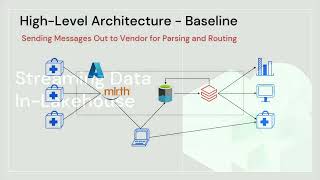
Taking Control of Streaming Healthcare Data

Chesapeake Regional Information System for our Patients (CRISP), a nonprofit healthcare information exchange (HIE), initially partnered with Slalom to build a Databricks data lakehouse architecture in response to the analytics demands of the COVID-19 pandemic, since then they have expanded the platform to additional use cases. Recently they have worked together to engineer streaming data pipelines to process healthcare messages, such as HL7, to help CRISP become vendor independent.

This session will focus on the improvements CRISP has made to their data lakehouse platform to support streaming use cases and the impact these changes have had for the organization. We will touch on using Databricks Auto Loader to efficiently ingest incoming files, ensuring data quality with Delta Live Tables, and sharing data internally with a SQL warehouse, as well as some of the work CRISP has done to parse and standardize HL7 messages from hundreds of sources. These efforts have allowed CRISP to stream over 4 million messages daily in near real-time with the scalability it needs to continue to onboard new healthcare providers so it can continue to facilitate care and improve health outcomes.

Talk by: Andy Hanks and Chris Mantz

Connect with us: Website: https://databricks.com Twitter: https://twitter.com/databricks LinkedIn: https://www.linkedin.com/company/databricks Instagram: https://www.instagram.com/databricksinc Facebook: https://www.facebook.com/databricksinc

Databricks As Code:Effectively Automate a Secure Lakehouse Using Terraform for Resource Provisioning

At Rivian, we have automated more than 95% of our Databricks resource provisioning workflows using an in-house Terraform module, affording us a lean admin team to manage over 750 users. In this session, we will cover the following elements of our approach and how others can benefit from improved team efficiency.

  • User and service principal management
  • Our permission model on Unity Catalog for data governance
  • Workspace and secrets resource management
  • Managing internal package dependencies using init scripts
  • Facilitating dashboards, SQL queries and their associated permissions
  • Scaling source of truth Petabyte scale Delta Lake table ingestion jobs and workflows

Talk by: Jason Shiverick and Vadivel Selvaraj

Connect with us: Website: https://databricks.com Twitter: https://twitter.com/databricks LinkedIn: https://www.linkedin.com/company/databricks Instagram: https://www.instagram.com/databricksinc Facebook: https://www.facebook.com/databricksinc

What's New in Databricks SQL -- With Live Demos

We’ve been pushing ahead to make the lakehouse even better for data warehousing across several pillars: native serverless experience, best in class price performance, intelligent workload management & observability and enhanced connectivity, analyst & developer experiences. As we look to double down on that pace of innovation, we want to deep dive into everything that’s been keeping us busy.

In this session we will share an update on key roadmap items. To bring things to life, you will see live demos of the most recent capabilities, from data ingestion, transformation, and consumption, using the modern data stack along with Databricks SQL.

Talk by: Can Efeoglu

Connect with us: Website: https://databricks.com Twitter: https://twitter.com/databricks LinkedIn: https://www.linkedin.com/company/databricks Instagram: https://www.instagram.com/databricksinc Facebook: https://www.facebook.com/databricksinc

Databricks Connect Powered by Spark Connect: Develop and Debug Spark From Any Developer Tool

Spark developers want to develop and debug their code using their tools of choice and development best practices while ensuring high-production fidelity on the target remote cluster. However, Spark's driver architecture is monolithic, with no built-in capability to directly connect to a remote Spark cluster from languages other than SQL. This makes it hard to enable such interactive developer experiences from a user’s local IDE of choice. Spark Connect’s decoupled client-server architecture introduces remote connectivity to Spark clusters and with that, enables interactive development experience - Spark and its open ecosystem can be leveraged from everywhere.

In this session, we show how we leverage Spark Connect to build a completely redesigned version of Databricks Connect, a first-class IDE-based developer experience that offers interactive debugging from any IDE. We show how developers can easily ensure consistency between their local and remote environments. We walk the audience through real-live examples of how to locally debug code running on Databrick. We also show how Databricks Connect integrates into the Databricks Visual Studio Code extension for an even better developer experience.

Talk by: Martin Grund and Stefania Leone

Connect with us: Website: https://databricks.com Twitter: https://twitter.com/databricks LinkedIn: https://www.linkedin.com/company/databricks Instagram: https://www.instagram.com/databricksinc Facebook: https://www.facebook.com/databricksinc

The English SDK for Apache Spark™

In the fast-paced world of data science and AI, we will explore how large language models (LLMs) can elevate the development process of Apache Spark applications.

We'll demonstrate how LLMs can simplify SQL query creation, data ingestion, and DataFrame transformations, leading to faster development and clearer code that's easier to review and understand. We'll also show how LLMs can assist in creating visualizations and clarifying data insights, making complex data easy to understand.

Furthermore, we'll discuss how LLMs can be used to create user-defined data sources and functions, offering a higher level of adaptability in Apache Spark applications.

Our session, filled with practical examples, highlights the innovative role of LLMs in the realm of Apache Spark development. We invite you to join us in this exploration of how these advanced language models can drive innovation and boost efficiency in the sphere of data science and AI.

Talk by: Gengliang Wang and Allison Wang

Connect with us: Website: https://databricks.com Twitter: https://twitter.com/databricks LinkedIn: https://www.linkedin.com/company/databricks Instagram: https://www.instagram.com/databricksinc Facebook: https://www.facebook.com/databricksinc

Databricks Asset Bundles: A Standard, Unified Approach to Deploying Data Products on Databricks

In this session, we will introduce Databricks Asset Bundles, provide a demonstration of how they work for a variety of data products, and how to fit them into an overall CICD strategy for the well-architected Lakehouse.

Data teams produce a variety of assets; datasets, reports and dashboards, ML models, and business applications. These assets depend upon code (notebooks, repos, queries, pipelines), infrastructure (clusters, SQL warehouses, serverless endpoints), and supporting services/resources like Unity Catalog, Databricks Workflows, and DBSQL dashboards. Today, each organization must figure out a deployment strategy for the variety of data products they build on Databricks as there is no consistent way to describe the infrastructure and services associated with project code.

Databricks Asset Bundles is a new capability on Databricks that standardizes and unifies the deployment strategy for all data products developed on the platform. It allows developers to describe the infrastructure and resources of their project through a YAML configuration file, regardless of whether they are producing a report, dashboard, online ML model, or Delta Live Tables pipeline. Behind the scenes, these configuration files use Terraform to manage resources in a Databricks workspace, but knowledge of Terraform is not required to use Databricks Asset Bundles.

Talk by: Rafi Kurlansik and Pieter Noordhuis

Connect with us: Website: https://databricks.com Twitter: https://twitter.com/databricks LinkedIn: https://www.linkedin.com/company/databricks Instagram: https://www.instagram.com/databricksinc Facebook: https://www.facebook.com/databricksinc

Summary

Real-time data processing has steadily been gaining adoption due to advances in the accessibility of the technologies involved. Despite that, it is still a complex set of capabilities. To bring streaming data in reach of application engineers Matteo Pelati helped to create Dozer. In this episode he explains how investing in high performance and operationally simplified streaming with a familiar API can yield significant benefits for software and data teams together.

Announcements

Hello and welcome to the Data Engineering Podcast, the show about modern data management Introducing RudderStack Profiles. RudderStack Profiles takes the SaaS guesswork and SQL grunt work out of building complete customer profiles so you can quickly ship actionable, enriched data to every downstream team. You specify the customer traits, then Profiles runs the joins and computations for you to create complete customer profiles. Get all of the details and try the new product today at dataengineeringpodcast.com/rudderstack Modern data teams are using Hex to 10x their data impact. Hex combines a notebook style UI with an interactive report builder. This allows data teams to both dive deep to find insights and then share their work in an easy-to-read format to the whole org. In Hex you can use SQL, Python, R, and no-code visualization together to explore, transform, and model data. Hex also has AI built directly into the workflow to help you generate, edit, explain and document your code. The best data teams in the world such as the ones at Notion, AngelList, and Anthropic use Hex for ad hoc investigations, creating machine learning models, and building operational dashboards for the rest of their company. Hex makes it easy for data analysts and data scientists to collaborate together and produce work that has an impact. Make your data team unstoppable with Hex. Sign up today at dataengineeringpodcast.com/hex to get a 30-day free trial for your team! Your host is Tobias Macey and today I'm interviewing Matteo Pelati about Dozer, an open source engine that includes data ingestion, transformation, and API generation for real-time sources

Interview

Introduction How did you get involved in the area of data management? Can you describe what Dozer is and the story behind it?

What was your decision process for building Dozer as open source?

As you note in the documentation, Dozer has overlap with a number of technologies that are aimed at different use cases. What was missing from each of them and the center of their Venn diagram that prompted you to build Dozer? In addition to working in an interesting technological cross-section, you are also targeting a disparate group of personas. Who are you building Dozer for and what were the motivations for that vision?

What are the different use cases that you are focused on supporting? What are the features of Dozer that enable engineers to address those uses, and what makes it preferable to existing alternative approaches?

Can you describe how Dozer is implemented?

How have the design and goals of the platform changed since you first started working on it? What are the architectural "-ilities" that you are trying to optimize for?

What is involved in getting Dozer deployed and integrated into an existing application/data infrastructure? How can teams who are using Dozer extend/integrate with Dozer?

What does the development/deployment workflow look like for teams who are building on top of Dozer?

What is your governance model for Dozer and balancing the open source project against your business goals? What are the most interesting, innovative, or unexpected ways that you have seen Dozer used? What are the most interesting, unexpected, or challenging lessons that you have learned while working on Dozer? When is Dozer the wrong choice? What do you have planned for the future of Dozer?

Contact Info

LinkedIn @pelatimtt on Twitter

Parting Question

From your perspective, what is the bigge