talk-data.com talk-data.com

Topic

SQL

Structured Query Language (SQL)

database_language data_manipulation data_definition programming_language

1751

tagged

Activity Trend

107 peak/qtr
2020-Q1 2026-Q1

Activities

1751 activities · Newest first

Summary

Data persistence is one of the most challenging aspects of computer systems. In the era of the cloud most developers rely on hosted services to manage their databases, but what if you are a cloud service? In this episode Vignesh Ravichandran explains how his team at Cloudflare provides PostgreSQL as a service to their developers for low latency and high uptime services at global scale. This is an interesting and insightful look at pragmatic engineering for reliability and scale.

Announcements

Hello and welcome to the Data Engineering Podcast, the show about modern data management Introducing RudderStack Profiles. RudderStack Profiles takes the SaaS guesswork and SQL grunt work out of building complete customer profiles so you can quickly ship actionable, enriched data to every downstream team. You specify the customer traits, then Profiles runs the joins and computations for you to create complete customer profiles. Get all of the details and try the new product today at dataengineeringpodcast.com/rudderstack This episode is brought to you by Datafold – a testing automation platform for data engineers that finds data quality issues before the code and data are deployed to production. Datafold leverages data-diffing to compare production and development environments and column-level lineage to show you the exact impact of every code change on data, metrics, and BI tools, keeping your team productive and stakeholders happy. Datafold integrates with dbt, the modern data stack, and seamlessly plugs in your data CI for team-wide and automated testing. If you are migrating to a modern data stack, Datafold can also help you automate data and code validation to speed up the migration. Learn more about Datafold by visiting dataengineeringpodcast.com/datafold You shouldn't have to throw away the database to build with fast-changing data. You should be able to keep the familiarity of SQL and the proven architecture of cloud warehouses, but swap the decades-old batch computation model for an efficient incremental engine to get complex queries that are always up-to-date. With Materialize, you can! It’s the only true SQL streaming database built from the ground up to meet the needs of modern data products. Whether it’s real-time dashboarding and analytics, personalization and segmentation or automation and alerting, Materialize gives you the ability to work with fresh, correct, and scalable results — all in a familiar SQL interface. Go to dataengineeringpodcast.com/materialize today to get 2 weeks free! Your host is Tobias Macey and today I'm interviewing Vignesh Ravichandran about building an internal database as a service platform at Cloudflare

Interview

Introduction How did you get involved in the area of data management? Can you start by describing the different database workloads that you have at Cloudflare?

What are the different methods that you have used for managing database instances?

What are the requirements and constraints that you had to account for in designing your current system? Why Postgres? optimizations for Postgres

simplification from not supporting multiple engines

limitations in postgres that make multi-tenancy challenging scale of operation (data volume, request rate What are the most interesting, innovative, or unexpected ways that you have seen your DBaaS used? What are the most interesting, unexpected, or challenging lessons that you have learned while working on your internal database platform? When is an internal database as a service the wrong choice? What do you have planned for the future of Postgres hosting at Cloudflare?

Contact Info

LinkedIn Website

Parting Question

From your perspective, what is the biggest gap in the tooling or technology for data management today?

Closing Announcements

Thank you for listening! Don't forget to check out our other shows. Podcast.init covers the Python language, its community, and the innovative ways it is being used. The Mac
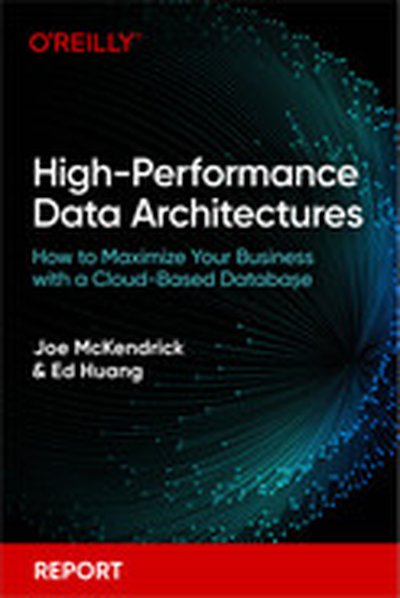

High-Performance Data Architectures

By choosing the right database, you can maximize your business potential, improve performance, increase efficiency, and gain a competitive edge. This insightful report examines the benefits of using a simplified data architecture containing cloud-based HTAP (hybrid transactional and analytical processing) database capabilities. You'll learn how this data architecture can help data engineers and data decision makers focus on what matters most: growing your business. Authors Joe McKendrick and Ed Huang explain how cloud native infrastructure supports enterprise businesses and operations with a much more agile foundation. Just one layer up from the infrastructure, cloud-based databases are a crucial part of data management and analytics. Learn how distributed SQL databases containing HTAP capabilities provide more efficient and streamlined data processing to improve cost efficiency and expedite business operations and decision making. This report helps you: Explore industry trends in database development Learn the benefits of a simplified data architecture Comb through the complex and crowded database choices on the market Examine the process of selecting the right database for your business Learn the latest innovations database for improving your company's efficiency and performance

Throughout history, small businesses have consistently played a pivotal role in the global economy, serving as its foundational backbone. As we navigate the digital age, the emergence of large corporations and rapid technological advancements present new challenges. Now, more than ever, it's imperative for small businesses to adapt, embracing a data-driven approach to remain competitive and sustainable. In this evolving landscape, we need champions dedicated to guiding these businesses, ensuring they harness the full potential of modern tools and insights to ensure a fair and varied marketplace of goods and services for all.  Dr Kendra Vant, Executive General Manager of Data & AI Products at Xero, is an industry leader in building data-driven products that harness AI and machine learning to solve complex problems for the small-business economy. Working across Australia, Asia and the US, Kendra has led data and technology teams at companies such as Seek, Telstra, Deloitte and now Xero where she leads the company's global efforts using emerging practices and technologies to help small businesses and their advisors benefit from the power of data and insights. Starting with doctoral research in experimental quantum physics at MIT and a stint building quantum computers at Los Alamos National Laboratory, Kendra has made a career of solving hard problems and pushing the boundaries of what's possible. In the episode, Kendra and Richie delve into the transformative impact of data science on small businesses, use-cases of data science for small businesses, how Xero has supported numerous small businesses with data science. They also cover the integration of AI in product development, the unexpected depth of data in seemingly low-tech sectors, the pivotal role of software platforms in data analysis and much more.  Links Mentioned in The Show: Xero Analyzing Business Data in SQL Financial Modeling in Spreadsheets Implementing AI Solutions in Business Generative AI Concepts

Summary

Generative AI has unlocked a massive opportunity for content creation. There is also an unfulfilled need for experts to be able to share their knowledge and build communities. Illumidesk was built to take advantage of this intersection. In this episode Greg Werner explains how they are using generative AI as an assistive tool for creating educational material, as well as building a data driven experience for learners.

Announcements

Hello and welcome to the Data Engineering Podcast, the show about modern data management Introducing RudderStack Profiles. RudderStack Profiles takes the SaaS guesswork and SQL grunt work out of building complete customer profiles so you can quickly ship actionable, enriched data to every downstream team. You specify the customer traits, then Profiles runs the joins and computations for you to create complete customer profiles. Get all of the details and try the new product today at dataengineeringpodcast.com/rudderstack This episode is brought to you by Datafold – a testing automation platform for data engineers that finds data quality issues before the code and data are deployed to production. Datafold leverages data-diffing to compare production and development environments and column-level lineage to show you the exact impact of every code change on data, metrics, and BI tools, keeping your team productive and stakeholders happy. Datafold integrates with dbt, the modern data stack, and seamlessly plugs in your data CI for team-wide and automated testing. If you are migrating to a modern data stack, Datafold can also help you automate data and code validation to speed up the migration. Learn more about Datafold by visiting dataengineeringpodcast.com/datafold You shouldn't have to throw away the database to build with fast-changing data. You should be able to keep the familiarity of SQL and the proven architecture of cloud warehouses, but swap the decades-old batch computation model for an efficient incremental engine to get complex queries that are always up-to-date. With Materialize, you can! It’s the only true SQL streaming database built from the ground up to meet the needs of modern data products. Whether it’s real-time dashboarding and analytics, personalization and segmentation or automation and alerting, Materialize gives you the ability to work with fresh, correct, and scalable results — all in a familiar SQL interface. Go to dataengineeringpodcast.com/materialize today to get 2 weeks free! Your host is Tobias Macey and today I'm interviewing Greg Werner about building IllumiDesk, a data-driven and AI powered online learning platform

Interview

Introduction How did you get involved in the area of data management? Can you describe what Illumidesk is and the story behind it? What are the challenges that educators and content creators face in developing and maintaining digital course materials for their target audiences? How are you leaning on data integrations and AI to reduce the initial time investment required to deliver courseware? What are the opportunities for collecting and collating learner interactions with the course materials to provide feedback to the instructors? What are some of the ways that you are incorporating pedagogical strategies into the measurement and evaluation methods that you use for reports? What are the different categories of insights that you need to provide across the different stakeholders/personas who are interacting with the platform and learning content? Can you describe how you have architected the Illumidesk platform? How have the design and goals shifted since you first began working on it? What are the strategies that you have used to allow for evolution and adaptation of the system in order to keep pace with the ecosystem of generative AI capabilities? What are the failure modes of the content generation that you need to account for? What are the most interesting, innovative, or unexpected ways that you have seen Illumidesk us

Summary

Data pipelines are the core of every data product, ML model, and business intelligence dashboard. If you're not careful you will end up spending all of your time on maintenance and fire-fighting. The folks at Rivery distilled the seven principles of modern data pipelines that will help you stay out of trouble and be productive with your data. In this episode Ariel Pohoryles explains what they are and how they work together to increase your chances of success.

Announcements

Hello and welcome to the Data Engineering Podcast, the show about modern data management Introducing RudderStack Profiles. RudderStack Profiles takes the SaaS guesswork and SQL grunt work out of building complete customer profiles so you can quickly ship actionable, enriched data to every downstream team. You specify the customer traits, then Profiles runs the joins and computations for you to create complete customer profiles. Get all of the details and try the new product today at dataengineeringpodcast.com/rudderstack This episode is brought to you by Datafold – a testing automation platform for data engineers that finds data quality issues before the code and data are deployed to production. Datafold leverages data-diffing to compare production and development environments and column-level lineage to show you the exact impact of every code change on data, metrics, and BI tools, keeping your team productive and stakeholders happy. Datafold integrates with dbt, the modern data stack, and seamlessly plugs in your data CI for team-wide and automated testing. If you are migrating to a modern data stack, Datafold can also help you automate data and code validation to speed up the migration. Learn more about Datafold by visiting dataengineeringpodcast.com/datafold Your host is Tobias Macey and today I'm interviewing Ariel Pohoryles about the seven principles of modern data pipelines

Interview

Introduction How did you get involved in the area of data management? Can you start by defining what you mean by a "modern" data pipeline? At Rivery you published a white paper identifying seven principles of modern data pipelines:

Zero infrastructure management ELT-first mindset Speaks SQL and Python Dynamic multi-storage layers Reverse ETL & operational analytics Full transparency Faster time to value

What are the applications of data that you focused on while identifying these principles? How do the application of these principles influence the ability of organizations and their data teams to encourage and keep pace with the use of data in the business? What are the technical components of a pipeline infrastructure that are necessary to support a "modern" workflow? How do the technologies involved impact the organizational involvement with how data is applied throughout the business? When using managed services, what are the ways that the pricing model acts to encourage/discourage experimentation/exploration with data? What are the most interesting, innovative, or unexpected ways that you have seen these seven principles implemented/applied? What are the most interesting, unexpected, or challenging lessons that you have learned while working with customers to adapt to these principles? What are the cases where some/all of these principles are undesirable/impractical to implement? What are the opportunities for further advancement/sophistication in the ways that teams work with and gain value from data?

Contact Info

LinkedIn

Parting Question

From your perspective, what is the biggest gap in the tooling or technology for data management today?

Closing Announcements

Thank you for listening! Don't forget to check out our other shows. Podcast.init covers the Python language, its community, and the innovative ways it is being used. The Machine Learning Podcast helps you go from idea to production with machine learning. Visit the site to subscribe to the show, sign up for the mailing list, and read the show notes. If you've learned somethi

Summary

As businesses increasingly invest in technology and talent focused on data engineering and analytics, they want to know whether they are benefiting. So how do you calculate the return on investment for data? In this episode Barr Moses and Anna Filippova explore that question and provide useful exercises to start answering that in your company.

Announcements

Hello and welcome to the Data Engineering Podcast, the show about modern data management Introducing RudderStack Profiles. RudderStack Profiles takes the SaaS guesswork and SQL grunt work out of building complete customer profiles so you can quickly ship actionable, enriched data to every downstream team. You specify the customer traits, then Profiles runs the joins and computations for you to create complete customer profiles. Get all of the details and try the new product today at dataengineeringpodcast.com/rudderstack Your host is Tobias Macey and today I'm interviewing Barr Moses and Anna Filippova about how and whether to measure the ROI of your data team

Interview

Introduction How did you get involved in the area of data management? What are the typical motivations for measuring and tracking the ROI for a data team?

Who is responsible for collecting that information? How is that information used and by whom?

What are some of the downsides/risks of tracking this metric? (law of unintended consequences) What are the inputs to the number that constitutes the "investment"? infrastructure, payroll of employees on team, time spent working with other teams? What are the aspects of data work and its impact on the business that complicate a calculation of the "return" that is generated? How should teams think about measuring data team ROI? What are some concrete ROI metrics data teams can use?

What level of detail is useful? What dimensions should be used for segmenting the calculations?

How can visibility into this ROI metric be best used to inform the priorities and project scopes of the team? With so many tools in the modern data stack today, what is the role of technology in helping drive or measure this impact? How do your respective solutions, Monte Carlo and dbt, help teams measure and scale data value? With generative AI on the upswing of the hype cycle, what are the impacts that you see it having on data teams?

What are the unrealistic expectations that it will produce? How can it speed up time to delivery?

What are the most interesting, innovative, or unexpected ways that you have seen data team ROI calculated and/or used? What are the most interesting, unexpected, or challenging lessons that you have learned while working on measuring the ROI of data teams? When is measuring ROI the wrong choice?

Contact Info

Barr

LinkedIn

Anna

LinkedIn

Parting Question

From your perspective, what is the biggest gap in the tooling or technology for data management today?

Closing Announcements

Thank you for listening! Don't forget to check out our other shows. Podcast.init covers the Python language, its community, and the innovative ways it is being used. The Machine Learning Podcast helps you go from idea to production with machine learning. Visit the site to subscribe to the show, sign up for the mailing list, and read the show notes. If you've learned something or tried out a project from the show then tell us about it! Email [email protected]) with your story. To help other people find the show please leave a review on Apple Podcasts and tell your friends and co-workers

Links

Monte Carlo

Podcast Episode

dbt

Podcast Episode

JetBlue Snowflake Con Presentation Generative AI Large Language Models

The intro and outro music is from The Hug by The Freak Fandango Orchestra / CC BY-SA Sponsored By: Rudderstack: Rudderstack

Introducing RudderStack Profiles. RudderStack Profiles takes the SaaS guessw

Data Warehousing using Fivetran, dbt and DBSQL

In this video you will learn how to use Fivetran to ingest data from Salesforce into your Lakehouse. After the data has been ingested, you will then learn how you can transform your data using dbt. Then we will use Databricks SQL to query, visualize and govern your data. Lastly, we will show you how you can use AI functions in Databricks SQL to call language learning models.

Read more about Databricks SQL https://docs.databricks.com/en/sql/index.html#what-is-databricks-sql

Summary

All software systems are in a constant state of evolution. This makes it impossible to select a truly future-proof technology stack for your data platform, making an eventual migration inevitable. In this episode Gleb Mezhanskiy and Rob Goretsky share their experiences leading various data platform migrations, and the hard-won lessons that they learned so that you don't have to.

Announcements

Hello and welcome to the Data Engineering Podcast, the show about modern data management Introducing RudderStack Profiles. RudderStack Profiles takes the SaaS guesswork and SQL grunt work out of building complete customer profiles so you can quickly ship actionable, enriched data to every downstream team. You specify the customer traits, then Profiles runs the joins and computations for you to create complete customer profiles. Get all of the details and try the new product today at dataengineeringpodcast.com/rudderstack Modern data teams are using Hex to 10x their data impact. Hex combines a notebook style UI with an interactive report builder. This allows data teams to both dive deep to find insights and then share their work in an easy-to-read format to the whole org. In Hex you can use SQL, Python, R, and no-code visualization together to explore, transform, and model data. Hex also has AI built directly into the workflow to help you generate, edit, explain and document your code. The best data teams in the world such as the ones at Notion, AngelList, and Anthropic use Hex for ad hoc investigations, creating machine learning models, and building operational dashboards for the rest of their company. Hex makes it easy for data analysts and data scientists to collaborate together and produce work that has an impact. Make your data team unstoppable with Hex. Sign up today at dataengineeringpodcast.com/hex to get a 30-day free trial for your team! Your host is Tobias Macey and today I'm interviewing Gleb Mezhanskiy and Rob Goretsky about when and how to think about migrating your data stack

Interview

Introduction How did you get involved in the area of data management? A migration can be anything from a minor task to a major undertaking. Can you start by describing what constitutes a migration for the purposes of this conversation? Is it possible to completely avoid having to invest in a migration? What are the signals that point to the need for a migration?

What are some of the sources of cost that need to be accounted for when considering a migration? (both in terms of doing one, and the costs of not doing one) What are some signals that a migration is not the right solution for a perceived problem?

Once the decision has been made that a migration is necessary, what are the questions that the team should be asking to determine the technologies to move to and the sequencing of execution? What are the preceding tasks that should be completed before starting the migration to ensure there is no breakage downstream of the changing component(s)? What are some of the ways that a migration effort might fail? What are the major pitfalls that teams need to be aware of as they work through a data platform migration? What are the opportunities for automation during the migration process? What are the most interesting, innovative, or unexpected ways that you have seen teams approach a platform migration? What are the most interesting, unexpected, or challenging lessons that you have learned while working on data platform migrations? What are some ways that the technologies and patterns that we use can be evolved to reduce the cost/impact/need for migraitons?

Contact Info

Gleb

LinkedIn @glebmm on Twitter

Rob

LinkedIn RobGoretsky on GitHub

Parting Question

From your perspective, what is the biggest gap in the tooling or technology for data management today?

Closing Announcements

Thank you for listening! Don't forget to check out our other shows. Podcast.init covers the Python language, its community, and the innovative ways it is being used. The Machine Learning Podcast helps you go from idea to production with machine learning. Visit the site to subscribe to the show, sign up for the mailing list, and read the show notes. If you've learned something or tried out a project from the show then tell us about it! Email [email protected]) with your story. To help other people find the show please leave a review on Apple Podcasts and tell your friends and co-workers

Links

Datafold

Podcast Episode

Informatica Airflow Snowflake

Podcast Episode

Redshift Eventbrite Teradata BigQuery Trino EMR == Elastic Map-Reduce Shadow IT

Podcast Episode

Mode Analytics Looker Sunk Cost Fallacy data-diff

Podcast Episode

SQLGlot Dagster dbt

The intro and outro music is from The Hug by The Freak Fandango Orchestra / CC BY-SA Sponsored By: Hex: Hex Tech Logo

Hex is a collaborative workspace for data science and analytics. A single place for teams to explore, transform, and visualize data into beautiful interactive reports. Use SQL, Python, R, no-code and AI to find and share insights across your organization. Empower everyone in an organization to make an impact with data. Sign up today at [dataengineeringpodcast.com/hex](https://www.dataengineeringpodcast.com/hex} and get 30 days free!Rudderstack: Rudderstack

Introducing RudderStack Profiles. RudderStack Profiles takes the SaaS guesswork and SQL grunt work out of building complete customer profiles so you can quickly ship actionable, enriched data to every downstream team. You specify the customer traits, then Profiles runs the joins and computations for you to create complete customer profiles. Get all of the details and try the new product today at dataengineeringpodcast.com/rudderstackSupport Data Engineering Podcast

Data Wrangling with SQL

Develop a comprehensive understanding of data wrangling with SQL to transform raw data into actionable insights. This hands-on guide, 'Data Wrangling with SQL,' leads you through fundamentals to advanced techniques for cleaning, analyzing, and engineering data. By mastering these techniques, you'll improve your data analysis capabilities and solve real-world data challenges efficiently. What this Book will help me do Understand and implement data wrangling steps using SQL, including handling missing data and optimizing queries. Master advanced SQL features like subqueries, aggregate functions, and common table expressions for effective data transformations. Apply data cleaning techniques to ensure data consistency and prepare it for deeper analysis and reporting. Optimize the structure and performance of SQL queries to work seamlessly with large datasets and improve decision-making processes. Gain practical skills with hands-on examples and exercises to consolidate your SQL abilities for real-world applications. Author(s) Raghav Kandarpa and Shivangi Saxena are experienced professionals in data analytics and database management. Their combined expertise in teaching SQL and working on real-world data analysis projects makes them ideal mentors for learning practical data wrangling concepts. They emphasize simplicity and clarity in their approach, offering a practical learning experience. Who is it for? This book is designed for data analysts, data scientists, and professionals dealing with business insights who aim to enhance their SQL skills for data wrangling and transformation. It suits those with basic SQL knowledge looking to refine their grasp of data manipulation techniques. Beginners to intermediate-level practitioners in data analysis will find practical guidance here for real-world data challenges. Readers aspiring to use SQL effectively for database analysis and decision-making will benefit greatly.

If a Duck Quacks in the Forest and Everyone Hears, Should You Care?

YES! "Duck posting" has become an internet meme for praising DuckDB on Twitter. Nearly every quack using DuckDB has done it once or twice. But, why all the fuss? With advances in CPUs, memory, SSDs, and the software that enables it all, our personal machines are powerful beasts relegated to handling a few Chrome tabs and sitting 90% idle. As data engineers and data analysts, this seems like a waste that's not only expensive, but also impacting the environment.

In this session, you will see how DuckDB brings SQL analytics capabilities to a 2MB standalone executable on your laptop that only recently required a large cluster. This session will explain the architecture of DuckDB that enables high performance analytics on a laptop: great query optimization, vectorized execution, continuous improvements in compression and more. We will show its capabilities using live demos, from the pandas library to WASM, to the command-line. We'll demonstrate performance on large datasets, and talk about how we're exploring using the laptop to augment cloud analytics workloads.

Talk by: Ryan Boyd

Here’s more to explore: Why the Data Lakehouse Is Your next Data Warehouse: https://dbricks.co/3Pt5unq Lakehouse Fundamentals Training: https://dbricks.co/44ancQs

Connect with us: Website: https://databricks.com Twitter: https://twitter.com/databricks LinkedIn: https://www.linkedin.com/company/databricks Instagram: https://www.instagram.com/databricksinc Facebook: https://www.facebook.com/databricksinc

Data Caching Strategies for Data Analytics and AI

he increasing popularity of data analytics and artificial intelligence (AI) has led to a dramatic increase in the volume of data being used in these fields, creating a growing need for an enhanced computational capability. Cache plays a crucial role as an accelerator for data and AI computations, but it is important to note that these domains have different data access patterns, requiring different cache strategies. In this session, you will see our observations on data access patterns in the analytical SQL and AI training domains based on practical experience with large-scale systems. We will discuss the evaluation results of various caching strategies for analytical SQL and AI and provide caching recommendations for different use cases. Over the years, we have learned some best practices from big internet companies about the following aspects of our journey:

  1. Traffic pattern for analytical SQL and cache strategy recommendation
  2. Traffic pattern for AI training and how we can measure the cache efficiency for different AI training process
  3. Cache capacity planning based on real-time metrics of the working set
  4. Adaptive caching admission and eviction for uncertain traffic patterns

Talk by: Chunxu Tang and Beinan Wang

Here’s more to explore: State of Data + AI Report: https://dbricks.co/44i2HBp Databricks named a Leader in 2022 Gartner® Magic QuadrantTM CDBMS: https://dbricks.co/3phw20d

Connect with us: Website: https://databricks.com Twitter: https://twitter.com/databricks LinkedIn: https://www.linkedin.com/company/databricks Instagram: https://www.instagram.com/databricksinc Facebook: https://www.facebook.com/databricksinc

Five Things You Didn't Know You Could Do with Databricks Workflows

Databricks workflows has come a long way since the initial days of orchestrating simple notebooks and jar/wheel files. Now we can orchestrate multi-task jobs and create a chain of tasks with lineage and DAG with either fan-in or fan-out among multiple other patterns or even run another Databricks job directly inside another job.

Databricks workflows takes its tag: “orchestrate anything anywhere” pretty seriously and is a truly fully-managed, cloud-native orchestrator to orchestrate diverse workloads like Delta Live Tables, SQL, Notebooks, Jars, Python Wheels, dbt, SQL, Apache Spark™, ML pipelines with excellent monitoring, alerting and observability capabilities as well. Basically, it is a one-stop product for all orchestration needs for an efficient lakehouse. And what is even better is, it gives full flexibility of running your jobs in a cloud-agnostic and cloud-independent way and is available across AWS, Azure and GCP.

In this session, we will discuss and deep dive on some of the very interesting features and will showcase end-to-end demos of the features which will allow you to take full advantage of Databricks workflows for orchestrating the lakehouse.

Talk by: Prashanth Babu

Connect with us: Website: https://databricks.com Twitter: https://twitter.com/databricks LinkedIn: https://www.linkedin.com/company/databricks Instagram: https://www.instagram.com/databricksinc Facebook: https://www.facebook.com/databricksinc

Nebula: The Journey of Scaling Instacart’s Data Pipelines with Apache Spark™ and Lakehouse

Instacart has gone through immense growth during the pandemic and the trend continues. Instacart ads is no exception in this growth story. We have launched many new product lines including display and video ads covering the full advertising funnel to address the increasing demand of our retail partners. We have built advanced models to auto-suggest optimal bidding to increase the ROI for our CPG partners. Advertisers’ trust is the utmost priority and thus the quest to build a top-class ads measurement platform.

Ads data processing requires complex data verifications to update ads serving stats. In ETL pipelines these were implemented through files containing thousands of lines of raw SQL which were hard to scale, test, and iterate upon. Our data engineers used to spend hours testing small changes due to a lack of local testing mechanisms. These pain points stress our need for better tools. After some research, we chose Apache Spark™ as our preferred tool to rebuild ETLs, and the Databricks platform made this move easier. In this session, We'll share our journey to move our pipelines to Spark and Delta Lake on Databricks. With Spark, Scala, and Delta we solved many problems which were slowing the team’s productivity. Some key areas that will be covered include:

  • Modular and composable code
  • Unit testing framework
  • Incremental event processing with spark structured streaming
  • Granular resource tuning for better performance and cost efficacy

Other than the domain business logic, the problems discussed here are quite common for performing data processing at scale. We hope that sharing our learnings will benefit others who are going through similar growth challenges or migrating to Lakehouse.

Talk by: Devlina Das and Arthur Li

Connect with us: Website: https://databricks.com Twitter: https://twitter.com/databricks LinkedIn: https://www.linkedin.com/company/databricks Instagram: https://www.instagram.com/databricksinc Facebook: https://www.facebook.com/databricksinc

Learnings From the Field: Migration From Oracle DW and IBM DataStage to Databricks on AWS

Legacy data warehouses are costly to maintain, unscalable and cannot deliver on data science, ML and real-time analytics use cases. Migrating from your enterprise data warehouse to Databricks lets you scale as your business needs grow and accelerate innovation by running all your data, analytics and AI workloads on a single unified data platform.

In the first part of this session we will guide you through the well-designed process and tools that will help you from the assessment phase to the actual implementation of an EDW migration project. Also, we will address ways to convert PL/SQL proprietary code to an open standard python code and take advantage of PySpark for ETL workloads and Databricks SQL’s data analytics workload power.

The second part of this session will be based on an EDW migration project of SNCF (French national railways); one of the major enterprise customers of Databricks in France. Databricks partnered with SNCF to migrate its real estate entity from Oracle DW and IBM DataStage to Databricks on AWS. We will walk you through the customer context, urgency to migration, challenges, target architecture, nitty-gritty details of implementation, best practices, recommendations, and learnings in order to execute a successful migration project in a very accelerated time frame.

Talk by: Himanshu Arora and Amine Benhamza

Connect with us: Website: https://databricks.com Twitter: https://twitter.com/databricks LinkedIn: https://www.linkedin.com/company/databricks Instagram: https://www.instagram.com/databricksinc Facebook: https://www.facebook.com/databricksinc

Self-Service Geospatial Analysis Leveraging Databricks, Apache Sedona, and R

Geospatial data analysis is critical to understanding the impact of agricultural operations on environmental sustainability with respect to water quality, soil health, greenhouse gasses, and more. Outside of a few specialized software products, however, support for spatial data types is often limited or missing from analytics and visualization platforms. In this session, we show how Truterra is using Databricks, Apache Sedona, and R to analyze spatial data at scale. Additionally, learn how Truterra uses spatial insights to educate and promote practices that optimize profitability, sustainability, and stewardship outcomes at the farm.

In this session, you will see how Databricks and Apache Sedona are used to process large spatial datasets including field, watershed, and hydrologic boundaries. You will see dynamic widgets, SQL and R used in tandem to generate map visuals, display them, and enable download all from a Databricks notebook.

Talk by: Nara Khou and Cort Lunke

Connect with us: Website: https://databricks.com Twitter: https://twitter.com/databricks LinkedIn: https://www.linkedin.com/company/databricks Instagram: https://www.instagram.com/databricksinc Facebook: https://www.facebook.com/databricksinc

Rapidly Implementing Major Retailer API at the Hershey Company

Accurate, reliable, and timely data is critical for CPG companies to stay ahead in highly competitive retailer relationships, and for a company like the Hershey Company, the commercial relationship with Walmart is one of the most important. The team at Hershey found themselves with a looming deadline for their legacy analytics services and targeted a migration to the brand new Walmart Luminate API. Working in partnership with Advancing Analytics, the Hershey Company leveraged a metadata-driven Lakehouse Architecture to rapidly onboard the new Luminate API, helping the category management teams to overhaul how they measure, predict, and plan their business operations.

In this session, we will discuss the impact Luminate has had on Hershey's business covering key areas such as sales, supply chain, and retail field execution, and the technical building blocks that can be used to rapidly provision business users with the data they need, when they need it. We will discuss how key technologies enable this rapid approach, with Databricks Autoloader ingesting and shaping our data, Delta Streaming processing the data through the lakehouse and Databricks SQL providing a responsive serving layer. The session will include commentary as well as cover the technical journey.

Talk by: Simon Whiteley and Jordan Donmoyer

Connect with us: Website: https://databricks.com Twitter: https://twitter.com/databricks LinkedIn: https://www.linkedin.com/company/databricks Instagram: https://www.instagram.com/databricksinc Facebook: https://www.facebook.com/databricksinc

Databricks and Delta Lake: Lessons Learned from Building Akamai's Web Security Analytics Product

Akamai is a leading content delivery network (CDN) and cybersecurity company operating hundreds of thousands of servers in more than 135 countries worldwide. In this session, we will share our experiences and lessons learned from building and maintaining the Web Security Analytics (WSA) product, an interactive analytics platform powered by Databricks and Delta Lake that enables customers to efficiently analyze and take informed action on a high volume of streaming security events.

The WSA platform must be able to serve hundreds of queries per minute, scanning hundreds of terabytes of data from a six petabyte data lake, with most queries returning results within ten seconds; for both aggregation queries and needle in a haystack queries. This session will cover how to use Databricks SQL warehouses and job clusters cost-effectively, and how to improve query performance using tools and techniques such as Delta Lake, Databricks Photon, and partitioning. This talk will be valuable for anyone looking to build and operate a high-performance analytics platform.

Talk by: Tomer Patel and Itai Yaffe

Connect with us: Website: https://databricks.com Twitter: https://twitter.com/databricks LinkedIn: https://www.linkedin.com/company/databricks Instagram: https://www.instagram.com/databricksinc Facebook: https://www.facebook.com/databricksinc

Increasing Data Trust: Enabling Data Governance on Databricks Using Unity Catalog & ML-Driven MDM

As part of Comcast Effectv’s transformation into a completely digital advertising agency, it was key to develop an approach to manage and remediate data quality issues related to customer data so that the sales organization is using reliable data to enable data-driven decision making. Like many organizations, Effectv's customer lifecycle processes are spread across many systems utilizing various integrations between them. This results in key challenges like duplicate and redundant customer data that requires rationalization and remediation. Data is at the core of Effectv’s modernization journey with the intended result of winning more business, accelerating order fulfillment, reducing make-goods and identifying revenue.

In partnership with Slalom Consulting, Comcast Effectv built a traditional lakehouse on Databricks to ingest data from all of these systems but with a twist; they anchored every engineering decision in how it will enable their data governance program.

In this session, we will touch upon the data transformation journey at Effectv and dive deeper into the implementation of data governance leveraging Databricks solutions such as Delta Lake, Unity Catalog and DB SQL. Key focus areas include how we baked master data management into our pipelines by automating the matching and survivorship process, and bringing it all together for the data consumer via DBSQL to use our certified assets in bronze, silver and gold layers.

By making thoughtful decisions about structuring data in Unity Catalog and baking MDM into ETL pipelines, you can greatly increase the quality, reliability, and adoption of single-source-of-truth data so your business users can stop spending cycles on wrangling data and spend more time developing actionable insights for your business.

Talk by: Maggie Davis and Risha Ravindranath

Connect with us: Website: https://databricks.com Twitter: https://twitter.com/databricks LinkedIn: https://www.linkedin.com/company/databricks Instagram: https://www.instagram.com/databricksinc Facebook: https://www.facebook.com/databricksinc

Real-Time Reporting and Analytics for Construction Data Powered by Delta Lake and DBSQL

Procore is a construction project management software that helps construction professionals efficiently manage their projects and collaborate with their teams. Our mission is to connect everyone in construction on a global platform.

Procore is the system of record for all construction projects. Our customers need to access the data in near real-time for construction insights. Enhanced reporting is a self-service operational reporting module that allows quick data access with consistency to thousands of tables and reports.

Procore data platform rebuilt the module (originally built on the relational database) using Databricks and Delta lake. We used Apache Spark™ streaming to maintain the consistent state on the ingestion side from Kafka and plan to leverage the fully capable functionalities of DBSQL using the serverless SQL warehouse to read the medallion models (built via DBT) in Delta Lake. In addition, the Unity Catalog and the Delta share features helped us share the data across regions seamlessly. This design enabled us to improve the p95 and p99 read time by xx% (which were initially timing out).

Attend this session to hear about the learnings and experience of building a Data Lakehouse architecture.

Talk by: Jay Yang and Hari Rajaram

Connect with us: Website: https://databricks.com Twitter: https://twitter.com/databricks LinkedIn: https://www.linkedin.com/company/databricks Instagram: https://www.instagram.com/databricksinc Facebook: https://www.facebook.com/databricksinc

Best Exploration of Columnar Shuffle Design

To significantly improve the performance of Spark SQL, there is a trend to offload Spark SQL execution to highly optimized native libraries or accelerators in past several years, like Photon from Databricks, Nvidia's Rapids plug-in, and Intel and Kyligence's initiated open source Gluten project. By the multi-fold performance improvement from these solutions, more and more Apache Spark™ users have started to adopt the new technology. One characteristics of native libraries is that they all use columnar data format as the basic data format. It's because the columnar data format has the intrinsic affinity to vectorized data processing using SIMD instructions. While vanilla Spark's shuffle is based on spark's internal row data format. The high overhead of the columnar to row and row to columnar conversion during the shuffle makes reusing current shuffle not possible. Due to the importance of shuffle service in Spark, we have to implement an efficient columnar shuffle, which brings couple of new challenges, like the split of columnar data, or the dictionary support during shuffle.

In this session, we will share the exploration process of the columnar shuffle design during our Gazelle and Gluten development, and best practices for implementing the columnar shuffle service. We will also share how we learned from the development of vanilla Spark's shuffle, for example, how to address the small files issue then we will propose the new shuffle solution. We will show the performance comparison between Columnar shuffle and vanilla Spark's row-based shuffle. Finally, we will share how the new built-in accelerators like QAT and IAA in the latest Intel processor are used in our columnar shuffle service and boost the performance.

Talk by: Binwei Yang and Rong Ma

Here’s more to explore: Why the Data Lakehouse Is Your next Data Warehouse: https://dbricks.co/3Pt5unq Lakehouse Fundamentals Training: https://dbricks.co/44ancQs

Connect with us: Website: https://databricks.com Twitter: https://twitter.com/databricks LinkedIn: https://www.linkedin.com/company/databricks Instagram: https://www.instagram.com/databricksinc Facebook: https://www.facebook.com/databricksinc