talk-data.com talk-data.com

Topic

SQL

Structured Query Language (SQL)

database_language data_manipulation data_definition programming_language

1751

tagged

Activity Trend

107 peak/qtr
2020-Q1 2026-Q1

Activities

1751 activities · Newest first

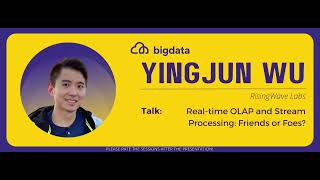
Yingjun Wu: Real time OLAP and Stream Processing Friends or Foes

Join Yingjun Wu in unlocking the power of real-time insights through 'Unlocking Real-time Insights: Enhancing Your Databases With Stream Processing.' 📊🔓 Discover how to harness Change Data Capture (CDC) and modern SQL streaming databases to drive real-time analytics, enabling businesses to stay ahead in the data-driven world. 🚀💡 #RealTimeInsights #streamprocessing

✨ H I G H L I G H T S ✨

🙌 A huge shoutout to all the incredible participants who made Big Data Conference Europe 2023 in Vilnius, Lithuania, from November 21-24, an absolute triumph! 🎉 Your attendance and active participation were instrumental in making this event so special. 🌍

Don't forget to check out the session recordings from the conference to relive the valuable insights and knowledge shared! 📽️

Once again, THANK YOU for playing a pivotal role in the success of Big Data Conference Europe 2023. 🚀 See you next year for another unforgettable conference! 📅 #BigDataConference #SeeYouNextYear

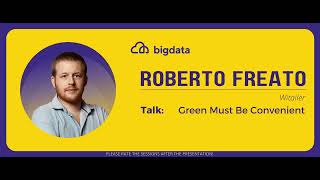
Roberto Freato: Green Must Be Convenient

Join Roberto Freato in his session 'Green Must Be Convenient' as he unveils the evolution of database storage practices, demonstrating how Azure SQL Database efficiently manages vast amounts of JSON objects. Discover how this bridges the gap between raw data in a data lake and the relational view used by analytical applications. 🌱💾 #DatabaseStorage #azuresql

✨ H I G H L I G H T S ✨

🙌 A huge shoutout to all the incredible participants who made Big Data Conference Europe 2023 in Vilnius, Lithuania, from November 21-24, an absolute triumph! 🎉 Your attendance and active participation were instrumental in making this event so special. 🌍

Don't forget to check out the session recordings from the conference to relive the valuable insights and knowledge shared! 📽️

Once again, THANK YOU for playing a pivotal role in the success of Big Data Conference Europe 2023. 🚀 See you next year for another unforgettable conference! 📅 #BigDataConference #SeeYouNextYear

Summary

The first step of data pipelines is to move the data to a place where you can process and prepare it for its eventual purpose. Data transfer systems are a critical component of data enablement, and building them to support large volumes of information is a complex endeavor. Andrei Tserakhau has dedicated his careeer to this problem, and in this episode he shares the lessons that he has learned and the work he is doing on his most recent data transfer system at DoubleCloud.

Announcements

Hello and welcome to the Data Engineering Podcast, the show about modern data management Introducing RudderStack Profiles. RudderStack Profiles takes the SaaS guesswork and SQL grunt work out of building complete customer profiles so you can quickly ship actionable, enriched data to every downstream team. You specify the customer traits, then Profiles runs the joins and computations for you to create complete customer profiles. Get all of the details and try the new product today at dataengineeringpodcast.com/rudderstack You shouldn't have to throw away the database to build with fast-changing data. You should be able to keep the familiarity of SQL and the proven architecture of cloud warehouses, but swap the decades-old batch computation model for an efficient incremental engine to get complex queries that are always up-to-date. With Materialize, you can! It’s the only true SQL streaming database built from the ground up to meet the needs of modern data products. Whether it’s real-time dashboarding and analytics, personalization and segmentation or automation and alerting, Materialize gives you the ability to work with fresh, correct, and scalable results — all in a familiar SQL interface. Go to dataengineeringpodcast.com/materialize today to get 2 weeks free! This episode is brought to you by Datafold – a testing automation platform for data engineers that finds data quality issues for every part of your data workflow, from migration to deployment. Datafold has recently launched a 3-in-1 product experience to support accelerated data migrations. With Datafold, you can seamlessly plan, translate, and validate data across systems, massively accelerating your migration project. Datafold leverages cross-database diffing to compare tables across environments in seconds, column-level lineage for smarter migration planning, and a SQL translator to make moving your SQL scripts easier. Learn more about Datafold by visiting dataengineeringpodcast.com/datafold today! Data lakes are notoriously complex. For data engineers who battle to build and scale high quality data workflows on the data lake, Starburst powers petabyte-scale SQL analytics fast, at a fraction of the cost of traditional methods, so that you can meet all your data needs ranging from AI to data applications to complete analytics. Trusted by teams of all sizes, including Comcast and Doordash, Starburst is a data lake analytics platform that delivers the adaptability and flexibility a lakehouse ecosystem promises. And Starburst does all of this on an open architecture with first-class support for Apache Iceberg, Delta Lake and Hudi, so you always maintain ownership of your data. Want to see Starburst in action? Go to dataengineeringpodcast.com/starburst and get $500 in credits to try Starburst Galaxy today, the easiest and fastest way to get started using Trino. Your host is Tobias Macey and today I'm interviewing Andrei Tserakhau about operationalizing high bandwidth and low-latency change-data capture

Interview

Introduction How did you get involved in the area of data management? Your most recent project involves operationalizing a generalized data transfer service. What was the original problem that you were trying to solve?

What were the shortcomings of other options in the ecosystem that led you to building a new system?

What was the design of your initial solution to the problem?

What are the sharp edges that you had to deal with to operate and use that i

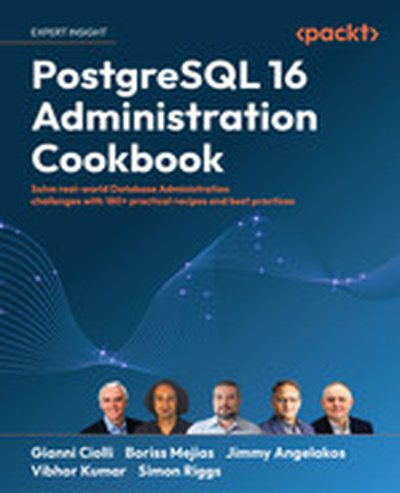
PostgreSQL 16 Administration Cookbook

This cookbook is a comprehensive guide to mastering PostgreSQL 16 database administration. With over 180 practical recipes, this book covers everything from query performance and backup strategies to replication and high availability. You'll gain hands-on expertise in solving real-world challenges while leveraging the new and improved features of PostgreSQL 16. What this Book will help me do Perform efficient batch processing with Postgres' SQL MERGE statement. Implement parallel transaction processes using logical replication. Enhance database backups and recovery with advanced compression techniques. Monitor and fine-tune database performance for optimal operation. Apply new PostgreSQL 16 features for secure and reliable databases. Author(s) The team of authors, including Gianni Ciolli, Boriss Mejías, Jimmy Angelakos, Vibhor Kumar, and Simon Riggs, bring years of experience in PostgreSQL database management and development. Their expertise spans professional system administration, academic research, and contributions to PostgreSQL development. Their collaborative insights enrich this comprehensive guide. Who is it for? This book is ideal for PostgreSQL database administrators seeking advanced techniques, data architects managing PostgreSQL in production, and developers interested in mastering PostgreSQL 16. Whether you're an experienced DBA upgrading to PostgreSQL 16 or a newcomer looking for practical recipes, this book provides valuable strategies and solutions.

SQL is the most important data skill you can learn on your journey. And it doesn’t need to be complicated. In this episode, dive into a short SQL introduction, basic SQL commands and know how SQL can help you land your data job.

Tune in now!

🗄️ Join FREE SQL hands-on workshop this December!

⭐ Leave a Podcast review & get your bonus!

🤝 Ace your data analyst interview with the interview simulator

📩 Get my weekly email with helpful data career tips

📊 Come to my next free “How to Land Your First Data Job” training

🏫 Check out my 10-week data analytics bootcamp

Timestamps:

(06:01) - How to get better in SQL

(08:41) - SQL commands to know

(20:48) - Come join FREE SQL hands-on Workshop

Connect with Avery:

📺 Subscribe on YouTube

🎙Listen to My Podcast

👔 Connect with me on LinkedIn

📸 Instagram

🎵 TikTok

Mentioned in this episode: Join the last cohort of 2025! The LAST cohort of The Data Analytics Accelerator for 2025 kicks off on Monday, December 8th and enrollment is officially open!

To celebrate the end of the year, we’re running a special End-of-Year Sale, where you’ll get: ✅ A discount on your enrollment 🎁 6 bonus gifts, including job listings, interview prep, AI tools + more

If your goal is to land a data job in 2026, this is your chance to get ahead of the competition and start strong.

👉 Join the December Cohort & Claim Your Bonuses: https://DataCareerJumpstart.com/daa https://www.datacareerjumpstart.com/daa

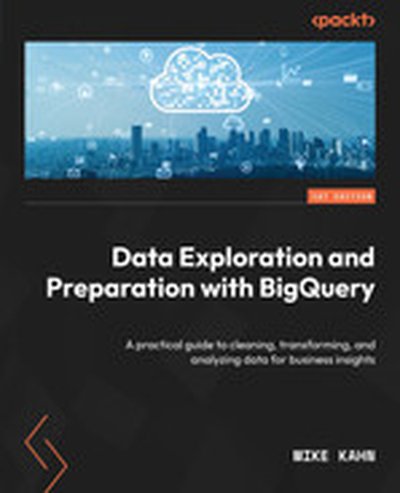
Data Exploration and Preparation with BigQuery

In "Data Exploration and Preparation with BigQuery," Michael Kahn provides a hands-on guide to understanding and utilizing Google's powerful data warehouse solution, BigQuery. This comprehensive book equips you with the skills needed to clean, transform, and analyze large datasets for actionable business insights. What this Book will help me do Master the process of exploring and assessing the quality of datasets. Learn SQL for performing efficient and advanced data transformations in BigQuery. Optimize the performance of BigQuery queries for speed and cost-effectiveness. Discover best practices for setting up and managing BigQuery resources. Apply real-world case studies to analyze data and derive meaningful insights. Author(s) Michael Kahn is an experienced data engineer and author specializing in big data solutions and technologies. With years of hands-on experience working with Google Cloud Platform and BigQuery, he has assisted organizations in optimizing their data pipelines for effective decision-making. His accessible writing style ensures complex topics become approachable, enabling readers of various skill levels to succeed. Who is it for? This book is tailored for data analysts, data engineers, and data scientists who want to learn how to effectively use BigQuery for data exploration and preparation. Whether you're new to BigQuery or looking to deepen your expertise in working with large datasets, this book provides clear guidance and practical examples to achieve your goals.

Summary

Building a data platform that is enjoyable and accessible for all of its end users is a substantial challenge. One of the core complexities that needs to be addressed is the fractal set of integrations that need to be managed across the individual components. In this episode Tobias Macey shares his thoughts on the challenges that he is facing as he prepares to build the next set of architectural layers for his data platform to enable a larger audience to start accessing the data being managed by his team.

Announcements

Hello and welcome to the Data Engineering Podcast, the show about modern data management Introducing RudderStack Profiles. RudderStack Profiles takes the SaaS guesswork and SQL grunt work out of building complete customer profiles so you can quickly ship actionable, enriched data to every downstream team. You specify the customer traits, then Profiles runs the joins and computations for you to create complete customer profiles. Get all of the details and try the new product today at dataengineeringpodcast.com/rudderstack You shouldn't have to throw away the database to build with fast-changing data. You should be able to keep the familiarity of SQL and the proven architecture of cloud warehouses, but swap the decades-old batch computation model for an efficient incremental engine to get complex queries that are always up-to-date. With Materialize, you can! It’s the only true SQL streaming database built from the ground up to meet the needs of modern data products. Whether it’s real-time dashboarding and analytics, personalization and segmentation or automation and alerting, Materialize gives you the ability to work with fresh, correct, and scalable results — all in a familiar SQL interface. Go to dataengineeringpodcast.com/materialize today to get 2 weeks free! Developing event-driven pipelines is going to be a lot easier - Meet Functions! Memphis functions enable developers and data engineers to build an organizational toolbox of functions to process, transform, and enrich ingested events “on the fly” in a serverless manner using AWS Lambda syntax, without boilerplate, orchestration, error handling, and infrastructure in almost any language, including Go, Python, JS, .NET, Java, SQL, and more. Go to dataengineeringpodcast.com/memphis today to get started! Data lakes are notoriously complex. For data engineers who battle to build and scale high quality data workflows on the data lake, Starburst powers petabyte-scale SQL analytics fast, at a fraction of the cost of traditional methods, so that you can meet all your data needs ranging from AI to data applications to complete analytics. Trusted by teams of all sizes, including Comcast and Doordash, Starburst is a data lake analytics platform that delivers the adaptability and flexibility a lakehouse ecosystem promises. And Starburst does all of this on an open architecture with first-class support for Apache Iceberg, Delta Lake and Hudi, so you always maintain ownership of your data. Want to see Starburst in action? Go to dataengineeringpodcast.com/starburst and get $500 in credits to try Starburst Galaxy today, the easiest and fastest way to get started using Trino. Your host is Tobias Macey and today I'll be sharing an update on my own journey of building a data platform, with a particular focus on the challenges of tool integration and maintaining a single source of truth

Interview

Introduction How did you get involved in the area of data management? data sharing weight of history

existing integrations with dbt switching cost for e.g. SQLMesh de facto standard of Airflow

Single source of truth

permissions management across application layers Database engine Storage layer in a lakehouse Presentation/access layer (BI) Data flows dbt -> table level lineage orchestration engine -> pipeline flows

task based vs. asset based

Metadata platform as the logical place for horizontal view

Contact Info

LinkedIn Website

Parting Questio

Summary

The dbt project has become overwhelmingly popular across analytics and data engineering teams. While it is easy to adopt, there are many potential pitfalls. Dustin Dorsey and Cameron Cyr co-authored a practical guide to building your dbt project. In this episode they share their hard-won wisdom about how to build and scale your dbt projects.

Announcements

Hello and welcome to the Data Engineering Podcast, the show about modern data management Data projects are notoriously complex. With multiple stakeholders to manage across varying backgrounds and toolchains even simple reports can become unwieldy to maintain. Miro is your single pane of glass where everyone can discover, track, and collaborate on your organization's data. I especially like the ability to combine your technical diagrams with data documentation and dependency mapping, allowing your data engineers and data consumers to communicate seamlessly about your projects. Find simplicity in your most complex projects with Miro. Your first three Miro boards are free when you sign up today at dataengineeringpodcast.com/miro. That’s three free boards at dataengineeringpodcast.com/miro. Introducing RudderStack Profiles. RudderStack Profiles takes the SaaS guesswork and SQL grunt work out of building complete customer profiles so you can quickly ship actionable, enriched data to every downstream team. You specify the customer traits, then Profiles runs the joins and computations for you to create complete customer profiles. Get all of the details and try the new product today at dataengineeringpodcast.com/rudderstack You shouldn't have to throw away the database to build with fast-changing data. You should be able to keep the familiarity of SQL and the proven architecture of cloud warehouses, but swap the decades-old batch computation model for an efficient incremental engine to get complex queries that are always up-to-date. With Materialize, you can! It’s the only true SQL streaming database built from the ground up to meet the needs of modern data products. Whether it’s real-time dashboarding and analytics, personalization and segmentation or automation and alerting, Materialize gives you the ability to work with fresh, correct, and scalable results — all in a familiar SQL interface. Go to dataengineeringpodcast.com/materialize today to get 2 weeks free! Data lakes are notoriously complex. For data engineers who battle to build and scale high quality data workflows on the data lake, Starburst powers petabyte-scale SQL analytics fast, at a fraction of the cost of traditional methods, so that you can meet all your data needs ranging from AI to data applications to complete analytics. Trusted by teams of all sizes, including Comcast and Doordash, Starburst is a data lake analytics platform that delivers the adaptability and flexibility a lakehouse ecosystem promises. And Starburst does all of this on an open architecture with first-class support for Apache Iceberg, Delta Lake and Hudi, so you always maintain ownership of your data. Want to see Starburst in action? Go to dataengineeringpodcast.com/starburst and get $500 in credits to try Starburst Galaxy today, the easiest and fastest way to get started using Trino. Your host is Tobias Macey and today I'm interviewing Dustin Dorsey and Cameron Cyr about how to design your dbt projects

Interview

Introduction How did you get involved in the area of data management? What was your path to adoption of dbt?

What did you use prior to its existence? When/why/how did you start using it?

What are some of the common challenges that teams experience when getting started with dbt?

How does prior experience in analytics and/or software engineering impact those outcomes?

You recently wrote a book to give a crash course in best practices for dbt. What motivated you to invest that time and effort?

What new lessons did you learn about dbt in the process of writing the book?

The introduction of dbt is largely res

Welcome back to another podcast episode of Data Unchained! Our guest today is Ariel Pohoryles, Head of Product Marketing at #Rivery. In this episode, Ariel and I dived into the evolution of the #data #market, interacting with data in SQL and Python, and the importance of full visibility of the entire #datapipeline.

marketing #datascience #datatools

Cyberpunk by jiglr | https://soundcloud.com/jiglrmusic Music promoted by https://www.free-stock-music.com Creative Commons Attribution 3.0 Unported License https://creativecommons.org/licenses/by/3.0/deed.en_US Hosted on Acast. See acast.com/privacy for more information.

Get superior price and performance with Azure cloud-scale databases | BRK224H

Improve performance with the latest capabilities for Azure SQL Databases, Azure Database for PostgreSQL, and SQL Server enabled by Azure Arc for hybrid and multi-cloud. You’ll learn how customers enabled ongoing innovation by migrating to Azure Database for MySQL. This session will cover tactical ways to get the most from your applications with the databases that are easy to use, deliver unmatched price/performance, support open-source and enable transformative AI technologies.

To learn more, please check out these resources: * https://aka.ms/Ignite23CollectionsBRK224H * https://info.microsoft.com/ww-landing-contact-me-for-events-m365-in-person-events.html?LCID=en-us&ls=407628-contactme-formfill * https://aka.ms/ArcSQL * https://aka.ms/azure-ignite2023-dataaiblog

𝗦𝗽𝗲𝗮𝗸𝗲𝗿𝘀: * Chandra Gavaravarapu * Maximilian Conrad * Shireesh Thota * Simon Faber * Vlad Rabenok * Xiaoxuan Guo * Ed Donahue * Aditya Badramraju * Bob Ward * Denzil Ribeiro * Parikshit Savjani

𝗦𝗲𝘀𝘀𝗶𝗼𝗻 𝗜𝗻𝗳𝗼𝗿𝗺𝗮𝘁𝗶𝗼𝗻: This video is one of many sessions delivered for the Microsoft Ignite 2023 event. View sessions on-demand and learn more about Microsoft Ignite at https://ignite.microsoft.com

BRK224H | English (US) | Data

MSIgnite

Google Cloud Platform for Data Science: A Crash Course on Big Data, Machine Learning, and Data Analytics Services

This book is your practical and comprehensive guide to learning Google Cloud Platform (GCP) for data science, using only the free tier services offered by the platform. Data science and machine learning are increasingly becoming critical to businesses of all sizes, and the cloud provides a powerful platform for these applications. GCP offers a range of data science services that can be used to store, process, and analyze large datasets, and train and deploy machine learning models. The book is organized into seven chapters covering various topics such as GCP account setup, Google Colaboratory, Big Data and Machine Learning, Data Visualization and Business Intelligence, Data Processing and Transformation, Data Analytics and Storage, and Advanced Topics. Each chapter provides step-by-step instructions and examples illustrating how to use GCP services for data science and big data projects. Readers will learn how to set up a Google Colaboratory account and run Jupyternotebooks, access GCP services and data from Colaboratory, use BigQuery for data analytics, and deploy machine learning models using Vertex AI. The book also covers how to visualize data using Looker Data Studio, run data processing pipelines using Google Cloud Dataflow and Dataprep, and store data using Google Cloud Storage and SQL. What You Will Learn Set up a GCP account and project Explore BigQuery and its use cases, including machine learning Understand Google Cloud AI Platform and its capabilities Use Vertex AI for training and deploying machine learning models Explore Google Cloud Dataproc and its use cases for big data processing Create and share data visualizations and reports with Looker Data Studio Explore Google Cloud Dataflow and its use cases for batch and stream data processing Run data processing pipelines on Cloud Dataflow Explore Google Cloud Storageand its use cases for data storage Get an introduction to Google Cloud SQL and its use cases for relational databases Get an introduction to Google Cloud Pub/Sub and its use cases for real-time data streaming Who This Book Is For Data scientists, machine learning engineers, and analysts who want to learn how to use Google Cloud Platform (GCP) for their data science and big data projects

Bring enhanced manageability to SQL Server anywhere with Azure Arc | OD45

Join this discussion to discover how connecting your SQL Servers to Azure can enhance your management, security, and governance capabilities with live demos. SQL Server enabled by Azure Arc is a hybrid cloud solution that allows you to manage, secure and govern your SQL Server estate running anywhere from Azure. Our experts will also explore different options for deploying Azure Arc to your SQL Servers at scale.

To learn more, please check out these resources: * https://aka.ms/Ignite23CollectionsOD45 * https://aka.ms/ArcSQL

𝗦𝗽𝗲𝗮𝗸𝗲𝗿𝘀: * Dhananjay Mahajan * Lance Wright * Nikita Takru * Raj Pochiraju

𝗦𝗲𝘀𝘀𝗶𝗼𝗻 𝗜𝗻𝗳𝗼𝗿𝗺𝗮𝘁𝗶𝗼𝗻: This video is one of many sessions delivered for the Microsoft Ignite 2023 event. View sessions on-demand and learn more about Microsoft Ignite at https://ignite.microsoft.com

OD45 | English (US) | Data

MSIgnite

Summary

Software development involves an interesting balance of creativity and repetition of patterns. Generative AI has accelerated the ability of developer tools to provide useful suggestions that speed up the work of engineers. Tabnine is one of the main platforms offering an AI powered assistant for software engineers. In this episode Eran Yahav shares the journey that he has taken in building this product and the ways that it enhances the ability of humans to get their work done, and when the humans have to adapt to the tool.

Announcements

Hello and welcome to the Data Engineering Podcast, the show about modern data management Introducing RudderStack Profiles. RudderStack Profiles takes the SaaS guesswork and SQL grunt work out of building complete customer profiles so you can quickly ship actionable, enriched data to every downstream team. You specify the customer traits, then Profiles runs the joins and computations for you to create complete customer profiles. Get all of the details and try the new product today at dataengineeringpodcast.com/rudderstack This episode is brought to you by Datafold – a testing automation platform for data engineers that finds data quality issues before the code and data are deployed to production. Datafold leverages data-diffing to compare production and development environments and column-level lineage to show you the exact impact of every code change on data, metrics, and BI tools, keeping your team productive and stakeholders happy. Datafold integrates with dbt, the modern data stack, and seamlessly plugs in your data CI for team-wide and automated testing. If you are migrating to a modern data stack, Datafold can also help you automate data and code validation to speed up the migration. Learn more about Datafold by visiting dataengineeringpodcast.com/datafold Data lakes are notoriously complex. For data engineers who battle to build and scale high quality data workflows on the data lake, Starburst powers petabyte-scale SQL analytics fast, at a fraction of the cost of traditional methods, so that you can meet all your data needs ranging from AI to data applications to complete analytics. Trusted by teams of all sizes, including Comcast and Doordash, Starburst is a data lake analytics platform that delivers the adaptability and flexibility a lakehouse ecosystem promises. And Starburst does all of this on an open architecture with first-class support for Apache Iceberg, Delta Lake and Hudi, so you always maintain ownership of your data. Want to see Starburst in action? Go to dataengineeringpodcast.com/starburst and get $500 in credits to try Starburst Galaxy today, the easiest and fastest way to get started using Trino. You shouldn't have to throw away the database to build with fast-changing data. You should be able to keep the familiarity of SQL and the proven architecture of cloud warehouses, but swap the decades-old batch computation model for an efficient incremental engine to get complex queries that are always up-to-date. With Materialize, you can! It’s the only true SQL streaming database built from the ground up to meet the needs of modern data products. Whether it’s real-time dashboarding and analytics, personalization and segmentation or automation and alerting, Materialize gives you the ability to work with fresh, correct, and scalable results — all in a familiar SQL interface. Go to dataengineeringpodcast.com/materialize today to get 2 weeks free! Your host is Tobias Macey and today I'm interviewing Eran Yahav about building an AI powered developer assistant at Tabnine

Interview

Introduction How did you get involved in machine learning? Can you describe what Tabnine is and the story behind it? What are the individual and organizational motivations for using AI to generate code?

What are the real-world limitations of generative AI for creating software? (e.g. size/complexity of the outputs, naming conventions, etc.) What are the elements of skepticism/overs

Cracking the Data Engineering Interview

"Cracking the Data Engineering Interview" is your essential guide to mastering the data engineering interview process. This book offers practical insights and techniques to build your resume, refine your skills in Python, SQL, data modeling, and ETL, and confidently tackle over 100 mock interview questions. Gain the knowledge and confidence to land your dream role in data engineering. What this Book will help me do Craft a compelling data engineering portfolio to stand out to employers. Refresh and deepen understanding of essential topics like Python, SQL, and ETL. Master over 100 interview questions that cover both technical and behavioral aspects. Understand data engineering concepts such as data modeling, security, and CI/CD. Develop negotiation, networking, and personal branding skills crucial for job applications. Author(s) None Bryan and None Ransome are seasoned authors with a wealth of experience in data engineering and professional development. Drawing from their extensive industry backgrounds, they provide actionable strategies for aspiring data engineers. Their approachable writing style and real-world insights make complex topics accessible to readers. Who is it for? This book is ideal for aspiring data engineers looking to navigate the job application process effectively. Readers should be familiar with data engineering fundamentals, including Python, SQL, cloud data platforms, and ETL processes. It's tailored for professionals aiming to enhance their portfolios, tackle challenging interviews, and boost their chances of landing a data engineering role.

Summary

Databases are the core of most applications, but they are often treated as inscrutable black boxes. When an application is slow, there is a good probability that the database needs some attention. In this episode Lukas Fittl shares some hard-won wisdom about the causes and solution of many performance bottlenecks and the work that he is doing to shine some light on PostgreSQL to make it easier to understand how to keep it running smoothly.

Announcements

Hello and welcome to the Data Engineering Podcast, the show about modern data management Introducing RudderStack Profiles. RudderStack Profiles takes the SaaS guesswork and SQL grunt work out of building complete customer profiles so you can quickly ship actionable, enriched data to every downstream team. You specify the customer traits, then Profiles runs the joins and computations for you to create complete customer profiles. Get all of the details and try the new product today at dataengineeringpodcast.com/rudderstack You shouldn't have to throw away the database to build with fast-changing data. You should be able to keep the familiarity of SQL and the proven architecture of cloud warehouses, but swap the decades-old batch computation model for an efficient incremental engine to get complex queries that are always up-to-date. With Materialize, you can! It’s the only true SQL streaming database built from the ground up to meet the needs of modern data products. Whether it’s real-time dashboarding and analytics, personalization and segmentation or automation and alerting, Materialize gives you the ability to work with fresh, correct, and scalable results — all in a familiar SQL interface. Go to dataengineeringpodcast.com/materialize today to get 2 weeks free! Data lakes are notoriously complex. For data engineers who battle to build and scale high quality data workflows on the data lake, Starburst powers petabyte-scale SQL analytics fast, at a fraction of the cost of traditional methods, so that you can meet all your data needs ranging from AI to data applications to complete analytics. Trusted by teams of all sizes, including Comcast and Doordash, Starburst is a data lake analytics platform that delivers the adaptability and flexibility a lakehouse ecosystem promises. And Starburst does all of this on an open architecture with first-class support for Apache Iceberg, Delta Lake and Hudi, so you always maintain ownership of your data. Want to see Starburst in action? Go to dataengineeringpodcast.com/starburst and get $500 in credits to try Starburst Galaxy today, the easiest and fastest way to get started using Trino. This episode is brought to you by Datafold – a testing automation platform for data engineers that finds data quality issues before the code and data are deployed to production. Datafold leverages data-diffing to compare production and development environments and column-level lineage to show you the exact impact of every code change on data, metrics, and BI tools, keeping your team productive and stakeholders happy. Datafold integrates with dbt, the modern data stack, and seamlessly plugs in your data CI for team-wide and automated testing. If you are migrating to a modern data stack, Datafold can also help you automate data and code validation to speed up the migration. Learn more about Datafold by visiting dataengineeringpodcast.com/datafold Your host is Tobias Macey and today I'm interviewing Lukas Fittl about optimizing your database performance and tips for tuning Postgres

Interview

Introduction How did you get involved in the area of data management? What are the different ways that database performance problems impact the business? What are the most common contributors to performance issues? What are the useful signals that indicate performance challenges in the database?

For a given symptom, what are the steps that you recommend for determining the proximate cause?

What are the potential negative impacts to be aware of when tu

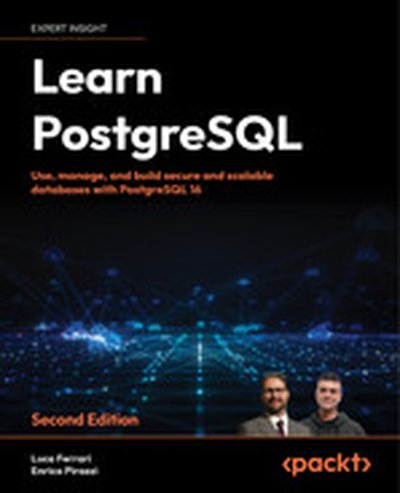
Learn PostgreSQL - Second Edition

Learn PostgreSQL, a comprehensive guide to mastering PostgreSQL 16, takes readers on a journey from the fundamentals to advanced concepts, such as replication and database optimization. With hands-on exercises and practical examples, this book provides all you need to confidently use, manage, and build secure and scalable databases. What this Book will help me do Master the essentials of PostgreSQL 16, including advanced SQL features and performance tuning. Understand database replication methods and manage a scalable architecture. Enhance database security through roles, schemas, and strict privilege management. Learn how to personalize your experience with custom extensions and functions. Acquire practical skills in backup, restoration, and disaster recovery planning. Author(s) Luca Ferrari and Enrico Pirozzi are experienced database engineers and PostgreSQL enthusiasts with years of experience using and teaching PostgreSQL technology. They specialize in creating learning content that is practical and focused on real-world situations. Their writing emphasizes clarity and systematically equips readers with professional skills. Who is it for? This book is perfect for database professionals, software developers, and system administrators looking to develop their PostgreSQL expertise. Beginners with an interest in databases will also find this book highly approachable. Ideal for readers seeking to improve their database scalability and robustness. If you aim to hone practical PostgreSQL skills, this guide is essential.

Summary

Databases are the core of most applications, whether transactional or analytical. In recent years the selection of database products has exploded, making the critical decision of which engine(s) to use even more difficult. In this episode Tanya Bragin shares her experiences as a product manager for two major vendors and the lessons that she has learned about how teams should approach the process of tool selection.

Announcements

Hello and welcome to the Data Engineering Podcast, the show about modern data management Introducing RudderStack Profiles. RudderStack Profiles takes the SaaS guesswork and SQL grunt work out of building complete customer profiles so you can quickly ship actionable, enriched data to every downstream team. You specify the customer traits, then Profiles runs the joins and computations for you to create complete customer profiles. Get all of the details and try the new product today at dataengineeringpodcast.com/rudderstack You shouldn't have to throw away the database to build with fast-changing data. You should be able to keep the familiarity of SQL and the proven architecture of cloud warehouses, but swap the decades-old batch computation model for an efficient incremental engine to get complex queries that are always up-to-date. With Materialize, you can! It’s the only true SQL streaming database built from the ground up to meet the needs of modern data products. Whether it’s real-time dashboarding and analytics, personalization and segmentation or automation and alerting, Materialize gives you the ability to work with fresh, correct, and scalable results — all in a familiar SQL interface. Go to dataengineeringpodcast.com/materialize today to get 2 weeks free! This episode is brought to you by Datafold – a testing automation platform for data engineers that finds data quality issues before the code and data are deployed to production. Datafold leverages data-diffing to compare production and development environments and column-level lineage to show you the exact impact of every code change on data, metrics, and BI tools, keeping your team productive and stakeholders happy. Datafold integrates with dbt, the modern data stack, and seamlessly plugs in your data CI for team-wide and automated testing. If you are migrating to a modern data stack, Datafold can also help you automate data and code validation to speed up the migration. Learn more about Datafold by visiting dataengineeringpodcast.com/datafold Data projects are notoriously complex. With multiple stakeholders to manage across varying backgrounds and toolchains even simple reports can become unwieldy to maintain. Miro is your single pane of glass where everyone can discover, track, and collaborate on your organization's data. I especially like the ability to combine your technical diagrams with data documentation and dependency mapping, allowing your data engineers and data consumers to communicate seamlessly about your projects. Find simplicity in your most complex projects with Miro. Your first three Miro boards are free when you sign up today at dataengineeringpodcast.com/miro. That’s three free boards at dataengineeringpodcast.com/miro. Your host is Tobias Macey and today I'm interviewing Tanya Bragin about her views on the database products market

Interview

Introduction How did you get involved in the area of data management? What are the aspects of the database market that keep you interested as a VP of product?

How have your experiences at Elastic informed your current work at Clickhouse?

What are the main product categories for databases today?

What are the industry trends that have the most impact on the development and growth of different product categories? Which categories do you see growing the fastest?

When a team is selecting a database technology for a given task, what are the types of questions that they should be asking? Transactional engines like Postgres, SQL Server, Oracle, etc. were long used

Demystifying Data Vault with dbt - Coalesce 2023

In this session, Alex Higgs unveils the potential of Data Vault 2.0, an often overlooked but powerful data warehousing method. Discover how it offers scalability, agility, and flexibility to your data solutions.

Key Highlights: - Explore the origins and essence of Data Vault 2.0 - Learn how Data Vault 2.0 streamlines big data solutions for scalability. - See how it integrates with dbt via AutomateDV for faster time to value. - Understand how AutomateDV simplifies Data Vault 2.0 data warehouses, freeing data teams from intricate SQL.

Speaker: Alex Higgs, Senior Consultant Data Engineer, Datavault

Register for Coalesce at https://coalesce.getdbt.com

Driving scalability at Carsales: The democratization of our data platform - Coalesce 2023

Two years ago, the data team at Carsales embarked on a journey to modernize their data platform, transforming their approach to analytics, reporting, and data-driven decision making. Navigating through an ever-evolving data landscape, Carsales has prioritized tools and methodologies that boost operational efficiency. This talk delves into their strategic transition towards a decentralized data platform, emphasizing the design to elevate scalability, reliability, and accessibility by embracing best-in-class software engineering practices. By enabling the application of SQL-based infrastructure, they've ensured that even individuals with minimal data engineering background can extract valuable insights while upholding system reliability.

Speaker: Adam Carbone, Data Engineering Lead, Carsales

Register for Coalesce at https://coalesce.getdbt.com