talk-data.com talk-data.com

Topic

SQL

Structured Query Language (SQL)

database_language data_manipulation data_definition programming_language

1751

tagged

Activity Trend

107 peak/qtr
2020-Q1 2026-Q1

Activities

1751 activities · Newest first

A complete beginner's guide to Snowpark in dbt - Coalesce 2023

Now that you can write models in Python, a new world of possibility has opened up. In this session, Christopher Marland introduces you to Snowpark and how it integrates with dbt, before demonstrating a real-world use case where Python transformations outperform SQL, starting from raw data and moving through to a completed analysis.

This talk is ideal for people who are familiar with PySpark but new to dbt, or who are experienced dbt users and curious about taking advantage of their new Pythonic superpowers from inside of a familiar development environment.

Speaker: Christopher Marland, Snowflake Solutions Architect, Aimpoint Digital

Register for Coalesce at https://coalesce.getdbt.com

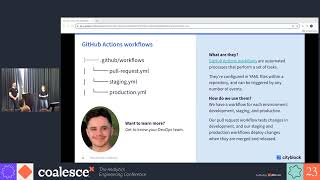
One to many: Moving from a monolithic dbt project to multi-project collaboration - Coalesce 2023

At the beginning of this year, Cityblock Health was afforded a unique opportunity: to rebuild their existing dbt project from scratch.

Launched in mid-2019, the legacy project had grown organically into a tangled mess of 1800+ models, with further development becoming more and more difficult.

Faced with the challenge of retroactively imposing order on the existing project, their leadership gave them the opportunity to start fresh instead.

They jumped at the chance, and began applying many of the lessons they learned at Coalesce 2022 to set the new project up for success: - SQL linting, with SQLFluff - YAML linting, with yamllint - dbt best practices, with dbt-checkpoint and dbt-project-evaluator

As a result, this core project has become the model for multi-project collaboration at Cityblock. Rather than a single monolithic project, the new state features a collection of smaller projects, each governed by a high bar for code quality.

Speakers: Katie Claiborne, Staff analytics engineer, Cityblock Health; Nathaniel Burren, Analytics Engineer, Cityblock Health

Register for Coalesce at https://coalesce.getdbt.com

Summary

The primary application of data has moved beyond analytics. With the broader audience comes the need to present data in a more approachable format. This has led to the broad adoption of data products being the delivery mechanism for information. In this episode Ranjith Raghunath shares his thoughts on how to build a strategy for the development, delivery, and evolution of data products.

Announcements

Hello and welcome to the Data Engineering Podcast, the show about modern data management Introducing RudderStack Profiles. RudderStack Profiles takes the SaaS guesswork and SQL grunt work out of building complete customer profiles so you can quickly ship actionable, enriched data to every downstream team. You specify the customer traits, then Profiles runs the joins and computations for you to create complete customer profiles. Get all of the details and try the new product today at dataengineeringpodcast.com/rudderstack You shouldn't have to throw away the database to build with fast-changing data. You should be able to keep the familiarity of SQL and the proven architecture of cloud warehouses, but swap the decades-old batch computation model for an efficient incremental engine to get complex queries that are always up-to-date. With Materialize, you can! It’s the only true SQL streaming database built from the ground up to meet the needs of modern data products. Whether it’s real-time dashboarding and analytics, personalization and segmentation or automation and alerting, Materialize gives you the ability to work with fresh, correct, and scalable results — all in a familiar SQL interface. Go to dataengineeringpodcast.com/materialize today to get 2 weeks free! As more people start using AI for projects, two things are clear: It’s a rapidly advancing field, but it’s tough to navigate. How can you get the best results for your use case? Instead of being subjected to a bunch of buzzword bingo, hear directly from pioneers in the developer and data science space on how they use graph tech to build AI-powered apps. . Attend the dev and ML talks at NODES 2023, a free online conference on October 26 featuring some of the brightest minds in tech. Check out the agenda and register today at Neo4j.com/NODES. This episode is brought to you by Datafold – a testing automation platform for data engineers that finds data quality issues before the code and data are deployed to production. Datafold leverages data-diffing to compare production and development environments and column-level lineage to show you the exact impact of every code change on data, metrics, and BI tools, keeping your team productive and stakeholders happy. Datafold integrates with dbt, the modern data stack, and seamlessly plugs in your data CI for team-wide and automated testing. If you are migrating to a modern data stack, Datafold can also help you automate data and code validation to speed up the migration. Learn more about Datafold by visiting dataengineeringpodcast.com/datafold Your host is Tobias Macey and today I'm interviewing Ranjith Raghunath about tactical elements of a data product strategy

Interview

Introduction How did you get involved in the area of data management? Can you describe what is encompassed by the idea of a data product strategy?

Which roles in an organization need to be involved in the planning and implementation of that strategy?

order of operations:

strategy -> platform design -> implementation/adoption platform implementation -> product strategy -> interface development

managing grain of data in products team organization to support product development/deployment customer communications - what questions to ask? requirements gathering, helping to understand "the art of the possible" What are the most interesting, innovative, or unexpected ways that you have seen organizations approach data product strategies? What are the most interesting, unexpected, or challenging lessons that you have learned while working on

Summary

Building streaming applications has gotten substantially easier over the past several years. Despite this, it is still operationally challenging to deploy and maintain your own stream processing infrastructure. Decodable was built with a mission of eliminating all of the painful aspects of developing and deploying stream processing systems for engineering teams. In this episode Eric Sammer discusses why more companies are including real-time capabilities in their products and the ways that Decodable makes it faster and easier.

Announcements

Hello and welcome to the Data Engineering Podcast, the show about modern data management Introducing RudderStack Profiles. RudderStack Profiles takes the SaaS guesswork and SQL grunt work out of building complete customer profiles so you can quickly ship actionable, enriched data to every downstream team. You specify the customer traits, then Profiles runs the joins and computations for you to create complete customer profiles. Get all of the details and try the new product today at dataengineeringpodcast.com/rudderstack This episode is brought to you by Datafold – a testing automation platform for data engineers that finds data quality issues before the code and data are deployed to production. Datafold leverages data-diffing to compare production and development environments and column-level lineage to show you the exact impact of every code change on data, metrics, and BI tools, keeping your team productive and stakeholders happy. Datafold integrates with dbt, the modern data stack, and seamlessly plugs in your data CI for team-wide and automated testing. If you are migrating to a modern data stack, Datafold can also help you automate data and code validation to speed up the migration. Learn more about Datafold by visiting dataengineeringpodcast.com/datafold You shouldn't have to throw away the database to build with fast-changing data. You should be able to keep the familiarity of SQL and the proven architecture of cloud warehouses, but swap the decades-old batch computation model for an efficient incremental engine to get complex queries that are always up-to-date. With Materialize, you can! It’s the only true SQL streaming database built from the ground up to meet the needs of modern data products. Whether it’s real-time dashboarding and analytics, personalization and segmentation or automation and alerting, Materialize gives you the ability to work with fresh, correct, and scalable results — all in a familiar SQL interface. Go to dataengineeringpodcast.com/materialize today to get 2 weeks free! As more people start using AI for projects, two things are clear: It’s a rapidly advancing field, but it’s tough to navigate. How can you get the best results for your use case? Instead of being subjected to a bunch of buzzword bingo, hear directly from pioneers in the developer and data science space on how they use graph tech to build AI-powered apps. . Attend the dev and ML talks at NODES 2023, a free online conference on October 26 featuring some of the brightest minds in tech. Check out the agenda and register today at Neo4j.com/NODES. Your host is Tobias Macey and today I'm interviewing Eric Sammer about starting your stream processing journey with Decodable

Interview

Introduction How did you get involved in the area of data management? Can you describe what Decodable is and the story behind it?

What are the notable changes to the Decodable platform since we last spoke? (October 2021) What are the industry shifts that have influenced the product direction?

What are the problems that customers are trying to solve when they come to Decodable? When you launched your focus was on SQL transformations of streaming data. What was the process for adding full Java support in addition to SQL? What are the developer experience challenges that are particular to working with streaming data?

How have you worked to address that in the Decodable platform and interfaces?

As you evolve the technical and product direction, what is your heuristic for balancing the unification of interfaces and system integration against the ability to swap different components or interfaces as new technologies are introduced? What are the most interesting, innovative, or unexpected ways that you have seen Decodable used? What are the most interesting, unexpected, or challenging lessons that you have learned while working on Decodable? When is Decodable the wrong choice? What do you have planned for the future of Decodable?

Contact Info

esammer on GitHub LinkedIn

Parting Question

From your perspective, what is the biggest gap in the tooling or technology for data management today?

Closing Announcements

Thank you for listening! Don't forget to check out our other shows. Podcast.init covers the Python language, its community, and the innovative ways it is being used. The Machine Learning Podcast helps you go from idea to production with machine learning. Visit the site to subscribe to the show, sign up for the mailing list, and read the show notes. If you've learned something or tried out a project from the show then tell us about it! Email [email protected]) with your story. To help other people find the show please leave a review on Apple Podcasts and tell your friends and co-workers

Links

Decodable

Podcast Episode

Understanding the Apache Flink Journey Flink

Podcast Episode

Debezium

Podcast Episode

Kafka Redpanda

Podcast Episode

Kinesis PostgreSQL

Podcast Episode

Snowflake

Podcast Episode

Databricks Startree Pinot

Podcast Episode

Rockset

Podcast Episode

Druid InfluxDB Samza Storm Pulsar

Podcast Episode

ksqlDB

Podcast Episode

dbt GitHub Actions Airbyte Singer Splunk Outbox Pattern

The intro and outro music is from The Hug by The Freak Fandango Orchestra / CC BY-SA Sponsored By: Neo4J: NODES Conference Logo
NODES 2023 is a free online conference focused on graph-driven innovations with content for all skill levels. Its 24 hours are packed with 90 interactive technical sessions from top developers and data scientists across the world covering a broad range of topics and use cases. The event tracks: - Intelligent Applications: APIs, Libraries, and Frameworks – Tools and best practices for creating graph-powered applications and APIs with any software stack and programming language, including Java, Python, and JavaScript - Machine Learning and AI – How graph technology provides context for your data and enhances the accuracy of your AI and ML projects (e.g.: graph neural networks, responsible AI) - Visualization: Tools, Techniques, and Best Practices – Techniques and tools for exploring hidden and unknown patterns in your data and presenting complex relationships (knowledge graphs, ethical data practices, and data representation)

Don’t miss your chance to hear about the latest graph-powered implementations and best practices for free on October 26 at NODES 2023. Go to Neo4j.com/NODES today to see the full agenda and register!Rudderstack: Rudderstack

Introducing RudderStack Profiles. RudderStack Profiles takes the SaaS guesswork and SQL grunt work out of building complete customer profiles so you can quickly ship actionable, enriched data to every downstream team. You specify the customer traits, then Profiles runs the joins and computations for you to create complete customer profiles. Get all of the details and try the new product today at dataengineeringpodcast.com/rudderstackMaterialize: Materialize
You shouldn't have to throw away the database to build with fast-changing data. Keep the familiar SQL, keep the proven architecture of cloud warehouses, but swap the decades-old batch computation model for an efficient incremental engine to get complex queries that are always up-to-date.

That is Materialize, the only true SQL streaming database built from the ground up to meet the needs of modern data products: Fresh, Correct, Scalable — all in a familiar SQL UI. Built on Timely Dataflow and Differential Dataflow, open source frameworks created by cofounder Frank McSherry at Microsoft Research, Materialize is trusted by data and engineering teams at Ramp, Pluralsight, Onward and more to build real-time data products without the cost, complexity, and development time of stream processing.

Go to materialize.com today and get 2 weeks free!Datafold: Datafold

This episode is brought to you by Datafold – a testing automation platform for data engineers that finds data quality issues before the code and data are deployed to production. Datafold leverages data-diffing to compare…

Bob Muglia joins the show to talk about why we need to move beyond SQL, semantic models, the power of knowledge graphs, the past, present, and future of databases, and much more.

Bob has a storied history in the data space, having significant involvement with Microsoft Office, SQL Server, Snowflake (former CEO), and much more. It's rare to meet someone with such a deep involvement in the creation of our industry, and this was a fascinating conversation.

Also, check out Bob's book, "The Datapreneurs." One of the best books about the data industry I've read in ages.

LinkedIn: https://www.linkedin.com/in/bob-muglia/

X: https://twitter.com/Bob_Muglia

Book: https://www.amazon.com/Datapreneurs-Promise-Creators-Building-Future-ebook/dp/B0BZQFJ5RP

Summary

The insurance industry is notoriously opaque and hard to navigate. Max Cho found that fact frustrating enough that he decided to build a business of making policy selection more navigable. In this episode he shares his journey of data collection and analysis and the challenges of automating an intentionally manual industry.

Announcements

Hello and welcome to the Data Engineering Podcast, the show about modern data management Introducing RudderStack Profiles. RudderStack Profiles takes the SaaS guesswork and SQL grunt work out of building complete customer profiles so you can quickly ship actionable, enriched data to every downstream team. You specify the customer traits, then Profiles runs the joins and computations for you to create complete customer profiles. Get all of the details and try the new product today at dataengineeringpodcast.com/rudderstack This episode is brought to you by Datafold – a testing automation platform for data engineers that finds data quality issues before the code and data are deployed to production. Datafold leverages data-diffing to compare production and development environments and column-level lineage to show you the exact impact of every code change on data, metrics, and BI tools, keeping your team productive and stakeholders happy. Datafold integrates with dbt, the modern data stack, and seamlessly plugs in your data CI for team-wide and automated testing. If you are migrating to a modern data stack, Datafold can also help you automate data and code validation to speed up the migration. Learn more about Datafold by visiting dataengineeringpodcast.com/datafold As more people start using AI for projects, two things are clear: It’s a rapidly advancing field, but it’s tough to navigate. How can you get the best results for your use case? Instead of being subjected to a bunch of buzzword bingo, hear directly from pioneers in the developer and data science space on how they use graph tech to build AI-powered apps. . Attend the dev and ML talks at NODES 2023, a free online conference on October 26 featuring some of the brightest minds in tech. Check out the agenda and register today at Neo4j.com/NODES. You shouldn't have to throw away the database to build with fast-changing data. You should be able to keep the familiarity of SQL and the proven architecture of cloud warehouses, but swap the decades-old batch computation model for an efficient incremental engine to get complex queries that are always up-to-date. With Materialize, you can! It’s the only true SQL streaming database built from the ground up to meet the needs of modern data products. Whether it’s real-time dashboarding and analytics, personalization and segmentation or automation and alerting, Materialize gives you the ability to work with fresh, correct, and scalable results — all in a familiar SQL interface. Go to dataengineeringpodcast.com/materialize today to get 2 weeks free! Your host is Tobias Macey and today I'm interviewing Max Cho about the wild world of insurance companies and the challenges of collecting quality data for this opaque industry

Interview

Introduction How did you get involved in the area of data management? Can you describe what CoverageCat is and the story behind it? What are the different sources of data that you work with?

What are the most challenging aspects of collecting that data? Can you describe the formats and characteristics (3 Vs) of that data?

What are some of the ways that the operational model of insurance companies have contributed to its opacity as an industry from a data perspective? Can you describe how you have architected your data platform?

How have the design and goals changed since you first started working on it? What are you optimizing for in your selection and implementation process?

What are the sharp edges/weak points that you worry about in your existing data flows?

How do you guard against those flaws in your day-to-day operations?

What are the

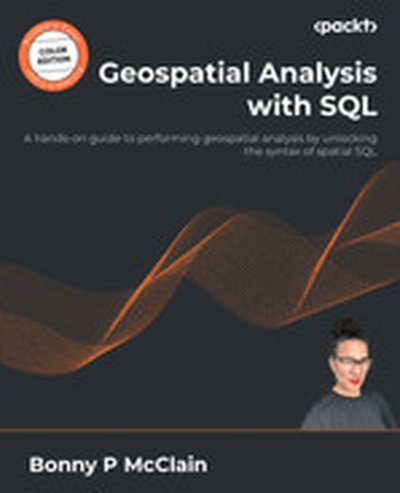
Geospatial Analysis with SQL

"Geospatial Analysis with SQL" is a practical guide that teaches you how to use SQL for geospatial data analysis. With direct, actionable guidance, you will learn to explore and analyze data using geospatial techniques without needing additional programming. This book equips you with the knowledge to solve location-based queries and perform advanced geospatial operations. What this Book will help me do Master the fundamentals of geospatial analysis and learn the importance of location-based data. Develop skills in creating and manipulating spatial database objects in SQL. Gain proficiency in using tools such as PostGIS and QGIS for geospatial data analysis. Learn techniques to visualize spatial data effectively and communicate results. Perform both single-layer and multi-layer spatial analysis for complex real-world scenarios. Author(s) Bonny P. McClain, the author of "Geospatial Analysis with SQL", brings extensive experience as a spatial data analyst and GIS expert. Bonny specializes in helping practitioners make data-driven insights through geospatial techniques. With a passion for teaching, Bonny's goal is to make complex concepts accessible and practical for analysts and developers alike. Who is it for? This book is ideal for GIS analysts, data analysts, and data scientists who have a basic understanding of SQL and geospatial concepts and want to expand their analytical capabilities. Readers looking to perform professional-grade geospatial analysis using SQL will find this book especially valuable. It caters to professionals wishing to use their SQL skills to understand and work with spatial datasets effectively.

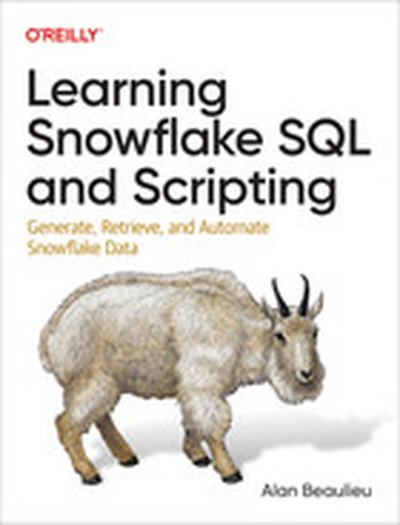
Learning Snowflake SQL and Scripting

To help you on the path to becoming a Snowflake pro, this concise yet comprehensive guide reviews fundamentals and best practices for Snowflake's SQL and Scripting languages. Developers and data professionals will learn how to generate, modify, and query data in the Snowflake relational database management system as well as how to apply analytic functions for reporting. Author Alan Beaulieu also shows you how to create scripts, stored functions, and stored procedures to return data sets using Snowflake Scripting. This book is ideal whether you're new to databases and need to run queries or reports against a Snowflake database, or transitioning from databases such as Oracle, SQL Server, or MySQL to cloud-based platforms. With this book, you will: Generate and modify Snowflake data using INSERT, UPDATE, DELETE Query data in Snowflake using SELECT, including joining multiple tables, using subqueries, and grouping Apply analytic functions for performing subtotals, grand totals, row comparisons, and other reporting functionality Build scripts combining SQL statements with looping, if-then-else, and exception handling Learn how to build stored procedures and functions Use stored procedures to return data sets

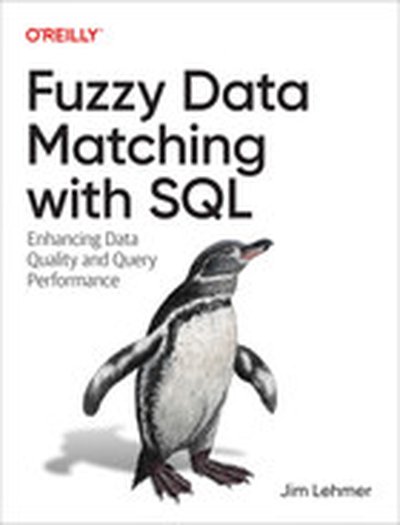
Fuzzy Data Matching with SQL

If you were handed two different but related sets of data, what tools would you use to find the matches? What if all you had was SQL SELECT access to a database? In this practical book, author Jim Lehmer provides best practices, techniques, and tricks to help you import, clean, match, score, and think about heterogeneous data using SQL. DBAs, programmers, business analysts, and data scientists will learn how to identify and remove duplicates, parse strings, extract data from XML and JSON, generate SQL using SQL, regularize data and prepare datasets, and apply data quality and ETL approaches for finding the similarities and differences between various expressions of the same data. Full of real-world techniques, the examples in the book contain working code. You'll learn how to: Identity and remove duplicates in two different datasets using SQL Regularize data and achieve data quality using SQL Extract data from XML and JSON Generate SQL using SQL to increase your productivity Prepare datasets for import, merging, and better analysis using SQL Report results using SQL Apply data quality and ETL approaches to finding similarities and differences between various expressions of the same data

Summary

Artificial intelligence applications require substantial high quality data, which is provided through ETL pipelines. Now that AI has reached the level of sophistication seen in the various generative models it is being used to build new ETL workflows. In this episode Jay Mishra shares his experiences and insights building ETL pipelines with the help of generative AI.

Announcements

Hello and welcome to the Data Engineering Podcast, the show about modern data management Introducing RudderStack Profiles. RudderStack Profiles takes the SaaS guesswork and SQL grunt work out of building complete customer profiles so you can quickly ship actionable, enriched data to every downstream team. You specify the customer traits, then Profiles runs the joins and computations for you to create complete customer profiles. Get all of the details and try the new product today at dataengineeringpodcast.com/rudderstack This episode is brought to you by Datafold – a testing automation platform for data engineers that finds data quality issues before the code and data are deployed to production. Datafold leverages data-diffing to compare production and development environments and column-level lineage to show you the exact impact of every code change on data, metrics, and BI tools, keeping your team productive and stakeholders happy. Datafold integrates with dbt, the modern data stack, and seamlessly plugs in your data CI for team-wide and automated testing. If you are migrating to a modern data stack, Datafold can also help you automate data and code validation to speed up the migration. Learn more about Datafold by visiting dataengineeringpodcast.com/datafold You shouldn't have to throw away the database to build with fast-changing data. You should be able to keep the familiarity of SQL and the proven architecture of cloud warehouses, but swap the decades-old batch computation model for an efficient incremental engine to get complex queries that are always up-to-date. With Materialize, you can! It’s the only true SQL streaming database built from the ground up to meet the needs of modern data products. Whether it’s real-time dashboarding and analytics, personalization and segmentation or automation and alerting, Materialize gives you the ability to work with fresh, correct, and scalable results — all in a familiar SQL interface. Go to dataengineeringpodcast.com/materialize today to get 2 weeks free! As more people start using AI for projects, two things are clear: It’s a rapidly advancing field, but it’s tough to navigate. How can you get the best results for your use case? Instead of being subjected to a bunch of buzzword bingo, hear directly from pioneers in the developer and data science space on how they use graph tech to build AI-powered apps. . Attend the dev and ML talks at NODES 2023, a free online conference on October 26 featuring some of the brightest minds in tech. Check out the agenda and register at Neo4j.com/NODES. Your host is Tobias Macey and today I'm interviewing Jay Mishra about the applications for generative AI in the ETL process

Interview

Introduction How did you get involved in the area of data management? What are the different aspects/types of ETL that you are seeing generative AI applied to?

What kind of impact are you seeing in terms of time spent/quality of output/etc.?

What kinds of projects are most likely to benefit from the application of generative AI? Can you describe what a typical workflow of using AI to build ETL workflows looks like?

What are some of the types of errors that you are likely to experience from the AI? Once the pipeline is defined, what does the ongoing maintenance look like? Is the AI required to operate within the pipeline in perpetuity?

For individuals/teams/organizations who are experimenting with AI in their data engineering workflows, what are the concerns/questions that they are trying to address? What are the most interesting, innovative, or unexpected w

Summary

The rapid growth of machine learning, especially large language models, have led to a commensurate growth in the need to store and compare vectors. In this episode Louis Brandy discusses the applications for vector search capabilities both in and outside of AI, as well as the challenges of maintaining real-time indexes of vector data.

Announcements

Hello and welcome to the Data Engineering Podcast, the show about modern data management Introducing RudderStack Profiles. RudderStack Profiles takes the SaaS guesswork and SQL grunt work out of building complete customer profiles so you can quickly ship actionable, enriched data to every downstream team. You specify the customer traits, then Profiles runs the joins and computations for you to create complete customer profiles. Get all of the details and try the new product today at dataengineeringpodcast.com/rudderstack This episode is brought to you by Datafold – a testing automation platform for data engineers that finds data quality issues before the code and data are deployed to production. Datafold leverages data-diffing to compare production and development environments and column-level lineage to show you the exact impact of every code change on data, metrics, and BI tools, keeping your team productive and stakeholders happy. Datafold integrates with dbt, the modern data stack, and seamlessly plugs in your data CI for team-wide and automated testing. If you are migrating to a modern data stack, Datafold can also help you automate data and code validation to speed up the migration. Learn more about Datafold by visiting dataengineeringpodcast.com/datafold You shouldn't have to throw away the database to build with fast-changing data. You should be able to keep the familiarity of SQL and the proven architecture of cloud warehouses, but swap the decades-old batch computation model for an efficient incremental engine to get complex queries that are always up-to-date. With Materialize, you can! It’s the only true SQL streaming database built from the ground up to meet the needs of modern data products. Whether it’s real-time dashboarding and analytics, personalization and segmentation or automation and alerting, Materialize gives you the ability to work with fresh, correct, and scalable results — all in a familiar SQL interface. Go to dataengineeringpodcast.com/materialize today to get 2 weeks free! If you’re a data person, you probably have to jump between different tools to run queries, build visualizations, write Python, and send around a lot of spreadsheets and CSV files. Hex brings everything together. Its powerful notebook UI lets you analyze data in SQL, Python, or no-code, in any combination, and work together with live multiplayer and version control. And now, Hex’s magical AI tools can generate queries and code, create visualizations, and even kickstart a whole analysis for you – all from natural language prompts. It’s like having an analytics co-pilot built right into where you’re already doing your work. Then, when you’re ready to share, you can use Hex’s drag-and-drop app builder to configure beautiful reports or dashboards that anyone can use. Join the hundreds of data teams like Notion, AllTrails, Loom, Mixpanel and Algolia using Hex every day to make their work more impactful. Sign up today at dataengineeringpodcast.com/hex to get a 30-day free trial of the Hex Team plan! Your host is Tobias Macey and today I'm interviewing Louis Brandy about building vector indexes in real-time for analytics and AI applications

Interview

Introduction How did you get involved in the area of data management? Can you describe what vector search is and how it differs from other search technologies?

What are the technical challenges related to providing vector search? What are the applications for vector search that merit the added complexity?

Vector databases have been gaining a lot of attention recently with the proliferation of LLM applicati

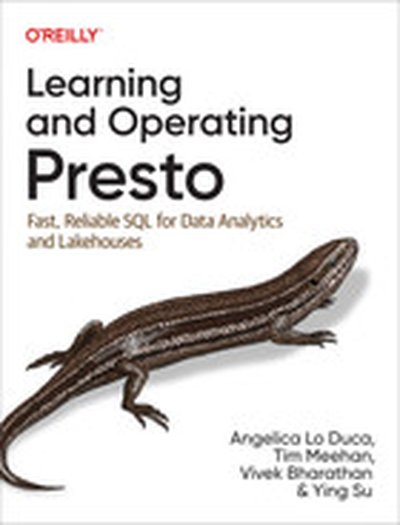
Learning and Operating Presto

The Presto community has mushroomed since its origins at Facebook in 2012. But ramping up this open source distributed SQL query engine can be challenging even for the most experienced engineers. With this practical book, data engineers and architects, platform engineers, cloud engineers, and software engineers will learn how to use Presto operations at your organization to derive insights on datasets wherever they reside. Authors Angelica Lo Duca, Tim Meehan, Vivek Bharathan, and Ying Su explain what Presto is, where it came from, and how it differs from other data warehousing solutions. You'll discover why Facebook, Uber, Alibaba Cloud, Hewlett Packard Enterprise, IBM, Intel, and many more use Presto and how you can quickly deploy Presto in production. With this book, you will: Learn how to install and configure Presto Use Presto with business intelligence tools Understand how to connect Presto to a variety of data sources Extend Presto for real-time business insight Learn how to apply best practices and tuning Get troubleshooting tips for logs, error messages, and more Explore Presto's architectural concepts and usage patterns Understand Presto security and administration

Summary

A significant amount of time in data engineering is dedicated to building connections and semantic meaning around pieces of information. Linked data technologies provide a means of tightly coupling metadata with raw information. In this episode Brian Platz explains how JSON-LD can be used as a shared representation of linked data for building semantic data products.

Announcements

Hello and welcome to the Data Engineering Podcast, the show about modern data management This episode is brought to you by Datafold – a testing automation platform for data engineers that finds data quality issues before the code and data are deployed to production. Datafold leverages data-diffing to compare production and development environments and column-level lineage to show you the exact impact of every code change on data, metrics, and BI tools, keeping your team productive and stakeholders happy. Datafold integrates with dbt, the modern data stack, and seamlessly plugs in your data CI for team-wide and automated testing. If you are migrating to a modern data stack, Datafold can also help you automate data and code validation to speed up the migration. Learn more about Datafold by visiting dataengineeringpodcast.com/datafold Introducing RudderStack Profiles. RudderStack Profiles takes the SaaS guesswork and SQL grunt work out of building complete customer profiles so you can quickly ship actionable, enriched data to every downstream team. You specify the customer traits, then Profiles runs the joins and computations for you to create complete customer profiles. Get all of the details and try the new product today at dataengineeringpodcast.com/rudderstack You shouldn't have to throw away the database to build with fast-changing data. You should be able to keep the familiarity of SQL and the proven architecture of cloud warehouses, but swap the decades-old batch computation model for an efficient incremental engine to get complex queries that are always up-to-date. With Materialize, you can! It’s the only true SQL streaming database built from the ground up to meet the needs of modern data products. Whether it’s real-time dashboarding and analytics, personalization and segmentation or automation and alerting, Materialize gives you the ability to work with fresh, correct, and scalable results — all in a familiar SQL interface. Go to dataengineeringpodcast.com/materialize today to get 2 weeks free! If you’re a data person, you probably have to jump between different tools to run queries, build visualizations, write Python, and send around a lot of spreadsheets and CSV files. Hex brings everything together. Its powerful notebook UI lets you analyze data in SQL, Python, or no-code, in any combination, and work together with live multiplayer and version control. And now, Hex’s magical AI tools can generate queries and code, create visualizations, and even kickstart a whole analysis for you – all from natural language prompts. It’s like having an analytics co-pilot built right into where you’re already doing your work. Then, when you’re ready to share, you can use Hex’s drag-and-drop app builder to configure beautiful reports or dashboards that anyone can use. Join the hundreds of data teams like Notion, AllTrails, Loom, Mixpanel and Algolia using Hex every day to make their work more impactful. Sign up today at dataengineeringpodcast.com/hex to get a 30-day free trial of the Hex Team plan! Your host is Tobias Macey and today I'm interviewing Brian Platz about using JSON-LD for building linked-data products

Interview

Introduction How did you get involved in the area of data management? Can you describe what the term "linked data product" means and some examples of when you might build one?

What is the overlap between knowledge graphs and "linked data products"?

What is JSON-LD?

What are the domains in which it is typically used? How does it assist in developing linked data products?

what are the characterist

What skills should you learn when studying to be a Data Analyst?

Join me with data legend Luke Barousse to discuss where you should focus your time.

Is it Python? Is it SQL? Is it Excel? Is it Power BI?

Listen to find out 👀

Connect with Luke Barousse:

🤝 Connect on Linkedin

▶️ Subscribe on Youtube

📊 Datanerd.tech

📩 Get my weekly email with helpful data career tips

📊 Come to my next free “How to Land Your First Data Job” training

🏫 Check out my 10-week data analytics bootcamp

Timestamps:

(03:42) - Analyzing 1.2M data jobs (DataNerd.tech)

(06:21) - The most important data skills

(12:13) - More senior skills

(22:52) - Data job titles

Connect with Avery:

📺 Subscribe on YouTube

🎙Listen to My Podcast

👔 Connect with me on LinkedIn

📸 Instagram

🎵 TikTok

Mentioned in this episode: Join the last cohort of 2025! The LAST cohort of The Data Analytics Accelerator for 2025 kicks off on Monday, December 8th and enrollment is officially open!

To celebrate the end of the year, we’re running a special End-of-Year Sale, where you’ll get: ✅ A discount on your enrollment 🎁 6 bonus gifts, including job listings, interview prep, AI tools + more

If your goal is to land a data job in 2026, this is your chance to get ahead of the competition and start strong.

👉 Join the December Cohort & Claim Your Bonuses: https://DataCareerJumpstart.com/daa https://www.datacareerjumpstart.com/daa

Summary

Data systems are inherently complex and often require integration of multiple technologies. Orchestrators are centralized utilities that control the execution and sequencing of interdependent operations. This offers a single location for managing visibility and error handling so that data platform engineers can manage complexity. In this episode Nick Schrock, creator of Dagster, shares his perspective on the state of data orchestration technology and its application to help inform its implementation in your environment.

Announcements

Hello and welcome to the Data Engineering Podcast, the show about modern data management Introducing RudderStack Profiles. RudderStack Profiles takes the SaaS guesswork and SQL grunt work out of building complete customer profiles so you can quickly ship actionable, enriched data to every downstream team. You specify the customer traits, then Profiles runs the joins and computations for you to create complete customer profiles. Get all of the details and try the new product today at dataengineeringpodcast.com/rudderstack This episode is brought to you by Datafold – a testing automation platform for data engineers that finds data quality issues before the code and data are deployed to production. Datafold leverages data-diffing to compare production and development environments and column-level lineage to show you the exact impact of every code change on data, metrics, and BI tools, keeping your team productive and stakeholders happy. Datafold integrates with dbt, the modern data stack, and seamlessly plugs in your data CI for team-wide and automated testing. If you are migrating to a modern data stack, Datafold can also help you automate data and code validation to speed up the migration. Learn more about Datafold by visiting dataengineeringpodcast.com/datafold You shouldn't have to throw away the database to build with fast-changing data. You should be able to keep the familiarity of SQL and the proven architecture of cloud warehouses, but swap the decades-old batch computation model for an efficient incremental engine to get complex queries that are always up-to-date. With Materialize, you can! It’s the only true SQL streaming database built from the ground up to meet the needs of modern data products. Whether it’s real-time dashboarding and analytics, personalization and segmentation or automation and alerting, Materialize gives you the ability to work with fresh, correct, and scalable results — all in a familiar SQL interface. Go to dataengineeringpodcast.com/materialize today to get 2 weeks free! Your host is Tobias Macey and today I'm welcoming back Nick Schrock to talk about the state of the ecosystem for data orchestration

Interview

Introduction How did you get involved in the area of data management? Can you start by defining what data orchestration is and how it differs from other types of orchestration systems? (e.g. container orchestration, generalized workflow orchestration, etc.) What are the misconceptions about the applications of/need for/cost to implement data orchestration?

How do those challenges of customer education change across roles/personas?

Because of the multi-faceted nature of data in an organization, how does that influence the capabilities and interfaces that are needed in an orchestration engine? You have been working on Dagster for five years now. How have the requirements/adoption/application for orchestrators changed in that time? One of the challenges for any orchestration engine is to balance the need for robust and extensible core capabilities with a rich suite of integrations to the broader data ecosystem. What are the factors that you have seen make the most influence in driving adoption of a given engine? What are the most interesting, innovative, or unexpected ways that you have seen data orchestration implemented and/or used? What are the most interesting, unexpected, or challenging lessons that you have learned while working o

Join me with data interview expert Nick Singh to discuss how to ace your data science and analytics interviews, from preparation tips to tackling SQL technical questions, in this must-listen episode of the Data Career Podcast—you won't want to miss it!

Connect with Nick Singh:

🎁 Free SQL Tutorial from Data Lemur: https://datalemur.com/sql-tutorial

🤝 Connect on Linkedin

📕 Buy "Ace the Data Science Interview" book

🐵DataLemur

👔 Get a discount on my data interview prep course: https://www.datacareerjumpstart.com//interview

📩 Get my weekly email with helpful data career tips

📊 Come to my next free “How to Land Your First Data Job” training

🏫 Check out my 10-week data analytics bootcamp

Timestamps:

(16:10) - 📊 Best interview tips

(36:30) - 🔄 Mock interview practice

Connect with Avery:

📺 Subscribe on YouTube

🎙Listen to My Podcast

👔 Connect with me on LinkedIn

📸 Instagram

🎵 TikTok

Mentioned in this episode: Join the last cohort of 2025! The LAST cohort of The Data Analytics Accelerator for 2025 kicks off on Monday, December 8th and enrollment is officially open!

To celebrate the end of the year, we’re running a special End-of-Year Sale, where you’ll get: ✅ A discount on your enrollment 🎁 6 bonus gifts, including job listings, interview prep, AI tools + more

If your goal is to land a data job in 2026, this is your chance to get ahead of the competition and start strong.

👉 Join the December Cohort & Claim Your Bonuses: https://DataCareerJumpstart.com/daa https://www.datacareerjumpstart.com/daa

Summary

Cloud data warehouses and the introduction of the ELT paradigm has led to the creation of multiple options for flexible data integration, with a roughly equal distribution of commercial and open source options. The challenge is that most of those options are complex to operate and exist in their own silo. The dlt project was created to eliminate overhead and bring data integration into your full control as a library component of your overall data system. In this episode Adrian Brudaru explains how it works, the benefits that it provides over other data integration solutions, and how you can start building pipelines today.

Announcements

Hello and welcome to the Data Engineering Podcast, the show about modern data management Introducing RudderStack Profiles. RudderStack Profiles takes the SaaS guesswork and SQL grunt work out of building complete customer profiles so you can quickly ship actionable, enriched data to every downstream team. You specify the customer traits, then Profiles runs the joins and computations for you to create complete customer profiles. Get all of the details and try the new product today at dataengineeringpodcast.com/rudderstack You shouldn't have to throw away the database to build with fast-changing data. You should be able to keep the familiarity of SQL and the proven architecture of cloud warehouses, but swap the decades-old batch computation model for an efficient incremental engine to get complex queries that are always up-to-date. With Materialize, you can! It’s the only true SQL streaming database built from the ground up to meet the needs of modern data products. Whether it’s real-time dashboarding and analytics, personalization and segmentation or automation and alerting, Materialize gives you the ability to work with fresh, correct, and scalable results — all in a familiar SQL interface. Go to dataengineeringpodcast.com/materialize today to get 2 weeks free! This episode is brought to you by Datafold – a testing automation platform for data engineers that finds data quality issues before the code and data are deployed to production. Datafold leverages data-diffing to compare production and development environments and column-level lineage to show you the exact impact of every code change on data, metrics, and BI tools, keeping your team productive and stakeholders happy. Datafold integrates with dbt, the modern data stack, and seamlessly plugs in your data CI for team-wide and automated testing. If you are migrating to a modern data stack, Datafold can also help you automate data and code validation to speed up the migration. Learn more about Datafold by visiting dataengineeringpodcast.com/datafold Your host is Tobias Macey and today I'm interviewing Adrian Brudaru about dlt, an open source python library for data loading

Interview

Introduction How did you get involved in the area of data management? Can you describe what dlt is and the story behind it?

What is the problem you want to solve with dlt? Who is the target audience?

The obvious comparison is with systems like Singer/Meltano/Airbyte in the open source space, or Fivetran/Matillion/etc. in the commercial space. What are the complexities or limitations of those tools that leave an opening for dlt? Can you describe how dlt is implemented? What are the benefits of building it in Python? How have the design and goals of the project changed since you first started working on it? How does that language choice influence the performance and scaling characteristics? What problems do users solve with dlt? What are the interfaces available for extending/customizing/integrating with dlt? Can you talk through the process of adding a new source/destination? What is the workflow for someone building a pipeline with dlt? How does the experience scale when supporting multiple connections? Given the limited scope of extract and load, and the composable design of dlt it seems like a purpose built companion to dbt (down to th

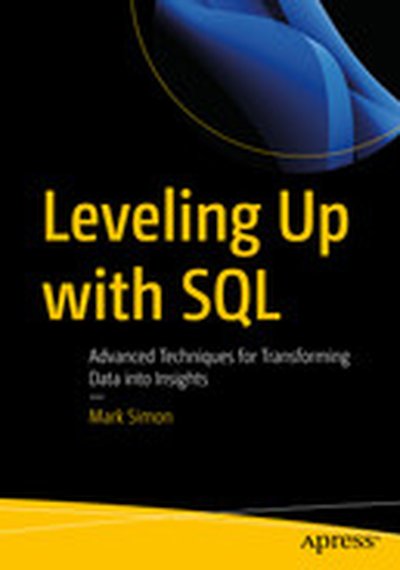
Leveling Up with SQL: Advanced Techniques for Transforming Data into Insights

Learn to write SQL queries to select and analyze data, and improve your ability to manipulate data. This book will help you take your existing skills to the next level. Author Mark Simon kicks things off with a quick review of basic SQL knowledge, followed by a demonstration of how efficient SQL databases are designed and how to extract just the right data from them. You’ll then learn about each individual table’s structure and how to work with the relationships between tables. As you progress through the book, you will learn more sophisticated techniques such as using common table expressions and subqueries, analyzing your data using aggregate and windowing functions, and how to save queries in the form of views and other methods. This book employs an accessible approach to work through a realistic sample, enabling you to learn concepts as they arise to improve parts of the database or to work with the data itself. After completing this book, you will have a more thorough understanding of database structure and how to use advanced techniques to extract, manage, and analyze data. What Will You Learn Gain a stronger understanding of database design principles, especially individual tables Understand the relationships between tables Utilize techniques such as views, subqueries, common table expressions, and windowing functions Who Is This Book For: SQL Databases users who want to improve their knowledge and techniques.

Business Intelligence Career Master Plan

Embark on your business intelligence career with 'Business Intelligence Career Master Plan'. This book provides you with a clear roadmap, actionable insights, and expert advice to help you navigate the challenges of building a successful career in BI. You'll learn everything from identifying your starting point in BI to developing critical skills in data analysis, visualization, and management. What this Book will help me do Understand various business intelligence roles and their responsibilities to find your ideal BI career path. Develop expertise in using tools like Power BI and databases like AdventureWorks to handle and analyze data effectively. Master the art of creating informative and compelling data visualizations to tell impactful data stories. Gain the technical skills needed for programming and system development to excel in the BI field. Learn how to automate and optimize BI workflows to enhance productivity and efficiency. Author(s) The authors, None Chavez and None Moncada, excel in mentoring aspiring business intelligence professionals. With vast experience in BI systems and project management, they aim to make technical concepts accessible and fascinating. Their hands-on guidance empowers readers to build essential skills and thrive in the BI field. Who is it for? This book is ideal for aspiring business intelligence developers and data analysts eager to advance their careers. If you're passionate about data and enjoy solving complex problems, this resource will equip you with the knowledge and tools to succeed. Starting with a foundational understanding of common tools like Excel and SQL is recommended to get the most out of this book.

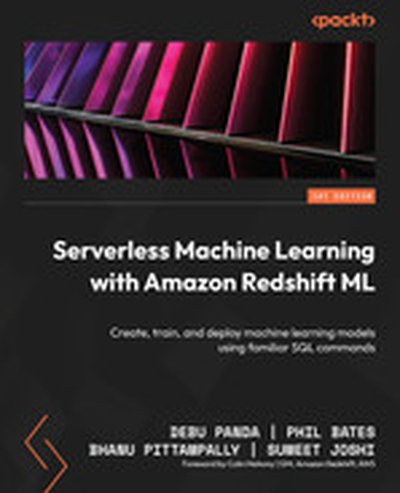
Serverless Machine Learning with Amazon Redshift ML

Serverless Machine Learning with Amazon Redshift ML provides a hands-on guide to using Amazon Redshift Serverless and Redshift ML for building and deploying machine learning models. Through SQL-focused examples and practical walkthroughs, you will learn efficient techniques for cloud data analytics and serverless machine learning. What this Book will help me do Grasp the workflow of building machine learning models with Redshift ML using SQL. Learn to handle supervised learning tasks like classification and regression. Apply unsupervised learning techniques, such as K-means clustering, in Redshift ML. Develop time-series forecasting models within Amazon Redshift. Understand how to operationalize machine learning in serverless cloud architecture. Author(s) Debu Panda, Phil Bates, Bhanu Pittampally, and Sumeet Joshi are seasoned professionals in cloud computing and machine learning technologies. They combine deep technical knowledge with teaching expertise to guide learners through mastering Amazon Redshift ML. Their collaborative approach ensures that the content is accessible, engaging, and practically applicable. Who is it for? This book is perfect for data scientists, machine learning engineers, and database administrators using or intending to use Amazon Redshift. It's tailored for professionals with basic knowledge of machine learning and SQL who aim to enhance their efficiency and specialize in serverless machine learning within cloud architectures.