talk-data.com talk-data.com

Topic

SQL

Structured Query Language (SQL)

database_language data_manipulation data_definition programming_language

1751

tagged

Activity Trend

107 peak/qtr
2020-Q1 2026-Q1

Activities

1751 activities · Newest first

Foundations of SQL Server 2008 R2 Business Intelligence, Second Edition

Foundations of SQL Server 2008 R2 Business Intelligence introduces the exciting gamut of business intelligence tools included with SQL Server 2008. Microsoft has designed SQL Server 2008 to be more than just a database. It's a complete business intelligence (BI) platform. The database is at the core, and surrounding the database are tools for data mining, modeling, reporting, analyzing, charting, and integration with other, enterprise-level software packages. SQL Server 2008 puts an incredible amount of BI functionality at your disposal. But how do you take advantage of it? That's what this book is all about. Authors Guy Fouché and Lynn Langit show how to implement end-to-end BI solutions using SQL Server Analysis Services (SSAS), SQL Server Integration Services (SSIS), SQL Server Reporting Services (SSRS), and other tools in the Microsoft BI toolkit. You'll learn about all-new features such as PowerPivot and Report Builder 3.0. Also provided are clear examples of predictive analysis made possible through powerful data mining features in SQL Server. If you're an analyst or developer working with SQL Server 2008 who is charged with delivering results that drive business success, you can't afford to be without this book; you can't afford to ignore the powerful BI suite that Microsoft has placed at your disposal. Provides the "big picture" of Microsoft's BI tool suite Covers PowerPivot and other game-changing technologies introduced alongside SQL Server 2008 Release 2 Gives a practical analysis of features based on real-world practices What you'll learn Apply dimensional- and fact-based modeling to create OLAP schemas Optimize data extraction and transformation with SQL Server Integration Services Develop OLAP and data-mining solutions using SQL Server Analysis Services Create compelling reports using the new Report Builder 3.0 in SQL Server Reporting Services Deliver self-service business-intelligence via Microsoft PowerPivot Manage and maintain control over your business intelligence environment Who this book is for Foundations of SQL Server 2008 R2 Business Intelligence is for business intelligence analysts and developers wanting to employ the full stack of business intelligence tools that are part of SQL Server. The book also appeals to database administrators managing databases in support of business intelligence efforts.
Beginning Oracle Application Express 4

Beginning Oracle Application Express 4 introduces one of the most talked about development platforms to come out of Oracle Corporation in years. Oracle Application Express, called APEX for short, enables rapid and easy development of web-based applications that make full use of Oracle Database. The release of APEX 4 brings a huge leap forward in terms of functionality and usability for both the developer and the end user. Power users and programmers alike can quickly put together robust and scalable applications for use by one person, by a department, by an entire company. Whether you're new to Oracle or an old hand who's yet to test the waters of APEX, Beginning Oracle Application Express 4 introduces the processes and best practices you'll need to become proficient with APEX. The book shows off the programming environment, the utilities and tools available, and then continues by walking through the process of building a working system from the ground up. While the book assumes a foundational knowledge of SQL and PL/SQL, all code used is documented and explained so that those new to the languages will not be lost. Covers brand-new functionality in APEX 4 Provides fully documented and explained example code Guides you through creating a working and fully deployable application What you'll learn Provides fully documented and explained example code Guides you through creating a working and fully deployable application Design, code, and troubleshoot APEX applications Create forms and generate reports Apply best-practices to database and application design Create intuitive navigation that inspires confidence amongst users Secure your applications from outside attack Deploy applications for one, a dozen, or hundreds of users Who this book is for Beginning Oracle Application Express 4 is for programmers and power users wanting to create rich, data-centric applications that are web-based, and that rest on Oracle's industry-leading database technology.

Microsoft SQL Server 2008 R2 Master Data Services

Best Practices for Deploying and Managing Master Data Services (MDS) Effectively manage master data and drive better decision making across your enterprise with detailed instruction from two MDS experts. Microsoft SQL Server 2008 R2 Master Data Services Implementation & Administration shows you how to use MDS to centralize the management of key data within your organization. Find out how to build an MDS model, establish hierarchies, govern data access, and enforce business rules. Legacy system integration and security are also covered. Real-world programming examples illustrate the material presented in this comprehensive guide. Create a process-agnostic solution for managing your business domains Learn how to take advantage of the data modeling capabilities of MDS Manage hierarchies and consolidations across your organization Import data by using SQL Server Integration Services and T-SQL statements Ensure data accuracy and completeness by using business rules and versioning Employ role-based security at functional, object, and attribute levels Design export views and publish data to subscribing systems Use Web services to progrmmatically interact with your implementation

The Microsoft® Data Warehouse Toolkit: With SQL Server 2008 R2 and the Microsoft® Business Intelligence Toolset, Second Edition

Best practices and invaluable advice from world-renowned data warehouse experts In this book, leading data warehouse experts from the Kimball Group share best practices for using the upcoming "Business Intelligence release" of SQL Server, referred to as SQL Server 2008 R2. In this new edition, the authors explain how SQL Server 2008 R2 provides a collection of powerful new tools that extend the power of its BI toolset to Excel and SharePoint users and they show how to use SQL Server to build a successful data warehouse that supports the business intelligence requirements that are common to most organizations. Covering the complete suite of data warehousing and BI tools that are part of SQL Server 2008 R2, as well as Microsoft Office, the authors walk you through a full project lifecycle, including design, development, deployment and maintenance. Features more than 50 percent new and revised material that covers the rich new feature set of the SQL Server 2008 R2 release, as well as the Office 2010 release Includes brand new content that focuses on PowerPivot for Excel and SharePoint, Master Data Services, and discusses updated capabilities of SQL Server Analysis, Integration, and Reporting Services Shares detailed case examples that clearly illustrate how to best apply the techniques described in the book The accompanying Web site contains all code samples as well as the sample database used throughout the case studies The Microsoft Data Warehouse Toolkit, Second Edition provides you with the knowledge of how and when to use BI tools such as Analysis Services and Integration Services to accomplish your most essential data warehousing tasks.

Database Modeling and Design, 5th Edition

Database Modeling and Design, Fifth Edition, focuses on techniques for database design in relational database systems. This extensively revised fifth edition features clear explanations, lots of terrific examples and an illustrative case, and practical advice, with design rules that are applicable to any SQL-based system. The common examples are based on real-life experiences and have been thoroughly class-tested. This book is immediately useful to anyone tasked with the creation of data models for the integration of large-scale enterprise data. It is ideal for a stand-alone data management course focused on logical database design, or a supplement to an introductory text for introductory database management. In-depth detail and plenty of real-world, practical examples throughout Loaded with design rules and illustrative case studies that are applicable to any SQL, UML, or XML-based system Immediately useful to anyone tasked with the creation of data models for the integration of large-scale enterprise data

Automated Physical Database Design and Tuning

Due to the increasing complexity in application workloads and query engines, database administrators are turning to automated tuning tools that systematically explore the space of physical design alternatives. A critical element of such tuning is physical database design since the choice of physical structures has a significant impact on the performance of the database system. Automated Physical Database Design and Tuning presents a detailed overview of the fundamental ideas and algorithms for automatically recommending changes to the physical design of a database system. The first part of the book introduces the necessary technical background. The author explains SQL, the space of execution plans for answering SQL queries, query optimization, how the choice of access paths (e.g., indexes) is crucial to performance, and the complexity of the physical design problem. The second part extensively discusses automated physical design techniques, covering fundamental research ideas in the last 15 years that have resulted in a new generation of tuning tools. The text focuses on the search space of alternatives, the necessity of a cost model to compare such alternatives, different mechanisms to traverse and enumerate the search space, and practical aspects in real-world tuning tools. In the third part, the author explores new advances in automated physical design. He applies previous approaches to other physical structures, such as materialized views, partitioning, and multidimensional clustering. He also analyzes workload models for new types of applications, generalizes the optimizing function of current physical design tools to cope with other application scenarios, and examines open-ended challenges in physical database design. This book offers valuable insights on well-established principles and cutting-edge research results in automated physical design. It helps readers gain a deeper understanding of how automated tuning tools work in database installations as well as the challenges and opportunities involved in designing next-generation tuning tools.

Securing SQL Server

Securing SQL Server: Protecting Your Database from Attackers provides readers with the necessary tools and techniques to help maintain the security of databases within their environment. It begins with a discussion of network security issues, including public versus private IP addresses; accessing an SQL server from home; physical security; and testing network security. The remaining chapters cover database encryption; SQL password security; SQL injection attacks; database backup security; security auditing; and server rights. The Appendix features checklists that database administrators can use to pass external audits. Named a 2011 Systems Administration Book by InfoSec Reviews Author Denny Cherry is an MVP by Microsoft for his expertise in the SQL Server product Learn expert techniques to protect your SQL database environment Discover how to identify what an intruder accessed or damaged

Oracle and PL/SQL Recipes: A Problem-Solution Approach

Oracle PL/SQL Recipes is your go to book for PL/SQL programming solutions. It takes a task-oriented approach to PL/SQL programming that lets you quickly look up a specific task and see the pattern for a solution. Then it's as simple as modifying the pattern for your specific application and implementing it. And you're done and home for dinner. Oracle PL/SQL Recipes is another in Apress' ongoing series of recipe books aimed at Oracle practitioners. The recipe format is ideal for the busy professional who just needs to get the job done. Covers the most common PL/SQL programming problems Presents solutions in ready-to-use format Stays short and to-the-point What you'll learn Move business logic into the database Implement robust exception-handling Optimize and debug, taking advantage of Oracle SQL Developer Integrate PL/SQL with web-based applications Interface with Java code and dynamic languages in the database, and running externally Run the UTPLSQL unit-testing framework Who this book is for Oracle PL/SQL Recipes is database administrators and developers wanting to take advantage of Oracle Database's built-in support for procedural logic. Database administrators can use PL/SQL to automate administrative tasks, audit access to sensitive data, and more. Developers will be able to optimize processing, push business logic into the database layer, and interface with Java and web applications.

Pro Oracle SQL

Pro Oracle SQL unlocks the power of SQL in the Oracle Database—one of the most potent SQL implementations on the market today. To master it requires a three-pronged approach: learn the language features, learn the supporting features that Oracle provides to help use the language effectively, and learn to think and work in sets. Karen Morton and her team help you master powerful aspects of Oracle SQL not found in competing databases. You'll learn analytic functions, the MODEL clause, and advanced grouping syntax—techniques that will help in creating good queries for reporting and business intelligence applications. Pro Oracle SQL also helps you minimize parsing overhead, read execution plans, test for correct results, and exert control over SQL execution in your database. You'll learn when to create indexes, how to verify that they make a difference, how to use SQL Profiles to optimize SQL in packaged applications, and much more. You'll also understand how SQL is optimized for working in sets, and that the key to getting accurate results lies in making sure that queries ask clear and precise questions. What's the bottom-line? Pro Oracle SQL helps you work at a truly professional level in Oracle dialect of SQL. You'll master the language, the tools to work effectively with the language, and the right way to think about a problem in SQL. Pro Oracle SQL helps you rise above the crowd to provide stellar service in your chosen profession. Endorsed by the OakTable Network, a group of Oracle technologists well-known for their rigorous and scientific approach to Oracle Database performance Comprehensive - goes beyond the language with a focus on what you need to know to write successful queries and data manipulation statements.

SQL Pocket Guide, 3rd Edition

If you're a programmer or database administrator who uses SQL in your day-to-day work, this popular pocket guide is the ideal on-the-job reference. You'll find many examples that address the language's complexity, along with key aspects of SQL used in IBM DB2 Release 9.7, MySQL 5.1, Oracle Database 11g Release 2, PostgreSQL 9.0, and Microsoft SQL Server 2008 Release 2. SQL Pocket Guide describes how these database systems implement SQL syntax for querying, managing transactions, and making changes to data. It also shows how the systems use SQL functions, regular expression syntax, and type conversion functions and formats. All example SQL statements in this book execute against a set of tables, with data that you can quickly download. The third edition covers important database changes, including: Oracle's support of the recursive WITH syntax, and addition of PIVOT and UNPIVOT operators Functions new to Oracle, such as LISTAGG, NTH_VALUE, and more PostgreSQL’s support of recursive WITH and some window functions DB2 syntax and datatypes, some compatible with Oracle MySQL features such as the TIMESTAMP type and the TO_SECONDS function

Joe Celko's SQL for Smarties, 4th Edition

Joe Celkos SQL for Smarties: Advanced SQL Programming offers tips and techniques in advanced programming. This book is the fourth edition and it consists of 39 chapters, starting with a comparison between databases and file systems. It covers transactions and currency control, schema level objects, locating data and schema numbers, base tables, and auxiliary tables. Furthermore, procedural, semi-procedural, and declarative programming are explored in this book. The book also presents the different normal forms in database normalization, including the first, second, third, fourth, fifth, elementary key, domain-key, and Boyce-Codd normal forms. It also offers practical hints for normalization and denormalization. The book discusses different data types, such as the numeric, temporal and character data types; the different predicates; and the simple and advanced SELECT statements. In addition, the book presents virtual tables, and it discusses data partitions in queries; grouping operations; simple aggregate functions; and descriptive statistics, matrices and graphs in SQL. The book concludes with a discussion about optimizing SQL. It will be of great value to SQL programmers. Expert advice from a noted SQL authority and award-winning columnist who has given ten years service to the ANSI SQL standards committee Teaches scores of advanced techniques that can be used with any product, in any SQL environment, whether it is an SQL 92 or SQL 2008 environment Offers tips for working around deficiencies and gives insight into real-world challenges

Green Deen

Muslims are compelled by their religion to praise the Creator and to care for their community. But what is not widely known is that there are deep and long-standing connections between Islamic teachings and environmentalism. In this groundbreaking book, Ibrahim Abdul-Matin draws on research, scripture, and interviews with Muslim Americans to trace Islam's preoccupation with humankind's collective role as stewards of the Earth. Abdul-Matin points out that the Prophet Muhammad declared that “the Earth is a mosque.” Deen means “path” or “way” in Arabic. Abdul-Matin offers dozens of examples of how Muslims can follow, and already are following, a Green Deen in four areas: “waste, watts (energy), water, and food.” At last, people of all beliefs can appreciate the gifts and contributions that Islam and Muslims bring to the environmental movement.

Pro SQL Azure

SQL Azure represents Microsoft's cloud-based delivery of its enterprise-caliber, SQL Server database management system (formerly under the code name "Oslo"). Pro SQL Azure introduces you to this new platform, showing you how to program and administer it in a variety of cloud computing scenarios. You'll learn to program SQL Azure from Silverlight, ASP.NET, WinForms, and from SQL Reporting Services. You'll also understand how to manage the platform by planning for scalability, troubleshooting performance issues, and implementing strong security. Shows how to use SQL Azure from Silverlight, ASP.NET, and more Covers management, scalability, and troubleshooting Addresses the all-important issue of securing your data

Practical Guide to using SQL in Oracle

Structured Query Language has become the standard for generating, manipulating, and retrieving database information. The dramatic increase in the popularity of relational databases, coupled with Oracle’s having the largest market share, has created a demand for programmers who can write SQL code correctly and efficiently.

This book provides a systematic approach to learning SQL in Oracle. Each chapter is written in a step-by-step manner and includes examples that can be run using Oracle. Using the sample tables and data provided, readers will be able to perform the examples to gain hands-on experience with Oracle programming.

Gain an understanding of basic SQL principles. Learn to generate, store, and edit SQL queries in Oracle. Develop joins, subqueries, and correlated subqueries. Work with XML and Oracle databases. Test your SQL knowledge with the exercises at the end of each chapter!

Oracle Database Administration for Microsoft SQL Server DBAs

Apply Your SQL Server DBA Skills to Oracle Database Administration Use your SQL Server experience to set up and maintain a high-performance Oracle Database environment. Written by a DBA with expertise in both platforms, Oracle Database Administration for Microsoft SQL Server DBAs illustrates each technique with clear explanations, examples, and comparison tables. Get full details on Oracle Database intervals, creation assistants, management techniques, and query tools. High availability, disaster recovery, and security procedures are also extensively covered in this comprehensive Oracle Press guide. Install and configure Oracle Database on Windows or Linux systems Administer and monitor databases from Oracle Enterprise Manager Implement robust security using roles, permissions, and privileges Back up and restore databases with Oracle Recovery Manager Use the Oracle cost-based optimizer to tune performance Write, debug, and execute PL/SQL queries using Oracle SQL Developer Maximize availability with Oracle Real Application Clusters Build standby and failover servers using Oracle Data Guard

Knight's Microsoft® Business Intelligence 24-Hour Trainer: Leveraging Microsoft SQL Server® Integration, Analysis, and Reporting Services with Excel® and SharePoint®

A book-and-video introduction to Microsoft's Business Intelligence tools If you are just starting to get a handle on Microsoft Business Intelligence (BI) tools, this book and accompanying video provides you with the just the right amount of information to perform basic business analysis and reporting. You'll explore the components and related tools that comprise the Microsoft BI toolset as well as the new BI features of Office 2010. After a basic primer on BI and data modeling, the expert team of authors provides you with step-by-step lessons in the book and videos on the accompanying Video on how to use SQL Server Integration Services, SQL Server Analysis Services, SQL Server Reporting Services, Excel BI (including PowerPivot), and SharePoint. Integrates instructional videos with each of the lessons found in the book to enhance your learning experience Explores the Microsoft Business Intelligence (BI) toolset as well as the new BI features of Office 2010 Encourages you to practice what you've learned in "Try It Out" sections Contains video demonstrations that walk you through how to tackle each lesson featured in the book With Knight's Microsoft Business Intelligence 24-Hour Trainer, veteran authors present you with an ideal introductory book-and-video package so that you can get started working with the BI toolset immediately!

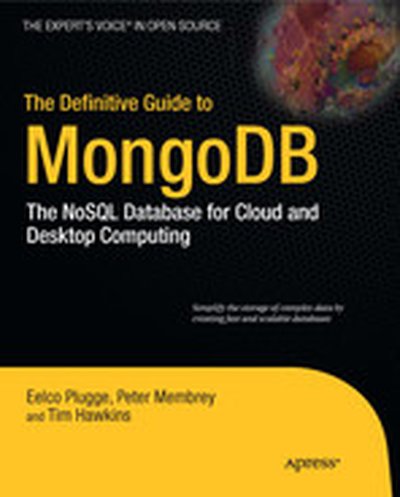
The Definitive Guide to MongoDB: The NoSQL Database for Cloud and Desktop Computing

MongoDB, a cross-platform NoSQL database, is the fastest-growing new database in the world. MongoDB provides a rich document orientated structure with dynamic queries that you'll recognize from RDMBS offerings such as MySQL. In other words, this is a book about a NoSQL database that does not require the SQL crowd to re-learn how the database world works! MongoDB has reached 1.0 and already boasts 50,000+ users. The community is strong and vibrant and MongoDB is improving at a fast rate. With scalable and fast databases becoming critical for today's applications, this book shows you how to install, administer and program MongoDB without pretending SQL never existed.

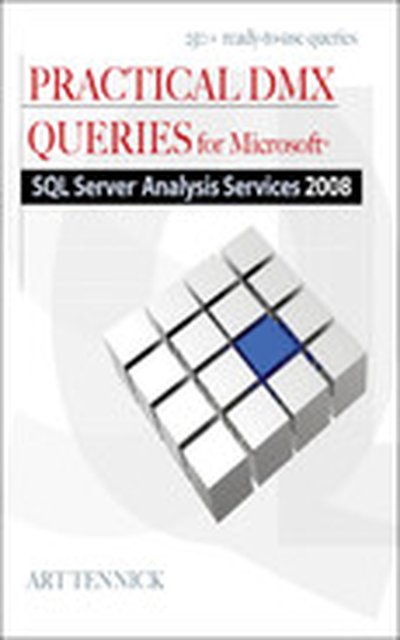
Practical DMX Queries for Microsoft SQL Server Analysis Services 2008

250+ Ready-to-Use, Powerful DMX Queries Transform data mining model information into actionable business intelligence using the Data Mining Extensions (DMX) language. Practical DMX Queries for Microsoft SQL Server Analysis Services 2008 contains more than 250 downloadable DMX queries you can use to extract and visualize data. The application, syntax, and results of each query are described in detail. The book emphasizes DMX for use in SSMS against SSAS, but the queries also apply to SSRS, SSIS, DMX in SQL, WinForms, WebForms, and many other applications. Techniques for generating DMX syntax from graphical tools are also demonstrated in this valuable resource. View cases within data mining structures and models using DMX Case queries Examine the content of a data mining model with DMX Content queries Perform DMX Prediction queries based on the Decision Trees algorithm and the Time Series algorithm Run Prediction and Cluster queries based on the Clustering algorithm Execute Prediction queries with Association and Sequence Clustering algorithms Use DMX DDL queries to create, alter, drop, back up, and restore data mining objects Display various parameters for each algorithm with Schema queries Examine the values of discrete, discretized, and continuous structure columns using Column queries Use graphical interfaces to generate Prediction, Content, Cluster, and DDL queries Deliver DMX query results to end users Download the source code from www.mhprofessional.com/computingdownload

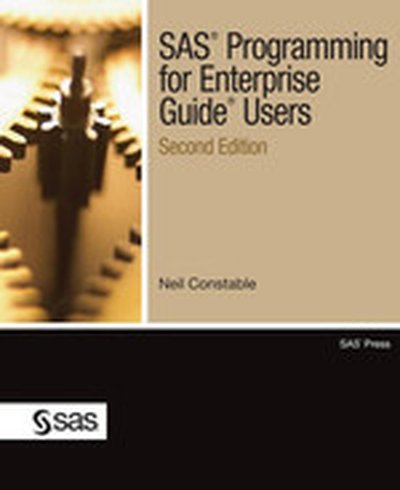
SAS Programming for Enterprise Guide Users, Second Edition

New and updated for SAS Enterprise Guide 4.2!

In this pragmatic, example-driven book, author Neil Constable demonstrates how you can use SAS code to enhance the capabilities of SAS Enterprise Guide. Designed to help you gain extra value from the products you already have, SAS Programming for Enterprise Guide Users contains tips and techniques that show you a variety of features that cannot be accessed directly through the task interfaces. In all cases, techniques are shown with examples that you can try and test, plus additional exercises are included to give you more practice. The end result is more efficient and resilient use of SAS Enterprise Guide in a wider variety of business areas.

Included is a discussion of the following subject areas: the Output Delivery System, advanced formatting, macro variables and macros, advanced reporting using PROC REPORT, highlighting in reports, hyperlinking between reports and graphs, data manipulation using SQL, data manipulation using the DATA step, extended graphics.

By adding small amounts of code in key areas, SAS Enterprise Guide users can get more out of the product than the tasks reveal. Users should be familiar with the SAS Enterprise Guide user interface and tasks. No programming experience is necessary.

This book is part of the SAS Press program.

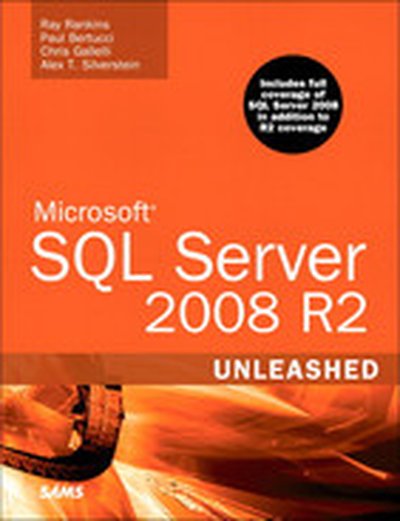
Microsoft® SQL Server 2008 R2 Unleashed

This is the industry’s most comprehensive and useful guide to SQL Server 2008 and 2008 R2. It presents start-to-finish coverage of SQL Server’s core database server and management capabilities, plus complete introductions to Integration, Reporting, and Analysis Services, application development, and much more. Four expert SQL Server administrators, developers, and consultants have packed this book with real-world information, tips, guidelines, and samples drawn from their own extensive experience creating and managing complex database solutions. Writing for intermediate-to-advanced-level SQL Server professionals, they focus on the product’s most complex and powerful capabilities, and its newest tools and features. For example, you’ll find invaluable information on administering SQL Server more efficiently, analyzing and optimizing queries, implementing data warehouses, ensuring high availability, and tuning performance. The accompanying CD-ROM contains an extraordinary library of practical tools and information including sample databases and all code examples. Whether you’re responsible for SQL Server 2008 analysis, design, implementation, support, administration, or troubleshooting, no other book offers you this much value. Understand the Microsoft SQL Server 2008 environment, R2’s newest features, and each edition’s capabilities Manage SQL Server 2008 more effectively with SQL Server Management Studio, the SQLCMD command-line query tool, and Powershell Efficiently manage security, users, backup/restore, replication, Database Mail, and database objects—from tables and indexes to stored procedures and triggers Increase availability with clustering, database mirroring, and other features Use new Policy-Based Management to centrally configure and operate SQL Server throughout the organization Use SQL Server Profiler to capture queries and identify bottlenecks Improve performance by optimizing queries, design more effective databases, and manage workloads with the new Resource Governor Develop applications using SQL Server 2008’s enhancements to T-SQL and SQLCLR, .NET integration, LINQ to SQL, XML, and XQuery Make the most of Analysis Services, Integration Services, and Reporting Services—especially Microsoft’s new R2 reporting improvements Improve data security using Column-level and Transparent Data Encryption CD-ROM includes: 15 additional chapters Code samples, scripts, and databases utilized within the book Free version of SQL Shot (performance & tuning software)