talk-data.com talk-data.com

Topic

AWS

Amazon Web Services (AWS)

cloud cloud provider infrastructure services

837

tagged

Activity Trend

190 peak/qtr
2020-Q1 2026-Q1

Activities

837 activities · Newest first

Summary The "data lakehouse" architecture balances the scalability and flexibility of data lakes with the ease of use and transaction support of data warehouses. Dremio is one of the companies leading the development of products and services that support the open lakehouse. In this episode Jason Hughes explains what it means for a lakehouse to be "open" and describes the different components that the Dremio team build and contribute to.

Announcements

Hello and welcome to the Data Engineering Podcast, the show about modern data management When you’re ready to build your next pipeline, or want to test out the projects you hear about on the show, you’ll need somewhere to deploy it, so check out our friends at Linode. With their new managed database service you can launch a production ready MySQL, Postgres, or MongoDB cluster in minutes, with automated backups, 40 Gbps connections from your application hosts, and high throughput SSDs. Go to dataengineeringpodcast.com/linode today and get a $100 credit to launch a database, create a Kubernetes cluster, or take advantage of all of their other services. And don’t forget to thank them for their continued support of this show! You wake up to a Slack message from your CEO, who’s upset because the company’s revenue dashboard is broken. You’re told to fix it before this morning’s board meeting, which is just minutes away. Enter Metaplane, the industry’s only self-serve data observability tool. In just a few clicks, you identify the issue’s root cause, conduct an impact analysis⁠—and save the day. Data leaders at Imperfect Foods, Drift, and Vendr love Metaplane because it helps them catch, investigate, and fix data quality issues before their stakeholders ever notice they exist. Setup takes 30 minutes. You can literally get up and running with Metaplane by the end of this podcast. Sign up for a free-forever plan at dataengineeringpodcast.com/metaplane, or try out their most advanced features with a 14-day free trial. Mention the podcast to get a free "In Data We Trust World Tour" t-shirt. RudderStack helps you build a customer data platform on your warehouse or data lake. Instead of trapping data in a black box, they enable you to easily collect customer data from the entire stack and build an identity graph on your warehouse, giving you full visibility and control. Their SDKs make event streaming from any app or website easy, and their state-of-the-art reverse ETL pipelines enable you to send enriched data to any cloud tool. Sign up free… or just get the free t-shirt for being a listener of the Data Engineering Podcast at dataengineeringpodcast.com/rudder. Data teams are increasingly under pressure to deliver. According to a recent survey by Ascend.io, 95% in fact reported being at or over capacity. With 72% of data experts reporting demands on their team going up faster than they can hire, it’s no surprise they are increasingly turning to automation. In fact, while only 3.5% report having current investments in automation, 85% of data teams plan on investing in automation in the next 12 months. 85%!!! That’s where our friends at Ascend.io come in. The Ascend Data Automation Cloud provides a unified platform for data ingestion, transformation, orchestration, and observability. Ascend users love its declarative pipelines, powerful SDK, elegant UI, and extensible plug-in architecture, as well as its support for Python, SQL, Scala, and Java. Ascend automates workloads on Snowflake, Databricks, BigQuery, and open source Spark, and can be deployed in AWS, Azure, or GCP. Go to dataengineeringpodcast.com/ascend and sign up for a free trial. If you’re a data engineering podcast listener, you get credits worth $5,000 when you become a customer. Your host is Tobias Macey and today I’m interviewing Jason Hughes about the work that Dremio is doing to support the open lakehouse

Interview

Introduction How did you get involved in the area of data management? Can you d
In today’s episode, we’re talking to Andy Serwatuk, Director of Solutions Architecture at Onix Networking Corp., a  Google Cloud Premier Partner enabling companies to effectively leverage the Google Cloud Platform across industries and use cases.

We discuss:

Andy’s background and how he started at Onix.The differences between SaaS and non-SaaS companies.Is Google Cloud a no-brainer for SaaS companies today?The value of outsourcing tasks to citizens.How can SaaS companies learn more about IoT and other emerging trends? …and much more.

This episode is brought to you by Qrvey

The tools you need to take action with your data, on a platform built for maximum scalability, security, and cost efficiencies. If you’re ready to reduce complexity and dramatically lower costs, contact us today at qrvey.com.

Qrvey, the modern no-code analytics solution for SaaS companies on AWS.

saas  #analytics #AWS  #BI

Summary For any business that wants to stay in operation, the most important thing they can do is understand their customers. American Express has invested substantial time and effort in their Customer 360 product to achieve that understanding. In this episode Purvi Shah, the VP of Enterprise Big Data Platforms at American Express, explains how they have invested in the cloud to power this visibility and the complex suite of integrations they have built and maintained across legacy and modern systems to make it possible.

Announcements

Hello and welcome to the Data Engineering Podcast, the show about modern data management When you’re ready to build your next pipeline, or want to test out the projects you hear about on the show, you’ll need somewhere to deploy it, so check out our friends at Linode. With their new managed database service you can launch a production ready MySQL, Postgres, or MongoDB cluster in minutes, with automated backups, 40 Gbps connections from your application hosts, and high throughput SSDs. Go to dataengineeringpodcast.com/linode today and get a $100 credit to launch a database, create a Kubernetes cluster, or take advantage of all of their other services. And don’t forget to thank them for their continued support of this show! You wake up to a Slack message from your CEO, who’s upset because the company’s revenue dashboard is broken. You’re told to fix it before this morning’s board meeting, which is just minutes away. Enter Metaplane, the industry’s only self-serve data observability tool. In just a few clicks, you identify the issue’s root cause, conduct an impact analysis⁠—and save the day. Data leaders at Imperfect Foods, Drift, and Vendr love Metaplane because it helps them catch, investigate, and fix data quality issues before their stakeholders ever notice they exist. Setup takes 30 minutes. You can literally get up and running with Metaplane by the end of this podcast. Sign up for a free-forever plan at dataengineeringpodcast.com/metaplane, or try out their most advanced features with a 14-day free trial. Mention the podcast to get a free "In Data We Trust World Tour" t-shirt. RudderStack helps you build a customer data platform on your warehouse or data lake. Instead of trapping data in a black box, they enable you to easily collect customer data from the entire stack and build an identity graph on your warehouse, giving you full visibility and control. Their SDKs make event streaming from any app or website easy, and their state-of-the-art reverse ETL pipelines enable you to send enriched data to any cloud tool. Sign up free… or just get the free t-shirt for being a listener of the Data Engineering Podcast at dataengineeringpodcast.com/rudder. Data teams are increasingly under pressure to deliver. According to a recent survey by Ascend.io, 95% in fact reported being at or over capacity. With 72% of data experts reporting demands on their team going up faster than they can hire, it’s no surprise they are increasingly turning to automation. In fact, while only 3.5% report having current investments in automation, 85% of data teams plan on investing in automation in the next 12 months. 85%!!! That’s where our friends at Ascend.io come in. The Ascend Data Automation Cloud provides a unified platform for data ingestion, transformation, orchestration, and observability. Ascend users love its declarative pipelines, powerful SDK, elegant UI, and extensible plug-in architecture, as well as its support for Python, SQL, Scala, and Java. Ascend automates workloads on Snowflake, Databricks, BigQuery, and open source Spark, and can be deployed in AWS, Azure, or GCP. Go to dataengineeringpodcast.com/ascend and sign up for a free trial. If you’re a data engineering podcast listener, you get credits worth $5,000 when you become a customer. Your host is Tobias Macey and today I’m interviewing Purvi Shah about building the Customer 360 data product for American Express and mig

In today’s episode, we are joined by Boris Berenberg. Boris is VP of Product at Modus Create, a digital transformation consulting firm aimed at helping clients build competitive advantage through digital innovation.

We talk about:

How Modus works and the problems it solves.Boris’ background and how he got into building products.Finding the optimal sweet spot between growth and efficiency.Redefining your target audience and customer needs.The importance of go-to-market for products.The various phases of thinking through a successful product.The importance of quality content in SaaS.

This episode is brought to you by Qrvey

The tools you need to take action with your data, on a platform built for maximum scalability, security, and cost efficiencies. If you’re ready to reduce complexity and dramatically lower costs, contact us today at qrvey.com.  Qrvey, the modern no-code analytics solution for SaaS companies on AWS.

saas  #analytics #AWS  #BI

Summary Data lineage is something that has grown from a convenient feature to a critical need as data systems have grown in scale, complexity, and centrality to business. Alvin is a platform that aims to provide a low effort solution for data lineage capabilities focused on simplifying the work of data engineers. In this episode co-founder Martin Sahlen explains the impact that easy access to lineage information can have on the work of data engineers and analysts, and how he and his team have designed their platform to offer that information to engineers and stakeholders in the places that they interact with data.

Announcements

Hello and welcome to the Data Engineering Podcast, the show about modern data management When you’re ready to build your next pipeline, or want to test out the projects you hear about on the show, you’ll need somewhere to deploy it, so check out our friends at Linode. With their new managed database service you can launch a production ready MySQL, Postgres, or MongoDB cluster in minutes, with automated backups, 40 Gbps connections from your application hosts, and high throughput SSDs. Go to dataengineeringpodcast.com/linode today and get a $100 credit to launch a database, create a Kubernetes cluster, or take advantage of all of their other services. And don’t forget to thank them for their continued support of this show! You wake up to a Slack message from your CEO, who’s upset because the company’s revenue dashboard is broken. You’re told to fix it before this morning’s board meeting, which is just minutes away. Enter Metaplane, the industry’s only self-serve data observability tool. In just a few clicks, you identify the issue’s root cause, conduct an impact analysis⁠—and save the day. Data leaders at Imperfect Foods, Drift, and Vendr love Metaplane because it helps them catch, investigate, and fix data quality issues before their stakeholders ever notice they exist. Setup takes 30 minutes. You can literally get up and running with Metaplane by the end of this podcast. Sign up for a free-forever plan at dataengineeringpodcast.com/metaplane, or try out their most advanced features with a 14-day free trial. Mention the podcast to get a free "In Data We Trust World Tour" t-shirt. RudderStack helps you build a customer data platform on your warehouse or data lake. Instead of trapping data in a black box, they enable you to easily collect customer data from the entire stack and build an identity graph on your warehouse, giving you full visibility and control. Their SDKs make event streaming from any app or website easy, and their state-of-the-art reverse ETL pipelines enable you to send enriched data to any cloud tool. Sign up free… or just get the free t-shirt for being a listener of the Data Engineering Podcast at dataengineeringpodcast.com/rudder. Data teams are increasingly under pressure to deliver. According to a recent survey by Ascend.io, 95% in fact reported being at or over capacity. With 72% of data experts reporting demands on their team going up faster than they can hire, it’s no surprise they are increasingly turning to automation. In fact, while only 3.5% report having current investments in automation, 85% of data teams plan on investing in automation in the next 12 months. 85%!!! That’s where our friends at Ascend.io come in. The Ascend Data Automation Cloud provides a unified platform for data ingestion, transformation, orchestration, and observability. Ascend users love its declarative pipelines, powerful SDK, elegant UI, and extensible plug-in architecture, as well as its support for Python, SQL, Scala, and Java. Ascend automates workloads on Snowflake, Databricks, BigQuery, and open source Spark, and can be deployed in AWS, Azure, or GCP. Go to dataengineeringpodcast.com/ascend and sign up for a free trial. If you’re a data engineering podcast listener, you get credits worth $5,000 when you become a customer. Your host is Tobias Macey and today I’m interviewing Martin Sahlen about his work on data lineage at Alvin and how it factors into the day-to-day work of data engineers

Interview

Introduction How did you get involved in the area of data management? Can you describe what Alvin is and the story behind it? What is the core problem that you are trying to solve at Alvin? Data lineage has quickly become an overloaded term. What are the elements of lineage that you are focused on addressing?

What are some of the other sources/pieces of information that you integrate into the lineage graph?

How does data lineage show up in the work of data engineers?

In what ways does your focus on data engineers inform the way that you model the lineage information?

As with every data asset/product, the lineage graph is only as useful as the data that it stores. What are some of the ways that you focus on establishing and ensuring a complete view of lineage?

How do you account for assets (e.g. tables, dashboards, exports, etc.) that are created outside of the "officially supported" methods? (e.g. someone manually runs a SQL create statement, etc.)

Can you describe how you have implemented the Alvin platform?

How have the design and goals shifted from when you first started exploring the problem?

What are the types of data systems/assets that you are focused on supporting? (e.g. data warehouses vs. lakes, structured vs. unstructured, which BI tools, etc.) How does Alvin fit into the workflow of data engineers and their downstream customers/collaborators?

What are some of the design choices (both visual and functional) that you focused on to avoid friction in the data engineer’s workflow?

What are some of the open questions/areas for investigation/improvement in the space of data lineage?

What are the factors that contribute to the difficulty of a truly holistic and complete view of lineage across an organization?

What are the most interesting, innovative, or unexpected ways that you have seen Alvin used? What are the most interesting, unexpected, or challenging lessons that you have learned while working on Alvin? When is Alvin the wrong choice? What do you have planned for the future of Alvin?

Contact Info

LinkedIn @martinsahlen on Twitter

Parting Question

From your perspective, what is the biggest gap in the tooling or technology for data management today?

Closing Announcements

Thank you for listening! Don’t forget to check out our other shows. Podcast.init covers the Python language, its community, and the innovative ways it is being used. The Machine Learning Podcast helps you go from idea to production with machine learning. Visit the site to subscribe to the show, sign up for the mailing list, and read the show notes. If you’ve learned something or tried out a project from the show then tell us about it! Email [email protected]) with your story. To help other people find the show please leave a review on Apple Podcasts and tell your friends and co-workers

Links

Alvin Unacast sqlparse Python library Cython

Podcast.init Episode

Antlr Kotlin programming language PostgreSQL

Podcast Episode

OpenSearch ElasticSearch Redis Kubernetes Airflow BigQuery Spark Looker Mode

The intro and outro music is from The Hug by The Freak Fandango Orchestra / CC BY-SA

Support Data Engineering Podcast

In today’s episode, we’re joined by Indus Khaitan. Indus is the CEO and Co-Founder of Quolum, a platform to make buying SaaS products as easy as possible.

We talk about:

Indus’ background, growing up in a mining town in India and moving to the USA to work in tech.How Quolum got started and the problems it solves today.Growing a business slowly and organically vs pushing to grow as fast as possible.Indus’ advice for early-stage founders.Is the SaaS market too heavily influenced by investors?The danger of celebrating unicorn valuations and funding.Some of the key events in Indus’ life that helped him in business.Why do people choose to risk it as a founder?

This episode is brought to you by Qrvey

The tools you need to take action with your data, on a platform built for maximum scalability, security, and cost efficiencies. If you’re ready to reduce complexity and dramatically lower costs, contact us today at qrvey.com.

Qrvey, the modern no-code analytics solution for SaaS companies on AWS.

saas  #analytics #AWS  #BI

Summary Data integration from source systems to their downstream destinations is the foundational step for any data product. With the increasing expecation for information to be instantly accessible, it drives the need for reliable change data capture. The team at Fivetran have recently introduced that functionality to power real-time data products. In this episode Mark Van de Wiel explains how they integrated CDC functionality into their existing product, discusses the nuances of different approaches to change data capture from various sources.

Announcements

Hello and welcome to the Data Engineering Podcast, the show about modern data management When you’re ready to build your next pipeline, or want to test out the projects you hear about on the show, you’ll need somewhere to deploy it, so check out our friends at Linode. With their new managed database service you can launch a production ready MySQL, Postgres, or MongoDB cluster in minutes, with automated backups, 40 Gbps connections from your application hosts, and high throughput SSDs. Go to dataengineeringpodcast.com/linode today and get a $100 credit to launch a database, create a Kubernetes cluster, or take advantage of all of their other services. And don’t forget to thank them for their continued support of this show! You wake up to a Slack message from your CEO, who’s upset because the company’s revenue dashboard is broken. You’re told to fix it before this morning’s board meeting, which is just minutes away. Enter Metaplane, the industry’s only self-serve data observability tool. In just a few clicks, you identify the issue’s root cause, conduct an impact analysis⁠—and save the day. Data leaders at Imperfect Foods, Drift, and Vendr love Metaplane because it helps them catch, investigate, and fix data quality issues before their stakeholders ever notice they exist. Setup takes 30 minutes. You can literally get up and running with Metaplane by the end of this podcast. Sign up for a free-forever plan at dataengineeringpodcast.com/metaplane, or try out their most advanced features with a 14-day free trial. Mention the podcast to get a free "In Data We Trust World Tour" t-shirt. RudderStack helps you build a customer data platform on your warehouse or data lake. Instead of trapping data in a black box, they enable you to easily collect customer data from the entire stack and build an identity graph on your warehouse, giving you full visibility and control. Their SDKs make event streaming from any app or website easy, and their state-of-the-art reverse ETL pipelines enable you to send enriched data to any cloud tool. Sign up free… or just get the free t-shirt for being a listener of the Data Engineering Podcast at dataengineeringpodcast.com/rudder. Data teams are increasingly under pressure to deliver. According to a recent survey by Ascend.io, 95% in fact reported being at or over capacity. With 72% of data experts reporting demands on their team going up faster than they can hire, it’s no surprise they are increasingly turning to automation. In fact, while only 3.5% report having current investments in automation, 85% of data teams plan on investing in automation in the next 12 months. 85%!!! That’s where our friends at Ascend.io come in. The Ascend Data Automation Cloud provides a unified platform for data ingestion, transformation, orchestration, and observability. Ascend users love its declarative pipelines, powerful SDK, elegant UI, and extensible plug-in architecture, as well as its support for Python, SQL, Scala, and Java. Ascend automates workloads on Snowflake, Databricks, BigQuery, and open source Spark, and can be deployed in AWS, Azure, or GCP. Go to dataengineeringpodcast.com/ascend and sign up for a free trial. If you’re a data engineering podcast listener, you get credits worth $5,000 when you become a customer. Your host is Tobias Macey and today I’m interviewing Mark Van de Wiel about Fivetran’s implementation of chang

In today’s episode we’re talking to Dvir Shapira. Dvir is Chief Product Officer at Venn LocalZone, a company that’s creating a secure workspace for remote work.

We talk about:

…and much more.

This episode is brought to you by Qrvey

The tools you need to take action with your data, on a platform built for maximum scalability, security, and cost efficiencies. If you’re ready to reduce complexity and dramatically lower costs, contact us today at qrvey.com.

Qrvey, the modern no-code analytics solution for SaaS companies on AWS.

saas  #analytics #AWS  #BI

Summary In order to improve efficiency in any business you must first know what is contributing to wasted effort or missed opportunities. When your business operates across multiple locations it becomes even more challenging and important to gain insights into how work is being done. In this episode Tommy Yionoulis shares his experiences working in the service and hospitality industries and how that led him to found OpsAnalitica, a platform for collecting and analyzing metrics on multi location businesses and their operational practices. He discusses the challenges of making data collection purposeful and efficient without distracting employees from their primary duties and how business owners can use the provided analytics to support their staff in their duties.

Announcements

Hello and welcome to the Data Engineering Podcast, the show about modern data management When you’re ready to build your next pipeline, or want to test out the projects you hear about on the show, you’ll need somewhere to deploy it, so check out our friends at Linode. With their new managed database service you can launch a production ready MySQL, Postgres, or MongoDB cluster in minutes, with automated backups, 40 Gbps connections from your application hosts, and high throughput SSDs. Go to dataengineeringpodcast.com/linode today and get a $100 credit to launch a database, create a Kubernetes cluster, or take advantage of all of their other services. And don’t forget to thank them for their continued support of this show! RudderStack helps you build a customer data platform on your warehouse or data lake. Instead of trapping data in a black box, they enable you to easily collect customer data from the entire stack and build an identity graph on your warehouse, giving you full visibility and control. Their SDKs make event streaming from any app or website easy, and their state-of-the-art reverse ETL pipelines enable you to send enriched data to any cloud tool. Sign up free… or just get the free t-shirt for being a listener of the Data Engineering Podcast at dataengineeringpodcast.com/rudder. Data teams are increasingly under pressure to deliver. According to a recent survey by Ascend.io, 95% in fact reported being at or over capacity. With 72% of data experts reporting demands on their team going up faster than they can hire, it’s no surprise they are increasingly turning to automation. In fact, while only 3.5% report having current investments in automation, 85% of data teams plan on investing in automation in the next 12 months. 85%!!! That’s where our friends at Ascend.io come in. The Ascend Data Automation Cloud provides a unified platform for data ingestion, transformation, orchestration, and observability. Ascend users love its declarative pipelines, powerful SDK, elegant UI, and extensible plug-in architecture, as well as its support for Python, SQL, Scala, and Java. Ascend automates workloads on Snowflake, Databricks, BigQuery, and open source Spark, and can be deployed in AWS, Azure, or GCP. Go to dataengineeringpodcast.com/ascend and sign up for a free trial. If you’re a data engineering podcast listener, you get credits worth $5,000 when you become a customer. You wake up to a Slack message from your CEO, who’s upset because the company’s revenue dashboard is broken. You’re told to fix it before this morning’s board meeting, which is just minutes away. Enter Metaplane, the industry’s only self-serve data observability tool. In just a few clicks, you identify the issue’s root cause, conduct an impact analysis⁠—and save the day. Data leaders at Imperfect Foods, Drift, and Vendr love Metaplane because it helps them catch, investigate, and fix data quality issues before their stakeholders ever notice they exist. Setup takes 30 minutes. You can literally get up and running with Metaplane by the end of this podcast. Sign up for a free-forever plan at dataengineeringpodcast.com/metaplane, or try out their most advanced

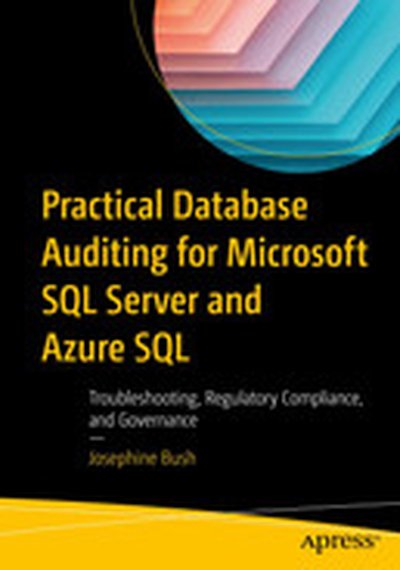
Practical Database Auditing for Microsoft SQL Server and Azure SQL: Troubleshooting, Regulatory Compliance, and Governance

Know how to track changes and key events in your SQL Server databases in support of application troubleshooting, regulatory compliance, and governance. This book shows how to use key features in SQL Server ,such as SQL Server Audit and Extended Events, to track schema changes, permission changes, and changes to your data. You’ll even learn how to track queries run against specific tables in a database. Not all changes and events can be captured and tracked using SQL Server Audit and Extended Events, and the book goes beyond those features to also show what can be captured using common criteria compliance, change data capture, temporal tables, or querying the SQL Server log. You will learn how to audit just what you need to audit, and how to audit pretty much anything that happens on a SQL Server instance. This book will also help you set up cloud auditing with an emphasis on Azure SQL Database, Azure SQL Managed Instance, and AWS RDS SQL Server. You don’t need expensive, third-party auditing tools to make auditing work for you, and to demonstrate and provide value back to your business. This book will help you set up an auditing solution that works for you and your needs. It shows how to collect the audit data that you need, centralize that data for easy reporting, and generate audit reports using built-in SQL Server functionality for use by your own team, developers, and organization’s auditors. What You Will Learn Understand why auditing is important for troubleshooting, compliance, and governance Track changes and key events using SQL Server Audit and Extended Events Track SQL Server configuration changes for governance and troubleshooting Utilize change data capture and temporal tables to track data changes in SQL Server tables Centralize auditing data from all yourdatabases for easy querying and reporting Configure auditing on Azure SQL, Azure SQL Managed Instance, and AWS RDS SQL Server Who This Book Is For Database administrators who need to know what’s changing on their database servers, and those who are making the changes; database-savvy DevOps engineers and developers who are charged with troubleshooting processes and applications; developers and administrators who are responsible for generating reports in support of regulatory compliance reporting and auditing

In today’s episode, we’re joined by Joyce Durst. Joyce is the CEO and Co-Founder of Growth Acceleration Partners (GAP), a strategic software delivery partner based in Austin, Texas.

We talk about:

This episode is brought to you by Qrvey

The tools you need to take action with your data, on a platform built for maximum scalability, security, and cost efficiencies. If you’re ready to reduce complexity and dramatically lower costs, contact us today at qrvey.com.

Qrvey, the modern no-code analytics solution for SaaS companies on AWS.

In today’s episode, we’re talking to Rick Spencer. Rick is VP of Product at InfluxData, a platform to help developers build time series-based applications quickly and at scale.   We talk about Rick’s background, how InfluxData got started, and the kinds of problems it solves today. Rick describes the differences between building a product for developers and one for non-developers.   We go on to discuss the difference between a time series database and a regular database, the benefits of a time series database, the idea of data gravity, and the interaction between engineering and product teams.   This episode is brought to you by Qrvey The tools you need to take action with your data, on a platform built for maximum scalability, security, and cost efficiencies. If you’re ready to reduce complexity and dramatically lower costs, contact us today at qrvey.com. Qrvey, the modern no-code analytics solution for SaaS companies on AWS. 

Summary The global climate impacts everyone, and the rate of change introduces many questions that businesses need to consider. Getting answers to those questions is challenging, because the climate is a multidimensional and constantly evolving system. Sust Global was created to provide curated data sets for organizations to be able to analyze climate information in the context of their business needs. In this episode Gopal Erinjippurath discusses the data engineering challenges of building and serving those data sets, and how they are distilling complex climate information into consumable facts so you don’t have to be an expert to understand it.

Announcements

Hello and welcome to the Data Engineering Podcast, the show about modern data management When you’re ready to build your next pipeline, or want to test out the projects you hear about on the show, you’ll need somewhere to deploy it, so check out our friends at Linode. With their new managed database service you can launch a production ready MySQL, Postgres, or MongoDB cluster in minutes, with automated backups, 40 Gbps connections from your application hosts, and high throughput SSDs. Go to dataengineeringpodcast.com/linode today and get a $100 credit to launch a database, create a Kubernetes cluster, or take advantage of all of their other services. And don’t forget to thank them for their continued support of this show! Data stacks are becoming more and more complex. This brings infinite possibilities for data pipelines to break and a host of other issues, severely deteriorating the quality of the data and causing teams to lose trust. Sifflet solves this problem by acting as an overseeing layer to the data stack – observing data and ensuring it’s reliable from ingestion all the way to consumption. Whether the data is in transit or at rest, Sifflet can detect data quality anomalies, assess business impact, identify the root cause, and alert data teams’ on their preferred channels. All thanks to 50+ quality checks, extensive column-level lineage, and 20+ connectors across the Data Stack. In addition, data discovery is made easy through Sifflet’s information-rich data catalog with a powerful search engine and real-time health statuses. Listeners of the podcast will get $2000 to use as platform credits when signing up to use Sifflet. Sifflet also offers a 2-week free trial. Find out more at dataengineeringpodcast.com/sifflet today! The biggest challenge with modern data systems is understanding what data you have, where it is located, and who is using it. Select Star’s data discovery platform solves that out of the box, with an automated catalog that includes lineage from where the data originated, all the way to which dashboards rely on it and who is viewing them every day. Just connect it to your database/data warehouse/data lakehouse/whatever you’re using and let them do the rest. Go to dataengineeringpodcast.com/selectstar today to double the length of your free trial and get a swag package when you convert to a paid plan. Data teams are increasingly under pressure to deliver. According to a recent survey by Ascend.io, 95% in fact reported being at or over capacity. With 72% of data experts reporting demands on their team going up faster than they can hire, it’s no surprise they are increasingly turning to automation. In fact, while only 3.5% report having current investments in automation, 85% of data teams plan on investing in automation in the next 12 months. 85%!!! That’s where our friends at Ascend.io come in. The Ascend Data Automation Cloud provides a unified platform for data ingestion, transformation, orchestration, and observability. Ascend users love its declarative pipelines, powerful SDK, elegant UI, and extensible plug-in architecture, as well as its support for Python, SQL, Scala, and Java. Ascend automates workloads on Snowflake, Databricks, BigQuery, and open source Spark, and can be deployed in AWS, Azure, or GCP. Go to datae

In today’s episode, we’re talking to Mariano Jurich, Project and Product Manager at Making Sense — a platform for developing game-changing software solutions.   We talk about the history of Making Sense and what the company is working on today, how to recognize when a new customer is a good fit, understanding the many types of users that use your product over time, and the importance of focusing on user experience.   We go on to discuss the reasons why a company with a strong product-market fit might still struggle to achieve success, how remote work could shape the future of software development, and how the software industry in Latin America specifically looks set to change.   Finally, we talk about how the growth of Web3 will impact software development, lead to greater democratization, and drive a more globalized world.   This episode is brought to you by Qrvey The tools you need to take action with your data, on a platform built for maximum scalability, security, and cost efficiencies. If you’re ready to reduce complexity and dramatically lower costs, contact us today at qrvey.com. Qrvey, the modern no-code analytics solution for SaaS companies on AWS.   

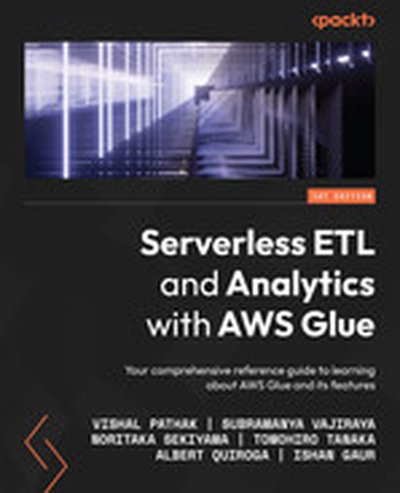
Serverless ETL and Analytics with AWS Glue

Discover how to harness AWS Glue for your ETL and data analysis workflows with "Serverless ETL and Analytics with AWS Glue." This comprehensive guide introduces readers to the capabilities of AWS Glue, from building data lakes to performing advanced ETL tasks, allowing you to create efficient, secure, and scalable data pipelines with serverless technology. What this Book will help me do Understand and utilize various AWS Glue features for data lake and ETL pipeline creation. Leverage AWS Glue Studio and DataBrew for intuitive data preparation workflows. Implement effective storage optimization techniques for enhanced data analytics. Apply robust data security measures, including encryption and access control, to protect data. Integrate AWS Glue with machine learning tools like SageMaker to build intelligent models. Author(s) The authors of this book include experts across the fields of data engineering and AWS technologies. With backgrounds in data analytics, software development, and cloud architecture, they bring a depth of practical experience. Their approach combines hands-on tutorials with conceptual clarity, ensuring a blend of foundational knowledge and actionable insights. Who is it for? This book is designed for ETL developers, data engineers, and data analysts who are familiar with data management concepts and want to extend their skills into serverless cloud solutions. If you're looking to master AWS Glue for building scalable and efficient ETL pipelines or are transitioning existing systems to the cloud, this book is ideal for you.

Summary AirBnB pioneered a number of the organizational practices that have become the goal of modern data teams. Out of that culture a number of successful businesses were created to provide the tools and methods to a broader audience. In this episode several almuni of AirBnB’s formative years who have gone on to found their own companies join the show to reflect on their shared successes, missed opportunities, and lessons learned.

Announcements

Hello and welcome to the Data Engineering Podcast, the show about modern data management When you’re ready to build your next pipeline, or want to test out the projects you hear about on the show, you’ll need somewhere to deploy it, so check out our friends at Linode. With their new managed database service you can launch a production ready MySQL, Postgres, or MongoDB cluster in minutes, with automated backups, 40 Gbps connections from your application hosts, and high throughput SSDs. Go to dataengineeringpodcast.com/linode today and get a $100 credit to launch a database, create a Kubernetes cluster, or take advantage of all of their other services. And don’t forget to thank them for their continued support of this show! Data stacks are becoming more and more complex. This brings infinite possibilities for data pipelines to break and a host of other issues, severely deteriorating the quality of the data and causing teams to lose trust. Sifflet solves this problem by acting as an overseeing layer to the data stack – observing data and ensuring it’s reliable from ingestion all the way to consumption. Whether the data is in transit or at rest, Sifflet can detect data quality anomalies, assess business impact, identify the root cause, and alert data teams’ on their preferred channels. All thanks to 50+ quality checks, extensive column-level lineage, and 20+ connectors across the Data Stack. In addition, data discovery is made easy through Sifflet’s information-rich data catalog with a powerful search engine and real-time health statuses. Listeners of the podcast will get $2000 to use as platform credits when signing up to use Sifflet. Sifflet also offers a 2-week free trial. Find out more at dataengineeringpodcast.com/sifflet today! The biggest challenge with modern data systems is understanding what data you have, where it is located, and who is using it. Select Star’s data discovery platform solves that out of the box, with an automated catalog that includes lineage from where the data originated, all the way to which dashboards rely on it and who is viewing them every day. Just connect it to your database/data warehouse/data lakehouse/whatever you’re using and let them do the rest. Go to dataengineeringpodcast.com/selectstar today to double the length of your free trial and get a swag package when you convert to a paid plan. Data teams are increasingly under pressure to deliver. According to a recent survey by Ascend.io, 95% in fact reported being at or over capacity. With 72% of data experts reporting demands on their team going up faster than they can hire, it’s no surprise they are increasingly turning to automation. In fact, while only 3.5% report having current investments in automation, 85% of data teams plan on investing in automation in the next 12 months. 85%!!! That’s where our friends at Ascend.io come in. The Ascend Data Automation Cloud provides a unified platform for data ingestion, transformation, orchestration, and observability. Ascend users love its declarative pipelines, powerful SDK, elegant UI, and extensible plug-in architecture, as well as its support for Python, SQL, Scala, and Java. Ascend automates workloads on Snowflake, Databricks, BigQuery, and open source Spark, and can be deployed in AWS, Azure, or GCP. Go to dataengineeringpodcast.com/ascend and sign up for a free trial. If you’re a data engineering podcast listener, you get credits worth $5,000 when you become a customer. Your host is Tobias Macey and today I’m interviewin

In today’s episode, we’re talking to Baskar Agneeswaran, CEO and Co-Founder at Vajro, a cloud-based mobile commerce platform for building high-converting mobile apps for online stores.   We talk about Baskar’s and Vajro’s background, how it’s possible to build an app within 60 minutes, and how smartphones might evolve over the next 15 years. Baskar also shares the marketing and sales models used by his company.   We discuss the difference between companies that have sales as a growth engine and those that have marketing as a growth engine, and how to strike a balance between these and the product itself. Baskar shares some of the lessons he’s learned scaling a company like Vajro. He also explains the different phases of growth.   Finally, we talk about the importance of diversity and how to balance that with alignment around a core mission.   This episode is brought to you by Qrvey The tools you need to take action with your data, on a platform built for maximum scalability, security, and cost efficiencies. If you’re ready to reduce complexity and dramatically lower costs, contact us today at qrvey.com. Qrvey, the modern no-code analytics solution for SaaS companies on AWS. 

Summary Data has permeated every aspect of our lives and the products that we interact with. As a result, end users and customers have come to expect interactions and updates with services and analytics to be fast and up to date. In this episode Shruti Bhat gives her view on the state of the ecosystem for real-time data and the work that she and her team at Rockset is doing to make it easier for engineers to build those experiences.

Announcements

Hello and welcome to the Data Engineering Podcast, the show about modern data management When you’re ready to build your next pipeline, or want to test out the projects you hear about on the show, you’ll need somewhere to deploy it, so check out our friends at Linode. With their new managed database service you can launch a production ready MySQL, Postgres, or MongoDB cluster in minutes, with automated backups, 40 Gbps connections from your application hosts, and high throughput SSDs. Go to dataengineeringpodcast.com/linode today and get a $100 credit to launch a database, create a Kubernetes cluster, or take advantage of all of their other services. And don’t forget to thank them for their continued support of this show! Data stacks are becoming more and more complex. This brings infinite possibilities for data pipelines to break and a host of other issues, severely deteriorating the quality of the data and causing teams to lose trust. Sifflet solves this problem by acting as an overseeing layer to the data stack – observing data and ensuring it’s reliable from ingestion all the way to consumption. Whether the data is in transit or at rest, Sifflet can detect data quality anomalies, assess business impact, identify the root cause, and alert data teams’ on their preferred channels. All thanks to 50+ quality checks, extensive column-level lineage, and 20+ connectors across the Data Stack. In addition, data discovery is made easy through Sifflet’s information-rich data catalog with a powerful search engine and real-time health statuses. Listeners of the podcast will get $2000 to use as platform credits when signing up to use Sifflet. Sifflet also offers a 2-week free trial. Find out more at dataengineeringpodcast.com/sifflet today! The biggest challenge with modern data systems is understanding what data you have, where it is located, and who is using it. Select Star’s data discovery platform solves that out of the box, with an automated catalog that includes lineage from where the data originated, all the way to which dashboards rely on it and who is viewing them every day. Just connect it to your database/data warehouse/data lakehouse/whatever you’re using and let them do the rest. Go to dataengineeringpodcast.com/selectstar today to double the length of your free trial and get a swag package when you convert to a paid plan. Data teams are increasingly under pressure to deliver. According to a recent survey by Ascend.io, 95% in fact reported being at or over capacity. With 72% of data experts reporting demands on their team going up faster than they can hire, it’s no surprise they are increasingly turning to automation. In fact, while only 3.5% report having current investments in automation, 85% of data teams plan on investing in automation in the next 12 months. 85%!!! That’s where our friends at Ascend.io come in. The Ascend Data Automation Cloud provides a unified platform for data ingestion, transformation, orchestration, and observability. Ascend users love its declarative pipelines, powerful SDK, elegant UI, and extensible plug-in architecture, as well as its support for Python, SQL, Scala, and Java. Ascend automates workloads on Snowflake, Databricks, BigQuery, and open source Spark, and can be deployed in AWS, Azure, or GCP. Go to dataengineeringpodcast.com/ascend and sign up for a free trial. If you’re a data engineering podcast listener, you get credits worth $5,000 when you become a customer. Your host is Tobias Macey and today I’m interviewing

In this episode, we’re talking to Kaj van de Loo, Chief Technology Officer at UserTesting.   We talk about the company’s history and the problems it solves, the way Agile development methodologies have evolved, the different types of Agile development, and the differences between B2B and B2C software.   Kaj talks about some of the best ways for companies to understand users and how to analyze data like web traffic, the growing importance of personalization in user experience, the best time to add product management to a team, and more.   Finally, we talk about the ideal ratio of QAs to developers and whether being a CTO makes someone a better CEO.

This episode is brought to you by Qrvey   The tools you need to take action with your data, on a platform built for maximum scalability, security, and cost efficiencies. If you’re ready to reduce complexity and dramatically lower costs, contact us today at qrvey.com. Qrvey, the modern no-code analytics solution for SaaS companies on AWS. 

Summary Data engineers have typically left the process of data labeling to data scientists or other roles because of its nature as a manual and process heavy undertaking, focusing instead on building automation and repeatable systems. Watchful is a platform to make labeling a repeatable and scalable process that relies on codifying domain expertise. In this episode founder Shayan Mohanty explains how he and his team are bringing software best practices and automation to the world of machine learning data preparation and how it allows data engineers to be involved in the process.

Announcements

Hello and welcome to the Data Engineering Podcast, the show about modern data management When you’re ready to build your next pipeline, or want to test out the projects you hear about on the show, you’ll need somewhere to deploy it, so check out our friends at Linode. With their new managed database service you can launch a production ready MySQL, Postgres, or MongoDB cluster in minutes, with automated backups, 40 Gbps connections from your application hosts, and high throughput SSDs. Go to dataengineeringpodcast.com/linode today and get a $100 credit to launch a database, create a Kubernetes cluster, or take advantage of all of their other services. And don’t forget to thank them for their continued support of this show! Data stacks are becoming more and more complex. This brings infinite possibilities for data pipelines to break and a host of other issues, severely deteriorating the quality of the data and causing teams to lose trust. Sifflet solves this problem by acting as an overseeing layer to the data stack – observing data and ensuring it’s reliable from ingestion all the way to consumption. Whether the data is in transit or at rest, Sifflet can detect data quality anomalies, assess business impact, identify the root cause, and alert data teams’ on their preferred channels. All thanks to 50+ quality checks, extensive column-level lineage, and 20+ connectors across the Data Stack. In addition, data discovery is made easy through Sifflet’s information-rich data catalog with a powerful search engine and real-time health statuses. Listeners of the podcast will get $2000 to use as platform credits when signing up to use Sifflet. Sifflet also offers a 2-week free trial. Find out more at dataengineeringpodcast.com/sifflet today! The biggest challenge with modern data systems is understanding what data you have, where it is located, and who is using it. Select Star’s data discovery platform solves that out of the box, with an automated catalog that includes lineage from where the data originated, all the way to which dashboards rely on it and who is viewing them every day. Just connect it to your database/data warehouse/data lakehouse/whatever you’re using and let them do the rest. Go to dataengineeringpodcast.com/selectstar today to double the length of your free trial and get a swag package when you convert to a paid plan. Data teams are increasingly under pressure to deliver. According to a recent survey by Ascend.io, 95% in fact reported being at or over capacity. With 72% of data experts reporting demands on their team going up faster than they can hire, it’s no surprise they are increasingly turning to automation. In fact, while only 3.5% report having current investments in automation, 85% of data teams plan on investing in automation in the next 12 months. 85%!!! That’s where our friends at Ascend.io come in. The Ascend Data Automation Cloud provides a unified platform for data ingestion, transformation, orchestration, and observability. Ascend users love its declarative pipelines, powerful SDK, elegant UI, and extensible plug-in architecture, as well as its support for Python, SQL, Scala, and Java. Ascend automates workloads on Snowflake, Databricks, BigQuery, and open source Spark, and can be deployed in AWS, Azure, or GCP. Go to dataengineeringpodcast.com/ascend and sign up for a free trial. If you’re