L'accès à l'information est capital pour les utilisateurs métier. Découvrez comment avec les agents IA , des modèles sémantiques ou ontologies, Microsoft Fabric vous permet de requêter facilement en langage naturel son patrimoine de donnée.
 talk-data.com
Topic
BI
Business Intelligence (BI)
data_visualization
reporting
analytics
1211
tagged
Activity Trend
111
peak/qtr
2020-Q1
2026-Q2
Top Events
O'Reilly Data Science Books
224
O'Reilly Data Engineering Books
179
Data Engineering Podcast
142
O'Reilly Business Intelligence Books
84
Data + AI Summit 2025
78
Analytics on Fire
53
Secrets of Data Analytics Leaders
36
Databricks DATA + AI Summit 2023
34
Outlier Conference 2025
26
DataFramed
25
O'Reilly Data Visualization Books
21
SaaS Scaled - Interviews about SaaS Startups, Analytics, & Operations
21
Le groupe Egis conçoit et exploite des infrastructures complexes à l’échelle mondiale : autoroutes, aéroports, ferroviaire, bâtiments, services de mobilité, énergie, aménagement urbain et environnement. La diversité et le volume des données générées posent des défis majeurs en matière de gouvernance, d’industrialisation et de scalabilité.
Pour y répondre, Egis a déployé une infrastructure Data Mesh sur Azure, mise en place et opérée par une équipe dédiée. Cette équipe assure la conception, la gouvernance et la mise à disposition de l’architecture pour l’ensemble des Business Lines. L’infrastructure s’appuie sur :
• Stockage distribué avec ADLS Gen2,
• ETL et traitements big data avec Azure Data Factory et Databricks,
• Visualisation et partage sécurisé via Power BI Service et Delta Sharing,
• Des mécanismes de gouvernance avancés pour garantir interopérabilité et fiabilité.
Cette session présentera :
• Les choix d’architecture et patterns techniques pour mettre en place un Data Mesh distribué à l’échelle d’un grand groupe international
• Le rôle et l’organisation de l’équipe dédiée dans la mise à disposition et l’accompagnement des projets métiers
• Les enseignements pratiques tirés de cas d’usage concrets déjà en production
Une immersion au cœur de la mise en œuvre réelle du Data Mesh, pensée pour transformer la donnée en un actif accessible, fiable et exploitable à grande échelle par les équipes métiers et techniques.
Cette session, présentée par Polar Analytics, plongera au cœur des défis du Big Data pour les marques d'e-commerce. Loin des concepts théoriques, nous vous présenterons un cas d'usage concret démontrant comment transformer des données fragmentées en une plateforme de business intelligence unifiée et actionable.
Beaucoup d’organisations parlent de créer une Source Unique de Vérité (SSOT), mais rares sont celles qui parviennent à en faire une réalité durable. Dans cette session, Vira Douangphouxay, Director of Analytics Engineering chez Vestiaire Collective, partagera comment son équipe a conçu et fait évoluer une initiative SSOT depuis zéro - en équilibrant scalabilité technique, alignement inter-équipes et gouvernance à long terme.
Vous découvrirez des retours d’expérience concrets : comment prioriser les actifs les plus critiques, structurer les responsabilités entre les équipes BI, produit et métier, et intégrer les bonnes pratiques dans des outils comme Coalesce, Snowflake, Catalog et Google Sheets.
Tristan Mayer, General Manager Catalog chez Coalesce, interviendra également pour apporter un éclairage complémentaire sur les bonnes pratiques outillées et les leçons tirées d'autres entreprises du secteur.
Que vous débutiez votre projet SSOT ou cherchiez à le pérenniser, cette session vous offrira une vision pragmatique de ce qu’il faut vraiment pour unifier vos définitions de données, réduire les incohérences de reporting et restaurer la confiance dans vos analyses.
Vos données ne valent rien si on ne sait pas où les trouver ni si on peut leur faire confiance. En 30 minutes, découvrez comment Qlik Talend Cloud – Data Products Catalog transforme un dataset brut en data product réutilisable : glossaire métier, métadonnées, profiling, lineage, règles d’accès et certification avant publication dans un catalogue simple à adopter par les équipes data, BI et IA. Démo end-to-end : créer → valider→ publier → suivre l’adoption - sans lourdeur ni copier-coller. Résultat : des data products identifés, fiables et auditables qui accélèrent vos cas d’usage et instaurent une gouvernance de qualité.
Présentation d’un projet de migration d’une stack data On Prem vers une architecture cloud (Databricks + Power BI)
Comment l’IA transforme-t-elle l’intelligence d’entreprise ? Découvrez comment agir dès aujourd’hui lors de notre démo session à Big Data & IA Paris.
Au programme:
- Comment passer d’analytics fragmentés à une approche basée sur la confiance, la sécurité et centrée sur l’utilisateur ?
- Les dernières avancées de Strategy Mosaic, la première couche sémantique ouverte, construite par l’IA et pour l’IA.
- Industrialise la gouvernance de vos outils de BI et d’IA sur l’ensemble de vos données.
Découvrez comment GLS pilote plus d’1M de colis grâce à une Modern Data Stack et une BI Data Viz au service de la performance.
Découvrez comment GLS suit, analyse et optimise plus d’1 million de colis chaque jour grâce à une Modern Data Stack performante et une BI pensée pour l’efficacité.
Vous verrez concrètement comment transformer des flux complexes en décisions claires et rapides, au service de la performance opérationnelle.
Repartez avec des insights concrets sur :
- Les outils et méthodes pour fiabiliser vos données en temps réel
- Les bonnes pratiques de data visualisation pour piloter à grande échelle
- L’impact business d’une gouvernance data efficace
Une session inspirante et à ne pas manquer si vous voulez booster votre pilotage grâce à la data.
Toucan est la solution d’Embedded Analytics qui simplifie l’accès à la donnée et aide les entreprises à prendre de meilleures décisions grâce à des dashboards clairs, rapides à déployer et accessibles à tous.
GLS, acteur majeur du transport de colis en Europe, s’appuie sur la data pour garantir chaque jour fiabilité, performance et qualité de service à ses millions de clients.
RSG Group – the global fitness powerhouse behind Gold’s Gym, McFIT, and JOHN REED – modernized its fragmented, manual data infrastructure into a scalable, low-maintenance analytics platform using Snowflake, Fivetran, and Coalesce. With a lean team and growing data needs across 900+ studios in 30 countries, the company replaced brittle pipelines and slow onboarding with automated ingestion, governed transformations, and self-service analytics. In this session, Head of Data & Business Intelligence Christopher Rüge will share how RSG Group reduced data integration time from 80 hours to 30 minutes, established end-to-end lineage and GDPR compliance with Coalesce, enabled data-driven decisions, and a strong foundation for AI use cases like personalization, churn prediction, and operational insights.
L’architecture data lakehouse est devenue la référence pour passer d’une BI “classique” centrée sur des bases analytiques à une plateforme de données unifiée, ouverte et évolutive, capable de supporter à la fois l’analytique moderne et l’IA/ML. Mais sa mise en œuvre reste exigeante (ingestion, optimisation, gouvernance).
Cette session montre comment Qlik Open Lakehouse intègre Apache Iceberg dans votre infrastructure pour bâtir un lakehouse gouverné, opérationnel, sans complexité.
À la clé : time-to-value accéléré, TCO réduit, interopérabilité ouverte sans vendor lock-in.
Un socle fiable qui aligne IT & métiers et propulse analytique et IA à l’échelle.
Vous souhaitez en savoir plus ? Toute l'équipe Qlik vous donne rendez-vous sur le stand D38 pour des démos live, des cas d'usage et des conseils d'experts.
Learn how to accelerate and automate migrations with SnowConvert AI, featuring data ecosystem migration agents powered by Snowflake Cortex AI. SnowConvert AI is your free, automated solution designed to dramatically reduce the complexities, costs, and timelines associated with data warehouse and BI migrations. It intelligently analyzes your existing code, automating code conversion, data validation, and streamlining the entire migration process. Join us for an overview of the solution, migration best practices, and live demos.
Think you need a fancy degree to start a career in data? Think again. In this episode of Data Career School, Amlan Mohanty breaks down exactly how you can launch a successful data career and land your first job in data analytics, data science, or business intelligence without a traditional degree. Discover how to build in-demand skills, create a portfolio that gets noticed, and land your first data job using practical, actionable strategies. Whether you’re self-taught, switching careers, or just curious about the data field, this episode gives you the perfect roadmap to break into a data career.
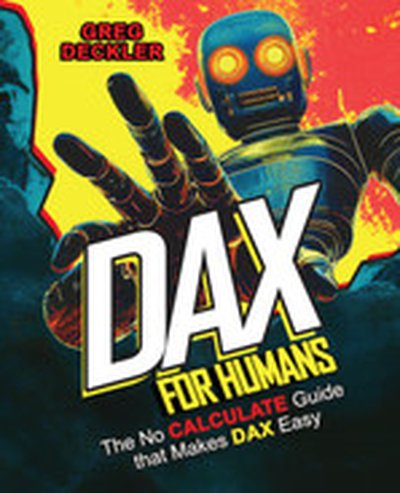
Level up your Power BI skills by learning DAX in an easy, fun, and practical way using one core pattern that can be used to solve most problems Key Features Learn simple through advanced DAX in a clear, concise way using real-world examples Explore powerful techniques for debugging DAX and increasing efficiency Use artificial intelligence to write, refine, and troubleshoot your DAX formulas Purchase of the print or Kindle book includes a free PDF eBook Book Description Although DAX has been around for over a decade, many struggle to master the language primarily because DAX is often taught through the CALCULATE function, which is the most complex and unintuitive function in all of DAX. But what if DAX could be taught without CALCULATE? The result would be an incredibly intuitive and easy way to learn DAX. DAX for Humans stands the traditional approach to learning DAX on its head, foregoing the traditional, legacy methods of learning DAX for a more modern approach that focuses on core DAX concepts and not any specific function. Even if you know nothing about DAX, from the very first chapter you will learn the essentials of the DAX language, as well as a single pattern to solve the majority of DAX problems. From that point forward, you’ll explore how to work with the basic building blocks of the DAX language and apply what you learn to real-world business scenarios across customers, human resources, projects, finance, operations, and more. By the end of this book, you’ll be able to apply your DAX skills to simple, complex, and advanced scenarios; understand how to optimize and debug your DAX code; and even know how to efficiently apply artificial intelligence to help you write and debug your DAX code. What you will learn Master techniques to solve common DAX calculations Apply DAX to real-word, practical business scenarios Explore advanced techniques for tackling unusual DAX scenarios Discover new ideas, tricks, and time-saving techniques for better calculations Find out how to optimize and debug DAX effectively Leverage AI to assist in writing, troubleshooting, and improving DAX Who this book is for If you use Power BI but struggle with DAX or if you know DAX but want to improve and expand your skills, then this book is for you. Even if you have never used Power BI or DAX before, you will find this book helpful as you progress from the basics to mastery of the DAX language using real-world scenarios as your guide.
Roman Singele and I will walk through the main announcements from Vienna and what they mean for Power BI and Fabric.
While 95% of enterprise AI pilots fail to deliver business value, Secoda's customers are seeing a different reality: with 76% of AI usage focused on core business intelligence workflows rather than isolated experiments.
Join Etai Mizrahi, Co-Founder & CEO of Secoda, as he shares how companies like Dialpad achieved company-wide AI adoption by moving 200+ employees from traditional dashboards to natural language analytics. Learn how Secoda's multi-agent AI architecture transforms data governance from manual overhead into automated workflows, and learn practical strategies for scaling AI beyond pilots to become essential infrastructure that delivers measurable ROI.
Everyone’s talking about GenAI. But at Big Data London, you want more than hype.
In this session, Simon Devine (Founder of Hopton Analytics) shares how the East of England Co-op embedded GenBI – Pyramid’s generative AI tool – into their business intelligence platform to improve how decisions are made across the organisation.
This wasn’t a flashy experiment. It was a carefully planned rollout of AI-generated explanations, natural language querying, and explainable analytics – designed to support busy operational teams, reduce report backlogs, and drive smarter decisions at scale.
Simon will take you behind the scenes of the project: how it was planned, what hurdles had to be overcome, and the governance structures that helped it succeed. You'll hear honest reflections on what worked, what didn’t, and what they’d do differently.
Whether you’re a data leader looking for real-world use cases, a BI owner exploring GenAI adoption, or a transformation lead trying to unlock value from your reporting stack – this session will give you practical insight, not just theory.
Come for the lived experience. Leave with ideas you can actually use.
Data is one of the most valuable assets in any organisation, but accessing and analysing it has been limited to technical experts. Business users often rely on predefined dashboards and data teams to extract insights, creating bottlenecks and slowing decision-making.
This is changing with the rise of Large Language Models (LLMs) and Retrieval-Augmented Generation (RAG). These technologies are redefining how organisations interact with data, allowing users to ask complex questions in natural language and receive accurate, real-time insights without needing deep technical expertise.
In this session, I’ll explore how LLMs and RAG are driving true data democratisation by making analytics accessible to everyone, enabling real-time insights with AI-powered search and retrieval and overcoming traditional barriers like SQL, BI tool complexity, and rigid reporting structures.
If you want to scare a Data Engineer with four words, ‘big data, high concurrency’ will probably do it. As data moved from the realm of BI reporting to being a customer-facing commodity, serving huge volumes of data to thousands of unforgiving app users is no small challenge. In this session, Connor Carreras will share (and demo!) how a major martech platform uses Firebolt to serve data about millions of websites to their worldwide customers with consistent millisecond response times. After this session, you will know how you can build low-latency data applications yourself. You’ll also have a deep understanding of what it takes for modern high-performance query engines to do well on these workloads.