talk-data.com talk-data.com

Topic

data-science

2091

tagged

Activity Trend

1 peak/qtr
2020-Q1 2026-Q1

Activities

Showing filtered results

Filtering by: O'Reilly Data Science Books ×
JMP 13 Fitting Linear Models, Second Edition, 2nd Edition

JMP 13 Fitting Linear Models focuses on the Fit Model platform and many of its personalities. Linear and logistic regression, analysis of variance and covariance, and stepwise procedures are covered. Also included are multivariate analysis of variance, mixed models, generalized models, and models based on penalized regression techniques.

JMP 13 Multivariate Methods, Second Edition, 2nd Edition

JMP 13 Multivariate Methods describes techniques for analyzing several variables simultaneously. The book covers descriptive measures, such as correlations. It also describes methods that give insight into the structure of the multivariate data, such as clustering, latent class analysis, principal components, discriminant analysis, and partial least squares.

JMP 13 Predictive and Specialized Modeling, Second Edition, 2nd Edition

JMP 13 Predictive and Specialized Modeling provides details about modeling techniques such as partitioning, neural networks, nonlinear regression, and time series analysis. Topics include the Gaussian platform, which is useful in analyzing computer simulation experiments. The book also covers the Response Screening platform, which is useful in testing the effect of a predictor when you have many responses.

JMP Start Statistics, 6th Edition

This book provides hands-on tutorials with just the right amount of conceptual and motivational material to illustrate how to use the intuitive interface for data analysis in JMP. Each chapter features concept-specific tutorials,

examples, brief reviews of concepts, step-by-step illustrations, and exercises.

Updated for JMP 13, JMP Start Statistics, Sixth Edition includes many new features, including:

The redesigned Formula Editor.

New and improved ways to create formulas in JMP directly from the data table or dialogs.

Interface updates, including improved menu layout.

Updates and enhancements in many analysis platforms.

New ways to get data into JMP and to save and share JMP results.

Many new features that make it easier to use JMP.

Total Survey Error in Practice

Featuring a timely presentation of total survey error (TSE), this edited volume introduces valuable tools for understanding and improving survey data quality in the context of evolving large-scale data sets This book provides an overview of the TSE framework and current TSE research as related to survey design, data collection, estimation, and analysis. It recognizes that survey data affects many public policy and business decisions and thus focuses on the framework for understanding and improving survey data quality. The book also addresses issues with data quality in official statistics and in social, opinion, and market research as these fields continue to evolve, leading to larger and messier data sets. This perspective challenges survey organizations to find ways to collect and process data more efficiently without sacrificing quality. The volume consists of the most up-to-date research and reporting from over 70 contributors representing the best academics and researchers from a range of fields. The chapters are broken out into five main sections: The Concept of TSE and the TSE Paradigm, Implications for Survey Design, Data Collection and Data Processing Applications, Evaluation and Improvement, and Estimation and Analysis. Each chapter introduces and examines multiple error sources, such as sampling error, measurement error, and nonresponse error, which often offer the greatest risks to data quality, while also encouraging readers not to lose sight of the less commonly studied error sources, such as coverage error, processing error, and specification error. The book also notes the relationships between errors and the ways in which efforts to reduce one type can increase another, resulting in an estimate with larger total error. This book: • Features various error sources, and the complex relationships between them, in 25 high-quality chapters on the most up-to-date research in the field of TSE • Provides comprehensive reviews of the literature on error sources as well as data collection approaches and estimation methods to reduce their effects • Presents examples of recent international events that demonstrate the effects of data error, the importance of survey data quality, and the real-world issues that arise from these errors • Spans the four pillars of the total survey error paradigm (design, data collection, evaluation and analysis) to address key data quality issues in official statistics and survey research Total Survey Error in Practice is a reference for survey researchers and data scientists in research areas that include social science, public opinion, public policy, and business. It can also be used as a textbook or supplementary material for a graduate-level course in survey research methods. Paul P. Biemer, PhD, is distinguished fellow at RTI International and associate director of Survey Research and Development at the Odum Institute, University of North Carolina, USA. Edith de Leeuw, PhD, is professor of survey methodology in the Department of Methodology and Statistics at Utrecht University, the Netherlands. Stephanie Eckman, PhD, is fellow at RTI International, USA. Brad Edwards is vice president, director of Field Services, and deputy area director at Westat, USA. Frauke Kreuter, PhD, is professor and director of the Joint Program in Survey Methodology, University of Maryland, USA; professor of statistics and methodology at the University of Mannheim, Germany; and head of the Statistical Methods Research Department at the Institute for Employment Research, Germany. Lars E. Lyberg, PhD, is senior advisor at Inizio, Sweden. N. Clyde Tucker, PhD, is principal survey methodologist at the American Institutes for Research, USA. Brady T. West, PhD, is research associate professor in the Survey Resea

2017 European Data Science Salary Survey

How do data science salaries for people in Europe compare to their counterparts in the rest of the world? Among the more than 1000 people who responded to O’Reilly’s 2016 Data Science Salary Survey, 359 live and work in various European countries as data scientists, analysts, engineers, and related professions. This report takes a deep dive into the survey results from respondents in various regions of Europe, including the tools they use, the compensation they receive, and the roles they play in their respective organizations. Even if you didn’t take part in the survey, you can still plug your own information into the survey’s simple linear model to see where you fit. With this report, you’ll learn: How salaries vary by country and specific regions in Europe Average size of companies by region How salary is affected by a country’s GDP Top industries for data scientists, including software, banking, finance, retail, and ecommerce Most commonly used tools vs tools used by respondents with above-average salaries Primary and secondary job tasks performed by survey respondents To stay up-to-date on this research, your participation is crucial. The survey is now open for the 2017 report; please take just 5 to 10 minutes to participate in the survey here.

Learning Kibana 5.0

Learning Kibana 5.0 is your gateway to mastering the art of data visualization using the powerful features of the Kibana platform. This book guides you through the process of creating stunning interactive dashboards and making data-driven insights accessible with real-time visualizations. Whether you're new to the Elastic stack or seeking to refine your expertise, this book equips you to harness Kibana's full potential. What this Book will help me do Build robust, real-time dashboards in Kibana to visualize complex datasets efficiently. Leverage Timelion to perform time-series data analysis and create metrics-based dashboards. Explore advanced analytics using the Graph plugin to uncover relationships and correlations in data. Learn how to create and deploy custom plugins to tailor Kibana to specific project needs. Understand how to use the Elastic stack to monitor, analyze, and optimize various types of data flows. Author(s) Bahaaldine Azarmi is a seasoned expert in the Elastic stack, known for his dedication to making complex technical topics approachable and practical. With years of experience in data analytics and software development, Bahaaldine shares not only his technical expertise but also his passion for helping professionals achieve their goals through clear, actionable guidance. His writing emphasizes hands-on learning and practical application. Who is it for? This book is perfect for developers, data visualization engineers, and data scientists who aim to hone their skills in data visualization and interactive dashboard development. It assumes a basic understanding of Elasticsearch and Logstash to maximize its practicality. If you aim to advance your career by learning how to optimize data architecture and solve real-world problems using the Elastic stack, this book is ideal for you.

Evolutionary Computation with Biogeography-based Optimization

Evolutionary computation algorithms are employed to minimize functions with large number of variables. Biogeography-based optimization (BBO) is an optimization algorithm that is based on the science of biogeography, which researches the migration patterns of species. These migration paradigms provide the main logic behind BBO. Due to the cross-disciplinary nature of the optimization problems, there is a need to develop multiple approaches to tackle them and to study the theoretical reasoning behind their performance. This manuscript intends to explain the mathematical model of BBO algorithm and its variants created to cope with continuous domain problems (with and without constraints) and combinatorial problems. Due to the cross-disciplinary nature of the optimization problems, there is a need to develop multiple approaches to tackle them and to study the theoretical reasoning behind their performance. This manuscript intends to explain the mathematical model of BBO algorithm and its variants created to cope with continuous domain problems (with and without constraints) and combinatorial problems.

A Panorama of Statistics

A Panorama of Statistics: Perspectives, Puzzles and Paradoxes in Statistics Eric Sowey, School of Economics, The University of New South Wales, Sydney, Australia Peter Petocz, Department of Statistics, Macquarie University, Sydney, Australia This book is a stimulating panoramic tour – quite different from a textbook journey – of the world of statistics in both its theory and practice, for teachers, students and practitioners.At each stop on the tour, the authors investigate unusual and quirky aspects of statistics, highlighting historical, biographical and philosophical dimensions of this field of knowledge. Each chapter opens with perspectives on its theme, often from several points of view. Five original and thought-provoking questions follow. These aim at widening readers’ knowledge and deepening their insight. Scattered among the questions are entertaining puzzles to solve and tantalising paradoxes to explain. Readers can compare their own statistical discoveries with the authors’ detailed answers to all the questions. The writing is lively and inviting, the ideas are rewarding, and the material is extensively cross-referenced. A Panorama of Statistics: Leads readers to discover the fascinations of statistics. Is an enjoyable companion to an undergraduate statistics textbook. Is an enriching source of knowledge for statistics teachers and practitioners. Is unique among statistics books today for its memorable content and engaging style. Lending itself equally to reading through and to dipping into, A Panorama of Statistics will surprise teachers, students and practitioners by the variety of ways in which statistics can capture and hold their interest.

Researching UX: Analytics

Good UX is based on evidence. Qualitative evidence, such as user testing and field research, can only get you so far. To get the full picture of how users are engaging with your website or app, you'll need to use quantitative evidence in the form of analytics. This book will show you, step by step, how you can use website and app analytics data to inform design choices and definitively improve user experience. Offering practical guidelines, with plenty of detailed examples, this book covers: why you need to gather analytics data for your UX projects getting set up with analytics tools analyzing data how to find problems in your analytics using analytics to aid user research, measure and report on outcomes By the end of this book, you'll have a strong understanding of the important role analytics plays in the UX process. It will inspire you to take an "analytics first" approach to your UX projects.

Strategies in Biomedical Data Science

An essential guide to healthcare data problems, sources, and solutions Strategies in Biomedical Data Science provides medical professionals with much-needed guidance toward managing the increasing deluge of healthcare data. Beginning with a look at our current top-down methodologies, this book demonstrates the ways in which both technological development and more effective use of current resources can better serve both patient and payer. The discussion explores the aggregation of disparate data sources, current analytics and toolsets, the growing necessity of smart bioinformatics, and more as data science and biomedical science grow increasingly intertwined. You'll dig into the unknown challenges that come along with every advance, and explore the ways in which healthcare data management and technology will inform medicine, politics, and research in the not-so-distant future. Real-world use cases and clear examples are featured throughout, and coverage of data sources, problems, and potential mitigations provides necessary insight for forward-looking healthcare professionals. Big Data has been a topic of discussion for some time, with much attention focused on problems and management issues surrounding truly staggering amounts of data. This book offers a lifeline through the tsunami of healthcare data, to help the medical community turn their data management problem into a solution. Consider the data challenges personalized medicine entails Explore the available advanced analytic resources and tools Learn how bioinformatics as a service is quickly becoming reality Examine the future of IOT and the deluge of personal device data The sheer amount of healthcare data being generated will only increase as both biomedical research and clinical practice trend toward individualized, patient-specific care. Strategies in Biomedical Data Science provides expert insight into the kind of robust data management that is becoming increasingly critical as healthcare evolves.

SAS 9.4 SQL Procedure User's Guide, Fourth Edition, 4th Edition

Describes the basics of using the SQL procedure and provides comprehensive reference information. The usage information includes retrieving data from single and multiple tables; selecting specific data from tables; subsetting, ordering, and summarizing data; updating tables; combining tables to create new tables and useful reports; performing queries on database management system (DBMS) tables; using PROC SQL with the SAS macro facility; and debugging and optimizing PROC SQL code. The reference information includes statements, dictionary components, and system options.

Statistics for Business: Decision Making and Analysis, 3rd Edition

For one- and two-semester courses in introductory business statistics. Understand Business. Understand Data. The 3rd Edition of Statistics for Business: Decision Making and Analysis emphasizes an application-based approach, in which readers learn how to work with data to make decisions. In this contemporary presentation of business statistics, readers learn how to approach business decisions through a 4M Analytics decision making strategy—motivation, method, mechanics and message—to better understand how a business context motivates the statistical process and how the results inform a course of action. Each chapter includes hints on using Excel, Minitab Express, and JMP for calculations, pointing the reader in the right direction to get started with analysis of data. Also available with MyLab Statistics MyLab™ Statistics from Pearson is the world’s leading online resource for teaching and learning statistics; it integrates interactive homework, assessment, and media in a flexible, easy-to-use format. MyLab Statistics is a course management system that helps individual students succeed. It provides engaging experiences that personalize, stimulate, and measure learning for each student. Tools are embedded to make it easy to integrate statistical software into the course. Note: You are purchasing a standalone product; MyLab™does not come packaged with this content. Students, if interested in purchasing this title with MyLab, ask your instructor for the correct package ISBN and Course ID. Instructors, contact your Pearson representative for more information. If you would like to purchase both the physical text and MyLab, search for: 0134763734 / 9780134763736 Statistics for Business: Decision Making and Analysis, Student Value Edition Plus MyLab Statistics with Pearson eText - Access Card Package, 3/e Package consists of: 0134497260 / 9780134497266 Statistics for Business: Decision Making and Analysis, Student Value Edition 0134748646 / 9780134748641 MyLab Statistics for Business Stats with Pearson eText - Standalone Access Card - for Statistics for Business: Decision Making and Analysis

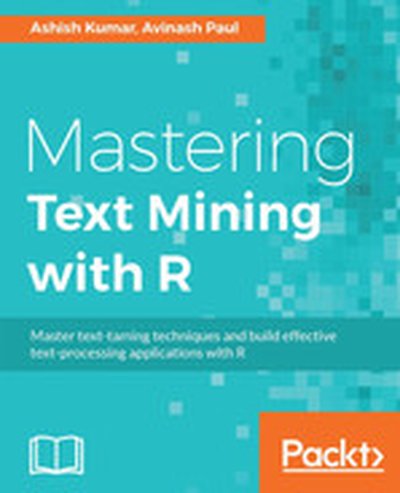
Mastering Text Mining with R

Mastering Text Mining with R is your go-to guide for learning how to process and analyze textual data using R. Throughout the book, you'll gain the skills necessary to perform data extraction and natural language processing, equipping you with practical applications tailored to real-world scenarios. What this Book will help me do Learn to access and manipulate textual data from various sources using R. Understand text processing techniques and employ them with tools like OpenNLP. Explore methods for text categorization, reduction, and summarization with hands-on exercises. Perform text classification tasks such as sentiment analysis and entity recognition. Build custom applications using text mining techniques and frameworks. Author(s) Ashish Kumar is a seasoned data scientist and software developer with years of experience in text analytics and the R programming language. He has a knack for explaining complex topics in an accessible and practical manner, ideal for learners embracing their text mining journey. Who is it for? This book is for anyone keen on mastering text mining with R. If you're an R programmer, data analyst, or data scientist looking to delve into text analytics, you'll find it ideal. Some familiarity with basic programming and statistics will enhance your experience, but all concepts are introduced clearly and effectively.

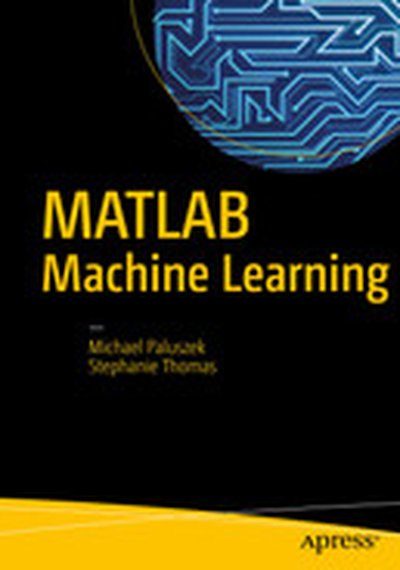
MATLAB Machine Learning

This book is a comprehensive guide to machine learning with worked examples in MATLAB. It starts with an overview of the history of Artificial Intelligence and automatic control and how the field of machine learning grew from these. It provides descriptions of all major areas in machine learning. The book reviews commercially available packages for machine learning and shows how they fit into the field. The book then shows how MATLAB can be used to solve machine learning problems and how MATLAB graphics can enhance the programmer’s understanding of the results and help users of their software grasp the results. Machine Learning can be very mathematical. The mathematics for each area is introduced in a clear and concise form so that even casual readers can understand the math. Readers from all areas of engineering will see connections to what they know and will learn new technology. The book then provides complete solutions in MATLAB for several important problems in machine learning including face identification, autonomous driving, and data classification. Full source code is provided for all of the examples and applications in the book. What you'll learn: An overview of the field of machine learning Commercial and open source packages in MATLAB How to use MATLAB for programming and building machine learning applications MATLAB graphics for machine learning Practical real world examples in MATLAB for major applications of machine learning in big data Who is this book for: The primary audiences are engineers and engineering students wanting a comprehensive and practical introduction to machine learning.

Advanced Graph Theory and Combinatorics

Advanced Graph Theory focuses on some of the main notions arising in graph theory with an emphasis from the very start of the book on the possible applications of the theory and the fruitful links existing with linear algebra. The second part of the book covers basic material related to linear recurrence relations with application to counting and the asymptotic estimate of the rate of growth of a sequence satisfying a recurrence relation.

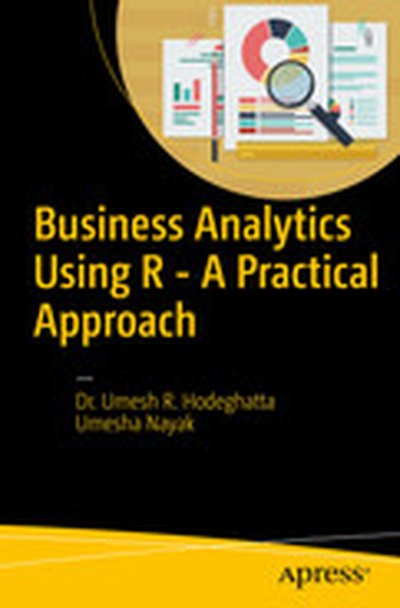
Business Analytics Using R - A Practical Approach

Learn the fundamental aspects of the business statistics, data mining, and machine learning techniques required to understand the huge amount of data generated by your organization. This book explains practical business analytics through examples, covers the steps involved in using it correctly, and shows you the context in which a particular technique does not make sense. Further, Practical Business Analytics using R helps you understand specific issues faced by organizations and how the solutions to these issues can be facilitated by business analytics. This book will discuss and explore the following through examples and case studies: An introduction to R: data management and R functions The architecture, framework, and life cycle of a business analytics project Descriptive analytics using R: descriptive statistics and data cleaning Data mining: classification, association rules, and clustering Predictive analytics: simple regression, multiple regression, and logistic regression This book includes case studies on important business analytic techniques, such as classification, association, clustering, and regression. The R language is the statistical tool used to demonstrate the concepts throughout the book. What You Will Learn • Write R programs to handle data • Build analytical models and draw useful inferences from them • Discover the basic concepts of data mining and machine learning • Carry out predictive modeling • Define a business issue as an analytical problem Who This Book Is For Beginners who want to understand and learn the fundamentals of analytics using R. Students, managers, executives, strategy and planning professionals, software professionals, and BI/DW professionals.

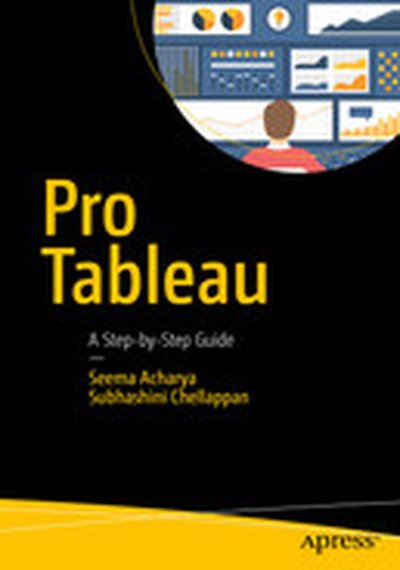
Pro Tableau: A Step-by-Step Guide

Leverage the power of visualization in business intelligence and data science to make quicker and better decisions. Use statistics and data mining to make compelling and interactive dashboards. This book will help those familiar with Tableau software chart their journey to being a visualization expert. Pro Tableau demonstrates the power of visual analytics and teaches you how to: Connect to various data sources such as spreadsheets, text files, relational databases (Microsoft SQL Server, MySQL, etc.), non-relational databases (NoSQL such as MongoDB, Cassandra), R data files, etc. Write your own custom SQL, etc. Perform statistical analysis in Tableau using R Use a multitude of charts (pie, bar, stacked bar, line, scatter plots, dual axis, histograms, heat maps, tree maps, highlight tables, box and whisker, etc.) What you'll learn Connect to various data sources such as relational databases (Microsoft SQL Server, MySQL), non-relational databases (NoSQL such as MongoDB, Cassandra), write your own custom SQL, join and blend data sources, etc. Leverage table calculations (moving average, year over year growth, LOD (Level of Detail), etc. Integrate Tableau with R Tell a compelling story with data by creating highly interactive dashboards Who this book is for All levels of IT professionals, from executives responsible for determining IT strategies to systems administrators, to data analysts, to decision makers responsible for driving strategic initiatives, etc. The book will help those familiar with Tableau software chart their journey to a visualization expert.