talk-data.com talk-data.com

Topic

data

5765

tagged

Activity Trend

3 peak/qtr
2020-Q1 2026-Q1

Activities

5765 activities · Newest first

Evaluation Theory, Models, and Applications, 2nd Edition

The golden standard evaluation reference text Now in its second edition, Evaluation Theory, Models, and Applications is the vital text on evaluation models, perfect for classroom use as a textbook, and as a professional evaluation reference. The book begins with an overview of the evaluation field and program evaluation standards, and proceeds to cover the most widely used evaluation approaches. With new evaluation designs and the inclusion of the latest literature from the field, this Second Edition is an essential update for professionals and students who want to stay current. Understanding and choosing evaluation approaches is critical to many professions, and Evaluation Theory, Models, and Applications, Second Edition is the benchmark evaluation guide. Authors Daniel L. Stufflebeam and Chris L. S. Coryn, widely considered experts in the evaluation field, introduce and describe 23 program evaluation approaches, including, new to this edition, transformative evaluation, participatory evaluation, consumer feedback, and meta-analysis. Evaluation Theory, Models, and Applications, Second Edition facilitates the process of planning, conducting, and assessing program evaluations. The highlighted evaluation approaches include: Experimental and quasi-experimental design evaluations Daniel L. Stufflebeam's CIPP Model Michael Scriven's Consumer-Oriented Evaluation Michael Patton's Utilization-Focused Evaluation Robert Stake's Responsive/Stakeholder-Centered Evaluation Case Study Evaluation Key readings listed at the end of each chapter direct readers to the most important references for each topic. Learning objectives, review questions, student exercises, and instructor support materials complete the collection of tools. Choosing from evaluation approaches can be an overwhelming process, but Evaluation Theory, Models, and Applications, Second Edition updates the core evaluation concepts with the latest research, making this complex field accessible in just one book.
Key Management Deployment Guide: Using the IBM Enterprise Key Management Foundation

In an increasingly interconnected world, data breaches grab headlines. The security of sensitive information is vital, and new requirements and regulatory bodies such as the Payment Card Industry Data Security Standard (PCI-DSS), Health Insurance Portability and Accountability Act (HIPAA), and Sarbanes-Oxley (SOX) create challenges for enterprises that use encryption to protect their information. As encryption becomes more widely adopted, organizations also must contend with an ever-growing set of encryption keys. Effective management of these keys is essential to ensure both the availability and security of the encrypted information. Centralized management of keys and certificates is necessary to perform the complex tasks that are related to key and certificate generation, renewal, and backup and recovery. The IBM® Enterprise Key Management Foundation (EKMF) is a flexible and highly secure key management system for the enterprise. It provides centralized key management on IBM zEnterprise® and distributed platforms for streamlined, efficient, and secure key and certificate management operations. This IBM Redbooks® publication introduces key concepts around a centralized key management infrastructure and depicts the proper planning, implementation, and management of such a system using the IBM Enterprise Key Management Foundation solution.

Building Applications with iBeacon

High-precision location information is increasingly useful for mobile application developers, since it allows devices to interact with the world around them. This practical book shows you how to achieve arm’s reach accuracy with iBeacons, simple transmitters that enable your applications to react to nearby surroundings and then deliver timely, relevant information—especially indoors, where GPS and cell service are inaccurate.

Microsoft SQL Server 2014 Query Tuning & Optimization

Optimize Microsoft SQL Server 2014 queries and applications Microsoft SQL Server 2014 Query Tuning & Optimization is filled with ready-to-use techniques for creating high-performance queries and applications. The book describes the inner workings of the query processor so you can write better queries and provide the query processor with the quality information it needs to produce efficient execution plans. You’ll also get tips for troubleshooting underperforming queries. In-Memory OLTP (Hekaton), a key new feature of SQL Server 2014, is fully covered in this practical guide. Understand how the query optimizer works Troubleshoot queries using extended events, SQL trace, dynamic management views (DMVs), the data collector, and other tools Work with query operators for data access, joins, aggregations, parallelism, and updates Speed up queries and dramatically improve application performance by creating the right indexes Understand statistics and how to detect and fix cardinality estimation errors Maximize OLTP query performance using In-Memory OLTP (Hekaton) features, including memory-optimized tables and natively compiled stored procedures Monitor and promote plan caching and reuse to improve application performance Improve the performance of data warehouse queries using columnstore indexes Handle query processor limitations with hints and other methods

PostgreSQL Administration Essentials

PostgreSQL Administration Essentials is your practical guide to effectively managing your PostgreSQL databases with confidence. In this book, you will learn techniques for backups and recovery, performance tuning, and replication management, and gain valuable insights into database monitoring and administration, all tailored to ensure the smooth operation and optimization of your database systems. What this Book will help me do Back up and restore PostgreSQL databases efficiently to prevent data loss. Set up and manage PostgreSQL replication to ensure high availability. Monitor and analyze database performance to maintain an optimized environment. Handle user permissions securely to manage database access effectively. Detect performance bottlenecks and optimize indexes for faster queries. Author(s) Hans-Jürgen Schönig is a seasoned database professional with extensive experience working with PostgreSQL in production environments. Having provided consulting and training services in the database field, Hans shares deep insights into practical database administration techniques. Through his books and courses, he focuses on making complex topics accessible and actionable for professionals. Who is it for? This book is ideal for database administrators who want to quickly gain practical PostgreSQL skills. Database developers or project managers aiming to understand database administration and optimization will find this resource valuable. Beginners wishing to familiarize themselves with PostgreSQL basics to advance their careers will also benefit greatly. For those already experienced in other database platforms, this book provides insights to transition into using PostgreSQL effectively.

Nonparametric Statistical Methods Using R

This book covers traditional nonparametric methods and rank-based analyses, including estimation and inference for models ranging from simple location models to general linear and nonlinear models for uncorrelated and correlated responses. The authors emphasize applications and statistical computation. They illustrate the methods with many real and simulated data examples using R, including the packages Rfit and npsm, which are available on CRAN. Each chapter includes exercises, making the book suitable for an undergraduate or graduate course.

Business Analytics Principles, Concepts, and Applications with SAS: What, Why, and How

Learn everything you need to know to start using business analytics and integrating it throughout your organization. brings together a complete, integrated package of knowledge for newcomers to the subject. The authors present an up-to-date view of what business analytics is, why it is so valuable, and most importantly, how it is used. They combine essential conceptual content with clear explanations of the tools, techniques, and methodologies actually used to implement modern business analytics initiatives. Business Analytics Principles, Concepts, and Applications with SAS They offer a proven step-wise approach to designing an analytics program, and successfully integrating it into your organization, so it effectively provides intelligence for competitive advantage in decision making. Using step-by-step examples, the authors identify common challenges that can be addressed by business analytics, illustrate each type of analytics (descriptive, prescriptive, and predictive), and guide users in undertaking their own projects. Illustrating the real-world use of statistical, information systems, and management science methodologies, these examples help readers successfully apply the methods they are learning. Unlike most competitive guides, this text demonstrates the use of SAS software, permitting instructors to spend less time teaching software and more time focusing on business analytics itself. will be a valuable resource for all beginning-to-intermediate level business analysts and business analytics managers; for MBA/Masters' degree students in the field; and for advanced undergraduates majoring in statistics, applied mathematics, or engineering/operations research. Business Analytics Principles, Concepts, and Applications with SAS

IBM System Storage SAN Volume Controller and Storwize V7000 Best Practices and Performance Guidelines

This IBM® Redbooks® publication captures several of the preferred practices that are based on field experience and describes the performance gains that can be achieved by implementing the IBM System Storage® SAN Volume Controller and Storwize® V7000 V7.2. This book begins with a look at the latest developments with SAN Volume Controller and Storwize V7000 and reviews the changes in the previous versions of the product. It highlights configuration guidelines and preferred practices for the storage area network (SAN) topology, clustered system, back-end storage, storage pools and managed disks, volumes, remote copy services, and hosts. Then, this book provides performance guidelines for SAN Volume Controller, back-end storage, and applications. It explains how you can optimize disk performance with the IBM System Storage Easy Tier® function. Next, it provides preferred practices for monitoring, maintaining, and troubleshooting SAN Volume Controller and Storwize V7000. Finally, this book highlights several scenarios that demonstrate the preferred practices and performance guidelines.

Presenting Data: How to Communicate Your Message Effectively

A clear easy-to-read guide to presenting your message using statistical data Poor presentation of data is everywhere; basic principles are forgotten or ignored. As a result, audiences are presented with confusing tables and charts that do not make immediate sense. This book is intended to be read by all who present data in any form. The author, a chartered statistician who has run many courses on the subject of data presentation, presents numerous examples alongside an explanation of how improvements can be made and basic principles to adopt. He advocates following four key 'C' words in all messages: Clear, Concise, Correct and Consistent. Following the principles in the book will lead to clearer, simpler and easier to understand messages which can then be assimilated faster. Anyone from student to researcher, journalist to policy adviser, charity worker to government statistician, will benefit from reading this book. More importantly, it will also benefit the recipients of the presented data. 'Ed Swires-Hennessy, a recognised expert in the presentation of statistics, explains and clearly describes a set of "principles" of clear and objective statistical communication. This book should be required reading for all those who present statistics.' Richard Laux, UK Statistics Authority 'I think this is a fantastic book and hope everyone who presents data or statistics makes time to read it first.' David Marder, Chief Media Adviser, Office for National Statistics, UK 'Ed's book makes his tried-and-tested material widely available to anyone concerned with understanding and presenting data. It is full of interesting insights, is highly practical and packed with sensible suggestions and nice ideas that you immediately want to try out.' Dr Shirley Coleman, Principal Statistician, Industrial Statistics Research Unit, School of Mathematics and Statistics, Newcastle University, UK

Right-Time Experiences: Driving Revenue with Mobile and Big Data

Grasp how mobile, big data, and analytics are combining to change business processes Right Experience, Right Results: Improving Profits, Margin, and Engagement with Mobile and Big Data illustrates how businesses can use mobility, big data, and analytics to enhance or change business processes, improve margins through better insight, transform customer experiences, empower employees with real-time, actionable insight, and more. The book depicts how companies can create competitive differentiation using mobile, cloud computing big data, and analytics to improve commerce, customer service, and communications with employees and consumers. In the past, the technologies used to deliver personalized and contextual services were either unavailable, unaffordable, or reserved solely for the consumer market. Today, however, the next wave of computing—mobile, cloud computing. big data, and analytics—has provided the foundation for businesses to create adaptive, personalized applications and services. Delivered point-of-need, these smarter services allow enterprise products and services to meet the burgeoning demand for always-connected, accurate, and real-time information. Right Experience, Right Results: Improving Profits, Margin, and Engagement with Mobile and Big Data is your guide to the new way of doing things. The book includes: Real world examples that illustrate how companies across various industries are creating better business processes by integrating new technologies A three step action plan for getting started and overcoming obstacles An electronic checklist with numerous actions that help get you up and running with incorporating mobile, big data, and analytics A guide to drawing insight from mobile, social, and other sources to create richer experiences If you're a CEO, chief marketing officer, marketing director, or business manager, Right Experience, Right Results gives you everything you need to harness technology to breathe new life into your business.

IBM PowerKVM Configuration and Use

This IBM® Redbooks® publication presents the new IBM PowerKVM virtualization for scale-out Linux systems. This book describes the concepts of PowerKVM and how you can deploy your virtual machines with the software stack included in the product. It helps you install and configure PowerKVM on your Power System server and provides guidance for managing the supported virtualization features by using the Web interface and command-line interface (CLI). This information for professionals who want to acquire a better understanding of PowerKVM virtualization technology to optimize Linux workload consolidation and use the new POWER8 processor features. The intended audience also includes people in these roles: Clients Sales and marketing professionals Technical support professionals IBM Business Partners Independent software vendors Open source community IBM OpenPower™ partners It does not replace the latest marketing materials and configuration tools. It is intended as an additional source of information that, together with existing sources, can be used to enhance your knowledge of IBM virtualization solutions. Before you start reading, you must be familiar with the general concepts of kernel-based virtual machine (KVM), Linux, and IBM Power architecture.

Data Science at the Command Line

This hands-on guide demonstrates how the flexibility of the command line can help you become a more efficient and productive data scientist. You’ll learn how to combine small, yet powerful, command-line tools to quickly obtain, scrub, explore, and model your data. To get you started—whether you’re on Windows, OS X, or Linux—author Jeroen Janssens introduces the Data Science Toolbox, an easy-to-install virtual environment packed with over 80 command-line tools. Discover why the command line is an agile, scalable, and extensible technology. Even if you’re already comfortable processing data with, say, Python or R, you’ll greatly improve your data science workflow by also leveraging the power of the command line. Obtain data from websites, APIs, databases, and spreadsheets Perform scrub operations on plain text, CSV, HTML/XML, and JSON Explore data, compute descriptive statistics, and create visualizations Manage your data science workflow using Drake Create reusable tools from one-liners and existing Python or R code Parallelize and distribute data-intensive pipelines using GNU Parallel Model data with dimensionality reduction, clustering, regression, and classification algorithms

IBM MQ V8 Features and Enhancements

The power of IBM® MQ is its flexibility combined with reliability, scalability, and security. This flexibility provides a large number of design and implementation choices. Making informed decisions from this range of choices can simplify the development of applications and the administration of an MQ messaging infrastructure. Applications that access such an infrastructure can be developed using a wide range of programming paradigms and languages. These applications can run within a substantial array of software and hardware environments. Customers can use IBM MQ to integrate and extend the capabilities of existing and varied infrastructures in the information technology (IT) system of a business. IBM MQ V8.0 was released in June 2014. Before that release, the product name was IBM WebSphere® MQ. This IBM Redbooks® publication covers the core enhancements made in IBM MQ V8 and the concepts that must be understood. A broad understanding of the product features is key to making informed design and implementation choices for both the infrastructure and the applications that access it. Details of new areas of function for IBM MQ are introduced throughout this book, such as the changes to security, publish/subscribe clusters, and IBM System z exploitation. This book is for individuals and organizations who make informed decisions about design and applications before implementing an IBM MQ infrastructure or begin development of an IBM MQ application.

Business Analytics Using SAS Enterprise Guide and SAS Enterprise Miner

This tutorial for data analysts new to SAS Enterprise Guide and SAS Enterprise Miner provides valuable experience using powerful statistical software to complete the kinds of business analytics common to most industries.

Today’s businesses increasingly use data to drive decisions that keep them competitive. Especially with the influx of big data, the importance of data analysis to improve every dimension of business cannot be overstated. Data analysts are therefore in demand; however, many hires and prospective hires, although talented with respect to business and statistics, lack the know-how to perform business analytics with advanced statistical software.

Business Analytics Using SAS Enterprise Guide and SAS Enterprise Miner is a beginner’s guide with clear, illustrated, step-by-step instructions that will lead you through examples based on business case studies. You will formulate the business objective, manage the data, and perform analyses that you can use to optimize marketing, risk, and customer relationship management, as well as business processes and human resources. Topics include descriptive analysis, predictive modeling and analytics, customer segmentation, market analysis, share-of-wallet analysis, penetration analysis, and business intelligence.

This book is part of the SAS Press program.

Modeling Techniques in Predictive Analytics: Business Problems and Solutions with R, Revised and Expanded Edition

To succeed with predictive analytics, you must understand it on three levels: Strategy and management Methods and models Technology and code This up-to-the-minute reference thoroughly covers all three categories. Now fully updated, this uniquely accessible book will help you use predictive analytics to solve real business problems and drive real competitive advantage. If you’re new to the discipline, it will give you the strong foundation you need to get accurate, actionable results. If you’re already a modeler, programmer, or manager, it will teach you crucial skills you don’t yet have. Unlike competitive books, this guide illuminates the discipline through realistic vignettes and intuitive data visualizations– not complex math. Thomas W. Miller, leader of Northwestern University’s pioneering program in predictive analytics, guides you through defining problems, identifying data, crafting and optimizing models, writing effective R code, interpreting results, and more. Every chapter focuses on one of today’s key applications for predictive analytics, delivering skills and knowledge to put models to work–and maximize their value. Reflecting extensive student and instructor feedback, this edition adds five classroom-tested case studies, updates all code for new versions of R, explains code behavior more clearly and completely, and covers modern data science methods even more effectively. All data sets, extensive R code, and additional examples available for download at http://www.ftpress.com/miller If you want to make the most of predictive analytics, data science, and big data, this is the book for you. Thomas W. Miller’s unique balanced approach combines business context and quantitative tools, appealing to managers, analysts, programmers, and students alike. Miller addresses multiple business cases and challenges, including segmentation, brand positioning, product choice modeling, pricing research, finance, sports, text analytics, sentiment analysis, and social network analysis. He illuminates the use of cross-sectional data, time series, spatial, and spatio-temporal data. You’ll learn why each problem matters, what data are relevant, and how to explore the data you’ve identified. Miller guides you through conceptually modeling each data set with words and figures; and then modeling it again with realistic R programs that deliver actionable insights. You’ll walk through model construction, explanatory variable subset selection, and validation, mastering best practices for improving out-of-sample predictive performance. Throughout, Miller employs data visualization and statistical graphics to help you explore data, present models, and evaluate performance. This edition adds five new case studies, updates all code for the newest versions of R, adds more commenting to clarify how the code works, and offers a more detailed and up-to-date primer on data science methods. Gain powerful, actionable, profitable insights about: Advertising and promotion Consumer preference and choice Market baskets and related purchases Economic forecasting Operations management Unstructured text and language Customer sentiment Brand and price Sports team performance And much more

Modeling Techniques in Predictive Analytics with Python and R: A Guide to Data Science

Master predictive analytics, from start to finish Start with strategy and management Master methods and build models Transform your models into highly-effective code—in both Python and R This one-of-a-kind book will help you use predictive analytics, Python, and R to solve real business problems and drive real competitive advantage. You’ll master predictive analytics through realistic case studies, intuitive data visualizations, and up-to-date code for both Python and R—not complex math. Step by step, you’ll walk through defining problems, identifying data, crafting and optimizing models, writing effective Python and R code, interpreting results, and more. Each chapter focuses on one of today’s key applications for predictive analytics, delivering skills and knowledge to put models to work—and maximize their value. Thomas W. Miller, leader of Northwestern University’s pioneering program in predictive analytics, addresses everything you need to succeed: strategy and management, methods and models, and technology and code. If you’re new to predictive analytics, you’ll gain a strong foundation for achieving accurate, actionable results. If you’re already working in the field, you’ll master powerful new skills. If you’re familiar with either Python or R, you’ll discover how these languages complement each other, enabling you to do even more. All data sets, extensive Python and R code, and additional examples available for download at http://www.ftpress.com/miller/ Python and R offer immense power in predictive analytics, data science, and big data. This book will help you leverage that power to solve real business problems, and drive real competitive advantage. Thomas W. Miller’s unique balanced approach combines business context and quantitative tools, illuminating each technique with carefully explained code for the latest versions of Python and R. If you’re new to predictive analytics, Miller gives you a strong foundation for achieving accurate, actionable results. If you’re already a modeler, programmer, or manager, you’ll learn crucial skills you don’t already have. Using Python and R, Miller addresses multiple business challenges, including segmentation, brand positioning, product choice modeling, pricing research, finance, sports, text analytics, sentiment analysis, and social network analysis. He illuminates the use of cross-sectional data, time series, spatial, and spatio-temporal data. You’ll learn why each problem matters, what data are relevant, and how to explore the data you’ve identified. Miller guides you through conceptually modeling each data set with words and figures; and then modeling it again with realistic code that delivers actionable insights. You’ll walk through model construction, explanatory variable subset selection, and validation, mastering best practices for improving out-of-sample predictive performance. Miller employs data visualization and statistical graphics to help you explore data, present models, and evaluate performance. Appendices include five complete case studies, and a detailed primer on modern data science methods. Use Python and R to gain powerful, actionable, profitable insights about: Advertising and promotion Consumer preference and choice Market baskets and related purchases Economic forecasting Operations management Unstructured text and language Customer sentiment Brand and price Sports team performance And much more

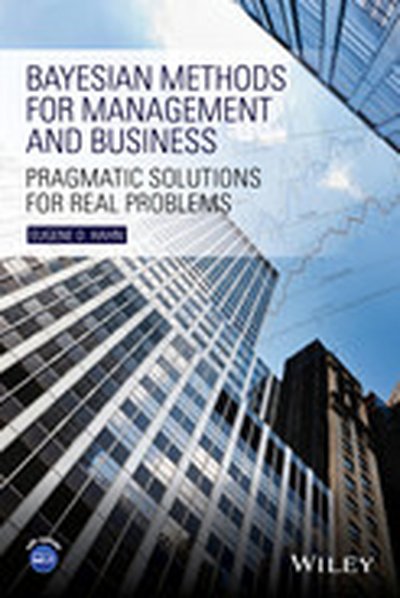
Bayesian Methods for Management and Business: Pragmatic Solutions for Real Problems

HIGHLIGHTS THE USE OF BAYESIAN STATISTICS TO GAIN INSIGHTS FROM EMPIRICAL DATA Featuring an accessible approach, Bayesian Methods for Management and Business: Pragmatic Solutions for Real Problems demonstrates how Bayesian statistics can help to provide insights into important issues facing business and management. The book draws on multidisciplinary applications and examples and utilizes the freely available software WinBUGS and R to illustrate the integration of Bayesian statistics within data-rich environments. Computational issues are discussed and integrated with coverage of linear models, sensitivity analysis, Markov Chain Monte Carlo (MCMC), and model comparison. In addition, more advanced models including hierarchal models, generalized linear models, and latent variable models are presented to further bridge the theory and application in real-world usage. Bayesian Methods for Management and Business: Pragmatic Solutions for Real Problems also features: Numerous real-world examples drawn from multiple management disciplines such as strategy, international business, accounting, and information systems An incremental skill-building presentation based on analyzing data sets with widely applicable models of increasing complexity An accessible treatment of Bayesian statistics that is integrated with a broad range of business and management issues and problems A practical problem-solving approach to illustrate how Bayesian statistics can help to provide insight into important issues facing business and management Bayesian Methods for Management and Business: Pragmatic Solutions for Real Problems is an important textbook for Bayesian statistics courses at the advanced MBA-level and also for business and management PhD candidates as a first course in methodology. In addition, the book is a useful resource for management scholars and practitioners as well as business academics and practitioners who seek to broaden their methodological skill sets.

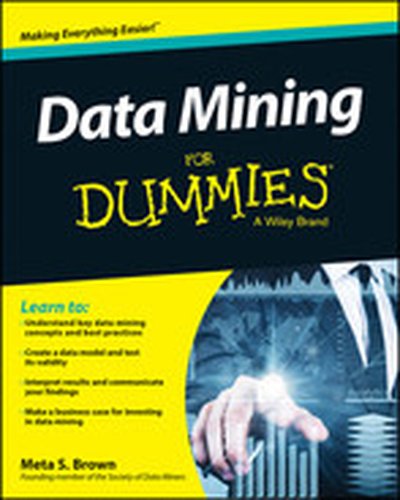
Data Mining For Dummies

Delve into your data for the key to success Data mining is quickly becoming integral to creating value and business momentum. The ability to detect unseen patterns hidden in the numbers exhaustively generated by day-to-day operations allows savvy decision-makers to exploit every tool at their disposal in the pursuit of better business. By creating models and testing whether patterns hold up, it is possible to discover new intelligence that could change your business's entire paradigm for a more successful outcome. Data Mining for Dummies shows you why it doesn't take a data scientist to gain this advantage, and empowers average business people to start shaping a process relevant to their business's needs. In this book, you'll learn the hows and whys of mining to the depths of your data, and how to make the case for heavier investment into data mining capabilities. The book explains the details of the knowledge discovery process including: Model creation, validity testing, and interpretation Effective communication of findings Available tools, both paid and open-source Data selection, transformation, and evaluation Data Mining for Dummies takes you step-by-step through a real-world data-mining project using open-source tools that allow you to get immediate hands-on experience working with large amounts of data. You'll gain the confidence you need to start making data mining practices a routine part of your successful business. If you're serious about doing everything you can to push your company to the top, Data Mining for Dummies is your ticket to effective data mining.

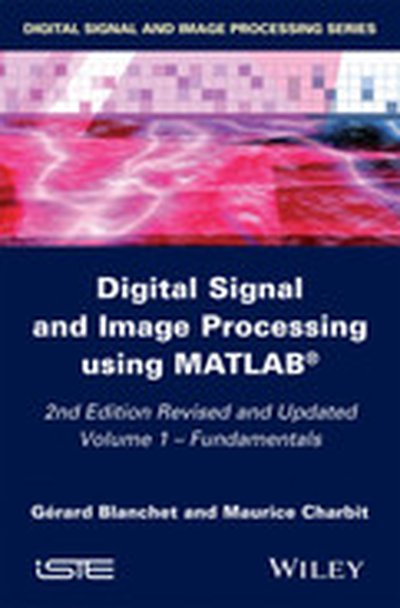
Digital Signal and Image Processing using MATLAB, Volume 1: Fundamentals, 2nd Edition

This fully revised and updated second edition presents the most important theoretical aspects of Image and Signal Processing (ISP) for both deterministic and random signals. The theory is supported by exercises and computer simulations relating to real applications. More than 200 programs and functions are provided in the MATLABÒ language, with useful comments and guidance, to enable numerical experiments to be carried out, thus allowing readers to develop a deeper understanding of both the theoretical and practical aspects of this subject. This fully revised new edition updates : - the introduction to MATLAB programs and functions as well as the Graphically displaying results for 2D displays - Calibration fundamentals for Discrete Time Signals and Sampling in Deterministic signals - image processing by modifying the contrast - also added are examples and exercises.

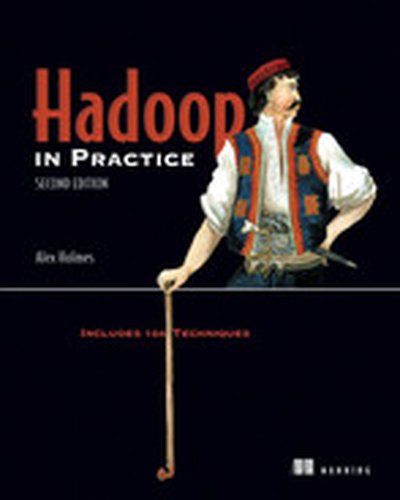
Hadoop in Practice, Second Edition

Hadoop in Practice, Second Edition provides over 100 tested, instantly useful techniques that will help you conquer big data, using Hadoop. This revised new edition covers changes and new features in the Hadoop core architecture, including MapReduce 2. Brand new chapters cover YARN and integrating Kafka, Impala, and Spark SQL with Hadoop. You'll also get new and updated techniques for Flume, Sqoop, and Mahout, all of which have seen major new versions recently. In short, this is the most practical, up-to-date coverage of Hadoop available anywhere About the Technology About the Book It's always a good time to upgrade your Hadoop skills! Hadoop in Practice, Second Edition provides a collection of 104 tested, instantly useful techniques for analyzing real-time streams, moving data securely, machine learning, managing large-scale clusters, and taming big data using Hadoop. This completely revised edition covers changes and new features in Hadoop core, including MapReduce 2 and YARN. You'll pick up hands-on best practices for integrating Spark, Kafka, and Impala with Hadoop, and get new and updated techniques for the latest versions of Flume, Sqoop, and Mahout. In short, this is the most practical, up-to-date coverage of Hadoop available. Readers need to know a programming language like Java and have basic familiarity with Hadoop. What's Inside Thoroughly updated for Hadoop 2 How to write YARN applications Integrate real-time technologies like Storm, Impala, and Spark Predictive analytics using Mahout and RR About the Reader About the Author Alex Holmes works on tough big-data problems. He is a software engineer, author, speaker, and blogger specializing in large-scale Hadoop projects. Quotes Very insightful. A deep dive into the Hadoop world. - Andrea Tarocchi, Red Hat, Inc. The most complete material on Hadoop and its ecosystem known to mankind! - Arthur Zubarev, Vital Insights Clear and concise, full of insights and highly applicable information. - Edward de Oliveira Ribeiro, DataStax, Inc. Comprehensive up-to-date coverage of Hadoop 2. - Muthusamy Manigandan, OzoneMedia