talk-data.com talk-data.com

Topic

data

5765

tagged

Activity Trend

3 peak/qtr
2020-Q1 2026-Q1

Activities

5765 activities · Newest first

Pro Oracle Database 11g RAC on Linux

Pro Oracle Database 11g RAC on Linux provides full-life-cycle guidance on implementing Oracle Real Application Clusters in a Linux environment. Real Application Clusters, commonly abbreviated as RAC, is Oracle's industry-leading architecture for scalable and fault-tolerant databases. RAC allows you to scale up and down by simply adding and subtracting inexpensive Linux servers. Redundancy provided by those multiple, inexpensive servers is the basis for the failover and other fault-tolerance features that RAC provides. Written by authors well-known for their talent with RAC, Pro Oracle Database 11g RAC on Linux gives you a rock-solid and technically flawless foundation on which to build your RAC-management skills. Authors Julian Dyke and Steve Shaw share their hard-won experience in building RAC clusters, showing you how to build for success using the very latest Oracle technologies, such as Automatic Storage Management (ASM) and Oracle Clusterware. You'll learn to troubleshoot performance and other problems. You'll even learn how to correctly deploy RAC in a virtual-machine environment based upon Oracle VM, which is the only virtualization solution supported by Oracle Corporation. RAC is a complex and powerful technology. It demands expertise in its deployment. You can't just "wing it" in creating a RAC solution. Julian and Steve have earned the right to term themselves expert—in Pro Oracle Database 11g RAC on Linux, they offer a rigorous and technically-correct treatment of RAC that helps you build a solid foundation of expertise and achieve success. Rigorous and technically accurate content Complete coverage of RAC, from planning to implementation to rollout to ongoing maintenance and troubleshooting Up-to-date with the very latest RAC features

Knight's Microsoft® Business Intelligence 24-Hour Trainer: Leveraging Microsoft SQL Server® Integration, Analysis, and Reporting Services with Excel® and SharePoint®

A book-and-video introduction to Microsoft's Business Intelligence tools If you are just starting to get a handle on Microsoft Business Intelligence (BI) tools, this book and accompanying video provides you with the just the right amount of information to perform basic business analysis and reporting. You'll explore the components and related tools that comprise the Microsoft BI toolset as well as the new BI features of Office 2010. After a basic primer on BI and data modeling, the expert team of authors provides you with step-by-step lessons in the book and videos on the accompanying Video on how to use SQL Server Integration Services, SQL Server Analysis Services, SQL Server Reporting Services, Excel BI (including PowerPivot), and SharePoint. Integrates instructional videos with each of the lessons found in the book to enhance your learning experience Explores the Microsoft Business Intelligence (BI) toolset as well as the new BI features of Office 2010 Encourages you to practice what you've learned in "Try It Out" sections Contains video demonstrations that walk you through how to tackle each lesson featured in the book With Knight's Microsoft Business Intelligence 24-Hour Trainer, veteran authors present you with an ideal introductory book-and-video package so that you can get started working with the BI toolset immediately!

Pentaho® Kettle Solutions: Building Open Source ETL Solutions with Pentaho Data Integration

A complete guide to Pentaho Kettle, the Pentaho Data lntegration toolset for ETL This practical book is a complete guide to installing, configuring, and managing Pentaho Kettle. If you're a database administrator or developer, you'll first get up to speed on Kettle basics and how to apply Kettle to create ETL solutions—before progressing to specialized concepts such as clustering, extensibility, and data vault models. Learn how to design and build every phase of an ETL solution. Shows developers and database administrators how to use the open-source Pentaho Kettle for enterprise-level ETL processes (Extracting, Transforming, and Loading data) Assumes no prior knowledge of Kettle or ETL, and brings beginners thoroughly up to speed at their own pace Explains how to get Kettle solutions up and running, then follows the 34 ETL subsystems model, as created by the Kimball Group, to explore the entire ETL lifecycle, including all aspects of data warehousing with Kettle Goes beyond routine tasks to explore how to extend Kettle and scale Kettle solutions using a distributed "cloud" Get the most out of Pentaho Kettle and your data warehousing with this detailed guide—from simple single table data migration to complex multisystem clustered data integration tasks.

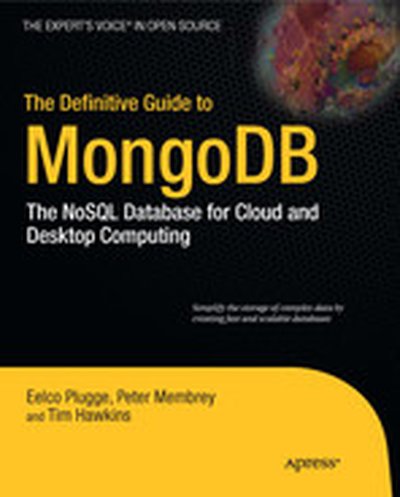
The Definitive Guide to MongoDB: The NoSQL Database for Cloud and Desktop Computing

MongoDB, a cross-platform NoSQL database, is the fastest-growing new database in the world. MongoDB provides a rich document orientated structure with dynamic queries that you'll recognize from RDMBS offerings such as MySQL. In other words, this is a book about a NoSQL database that does not require the SQL crowd to re-learn how the database world works! MongoDB has reached 1.0 and already boasts 50,000+ users. The community is strong and vibrant and MongoDB is improving at a fast rate. With scalable and fast databases becoming critical for today's applications, this book shows you how to install, administer and program MongoDB without pretending SQL never existed.

News Search, Blogs and Feeds

This book is about news search and monitoring. Aimed at professionals with a strategic need of monitoring the surrounding world, users with a need to find the best news sources, monitoring services and news search strategies and techniques will benefit from reading this book. The main purpose is to present a practical handbook with an analysis of readily available tools, blending with passages of a theoretical nature. It is also useful for students at LIS programmes and related information programmes and for librarians and information professionals. The authors aim to aid the reader in reaching a greater understanding of the core in news search and monitoring. Presents effective tools to evaluate news search engines and databases Harness the power of RSS (Real Simple Syndication) feeds in online news search and monitoring Learn how to navigate and critically question the news found in the blogosphere

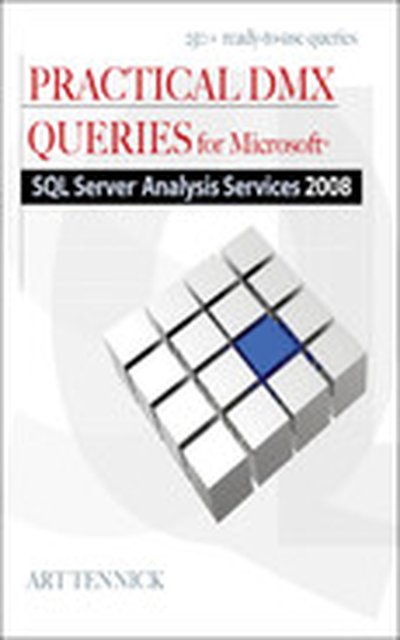
Practical DMX Queries for Microsoft SQL Server Analysis Services 2008

250+ Ready-to-Use, Powerful DMX Queries Transform data mining model information into actionable business intelligence using the Data Mining Extensions (DMX) language. Practical DMX Queries for Microsoft SQL Server Analysis Services 2008 contains more than 250 downloadable DMX queries you can use to extract and visualize data. The application, syntax, and results of each query are described in detail. The book emphasizes DMX for use in SSMS against SSAS, but the queries also apply to SSRS, SSIS, DMX in SQL, WinForms, WebForms, and many other applications. Techniques for generating DMX syntax from graphical tools are also demonstrated in this valuable resource. View cases within data mining structures and models using DMX Case queries Examine the content of a data mining model with DMX Content queries Perform DMX Prediction queries based on the Decision Trees algorithm and the Time Series algorithm Run Prediction and Cluster queries based on the Clustering algorithm Execute Prediction queries with Association and Sequence Clustering algorithms Use DMX DDL queries to create, alter, drop, back up, and restore data mining objects Display various parameters for each algorithm with Schema queries Examine the values of discrete, discretized, and continuous structure columns using Column queries Use graphical interfaces to generate Prediction, Content, Cluster, and DDL queries Deliver DMX query results to end users Download the source code from www.mhprofessional.com/computingdownload

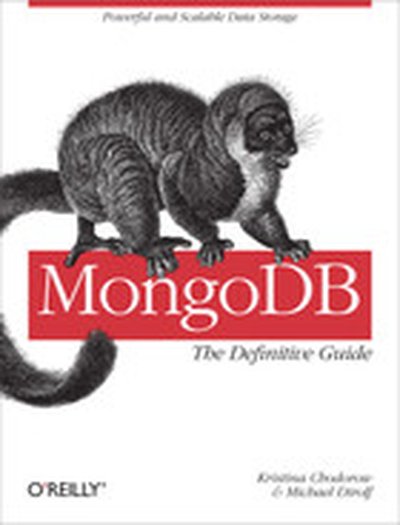
MongoDB: The Definitive Guide

How does MongoDB help you manage a huMONGOus amount of data collected through your web application? With this authoritative introduction, you'll learn the many advantages of using document-oriented databases, and discover why MongoDB is a reliable, high-performance system that allows for almost infinite horizontal scalability. Written by engineers from 10gen, the company that develops and supports this open source database, MongoDB: The Definitive Guide provides guidance for database developers, advanced configuration for system administrators, and an overview of the concepts and use cases for other people on your project. Learn how easy it is to handle data as self-contained JSON-style documents, rather than as records in a relational database. Explore ways that document-oriented storage will work for your project Learn how MongoDB’s schema-free data model handles documents, collections, and multiple databases Execute basic write operations, and create complex queries to find data with any criteria Use indexes, aggregation tools, and other advanced query techniques Learn about monitoring, security and authentication, backup and repair, and more Set up master-slave and automatic failover replication in MongoDB Use sharding to scale MongoDB horizontally, and learn how it impacts applications Get example applications written in Java, PHP, Python, and Ruby

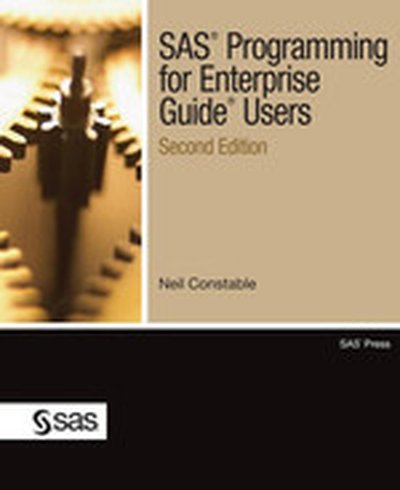
SAS Programming for Enterprise Guide Users, Second Edition

New and updated for SAS Enterprise Guide 4.2!

In this pragmatic, example-driven book, author Neil Constable demonstrates how you can use SAS code to enhance the capabilities of SAS Enterprise Guide. Designed to help you gain extra value from the products you already have, SAS Programming for Enterprise Guide Users contains tips and techniques that show you a variety of features that cannot be accessed directly through the task interfaces. In all cases, techniques are shown with examples that you can try and test, plus additional exercises are included to give you more practice. The end result is more efficient and resilient use of SAS Enterprise Guide in a wider variety of business areas.

Included is a discussion of the following subject areas: the Output Delivery System, advanced formatting, macro variables and macros, advanced reporting using PROC REPORT, highlighting in reports, hyperlinking between reports and graphs, data manipulation using SQL, data manipulation using the DATA step, extended graphics.

By adding small amounts of code in key areas, SAS Enterprise Guide users can get more out of the product than the tasks reveal. Users should be familiar with the SAS Enterprise Guide user interface and tasks. No programming experience is necessary.

This book is part of the SAS Press program.

Silverlight 4 Business Intelligence Software

Business Intelligence (BI) software allows you to view different components of a business using a single visual platform, which makes comprehending mountains of data easier. BI is everywhere. Applications that include reports, analytics, statistics, and historical and predictive modeling are all examples of BI. Currently, we are in the second generation of BI software—called BI 2.0—which is focused on writing BI software that is predictive, adaptive, simple, and interactive. As computers and software have evolved, more data can be presented to end users with increasingly visually rich techniques. Rich Internet Application (RIA) technologies such as Microsoft Silverlight can be used to transform traditional user-interfaces filled with boring data into fully interactive analytical applications that quickly deliver insight from large data sets. Furthermore, RIA applications now include 3D spatial-design capabilities that move beyond a simple list or grid and allow for interesting layouts of aggregated data. BI 2.0 implemented via an RIA technology can truly bring out the power of BI and deliver it to an average user on the Web. Next-Generation Business Intelligence Software with Silverlight 4 provides developers, designers, and architects with a solid foundation in BI design and architecture concepts for Microsoft Silverlight. This book covers key BI design concepts and how they can be applied without an existing BI infrastructure. Author Bart Czernicki provides you with examples of how to build small BI applications that are interactive, highly visual, statistical, predictive—and most importantly—intuitive to the end-user. BI isn't just for the executive branch of a Fortune 500 company—it is for the masses. Let Next-Generation Business Intelligence Software with Silverlight 4 show you how to unlock the rich intelligence you already have.

The Business Analyst's Guide to Oracle Hyperion Interactive Reporting 11

The Business Analyst's Guide to Oracle Hyperion Interactive Reporting 11 is your go-to resource for mastering this powerful Oracle business intelligence tool. Within these pages, you'll explore the Interactive Reporting Web Client software to its fullest potential, learning how to gather, analyze, and visually present data effectively. What this Book will help me do Navigate through the Oracle Hyperion interface and utilize key functionalities with confidence. Develop and optimize data models and queries to extract meaningful insights. Integrate external data and analyze results using advanced SQL capabilities. Create compelling dashboards and customize interactive visualizations for impactful presentations. Build highly detailed and professional-quality reports that address complex analytical needs. Author(s) Edward Cody is a seasoned data analysis expert with years of hands-on experience teaching and working with Oracle Hyperion products. His pragmatic approach to reporting challenges is evident in his professional achievements and consulting projects. Edward enjoys sharing his expertise to empower others to harness the potential of cutting-edge data tools. Who is it for? This book is ideal for business analysts, data professionals, and enterprise users aiming to master Oracle Hyperion Interactive Reporting 11. Whether you are new to the software or looking to deepen your expertise, it provides incremental learning for progressively building skills that turn data into strategic decisions.

Bias and Causation: Models and Judgment for Valid Comparisons

A one-of-a-kind resource on identifying and dealing with bias in statistical research on causal effects Do cell phones cause cancer? Can a new curriculum increase student achievement? Determining what the real causes of such problems are, and how powerful their effects may be, are central issues in research across various fields of study. Some researchers are highly skeptical of drawing causal conclusions except in tightly controlled randomized experiments, while others discount the threats posed by different sources of bias, even in less rigorous observational studies. Bias and Causation presents a complete treatment of the subject, organizing and clarifying the diverse types of biases into a conceptual framework. The book treats various sources of bias in comparative studies—both randomized and observational—and offers guidance on how they should be addressed by researchers. Utilizing a relatively simple mathematical approach, the author develops a theory of bias that outlines the essential nature of the problem and identifies the various sources of bias that are encountered in modern research. The book begins with an introduction to the study of causal inference and the related concepts and terminology. Next, an overview is provided of the methodological issues at the core of the difficulties posed by bias. Subsequent chapters explain the concepts of selection bias, confounding, intermediate causal factors, and information bias along with the distortion of a causal effect that can result when the exposure and/or the outcome is measured with error. The book concludes with a new classification of twenty general sources of bias and practical advice on how mathematical modeling and expert judgment can be combined to achieve the most credible causal conclusions. Throughout the book, examples from the fields of medicine, public policy, and education are incorporated into the presentation of various topics. In addition, six detailed case studies illustrate concrete examples of the significance of biases in everyday research. Requiring only a basic understanding of statistics and probability theory, Bias and Causation is an excellent supplement for courses on research methods and applied statistics at the upper-undergraduate and graduate level. It is also a valuable reference for practicing researchers and methodologists in various fields of study who work with statistical data. This book was selected as the 2011 Ziegel Prize Winner in Technometrics for the best book reviewed by the journal. It is also the winner of the 2010 PROSE Award for Mathematics from The American Publishers Awards for Professional and Scholarly Excellence

Excel® Dashboards & Reports

The go to resource for how to use Excel dashboards and reports to better conceptualize data Many Excel books do an adequate job of discussing the individual functions and tools that can be used to create an "Excel Report." What they don't offer is the most effective ways to present and report data. Offering a comprehensive review of a wide array of technical and analytical concepts, Excel Reports and Dashboards helps Excel users go from reporting data with simple tables full of dull numbers, to presenting key information through the use of high-impact, meaningful reports and dashboards that will wow management both visually and substantively. Details how to analyze large amounts of data and report the results in a meaningful, eye-catching visualization Describes how to use different perspectives to achieve better visibility into data, as well as how to slice data into various views on the fly Shows how to automate redundant reporting and analyses Part technical manual, part analytical guidebook, Excel Dashboards and Reports is the latest addition to the Mr. Spreadsheet's Bookshelf series and is the leading resource for learning to create dashboard reports in an easy-to-use format that's both visually attractive and effective.

Practical PowerPivot & DAX Formulas for Excel 2010

250 + ready-to-use, powerful DAX formulas Develop effective business intelligence (BI) solutions and drive faster, better decision making across your enterprise with help from an experienced database consultant and trainer. Through clear explanations, screenshots, and examples, Practical PowerPivot & DAX Formulas for Excel 2010 shows you how to extract actionable insights from vast amounts of corporate data. More than 250 downloadable DAX formulas plus valuable appendixes covering SQL, MDX, and DMX query design are included in this hands-on guide. Build pivot tables and charts with PowerPivot for Excel Import information from Access, Excel, data feeds, SQL Server, and other sources Organize and format BI reports using the PowerPivot Field List Write DAX formulas that filter, sort, average, and denormalize data Construct complex DAX formulas from statistical, math, and date functions Compare current and past performance using date and time intelligence Handle non-additive numbers, non-numeric values, and running totals Develop complete self-service and sharable BI solutions in a few minutes Download the source code from www.mhprofessional.com/computingdownload

Quick Start Guide to Oracle Fusion Development

Get Started with Oracle Fusion Development Written by a Group Product Manager at Oracle, this Oracle Press guide gets you up and running quickly with your first Oracle Fusion applications. Quick Start Guide to Oracle Fusion Development provides only the essential information you need to build applications in a matter of hours. Rapidly learn the building blocks and functionality you’ll use most of the time. The progression of topics closely matches the application building process, taking you through a typical developer scenario from start to completion. Quick Start Guide to Oracle Fusion Development features Concise and friendly format providing the essentials needed to start building applications right away Chapters that build on each other to illustrate a typical development scenario from start to finish Unique author insights gained from hours of one-on-one meetings with customers and work in Oracle’s usability labs The perfect entry point to Oracle Fusion development Introduction to Fusion and the Fusion Technologies; Introduction to JDeveloper and Oracle ADF; Finding your Way Around JDeveloper; Building Business Services; Introducing ADF Business Components; The Role of the Entity; A View of your Data – The View Object; The Application Module; Implementing Business Service Validation; More View Object Features; Building the User Interface; Introducing ADF Face Rich Client; ADF Model; Building Typical ADF Pages; Building Application Flow; Menus, Toolbars and Buttons; Advanced UI Techniques; Data Visualization and Other Rich UI Components; Application Look and Feel; Common Coding Patterns; Common Business Service Coding Examples; Common View Coding Examples

Analysis of Financial Time Series, Third Edition

This book provides a broad, mature, and systematic introduction to current financial econometric models and their applications to modeling and prediction of financial time series data. It utilizes real-world examples and real financial data throughout the book to apply the models and methods described. The author begins with basic characteristics of financial time series data before covering three main topics: Analysis and application of univariate financial time series The return series of multiple assets Bayesian inference in finance methods Key features of the new edition include additional coverage of modern day topics such as arbitrage, pair trading, realized volatility, and credit risk modeling; a smooth transition from S-Plus to R; and expanded empirical financial data sets. The overall objective of the book is to provide some knowledge of financial time series, introduce some statistical tools useful for analyzing these series and gain experience in financial applications of various econometric methods.

Google Analytics

Do you know what people do when they visit your website or web app? Or how much the site contributes to your bottom line? Google Analytics keeps track and makes it easy for you to learn precisely what's happening. This hands-on guide shows you how to get the most out of this free and powerful tool -- whether you're new to Google Analytics or have been using it for years. Google Analytics shows you how to track different market segments and analyze conversion rates, and reveals advanced techniques such as marketing-campaign tracking, a valuable feature that most people overlook. And this practical book not only provides complete code samples for web developers, it also explains the concepts behind the code to marketers, managers, and others on your team. Discover exactly how the Google Analytics system works Learn how to configure the system to measure data most relevant to your business goals Track online marketing activities, including cost-per-click ads, email, and internal campaigns Track events -- rather than page views -- on sites with features such as maps, embedded video, and widgets Configure Google Analytics to track enterprise data, including multiple domains Use advanced techniques such as custom variables and CRM integration

GARCH Models

This book provides a comprehensive and systematic approach to understanding GARCH time series models and their applications whilst presenting the most advanced results concerning the theory and practical aspects of GARCH. The probability structure of standard GARCH models is studied in detail as well as statistical inference such as identification, estimation and tests. The book also provides coverage of several extensions such as asymmetric and multivariate models and looks at financial applications. Key features: Provides up-to-date coverage of the current research in the probability, statistics and econometric theory of GARCH models. Numerous illustrations and applications to real financial series are provided. Supporting website featuring R codes, Fortran programs and data sets. Presents a large collection of problems and exercises. This authoritative, state-of-the-art reference is ideal for graduate students, researchers and practitioners in business and finance seeking to broaden their skills of understanding of econometric time series models.

IBM Lotus Notes 8.5 User Guide

IBM Lotus Notes 8.5 User Guide is your comprehensive resource for efficiently mastering Lotus Notes. This practical guide provides step-by-step instructions for daily tasks, tips for boosting productivity, and expert advice on features like email, calendars, widgets, and more. What this Book will help me do Effortlessly organize your workday with Lotus Notes' advanced calendar and scheduling tools. Communicate effectively using Lotus Notes' email features, complete with time-saving automation tips. Streamline your workflow by customizing Lotus Notes widgets and preferences. Enhance team collaboration with practical setups for Sametime and Notes applications. Be productive remotely by leveraging Lotus Notes' remote work capabilities and Symphony office suite. Author(s) Karen Hooper, an experienced Lotus Notes practitioner, brings years of expertise in business software to this guide. With a focus on simplicity and user accessibility, she demystifies technology, helping users unlock their potential. Her empathetic and hands-on approach ensures every reader feels empowered. Who is it for? This book is ideal for business users, whether beginners or experienced, looking to optimize their use of Lotus Notes. It suits professionals aiming to save time and boost efficiency. Readers will find actionable insights and solutions to common challenges, tailored to varying skill levels.

Oracle CRM On Demand Dashboards

Design and Deliver Oracle CRM On Demand Dashboards Create custom, interactive dashboards to deliver actionable business intelligence directly to end users with help from this Oracle Press guide. Oracle CRM On Demand Dashboards provides comprehensive coverage of the versatile features available in Oracle Answers On Demand coupled with detailed planning and design strategies for building and deploying reports and dashboards with Oracle CRM On Demand. Real-world examples and time-saving formatting tips are included throughout this practical resource. Configure administrative settings to access report and dashboard development tools Take advantage of built-in dashboards Plan dashboards and reports based on business needs Create, edit, manage, save, and delete custom dashboards Configure dashboard properties and pages Add and configure dashboard objects, such as guided navigation, links, images, and folders Display and arrange reports on dashboards Develop dashboard filter prompts Deploy dashboards to Oracle CRM On Demand end users