talk-data.com talk-data.com

Topic

data

5765

tagged

Activity Trend

3 peak/qtr
2020-Q1 2026-Q1

Activities

5765 activities · Newest first

Learn Microsoft Power Apps - Second Edition

Learn Microsoft Power Apps is your complete guide to building personalized business applications using Microsoft's low-code platform. You'll discover how to create interactive, secure apps tailored to your needs, with the help of detailed examples, best practices, and progressive tutorials. Unleash the power of tools like AI Builder and Dataverse to add cutting-edge functionality to your applications. What this Book will help me do Understand the Power Apps ecosystem and its licensing to make informed decisions. Create canvas applications to address specific business challenges effectively. Incorporate integration with SharePoint, Power Automate, and other Microsoft tools for enhanced app capabilities. Use Dataverse for data storage and employ model-driven approaches for robust applications. Leverage artificial intelligence features like AI Builder and Copilot to accelerate and improve development. Author(s) Matthew Weston and Elisa Bárcena Martín are seasoned professionals in the Microsoft and business solutions field. Their combined experience includes decades of expertise in developing applications, consulting, and teaching others how to harness Power Platform technologies. They excel in breaking down complex topics into understandable, actionable content, and their supportive tone makes learning enjoyable and productive. Who is it for? This book is ideal for business analysts, IT professionals, and solution developers seeking to streamline business processes through custom applications. Whether you're a seasoned developer looking to expand into low-code platforms or a beginner eager to tackle real-world problems, this book guides you step by step. A basic understanding of Microsoft 365 is all that's needed to get started, giving non-developers and tech enthusiasts alike the confidence to create impactful applications.
Streamlit for Data Science - Second Edition

Streamlit for Data Science is your complete guide to mastering the creation of powerful, interactive data-driven applications using Python and Streamlit. With this comprehensive resource, you'll learn everything from foundational Streamlit skills to advanced techniques like integrating machine learning models and deploying apps to cloud platforms, enabling you to significantly enhance your data science toolkit. What this Book will help me do Master building interactive applications using Streamlit, including techniques for user interfaces and integrations. Develop visually appealing and functional data visualizations using Python libraries in Streamlit. Learn to integrate Streamlit applications with machine learning frameworks and tools like Hugging Face and OpenAI. Understand and apply best practices to deploy Streamlit apps to cloud platforms such as Streamlit Community Cloud and Heroku. Improve practical Python skills through implementing end-to-end data applications and prototyping data workflows. Author(s) Tyler Richards, the author of Streamlit for Data Science, is a senior data scientist with in-depth practical experience in building data-driven applications. With a passion for Python and data visualization, Tyler leverages his knowledge to help data professionals craft effective and compelling tools. His teaching approach combines clarity, hands-on exercises, and practical relevance. Who is it for? This book is written for data scientists, engineers, and enthusiasts who use Python and want to create dynamic data-driven applications. With a focus on those who have some familiarity with Python and libraries like Pandas or NumPy, it assists readers in building on their knowledge by offering tailored guidance. Perfect for those looking to prototype data projects or enhance their programming toolkit.

Learning Microsoft Power Automate

Processing information efficiently is critical to the successful operation of modern organizations. One particularly helpful tool is Microsoft Power Automate, a low-code/no-code development platform designed to help tech-savvy users create and implement workflows. This practical book explains how small-business and enterprise users can replace manual work that takes days with an automated process you can set up in a few hours using Power Automate. Paul Papanek Stork, principal architect at Don't Pa..Panic Consulting, provides a concise yet comprehensive overview of the foundational skills required to understand and work with Power Automate. You'll learn how to use these workflows, or flows, to automate repetitive tasks or complete business processes without manual intervention. Whether you're transferring form responses to a list, managing document approvals, sending automatic reminders for overdue tasks, or archiving emails and attachments, these skills will help you: Design and build flows with templates or from scratch Select triggers and actions to automate a process Add actions to a flow to retrieve and process information Use functions to transform information Control the logic of a process using conditional actions, loops, or parallel branches Implement error checking to avoid potential problems

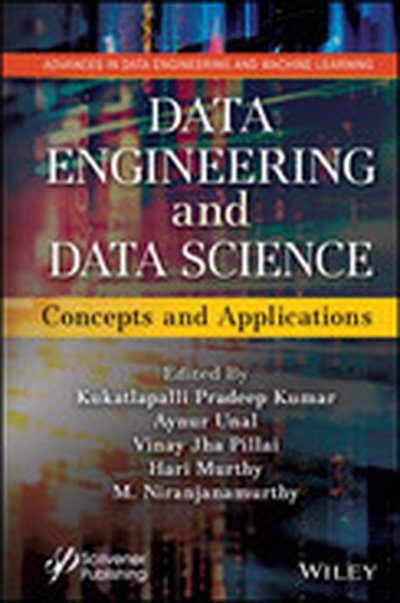
Data Engineering and Data Science

DATA ENGINEERING and DATA SCIENCE Written and edited by one of the most prolific and well-known experts in the field and his team, this exciting new volume is the “one-stop shop” for the concepts and applications of data science and engineering for data scientists across many industries. The field of data science is incredibly broad, encompassing everything from cleaning data to deploying predictive models. However, it is rare for any single data scientist to be working across the spectrum day to day. Data scientists usually focus on a few areas and are complemented by a team of other scientists and analysts. Data engineering is also a broad field, but any individual data engineer doesn’t need to know the whole spectrum of skills. Data engineering is the aspect of data science that focuses on practical applications of data collection and analysis. For all the work that data scientists do to answer questions using large sets of information, there have to be mechanisms for collecting and validating that information. In this exciting new volume, the team of editors and contributors sketch the broad outlines of data engineering, then walk through more specific descriptions that illustrate specific data engineering roles. Data-driven discovery is revolutionizing the modeling, prediction, and control of complex systems. This book brings together machine learning, engineering mathematics, and mathematical physics to integrate modeling and control of dynamical systems with modern methods in data science. It highlights many of the recent advances in scientific computing that enable data-driven methods to be applied to a diverse range of complex systems, such as turbulence, the brain, climate, epidemiology, finance, robotics, and autonomy. Whether for the veteran engineer or scientist working in the field or laboratory, or the student or academic, this is a must-have for any library.

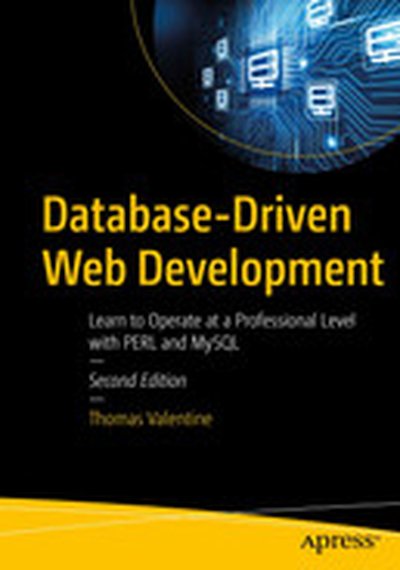
Database-Driven Web Development: Learn to Operate at a Professional Level with PERL and MySQL

This book will teach you the essential knowledge required to be a successful and productive web developer with the ability to produce cutting-edge websites utilizing a database. This updated edition starts with the fundamentals of web development before delving into Perl and MySQL concepts such as script and database modelling, script-driven database interactions, content generation from a database, and information delivery from the server to the browser and vice versa. The only skills required to get the most from this book are basic knowledge of how the Internet works and a novice skill level with Perl and MySQL. The rest is intuitively presented code that most people can quickly and easily understand and employ. An extensive selection of practical, fully functional programming constructs in six different programming languages will give you the knowledge and tools required to create eye-catching, capable, and functionally impressive database-driven websites. Author Thomas Valentine has taken the concepts presented in the first edition of this book to new heights, offering in-depth discussions of each area of functionality required to develop fully formed database-driven web applications. He has expanded on the examples presented in the first edition and has included some very interesting and useful programming techniques for your consideration. Upon completing this book, you’ll have gained the benefit of the author’s decades worth of experience and will be able to apply your new knowledge and skills to your own projects. What You Will Learn Install, configure and use a trio of software packages (Apache Web Server, MySQL Database Server, and Perl Scripting Server) Create an effective web development workstation with databases in mind Use the PERL scripting language and MySQL databases effectively Maximize the Apache Web Server Who This Book Is For Those who already know web development basics and web developers who want to master database-driven web development. The skills required to understand the concepts put forth in this book are a working knowledge of PERL and basic MySQL.

The Unrealized Opportunities with Real-Time Data

The amount of data generated from various processes and platforms has increased exponentially in the past decade, and the challenges of filtering useful data out of streams of raw data has become even greater. Meanwhile, the essence of making useful insights from that data has become even more important. In this incisive report, Federico Castanedo examines the challenges companies face when acting on data at rest as well as the benefits you unlock when acting on data as it's generated. Data engineers, enterprise architects, CTOs, and CIOs will explore the tools, processes, and mindset your company needs to process streaming data in real time. Learn how to make quick data-driven decisions to gain an edge on competitors. This report helps you: Explore gaps in today's real-time data architectures, including the limitations of real-time analytics to act on data immediately Examine use cases that can't be served efficiently with real-time analytics Understand how stream processing engines work with real-time data Learn how distributed data processing architectures, stream processing, streaming analytics, and event-based architectures relate to real-time data Understand how to transition from traditional batch processing environments to stream processing Federico Castanedo is an academic director and adjunct professor at IE University in Spain. A data science and AI leader, he has extensive experience in academia, industry, and startups.

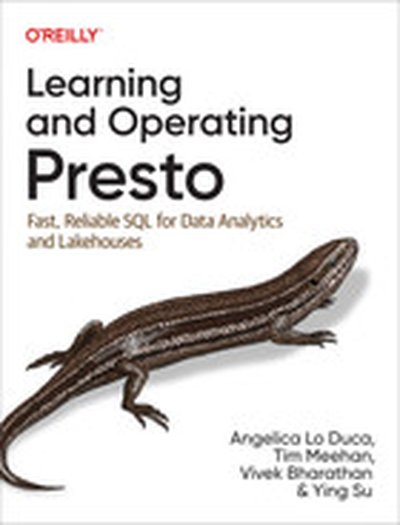
Learning and Operating Presto

The Presto community has mushroomed since its origins at Facebook in 2012. But ramping up this open source distributed SQL query engine can be challenging even for the most experienced engineers. With this practical book, data engineers and architects, platform engineers, cloud engineers, and software engineers will learn how to use Presto operations at your organization to derive insights on datasets wherever they reside. Authors Angelica Lo Duca, Tim Meehan, Vivek Bharathan, and Ying Su explain what Presto is, where it came from, and how it differs from other data warehousing solutions. You'll discover why Facebook, Uber, Alibaba Cloud, Hewlett Packard Enterprise, IBM, Intel, and many more use Presto and how you can quickly deploy Presto in production. With this book, you will: Learn how to install and configure Presto Use Presto with business intelligence tools Understand how to connect Presto to a variety of data sources Extend Presto for real-time business insight Learn how to apply best practices and tuning Get troubleshooting tips for logs, error messages, and more Explore Presto's architectural concepts and usage patterns Understand Presto security and administration

Kafka Connect

Used by more than 80% of Fortune 100 companies, Apache Kafka has become the de facto event streaming platform. Kafka Connect is a key component of Kafka that lets you flow data between your existing systems and Kafka to process data in real time. With this practical guide, authors Mickael Maison and Kate Stanley show data engineers, site reliability engineers, and application developers how to build data pipelines between Kafka clusters and a variety of data sources and sinks. Kafka Connect allows you to quickly adopt Kafka by tapping into existing data and enabling many advanced use cases. No matter where you are in your event streaming journey, Kafka Connect is the ideal tool for building a modern data pipeline. Learn Kafka Connect's capabilities, main concepts, and terminology Design data and event streaming pipelines that use Kafka Connect Configure and operate Kafka Connect environments at scale Deploy secured and highly available Kafka Connect clusters Build sink and source connectors and single message transforms and converters

Learning Data Science

As an aspiring data scientist, you appreciate why organizations rely on data for important decisions—whether it's for companies designing websites, cities deciding how to improve services, or scientists discovering how to stop the spread of disease. And you want the skills required to distill a messy pile of data into actionable insights. We call this the data science lifecycle: the process of collecting, wrangling, analyzing, and drawing conclusions from data. Learning Data Science is the first book to cover foundational skills in both programming and statistics that encompass this entire lifecycle. It's aimed at those who wish to become data scientists or who already work with data scientists, and at data analysts who wish to cross the "technical/nontechnical" divide. If you have a basic knowledge of Python programming, you'll learn how to work with data using industry-standard tools like pandas. Refine a question of interest to one that can be studied with data Pursue data collection that may involve text processing, web scraping, etc. Glean valuable insights about data through data cleaning, exploration, and visualization Learn how to use modeling to describe the data Generalize findings beyond the data

Building Real-Time Analytics Systems

Gain deep insight into real-time analytics, including the features of these systems and the problems they solve. With this practical book, data engineers at organizations that use event-processing systems such as Kafka, Google Pub/Sub, and AWS Kinesis will learn how to analyze data streams in real time. The faster you derive insights, the quicker you can spot changes in your business and act accordingly. Author Mark Needham from StarTree provides an overview of the real-time analytics space and an understanding of what goes into building real-time applications. The book's second part offers a series of hands-on tutorials that show you how to combine multiple software products to build real-time analytics applications for an imaginary pizza delivery service. You will: Learn common architectures for real-time analytics Discover how event processing differs from real-time analytics Ingest event data from Apache Kafka into Apache Pinot Combine event streams with OLTP data using Debezium and Kafka Streams Write real-time queries against event data stored in Apache Pinot Build a real-time dashboard and order tracking app Learn how Uber, Stripe, and Just Eat use real-time analytics

Low-Code AI

Take a data-first and use-case-driven approach with Low-Code AI to understand machine learning and deep learning concepts. This hands-on guide presents three problem-focused ways to learn no-code ML using AutoML, low-code using BigQuery ML, and custom code using scikit-learn and Keras. In each case, you'll learn key ML concepts by using real-world datasets with realistic problems. Business and data analysts get a project-based introduction to ML/AI using a detailed, data-driven approach: loading and analyzing data; feeding data into an ML model; building, training, and testing; and deploying the model into production. Authors Michael Abel and Gwendolyn Stripling show you how to build machine learning models for retail, healthcare, financial services, energy, and telecommunications. You'll learn how to: Distinguish between structured and unstructured data and the challenges they present Visualize and analyze data Preprocess data for input into a machine learning model Differentiate between the regression and classification supervised learning models Compare different ML model types and architectures, from no code to low code to custom training Design, implement, and tune ML models Export data to a GitHub repository for data management and governance

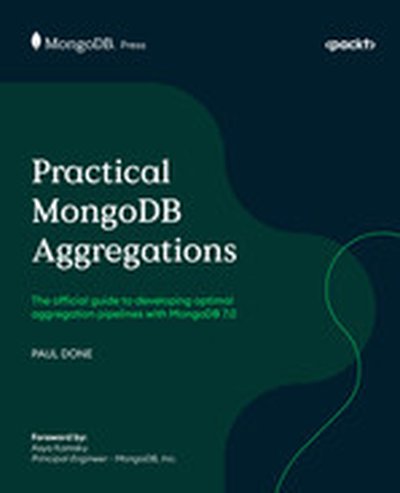
Practical MongoDB Aggregations

Practical MongoDB Aggregations serves as the definitive guide to mastering aggregation pipelines within MongoDB 7.0. Officially endorsed by MongoDB, Inc., this book provides streamlined strategies and practical examples to help you achieve complex data manipulation and analytical tasks, ultimately enhancing your database operation proficiency. What this Book will help me do Understand the architecture of the MongoDB aggregation framework to build scalable pipelines. Design and implement optimized aggregation pipelines for high performance. Learn practical techniques for processing large datasets efficiently using sharding. Apply data processing directly within MongoDB to minimize external workflows. Master handling arrays and securing data through well-designed pipelines. Author(s) Paul Done is an experienced software engineer with in-depth expertise in MongoDB and database systems. With years of professional experience managing and optimizing databases, Paul draws from real-world scenarios to devise effective strategies for learning MongoDB's advanced features. His approachable and instructional writing style empowers developers, engineers, and analysts to reach their full potential. Who is it for? This book is perfect for developers, database architects, and data engineers who have a foundational understanding of MongoDB and are looking to deepen their practical skills in using aggregation pipelines. Professionals who want to perform efficient data processing and gain insights into MongoDB's advanced features will find this guide invaluable. If you wish to streamline analytical tasks, optimize performance, and work efficiently with MongoDB's latest functionalities, this book is tailored for you.

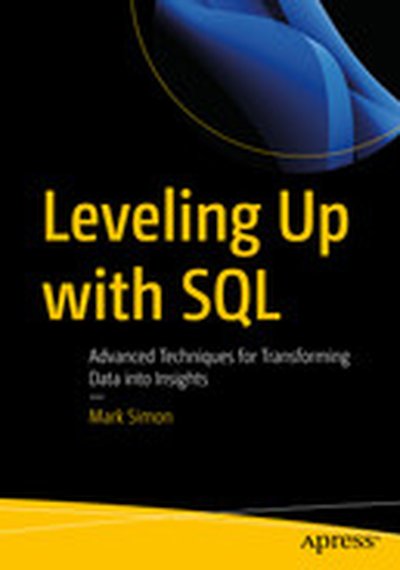
Leveling Up with SQL: Advanced Techniques for Transforming Data into Insights

Learn to write SQL queries to select and analyze data, and improve your ability to manipulate data. This book will help you take your existing skills to the next level. Author Mark Simon kicks things off with a quick review of basic SQL knowledge, followed by a demonstration of how efficient SQL databases are designed and how to extract just the right data from them. You’ll then learn about each individual table’s structure and how to work with the relationships between tables. As you progress through the book, you will learn more sophisticated techniques such as using common table expressions and subqueries, analyzing your data using aggregate and windowing functions, and how to save queries in the form of views and other methods. This book employs an accessible approach to work through a realistic sample, enabling you to learn concepts as they arise to improve parts of the database or to work with the data itself. After completing this book, you will have a more thorough understanding of database structure and how to use advanced techniques to extract, manage, and analyze data. What Will You Learn Gain a stronger understanding of database design principles, especially individual tables Understand the relationships between tables Utilize techniques such as views, subqueries, common table expressions, and windowing functions Who Is This Book For: SQL Databases users who want to improve their knowledge and techniques.

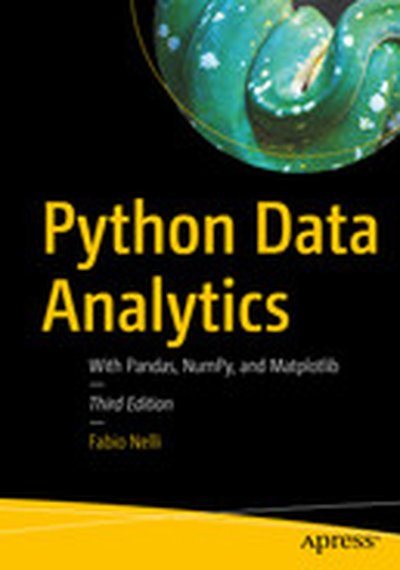
Python Data Analytics: With Pandas, NumPy, and Matplotlib

Explore the latest Python tools and techniques to help you tackle the world of data acquisition and analysis. You'll review scientific computing with NumPy, visualization with matplotlib, and machine learning with scikit-learn. This third edition is fully updated for the latest version of Python and its related libraries, and includes coverage of social media data analysis, image analysis with OpenCV, and deep learning libraries. Each chapter includes multiple examples demonstrating how to work with each library. At its heart lies the coverage of pandas, for high-performance, easy-to-use data structures and tools for data manipulation Author Fabio Nelli expertly demonstrates using Python for data processing, management, and information retrieval. Later chapters apply what you've learned to handwriting recognition and extending graphical capabilities with the JavaScript D3 library. Whether you are dealing with sales data, investment data, medical data, web page usage, or other data sets, Python Data Analytics, Third Edition is an invaluable reference with its examples of storing, accessing, and analyzing data. What You'll Learn Understand the core concepts of data analysis and the Python ecosystem Go in depth with pandas for reading, writing, and processing data Use tools and techniques for data visualization and image analysis Examine popular deep learning libraries Keras, Theano,TensorFlow, and PyTorch Who This Book Is For Experienced Python developers who need to learn about Pythonic tools for data analysis

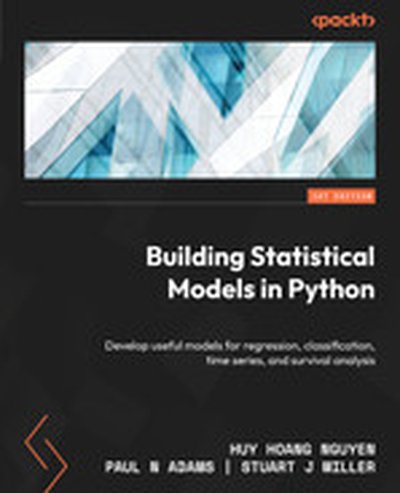
Building Statistical Models in Python

Building Statistical Models in Python is your go-to guide for mastering statistical modeling techniques using Python. By reading this book, you will explore how to use Python libraries like stats models and others to tackle tasks such as regression, classification, and time series analysis. What this Book will help me do Develop a deep practical knowledge of statistical concepts and their implementation in Python. Create regression and classification models to solve real-world problems. Gain expertise analyzing time series data and generating valuable forecasts. Learn to perform hypothesis verification to interpret data correctly. Understand survival analysis and apply it in various industry scenarios. Author(s) Huy Hoang Nguyen, Paul N Adams, and Stuart J Miller bring their extensive expertise in data science and Python programming to the table. With years of professional experience in both industry and academia, they aim to make statistical modeling approachable and applicable. Combining technical depth with hands-on coding, their goal is to ensure readers not only understand the theory but also gain confidence in its application. Who is it for? This book is tailored for beginners and intermediate programmers seeking to learn statistical modeling without a prerequisite in mathematics. It's ideal for data analysts, data scientists, and Python enthusiasts who want to leverage statistical models to gain insights from data. With this book, you will journey from the basics to advanced applications, making it perfect for those who aim to master statistical analysis.

Business Intelligence Career Master Plan

Embark on your business intelligence career with 'Business Intelligence Career Master Plan'. This book provides you with a clear roadmap, actionable insights, and expert advice to help you navigate the challenges of building a successful career in BI. You'll learn everything from identifying your starting point in BI to developing critical skills in data analysis, visualization, and management. What this Book will help me do Understand various business intelligence roles and their responsibilities to find your ideal BI career path. Develop expertise in using tools like Power BI and databases like AdventureWorks to handle and analyze data effectively. Master the art of creating informative and compelling data visualizations to tell impactful data stories. Gain the technical skills needed for programming and system development to excel in the BI field. Learn how to automate and optimize BI workflows to enhance productivity and efficiency. Author(s) The authors, None Chavez and None Moncada, excel in mentoring aspiring business intelligence professionals. With vast experience in BI systems and project management, they aim to make technical concepts accessible and fascinating. Their hands-on guidance empowers readers to build essential skills and thrive in the BI field. Who is it for? This book is ideal for aspiring business intelligence developers and data analysts eager to advance their careers. If you're passionate about data and enjoy solving complex problems, this resource will equip you with the knowledge and tools to succeed. Starting with a foundational understanding of common tools like Excel and SQL is recommended to get the most out of this book.

IBM Storage as a Service Offering Guide

IBM® Storage as a Service (STaaS) extends your hybrid cloud experience with a new flexible consumption model enabled for both your on-premises and hybrid cloud infrastructure needs, giving you the agility, cash flow efficiency, and services of cloud storage with the flexibility to dynamically scale up or down and only pay for what you use beyond the minimal capacity. This IBM Redpaper provides a detailed introduction to the IBM STaaS service. The paper is targeted for data center managers and storage administrators.

IBM Power E1050: Technical Overview and Introduction

This IBM® Redpaper publication is a comprehensive guide that covers the IBM Power E1050 server (9043-MRX) that uses the latest IBM Power10 processor-based technology and supports IBM AIX® and Linux operating systems (OSs). The goal of this paper is to provide a hardware architecture analysis and highlight the changes, new technologies, and major features that are being introduced in this system, such as: The latest IBM Power10 processor design, including the dual-chip module (DCM) packaging, which is available in various configurations from 12 - 24 cores per socket. Support of up to 16 TB of memory. Native Peripheral Component Interconnect Express (PCIe) 5th generation (Gen5) connectivity from the processor socket to deliver higher performance and bandwidth for connected adapters. Open Memory Interface (OMI) connected Differential Dual Inline Memory Module (DDIMM) memory cards delivering increased performance, resiliency, and security over industry-standard memory technologies, including transparent memory encryption. Enhanced internal storage performance with the use of native PCIe-connected Non-volatile Memory Express (NVMe) devices in up to 10 internal storage slots to deliver up to 64 TB of high-performance, low-latency storage in a single 4-socket system. Consumption-based pricing in the Power Private Cloud with Shared Utility Capacity commercial model to allow customers to consume resources more flexibly and efficiently, including AIX, Red Hat Enterprise Linux (RHEL), SUSE Linux Enterprise Server, and Red Hat OpenShift Container Platform workloads. This publication is for professionals who want to acquire a better understanding of IBM Power products. The intended audience includes: IBM Power customers Sales and marketing professionals Technical support professionals IBM Business Partners Independent software vendors (ISVs) This paper expands the set of IBM Power documentation by providing a desktop reference that offers a detailed technical description of the Power E1050 Midrange server model. This paper does not replace the current marketing materials and configuration tools. It is intended as an extra source of information that, together with existing sources, can be used to enhance your knowledge of IBM server solutions..

IBM Power E1080 Technical Overview and Introduction

This IBM® Redpaper® publication provides a broad understanding of a new architecture of the IBM Power® E1080 (also known as the Power E1080) server that supports IBM AIX®, IBM i, and selected distributions of Linux operating systems. The objective of this paper is to introduce the Power E1080, the most powerful and scalable server of the IBM Power portfolio, and its offerings and relevant functions: Designed to support up to four system nodes and up to 240 IBM Power10™ processor cores The Power E1080 can be initially ordered with a single system node or two system nodes configuration, which provides up to 60 Power10 processor cores with a single node configuration or up to 120 Power10 processor cores with a two system nodes configuration. More support for a three or four system nodes configuration is to be added on December 10, 2021, which provides support for up to 240 Power10 processor cores with a full combined four system nodes server. Designed to supports up to 64 TB memory The Power E1080 can be initially ordered with the total memory RAM capacity up to 8 TB. More support is to be added on December 10, 2021 to support up to 64 TB in a full combined four system nodes server. Designed to support up to 32 Peripheral Component Interconnect® (PCIe) Gen 5 slots in a full combined four system nodes server and up to 192 PCIe Gen 3 slots with expansion I/O drawers The Power E1080 supports initially a maximum of two system nodes; therefore, up to 16 PCIe Gen 5 slots, and up to 96 PCIe Gen 3 slots with expansion I/O drawer. More support is to be added on December 10, 2021, to support up to 192 PCIe Gen 3 slots with expansion I/O drawers. Up to over 4,000 directly attached serial-attached SCSI (SAS) disks or solid-state drives (SSDs) Up to 1,000 virtual machines (VMs) with logical partitions (LPARs) per system System control unit, providing redundant system master Flexible Service Processor (FSP) Supports IBM Power System Private Cloud Solution with Dynamic Capacity This publication is for professionals who want to acquire a better understanding of Power servers. The intended audience includes the following roles: Customers Sales and marketing professionals Technical support professionals IBM Business Partners Independent software vendors (ISVs) This paper does not replace the current marketing materials and configuration tools. It is intended as an extra source of information that, together with existing sources, can be used to enhance your knowledge of IBM server solutions.