talk-data.com talk-data.com

Topic

Data Lakehouse

data_architecture data_warehouse data_lake

489

tagged

Activity Trend

118 peak/qtr
2020-Q1 2026-Q1

Activities

489 activities · Newest first

How EPRI Uses Computer Vision to Mitigate Wildfire Risks for Electric Utilities

For this talk, Labelbox has invited the Electric Power and Research Institute (EPRI) to share information about how it is using computer vision, drone technology, and Labelbox’s training data platform to reduce wildfire risks innate to electricity delivery. This talk is a great starting point for any data teams tackling difficult computer vision projects. The Labelbox team will demonstrate how teams can produce their own annotated datasets like EPRI did, and import them into the Lakehouse for AI with the Labelbox Connector for Databricks.

Mechanical failures from overhead electrical infrastructure, in certain environments, are described in utility wildfire mitigation plans as potential ignition concerns. The utility industry is evaluating drones and new inspection technologies that may support more efficient and timely identification of such at risk assets. EPRI will present several of its AI initiatives and their impact on wildfire prevention and proper maintenance of power lines.

Connect with us: Website: https://databricks.com Facebook: https://www.facebook.com/databricksinc Twitter: https://twitter.com/databricks LinkedIn: https://www.linkedin.com/company/data... Instagram: https://www.instagram.com/databricksinc/

How Robinhood Built a Streaming Lakehouse to Bring Data Freshness from 24h to Less Than 15 Mins

Robinhood’s data lake is the bedrock foundation that powers business analytics, product experimentation, and other machine learning applications throughout our organization. Come join this session where we will share our journey of building a scalable streaming data lakehouse with Spark, Postgres and other leading open source technologies.

We will lay out our architecture in depth and describe how we perform CDC streaming ingestion and incremental processing of 1000’s of Postgres tables into our data lake.

Connect with us: Website: https://databricks.com Facebook: https://www.facebook.com/databricksinc Twitter: https://twitter.com/databricks LinkedIn: https://www.linkedin.com/company/data... Instagram: https://www.instagram.com/databricksinc/

How the Largest County in the US is Transforming Hiring with a Modern Data Lakehouse

Los Angeles County’s Department of Human Resources (DHR) is responsible for attracting a diverse workforce for the 37 departments it supports. Each year, DHR processes upwards of 400,000 applications for job opportunities making it one of the largest employers in the nation. Managing a hiring process of this scale is complex with many complicated factors such as background checks and skills examination. These processes, if not managed properly, can create bottlenecks and a poor experience for both candidates and hiring managers.

In order to identify areas for improvement, DHR set out to build detailed operational metrics across each stage of the hiring process. DHR used to conduct high level analysis manually using excel and other disparate tools. The data itself was limited, difficult to obtain, and analyze. In addition, it was taking analysts weeks to manually pull data from half a dozen siloed systems into excel for cleansing and analysis. This process was labor-intensive, inefficient, and prone to human error.

To overcome these challenges, DHR in partnership with Internal Services Department (ISD) adopted a modern data architecture in the cloud. Powered by the Azure Databricks Lakehouse, DHR was able to bring together their diverse volumes of data into a single platform for data analytics. Manual ETL processes that took weeks could now be automated in 10 minutes or less. With this new architecture, DHR has built Business Intelligence dashboards to unpack the hiring process to get a clear picture of where the bottlenecks are and track the speed with which candidates move through the process The dashboards allow the County departments innovate and make changes to enhance and improve the experience of potential job seekers and improve the timeliness of securing highly qualified and diverse County personnel at all employment levels.

In this talk, we’ll discuss DHR’s journey towards building a data-driven hiring process, the architecture decisions that enabled this transformation and the types of analytics that we’ve deployed to improve hiring efforts.

Connect with us: Website: https://databricks.com Facebook: https://www.facebook.com/databricksinc Twitter: https://twitter.com/databricks LinkedIn: https://www.linkedin.com/company/data... Instagram: https://www.instagram.com/databricksinc/

Ingesting data into Lakehouse with COPY INTO

COPY INTO is a popular data ingestion SQL command for Databricks users, especially for customers using Databricks SQL. In this talk, we want to discuss the data ingestion use cases in Databricks and how COPY INTO fits your data ingestion needs. We will discuss a few new COPY INTO features and how to achieve the following use cases: 1. Loading data into a Delta Table incrementally ; 2. Fixing errors in already loaded data and helping you with data cleansing; 3. Evolving your schema over time; 4. Previewing data before ingesting; 5. Loading data from a third party data source. In this session, we will demo the new features, discuss the architecture for the implementation, and how other Databricks features are using COPY INTO under the hood.

Connect with us: Website: https://databricks.com Facebook: https://www.facebook.com/databricksinc Twitter: https://twitter.com/databricks LinkedIn: https://www.linkedin.com/company/data... Instagram: https://www.instagram.com/databricksinc/

Analytics Engineering and the Great Convergence   Tristan Handy   Keynote Data + AI Summit 2022

We've come a long way from the way data analysis used to be done. The emergence of the analytics engineering workflow, with dbt at its center, has helped usher in a new era of productivity. Not quite data engineering or data analysis, analytics engineering has enabled new levels of collaboration between two key sets of practitioners.

But that's not the only coming together happening right now. Enabled by the open lakehouse, the worlds of data analysis and AI/ML are also converging under a single roof, hinting at a new future of intertwined workloads and silo-free collaboration. It's a future that's tantalizing, and entirely within reach. Let's talk about making it happen.

Connect with us: Website: https://databricks.com Facebook: https://www.facebook.com/databricksinc Twitter: https://twitter.com/databricks LinkedIn: https://www.linkedin.com/company/data... Instagram: https://www.instagram.com/databricksinc/

Day 1 Afternoon Keynote |  Data + AI Summit 2022

Day 1 Afternoon Keynote | Data + AI Summit 2022 Supercharging our data architecture at Coinbase using Databricks Lakehouse | Eric Sun | Keynote Partner Connect & Ecosystem Strategy | Zaheera Valani What are ELT and CDC, and why are all the cool kids doing it? |George Fraser Analytics without Compromise | Francois Ajenstat Fireside Chat with Zhamak Dehghani and Arsalan Tavakoli

Connect with us: Website: https://databricks.com Facebook: https://www.facebook.com/databricksinc Twitter: https://twitter.com/databricks LinkedIn: https://www.linkedin.com/company/data... Instagram: https://www.instagram.com/databricksinc/

Day 1 Morning Keynote | Data + AI Summit 2022

Day 1 Morning Keynote | Data + AI Summit 2022 Welcome & "Destination Lakehouse" | Ali Ghodsi Apache Spark Community Update | Reynold Xin Streaming Lakehouse | Karthik Ramasamy Delta Lake | Michael Armbrust How Adobe migrated to a unified and open data Lakehouse to deliver personalization at unprecedented scale | Dave Weinstein Data Governance and Sharing on Lakehouse |Matei Zaharia Analytics Engineering and the Great Convergence | Tristan Handy Data Warehousing | Shant Hovespian Unlocking the power of data, AI & analytics: Amgen’s journey to the Lakehouse | Kerby Johnson

Get insights on how to launch a successful lakehouse architecture in Rise of the Data Lakehouse by Bill Inmon, the father of the data warehouse. Download the ebook: https://dbricks.co/3ER9Y0K

Connect with us: Website: https://databricks.com Facebook: https://www.facebook.com/databricksinc Twitter: https://twitter.com/databricks LinkedIn: https://www.linkedin.com/company/data... Instagram: https://www.instagram.com/databricksinc/

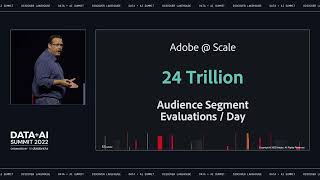
How Adobe migrated to a unified and open data Lakehouse to deliver personalization at scale.

In this keynote talk, David Weinstein, VP of Engineering for Adobe Experience Cloud, will share Adobe’s journey from a simple data lake to a unified, open Lakehouse architecture with Databricks. Adobe can now deliver personalized experiences at scale to diverse customers with greater speed, operational efficiency and faster innovation across the Experience Cloud portfolio. Learn why they chose to migrate from Iceberg to Delta Lake to drive its open standard development and accelerate innovation of their Lakehouse, and they’ll also share how leveraging the Delta Lake table format has allowed for techniques to support change data capture and significantly improve operational efficiency.

Connect with us: Website: https://databricks.com Facebook: https://www.facebook.com/databricksinc Twitter: https://twitter.com/databricks LinkedIn: https://www.linkedin.com/company/data... Instagram: https://www.instagram.com/databricksinc/

Optimizing Incremental Ingestion in the Context of a Lakehouse

Incremental ingestion of data is often trickier than one would assume, particularly when it comes to maintaining data consistency: for example, specific challenges arise depending on whether the data is ingested in a streaming or a batched fashion. In this session we want to share the real-life challenges encountered when setting up incremental ingestion pipeline in the context of a Lakehouse architecture.

In this session we outline how we used the recently introduced Databricks features, such as Autoloader and Change Data Feed, in addition to some more mature features, such as Spark Structured Streaming and Trigger Once functionality. These functionalities allowed us to transform batch processes into a “streaming” setup without having the need for the cluster to always run. This setup – which we are keen to share to the community - does not require reloading large amounts of data, and therefore represents a computationally, and consequently economically, cheaper solution.

In our presentation we dive deeper into each of the different aspects of the setup, with some extra focus on some essential Autoloader functionalities, such as schema inference, recovery mechanisms and file discovery modes.

Connect with us: Website: https://databricks.com Facebook: https://www.facebook.com/databricksinc Twitter: https://twitter.com/databricks LinkedIn: https://www.linkedin.com/company/data... Instagram: https://www.instagram.com/databricksinc/

Revolutionizing agriculture with AI: Delivering smart industrial solutions built upon a Lakehouse

John Deere is leveraging big data and AI to deliver ‘smart’ industrial solutions that are revolutionizing agriculture and construction, driving sustainability and ultimately helping to feed the world. The John Deere Data Factory that is built upon the Databricks Lakehouse Platform is at the core of this innovation. It ingests petabytes of data and trillions of records to give data teams fast, reliable access to standardized data sets supporting 100s of ML and analytics use cases across the organization. From IoT sensor-enabled equipment driving proactive alerts that prevent failures, to precision agriculture that maximizes field output, to optimizing operations in the supply chain, finance and marketing, John Deere is providing advanced products, technology and services for customers who cultivate, harvest, transform, enrich, and build upon the land.

Connect with us: Website: https://databricks.com Facebook: https://www.facebook.com/databricksinc Twitter: https://twitter.com/databricks LinkedIn: https://www.linkedin.com/company/data... Instagram: https://www.instagram.com/databricksinc/

Supercharging our data architecture at Coinbase using Databricks Lakehouse   Eric Sun

Coinbase is neither simply a finance company nor a tech company — it’s a crypto company. This distinction has big implications for how we work with the Blockchain, Product and Financial data that we need to drive our hypergrowth. We’ve recently enabled a Lakehouse architecture based upon Databricks to unify these complex and varied data sets, to deliver a high performance, continuous ingestion framework at an unprecedented scale. We can now support both ETL and ML workloads on one platform to deliver innovative batch and streaming use cases, and democratize data much faster by enabling teams to use the tools of their choice, while greatly reducing end-to-end latency and simplifying maintenance and operations. In this keynote, we will share our journey to the Lakehouse, and some of the lessons learned as we built an open data architecture at scale.

Connect with us: Website: https://databricks.com Facebook: https://www.facebook.com/databricksinc Twitter: https://twitter.com/databricks LinkedIn: https://www.linkedin.com/company/data... Instagram: https://www.instagram.com/databricksinc/

Day 2 Morning Keynote |  Data + AI Summit 2022

Day 2 Morning Keynote | Data + AI Summit 2022 Production Machine Learning | Patrick Wendell MLflow 2.0 | Kasey Uhlenhuth Revolutionizing agriculture with AI: Delivering smart industrial solutions built upon a Lakehouse architecture | Ganesh Jayaram Intuit’s Data Journey to the Lakehouse: Developing Smart, Personalized Financial Products for 100M+ Consumers & Small Businesses | Alon Amit and Manish Amde Workflows | Stacy Kerkela Delta Live Tables | Michael Armbrust AI and creativity, and building data products where there's no quantitative metric for success, such as in games, or web-scale search, or content discovery | Hilary Mason What to Know about Data Science and Machine Learning in 2022 | Peter Norvig Data-centric AI development: From Big Data to Good Data | Andrew Ng

Connect with us: Website: https://databricks.com Facebook: https://www.facebook.com/databricksinc Twitter: https://twitter.com/databricks LinkedIn: https://www.linkedin.com/company/data... Instagram: https://www.instagram.com/databricksinc/

Intuit’s Data Journey to the Lakehouse

Intuit is the global technology platform that helps 100M consumers and small businesses overcome their most important financial challenges. In 2020-21, Intuit QuickBooks Capital facilitated more than $1.4B in loans to approximately 40,000 small businesses to help manage their cash flow through the pandemic, by harnessing the power of data and AI.

Pivotal to Intuit’s success is a lakehouse data architecture, catalyzed by the adoption of Databricks, for collecting, processing, and transforming petabytes of raw data into a unified mesh of high quality data. Altogether, enabling the company to accelerate delivery of awesome AI-driven personalized customer experiences at scale with products such as TurboTax, QuickBooks and Mint.

In this talk, Intuit’s AI+Data Vice President of Product, Alon Amit and Director of Engineering, Manish Amde, will provide insight into the company’s migration to a lakehouse architecture, highlight use cases to illustrate its value, and share lessons learned.

Connect with us: Website: https://databricks.com Facebook: https://www.facebook.com/databricksinc Twitter: https://twitter.com/databricks LinkedIn: https://www.linkedin.com/company/data... Instagram: https://www.instagram.com/databricksinc/

Unlocking the power of data, AI & analytics: Amgen’s journey to the Lakehouse | Kerby Johnson

In this keynote, you will learn more about Amgen's data platform journey from data warehouse to data lakehouse. They’’ll discuss our decision process and the challenges they faced with legacy architectures, and how they designed and implemented a sustaining platform strategy with Databricks Lakehouse, accelerating their ability to democratize data to thousands of users.
Today, Amgen has implemented 400+ data science and analytics projects covering use cases like clinical trial optimization, supply chain management and commercial sales reporting, with more to come as they complete their digital transformation and unlock the power of data across the company.

Connect with us: Website: https://databricks.com Facebook: https://www.facebook.com/databricksinc Twitter: https://twitter.com/databricks LinkedIn: https://www.linkedin.com/company/data... Instagram: https://www.instagram.com/databricksinc/

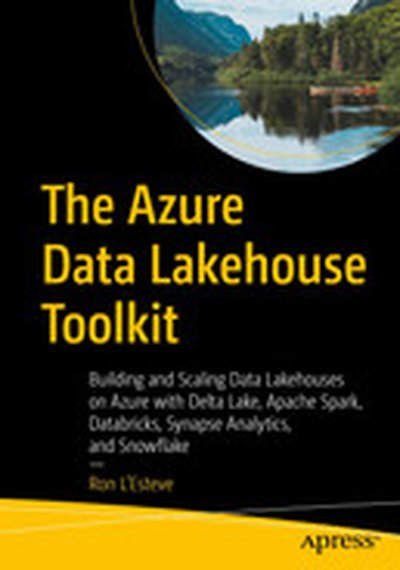
The Azure Data Lakehouse Toolkit: Building and Scaling Data Lakehouses on Azure with Delta Lake, Apache Spark, Databricks, Synapse Analytics, and Snowflake

Design and implement a modern data lakehouse on the Azure Data Platform using Delta Lake, Apache Spark, Azure Databricks, Azure Synapse Analytics, and Snowflake. This book teaches you the intricate details of the Data Lakehouse Paradigm and how to efficiently design a cloud-based data lakehouse using highly performant and cutting-edge Apache Spark capabilities using Azure Databricks, Azure Synapse Analytics, and Snowflake. You will learn to write efficient PySpark code for batch and streaming ELT jobs on Azure. And you will follow along with practical, scenario-based examples showing how to apply the capabilities of Delta Lake and Apache Spark to optimize performance, and secure, share, and manage a high volume, high velocity, and high variety of data in your lakehouse with ease. The patterns of success that you acquire from reading this book will help you hone your skills to build high-performing and scalable ACID-compliant lakehouses using flexible and cost-efficient decoupled storage and compute capabilities. Extensive coverage of Delta Lake ensures that you are aware of and can benefit from all that this new, open source storage layer can offer. In addition to the deep examples on Databricks in the book, there is coverage of alternative platforms such as Synapse Analytics and Snowflake so that you can make the right platform choice for your needs. After reading this book, you will be able to implement Delta Lake capabilities, including Schema Evolution, Change Feed, Live Tables, Sharing, and Clones to enable better business intelligence and advanced analytics on your data within the Azure Data Platform. What You Will Learn Implement the Data Lakehouse Paradigm on Microsoft’s Azure cloud platform Benefit from the new Delta Lake open-source storage layer for data lakehouses Take advantage of schema evolution, change feeds, live tables, and more Writefunctional PySpark code for data lakehouse ELT jobs Optimize Apache Spark performance through partitioning, indexing, and other tuning options Choose between alternatives such as Databricks, Synapse Analytics, and Snowflake Who This Book Is For Data, analytics, and AI professionals at all levels, including data architect and data engineer practitioners. Also for data professionals seeking patterns of success by which to remain relevant as they learn to build scalable data lakehouses for their organizations and customers who are migrating into the modern Azure Data Platform.

Summary The ecosystem for data tools has been going through rapid and constant evolution over the past several years. These technological shifts have brought about corresponding changes in data and platform architectures for managing data and analytical workflows. In this episode Colleen Tartow shares her insights into the motivating factors and benefits of the most prominent patterns that are in the popular narrative; data mesh and the modern data stack. She also discusses her views on the role of the data lakehouse as a building block for these architectures and the ongoing influence that it will have as the technology matures.

Announcements

Hello and welcome to the Data Engineering Podcast, the show about modern data management When you’re ready to build your next pipeline, or want to test out the projects you hear about on the show, you’ll need somewhere to deploy it, so check out our friends at Linode. With their new managed database service you can launch a production ready MySQL, Postgres, or MongoDB cluster in minutes, with automated backups, 40 Gbps connections from your application hosts, and high throughput SSDs. Go to dataengineeringpodcast.com/linode today and get a $100 credit to launch a database, create a Kubernetes cluster, or take advantage of all of their other services. And don’t forget to thank them for their continued support of this show! Atlan is the metadata hub for your data ecosystem. Instead of locking your metadata into a new silo, unleash its transformative potential with Atlan’s active metadata capabilities. Push information about data freshness and quality to your business intelligence, automatically scale up and down your warehouse based on usage patterns, and let the bots answer those questions in Slack so that the humans can focus on delivering real value. Go to dataengineeringpodcast.com/atlan today to learn more about how Atlan’s active metadata platform is helping pioneering data teams like Postman, Plaid, WeWork & Unilever achieve extraordinary things with metadata and escape the chaos. Modern data teams are dealing with a lot of complexity in their data pipelines and analytical code. Monitoring data quality, tracing incidents, and testing changes can be daunting and often takes hours to days or even weeks. By the time errors have made their way into production, it’s often too late and damage is done. Datafold built automated regression testing to help data and analytics engineers deal with data quality in their pull requests. Datafold shows how a change in SQL code affects your data, both on a statistical level and down to individual rows and values before it gets merged to production. No more shipping and praying, you can now know exactly what will change in your database! Datafold integrates with all major data warehouses as well as frameworks such as Airflow & dbt and seamlessly plugs into CI workflows. Visit dataengineeringpodcast.com/datafold today to book a demo with Datafold. Tired of deploying bad data? Need to automate data pipelines with less red tape? Shipyard is the premier data orchestration platform built to help your data team quickly launch, monitor, and share workflows in a matter of minutes. Build powerful workflows that connect your entire data stack end-to-end with a mix of your code and their open-source, low-code templates. Once launched, Shipyard makes data observability easy with logging, alerting, and retries that will catch errors before your business team does. So whether you’re ingesting data from an API, transforming it with dbt, updating BI tools, or sending data alerts, Shipyard centralizes these operations and handles the heavy lifting so your data team can finally focus on what they’re good at — solving problems with data. Go to dataengineeringpodcast.com/shipyard to get started automating with their free developer plan today! Your host is Tobias Macey and today I’m interviewing Colleen Tartow about her views on the forces shaping th

Data + AI Summit 2022 Keynote from John Deere: Revolutionizing agriculture with AI

Hear Ganesh Jayaram, CIO of John Deere, talk about how the company is leveraging big data and AI to deliver ‘smart’ industrial solutions that are revolutionizing agriculture, driving sustainability and ultimately helping to feed the world. The John Deere Data Factory that is built upon the Databricks Lakehouse Platform is at the core of this innovation. It ingests 8 petabytes of data and trillions of records to give data teams fast, reliable access to standardized data sets to deliver over 3000 ML and analytics use cases that democratize data across John Deere, to deliver a culture of empowerment where data is everybody's responsibility.

Visit the Data + AI Summit at https://databricks.com/dataaisummit/

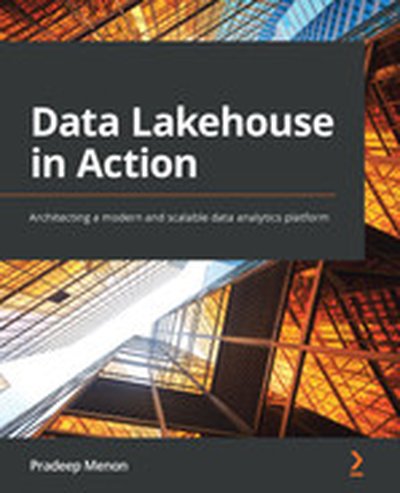
Data Lakehouse in Action

"Data Lakehouse in Action" provides a comprehensive exploration of the Data Lakehouse architecture, a modern solution for scalable and effective large-scale analytics. This book guides you through understanding the principles and components of the architecture, and its implementation using cloud platforms like Azure. Learn the practical techniques for designing robust systems tailored to organizational needs and maturity. What this Book will help me do Understand the evolution and need for modern data architecture patterns like Data Lakehouse. Learn how to design systems for data ingestion, storage, processing, and serving in a Data Lakehouse. Develop best practices for data governance and security in the Data Lakehouse architecture. Discover various analytics workflows enabled by the Data Lakehouse, including real-time and batch approaches. Implement practical Data Lakehouse patterns on a cloud platform, and integrate them with macro-patterns such as Data Mesh. Author(s) Pradeep Menon is a seasoned data architect and engineer with extensive experience implementing data analytics solutions for leading companies. With a penchant for simplifying complex architectures, Pradeep has authored several technical publications and frequently shares his expertise at industry conferences. His hands-on approach and passion for teaching shine through in his practical guides. Who is it for? This book is ideal for data professionals including architects, engineers, and data strategists eager to enhance their knowledge in modern analytics platforms. If you have a basic understanding of data architecture and are curious about implementing systems governed by the Data Lakehouse paradigm, this book is for you. It bridges foundational concepts with advanced practices, making it suitable for learners aiming to contribute effectively to their organization's analytics efforts.

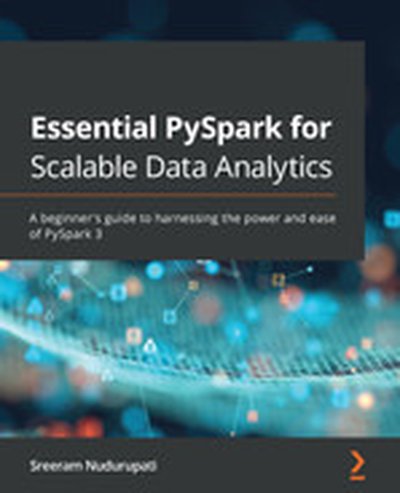
Essential PySpark for Scalable Data Analytics

Dive into the world of scalable data processing with 'Essential PySpark for Scalable Data Analytics'. This book is a comprehensive guide that helps beginners understand and utilize PySpark to process, analyze, and draw insights from large datasets effectively. With hands-on tutorials and clear explanations, you will gain the confidence to tackle big data analytics challenges. What this Book will help me do Understand and apply the distributed computing paradigm for big data. Learn to perform scalable data ingestion, cleansing, and preparation using PySpark. Create and utilize data lakes and the Lakehouse paradigm for efficient data storage and access. Develop and deploy machine learning models with scalability in mind. Master real-time analytics pipelines and create impactful data visualizations. Author(s) None Nudurupati is an experienced data engineer and educator, specializing in distributed systems and big data technologies. With years of practical experience in the field, None brings a clear and approachable teaching style to technical topics. Passionate about empowering readers, the author has designed this book to be both practical and inspirational for aspiring data practitioners. Who is it for? This book is ideal for data professionals including data scientists, engineers, and analysts looking to scale their data analytics processes. It assumes familiarity with basic data science concepts and Python, as well as some experience with SQL-like data analysis. This is particularly suitable for individuals aiming to expand their knowledge in distributed computing and PySpark to handle big data challenges. Achieving scalable and efficient data solutions is at the core of this guide.

Data Engineering with Apache Spark, Delta Lake, and Lakehouse

Data Engineering with Apache Spark, Delta Lake, and Lakehouse is a comprehensive guide packed with practical knowledge for building robust and scalable data pipelines. Throughout this book, you will explore the core concepts and applications of Apache Spark and Delta Lake, and learn how to design and implement efficient data engineering workflows using real-world examples. What this Book will help me do Master the core concepts and components of Apache Spark and Delta Lake. Create scalable and secure data pipelines for efficient data processing. Learn best practices and patterns for building enterprise-grade data lakes. Discover how to operationalize data models into production-ready pipelines. Gain insights into deploying and monitoring data pipelines effectively. Author(s) None Kukreja is a seasoned data engineer with over a decade of experience working with big data platforms. He specializes in implementing efficient and scalable data solutions to meet the demands of modern analytics and data science. Writing with clarity and a practical approach, he aims to provide actionable insights that professionals can apply to their projects. Who is it for? This book is tailored for aspiring data engineers and data analysts who wish to delve deeper into building scalable data platforms. It is suitable for those with basic knowledge of Python, Spark, and SQL, and seeking to learn Delta Lake and advanced data engineering concepts. Readers should be eager to develop practical skills for tackling real-world data engineering challenges.