talk-data.com talk-data.com

Topic

Data Quality

data_management data_cleansing data_validation

537

tagged

Activity Trend

82 peak/qtr
2020-Q1 2026-Q1

Activities

537 activities · Newest first

Summary The technological and social ecosystem of data engineering and data management has been reaching a stage of maturity recently. As part of this stage in our collective journey the focus has been shifting toward operation and automation of the infrastructure and workflows that power our analytical workloads. It is an encouraging sign for the industry, but it is still a complex and challenging undertaking. In order to make this world of DataOps more accessible and manageable the team at Nexla has built a platform that decouples the logical unit of data from the underlying mechanisms so that you can focus on the problems that really matter to your business. In this episode Saket Saurabh (CEO) and Avinash Shahdadpuri (CTO) share the story behind the Nexla platform, discuss the technical underpinnings, and describe how their concept of a Nexset simplifies the work of building data products for sharing within and between organizations.

Announcements

Hello and welcome to the Data Engineering Podcast, the show about modern data management When you’re ready to build your next pipeline, or want to test out the projects you hear about on the show, you’ll need somewhere to deploy it, so check out our friends at Linode. With their managed Kubernetes platform it’s now even easier to deploy and scale your workflows, or try out the latest Helm charts from tools like Pulsar and Pachyderm. With simple pricing, fast networking, object storage, and worldwide data centers, you’ve got everything you need to run a bulletproof data platform. Go to dataengineeringpodcast.com/linode today and get a $100 credit to try out a Kubernetes cluster of your own. And don’t forget to thank them for their continued support of this show! Schema changes, missing data, and volume anomalies caused by your data sources can happen without any advanced notice if you lack visibility into your data-in-motion. That leaves DataOps reactive to data quality issues and can make your consumers lose confidence in your data. By connecting to your pipeline orchestrator like Apache Airflow and centralizing your end-to-end metadata, Databand.ai lets you identify data quality issues and their root causes from a single dashboard. With Databand.ai, you’ll know whether the data moving from your sources to your warehouse will be available, accurate, and usable when it arrives. Go to dataengineeringpodcast.com/databand to sign up for a free 30-day trial of Databand.ai and take control of your data quality today. We’ve all been asked to help with an ad-hoc request for data by the sales and marketing team. Then it becomes a critical report that they need updated every week or every day. Then what do you do? Send a CSV via email? Write some Python scripts to automate it? But what about incremental sync, API quotas, error handling, and all of the other details that eat up your time? Today, there is a better way. With Census, just write SQL or plug in your dbt models and start syncing your cloud warehouse to SaaS applications like Salesforce, Marketo, Hubspot, and many more. Go to dataengineeringpodcast.com/census today to get a free 14-day trial. Your host is Tobias Macey and today I’m interviewing Saket Saurabh and Avinash Shahdadpuri about Nexla, a platform for powering data operations and sharing within and across businesses

Interview

Introduction How did you get involved in the area of data management? Can you describe what Nexla is and the story behind it? What are the major problems that Nexla is aiming to solve?

What are the components of a data platform that Nexla might replace?

What are the use cases and benefits of being able to publish data sets for use outside and across organizations? What are the different elements involved in implementing DataOps? How is the Nexla platform implemented?

What have been the most comple engineering challenges? How has the architecture changed or evolved since you first began working on it? What are some of the assumpt

Summary A major concern that comes up when selecting a vendor or technology for storing and managing your data is vendor lock-in. What happens if the vendor fails? What if the technology can’t do what I need it to? Compilerworks set out to reduce the pain and complexity of migrating between platforms, and in the process added an advanced lineage tracking capability. In this episode Shevek, CTO of Compilerworks, takes us on an interesting journey through the many technical and social complexities that are involved in evolving your data platform and the system that they have built to make it a manageable task.

Announcements

Hello and welcome to the Data Engineering Podcast, the show about modern data management When you’re ready to build your next pipeline, or want to test out the projects you hear about on the show, you’ll need somewhere to deploy it, so check out our friends at Linode. With their managed Kubernetes platform it’s now even easier to deploy and scale your workflows, or try out the latest Helm charts from tools like Pulsar and Pachyderm. With simple pricing, fast networking, object storage, and worldwide data centers, you’ve got everything you need to run a bulletproof data platform. Go to dataengineeringpodcast.com/linode today and get a $100 credit to try out a Kubernetes cluster of your own. And don’t forget to thank them for their continued support of this show! Schema changes, missing data, and volume anomalies caused by your data sources can happen without any advanced notice if you lack visibility into your data-in-motion. That leaves DataOps reactive to data quality issues and can make your consumers lose confidence in your data. By connecting to your pipeline orchestrator like Apache Airflow and centralizing your end-to-end metadata, Databand.ai lets you identify data quality issues and their root causes from a single dashboard. With Databand.ai, you’ll know whether the data moving from your sources to your warehouse will be available, accurate, and usable when it arrives. Go to dataengineeringpodcast.com/databand to sign up for a free 30-day trial of Databand.ai and take control of your data quality today. We’ve all been asked to help with an ad-hoc request for data by the sales and marketing team. Then it becomes a critical report that they need updated every week or every day. Then what do you do? Send a CSV via email? Write some Python scripts to automate it? But what about incremental sync, API quotas, error handling, and all of the other details that eat up your time? Today, there is a better way. With Census, just write SQL or plug in your dbt models and start syncing your cloud warehouse to SaaS applications like Salesforce, Marketo, Hubspot, and many more. Go to dataengineeringpodcast.com/census today to get a free 14-day trial. Your host is Tobias Macey and today I’m interviewing Shevek about Compilerworks and his work on writing compilers to automate data lineage tracking from your SQL code

Interview

Introduction How did you get involved in the area of data management? Can you describe what Compilerworks is and the story behind it? What is a compiler?

How are you applying compilers to the challenges of data processing systems?

What are some use cases that Compilerworks is uniquely well suited to? There are a number of other methods and systems available for tracking and/or computing data lineage. What are the benefits of the approach that you are taking with Compilerworks? Can you describe the design and implementation of the Compilerworks platform?

How has the system changed or evolved since you first began working on it?

What programming languages and SQL dialects do you currently support?

Which have been the most challenging to work with? How do you handle verification/validation of the algebraic representation of SQL code given the variability of implementations and the flexibility of the specification?

Can you talk through the process of getting Compilerworks

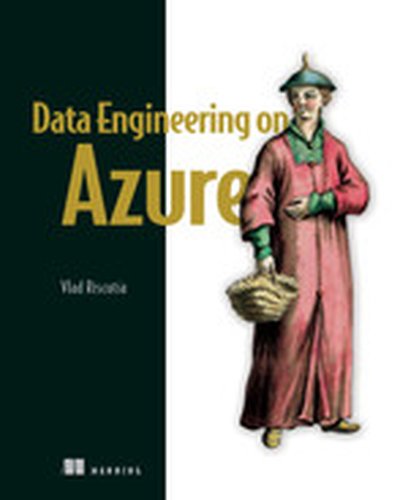
Data Engineering on Azure

Build a data platform to the industry-leading standards set by Microsoft’s own infrastructure. In Data Engineering on Azure you will learn how to: Pick the right Azure services for different data scenarios Manage data inventory Implement production quality data modeling, analytics, and machine learning workloads Handle data governance Using DevOps to increase reliability Ingesting, storing, and distributing data Apply best practices for compliance and access control Data Engineering on Azure reveals the data management patterns and techniques that support Microsoft’s own massive data infrastructure. Author Vlad Riscutia, a data engineer at Microsoft, teaches you to bring an engineering rigor to your data platform and ensure that your data prototypes function just as well under the pressures of production. You'll implement common data modeling patterns, stand up cloud-native data platforms on Azure, and get to grips with DevOps for both analytics and machine learning. About the Technology Build secure, stable data platforms that can scale to loads of any size. When a project moves from the lab into production, you need confidence that it can stand up to real-world challenges. This book teaches you to design and implement cloud-based data infrastructure that you can easily monitor, scale, and modify. About the Book In Data Engineering on Azure you’ll learn the skills you need to build and maintain big data platforms in massive enterprises. This invaluable guide includes clear, practical guidance for setting up infrastructure, orchestration, workloads, and governance. As you go, you’ll set up efficient machine learning pipelines, and then master time-saving automation and DevOps solutions. The Azure-based examples are easy to reproduce on other cloud platforms. What's Inside Data inventory and data governance Assure data quality, compliance, and distribution Build automated pipelines to increase reliability Ingest, store, and distribute data Production-quality data modeling, analytics, and machine learning About the Reader For data engineers familiar with cloud computing and DevOps. About the Author Vlad Riscutia is a software architect at Microsoft. Quotes A definitive and complete guide on data engineering, with clear and easy-to-reproduce examples. - Kelum Prabath Senanayake, Echoworx An all-in-one Azure book, covering all a solutions architect or engineer needs to think about. - Albert Nogués, Danone A meaningful journey through the Azure ecosystem. You’ll be building pipelines and joining components quickly! - Todd Cook, Appen A gateway into the world of Azure for machine learning and DevOps engineers. - Krzysztof Kamyczek, Luxoft

Summary Data quality is a concern that has been gaining attention alongside the rising importance of analytics for business success. Many solutions rely on hand-coded rules for catching known bugs, or statistical analysis of records to detect anomalies retroactively. While those are useful tools, it is far better to prevent data errors before they become an outsized issue. In this episode Gleb Mezhanskiy shares some strategies for adding quality checks at every stage of your development and deployment workflow to identify and fix problematic changes to your data before they get to production.

Announcements

Hello and welcome to the Data Engineering Podcast, the show about modern data management You listen to this show to learn about all of the latest tools, patterns, and practices that power data engineering projects across every domain. Now there’s a book that captures the foundational lessons and principles that underly everything that you hear about here. I’m happy to announce I collected wisdom from the community to help you in your journey as a data engineer and worked with O’Reilly to publish it as 97 Things Every Data Engineer Should Know. Go to dataengineeringpodcast.com/97things today to get your copy! When you’re ready to build your next pipeline, or want to test out the projects you hear about on the show, you’ll need somewhere to deploy it, so check out our friends at Linode. With their managed Kubernetes platform it’s now even easier to deploy and scale your workflows, or try out the latest Helm charts from tools like Pulsar and Pachyderm. With simple pricing, fast networking, object storage, and worldwide data centers, you’ve got everything you need to run a bulletproof data platform. Go to dataengineeringpodcast.com/linode today and get a $100 credit to try out a Kubernetes cluster of your own. And don’t forget to thank them for their continued support of this show! RudderStack’s smart customer data pipeline is warehouse-first. It builds your customer data warehouse and your identity graph on your data warehouse, with support for Snowflake, Google BigQuery, Amazon Redshift, and more. Their SDKs and plugins make event streaming easy, and their integrations with cloud applications like Salesforce and ZenDesk help you go beyond event streaming. With RudderStack you can use all of your customer data to answer more difficult questions and then send those insights to your whole customer data stack. Sign up free at dataengineeringpodcast.com/rudder today. We’ve all been asked to help with an ad-hoc request for data by the sales and marketing team. Then it becomes a critical report that they need updated every week or every day. Then what do you do? Send a CSV via email? Write some Python scripts to automate it? But what about incremental sync, API quotas, error handling, and all of the other details that eat up your time? Today, there is a better way. With Census, just write SQL or plug in your dbt models and start syncing your cloud warehouse to SaaS applications like Salesforce, Marketo, Hubspot, and many more. Go to dataengineeringpodcast.com/census today to get a free 14-day trial. Your host is Tobias Macey and today I’m interviewing Gleb Mezhanskiy about strategies for proactive data quality management and his work at Datafold to help provide tools for implementing them

Interview

Introduction How did you get involved in the area of data management? Can you describe what you are building at Datafold and the story behind it? What are the biggest factors that you see contributing to data quality issues?

How are teams identifying and addressing those failures?

How does the data platform architecture impact the potential for introducing quality problems? What are some of the potential risks or consequences of introducing errors in data processing? How can organizations shift to being proactive in their data quality management?

How much of a role does tooling play in addressing the introduct

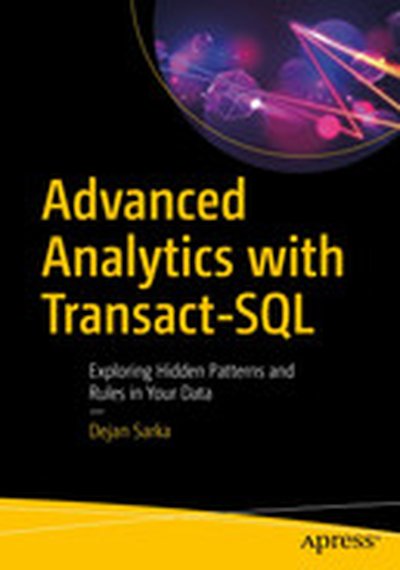
Advanced Analytics with Transact-SQL: Exploring Hidden Patterns and Rules in Your Data

Learn about business intelligence (BI) features in T-SQL and how they can help you with data science and analytics efforts without the need to bring in other languages such as R and Python. This book shows you how to compute statistical measures using your existing skills in T-SQL. You will learn how to calculate descriptive statistics, including centers, spreads, skewness, and kurtosis of distributions. You will also learn to find associations between pairs of variables, including calculating linear regression formulas and confidence levels with definite integration. No analysis is good without data quality. Advanced Analytics with Transact-SQL introduces data quality issues and shows you how to check for completeness and accuracy, and measure improvements in data quality over time. The book also explains how to optimize queries involving temporal data, such as when you search for overlapping intervals. More advanced time-oriented information in the book includes hazard and survival analysis. Forecasting with exponential moving averages and autoregression is covered as well. Every web/retail shop wants to know the products customers tend to buy together. Trying to predict the target discrete or continuous variable with few input variables is important for practically every type of business. This book helps you understand data science and the advanced algorithms use to analyze data, and terms such as data mining, machine learning, and text mining. Key to many of the solutions in this book are T-SQL window functions. Author Dejan Sarka demonstrates efficient statistical queries that are based on window functions and optimized through algorithms built using mathematical knowledge and creativity. The formulas and usage of those statistical procedures are explained so you can understand and modify the techniques presented. T-SQL is supported in SQL Server,Azure SQL Database, and in Azure Synapse Analytics. There are so many BI features in T-SQL that it might become your primary analytic database language. If you want to learn how to get information from your data with the T-SQL language that you already are familiar with, then this is the book for you. What You Will Learn Describe distribution of variables with statistical measures Find associations between pairs of variables Evaluate the quality of the data you are analyzing Perform time-series analysis on your data Forecast values of a continuous variable Perform market-basket analysis to predict customer purchasing patterns Predict target variable outcomes from one or more input variables Categorize passages of text by extracting and analyzing keywords Who This Book Is For Database developers and database administrators who want to translate their T-SQL skills into the world of business intelligence (BI) and data science. For readers who want to analyze large amounts of data efficiently by using their existing knowledge of T-SQL and Microsoft’s various database platforms such as SQL Server and Azure SQL Database. Also for readers who want to improve their querying by learning new and original optimization techniques.

Data quality has become a much discussed topic in the fields of data engineering and data science, and it has become clear that data validation is absolutely crucial to ensuring the reliability of any data products and insights produced by an organization’s data pipelines. This session will outline patterns for combining three popular open source tools in the data ecosystem - dbt, Airflow, and Great Expectations - and use them to build a robust data pipeline with data validation at each critical step.

If you manage a lot of data, and you’re attending this summit, you likely rely on Apache Airflow to do a lot of the heavy lifting. Like any powerful tool, Apache Airflow allows you to accomplish what you couldn’t before… but also creates new challenges. As DAGs pile up, complexity layers on top of complexity and it becomes hard to grasp how a failed or delayed DAG will affect everything downstream. In this session we will provide a crash course on OpenLineage, an open platform for metadata management and data lineage analysis. We’ll show how capturing metadata with OpenLineage can help you maintain inter-DAG dependencies, capture data on historical runs, and minimize data quality issues.

We’ve all heard the phrase “data is the new oil.” But really imagine a world where this analogy is more real, where problems in the flow of data - delays, low quality, high volatility - could bring down whole economies? When data is the new oil with people and businesses similarly reliant on it, how do you avoid the fires, spills, and crises? As data products become central to companies’ bottom line, data engineering teams need to create higher standards for the availability, completeness, and fidelity of their data. In this session we’ll demonstrate how Databand helps organizations guarantee the health of their Airflow pipelines. Databand is a data pipeline observability system that monitors SLAs and data quality issues, and proactively alerts users on problems to avoid data downtime. The session will be led by Josh Benamram, CEO and Cofounder of Databand.ai. Josh will be joined by Vinoo Ganesh, an experienced software engineer, system architect, and current CTO of Veraset, a data-as-a-service startup focused on understanding the world from a geospatial perspective. Join to see how Databand.ai can help you create stable, reliable pipelines that your business can depend on!

Machine Learning models can add value and insight to many projects, but they can be challenging to put into production due to problems like lack of reproducibility, difficulty maintaining integrations, and sneaky data quality issues. Kedro, a framework for creating reproducible, maintainable, and modular data science code, and Great Expectations, a framework for data validations, are two great open-source Python tools that can address some of these problems. Both integrate seamlessly with Airflow for flexible and powerful ML pipeline orchestration. In this talk we’ll discuss how you can leverage existing Airflow provider packages to integrate these tools to create sustainable, production-ready ML models.

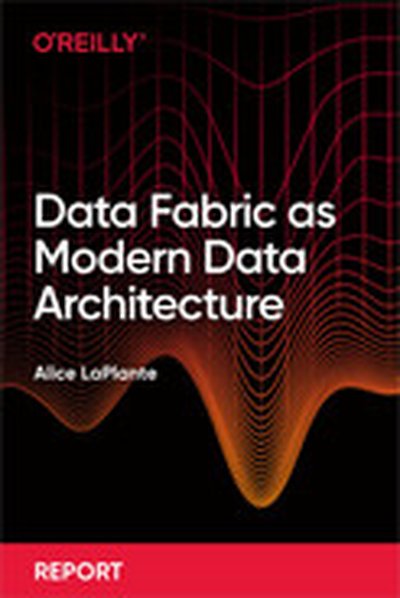
Data Fabric as Modern Data Architecture

Data fabric is a hot concept in data management today. By encompassing the data ecosystem your company already has in place, this architectural design pattern provides your staff with one reliable place to go for data. In this report, author Alice LaPlante shows CIOs, CDOs, and CAOs how data fabric enables their users to spend more time analyzing than wrangling data. The best way to thrive during this intense period of digital transformation is through data. But after roaring through 2019, progress on getting the most out of data investments has lost steam. Only 38% of companies now say they've created a data-driven organization. This report describes how a data fabric can help you reach the all-important goal of data democratization. Learn how data fabric handles data prep, data delivery, and serves as a data catalog Use data fabric to handle data variety, a top challenge for many organizations Learn how data fabric spans any environment to support data for users and use cases from any source Examine data fabric's capabilities including data and metadata management, data quality, integration, analytics, visualization, and governance Get five pieces of advice for getting started with data fabric

In this episode of DataFramed, Adel speaks with Barr Moses, CEO, and co-founder of Monte Carlo on the importance of data quality and how data observability creates trust in data throughout the organization. 

Throughout the episode, Barr talks about her background, the state of data-driven organizations and what it means to be data-driven, the data maturity of organizations, the importance of data quality, what data observability is, and why we’ll hear about it more often in the future. She also covers the state of data infrastructure, data meshes, and more. 

Relevant links from the interview:

Connect with Barr on LinkedInLearn more about data meshesCheck out the Monte Carlo blogDataCamp's Guide to Organizational Data Maturity

We talked about:

Jessi’s background Uri’s background Data governance Implementing data governance: policies and processes Reasons not to have data governance Start with “why” Cataloging and classifying our data Let data work for you The human component Data quality Defining policies Implementing policies Shopping-card experience for requesting data Proving the value of data catalog Using data catalog Data governance = data catalog?

Links:

Book: https://www.oreilly.com/library/view/data-governance-the/9781492063483/ Jessi’s LinkedIn: https://www.linkedin.com/in/jashdown/ Uri’s LinkedIn: https://linkedin.com/in/ugilad Uri’s Twitter: https://twitter.com/ugilad

Join DataTalks.Club: https://datatalks.club/slack.html

Our events: https://datatalks.club/events.html

Conference: https://datatalks.club/conferences/2021-summer-marathon.html

Summary Data lineage is the common thread that ties together all of your data pipelines, workflows, and systems. In order to get a holistic understanding of your data quality, where errors are occurring, or how a report was constructed you need to track the lineage of the data from beginning to end. The complicating factor is that every framework, platform, and product has its own concepts of how to store, represent, and expose that information. In order to eliminate the wasted effort of building custom integrations every time you want to combine lineage information across systems Julien Le Dem introduced the OpenLineage specification. In this episode he explains his motivations for starting the effort, the far-reaching benefits that it can provide to the industry, and how you can start integrating it into your data platform today. This is an excellent conversation about how competing companies can still find mutual benefit in co-operating on open standards.

Announcements

Hello and welcome to the Data Engineering Podcast, the show about modern data management When you’re ready to build your next pipeline, or want to test out the projects you hear about on the show, you’ll need somewhere to deploy it, so check out our friends at Linode. With their managed Kubernetes platform it’s now even easier to deploy and scale your workflows, or try out the latest Helm charts from tools like Pulsar and Pachyderm. With simple pricing, fast networking, object storage, and worldwide data centers, you’ve got everything you need to run a bulletproof data platform. Go to dataengineeringpodcast.com/linode today and get a $100 credit to try out a Kubernetes cluster of your own. And don’t forget to thank them for their continued support of this show! RudderStack’s smart customer data pipeline is warehouse-first. It builds your customer data warehouse and your identity graph on your data warehouse, with support for Snowflake, Google BigQuery, Amazon Redshift, and more. Their SDKs and plugins make event streaming easy, and their integrations with cloud applications like Salesforce and ZenDesk help you go beyond event streaming. With RudderStack you can use all of your customer data to answer more difficult questions and then send those insights to your whole customer data stack. Sign up free at dataengineeringpodcast.com/rudder today. When it comes to serving data for AI and ML projects, do you feel like you have to rebuild the plane while you’re flying it across the ocean? Molecula is an enterprise feature store that operationalizes advanced analytics and AI in a format designed for massive machine-scale projects without having to manage endless one-off information requests. With Molecula, data engineers manage one single feature store that serves the entire organization with millisecond query performance whether in the cloud or at your data center. And since it is implemented as an overlay, Molecula doesn’t disrupt legacy systems. High-growth startups use Molecula’s feature store because of its unprecedented speed, cost savings, and simplified access to all enterprise data. From feature extraction to model training to production, the Molecula feature store provides continuously updated feature access, reuse, and sharing without the need to pre-process data. If you need to deliver unprecedented speed, cost savings, and simplified access to large scale, real-time data, visit dataengineeringpodcast.com/molecula and request a demo. Mention that you’re a Data Engineering Podcast listener, and they’ll send you a free t-shirt. Your host is Tobias Macey and today I’m interviewing Julien Le Dem about Open Lineage, a new standard for structuring metadata to enable interoperability across the ecosystem of data management tools.

Interview

Introduction How did you get involved in the area of data management? Can you start by giving an overview of what the Open Lineage project is and the story behind it? What is the current state of t

Today's guest is another day one as he's been in my community for over a decade and attended my very first Xcelsius training class! Mark Bradley has been in IT for around 30 years and has such a huge amount of knowledge and enthusiasm for the intersection of data, metrics, and leadership, I promise that you are not going to want to miss this amazing data masterclass! If you are thinking about becoming a CIO (Chief Information Officer) or your company is going through a digital transformation, this data masterclass is for you. Join us as discuss the ITIL framework, the topic of Mark's recent book. We also look at how this relates to DITS or digital and IT strategy and the actionable steps you can take to accelerate your digital transformation! In this episode, you'll learn: [0:07:44] Mark describes the difference between building internally and outsourcing. [0:13:02] Mark teaches why you should focus on data quality vs quantity to build dashboards that serve specific needs of an organization. [0:20:32] The evolution of the ITIL methodology and getting to grips with DITS or digital and IT strategy.  [0:25:13] Specific roles that DITS is most appropriate for: CIOs, aspiring managers, directors, and CTOs.   [0:30:42] How relationships have changed with the subscription model for business. [0:31:37] Who the ITIL® 4 book is best suited to; size of businesses and types of transformations. [0:33:23] The obstacles to building a successful and functional digital strategy for a business. For full show notes, and the links mentioned visit: https://bibrainz.com/podcast/81  Enjoyed the Show?  Please leave us a review on iTunes.

Summary The Data industry is changing rapidly, and one of the most active areas of growth is automation of data workflows. Taking cues from the DevOps movement of the past decade data professionals are orienting around the concept of DataOps. More than just a collection of tools, there are a number of organizational and conceptual changes that a proper DataOps approach depends on. In this episode Kevin Stumpf, CTO of Tecton, Maxime Beauchemin, CEO of Preset, and Lior Gavish, CTO of Monte Carlo, discuss the grand vision and present realities of DataOps. They explain how to think about your data systems in a holistic and maintainable fashion, the security challenges that threaten to derail your efforts, and the power of using metadata as the foundation of everything that you do. If you are wondering how to get control of your data platforms and bring all of your stakeholders onto the same page then this conversation is for you.

Announcements

Hello and welcome to the Data Engineering Podcast, the show about modern data management When you’re ready to build your next pipeline, or want to test out the projects you hear about on the show, you’ll need somewhere to deploy it, so check out our friends at Linode. With their managed Kubernetes platform it’s now even easier to deploy and scale your workflows, or try out the latest Helm charts from tools like Pulsar and Pachyderm. With simple pricing, fast networking, object storage, and worldwide data centers, you’ve got everything you need to run a bulletproof data platform. Go to dataengineeringpodcast.com/linode today and get a $100 credit to try out a Kubernetes cluster of your own. And don’t forget to thank them for their continued support of this show! Modern Data teams are dealing with a lot of complexity in their data pipelines and analytical code. Monitoring data quality, tracing incidents, and testing changes can be daunting and often takes hours to days. Datafold helps Data teams gain visibility and confidence in the quality of their analytical data through data profiling, column-level lineage and intelligent anomaly detection. Datafold also helps automate regression testing of ETL code with its Data Diff feature that instantly shows how a change in ETL or BI code affects the produced data, both on a statistical level and down to individual rows and values. Datafold integrates with all major data warehouses as well as frameworks such as Airflow & dbt and seamlessly plugs into CI workflows. Go to dataengineeringpodcast.com/datafold today to start a 30-day trial of Datafold. Once you sign up and create an alert in Datafold for your company data, they will send you a cool water flask. RudderStack’s smart customer data pipeline is warehouse-first. It builds your customer data warehouse and your identity graph on your data warehouse, with support for Snowflake, Google BigQuery, Amazon Redshift, and more. Their SDKs and plugins make event streaming easy, and their integrations with cloud applications like Salesforce and ZenDesk help you go beyond event streaming. With RudderStack you can use all of your customer data to answer more difficult questions and then send those insights to your whole customer data stack. Sign up free at dataengineeringpodcast.com/rudder today. Your host is Tobias Macey and today I’m interviewing Max Beauchemin, Lior Gavish, and Kevin Stumpf about the real world challenges of embracing DataOps practices and systems, and how to keep things secure as you scale

Interview

Introduction How did you get involved in the area of data management? Before we get started, can you each give your definition of what "DataOps" means to you?

How does this differ from "business as usual" in the data industry? What are some of the things that DataOps isn’t (despite what marketers might say)?

What are the biggest difficulties that you have faced in going from concept to production with a workflow or system intended to power self-serve access to other membe

Summary The reason for collecting, cleaning, and organizing data is to make it usable by the organization. One of the most common and widely used methods of access is through a business intelligence dashboard. Superset is an open source option that has been gaining popularity due to its flexibility and extensible feature set. In this episode Maxime Beauchemin discusses how data engineers can use Superset to provide self service access to data and deliver analytics. He digs into how it integrates with your data stack, how you can extend it to fit your use case, and why open source systems are a good choice for your business intelligence. If you haven’t already tried out Superset then this conversation is well worth your time. Give it a listen and then take it for a test drive today.

Announcements

Hello and welcome to the Data Engineering Podcast, the show about modern data management When you’re ready to build your next pipeline, or want to test out the projects you hear about on the show, you’ll need somewhere to deploy it, so check out our friends at Linode. With their managed Kubernetes platform it’s now even easier to deploy and scale your workflows, or try out the latest Helm charts from tools like Pulsar and Pachyderm. With simple pricing, fast networking, object storage, and worldwide data centers, you’ve got everything you need to run a bulletproof data platform. Go to dataengineeringpodcast.com/linode today and get a $100 credit to try out a Kubernetes cluster of your own. And don’t forget to thank them for their continued support of this show! Modern Data teams are dealing with a lot of complexity in their data pipelines and analytical code. Monitoring data quality, tracing incidents, and testing changes can be daunting and often takes hours to days. Datafold helps Data teams gain visibility and confidence in the quality of their analytical data through data profiling, column-level lineage and intelligent anomaly detection. Datafold also helps automate regression testing of ETL code with its Data Diff feature that instantly shows how a change in ETL or BI code affects the produced data, both on a statistical level and down to individual rows and values. Datafold integrates with all major data warehouses as well as frameworks such as Airflow & dbt and seamlessly plugs into CI workflows. Go to dataengineeringpodcast.com/datafold today to start a 30-day trial of Datafold. Once you sign up and create an alert in Datafold for your company data, they will send you a cool water flask. RudderStack’s smart customer data pipeline is warehouse-first. It builds your customer data warehouse and your identity graph on your data warehouse, with support for Snowflake, Google BigQuery, Amazon Redshift, and more. Their SDKs and plugins make event streaming easy, and their integrations with cloud applications like Salesforce and ZenDesk help you go beyond event streaming. With RudderStack you can use all of your customer data to answer more difficult questions and then send those insights to your whole customer data stack. Sign up free at dataengineeringpodcast.com/rudder today. Your host is Tobias Macey and today I’m interviewing Max Beauchemin about Superset, an open source platform for data exploration, dashboards, and business intelligence

Interview

Introduction How did you get involved in the area of data management? Can you start by describing what Superset is? Superset is becoming part of the reference architecture for a modern data stack. What are the factors that have contributed to its popularity over other tools such as Redash, Metabase, Looker, etc.? Where do dashboarding and exploration tools like Superset fit in the responsibilities and workflow of a data engineer? What are some of the challenges that Superset faces in being performant when working with large data sources?

Which data sources have you found to be the most challenging to work with?

What are some anti-patterns that users of Superset mig

We covered:

Barr’s background Market gaps in data reliability Observability in engineering Data downtime Data quality problems and the five pillars of data observability Example: job failing because of a schema change Three pillars of observability (good pipelines and bad data) Observability vs monitoring Finding the root cause Who is accountable for data quality? (the RACI framework) Service level agreements Inferring the SLAs from the historical data Implementing data observability Data downtime maturity curve Monte carlo: data observability solution Open source tools Test-driven development for data Is data observability cloud agnostic? Centralizing data observability Detecting downstream and upstream data usage Getting bad data vs getting unusual data

Links:

Learn more about Monte Carlo: https://www.montecarlodata.com/ The Data Engineer's Guide to Root Cause Analysis: https://www.montecarlodata.com/the-data-engineers-guide-to-root-cause-analysis/ Why You Need to Set SLAs for Your Data Pipelines: https://www.montecarlodata.com/how-to-make-your-data-pipelines-more-reliable-with-slas/ Data Observability: The Next Frontier of Data Engineering: https://www.montecarlodata.com/data-observability-the-next-frontier-of-data-engineering/ To get in touch with Barr, ping her in the DataTalks.Club group or use [email protected]

Join DataTalks.Club: https://datatalks.club/slack.html

Summary Most of the time when you think about a data pipeline or ETL job what comes to mind is a purely mechanistic progression of functions that move data from point A to point B. Sometimes, however, one of those transformations is actually a full-fledged machine learning project in its own right. In this episode Tal Galfsky explains how he and the team at Cherre tackled the problem of messy data for Addresses by building a natural language processing and entity resolution system that is served as an API to the rest of their pipelines. He discusses the myriad ways that addresses are incomplete, poorly formed, and just plain wrong, why it was a big enough pain point to invest in building an industrial strength solution for it, and how it actually works under the hood. After listening to this you’ll look at your data pipelines in a new light and start to wonder how you can bring more advanced strategies into the cleaning and transformation process.

Announcements

Hello and welcome to the Data Engineering Podcast, the show about modern data management When you’re ready to build your next pipeline, or want to test out the projects you hear about on the show, you’ll need somewhere to deploy it, so check out our friends at Linode. With their managed Kubernetes platform it’s now even easier to deploy and scale your workflows, or try out the latest Helm charts from tools like Pulsar and Pachyderm. With simple pricing, fast networking, object storage, and worldwide data centers, you’ve got everything you need to run a bulletproof data platform. Go to dataengineeringpodcast.com/linode today and get a $100 credit to try out a Kubernetes cluster of your own. And don’t forget to thank them for their continued support of this show! Modern Data teams are dealing with a lot of complexity in their data pipelines and analytical code. Monitoring data quality, tracing incidents, and testing changes can be daunting and often takes hours to days. Datafold helps Data teams gain visibility and confidence in the quality of their analytical data through data profiling, column-level lineage and intelligent anomaly detection. Datafold also helps automate regression testing of ETL code with its Data Diff feature that instantly shows how a change in ETL or BI code affects the produced data, both on a statistical level and down to individual rows and values. Datafold integrates with all major data warehouses as well as frameworks such as Airflow & dbt and seamlessly plugs into CI workflows. Go to dataengineeringpodcast.com/datafold today to start a 30-day trial of Datafold. Once you sign up and create an alert in Datafold for your company data, they will send you a cool water flask. RudderStack’s smart customer data pipeline is warehouse-first. It builds your customer data warehouse and your identity graph on your data warehouse, with support for Snowflake, Google BigQuery, Amazon Redshift, and more. Their SDKs and plugins make event streaming easy, and their integrations with cloud applications like Salesforce and ZenDesk help you go beyond event streaming. With RudderStack you can use all of your customer data to answer more difficult questions and then send those insights to your whole customer data stack. Sign up free at dataengineeringpodcast.com/rudder today. Your host is Tobias Macey and today I’m interviewing Tal Galfsky about how Cherre is bringing order to the messy problem of physical addresses and entity resolution in their data pipelines.

Interview

Introduction How did you get involved in the area of data management? Started as physicist and evolved into Data Science Can you start by giving a brief recap of what Cherre is and the types of data that you deal with? Cherre is a company that connects data We’re not a data vendor, in that we don’t sell data, primarily We help companies connect and make sense of their data The real estate market is historically closed, gut let, behind on tech What are the biggest challenges that you deal with in your role when working with real estate data? Lack of a standard domain model in real estate. Ontology. What is a property? Each data source, thinks about properties in a very different way. Therefore, yielding similar, but completely different data. QUALITY (Even if the dataset are talking about the same thing, there are different levels of accuracy, freshness). HIREARCHY. When is one source better than another What are the teams and systems that rely on address information? Any company that needs to clean or organize (make sense) their data, need to identify, people, companies, and properties. Our clients use Address resolution in multiple ways. Via the UI or via an API. Our service is both external and internal so what I build has to be good enough for the demanding needs of our data science team, robust enough for our engineers, and simple enough that non-expert clients can use it. Can you give an example for the problems involved in entity resolution Known entity example. Empire state buidling. To resolve addresses in a way that makes sense for the client you need to capture the real world entities. Lots, buildings, units.

Identify the type of the object (lot, building, unit) Tag the object with all the relevant addresses Relations to other objects (lot, building, unit)

What are some examples of the kinds of edge cases or messiness that you encounter in addresses? First class is string problems. Second class component problems. third class is geocoding. I understand that you have developed a service for normalizing addresses and performing entity resolution to provide canonical references for downstream analyses. Can you give an overview of what is involved? What is the need for the service. The main requirement here is connecting an address to lot, building, unit with latitude and longitude coordinates

How were you satisfying this requirement previously? Before we built our model and dedicated service we had a basic prototype for pipeline only to handle NYC addresses. What were the motivations for designing and implementing this as a service? Need to expand nationwide and to deal with client queries in real time. What are some of the other data sources that you rely on to be able to perform this normalization and resolution? Lot data, building data, unit data, Footprints and address points datasets. What challenges do you face in managing these other sources of information? Accuracy, hirearchy, standardization, unified solution, persistant ids and primary keys

Digging into the specifics of your solution, can you talk through the full lifecycle of a request to resolve an address and the various manipulations that are performed on it? String cleaning, Parse and tokenize, standardize, Match What are some of the other pieces of information in your system that you would like to see addressed in a similar fashion? Our named entity solution with connection to knowledge graph and owner unmasking. What are some of the most interesting, unexpected, or challenging lessons that you learned while building this address resolution system? Scaling nyc geocode example. The NYC model was exploding a subset of the options for messing up an address. Flexibility. Dependencies. Client exposure. Now that you have this system running in production, if you were to start over today what would you do differently? a lot but at this point the module boundaries and client interface are defined in such way that we are able to make changes or completely replace any given part of it without breaking anything client facing What are some of the other projects that you are excited to work on going forward? Named entity resolution and Knowledge Graph

Contact Info

LinkedIn

Parting Question

From your perspective, what is the biggest gap in the tooling or technology for data management today? BigQuery is huge asset and in particular UDFs but they don’t support API calls or python script

Closing Announcements

Thank you for listening! Don’t forget to check out our other show, Podcast.init to learn about the Python language, its community, and the innovative ways it is being used. Visit the site to subscribe to the show, sign up for the mailing list, and read the show notes. If you’ve learned something or tried out a project from the show then tell us about it! Email [email protected]) with your story. To help other people find the show please leave a review on iTunes and tell your friends and co-workers Join the community in the new Zulip chat workspace at dataengineeringpodcast.com/chat

Links

Cherre

Podcast Episode

Photonics Knowledge Graph Entity Resolution BigQuery NLP == Natural Language Processing dbt

Podcast Episode

Airflow

Podcast.init Episode

Datadog

Podcast Episode

The intro and outro music is from The Hug by The Freak Fandango Orchestra / CC BY-SA

Support Data Engineering Podcast

Summary "Business as usual" is changing, with more companies investing in data as a first class concern. As a result, the data team is growing and introducing more specialized roles. In this episode Josh Benamram, CEO and co-founder of Databand, describes the motivations for these emerging roles, how these positions affect the team dynamics, and the types of visibility that they need into the data platform to do their jobs effectively. He also talks about how his experience working with these teams informs his work at Databand. If you are wondering how to apply your talents and interests to working with data then this episode is a must listen.

Announcements

Hello and welcome to the Data Engineering Podcast, the show about modern data management When you’re ready to build your next pipeline, or want to test out the projects you hear about on the show, you’ll need somewhere to deploy it, so check out our friends at Linode. With their managed Kubernetes platform it’s now even easier to deploy and scale your workflows, or try out the latest Helm charts from tools like Pulsar and Pachyderm. With simple pricing, fast networking, object storage, and worldwide data centers, you’ve got everything you need to run a bulletproof data platform. Go to dataengineeringpodcast.com/linode today and get a $100 credit to try out a Kubernetes cluster of your own. And don’t forget to thank them for their continued support of this show! Modern Data teams are dealing with a lot of complexity in their data pipelines and analytical code. Monitoring data quality, tracing incidents, and testing changes can be daunting and often takes hours to days. Datafold helps Data teams gain visibility and confidence in the quality of their analytical data through data profiling, column-level lineage and intelligent anomaly detection. Datafold also helps automate regression testing of ETL code with its Data Diff feature that instantly shows how a change in ETL or BI code affects the produced data, both on a statistical level and down to individual rows and values. Datafold integrates with all major data warehouses as well as frameworks such as Airflow & dbt and seamlessly plugs into CI workflows. Go to dataengineeringpodcast.com/datafold today to start a 30-day trial of Datafold. Once you sign up and create an alert in Datafold for your company data, they will send you a cool water flask. RudderStack’s smart customer data pipeline is warehouse-first. It builds your customer data warehouse and your identity graph on your data warehouse, with support for Snowflake, Google BigQuery, Amazon Redshift, and more. Their SDKs and plugins make event streaming easy, and their integrations with cloud applications like Salesforce and ZenDesk help you go beyond event streaming. With RudderStack you can use all of your customer data to answer more difficult questions and then send those insights to your whole customer data stack. Sign up free at dataengineeringpodcast.com/rudder today. Your host is Tobias Macey and today I’m interviewing Josh Benamram about the continued evolution of roles and responsibilities in data teams and their varied requirements for visibility into the data stack

Interview

Introduction How did you get involved in the area of data management? Can you start by discussing the set of roles that you see in a majority of data teams? What new roles do you see emerging, and what are the motivating factors?

Which of the more established positions are fracturing or merging to create these new responsibilities?

What are the contexts in which you are seeing these role definitions used? (e.g. small teams, large orgs, etc.) How do the increased granularity/specialization of responsibilities across data teams change the ways that data and platform architects need to think about technology investment?

What are the organizational impacts of these new types of data work?

How do these shifts in role definition change the ways that the individuals in th

Summary One of the biggest obstacles to success in delivering data products is cross-team collaboration. Part of the problem is the difference in the information that each role requires to do their job and where they expect to find it. This introduces a barrier to communication that is difficult to overcome, particularly in teams that have not reached a significant level of maturity in their data journey. In this episode Prukalpa Sankar shares her experiences across multiple attempts at building a system that brings everyone onto the same page, ultimately bringing her to found Atlan. She explains how the design of the platform is informed by the needs of managing data projects for large and small teams across her previous roles, how it integrates with your existing systems, and how it can work to bring everyone onto the same page.

Announcements

Hello and welcome to the Data Engineering Podcast, the show about modern data management When you’re ready to build your next pipeline, or want to test out the projects you hear about on the show, you’ll need somewhere to deploy it, so check out our friends at Linode. With their managed Kubernetes platform it’s now even easier to deploy and scale your workflows, or try out the latest Helm charts from tools like Pulsar and Pachyderm. With simple pricing, fast networking, object storage, and worldwide data centers, you’ve got everything you need to run a bulletproof data platform. Go to dataengineeringpodcast.com/linode today and get a $100 credit to try out a Kubernetes cluster of your own. And don’t forget to thank them for their continued support of this show! Modern Data teams are dealing with a lot of complexity in their data pipelines and analytical code. Monitoring data quality, tracing incidents, and testing changes can be daunting and often takes hours to days. Datafold helps Data teams gain visibility and confidence in the quality of their analytical data through data profiling, column-level lineage and intelligent anomaly detection. Datafold also helps automate regression testing of ETL code with its Data Diff feature that instantly shows how a change in ETL or BI code affects the produced data, both on a statistical level and down to individual rows and values. Datafold integrates with all major data warehouses as well as frameworks such as Airflow & dbt and seamlessly plugs into CI workflows. Go to dataengineeringpodcast.com/datafold today to start a 30-day trial of Datafold. Once you sign up and create an alert in Datafold for your company data, they will send you a cool water flask. RudderStack’s smart customer data pipeline is warehouse-first. It builds your customer data warehouse and your identity graph on your data warehouse, with support for Snowflake, Google BigQuery, Amazon Redshift, and more. Their SDKs and plugins make event streaming easy, and their integrations with cloud applications like Salesforce and ZenDesk help you go beyond event streaming. With RudderStack you can use all of your customer data to answer more difficult questions and then send those insights to your whole customer data stack. Sign up free at dataengineeringpodcast.com/rudder today. Your host is Tobias Macey and today I’m interviewing Prukalpa Sankar about Atlan, a modern data workspace that makes collaboration among data stakeholders easier, increasing efficiency and agility in data projects

Interview

Introduction How did you get involved in the area of data management? Can you start by giving an overview of what you are building at Atlan and some of the story behind it? Who are the target users of Atlan? What portions of the data workflow is Atlan responsible for?

What components of the data stack might Atlan replace?

How would you characterize Atlan’s position in the current data ecosystem?

What makes Atlan stand out from other systems for data cataloguing, metadata management, or data governance? What types of data assets (e.g. structured vs unstructured, textual