talk-data.com talk-data.com

Topic

DataViz

Data Visualization

bi charts dashboards

434

tagged

Activity Trend

43 peak/qtr
2020-Q1 2026-Q1

Activities

434 activities · Newest first

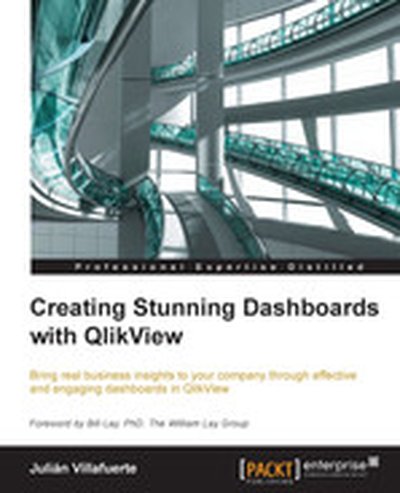
Creating Stunning Dashboards with QlikView

Explore the world of QlikView dashboards with this comprehensive guide that walks you through the entire process of creating effective and visually engaging dashboards for your business needs. From identifying KPIs to rolling out your application, this book provides actionable steps and best practices for delivering data-driven results. What this Book will help me do Define key performance indicators (KPIs) based on business objectives and goals. Design and structure dashboards using best practices in data visualization. Master creating various chart types, including bar, line, pie charts, and advanced visualizations, like heat maps. Integrate data from multiple sources, such as ERP systems and spreadsheets, into a cohesive dashboard. Learn the steps to develop mobile-optimized dashboards for accessibility on the go. Author(s) None Villafuerte, a seasoned expert in data visualization and QlikView development, brings a wealth of experience to this book. With years of hands-on work creating impactful dashboards for various business needs, the author's pragmatic and result-oriented approach provides readers with practical and insightful knowledge. Who is it for? The book is tailored for QlikView developers who already possess a basic understanding of scripting and dashboard layout design. It's ideal for professionals aiming to enhance their design and visualization skills. Additionally, business analysts or managers with a technical inclination could also benefit from its comprehensive approach to creating interactive dashboards. If building effective and appealing dashboards that drive business impact is your goal, this book is for you.
Beginning R: An Introduction to Statistical Programming, Second Edition

Beginning R, Second Edition is a hands-on book showing how to use the R language, write and save R scripts, read in data files, and write custom statistical functions as well as use built in functions. This book shows the use of R in specific cases such as one-way ANOVA analysis, linear and logistic regression, data visualization, parallel processing, bootstrapping, and more. It takes a hands-on, example-based approach incorporating best practices with clear explanations of the statistics being done. It has been completely re-written since the first edition to make use of the latest packages and features in R version 3. R is a powerful open-source language and programming environment for statistics and has become the de facto standard for doing, teaching, and learning computational statistics. R is both an object-oriented language and a functional language that is easy to learn, easy to use, and completely free. A large community of dedicated R users and programmers provides an excellent source of R code, functions, and data sets, with a constantly evolving ecosystem of packages providing new functionality for data analysis. R has also become popular in commercial use at companies such as Microsoft, Google, and Oracle. Your investment in learning R is sure to pay off in the long term as R continues to grow into the go to language for data analysis and research.

Dashboards for Excel

The book takes a hands-on approach to developing dashboards, from instructing users on advanced Excel techniques to addressing dashboard pitfalls common in the real world. Dashboards for Excel is your key to creating informative, actionable, and interactive dashboards and decision support systems. Throughout the book, the reader is challenged to think about Excel and data analytics differently—that is, to think outside the cell. This book shows you how to create dashboards in Excel quickly and effectively. In this book, you learn how to: Apply data visualization principles for more effective dashboards Employ dynamic charts and tables to create dashboards that are constantly up-to-date and providing fresh information Use understated yet powerful formulas for Excel development Apply advanced Excel techniques mixing formulas and Visual Basic for Applications (VBA) to create interactive dashboards Create dynamic systems for decision support in your organization Avoid common problems in Excel development and dashboard creation Get started with the Excel data model, PowerPivot, and Power Query

OpenGL Data Visualization Cookbook

Dive into the world of data visualization with "OpenGL Data Visualization Cookbook." This guide offers over 35 hands-on recipes using OpenGL to craft stunning and interactive visualizations for various applications. You will learn how to render data dynamically, handle complex datasets, and create compelling graphics across platforms. What this Book will help me do Set up an efficient OpenGL development environment across different operating systems. Build interactive data visualizations with 2D and 3D graphics using OpenGL and related libraries. Master advanced techniques for rendering volumetric and motion data on a variety of devices. Integrate shaders to create realistic visual effects and dynamic content within your applications. Develop impactful OpenGL-based applications for both conventional and modern mobile platforms. Author(s) The authors behind "OpenGL Data Visualization Cookbook" are experienced developers and educators with years of expertise in computer graphics and real-time visualizations. They specialize in breaking down complex topics into digestible and hands-on lessons, offering practical guidance for using OpenGL. Who is it for? This book is perfect for developers, engineers, and scientists who wish to leverage OpenGL for advanced data visualization. It suits hands-on learners with basic programming skills in languages like C/C++ or similar languages. If you are eager to expand your skills in real-time graphics and explore the cutting-edge visualization techniques, this book is a suitable fit for you.

SAS Programming and Data Visualization Techniques: A Power User’s Guide

SAS Programming and Data Visualization Techniques: A Power User’s Guide brings together a wealth of ideas about strategic and tactical solutions to everyday situations experienced when transferring, extracting, processing, analyzing, and reporting the valuable data you have at your fingertips. Best, you can achieve most of the solutions using the SAS components you already license, meaning that this book’s insights can keep you from throwing money at problems needlessly. Author Philip R. Holland advises a broad range of clients throughout Europe and the United States as an independent consultant and founder of Holland Numerics Ltd, a SAS technical consultancy. In this book he explains techniques—through code samples and example—that will enable you to increase your knowledge of all aspects of SAS programming, improve your coding productivity, and interface SAS with other programs. He also provides an expert’s overview of Graph Templates, which was recently moved into Base SAS. You will learn to create attractive, standardized, reusable, and platform-independent graphs—both statistical and non-statistical—to help you and your business users explore, visualize, and capitalize on your company’s data. In addition, you will find many examples and cases pertaining to healthcare, finance, retail, and other industries. Among other things, SAS Programming and Data Visualization Techniques will show you how to: Write efficient and reusable SAS code Combine look-up data sets with larger data sets effectively Run R and Perl from SAS Run SAS programs from SAS Studio and Enterprise Guide Output data into insightful, valuable charts and graphs SAS Programming and Data Visualization Techniques prepares you to make better use of your existing SAS components by learning to use the newest features, improve your coding efficiency, help you develop applications that are easier to maintain, and make data analysis easier. In other words, it will save you time, money, and effort—and make you a more valuable member of the development team.

podcast_episode
by Val Kroll , Julie Hoyer , Tim Wilson (Analytics Power Hour - Columbus (OH) , Lea Pica (Present Beyond Measure) , Moe Kiss (Canva) , Michael Helbling (Search Discovery)

They say a picture is worth a thousand terabytes of data (probably). If you are a regular listener of the podcast, you will know proper communication isn't our strongest suit, so we brought in a hitter. Lea Pica joins us in this episode to talk about communication best practices, and how they are even more important for an analyst than other roles in the organization. Got sixty minutes to listen and learn? We'll take it, and give you fifteen minutes back.

Predictive Analytics using Rattle and Qlik Sense

Explore the practical applications of predictive analytics with a focus on leveraging Rattle and Qlik Sense in your projects. From setting up your environment to constructing comprehensive data applications, this book provides a complete roadmap for mastering these tools and techniques. Gain valuable insights into your data and elevate your analytical skills for real-world business scenarios. What this Book will help me do Set up your analytics environment with Qlik Sense, R, and Rattle to kick-start your projects. Master visualization techniques and statistical methods to uncover meaningful insights. Develop data-driven predictive models and evaluate their performances effectively. Learn unsupervised and supervised machine learning techniques for diverse data problems. Build data storytelling and dashboards in Qlik Sense to showcase your results compellingly. Author(s) Ferran Garcia Pagans is a seasoned data analyst and author with extensive experience in predictive analytics and data visualization. His deep knowledge of modern analytics tools like Rattle and Qlik Sense enables him to guide professionals in deriving actionable insights from data. He excels in breaking down complex concepts into accessible knowledge, making his work invaluable for learners. Who is it for? This book is perfect for business analysts, data professionals, and enthusiasts looking to enhance their understanding of predictive analytics. It suits those with foundational knowledge of statistics and tools like Excel and R. If your goal is to implement real-world predictive models and data storytelling using Rattle and Qlik Sense, this book is an ideal companion.

Learning SAP Business Objects Dashboards

"Learning SAP Business Objects Dashboards" is your definitive guide to mastering the creation of professional, interactive dashboards tailored for both desktop and mobile use. Whether you are starting with basics or looking to enhance your existing BI skill set, this book offers step-by-step guidance to build customizing and visually appealing dashboards using SAP Business Objects. What this Book will help me do Gain proficiency in using SAP BO Dashboard Designer to create compelling BI dashboards. Learn how to integrate data seamlessly into SAP dashboards for dynamic insights. Master the art of building interactive and responsive dashboards suitable for various devices. Explore advanced visualization techniques including maps, selectors, and styling. Understand how to ensure data security and successfully deploy your dashboards. Author(s) Taha Mahmoud is an experienced Business Intelligence consultant specializing in SAP technologies. With years of experience in crafting custom BI solutions, Taha brings a practical and approachable teaching style to the complex realm of dashboard design. His goal in writing this book is to impart practical skills to learners so they can confidently excel in their BI careers. Who is it for? This book is ideal for business analysts, BI developers, and data visualization enthusiasts aiming to learn or improve their SAP Business Objects dashboard skills. It requires basic knowledge of MS Excel and an analytical mindset. If you're tasked with presenting data in clear, impactful visuals or making interactive dashboards for your organization, this book is for you.
Mastering Matplotlib

Mastering Matplotlib provides readers with the tools to not just create visualizations but to fully harness the capabilities of the Matplotlib library. You will explore advanced features, work on interactive visualizations, and learn to optimize plots for various platforms and datasets. By the end, you will be adept at using Matplotlib in complex projects involving data analysis and visualization. What this Book will help me do Understand the architecture and internals of Matplotlib to better utilize and extend its features. Develop visually dynamic and interactive plots that update in real-time with changes in the user interface. Leverage third-party libraries to visualize complex datasets and relationships efficiently. Create tailored styling for visualizations, meeting publication and presentation standards. Deploy and integrate Matplotlib-based visualizations into cloud environments and big data workflows seamlessly. Author(s) Duncan M. McGreggor is a seasoned software engineer with years of hands-on experience in data visualization and scientific computing. He specializes in utilizing Matplotlib for dynamic charting and advanced plotting use cases. His approach to writing focuses on empowering readers to apply and integrate visualization solutions in real-world scenarios. Who is it for? This book is ideal for scientists, software engineers, programmers, and students who have a foundational understanding of Matplotlib and are looking to take their skills to an advanced level. If you're aiming to leverage Matplotlib to handle intricate datasets or to create sophisticated visual representations, this book is for you. It caters to learners seeking practical guidance for professional or academic projects. Expand your visualization toolkit with this insightful guide.

ggplot2 Essentials

"ggplot2 Essentials" takes you on a journey to mastering data visualization in R. Through this book, you will explore the full capabilities of the ggplot2 package and how it employs the principles of the grammar of graphics to create meaningful and visually appealing graphs. By reading this book, you will gain practical skills to produce stunning plots for your data analysis projects. What this Book will help me do Understand the core concepts of the grammar of graphics and how ggplot2 implements them. Learn to create a variety of plots using the ggplot2's basic and advanced functionalities. Master techniques for customizing plots, including aesthetics and graphical details. Become proficient in exporting plots in diverse formats and creating publication-ready graphs. Incorporate mapping and overlays into your plots, expanding the frontiers of ggplot2 capabilities. Author(s) Donato Teutonico is an experienced data analyst and programmer with a strong background in R and data visualization. With years of expertise, Donato specializes in creating clear, actionable tutorials for users of statistical software. His approach to teaching emphasizes practical, hands-on examples tailored to empower learners with practical plotting skills. Who is it for? This book is ideal for R programmers who want to harness the power of ggplot2 for data visualization. If you are already familiar with R and want to create more sophisticated and customizable graphics, this resource will enhance your skills. It is suited for intermediate R users aiming to discover ggplot2's features and create polished visual representations of their data. Advanced beginners passionate about data visualization will also appreciate the clear explanations and practical examples.

Data Visualization with D3 and AngularJS

In "Data Visualization with D3 and AngularJS," you'll discover how to create dynamic, data-driven visualizations with the power of D3.js integrated seamlessly into AngularJS apps. This book offers a hands-on approach, demonstrating step-by-step how to leverage the strengths of these technologies to build interactive dashboards and visual components. What this Book will help me do Build and integrate interactive dashboards using D3.js and AngularJS. Design varied types of charts, including scatter plots, bar graphs, and area charts. Understand how to load, parse, and preprocess external data for visualizations. Develop modular and reusable visualization components in AngularJS. Create custom animations and interactions for user engagement with data visualizations. Author(s) With years of experience in front-end development and data visualization, the authors None Hanchett and None Körner bring expert insight and clarity to these topics. Their instructional approach focuses on practical, real-world applications, aiming to empower readers to achieve professional results through clear explanations and well-structured examples. Who is it for? This book is tailored for web developers familiar with AngularJS who are eager to incorporate advanced visualizations into their applications. Whether you're looking to build professional dashboards or simply explore the capabilities of D3.js, this book provides the knowledge you need. Ideal for those aiming to gain hands-on experience and enhance their development skill set.

Learning Tableau

Learning Tableau is your guide to mastering Tableau 9.0 for building impactful data visualizations and creating interactive, insightful dashboards. Whether you're beginning your data visualization journey or seek to refine your skills, this book provides a comprehensive approach to unlocking the potential of your data. What this Book will help me do Understand how to create basic and advanced visualizations for effective data representation. Learn techniques to enhance data analysis through custom calculations and interactive features. Gain skills to integrate and analyze data from multiple sources using Tableau's blending and joining features. Master the art of designing and formatting visually appealing dashboards to tell compelling data stories. Explore advanced Tableau functionalities like LOD calculations and sheet swapping to improve analytical insights. Author(s) Joshua N. Milligan is a seasoned data professional with a wealth of experience in Tableau. As a Tableau Zen Master, he combines his practical expertise and in-depth knowledge to craft a beginner-friendly guide for professionals looking to grasp Tableau's features effectively. His approachable and engaging writing style makes complex concepts accessible. Who is it for? This book is ideal for professionals and enthusiasts aiming to develop their skills in data visualization and Tableau. It's suitable for individuals with basic knowledge of data or databases, but no prior Tableau experience is necessary. Whether you're a data analyst, business professional, or IT specialist, this book will help you communicate data insights clearly. Readers will achieve a comprehensive understanding of Tableau 9.0's capabilities to create valuable outcomes.

Data Visualization with JavaScript

You've got data to communicate. But what kind of visualization do you choose, how do you build it, and how do you ensure that it's up to the demands of the Web? In Data Visualization with JavaScript, you'll learn how to use JavaScript, HTML, and CSS to build the most practical visualizations for your data. Step-by-step examples walk you through creating, integrating, and debugging different types of visualizations and will have you building basic visualizations, like bar, line, and scatter graphs, in no time. Then you'll move on to more advanced topics, including how to: Create tree maps, heat maps, network graphs, word clouds, and timelines Map geographic data, and build sparklines and composite charts Add interactivity and retrieve data with AJAX Manage data in the browser and build data-driven web applications Harness the power of the Flotr2, Flot, Chronoline.js, D3.js, Underscore.js, and Backbone.js libraries If you already know your way around building a web page but aren't quite sure how to build a good visualization, Data Visualization with JavaScript will help you get your feet wet without throwing you into the deep end. Before you know it, you'll be well on your way to creating simple, powerful data visualizations.

Data Science For Dummies

Discover how data science can help you gain in-depth insight into your business - the easy way! Jobs in data science abound, but few people have the data science skills needed to fill these increasingly important roles in organizations. Data Science For Dummies is the perfect starting point for IT professionals and students interested in making sense of their organization's massive data sets and applying their findings to real-world business scenarios. From uncovering rich data sources to managing large amounts of data within hardware and software limitations, ensuring consistency in reporting, merging various data sources, and beyond, you'll develop the know-how you need to effectively interpret data and tell a story that can be understood by anyone in your organization. Provides a background in data science fundamentals before moving on to working with relational databases and unstructured data and preparing your data for analysis Details different data visualization techniques that can be used to showcase and summarize your data Explains both supervised and unsupervised machine learning, including regression, model validation, and clustering techniques Includes coverage of big data processing tools like MapReduce, Hadoop, Dremel, Storm, and Spark It's a big, big data world out there - let Data Science For Dummies help you harness its power and gain a competitive edge for your organization.

D3.js in Action

D3.js in Action is a practical tutorial for creating interactive graphics and data-driven applications using D3.js. You'll start with in-depth explanations of D3's out-of-the-box layouts, along with dozens of practical use cases that align with different types of visualizations. Then, you'll explore practical techniques for content creation, animation, and representing dynamic data—including interactive graphics and data streamed live over the web. The final chapters show you how to use D3's rich interaction model as the foundation for a complete web application. In the end, you'll be ready to integrate D3.js into your web development process and transform any site into a more engaging and sophisticated user experience. About the Technology D3.js is a JavaScript library that allows data to be represented graphically on a web page. Because it uses the broadly supported SVG standard, D3 allows you to create scalable graphs for any modern browser. You start with a structure, dataset, or algorithm and programmatically generate static, interactive, or animated images that responsively scale to any screen. About the Book D3.js in Action introduces you to the most powerful web data visualization library available and shows you how to use it to build interactive graphics and data-driven applications. You'll start with dozens of practical use cases that align with different types of charts, networks, and maps using D3's out-of-the-box layouts. Then, you'll explore practical techniques for content design, animation, and representation of dynamic data—including interactive graphics and live streaming data. What's Inside Interacting with vector graphics Expressive data visualization Creating rich mapping applications Prepping your data Complete data-driven web apps in D3 About the Reader Readers need basic HTML, CSS, and JavaScript skills. No experience with D3 or SVG is required. About the Author Elijah Meeks is a senior data visualization engineer at Netflix. His D3.js portfolio includes work at Stanford University and with well-known companies worldwide. Quotes A mandatory introduction to a very complex and powerful library. - Stephen Wakely, Thomson Reuters Quickly gets you coding amazing visualizations. - Ntino Krampis, PhD, City University of New York A remarkable exploration of the world of dataviz possibilities with D3. - Arun Noronha, Directworks Inc. A must-have book. - Arif Shaikh, Sony Pictures Entertainment One of the most comprehensive books about data visualization I have ever read. - Andrea Mostosi, The Fool s.r.l.

TIBCO Spotfire: A Comprehensive Primer

TIBCO Spotfire: A Comprehensive Primer is the go-to guide for mastering TIBCO Spotfire, a leading data visualization and analytics tool. Whether you are new to Spotfire or data visualization in general, this book will provide you with a solid foundation to create impactful and actionable visual insights. What this Book will help me do Understand the fundamentals of TIBCO Spotfire and its application in data analytics. Learn how to design compelling visualizations and dashboards that convey meaningful insights. Master advanced data transformations and analysis techniques in TIBCO Spotfire. Integrate Spotfire with external data sources and scripting languages, enhancing its functionality. Optimize Spotfire's performance and usability for enterprise-level implementations. Author(s) None Phillips, an experienced analytics professional and educator, specializes in creating accessible learning materials for data science tools. With a decade of experience in the field, None has helped many organizations unlock their data potential through tools like TIBCO Spotfire. Their approach emphasizes practical understanding, making complex concepts approachable for learners of all levels. Who is it for? The book is perfect for business analysts, data scientists, and other professionals involved in data-driven decision making who want to master TIBCO Spotfire. It's designed for beginners without prior exposure to data visualization or TIBCO Spotfire, offering an accessible entry into the field. Individuals aiming to gain hands-on experience and create enterprise-grade solutions will find this book invaluable. Additionally, it serves as a reference for experienced Spotfire users looking to refine their skills.

Data Visualization for Oracle Business Intelligence 11g

The only Oracle Press guide to creating effective visual presentations of business intelligence data quickly and easily Data Visualization for Oracle Business Intelligence 11g reveals the best practices for creating graphs, tables, maps, and other methodologies for presenting data-driven insights using one of the most common business intelligence front-end systems in the world, Oracle Business Intelligence 11 g. This information-rich guide offers clear instructions for building top-quality dashboards, analyses, and visualizations from real-world implementers and respected data visualization experts. You’ll learn everything from improving the readability of your tables to implementing the latest Advanced Trellis Chart features and from adding native map views of BI data to designing optimal dashboard layout strategies. You’ll see how to produce accurate, compelling, and professional graphics that will immediately enhance corporate decision making. Shows proven steps for extracting maximum impact from native features that are little known to the majority of BI users Covers dashboard strategy, including layout, design, navigation, master detail linking, action links, and prompts Addresses how to extend Oracle Business Intelligence 11 g with advanced languages and visualization systems such as JavaScript-based D3 and JQuery, R, and Oracle Application Development Framework Includes an associated web gallery showcasing the colors and graphics that render best digitally

My quest this week is noteworthy a.i. researcher Randy Olson who joins me to share his work creating the Reddit World Map - a visualization that illuminates clusters in the reddit community based on user behavior. Randy's blog post on created the reddit world map is well complimented by a more detailed write up titled Navigating the massive world of reddit: using backbone networks to map user interests in social media. Last but not least, an interactive version of the results (which leverages Gephi) can be found here. For a benevolent recommendation, Randy suggetss people check out Seaborn - a python library for statistical data visualization. For a self serving recommendation, Randy recommends listeners visit the Data is beautiful subreddit where he's a moderator.

Mastering Gephi Network Visualization

Mastering Gephi Network Visualization is your comprehensive guide to creating sophisticated network graphs with Gephi. Within these pages, you'll learn how to analyze and interpret network data effectively, employing advanced techniques to uncover patterns and insights. This book is perfect for turning complex datasets into visually stunning and informative graphs. What this Book will help me do Effectively use Gephi to create and refine network visualizations. Choose appropriate layouts and filters for your network data, improving clarity. Analyze network statistics to uncover meaningful patterns and relationships. Segregate a network into components for targeted data analysis. Export and present your visualizations effectively for reports and presentations. Author(s) The authors of Mastering Gephi Network Visualization are experts in data visualization and network analysis. With years of experience using Gephi in practical applications, they bring a wealth of knowledge to the topic. Their teaching methodology emphasizes clarity and hands-on application, ensuring readers can apply the concepts easily and effectively. Who is it for? This book is ideal for analysts, data scientists, and researchers who work with network data and wish to visualize it effectively. Prior experience with Gephi is helpful but not necessary, as all concepts are introduced step-by-step. Readers with any level of expertise in network visualization will find this book informative. If you're looking to produce engaging network graphs for data analysis, this is the right book for you.

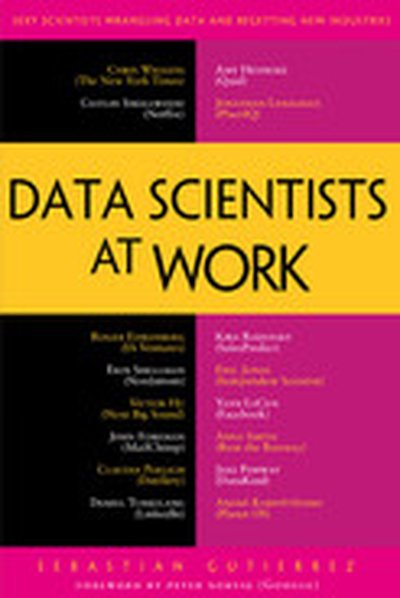
Data Scientists at Work

Data Scientists at Work is a collection of interviews with sixteen of the world's most influential and innovative data scientists from across the spectrum of this hot new profession. "Data scientist is the sexiest job in the 21st century," according to the Harvard Business Review. By 2018, the United States will experience a shortage of 190,000 skilled data scientists, according to a McKinsey report. Through incisive in-depth interviews, this book mines the what, how, and why of the practice of data science from the stories, ideas, shop talk, and forecasts of its preeminent practitioners across diverse industries: social network (Yann LeCun, Facebook); professional network (Daniel Tunkelang, LinkedIn); venture capital (Roger Ehrenberg, IA Ventures); enterprise cloud computing and neuroscience (Eric Jonas, formerly Salesforce.com); newspaper and media (Chris Wiggins, The New York Times); streaming television (Caitlin Smallwood, Netflix); music forecast (Victor Hu, Next Big Sound); strategic intelligence (Amy Heineike, Quid); environmental big data (Andre´ Karpis?ts?enkoEach of these data scientists shares how he or she tailors the torrent-taming techniques of big data, data visualization, search, and statistics to specific jobs by dint of ingenuity, imagination, patience, and passion. , Planet OS); geospatial marketing intelligence (Jonathan Lenaghan, PlaceIQ); advertising (Claudia Perlich, Dstillery); fashion e-commerce (Anna Smith, Rent the Runway); specialty retail (Erin Shellman, Nordstrom); email marketing (John Foreman, MailChimp); predictive sales intelligence (Kira Radinsky, SalesPredict); and humanitarian nonprofit (Jake Porway, DataKind). The book features a stimulating foreword by Google's Director of Research, Peter Norvig. Data Scientists at Work parts the curtain on the interviewees’ earliest data projects, how they became data scientists, their discoveries and surprises in working with data, their thoughts on the past, present, and future of the profession, their experiences of team collaboration within their organizations, and the insights they have gained as they get their hands dirty refining mountains of raw data into objects of commercial, scientific, and educational value for their organizations and clients.