Airflow is a popular choice for organizations looking to integrate open-source dbt within their existing data infrastructure. This talk will explore two primary methods of running dbt in Airflow: job-level and model-level. We’ll discuss the tradeoffs associated with each approach, highlighting the simplicity and efficiency of job-level orchestration, contrasted with the enhanced observability and control provided by model-level orchestration. We’ll also explain how the balance has shifted in recent years, with improvements to dbt core making model-level more efficient and innovative Airflow extensions like Cosmos making it easier to implement. Finally, we’ll provide benchmarks to help you determine which paradigm is the best fit for your needs.
 talk-data.com
Topic
dbt
dbt (data build tool)
758
tagged
Activity Trend
Top Events
Airflow, traditionally used by Data Engineers, is now popular among Analytics Engineers who aim to provide analysts with high-quality tooling while adhering to software engineering best practices. dbt, an open-source project that uses SQL to create data transformation pipelines, is one such tool. One approach to orchestrating dbt using Airflow is using dynamic task mapping to automatically create a task for each sub-directory inside dbt’s staging, intermediate, and marts directories. This enables analysts to write SQL code that is automatically added as a dedicated task in Airflow at runtime. Combining this new Airflow feature with dbt best practices offers several benefits, such as analysts not needing to make Airflow changes and engineers being able to re-run subsets of dbt models should errors occur. In this talk, I would like to share some lessons I have learned while successfully implementing this approach for several clients.
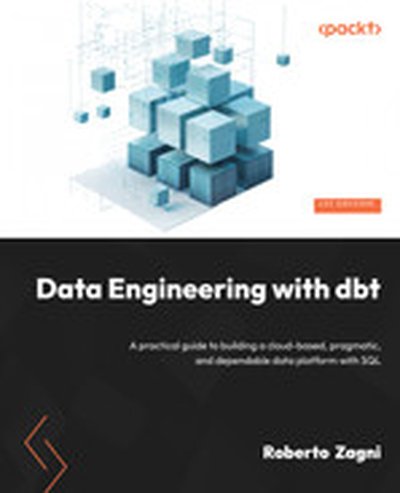
Data Engineering with dbt provides a comprehensive guide to building modern, reliable data platforms using dbt and SQL. You'll gain hands-on experience building automated ELT pipelines, using dbt Cloud with Snowflake, and embracing patterns for scalable and maintainable data solutions. What this Book will help me do Set up and manage a dbt Cloud environment and create reliable ELT pipelines. Integrate Snowflake with dbt to implement robust data engineering workflows. Transform raw data into analytics-ready data using dbt's features and SQL. Apply advanced dbt functionality such as macros and Jinja for efficient coding. Ensure data accuracy and platform reliability with built-in testing and monitoring. Author(s) None Zagni is a seasoned data engineering professional with a wealth of experience in designing scalable data platforms. Through practical insights and real-world applications, Zagni demystifies complex data engineering practices. Their approachable teaching style makes technical concepts accessible and actionable. Who is it for? This book is perfect for data engineers, analysts, and analytics engineers looking to leverage dbt for data platform development. If you're a manager or decision maker interested in fostering efficient data workflows or a professional with basic SQL knowledge aiming to deepen your expertise, this resource will be invaluable.
Summary
Data transformation is a key activity for all of the organizational roles that interact with data. Because of its importance and outsized impact on what is possible for downstream data consumers it is critical that everyone is able to collaborate seamlessly. SQLMesh was designed as a unifying tool that is simple to work with but powerful enough for large-scale transformations and complex projects. In this episode Toby Mao explains how it works, the importance of automatic column-level lineage tracking, and how you can start using it today.
Announcements
Hello and welcome to the Data Engineering Podcast, the show about modern data management RudderStack helps you build a customer data platform on your warehouse or data lake. Instead of trapping data in a black box, they enable you to easily collect customer data from the entire stack and build an identity graph on your warehouse, giving you full visibility and control. Their SDKs make event streaming from any app or website easy, and their extensive library of integrations enable you to automatically send data to hundreds of downstream tools. Sign up free at dataengineeringpodcast.com/rudderstack- Your host is Tobias Macey and today I'm interviewing Toby Mao about SQLMesh, an open source DataOps framework designed to scale data transformations with ease of collaboration and validation built in
Interview
Introduction How did you get involved in the area of data management? Can you describe what SQLMesh is and the story behind it?
DataOps is a term that has been co-opted and overloaded. What are the concepts that you are trying to convey with that term in the context of SQLMesh?
What are the rough edges in existing toolchains/workflows that you are trying to address with SQLMesh?
How do those rough edges impact the productivity and effectiveness of teams using those
Can you describe how SQLMesh is implemented?
How have the design and goals evolved since you first started working on it?
What are the lessons that you have learned from dbt which have informed the design and functionality of SQLMesh? For teams who have already invested in dbt, what is the migration path from or integration with dbt? You have some built-in integration with/awareness of orchestrators (currently Airflow). What are the benefits of making the transformation tool aware of the orchestrator? What do you see as the potential benefits of integration with e.g. data-diff? What are the second-order benefits of using a tool such as SQLMesh that addresses the more mechanical aspects of managing transformation workfows and the associated dependency chains? What are the most interesting, innovative, or unexpected ways that you have seen SQLMesh used? What are the most interesting, unexpected, or challenging lessons that you have learned while working on SQLMesh? When is SQLMesh the wrong choice? What do you have planned for the future of SQLMesh?
Contact Info
tobymao on GitHub @captaintobs on Twitter Website
Parting Question
From your perspective, what is the biggest gap in the tooling or technology for data management today?
Closing Announcements
Thank you for listening! Don't forget to check out our other shows. Podcast.init covers the Python language, its community, and the innovative ways it is being used. The Machine Learning Podcast helps you go from idea to production with machine learning. Visit the site to subscribe to the show, sign up for the mailing list, and read the show notes. If you've learned something or tried out a project from the show then tell us about it! Email [email protected]) with your story. To help other people find the show please leave a review on Apple Podcasts and tell your friends and co-workers
Links
SQLMesh Tobiko Data SAS AirBnB Minerva SQLGlot Cron AST == Abstract Syntax Tree Pandas Terraform dbt
Podcast Episode
SQLFluff
Podcast.init Episode
The intro and outro music is from The Hug by The Freak Fandango Orc
We talked about:
Santona's background Focusing on data workflows Upsolver vs DBT ML pipelines vs Data pipelines MLOps vs DataOps Tools used for data pipelines and ML pipelines The “modern data stack” and today's data ecosystem Staging the data and the concept of a “lakehouse” Transforming the data after staging What happens after the modeling phase Human-centric vs Machine-centric pipeline Applying skills learned in academia to ML engineering Crafting user personas based on real stories A framework of curiosity Santona's book and resource recommendations
Links:
LinkedIn: https://www.linkedin.com/in/santona-tuli/ Upsolver website: upsolver.com Why we built a SQL-based solution to unify batch and stream workflows: https://www.upsolver.com/blog/why-we-built-a-sql-based-solution-to-unify-batch-and-stream-workflows
Free MLOps course: https://github.com/DataTalksClub/mlops-zoomcamp
Join DataTalks.Club: https://datatalks.club/slack.html
Our events: https://datatalks.club/events.html
George Yates from Astronomer will give a breakdown on the Cosmos library that allows you to visualize DBT workflows within Airflow.
Summary
Architectural decisions are all based on certain constraints and a desire to optimize for different outcomes. In data systems one of the core architectural exercises is data modeling, which can have significant impacts on what is and is not possible for downstream use cases. By incorporating column-level lineage in the data modeling process it encourages a more robust and well-informed design. In this episode Satish Jayanthi explores the benefits of incorporating column-aware tooling in the data modeling process.
Announcements
Hello and welcome to the Data Engineering Podcast, the show about modern data management RudderStack helps you build a customer data platform on your warehouse or data lake. Instead of trapping data in a black box, they enable you to easily collect customer data from the entire stack and build an identity graph on your warehouse, giving you full visibility and control. Their SDKs make event streaming from any app or website easy, and their extensive library of integrations enable you to automatically send data to hundreds of downstream tools. Sign up free at dataengineeringpodcast.com/rudderstack- Your host is Tobias Macey and today I'm interviewing Satish Jayanthi about the practice and promise of building a column-aware data architecture through intentional modeling
Interview
Introduction How did you get involved in the area of data management? How has the move to the cloud for data warehousing/data platforms influenced the practice of data modeling?
There are ongoing conversations about the continued merits of dimensional modeling techniques in modern warehouses. What are the modeling practices that you have found to be most useful in large and complex data environments?
Can you describe what you mean by the term column-aware in the context of data modeling/data architecture?
What are the capabilities that need to be built into a tool for it to be effectively column-aware?
What are some of the ways that tools like dbt miss the mark in managing large/complex transformation workloads? Column-awareness is obviously critical in the context of the warehouse. What are some of the ways that that information can be fed into other contexts? (e.g. ML, reverse ETL, etc.) What is the importance of embedding column-level lineage awareness into transformation tool vs. layering on top w/ dedicated lineage/metadata tooling? What are the most interesting, innovative, or unexpected ways that you have seen column-aware data modeling used? What are the most interesting, unexpected, or challenging lessons that you have learned while working on building column-aware tooling? When is column-aware modeling the wrong choice? What are some additional resources that you recommend for individuals/teams who want to learn more about data modeling/column aware principles?
Contact Info
Parting Question
From your perspective, what is the biggest gap in the tooling or technology for data management today?
Closing Announcements
Thank you for listening! Don't forget to check out our other shows. Podcast.init covers the Python language, its community, and the innovative ways it is being used. The Machine Learning Podcast helps you go from idea to production with machine learning. Visit the site to subscribe to the show, sign up for the mailing list, and read the show notes. If you've learned something or tried out a project from the show then tell us about it! Email [email protected]) with your story. To help other people find the show please leave a review on Apple Podcasts and tell your friends and co-workers
Links
Coalesce
Podcast Episode
Star Schema Conformed Dimensions Data Vault
The intro and outro music is from The Hug by The Freak Fandango Orchestra / CC BY-SA
Sponsored By:
Rudderstack: 
RudderStack provides all your customer data pipeli
The word "model" is used a lot by data professionals. There are dbt models, machine learning models, relational models, and conceptual, logical, and physical models. My concern is we're missing the bigger picture of what data modeling was initially supposed to accomplish, which was to represent reality and structure it as data. The bigger implication is that our various "models" will become too myopic and miss the larger broader context of the reality of how we use data to serve our organizations.
If you like this show, give it a 5-star rating on your favorite podcast platform.
Purchase Fundamentals of Data Engineering at your favorite bookseller.
Subscribe to my Substack: https://joereis.substack.com/
Summary
Data engineering is all about building workflows, pipelines, systems, and interfaces to provide stable and reliable data. Your data can be stable and wrong, but then it isn't reliable. Confidence in your data is achieved through constant validation and testing. Datafold has invested a lot of time into integrating with the workflow of dbt projects to add early verification that the changes you are making are correct. In this episode Gleb Mezhanskiy shares some valuable advice and insights into how you can build reliable and well-tested data assets with dbt and data-diff.
Announcements
Hello and welcome to the Data Engineering Podcast, the show about modern data management RudderStack helps you build a customer data platform on your warehouse or data lake. Instead of trapping data in a black box, they enable you to easily collect customer data from the entire stack and build an identity graph on your warehouse, giving you full visibility and control. Their SDKs make event streaming from any app or website easy, and their extensive library of integrations enable you to automatically send data to hundreds of downstream tools. Sign up free at dataengineeringpodcast.com/rudderstack Your host is Tobias Macey and today I'm interviewing Gleb Mezhanskiy about how to test your dbt projects with Datafold
Interview
Introduction How did you get involved in the area of data management? Can you describe what Datafold is and what's new since we last spoke? (July 2021 and July 2022 about data-diff) What are the roadblocks to data testing/validation that you see teams run into most often?
How does the tooling used contribute to/help address those roadblocks?
What are some of the error conditions/failure modes that data-diff can help identify in a dbt project?
What are some examples of tests that need to be implemented by the engineer?
In your experience working with data teams, what typically constitutes the "staging area" for a dbt project? (e.g. separate warehouse, namespaced tables, snowflake data copies, lakefs, etc.) Given a dbt project that is well tested and has data-diff as part of the validation suite, what are the challenges that teams face in managing the feedback cycle of running those tests? In application development there is the idea of the "testing pyramid", consisting of unit tests, integration tests, system tests, etc. What are the parallels to that in data projects?
What are the limitations of the data ecosystem that make testing a bigger challenge than it might otherwise be?
Beyond test execution, what are the other aspects of data health that need to be included in the development and deployment workflow of dbt projects? (e.g. freshness, time to delivery, etc.) What are the most interesting, innovative, or unexpected ways that you have seen Datafold and/or data-diff used for testing dbt projects? What are the most interesting, unexpected, or challenging lessons that you have learned while working on dbt testing internally or with your customers? When is Datafold/data-diff the wrong choice for dbt projects? What do you have planned for the future of Datafold?
Contact Info
Closing Announcements
Thank you for listening! Don't forget to check out our other shows. Podcast.init covers the Python language, its community, and the innovative ways it is being used. The Machine Learning Podcast helps you go from idea to production with machine learning. Visit the site to subscribe to the show, sign up for the mailing list, and read the show notes. If you've learned something or tried out a project from the show then tell us about it! Email [email protected]) with your story. To help other people find the show please leave a review on Apple Podcasts and tell your friends and co-workers
Parting Question
From your perspective, what is the biggest gap in the tooling or technology for data management today?
Links
Datafold
Podcast Episode
data-diff
Podcast Episode
db

ABOUT THE TALK: What are the latest trends and buzzwords in Data?
Barry McCordel welcomes panelists from Hex, DBT Labs and West Marin Data to discuss their thoughts on the latest trends and buzzwords in Data.
Learn about the latest in the world of streaming, data teams doing more with less, data meshes, innovations in different kids of SQL plus more!
ABOUT THE SPEAKERS: Julia Schottenstein is the Product Manager at dbt labs. Prior to this, she worked in Venture Capital as a Principal at NEA.
Drew Banin is the co-founder of dbt labs. He has built event collection systems that scaled to billions of events per month, implemented Markov-based marketing attribution models on millions of dollars of marketing spend, and dreams in NetworkX graphs.
Barry McCardel is the CEO and co-founder of Hex. He previously worked at TrialSpark leading operation and Palantir Technologies where he led teams at the intersection of product development and real-world impact.
Pedram Navid is the Founder of West Marin Data. In his role he helps startups implement their data stack. He also supports them with product, marketing and community-building.
ABOUT DATA COUNCIL: Data Council (https://www.datacouncil.ai/) is a community and conference series that provides data professionals with the learning and networking opportunities they need to grow their careers.
Make sure to subscribe to our channel for the most up-to-date talks from technical professionals on data related topics including data infrastructure, data engineering, ML systems, analytics and AI from top startups and tech companies.
FOLLOW DATA COUNCIL: Twitter: https://twitter.com/DataCouncilAI LinkedIn: https://www.linkedin.com/company/datacouncil
Summary
All of the advancements in our technology is based around the principles of abstraction. These are valuable until they break down, which is an inevitable occurrence. In this episode the host Tobias Macey shares his reflections on recent experiences where the abstractions leaked and some observances on how to deal with that situation in a data platform architecture.
Announcements
Hello and welcome to the Data Engineering Podcast, the show about modern data management RudderStack helps you build a customer data platform on your warehouse or data lake. Instead of trapping data in a black box, they enable you to easily collect customer data from the entire stack and build an identity graph on your warehouse, giving you full visibility and control. Their SDKs make event streaming from any app or website easy, and their extensive library of integrations enable you to automatically send data to hundreds of downstream tools. Sign up free at dataengineeringpodcast.com/rudderstack Your host is Tobias Macey and today I'm sharing some thoughts and observances about abstractions and impedance mismatches from my experience building a data lakehouse with an ELT workflow
Interview
Introduction impact of community tech debt
hive metastore new work being done but not widely adopted
tensions between automation and correctness data type mapping
integer types complex types naming things (keys/column names from APIs to databases)
disaggregated databases - pros and cons
flexibility and cost control not as much tooling invested vs. Snowflake/BigQuery/Redshift
data modeling
dimensional modeling vs. answering today's questions
What are the most interesting, unexpected, or challenging lessons that you have learned while working on your data platform? When is ELT the wrong choice? What do you have planned for the future of your data platform?
Contact Info
Parting Question
From your perspective, what is the biggest gap in the tooling or technology for data management today?
Closing Announcements
Thank you for listening! Don't forget to check out our other shows. Podcast.init covers the Python language, its community, and the innovative ways it is being used. The Machine Learning Podcast helps you go from idea to production with machine learning. Visit the site to subscribe to the show, sign up for the mailing list, and read the show notes. If you've learned something or tried out a project from the show then tell us about it! Email [email protected]) with your story. To help other people find the show please leave a review on Apple Podcasts and tell your friends and co-workers
Links
dbt Airbyte
Podcast Episode
Dagster
Podcast Episode
Trino
Podcast Episode
ELT Data Lakehouse Snowflake BigQuery Redshift Technical Debt Hive Metastore AWS Glue
The intro and outro music is from The Hug by The Freak Fandango Orchestra / CC BY-SA
Sponsored By:
Rudderstack:
RudderStack provides all your customer data pipelines in one platform. You can collect, transform, and route data across your entire stack with its event streaming, ETL, and reverse ETL pipelines.
RudderStack’s warehouse-first approach means it does not store sensitive information, and it allows you to leverage your existing data warehouse/data lake infrastructure to build a single source of truth for every team.
RudderStack also supports real-time use cases. You can Implement RudderStack SDKs once, then automatically send events to your warehouse and 150+ business tools, and you’ll never have to worry about API changes again.
Visit dataengineeringpodcast.com/rudderstack to sign up for free today, and snag a free T-Shirt just for being a Data Engineering Podcast listener.Support Data Engineering Podcast
I recap the Joe Reis + dbt roadshow in Denver (thanks to everyone who showed up) and discuss the divide between IT and "The Business."
If you like this show, give it a 5-star rating on your favorite podcast platform.
Purchase Fundamentals of Data Engineering at your favorite bookseller.
Check out my substack: https://joereis.substack.com/
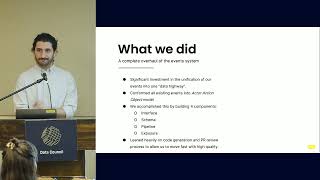
ABOUT THE TALK: After two years, three rounds of funding, and hundreds of new employees — Whatnot’s modern data stack has come from not existing to processing tens of millions of events across hundreds of different event types each day.
How does their small (but mighty!) team keep up? This talk explores data contracts — it covers the use of Interface Definition Language (Protobuf) to serve as the source of truth for event definitions, govern event construction in production, automatically generate DBT models in the data warehouse.
ABOUT THE SPEAKER: Zack Klein is a software engineer at Whatnot, where he thoroughly enjoys building data products and narrowly avoiding breaking production each day. Previously, he worked on big data platforms at Blackstone and HBO.
ABOUT DATA COUNCIL: Data Council (https://www.datacouncil.ai/) is a community and conference series that provides data professionals with the learning and networking opportunities they need to grow their careers.
Make sure to subscribe to our channel for the most up-to-date talks from technical professionals on data related topics including data infrastructure, data engineering, ML systems, analytics and AI from top startups and tech companies.
FOLLOW DATA COUNCIL: Twitter: https://twitter.com/DataCouncilAI LinkedIn: https://www.linkedin.com/company/datacouncil-ai/

ABOUT THE TALK: Building data tools requires us to not only think about the data team, but also about the people that the data team is serving: business users, or "non-data team people".
This talk will go over how it's super important to consider these two personas when building data tools, but it can also be a bit complicated. We will talk through a few principles we can use to build data products that are great for everyone (not just the data team!)
ABOUT THE SPEAKER: As a product manager with a background in data science, Katie Hindson loves building data products. Currently, she's working at Lightdash, an open-source BI tool that instantly turns your dbt project into a full-stack BI platform. Katie is really interested in the interaction between data teams, their tools, and the rest of the company - because the best data teams are the ones that can help everyone at the company make better decisions, faster.
ABOUT DATA COUNCIL: Data Council (https://www.datacouncil.ai/) is a community and conference series that provides data professionals with the learning and networking opportunities they need to grow their careers.
Make sure to subscribe to our channel for the most up-to-date talks from technical professionals on data related topics including data infrastructure, data engineering, ML systems, analytics and AI from top startups and tech companies.
FOLLOW DATA COUNCIL: Twitter: https://twitter.com/DataCouncilAI LinkedIn: https://www.linkedin.com/company/datacouncil-ai/
ABOUT THE TALK: Ever noticed the manifest.json file that dbt puts into your target folder? This little file contains rich information about your dbt project that enables numerous fun use cases! These include complex deployment configurations, quality enforcement, and streamlined development workflows. This talk will go over what the manifest is and how it is produced, along with case studies of how the manifest is used across the community and in Squarespace’s data pipelines.
ABOUT THE SPEAKER: Aaron Richter is a software developer with a passion for all things data. His work involves making sure data is clean and accessible, and that the tools to access it are at peak performance. Aaron is currently a data engineer at Squarespace, where he supports the company’s analytics platform. Previously, he built the data warehouse at Modernizing Medicine, and worked as a data science advocate at Saturn Cloud.
ABOUT DATA COUNCIL: Data Council (https://www.datacouncil.ai/) is a community and conference series that provides data professionals with the learning and networking opportunities they need to grow their careers.
Make sure to subscribe to our channel for the most up-to-date talks from technical professionals on data related topics including data infrastructure, data engineering, ML systems, analytics and AI from top startups and tech companies.
FOLLOW DATA COUNCIL: Twitter: https://twitter.com/DataCouncilAI LinkedIn: https://www.linkedin.com/company/datacouncil-ai/
Advances in ML have transformed data privacy from a regulatory necessity into an opportunity to improve the work of data people. Synthetic data for modeling + testing is one example of a hard thing that's now easy - and in this conversation with Tristan and Julia, Ian + Abhishek cover many other ways that privacy can actually be a skill that propels your work forward, rather than a mere legal best practice. For full show notes and to read 6+ years of back issues of the podcast's companion newsletter, head to https://roundup.getdbt.com. The Analytics Engineering Podcast is sponsored by dbt Labs.
The Modern Data Stack has brought a lot of new buzzwords into the data engineering lexicon: "data mesh", "data observability", "reverse ETL", "data lineage", "analytics engineering". In this light-hearted talk we will demystify the evolving revolution that will define the future of data analytics & engineering teams.
Our journey begins with the PyData Stack: pandas pipelines powering ETL workflows...clean code, tested code, data validation, perfect for in-memory workflows. As demand for self-serve analytics grows, new data sources bring more APIs to model, more code to maintain, DAG workflow orchestration tools, new nuances to capture ("the tax team defines revenue differently"), more dashboards, more not-quite-bugs ("but my number says this...").
This data maturity journey is a well-trodden path with common pitfalls & opportunities. After dashboards comes predictive modelling ("what will happen"), prescriptive modelling ("what should we do?"), perhaps eventually automated decision making. Getting there is much easier with the advent of the Python Powered Modern Data Stack.
In this talk, we will cover the shift from ETL to ELT, the open-source Modern Data Stack tools you should know, with a focus on how dbt's new Python integration is changing how data pipelines are built, run, tested & maintained. By understanding the latest trends & buzzwords, attendees will gain a deeper insight into Python's role at the core of the future of data engineering.
Summary
The customer data platform is a category of services that was developed early in the evolution of the current era of cloud services for data processing. When it was difficult to wire together the event collection, data modeling, reporting, and activation it made sense to buy monolithic products that handled every stage of the customer data lifecycle. Now that the data warehouse has taken center stage a new approach of composable customer data platforms is emerging. In this episode Darren Haken is joined by Tejas Manohar to discuss how Autotrader UK is addressing their customer data needs by building on top of their existing data stack.
Announcements
Hello and welcome to the Data Engineering Podcast, the show about modern data management RudderStack helps you build a customer data platform on your warehouse or data lake. Instead of trapping data in a black box, they enable you to easily collect customer data from the entire stack and build an identity graph on your warehouse, giving you full visibility and control. Their SDKs make event streaming from any app or website easy, and their extensive library of integrations enable you to automatically send data to hundreds of downstream tools. Sign up free at dataengineeringpodcast.com/rudderstack Your host is Tobias Macey and today I'm interviewing Darren Haken and Tejas Manohar about building a composable CDP and how you can start adopting it incrementally
Interview
Introduction How did you get involved in the area of data management? Can you describe what you mean by a "composable CDP"?
What are some of the key ways that it differs from the ways that we think of a CDP today?
What are the problems that you were focused on addressing at Autotrader that are solved by a CDP? One of the promises of the first generation CDP was an opinionated way to model your data so that non-technical teams could own this responsibility. What do you see as the risks/tradeoffs of moving CDP functionality into the same data stack as the rest of the organization?
What about companies that don't have the capacity to run a full data infrastructure?
Beyond the core technology of the data warehouse, what are the other evolutions/innovations that allow for a CDP experience to be built on top of the core data stack? added burden on core data teams to generate event-driven data models When iterating toward a CDP on top of the core investment of the infrastructure to feed and manage a data warehouse, what are the typical first steps?
What are some of the components in the ecosystem that help to speed up the time to adoption? (e.g. pre-built dbt packages for common transformations, etc.)
What are the most interesting, innovative, or unexpected ways that you have seen CDPs implemented? What are the most interesting, unexpected, or challenging lessons that you have learned while working on CDP related functionality? When is a CDP (composable or monolithic) the wrong choice? What do you have planned for the future of the CDP stack?
Contact Info
Darren
LinkedIn @DarrenHaken on Twitter
Tejas
LinkedIn @tejasmanohar on Twitter
Parting Question
From your perspective, what is the biggest gap in the tooling or technology for data management today?
Closing Announcements
Thank you for listening! Don't forget to check out our other shows. Podcast.init covers the Python language, its community, and the innovative ways it is being used. The Machine Learning Podcast helps you go from idea to production with machine learning. Visit the site to subscribe to the show, sign up for the mailing list, and read the show notes. If you've learned something or tried out a project from the show then tell us about it! Email [email protected]) with your story. To help other people find the show please leave a review on Apple Podcasts and tell your friends and co-workers
Links
Autotrader Hightouch
Customer Studio
CDP == Customer Data Platform Segment
Podcast Episode
mPar